

We may earn a commission when you buy through links on this page, at no extra cost to you. Learn more.
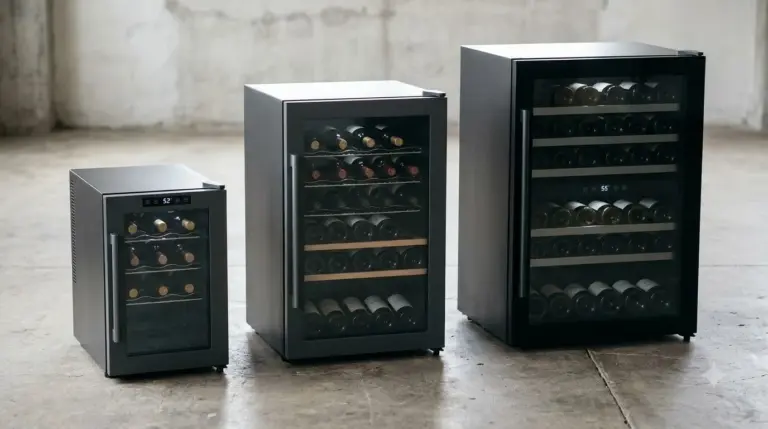
The best 52 bottle wine fridge depends on where you plan to install it and whether you store one wine style or chill reds and whites simultaneously. Built-in dual-zone units suit kitchen renovations and mixed collections, while freestanding single-zone cabinets give dedicated collectors steady cellar temperatures without custom cabinetry. Quiet compressor models with adjustable shelving work best for open-concept living spaces and wider Burgundy or Champagne bottles.
A 52-bottle cabinet hits a practical sweet spot for households that outgrew a countertop chiller and buy wine by the mixed case. Roughly 24 inches wide and counter-height, this size class holds around four cases of standard 750 mL Bordeaux bottles while leaving enough interior room for temperature stability. Selecting the right configuration comes down to venting direction, cooling zones, shelf spacing, and acoustic output.
Quick Comparison
Different 52-bottle configurations prioritize kitchen integration, serving versatility, or long-term aging stability.
| Unit Type | Venting Design | Temperature Zones | Ideal Placement | Primary Strength |
|---|---|---|---|---|
| Built-In Dual-Zone | Front-venting base | 2 independent zones | Under kitchen or bar counters | Flush cabinetry fit with separate red and white service temps |
| Freestanding Single-Zone | Rear and side clearance | 1 uniform zone | Dining rooms, basements, pantries | Consistent 55°F cellar storage with fewer mechanical parts |
| Wide-Shelf Adjustable | Front or rear venting | 1 or 2 zones | Kitchens and home bars | Removable or wide-spaced racks for Burgundy and Champagne |
| Low-Vibration Quiet | Front or rear venting | 1 or 2 zones | Living rooms, offices, bedrooms | Dampened compressors under 40 dBA that protect aging sediment |
| Dual-Purpose Beverage | Front-venting base | 2 split zones | Entertainment rooms and patios | Combines wine racking with cold storage for cans and mixers |
Best for Under-Counter Kitchen Remodels: Built-In Dual-Zone Units
A front-venting, dual-zone 52-bottle refrigerator slides flush into a standard 24-inch base cabinet opening while keeping reds and whites at separate serving temperatures.
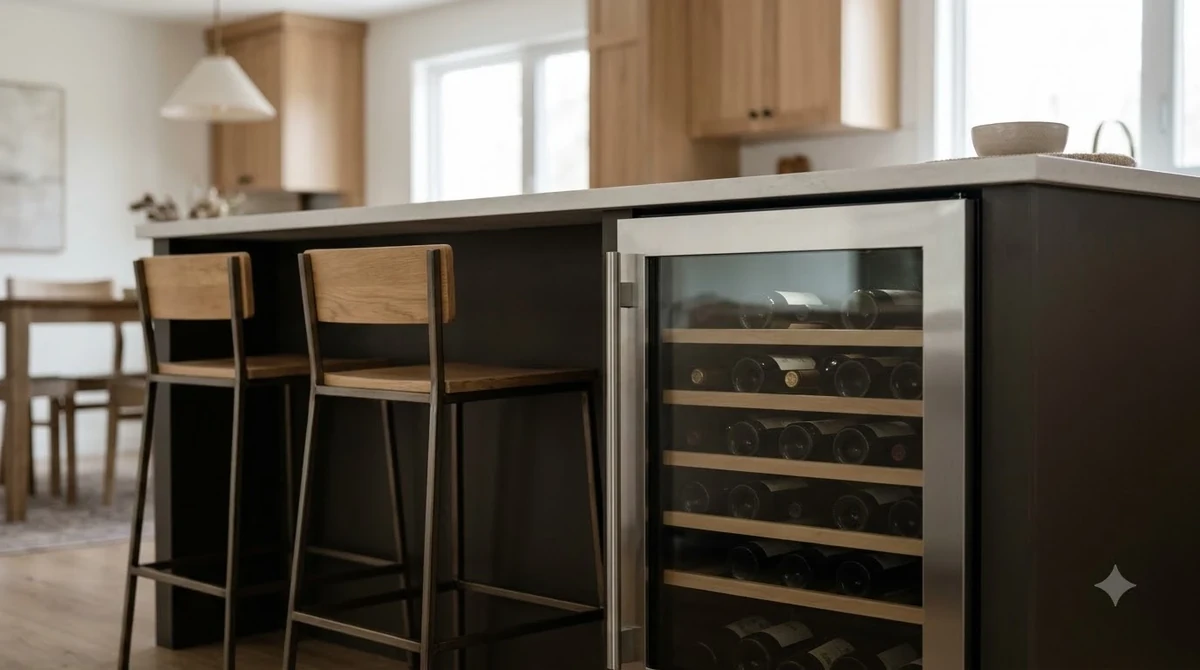
Why it stands out: Standard kitchen refrigerators run too cold and dry for corks, whereas a dedicated built-in dual-zone wine cooler lets you maintain crisp whites around 45°F to 50°F in one compartment and reds closer to 55°F to 65°F in the other. Because the exhaust louvers sit along the bottom toe-kick, warm air escapes forward into the room rather than trapping heat inside surrounding millwork. Reviewers at Wine Enthusiast point out that front-venting designs prevent the compressor from overworking inside tight cabinetry.
Keep in mind and best for: Dual-zone cabinets use an internal divider to separate climates, which trims a few bottle slots compared to open single-zone interiors. Check whether the door hinge is reversible so the glass opens cleanly against adjacent islands or walls. This style is best for homeowners remodeling a kitchen, wet bar, or butler’s pantry who want grab-and-pour convenience without sacrificing counter space.
Best for Steady Cellar Aging: Freestanding Single-Zone Cabinets
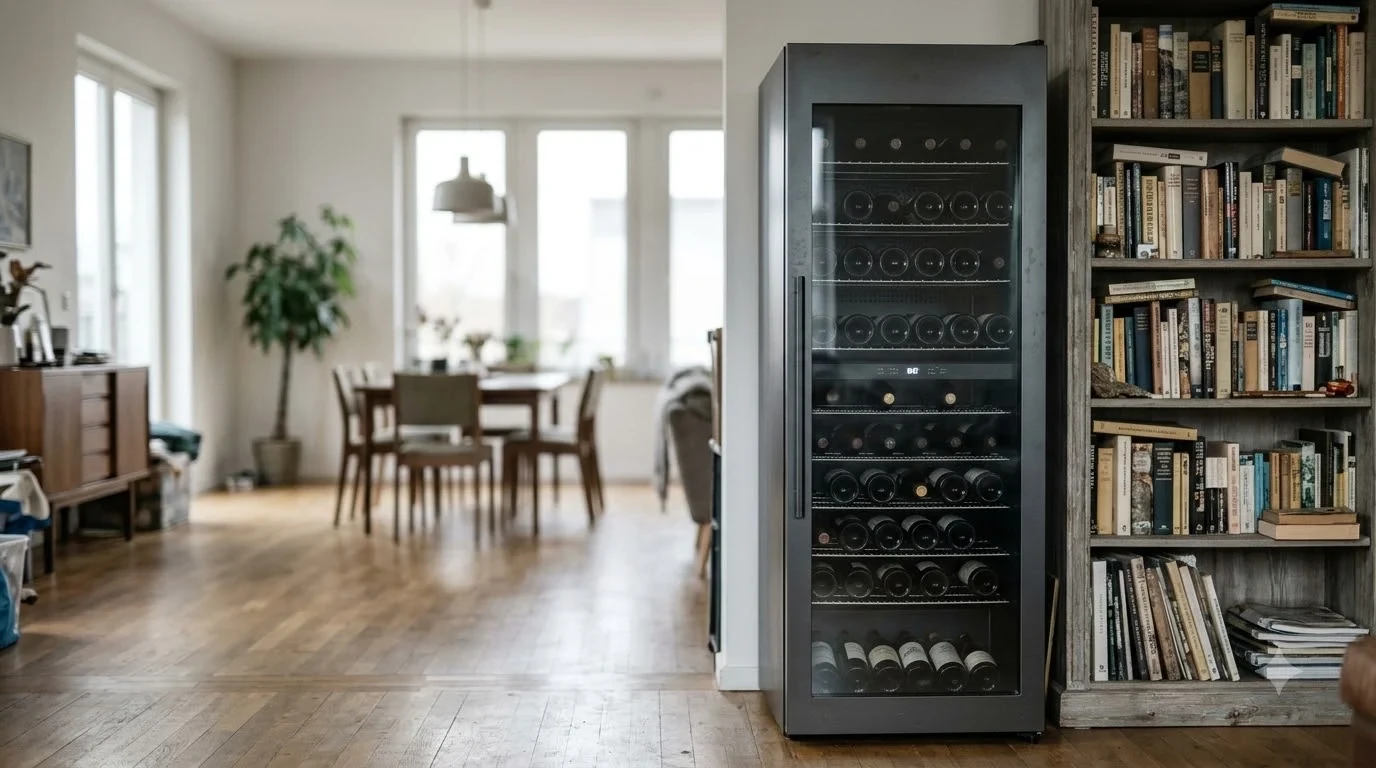
If your goal is holding bottles for several years rather than pouring straight from the rack, a freestanding single-zone 52-bottle unit delivers uniform climate control.
Why it stands out: Sommeliers and storage guides widely agree that all wine—red, white, and sparkling—ages properly at one steady temperature around 55°F. Eliminating the middle thermal divider frees up full vertical rack space and reduces mechanical complexity, helping the cooling system hold tight temperature tolerances over long stretches. Many freestanding units also incorporate UV-tinted double- or triple-pane glass and activated charcoal filters to block light and stray household odors.
Keep in mind and best for: Freestanding units dissipate heat through their back and sides, so they require two to four inches of open air clearance and cannot be boxed into flush cabinetry. Whites stored at 55°F will also need 15 to 20 minutes in an ice bucket before serving if you prefer them extra crisp. Choose this type if you have open floor space in a dining room or basement and want reliable multi-year storage.
Best for Mixed Bottle Shapes: Wide-Shelf Adjustable Coolers
A 52-bottle fridge with removable beechwood slats or wide-spaced rails prevents label scuffs and accommodates wider Pinot Noir, Chardonnay, and sparkling bottles.
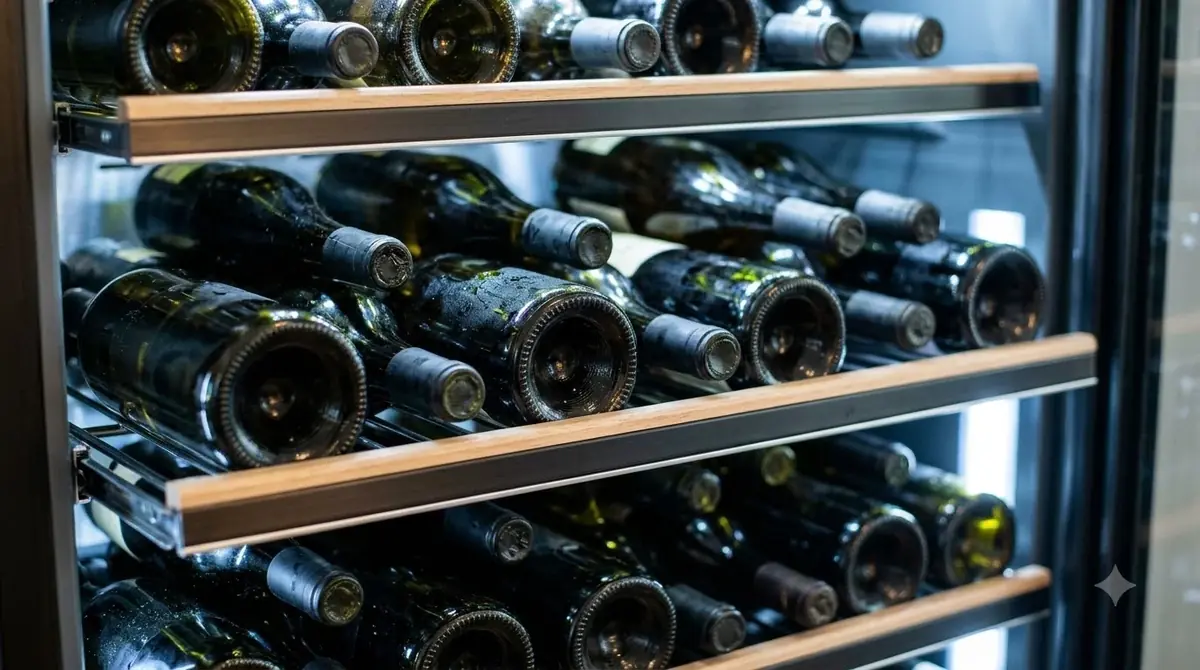
Why it stands out: Manufacturers calculate the “52-bottle” headline figure using slim, straight-sided 750 mL Bordeaux bottles. Once you load sloped-shoulder Burgundy bottles, wider California Cabernets, or heavy Champagne punts, fixed narrow racks quickly lose 15 to 20 percent of their stated capacity and scrape paper labels. Units engineered with luxury rack spacing or easily removable shelves let you rearrange tiers to fit magnums and oversized formats without forcing bottles against upper rails.
Keep in mind and best for: Removing a shelf to fit larger-diameter bottles lowers your total bottle count, so realistic everyday capacity for a varied collection usually lands closer to 40 to 44 bottles. Look for smooth-gliding telescopic tracks so heavy shelves do not tip when pulled halfway out. This category is best for enthusiasts who collect Pinot Noir, Champagne, Rhône blends, or grower sparkling wines alongside standard Bordeaux shapes.
Best for Open Living Spaces: Low-Vibration Quiet Models
When a wine refrigerator sits near a dining table, home office, or media room, acoustic dampening and vibration isolation matter just as much as cooling power.
Why it stands out: While tiny units like a 6 bottle wine fridge often use silent thermoelectric cooling, 52-bottle cabinets require compressor systems to chill a larger interior volume. Modern inverter compressors paired with rubber shock mounts and solid hardwood shelving absorb mechanical hum and keep operating noise below 40 decibels—roughly the volume of a quiet library. Minimizing micro-vibrations also keeps sediment settled in older red wines so flavors develop cleanly.
Keep in mind and best for: Compressor units still cycle on and off periodically, and placing the cabinet on an unlevel hardwood floor can amplify rattle. Leveling legs and a dedicated hard-surface spot help keep the cabinet silent. This option is best for open-concept apartments, dining rooms, and studies where constant appliance hum would disrupt conversation or work.
Best for Frequent Entertaining: Wine and Beverage Combo Centers
Hosts who stock craft beer, sparkling water, and mixers alongside wine benefit from a 52-bottle-equivalent layout divided between wooden wine racks and glass-shelved beverage zones.
Why it stands out: Instead of dedicating an entire cabinet solely to 750 mL wine bottles, combo designs pair a wine compartment with a colder zone capable of dropping down to the high 30s for canned drinks. Having separate climate controls means guests can grab ice-cold sodas or pilsners from one side without opening the wine section and letting warm room air wash over your bottles. French-door and side-by-side variants in this footprint also make organizing party drinks intuitive.
Keep in mind and best for: Because part of the interior holds cans or upright mixers, total wine capacity drops below 52 bottles—often closer to 20 to 30 bottles plus 60 to 100 cans. If your primary goal is pure wine storage, a dedicated wine-only interior makes better use of the footprint. Choose this configuration if you host weekend gatherings and want one central bar appliance.
How to Choose
Before selecting a 52-bottle cabinet, check four technical specifications against your space and drinking habits:
- Installation clearance: Measure the cutout width, height, and depth carefully. Built-in units vent through the front grille and fit flush under standard counters, whereas freestanding models need several inches of breathing room behind and beside the cabinet.
- Single vs. dual temperature zones: Pick single-zone if you want effortless 55°F storage across the whole cabinet, or dual-zone if you want white wines chilled to serving temperature right alongside reds. As VinePair’s wine serving temperature guide explains, lighter whites and sparkling wines taste brightest between 40°F and 50°F, while full-bodied reds show best around 60°F to 65°F.
- Door glass and security: Double- or triple-pane tempered glass with UV coatings prevents sunlight and kitchen LEDs from prematurely aging wine. An integrated bottom lock protects valuable bottles from curious kids or guests.
- Sizing relative to your habits: If you only keep a few bottles on hand for weeknight dinners, stepping down to a 12 bottle wine fridge saves floor space and energy. For a broader breakdown of cabinet dimensions across capacities, compare options by bottle count before measuring your space.
Tip: Fill empty racks with sealed bottles of water when you first stock your fridge. Extra liquid thermal mass helps the compressor hold a steadier internal temperature and reduces how often the cooling cycle kicks on.
Frequently Asked Questions
How many bottles does a 52-bottle wine fridge actually hold?
A 52-bottle rating is measured using uniform, slim 750 mL Bordeaux bottles arranged neck-to-base. If your collection includes wider Burgundy, Pinot Noir, Rhône, or Champagne bottles, realistic usable capacity typically ranges from 40 to 46 bottles. Removing a shelf to fit magnums will reduce that count slightly further.
What dimensions should I expect for a 52-bottle wine cooler?
Most 52-bottle units measure roughly 23.5 inches wide, 33 to 34 inches tall, and 22 to 24 inches deep, allowing them to fit standard 24-inch under-counter appliance cutouts. Always leave extra depth clearance at the back for the power plug and door handle protrusion so the door swings open fully.
Can I put a freestanding 52-bottle wine fridge under a counter?
No, placing a freestanding wine cooler inside an enclosed cabinet traps exhaust heat around the condenser coils. Overheating causes the compressor to run continuously, leads to temperature swings, and shortens the appliance’s lifespan. Only front-venting models rated for built-in installation belong under counters.
How many glasses of wine fit inside a full 52-bottle fridge?
At capacity with standard 750 mL bottles, a full 52-bottle cabinet holds roughly 260 five-ounce pours. If you are planning a party and calculating how many glasses in a bottle of wine to budget for guests, a full cabinet provides enough wine for about 65 to 85 people enjoying three to four glasses each.
Matching your venting setup, shelf spacing, and zone count to how you actually buy and serve wine ensures your 52-bottle cabinet runs quietly for years. Measure your installation opening twice, allow extra breathing room for wider bottle shapes, and leave a few open slots for new discoveries.
More in By Bottle Count
 Best 15 Bottle Wine Fridge Options for Quiet Storage and Ready-to-Pour ServingUpdated Nov 18, 2026
 Best 34 Bottle Wine Cooler Types for Kitchens, Bars, and Home CellarsUpdated Nov 18, 2026
 Best 166 Bottle Wine Cooler Types for Serious Collectors and HostsUpdated Nov 18, 2026
 Best 54 Bottle Wine Fridge Types for Undercounter and Home CellarsUpdated Nov 18, 2026
 Best 46 Bottle Dual Zone Wine Cooler for Built-In Kitchens and Home BarsUpdated Nov 19, 2026
 Best 28 Bottle Wine Fridge for Two Cases and Entertaining StockUpdated Nov 18, 2026