

We may earn a commission when you buy through links on this page, at no extra cost to you. Learn more.
The best 54 bottle wine fridge for most homes is a front-venting dual-zone compressor model, which holds both reds and whites at ready-to-pour temperatures while sliding neatly under a standard 24-inch kitchen counter. Serious collectors focused on long-term aging should choose a single-zone cellaring cabinet set to a steady 55°F, while renters and entertainers benefit from freestanding or wide-shelf units built for oversized bottles.
A 54-bottle capacity hits a practical middle ground in home wine storage, offering enough space for four and a half cases without requiring a dedicated cellar room or towering floor-to-ceiling cabinet. Most units in this size class measure roughly 23.5 to 24 inches wide and 32.5 to 34.5 inches tall, letting them replace a standard undercounter dishwasher or trash compactor opening while still holding a meaningful mixed collection.
Quick Comparison
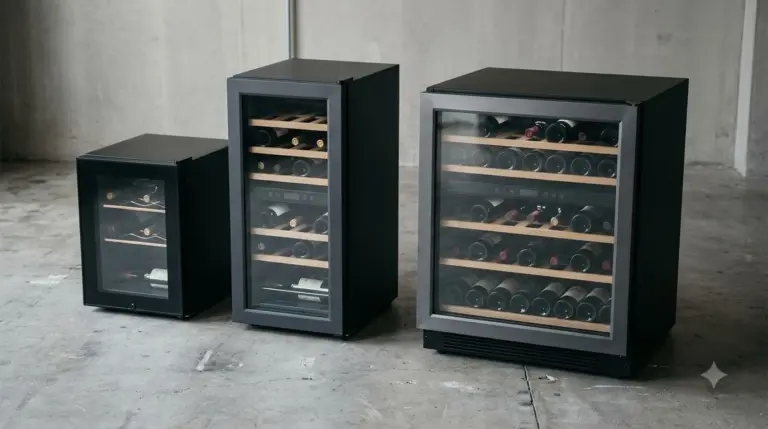
Different 54-bottle refrigerator designs prioritize either smooth kitchen integration, simultaneous red-and-white serving, or long-term aging stability.
| Fridge Type | Temperature Zones | Venting & Placement | Cooling System | Best Use Case |
|---|---|---|---|---|
| Built-In Dual-Zone | 2 independent zones | Front exhaust (undercounter) | Fan-circulated compressor | Kitchen remodels and serving reds and whites together |
| Single-Zone Cellaring | 1 uniform zone | Front or rear exhaust | Low-vibration compressor | Multi-year aging at a constant cellar temperature |
| Freestanding Compressor | 1 or 2 zones | Rear/side exhaust (open space) | Standard compressor | Dining rooms, home bars, and apartments without cabinetry cuts |
| Wide-Shelf / Mixed-Format | 1 or 2 zones | Front or rear exhaust | Compressor with removable racks | Champagne, Pinot Noir, and wide-shoulder bottles |
| Panel-Ready & Smart | 2 independent zones | Zero-clearance front exhaust | Inverter compressor | Custom cabinetry integration and remote monitoring |
Best for Built-In Kitchens and Entertaining
Front-venting dual-zone units are the standard choice for kitchen islands and wet bars because they exhaust heat forward through a toe-kick grille and chill reds and whites at the same time.
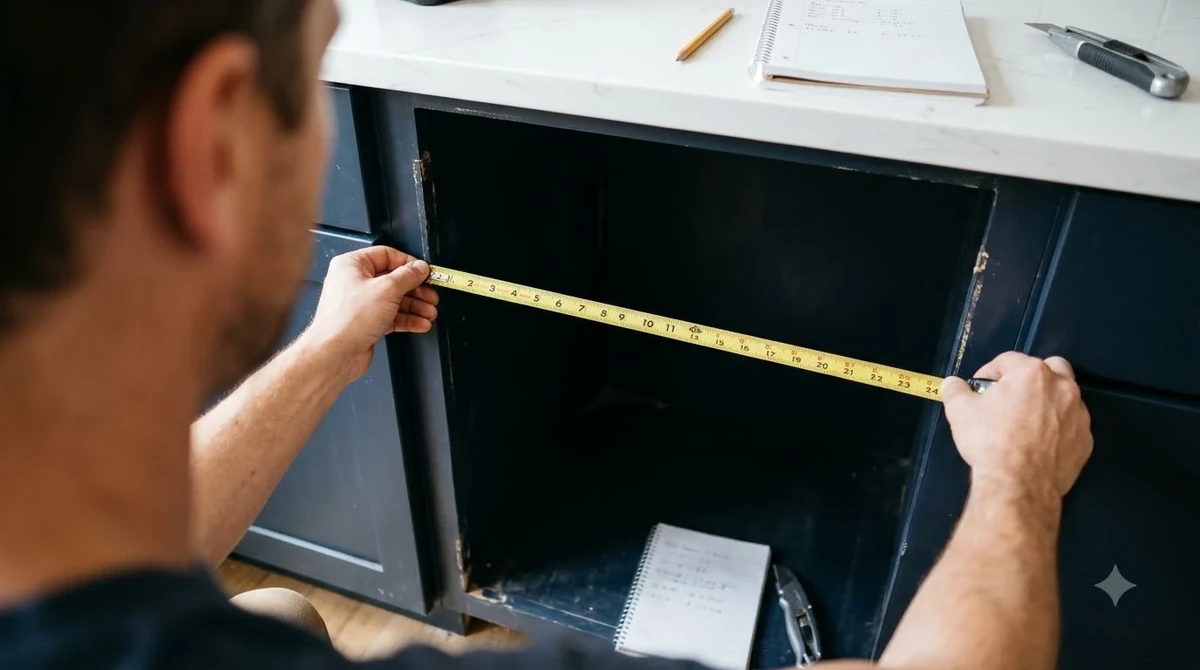
Why it stands out: According to Wine Enthusiast, built-in refrigerators are engineered specifically for tight cabinetry enclosures where side and rear airflow are blocked. Dividing a 54-bottle cabinet into two independently controlled compartments lets hosts keep crisp whites and sparkling wines in an upper zone around 40°F to 50°F while holding reds in a lower zone between 55°F and 65°F.
Keep in mind: Dual-zone dividers and internal fans take up slight interior volume, meaning true capacity drops closer to 46 or 50 bottles once you mix Burgundy shapes with standard Bordeaux bottles. Best for: Homeowners remodeling a kitchen or bar area who want bottles at immediate serving temperature rather than long-term cellar storage.
Best for Long-Term Aging and Cellaring
Single-zone compressor coolers eliminate internal temperature partitions to maintain one uninterrupted climate, giving collectors maximum bottle density and rock-steady aging conditions.
Why it stands out: Wine storage specialists note that all wines—whether red, white, or sparkling—age safely at a uniform 55°F when protected from light, vibration, and dry air. Without a divider plate splitting the cabinet, a single-zone 54-bottle unit typically offers cleaner rack spacing, more consistent humidity retention, and fewer temperature swings caused by competing cooling coils.
Keep in mind: Bottles pulled straight from a 55°F single-zone cabinet are ready for full-bodied reds, though white and sparkling wines will still need 20 to 30 minutes in an ice bucket or kitchen refrigerator before pouring. Best for: Wine drinkers buying cases to hold for two to five years who prioritize preservation over instant table-ready chilling.
Best for Freestanding Spaces and Renters
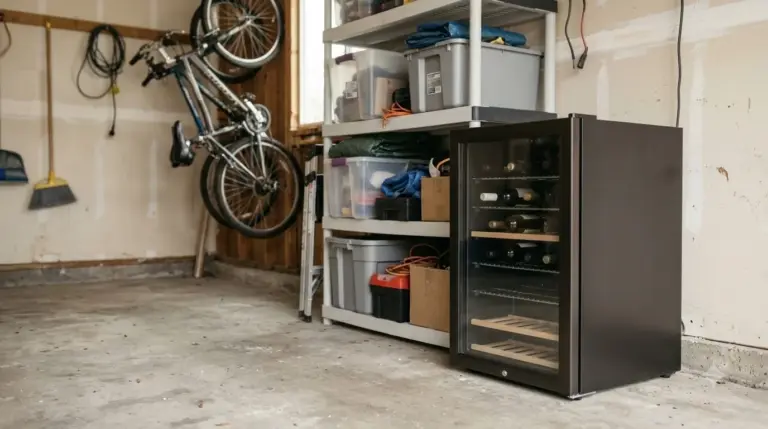
Freestanding 54-bottle wine fridges vent heat from the back or sides, offering full four-and-a-half-case storage in dining rooms, living areas, or home offices without cabinetry modifications.
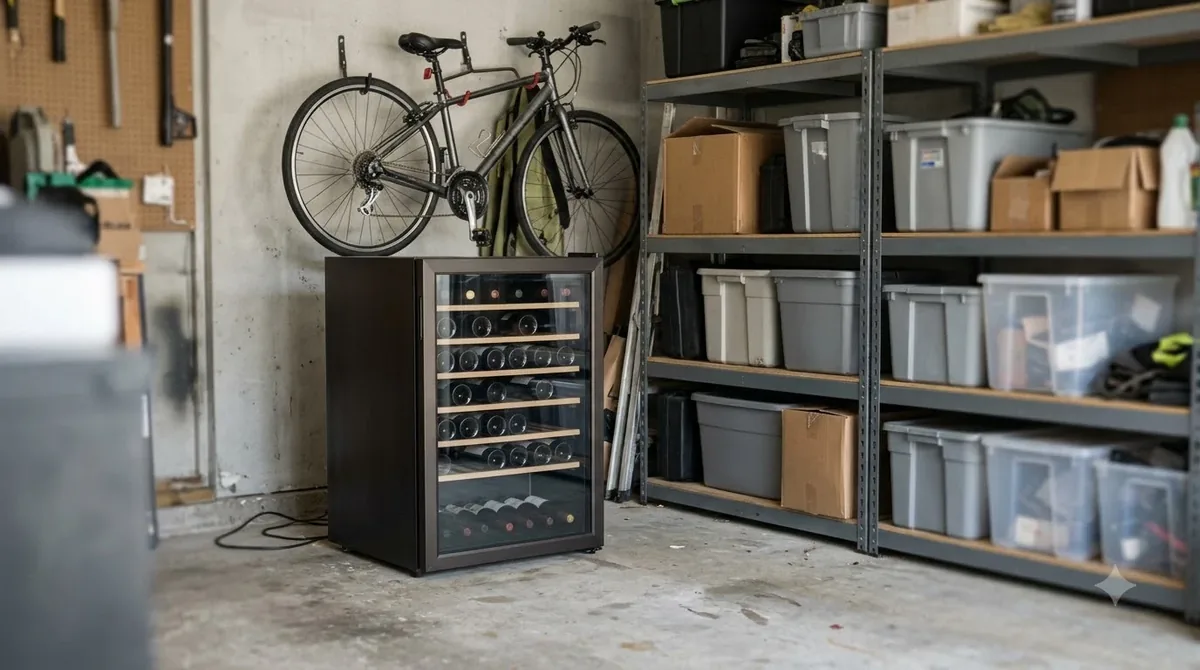
Why it stands out: Because they do not require custom millwork or front kick-plate engineering, freestanding models generally feature finished steel or black side panels that look clean from every angle. Many units in this category pair a quiet compressor—often rated between 39 and 43 decibels—with reversible door hinges so you can position the cabinet against almost any wall.
Keep in mind: Reviewers at major appliance guides emphasize leaving at least two to four inches of clearance behind and beside a freestanding cabinet; pushing it flush against drywall traps heat and forces the compressor to overwork. Best for: Renters, condo owners, or anyone upgrading from a 12 bottle wine fridge who needs serious capacity without permanent installation.
Best for Champagne and Wide-Shoulder Bottles
Mixed-format 54-bottle coolers feature adjustable or removable hardwood shelves with wider vertical clearance, preventing scraped labels and jammed drawers when storing heavy Pinot Noir, Syrah, or Champagne bottles.
Why it stands out: Industry capacity ratings are calculated using slim 750ml Bordeaux bottles stacked neck-to-base, which quickly breaks down in real-world collections. Units built with roller-mounted beechwood racks and removable mid-shelves allow you to pull out a full row smoothly or lift a shelf entirely to cradle wider Burgundy and sparkling formats without bruising corks.
Keep in mind: Removing one shelf to accommodate wider bottles reduces the total bottle count by roughly six to nine bottles, so plan your inventory accordingly. Best for: Collectors who buy heavily from Burgundy, Oregon, California Pinot Noir producers, or Champagne houses rather than standard Cabernet bottles.
Best for Custom Cabinetry and Smart Monitoring
Panel-ready and Wi-Fi-connected 54-bottle refrigerators combine zero-clearance hinges with variable-speed inverter compressors for designers and collectors who want invisible integration and remote alerts.
Why it stands out: Unlike standard stainless-steel doors, panel-ready frames accept custom wood overlays and cabinet pulls to match surrounding kitchen millwork, while articulating hinges let the door open fully without clipping adjacent cabinets. Inside, variable-speed inverter compressors ramp cooling up and down gradually rather than clicking on and off abruptly, cutting vibration and power draw while app alerts warn you if a door is left ajar.
Keep in mind: Custom wood door panels add substantial weight, making heavy-duty hinges and accurate cabinet leveling essential during installation. Best for: Custom kitchen builds and frequent travelers who want smartphone temperature monitoring and flush architectural styling.
How to Choose
Selecting the right 54-bottle cabinet comes down to matching the appliance’s airflow, door glass, and interior racking to your room and drinking habits.
- Measure the cutout and door swing: Standard 24-inch undercounter openings require a front-venting built-in unit. Check whether the handle adds an extra inch or two to the cabinet depth, and confirm the door hinges are reversible if a wall sits on one side.
- Match zones to how you drink: As VinePair’s serving temperature guide explains, sparkling wines taste best ice-cold between 40°F and 50°F, while full-bodied reds shine closer to 60°F to 65°F. Choose dual-zone if you pull bottles straight to the table, or single-zone if you cellar everything at 55°F.
- Inspect the glass and lighting: Look for double-pane or triple-pane tinted glass filled with argon gas and coated to block ultraviolet rays, paired with low-heat LED interior lighting that will not warm the top shelf.
- Check shelf hardware and acoustics: Ball-bearing or roller-glide wooden shelves prevent rattling and make back-row bottles easy to reach. If the fridge will sit in an open-plan living space, target a compressor rated around 40 to 42 decibels.
Tip: Treat a 54-bottle rating as a maximum ceiling for Bordeaux-shaped bottles; if your racks hold a mix of Champagne, Rhône, and Burgundy bottles, expect comfortable everyday capacity to land around 42 to 48 bottles.
Frequently Asked Questions
How many bottles actually fit in a 54-bottle wine fridge?
A 54-bottle rating assumes every slot is filled with uniform 750ml Bordeaux-style bottles arranged neck-to-base. Once you add wider Burgundy, Pinot Noir, or Champagne bottles—or remove a shelf to fit magnums—realistic capacity is typically 42 to 48 bottles.
Can you put a freestanding 54-bottle wine fridge under a counter?
No, freestanding wine refrigerators vent heat through the rear or sides and will overheat if enclosed inside cabinetry. Only models explicitly labeled as built-in or front-venting should be installed flush under a kitchen counter.
Are 54-bottle wine coolers noisy?
Almost all 54-bottle units use compressor cooling rather than thermoelectric chips, which produces a low hum similar to a modern dishwasher. Most quality models operate between 39 and 43 decibels, making them quiet enough for open kitchens and dining areas.
How should I size up from a smaller countertop cooler?
If you currently keep a small 6 bottle wine fridge on the counter for weeknight pours, jumping to 54 bottles gives you room for roughly nine times as much wine—or about 270 standard five-ounce pours once you factor in how many glasses in a bottle of wine you typically serve. Comparing dimensions by bottle count helps ensure you buy enough headroom for a growing collection without sacrificing floor space.
Choosing between a dual-zone built-in unit, a steady single-zone cellar cabinet, or a freestanding model comes down to where the appliance will live and whether you prioritize immediate serving or multi-year aging. Measure your cutout carefully, account for wider bottle shapes in your favorite regions, and pick the airflow and shelving layout that fits how you actually open wine.
More in By Bottle Count
 Best 52 Bottle Wine Fridge Options for Every Kitchen and CollectionUpdated Nov 18, 2026
 Best 15 Bottle Wine Fridge Options for Quiet Storage and Ready-to-Pour ServingUpdated Nov 18, 2026
 Best 34 Bottle Wine Cooler Types for Kitchens, Bars, and Home CellarsUpdated Nov 18, 2026
 Best 166 Bottle Wine Cooler Types for Serious Collectors and HostsUpdated Nov 18, 2026
 Best 46 Bottle Dual Zone Wine Cooler for Built-In Kitchens and Home BarsUpdated Nov 19, 2026
 Best 28 Bottle Wine Fridge for Two Cases and Entertaining StockUpdated Nov 18, 2026