
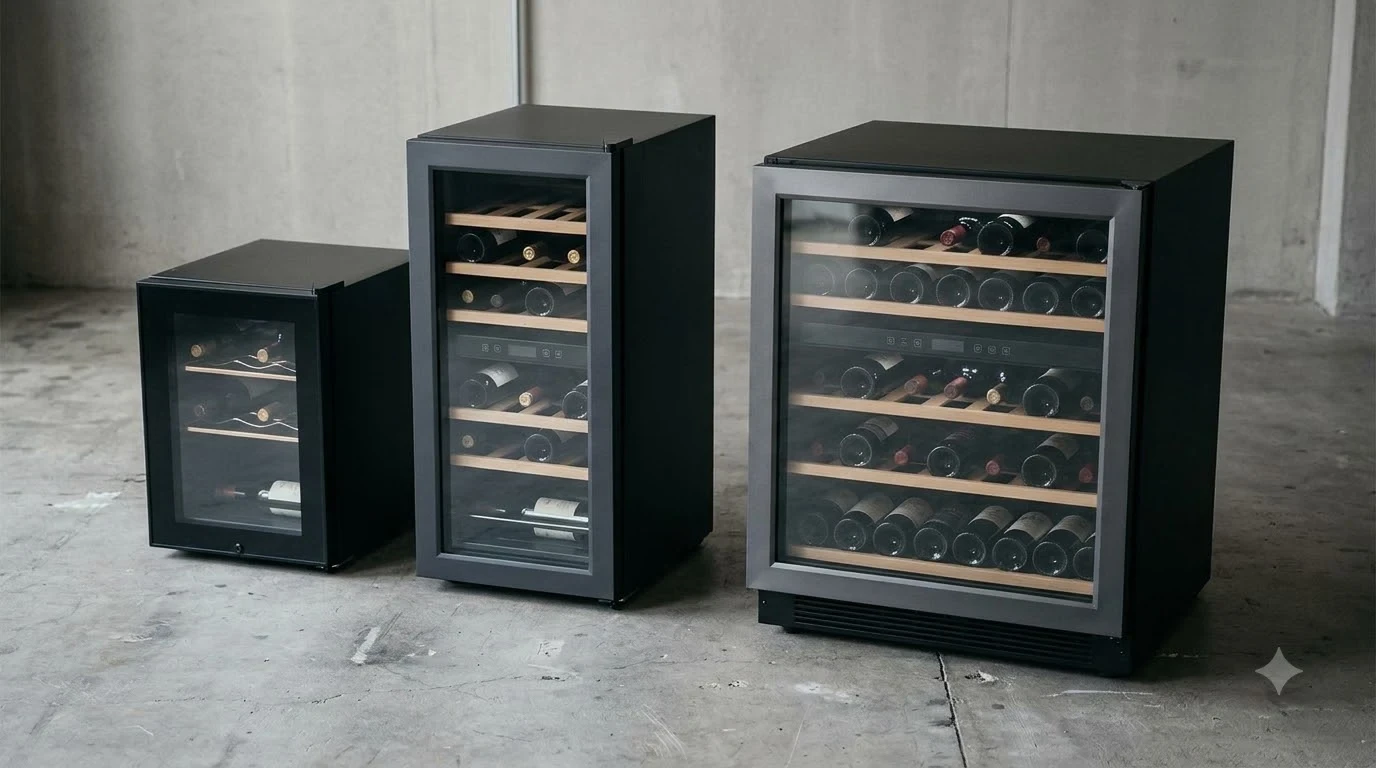

We may earn a commission when you buy through links on this page, at no extra cost to you. Learn more.
The best 166 bottle wine cooler depends on how you balance long-term cellaring against everyday serving, with single-zone compressor cabinets excelling at uniform aging and dual-zone built-in models offering the most convenience for mixed collections. Single-zone units keep every bottle at a steady cellar temperature around 55°F for multi-year maturation, while dual-zone designs separate crisp whites from reds at ready-to-pour temperatures. Front-venting built-in cabinets slide cleanly into standard 24-inch cabinetry cutouts, whereas freestanding models, solid-door cellars, and universal-rack configurations each solve specific room, light, and bottle-shape challenges.
Stepping up to a 166-bottle capacity marks the transition from casual kitchen storage to a serious home cellar, giving you roughly 14 cases of temperature-controlled space in a tall, slim footprint. Because manufacturers calculate maximum capacity using standard 750ml Bordeaux bottles stacked neck-to-base, understanding how shelving, cooling zones, and ventilation interact will ensure your actual collection fits comfortably without crowding or temperature swings.
Quick Comparison
Different 166-bottle wine cooler designs prioritize distinct storage goals, from smooth kitchen integration to maximum protection against ambient heat and light.
| Cooler Type | Temperature Zones | Ventilation & Placement | Door Style | Primary Strength |
|---|---|---|---|---|
| Dual-Zone Built-In | 2 independent zones | Front-venting; flush or freestanding | UV-tinted glass | Simultaneous serving temps for reds and whites |
| Single-Zone Cellar | 1 uniform zone | Front or rear-venting | UV-tinted glass | Consistent 55°F long-term aging |
| Wide-Shelf / Universal Rack | 1 or 2 zones | Front-venting | UV-tinted glass | Fits Burgundy, Pinot Noir, and Champagne bottles |
| Solid-Door Wine Vault | 1 uniform zone | Front or top-venting | Insulated solid panel | Zero light exposure and high ambient heat tolerance |
| Freestanding Display Cabinet | 1 or 2 zones | Rear and side clearance required | Frameless or trim glass | Showcase presentation in dining or living spaces |
Best for Mixed Red and White Collections: Dual-Zone Built-In Coolers
Dual-zone built-in models divide the tall cabinet into two independently controlled compartments, allowing you to keep sparkling and white wines chilled for immediate pouring while holding reds at cellar or service temperatures.
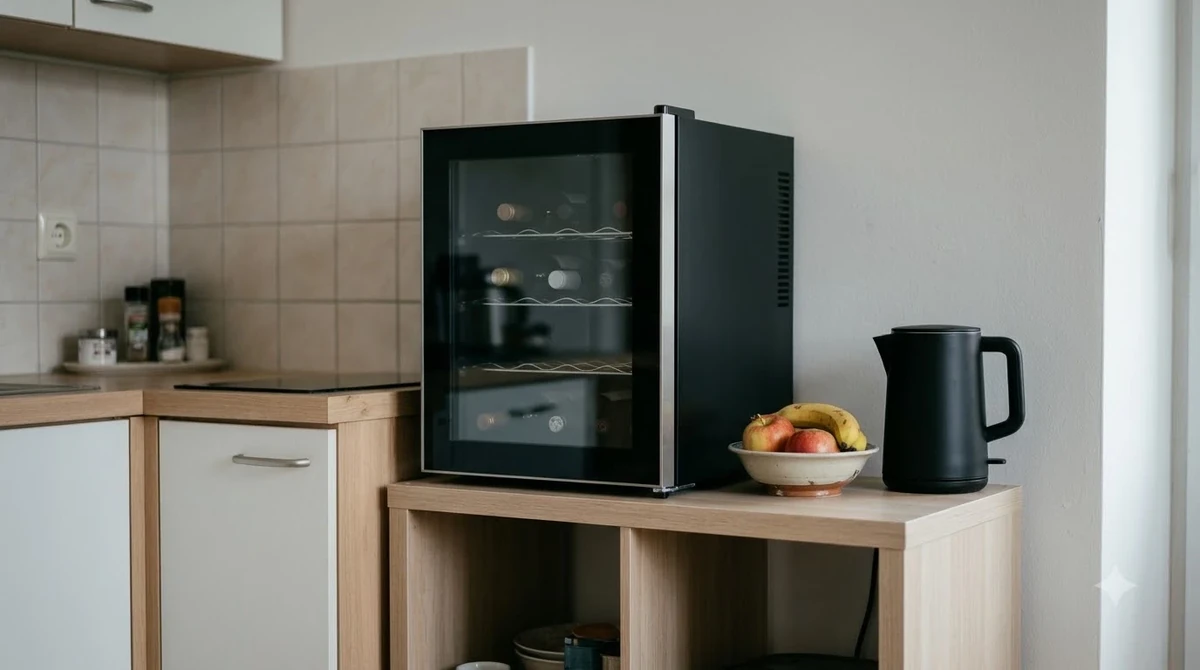
Why it stands out: Reviewers at Wine Enthusiast note that dual-zone refrigerators bridge the gap between storage and hospitality by holding upper zones around 45°F to 50°F for whites and lower zones between 55°F and 65°F for reds. Because these 166-bottle units typically measure roughly 23.5 to 24 inches wide and 70 inches tall with front-facing exhaust grilles, they integrate neatly into custom cabinetry or sit flush against a wall without needing extra side clearance. Internal circulation fans, activated charcoal filters, and telescoping beechwood shelves keep air fresh and make accessing bottles near the back straightforward without disturbing neighboring racks.
Keep in mind: A physical divider and separate evaporator coils take up interior volume, meaning a dual-zone cabinet often holds slightly fewer oversized bottles than an identically sized single-zone unit. Additionally, you must program the upper compartment at least a few degrees cooler than the lower section to prevent thermal bleed between zones. This style is best for hosts and everyday drinkers who pull both chilled whites and cellar-temperature reds throughout the week and want a built-in look in a kitchen, pantry, or home bar.
Best for Long-Term Aging: Single-Zone Compressor Cellars
Single-zone compressor cellars dedicate the entire interior to one steady temperature, creating an uninterrupted microclimate ideal for maturing age-worthy bottles over five years or longer.
Why it stands out: As sommelier Stephanie Cain explained to VinePair, both red and white wines age safely together at a uniform cellar temperature around 55°F, making a single-zone cabinet the most efficient choice when long-term preservation is the main goal. Without an internal partition dividing the cabinet, single-zone 166-bottle coolers maximize usable shelf spacing and allow more flexible stacking across 14 to 16 removable wooden racks. Variable-speed or vibration-dampened compressors maintain tight temperature stability and proper relative humidity so natural corks stay supple and prevent premature oxidation.
Keep in mind: Storing whites at 55°F means you will need to transfer crisp whites or sparkling wines to a standard kitchen refrigerator or ice bucket roughly 30 to 45 minutes before serving. You should also verify whether a specific single-zone cabinet vents from the front plinth or the rear panel before sliding it into an enclosed alcove. This configuration is best for collectors building vertical vintages of Bordeaux, Cabernet Sauvignon, or ageable whites who prioritize stability and maximum capacity over ready-to-drink serving temperatures.
Best for Burgundy and Champagne Bottles: Wide-Shelf Universal Rack Coolers
Wide-shelf universal rack coolers feature generous vertical spacing and sculpted wooden slats engineered to cradle wider-bodied bottles without scraping labels or forcing you to remove entire shelves.
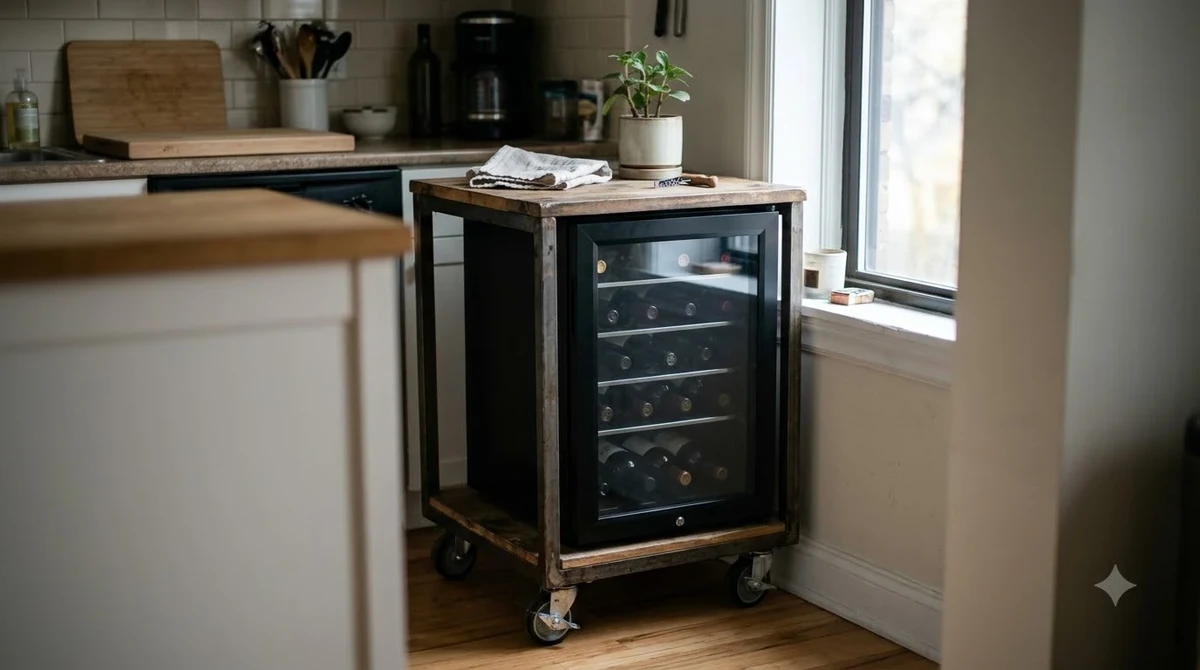
Why it stands out: According to buying specialists at Wine Enthusiast, stated bottle counts almost always rely on slim 750ml Bordeaux cylinders, which means wide-shouldered Pinot Noir, Rhône, Turley-style Zinfandel, and Champagne bottles quickly reduce real-world capacity in standard racks. Universal-rack 166-bottle cabinets solve this friction by pairing slightly wider interior cradles with smooth ball-bearing telescopic glides that extend 80 percent or more out of the cabinet. Many designs also include a dedicated display cradle or bulk bottom bin for magnums and odd-shaped formats.
Keep in mind: Even with wider shelf spacing, filling a 166-bottle cooler predominantly with heavy Champagne or Burgundy bottles will typically bring real-world capacity closer to 120 or 135 bottles. Pay close attention to shelf weight ratings, as fully loaded telescopic racks require sturdy steel or hardwood construction to glide smoothly without sagging. This type is best for enthusiasts whose cellars lean heavily toward Burgundy, Oregon Pinot Noir, grower Champagne, or California cult wines in heavy glass.
Best for Garages and Sunny Rooms: Solid-Door Insulated Wine Vaults
Solid-door wine vaults replace transparent glass with a thick, foam-insulated steel or paneled door, blocking 100 percent of ultraviolet light while shielding the interior against warm or fluctuating rooms.
Why it stands out: Light and heat are two of wine’s biggest enemies, and even double- or triple-pane tinted glass allows trace UV rays and thermal transfer into the cabinet over several years. A solid insulated door eliminates light strike completely and lowers compressor duty cycles, helping the cooling system hold a rock-steady 55°F even when ambient room temperatures climb higher than standard living spaces allow. Because there is no glass condensation risk in humid climates, these cabinets maintain interior humidity reliably with minimal energy draw.
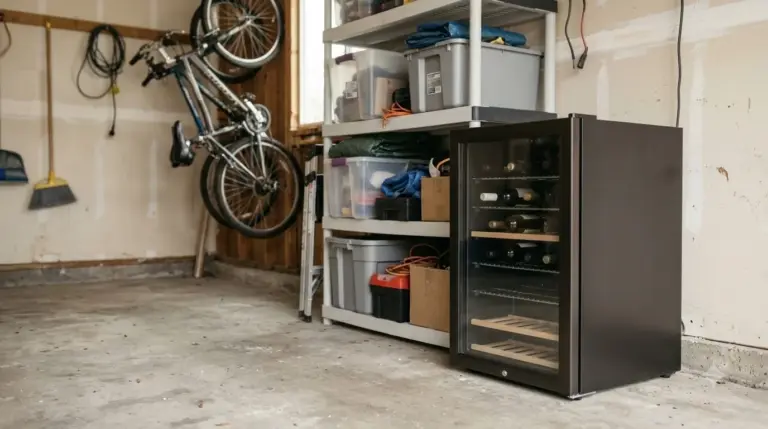
Keep in mind: You lose the visual appeal of viewing your collection through an illuminated glass door, and you will need to open the door to browse labels, though modern LED strip lighting illuminates the shelves quickly once opened. Most residential wine coolers still require ambient temperatures above 60°F to prevent over-chilling in unheated winter garages, so check the manufacturer’s climate class rating carefully. This option is best for collectors placing a high-capacity unit in a utility room, basement, sunroom, or climate-moderated garage where preservation matters more than display.
Best for Open-Concept Living Spaces: Freestanding Low-Noise Display Cabinets
Freestanding display cabinets combine whisper-quiet compressor engineering with furniture-grade glass doors and soft LED lighting to turn a 166-bottle collection into an architectural focal point.
Why it stands out: When a nearly six-foot-tall appliance sits in a dining room, open kitchen, or home lounge, acoustic comfort and visual polish matter just as much as thermal control. Low-decibel models rated at or below 39 to 40 dB use rubber-mounted compressors and slow-turning circulation fans so cycling noises blend naturally into household background sound. Rimless black glass, recessed handles, and customizable white or amber LED lighting showcase bottle labels cleanly without generating interior heat, while integrated security locks protect valuable bottles during gatherings.
Keep in mind: True freestanding models dissipate heat through their rear condenser coils and side walls, requiring two to five inches of open air space around the back, sides, and top to avoid overheating the compressor. They cannot be recessed tightly into cabinetry without risking premature component failure. This style is best for design-conscious buyers placing their cooler against an open wall in a dining area or living space where quiet operation and visual presentation are top priorities.
How to Choose
Selecting the right 166-bottle configuration starts with matching the appliance’s physical footprint and cooling architecture to your home and drinking habits. Before committing to a cabinet, evaluate these core factors:
- Measure the cutout and door swing: Most 166-bottle coolers measure roughly 23.5 to 24 inches wide, 26 to 28 inches deep, and 69 to 72 inches tall. Account for an extra two inches of depth for external handles, and verify that the door can swing open past 90 degrees so the telescopic shelves slide out freely.
- Match ventilation to installation: Choose a front-venting built-in model if the unit will sit inside cabinetry or tight against adjacent walls. Reserve rear-venting freestanding units for open floor space with generous airflow clearance.
- Check ambient temperature limits: Standard compressor wine coolers operate best in rooms between 60°F and 80°F, though heavy-duty models tolerate up to 90°F or 100°F. Avoid uninsulated basements or garages that drop below 55°F in winter unless the cabinet includes an internal heating element.
- Plan for real-world bottle sizing: If you are scaling up from a 16 bottle wine cooler or an entry-level 4 bottle wine cooler, remember that capacity ratings assume uniform 750ml Bordeaux bottles stacked neck-to-base. Exploring storage layouts by bottle count helps clarify how mixed bottle shapes and magnums affect actual shelf space.
- Look for protective hardware: Prioritize double- or triple-pane UV-resistant glass, activated charcoal odor filters, temperature memory after power outages, and an open-door alarm to safeguard your investment.
Tip: Let any compressor-driven 166-bottle wine cooler stand upright unplugged for at least 24 hours after delivery before turning it on; this allows internal lubricants displaced during shipping to settle back into the compressor and prevents premature mechanical wear.
Frequently Asked Questions
How many bottles does a 166-bottle wine cooler actually hold?
A 166-bottle rating reflects the maximum capacity using standard 750ml Bordeaux bottles stacked alternating neck-to-base across all shelves. In everyday use with mixed bottle shapes—such as wider Burgundy, Pinot Noir, Rhône, or Champagne bottles—you can realistically expect to fit between 120 and 145 bottles without forcing shelves or scraping labels.
Should I choose a single-zone or dual-zone 166-bottle wine cooler?
Choose a single-zone cooler if your primary goal is long-term aging, since both red and white wines mature best at a steady 55°F and a single compartment maximizes usable shelf space. Opt for a dual-zone model if you regularly entertain and want white wines chilled to 45°F–50°F while keeping reds ready to pour at 58°F–65°F.
Can a 166-bottle wine cooler be installed inside kitchen cabinetry?
Yes, provided you choose a front-venting built-in model that exhausts warm air through a grille at the bottom front plinth. Freestanding models vent from the back or sides and require several inches of open clearance, meaning enclosing them inside tight cabinetry will cause the compressor to overheat and fail.
How much wine does a 166-bottle cooler hold in cases and glasses?
At full capacity, 166 standard 750ml bottles equal just under 14 standard 12-bottle cases of wine. Since there are five standard five-ounce pours per bottle—a helpful baseline when calculating how many glasses in a bottle of wine—a full cabinet holds roughly 830 glasses ready for dinners, tastings, and cellar aging.
Whether you need a front-venting dual-zone cabinet for effortless entertaining or a rock-solid single-zone cellar for multi-year aging, a 166-bottle wine cooler gives your collection room to breathe without requiring a custom build-out. Measure your installation alcove carefully, account for the bottle shapes you buy most often, and select the cooling and door configuration tailored to your home’s environment.
More in By Bottle Count
 Best 52 Bottle Wine Fridge Options for Every Kitchen and CollectionUpdated Nov 18, 2026
 Best 15 Bottle Wine Fridge Options for Quiet Storage and Ready-to-Pour ServingUpdated Nov 18, 2026
 Best 34 Bottle Wine Cooler Types for Kitchens, Bars, and Home CellarsUpdated Nov 18, 2026
 Best 54 Bottle Wine Fridge Types for Undercounter and Home CellarsUpdated Nov 18, 2026
 Best 46 Bottle Dual Zone Wine Cooler for Built-In Kitchens and Home BarsUpdated Nov 19, 2026
 Best 28 Bottle Wine Fridge for Two Cases and Entertaining StockUpdated Nov 18, 2026