

We may earn a commission when you buy through links on this page, at no extra cost to you. Learn more.
The best lead free decanter is one whose maker states the lead content on the product page or packaging, with a shape that suits the wine you serve most often. Decanters are traditionally made from glass or crystal, and crystal has historically been made with lead. Many modern pieces are sold as lead-free crystal or plain glass, so the label is the first thing to check. Beyond materials, the right decanter depends on the size of the base, the width of the neck, and how easily it can be cleaned after a dinner.
A decanter does two jobs. It separates a wine from any sediment that has settled in the bottle, and it gives the wine more contact with air, which some people describe as letting it breathe. Opinions on how much a decanter improves a wine vary, but the vessel is still a useful serving piece. This guide focuses on the buying questions that matter most when the decanter is made without lead: the materials to look for, the shapes that work well, and the care each one needs.
Quick Comparison of Decanter Materials and Shapes
Decanters differ in three main ways: what they are made from, how much surface the wine touches, and how easy they are to clean. The table below compares the common options so you can narrow the list before reading the sections that follow. The ratings are general comparisons, not measurements, and the maker’s labeling should always be the final check on materials.
| Decanter type | Material note | Air contact | Cleaning | Best setting |
|---|---|---|---|---|
| Lead-free crystal | Stated as lead-free by the maker | Wide base gives more surface | Hand wash, soft brush | Dinner parties, gifts |
| Plain glass | No lead in the material | Varies by shape | Often simpler to clean | Everyday red wine |
| Hand-blown glass | Check the maker’s labeling | Irregular shape, good aeration | Takes more care | Display pieces, special bottles |
| Pressed glass | Usually plain glass | Narrow opening limits air | Easy to rinse | Casual use, sediment-free wines |
Best for Everyday Red Wine
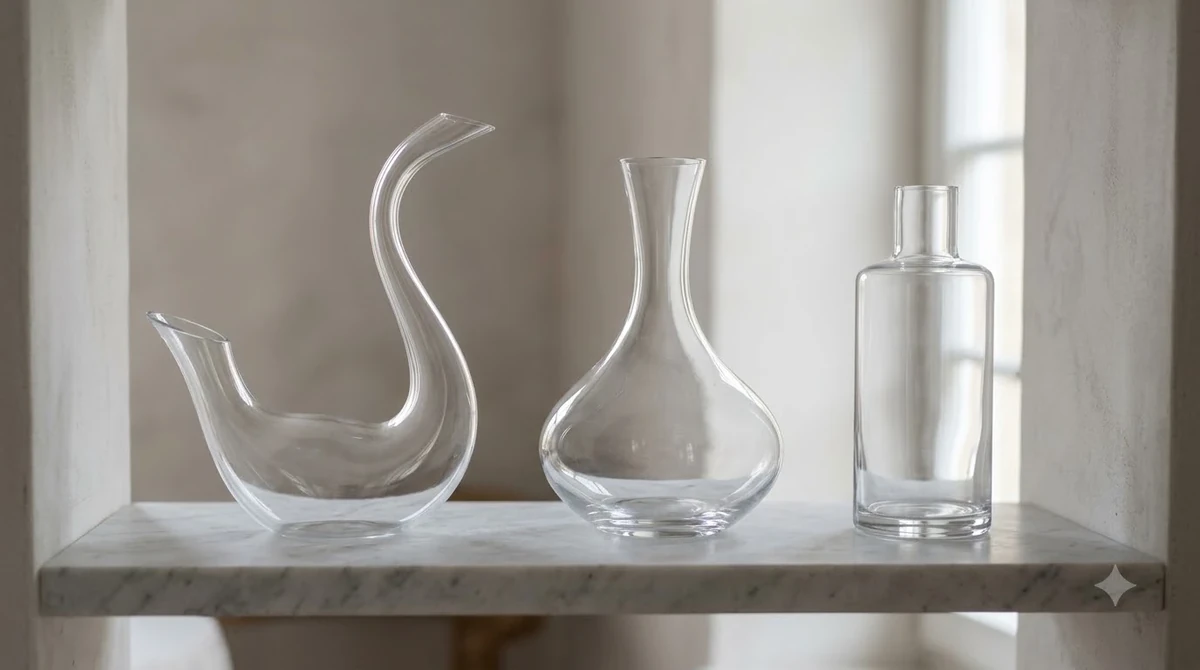
A simple decanter with a wide base is the most practical choice for a bottle of red wine opened at dinner. The broad bottom lets the wine spread out, which gives more surface for air to reach, and a smooth body is easy to pour from without spilling. For a weeknight bottle, the decanter does the job without asking much of the table.
This type stands out because it is straightforward to use. The wide base increases the surface area, and a plain body makes it easy to see the color of the wine. Plain glass is often the easiest material to live with, since it is light, simple to rinse, and less likely to be a concern when the label is not clear.
The trade-off is that a wide decanter takes up more room on the table and in the cupboard. Pouring slowly keeps the wine clear of sediment, and a decanter with a long neck can make pouring tricky if the wine is poured quickly. Keep an eye on the level, since a large base holds more wine than a narrow one.
Best for Dinner Parties and Gifts
For a dinner party or a gift, a lead-free crystal decanter adds visual weight to the table. Crystal catches the light and makes a red or white wine look more special when it is poured. It suits a host who wants the decanter to be part of the presentation, and it works well as a present for someone who enjoys formal dinners.
Crystal stands out for presentation. Its clarity shows the color of the wine, and a well-cut body feels substantial in the hand. When the label states that the piece is lead-free, the buyer can choose the look of crystal without guessing about the material. Many people also like to match the decanter to a set of glasses for a coordinated table.
Crystal needs more care than plain glass. Hand washing with a soft brush is usually recommended, and the piece should dry fully before it is stored. The price and finish vary widely, so compare the product details rather than assuming a heavier piece is better. Check the packaging for a clear lead-free statement before purchase.
Best for Older Bottles with Sediment
Older bottles often throw sediment, the natural deposits that form as wine ages. A decanter helps here because the wine can be poured slowly into a clear vessel, leaving the sediment behind in the bottle. For this job, a decanter with a moderate base and a neck that pours steadily is more useful than a very wide piece.
The main advantage of a simple, clear decanter is that sediment is easy to see. Plain glass or clear crystal lets you watch the wine as it moves, so you can stop pouring when the cloudy part reaches the neck. Decanting in this way is one of the traditional uses of the vessel, and the decanter’s clarity makes the process easier to control.
Sediment pours need patience, and a decanter with a narrow neck can make the job slower. Use a light source behind the bottle, pour in one steady stream, and keep the bottle steady on the table. A decanter that is too large for the bottle can also make it harder to tell when the sediment is near the neck.

Best for Small Kitchens and Apartments
A compact decanter suits a small kitchen or apartment, where storage space is limited. A narrower body and a modest capacity take up less shelf room, and the piece can stay on a counter or in a cabinet between uses without crowding other items. It is a practical option for a household that drinks wine a few evenings a week rather than hosting often.
Compact decanters are easy to store and quick to rinse. They suit a single bottle at a time, and the smaller surface area makes cleaning less of a chore. Their lighter weight also makes them easier to lift and pour from, which helps for people who prefer a relaxed pour at the table.
The trade-off is that a small decanter may not hold a full bottle of wine comfortably, and a narrow shape gives less air contact than a wide one. If you plan to aerate a wine for longer, a larger base is the better choice. Check the capacity before buying so that it fits the bottles you open most often.
Best for Easy Cleaning and Daily Use
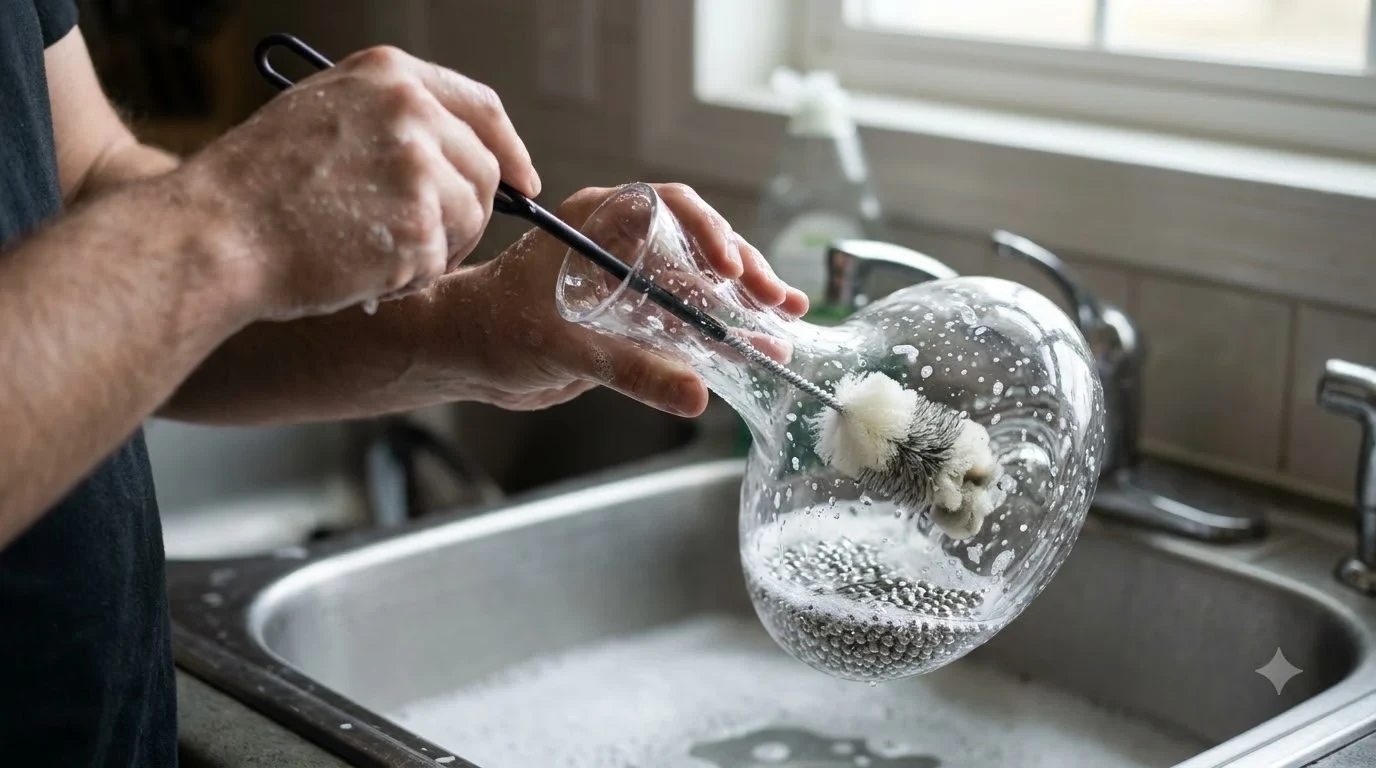
Some buyers want a decanter that can be cleaned quickly after each meal, without a long soak or a special brush. A smooth glass piece with a wide opening is the easiest to reach, and a plain body avoids the tight corners where residue can collect. This type suits busy households and everyday red or white wines.
Plain glass decanters are easy to clean because a bottle brush or a soft sponge can reach the bottom and walls without trouble. Their smooth surfaces show residue clearly, so it is easy to tell when the piece is fully rinsed. For frequent use, that simplicity matters more than an elaborate design.
Check the maker’s care instructions before buying, especially for any piece with decorative cuts or a narrow neck. Some decanters are not suited to a dishwasher, and drying them upside down on a towel is a common practice that helps prevent water spots. A plain shape can look understated on the table, but it is practical for daily use.
How to Choose a Lead Free Decanter
Start with the label. A decanter sold as lead-free should say so clearly on the product page or the packaging, and the maker should describe the material in plain terms. If that information is missing or vague, it is reasonable to look for a different piece. After the material is confirmed, the shape, size, and cleaning needs decide which decanter fits your table.
- Material: look for a clear lead-free statement, then choose between crystal and plain glass.
- Base width: a wide base gives more air contact, while a narrow body is easier to store.
- Neck shape: a steady pouring neck helps keep sediment in the bottle.
- Capacity: match the size to the bottles you open most often.
- Cleaning: plain shapes are easier to clean than heavily cut or narrow designs.
Think about the set you already own as well. A decanter that matches your glasses and serving pieces tends to get used more often. The wine decanter guide compares more shapes, and the Decanter article on Wikipedia describes how decanting separates sediment and gives wine air, which helps explain why the shape matters.
Tip: Rinse a new decanter with warm water and let it dry fully before the first use. Store it upright with the stopper or cover off, so air can circulate and no odor builds up.
Frequently Asked Questions
How can I tell if a decanter is lead-free?
Look for a clear lead-free statement on the product page or packaging. If the maker describes the material only as crystal or glass without saying anything about lead, ask for the details before buying.
Is plain glass a good alternative to crystal?
Yes, plain glass is a practical choice for everyday use. It is easy to clean, simple to see through, and suits red wine served at dinner. Crystal adds visual weight for presentation, so the choice often comes down to how the decanter will be used.
How long can wine stay in a decanter?
Wine should be poured and enjoyed within a few hours, because it changes as it meets air. Decanting is usually done shortly before serving, rather than hours ahead. The how long does red wine last after opening guide covers storage in more detail.
Should I decant every bottle of wine?
No. Decanting is most useful for wines with sediment or for bottles that benefit from air. Many everyday wines are fine poured straight from the bottle, and the decision can depend on the wine and on what you enjoy.
Once you have chosen the material and shape, the next step is to plan the rest of the serving setup. The Aerators & Decanters section lists related pieces, and the decanter set guide shows how a decanter can be paired with glasses for a complete table.
More in Decanters & Aerators
 Best Whiskey and Wine Decanter: Choosing One Vessel for Both DrinksUpdated Nov 18, 2026
 Best Tower Decanter: How to Pick the Right Shape for Your WineUpdated Nov 18, 2026
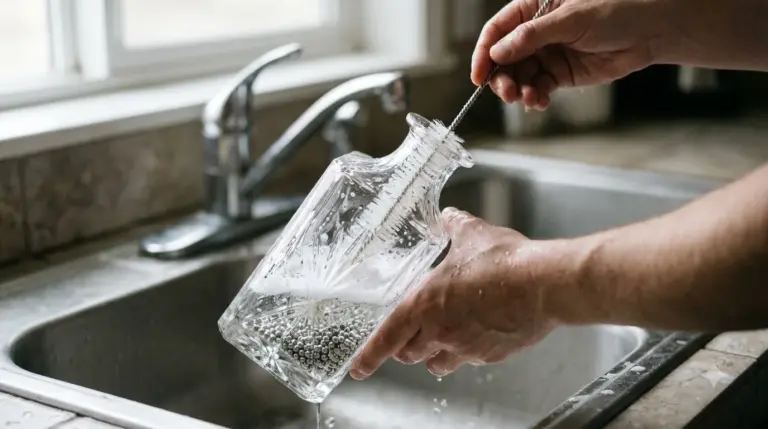 Best Cleaning Brush Decanter Options for Narrow Necks and Deep BowlsUpdated Nov 19, 2026
 Best U Shaped Decanter Picks for Aerating Bold Red WineUpdated Nov 18, 2026
 Best Electric Decanter Styles for Faster, Smoother Wine PoursUpdated Nov 18, 2026
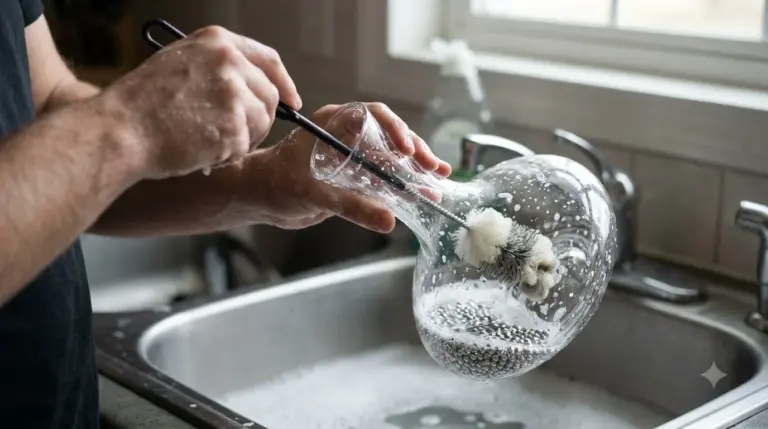 Best Hand Blown Decanter Styles for Every Bottle and TableUpdated Nov 18, 2026