

We may earn a commission when you buy through links on this page, at no extra cost to you. Learn more.
Is cheap wine bad? No, inexpensive wine is not automatically bad, and many affordable bottles offer enjoyable fruit, balanced acidity, and reliable quality. Lower prices often reflect production volume, vineyard location, labor expenses, packaging, and marketing rather than a fundamental problem with the wine. The key is knowing how to recognize a well-made everyday bottle and understanding which compromises matter to your preferences.
Wine shopping can make price seem like a quality ranking. Expensive bottles often have more elaborate labels, heavier glass, famous vineyard names, and stories about extended aging. Meanwhile, an affordable bottle might have a simple label and a familiar grape variety. Those differences can influence expectations, but they do not tell the whole story. A good everyday wine does not need a famous appellation, expensive oak barrels, or decades of aging. It needs clean winemaking, appealing flavors, and enough balance to make the next glass enjoyable. Understanding how producers control costs makes it easier to find wines that deliver genuine value without paying for features you do not need.
Who This Is For
Affordable wine makes sense for people who want an enjoyable bottle without treating every purchase as a special occasion. The best inexpensive choices depend on drinking habits, preferred wine styles, food pairings, and how much complexity a drinker expects.
Everyday wine drinkers are the most obvious audience. If a bottle will accompany Tuesday-night pasta, casual pizza, grilled chicken, or a relaxed dinner with friends, it may not need the depth or aging potential of a prestigious wine. A fresh Sauvignon Blanc, fruit-forward Merlot, or uncomplicated Spanish red can provide everything the occasion requires. Paying extra for a collectible bottle makes little sense if the goal is simply to enjoy dinner.
New wine drinkers can also benefit from starting with affordable bottles. Trying several grape varieties and regions helps establish preferences without committing to expensive purchases. Someone who discovers a preference for crisp whites might explore Sauvignon Blanc from Chile, Portugal’s Vinho Verde, and Spanish Albariño before deciding whether a more expensive bottle offers something worthwhile.
Hosts planning larger gatherings have another reason to consider value wines. Serving a consistent, approachable bottle to several guests is often more practical than spending heavily on a prestige label. A simple, fruit-forward wine can appeal to a broad range of palates, especially when served at an appropriate temperature and alongside suitable food.
However, inexpensive wine is not always the right choice. Collectors seeking complex aromas, distinctive vineyard character, careful oak integration, or long-term aging potential may find that higher production costs are justified. A bottle intended for a milestone anniversary or a special tasting may deserve a different buying strategy from a wine intended for immediate consumption.
The important distinction is between price and purpose. An inexpensive bottle can be excellent at being an inexpensive everyday wine without reproducing the complexity of a much more expensive bottle. That is a reasonable difference, not evidence that the cheaper wine is defective.
Key Factors to Compare
The most useful way to evaluate inexpensive wine is to compare what is inside the bottle rather than relying on its shelf position. Grape variety, region, production scale, sweetness, acidity, and packaging provide more practical clues than price alone.
| Factor | What to Look For | Why It Matters |
|---|---|---|
| Grape variety | Carménère, Primitivo, Merlot, Sauvignon Blanc | Some varieties offer approachable flavors without expensive production. |
| Region | Chile, Spain, Portugal, Argentina | Production costs and regional reputation can influence retail prices. |
| Production scale | Established commercial producers | Large volumes can spread fixed costs across more bottles. |
| Acidity | Freshness and lively fruit | Helps wine remain balanced and refreshing. |
| Tannin | Appropriate structure for the grape | Prevents red wine from feeling excessively harsh or drying. |
| Sweetness | Dry, off-dry, or sweet according to preference | Determines how the wine tastes and pairs with food. |
| Packaging | Glass bottles, cartons, or cans | Packaging costs do not directly determine wine quality. |
| Intended use | Immediate drinking or aging | Most affordable everyday wines are designed for early enjoyment. |
Region is one of the strongest starting points. Wine Folly recommends exploring Spain, Chile, and Portugal because these countries offer opportunities to find wines without the same prestige-related costs associated with some famous regions. A bottle from a less fashionable appellation can deliver enjoyable fruit and balance without carrying the premium associated with a celebrated vineyard name.
Grape variety is another useful filter. Carménère from Chile, Primitivo from southern Italy, Tannat from Uruguay, and Bobal from Spain are examples of varieties worth exploring. They offer alternatives to the familiar Cabernet Sauvignon and Chardonnay categories, where shoppers may encounter considerable variation in price depending on the region and producer.
Production scale also deserves attention. A winery making substantial quantities of wine can spread equipment expenses, bottling costs, and facility overhead across more bottles. That efficiency can lower the final price without requiring the producer to abandon basic quality control. Large-scale production is a business decision, not proof of careless winemaking.
Packaging is a particularly misleading factor. A heavy glass bottle, elaborate label, or decorative closure may make a wine appear premium, but these features do not establish that the wine tastes better. Wine Enthusiast explains that packaging materials contribute to production expenses, particularly at lower price points. A straightforward bottle can leave more room in the production budget for the wine itself.
Finally, consider balance. A red wine should not taste excessively bitter, harsh, or hot from alcohol. A white wine should retain freshness rather than tasting flat or unpleasantly sweet. A wine does not need extraordinary complexity to be well made, but its components should work together.
For a broader understanding of wine quality and drinking decisions, the Wine Q&A and wine basics section provides a useful starting point for exploring grapes, styles, and common wine terminology.
Step-by-Step: How to Find Good Affordable Wine
Finding an enjoyable inexpensive bottle becomes easier with a repeatable shopping process. Start with a preferred style, look beyond famous regions, compare producers, and evaluate the wine according to its intended use rather than its price alone.
- Decide whether you want red, white, rosé, or sparkling wine. Begin with the style you already enjoy. If crisp white wine is your preference, there is little reason to buy a heavily oaked red simply because it appears inexpensive. Matching the category to your taste reduces unnecessary experimentation.
- Choose a grape variety or flavor profile. For fresh white wines, consider Sauvignon Blanc, Riesling, or Pinot Grigio. For softer reds, explore Merlot or Pinot Noir. If you prefer fuller-bodied reds, try Syrah or Primitivo. This provides a useful starting point before comparing individual labels.
- Look beyond famous wine regions. Consider Chile, Portugal, Spain, Argentina, and other established producing countries. Their less prestigious regions may offer attractive combinations of grape quality, production experience, and competitive costs.
- Research the producer. Look for a recognizable winery with a consistent approach to its everyday wines. Established commercial producers can have the equipment, sourcing relationships, and technical expertise required to make dependable wines at scale.
- Read the product description carefully. Look for information about sweetness, acidity, body, grape composition, and production style. A description that identifies fresh citrus, green apple, and high acidity suggests a different drinking experience from one emphasizing ripe peach, tropical fruit, and residual sweetness.
- Match the wine to the occasion. Choose a refreshing white for seafood, a medium-bodied red for pasta, or a fruit-forward rosé for casual gatherings. The best bottle is one that suits the meal and the people drinking it.
- Compare more than one bottle over time. Keep track of producers, grapes, and regions you enjoy. If a particular Spanish red works well with dinner, exploring another bottle from the same region can be more productive than selecting a random label.
- Serve it correctly. Chill white wine and rosé appropriately, and avoid serving red wine excessively warm. Proper serving conditions can make an inexpensive bottle taste more balanced and expressive.
A useful shopping habit is to ask a wine retailer for an inexpensive bottle with a particular flavor profile instead of simply asking for the cheapest wine available. For example, requesting a dry, medium-bodied red with moderate tannins gives the retailer a much clearer target. The same approach works for whites: asking for a crisp, citrus-driven wine with refreshing acidity narrows the options considerably.
For additional context on how production costs and regional differences influence what ends up in a bottle, read Wine Enthusiast’s explanation of what wine prices actually represent. It discusses vineyard location, labor, equipment, aging, vintage conditions, and packaging rather than treating price as a simple quality score.
Tip: Keep a short note on the grape, region, producer, and sweetness of wines you enjoy. Remembering those four details makes repeat purchases much easier and helps you discover similar bottles without relying on expensive labels.
Types or Styles Explained
Affordable wines cover nearly every major category, but some styles are particularly suitable for straightforward, early drinking. Understanding their characteristics helps shoppers choose bottles that provide the desired flavor without paying for unnecessary aging or production features.

Fresh, unoaked white wines
Sauvignon Blanc, Pinot Grigio, and many Portuguese white blends are practical choices for people who prefer freshness. These wines generally emphasize fruit, acidity, and easy drinking rather than extended barrel aging. Chilean Sauvignon Blanc can show citrus and herbal notes, while Italian Pinot Grigio often offers light citrus and subtle orchard-fruit flavors.
These wines work particularly well with salads, grilled fish, shellfish, and lighter meals. Sauvignon Blanc has high acidity, which helps it pair with acidic dishes such as salads dressed with lemon. The important point is freshness and balance, not whether the bottle comes from a famous vineyard.
Fruit-forward red wines
Merlot, Primitivo, and many approachable red blends are useful options for shoppers who want generous fruit flavors without an elaborate structure. Merlot typically has medium tannin and a softer profile than Cabernet Sauvignon, making it a practical choice for casual dinners.
Primitivo can offer ripe dark-fruit flavors and a fuller impression, while some inexpensive red blends emphasize smoothness and immediate accessibility. These styles can accompany burgers, tomato-based pasta, roasted vegetables, and grilled meats. However, sweetness and alcohol levels vary, so the overall balance remains important.
Light-bodied reds
Pinot Noir and lighter styles of Spanish Garnacha can provide freshness without the heavier tannins associated with Cabernet Sauvignon or Syrah. Pinot Noir generally has low-to-medium tannin and high acidity, making it suitable for roast chicken, mushrooms, and salmon.
Not every affordable Pinot Noir will have the same concentration or complexity as a more expensive example. However, a clean, fruit-driven version can still be enjoyable, especially when served slightly cool. A serving temperature of 55 to 60 degrees Fahrenheit is a useful range for lighter reds.
Rosé and sparkling wines
Affordable rosé can be an especially practical choice for warm-weather meals and informal gatherings. Dry rosé styles often combine refreshing acidity with strawberry, citrus, and melon flavors. They can accompany grilled vegetables, chicken, seafood, and lighter appetizers.
Inexpensive sparkling wine can also be worthwhile. Prosecco, made primarily from Glera and generally using the tank method, offers a different production approach from Champagne and traditional-method Cava. Champagne and Cava undergo their second fermentation in the bottle, which contributes to production complexity. Prosecco can therefore provide a more accessible sparkling style for occasions where elaborate bottle aging is unnecessary.
Sweetness terminology matters when comparing sparkling bottles. Brut Nature, Extra Brut, Brut, Extra Dry, Dry, Demi-Sec, and Doux describe a progression from drier to sweeter styles. Extra Dry is sweeter than Brut, despite the name. Understanding these terms helps shoppers select a bottle that matches their preference rather than assuming every inexpensive sparkling wine tastes alike.
Bulk-produced and alternative-packaged wines
Bulk-produced wine is frequently misunderstood. Large-scale production can involve carefully controlled fermentation, filtration, blending, and packaging. Automation can help producers maintain consistency across substantial volumes, and a high production quantity does not automatically mean that the finished wine is defective.
Alternative packaging also deserves consideration. Wine sold in cartons or cans may have lower packaging and transportation costs than traditional glass bottles. Wine Folly specifically identifies Tetra Pak packaging as an option worth investigating for affordable wine. These formats are particularly suitable for fresh wines intended for relatively early consumption rather than extended bottle aging.
The Wine Folly guide to buying good inexpensive wine also recommends considering lesser-known grapes and value-oriented regions rather than restricting shopping to familiar varieties and prestigious appellations.
Common Mistakes
Many disappointing wine purchases come from incorrect expectations rather than the price itself. Avoiding a few common assumptions can make inexpensive wine shopping more predictable and help distinguish ordinary stylistic differences from genuine quality problems.
Assuming expensive always means better
Price can reflect expensive land, skilled labor, small production quantities, oak aging, storage, packaging, and brand reputation. These expenses can support higher-quality production, but they do not guarantee that every consumer will enjoy the result more.
A premium Napa Valley Cabernet Sauvignon and an inexpensive Chilean Cabernet Sauvignon may have different levels of concentration, structure, and aging potential. That does not automatically make the less expensive bottle unsuitable for a casual dinner. The two wines may simply serve different purposes.
Assuming bulk production means poor quality
Large producers can use advanced equipment and controlled production methods to make consistent wines. The ability to distribute fixed costs across many bottles can reduce expenses without eliminating attention to fermentation, blending, or quality control.
Bulk production does create limitations in some cases. A high-volume wine may prioritize consistency and broad appeal over distinctive vineyard expression. It may also have less concentration or complexity than a wine produced from carefully selected, lower-yielding vineyards. Those differences are not the same as spoilage or a winemaking fault.
Judging wine by its packaging
A heavy bottle does not prove that its contents are better. Elaborate labels, expensive closures, decorative boxes, and unusually thick glass all contribute to a product’s presentation. They may communicate a premium image, but they are not direct evidence of flavor quality.
Simple packaging can be entirely appropriate for wine intended to be enjoyed young. The money saved on elaborate presentation may contribute to a more competitive final product. Focus on the producer, grape, region, and style instead of using bottle weight as a quality test.
Confusing fruitiness with poor quality
Some inexpensive wines are deliberately fruit-forward and approachable. A red wine with ripe cherry, plum, or blackberry flavors is not automatically inferior to a more restrained bottle with earthy or savory aromas. Likewise, a slightly sweet white wine is not necessarily badly made.
The useful distinction is balance. Residual sugar should fit the wine’s acidity and overall style. Excessive sweetness without enough freshness can make a wine feel heavy, while a naturally fruit-driven wine can still taste lively and pleasant.
Buying according to reputation alone
Famous grape varieties and regions can attract premium pricing because of reputation and demand. Cabernet Sauvignon from Napa Valley, Pinot Noir from Burgundy, and Champagne from France all carry strong associations with particular places and styles.
However, a less familiar region may offer better value for the same general drinking purpose. Exploring Carménère from Chile, Bobal from Spain, or Portuguese blends can reveal enjoyable alternatives without requiring shoppers to pay for an established luxury image.
Expecting every inexpensive bottle to improve with age
Most affordable everyday wines are made for relatively early drinking. They are designed to deliver fresh fruit and straightforward enjoyment rather than evolve over many years in a cellar.
Buying a case of inexpensive wine for long-term storage is therefore not automatically a good investment. A wine that tastes fresh and balanced shortly after release may gradually lose the qualities that made it appealing. Ageability depends on the wine’s structure, acidity, tannin, concentration, and production approach, not simply on whether it is red or expensive.
Care and Storage Tips
Correct storage and serving conditions matter for affordable wines just as much as they do for premium bottles. Heat, light, oxygen, and inappropriate serving temperatures can reduce freshness and make a perfectly sound inexpensive wine less enjoyable.
For unopened bottles, a cool, dark, stable environment is preferable. A temperature near 55 degrees Fahrenheit is a useful storage target. Bottles with traditional cork closures should generally be stored on their sides to help keep the cork from drying out. Avoid placing wine near ovens, sunny windows, radiators, or other sources of heat.
Temperature fluctuations can be particularly unhelpful. A bottle repeatedly exposed to warm conditions may develop unwanted cooked-fruit or oxidized characteristics. A cupboard away from direct sunlight can be suitable for short-term storage, although it is not a substitute for a temperature-controlled wine storage space when bottles are being kept for extended periods.
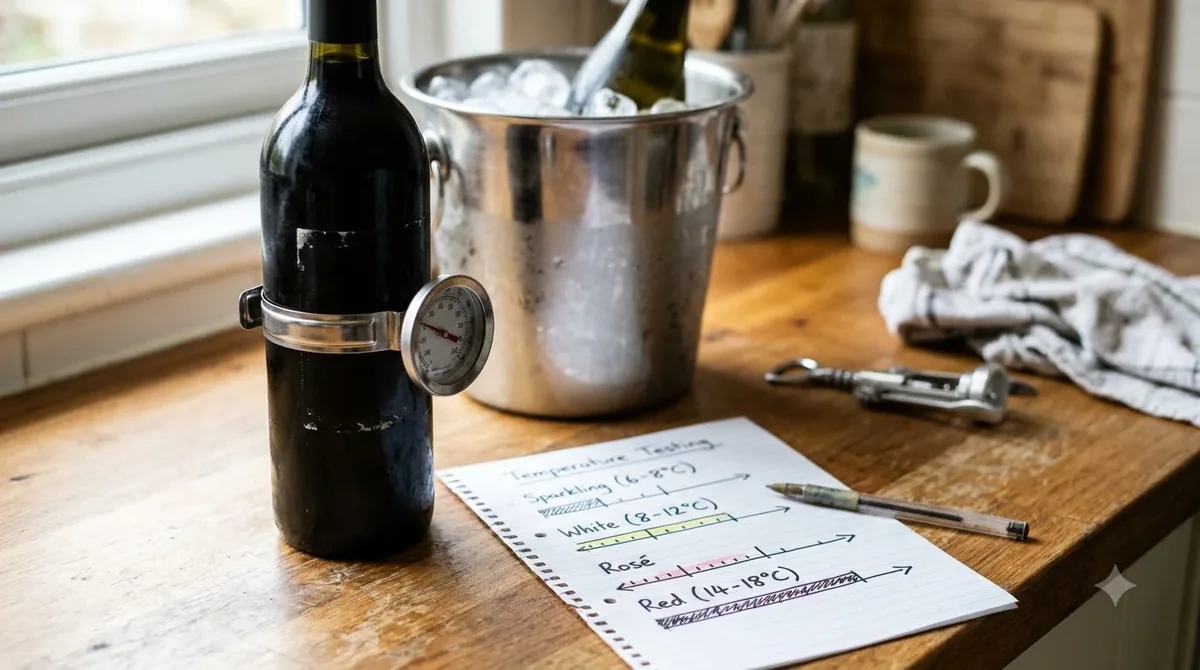
Serving temperature also changes how wine tastes. White wine served too warm can seem heavy, while very cold temperatures can suppress aromas. Red wine served in a hot room may emphasize alcohol and reduce the impression of freshness.
| Wine Style | Suggested Serving Temperature | Practical Approach |
|---|---|---|
| Sparkling wine | 40–50°F | Chill before opening. |
| Light white wine | 45–50°F | Serve chilled but not excessively cold. |
| Rosé | 45–50°F | Keep refrigerated until serving. |
| Full-bodied white wine | 50–55°F | Allow slightly warmer serving. |
| Light red wine | 55–60°F | Serve slightly cooler than a warm room. |
| Full-bodied red wine | 60–65°F | Avoid excessive warmth. |
| Sweet white wine | 43–50°F | Serve well chilled. |
After opening, refrigerate leftover wine and replace the closure to limit oxygen exposure. As a general guideline, sparkling wines retain their best qualities for approximately one to three days, still wines for three to five days, and fortified wines for several weeks. Bag-in-box wines can remain usable for approximately four to six weeks after opening, depending on the packaging system and storage conditions.
These are practical quality windows rather than guarantees. Wine can deteriorate faster if left warm or exposed to substantial oxygen. Pay attention to changes in aroma, flavor, and appearance before deciding whether a remaining portion is still enjoyable.
There is also no reason to decant every inexpensive red wine. Young, full-bodied reds may benefit from 30 to 60 minutes of aeration, but lighter, fruit-forward wines often need little or no decanting. A short period in a glass may be enough to let aromas develop.
For sparkling wine, use a suitable sparkling-wine stopper if the bottle will be kept for another day. A regular cork is not designed to recreate the original seal. If the wine loses its bubbles, it may still be usable in cooking, although its drinking experience will be different.
Storage problems can affect inexpensive and expensive bottles alike. If a wine develops an unpleasant vinegar-like smell, stale or oxidized flavors, or other unusual characteristics, the cause may be poor storage or a bottle fault rather than the original retail price. The same applies to sparkling wine; learning how to tell if champagne is bad helps distinguish normal changes from signs that a bottle has deteriorated.
Frequently Asked Questions
Can inexpensive wine be used for cooking?
Yes. Dry inexpensive wine can work well in sauces, risotto, braised dishes, and pan reductions. Choose a clean wine with a flavor profile that complements the recipe rather than using a bottle with obvious spoilage or unpleasant aromas.
Does a screw cap mean that a wine is low quality?
No. Screw caps are legitimate wine closures used for wines across different quality levels. They can provide a consistent seal and reduce the risk of cork-related faults, making them practical for wines intended to retain fresh fruit character.
Does cheap wine contain more added sugar than expensive wine?
Not necessarily. Residual sugar depends on the wine’s production style and fermentation decisions rather than its price alone. Dry and sweet wines exist at many price levels, so shoppers should compare sweetness information instead of assuming that a low-cost bottle contains more sugar.
Can an inexpensive wine be served at a formal dinner?
Yes. A well-selected wine can suit a formal dinner even if it is inexpensive. Matching the wine to the menu, using appropriate glassware, and serving it at the right temperature can make a noticeable difference to the overall presentation.
Can an inexpensive wine be stored for several years?
Some affordable wines can hold their quality for a few years, but most everyday commercial wines are intended for relatively early consumption. Certain high-acidity Rieslings and structured red wines may have better aging potential than simple fresh-fruit styles, depending on their specific production and structure.
Cheap wine is not automatically bad wine. By exploring value-oriented regions, considering lesser-known grapes, and focusing on balance rather than packaging or prestige, shoppers can find enjoyable bottles for everyday meals and gatherings. The smartest purchase is the wine that matches personal taste, the occasion, and the experience expected from the bottle.
More in Wine Basics
 Which Rose Is Best for Your Taste, Budget, and Food PairingsUpdated Nov 21, 2026
 What To Write On A Wine Gift Tag: Thoughtful Messages For Every OccasionUpdated Nov 21, 2026
 Which Wine Is Best For Weight Loss? Compare Lower-Calorie ChoicesUpdated Nov 21, 2026
 What Is The Best Wine For Mimosas? Choose Bubbly That Balances Orange JuiceUpdated Nov 20, 2026
 Which Prosecco Is Best for Your Taste and OccasionUpdated Nov 20, 2026
 Which Wine Is Best For Health? Understand the Risks and BenefitsUpdated Nov 20, 2026