

We may earn a commission when you buy through links on this page, at no extra cost to you. Learn more.
The Hamilton Beach wine chiller is a compact option for households that want countertop wine storage for up to six bottles without buying a full-size refrigerator. Its thermoelectric cooling system, digital temperature controls, and glass display door make it appealing for casual wine drinkers with limited space. However, ambient temperature can affect cooling performance, and its small capacity makes it unsuitable for larger collections or serious long-term cellaring.
Hamilton Beach wine coolers are available under several model numbers, so buyers should distinguish the six-bottle countertop appliances from larger wine and beverage refrigerators and older wine-serving accessories. This review focuses on the compact six-bottle refrigerator category, particularly the HBWF6035 specification and related Hamilton Beach six-bottle documentation. Model differences matter because capacity, temperature range, dimensions, and power requirements are not necessarily identical across products carrying the same brand name.
Specs and Key Features of the Hamilton Beach Six-Bottle Cooler
The Hamilton Beach six-bottle wine chiller is designed around compact storage rather than a large wine collection. Its main attractions are a small footprint, thermoelectric cooling, electronic temperature adjustment, and a glass door that makes the bottles visible without opening the cabinet.
The HBWF6035 product specification identifies a 13-liter interior with room for up to six standard-sized wine bottles. Its freestanding design makes it appropriate for a kitchen counter, home bar, or other suitable surface. Touchscreen controls and a digital display simplify temperature adjustments compared with appliances that rely on a basic mechanical dial.
One important distinction concerns the documentation for different six-bottle models. The HBWF6035 specification gives a 10–15°C operating range, while another Hamilton Beach user guide covering the HBWF6035-PL/HBWF6035 identifies a 57–68°F range. These published figures should not be combined into one guaranteed operating range. Buyers should verify the precise model and its supplied documentation before relying on a particular temperature setting.
| Specification | Published information |
|---|---|
| Brand | Hamilton Beach |
| Featured model | HBWF6035 |
| Capacity | Up to 6 standard wine bottles |
| Interior volume | 13 liters |
| Cooling technology | Thermoelectric |
| Temperature range | 10–15°C in the product specification |
| Controls | Touchscreen and digital display |
| Door | Glass |
| Power specification | 24–30 watts rated power |
| Adapter voltage | DC 12V |
| Installation | Freestanding |
These specifications make the appliance more appropriate for maintaining a small collection at a convenient drinking temperature than for storing valuable bottles over many years. A six-bottle cabinet is also a different purchase from a traditional wine cellar refrigerator, which generally offers more capacity and greater flexibility for organizing bottles by grape variety, region, and drinking date.
The HBWF6035 documentation also describes a cooling semiconductor and fan. Thermoelectric systems avoid the compressor-based mechanism found in conventional refrigerators, but they still require air circulation. A fan-based cooling arrangement should not be mistaken for a completely silent appliance.
Another useful distinction is the difference between the HBWF6035 specification and the separate 16-liter Hamilton Beach guide. That guide describes three removable curved steel racks, a drip tray, and dimensions of 17.9 x 9.76 x 14.56 inches. Those details should only be applied to the guide-covered version, not automatically assumed to describe every Hamilton Beach six-bottle model.
For an additional comparison, the retailer listing for the Hamilton Beach HMB10860 identifies a 13-liter capacity, touchscreen controls, blue LED lighting, and dimensions of 19 x 11 x 16 inches. The Hamilton Beach HMB10860 product listing illustrates why the model number deserves attention before purchasing.
What Owners Like About the Compact Design and Cooling
The main appeal of the Hamilton Beach six-bottle format is convenience. It offers a dedicated location for a small selection of wine without requiring the floor space or installation planning associated with a larger beverage refrigerator.

A compact cabinet can be particularly useful for people who normally keep only a few bottles available for dinner, weekend entertaining, or occasional wine nights. Rather than filling a large refrigerator shelf with bottles, the owner can keep a small assortment together in a dedicated appliance. The glass door also makes it easier to see what is available before opening it.
The digital display is another practical advantage. Temperature controls provide a more direct way to adjust the cabinet than simply estimating how cold the interior feels. The ability to change settings is useful when the cooler is used for different wine styles, although the actual temperature achieved depends on the model and its surroundings.
Thermoelectric cooling also has some practical advantages. The technology does not use the same compressor mechanism as a conventional refrigerator, and the manufacturer specification describes the system as providing cooling without vibration. This can appeal to people who prefer a smaller appliance for a home bar or countertop.
The compact format also encourages sensible collection management. Six bottles are enough for a modest selection containing a sparkling wine, a white wine, a rosé, and a few reds. Owners who buy wine for immediate or near-term enjoyment may find this more useful than a large cabinet with empty shelves.
Display and everyday accessibility
The glass door gives the appliance a more deliberate wine-storage appearance than a plain opaque cabinet. Blue LED lighting is also identified in the retailer listing for the HMB10860. Interior lighting can make it easier to identify bottles, particularly in a dimly lit bar area.
However, appearance should remain secondary to storage performance. A glass door and illuminated display do not guarantee that the cabinet maintains an ideal wine temperature. The actual temperature, room conditions, ventilation, and bottle fit matter more than the visual presentation.
How the six-bottle capacity helps
Six bottles represent a manageable amount for a household that does not regularly entertain large groups. A standard 750 ml bottle contains approximately five 5-ounce glasses, so a fully stocked six-bottle cooler represents roughly 30 standard servings.
That capacity can support a small dinner gathering or a few days of varied drinking choices. It is less useful for anyone who purchases cases, collects wines from several regions, or wants separate storage zones for reds and whites.
People who want wine accessories together can also browse the broader Accessory Brands category when comparing equipment for a home bar. A compact refrigerator is only one part of a useful serving setup; appropriate glassware, openers, and storage arrangements also contribute to convenience.
Common Complaints and Cooling Limitations
The biggest limitation of a thermoelectric wine chiller is its dependence on surrounding conditions. A compact unit may struggle to achieve its selected temperature when installed in a particularly warm room, especially if the ventilation openings are obstructed.
The Hamilton Beach user guide specifically explains that its thermoelectric cooling system is not a compressor system and that the internal temperature may not reach the selected setting when ambient temperatures are too high. This is an important qualification for buyers who expect refrigerator-like performance regardless of the room environment.
For example, a cooler installed beside an oven, in direct sunlight, or in a poorly ventilated entertainment cabinet faces less favorable conditions than one placed in a temperature-controlled room. The difference between the selected temperature and the actual internal temperature may become more noticeable during hot weather.
Another consideration is bottle compatibility. The advertised six-bottle capacity refers to standard-sized bottles, not every possible wine bottle shape. Sparkling wine and Champagne bottles can be wider than conventional Bordeaux-style bottles. Some Chardonnay bottles and other broad-shouldered designs may also take up more room.
Owners should therefore avoid assuming that six bottles of every wine style will fit comfortably. A cabinet that accommodates six standard bottles may have a lower practical capacity when filled with wider bottles. If the intended collection includes sparkling wines, specialty bottles, or large formats, internal shelf spacing should be checked carefully.
Temperature consistency and fan noise
Thermoelectric cooling requires airflow, and the fan contributes to the operating noise. Although the technology avoids compressor operation, it does not eliminate every mechanical sound. People placing the cooler in a quiet bedroom, office, or small apartment should consider this before making a purchase.
Temperature stability is another concern. A digital display communicates a setting or temperature reading, but buyers should not automatically assume that the entire cabinet remains at precisely the same temperature at every moment. Room temperature, ventilation, door openings, and the number of bottles inside can influence cooling behavior.
For owners who want more dependable temperature management, checking the interior with a separate refrigerator thermometer can help identify whether the cabinet is operating within its expected range. This is especially useful when the cooler is being used for white wine or sparkling wine that needs relatively cool serving conditions.
Understanding retailer feedback
Wayfair’s customer feedback for the related HMB10860 six-bottle model includes both positive and negative experiences. Some customers appreciate the compact appearance, while others report concerns about insufficient cooling, tight bottle spacing, and noise. These comments are useful signals, but they are not controlled performance tests and should not be treated as proof that every unit will behave identically.
There is also a distinction between a complaint about cooling and a complaint about capacity. A cooler may operate normally while still being unsuitable for bottles with wider dimensions. Similarly, an owner who places a thermoelectric appliance in a very warm room may have a different experience from someone using it in a cooler, well-ventilated space.
For that reason, the strongest buying decision comes from matching the exact model to the installation environment rather than relying only on a product photograph or a headline capacity figure.
Who Should Buy and Who Should Skip This Wine Cooler
The Hamilton Beach six-bottle wine chiller makes the most sense for casual wine drinkers who want a small, dedicated storage appliance. Its compact capacity, glass door, and electronic controls are useful for people who prioritize convenience over large-scale storage.
It can be a reasonable choice for an apartment kitchen, compact home bar, or dining area where floor space is limited. Someone who regularly buys three or four bottles at a time may appreciate having a separate place to keep them organized and ready for serving.
The appliance is also worth considering for households that mainly drink wine relatively soon after purchasing it. A small cooler can keep a modest rotation available without requiring a larger dedicated wine cabinet.
Buy it if your needs are modest
Consider this type of cooler if your collection rarely exceeds six standard bottles and you have a suitable location away from heat sources. A room with relatively stable ambient temperatures is preferable to a hot kitchen corner or enclosed entertainment unit.
It may also suit someone who wants a visible bottle display. The glass door and digital controls provide a more dedicated wine-storage arrangement than keeping bottles loose in a kitchen refrigerator.
However, the best results depend on realistic expectations. A small thermoelectric cabinet should be treated as a compact convenience appliance rather than a professional wine cellar.
Skip it if you need long-term storage
Collectors with valuable bottles, large purchases, or wines intended to age for several years should consider a larger dedicated wine refrigerator. A six-bottle cabinet offers limited room for organizing bottles, and its temperature performance can be affected by ambient conditions.
It is also a less suitable option for people who need separate red and white wine zones. A single-zone cooler cannot independently maintain two different temperatures at the same time. Anyone who regularly serves Cabernet Sauvignon, Pinot Noir, Chardonnay, and Champagne at their respective preferred temperatures may find a single small compartment restrictive.
Another reason to skip it is an installation area without sufficient airflow. The Hamilton Beach guide requires five inches of clearance at the rear and sides for the guide-covered appliance. If that space is unavailable, the unit should not be squeezed into the opening.
Finally, buyers who regularly store Champagne or unusually wide bottles should confirm the usable interior dimensions before choosing this format. The advertised capacity is based on standard-sized bottles, and real-world storage needs may differ.
How It Compares to Alternative Wine Chilling Options
The Hamilton Beach wine chiller occupies a middle ground between a simple serving accessory and a full-size wine refrigerator. Understanding the alternatives makes it easier to decide whether a small thermoelectric appliance is the right type of equipment.

Hamilton Beach versus an electric wine chiller
An electric wine chiller is a broad category that can include small appliances designed to cool an individual bottle for serving. A six-bottle Hamilton Beach cabinet is different because it provides enclosed storage for several bottles rather than focusing on chilling one bottle at a time.
For someone who wants several wines available throughout the week, a cabinet offers more practical storage. For someone who only wants to bring a single bottle of Sauvignon Blanc or sparkling wine to serving temperature before dinner, a dedicated bottle chiller may be more convenient.
The distinction also matters for space. A countertop cabinet requires a permanent location and a power connection, while a serving accessory can generally be stored away when it is not being used.
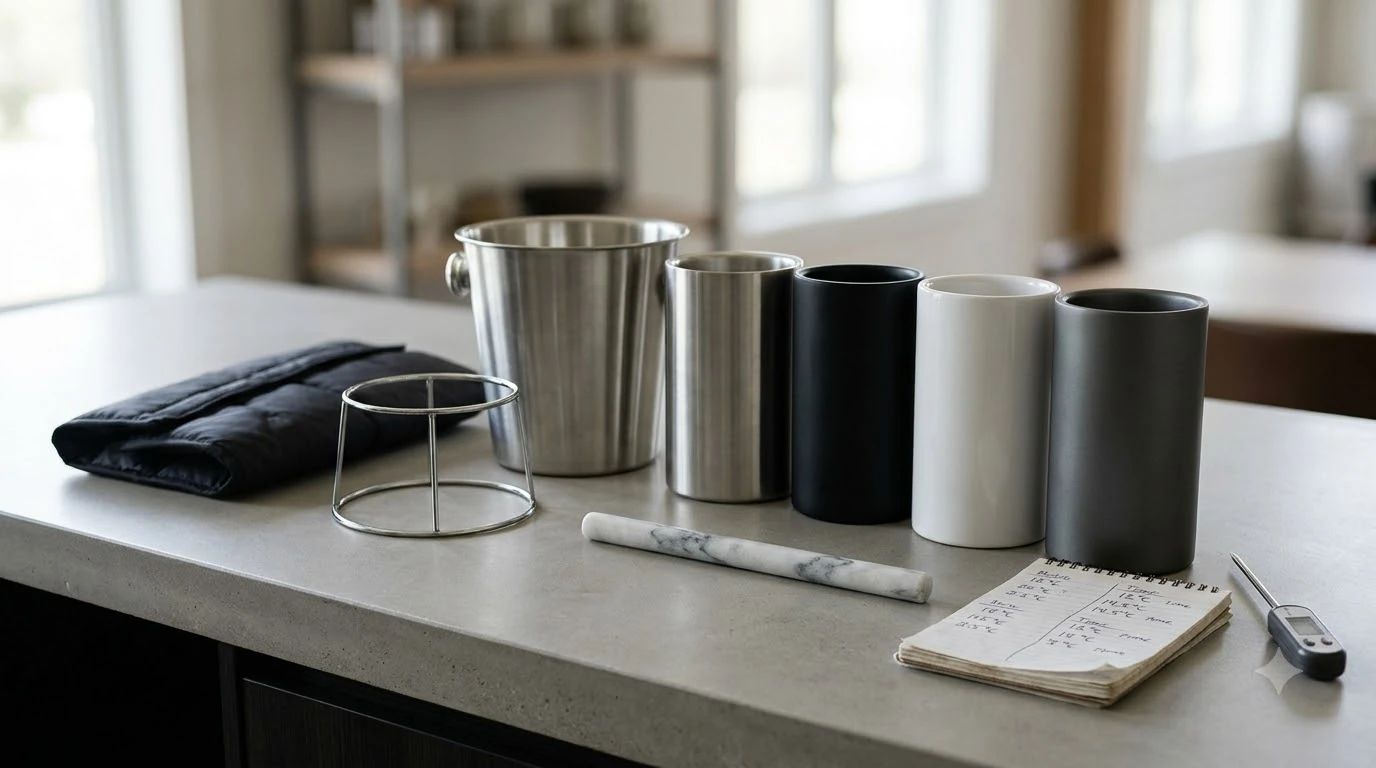
Hamilton Beach versus a marble wine chiller
A marble wine chiller is primarily a passive serving accessory. Its heavy stone construction can help keep a previously chilled bottle cool during a meal, but it does not function as an electrically controlled refrigerator.
The Hamilton Beach appliance is more suitable for maintaining a small group of bottles in an enclosed environment. Marble is better for presentation and serving when a bottle has already been chilled using another method.
These products therefore serve different purposes. Someone who frequently hosts dinners may find value in having both a compact refrigerator for storage and a marble holder for presenting one bottle at the table.
Hamilton Beach versus a conventional wine refrigerator
A larger wine refrigerator is generally the more appropriate option for someone who owns more than six bottles. It can provide additional rack positions, more room for different bottle shapes, and potentially separate temperature zones depending on the model.
Conventional compressor-based wine refrigerators may also be preferable in warmer environments, although actual performance depends on the appliance’s design and specified ambient operating range. A larger cabinet costs more space and requires more careful installation planning, so it is not automatically the better choice for a small household.
Buyers comparing these categories should look beyond capacity alone. Cooling technology, actual temperature range, ventilation requirements, bottle compatibility, noise, and warranty coverage all affect long-term satisfaction.
Tip: Before purchasing, measure the installation surface and compare it with the exact model’s dimensions. Also leave the five inches of rear and side clearance specified in the applicable Hamilton Beach user guide, and avoid enclosed cabinet installations for models designated as freestanding.
For serving wine outdoors or at casual gatherings, suitable beach wine glasses can complement a compact home wine setup, although glassware does not replace proper bottle storage or chilling.
Frequently Asked Questions
Can the Hamilton Beach wine chiller be transported while it contains bottles?
It is better to remove all bottles before moving a refrigerator-style appliance. Emptying it reduces the chance of bottles shifting against the racks or glass door during transport. After relocation, follow the instructions supplied with the exact model before reconnecting it to power.
Does the Hamilton Beach wine chiller have an automatic defrost function?
The six-bottle user guide describes condensation collection through a removable drip tray, but that description does not establish an automatic defrost feature. Owners should follow the cleaning and maintenance instructions supplied with their particular unit rather than assume it has features found in larger refrigerators.
Can the Hamilton Beach cooler store unopened wine indefinitely?
No small countertop cooler should automatically be considered a long-term wine cellar. Long-term storage requires attention to stable temperature, light exposure, humidity, and bottle conditions. The six-bottle format is better suited to a modest collection intended for relatively near-term consumption.
Can the cooler be used in a garage or outdoor entertainment area?
Only use the appliance in an environment permitted by its operating instructions. A garage or outdoor entertainment area may experience temperature extremes that interfere with thermoelectric cooling. Exposure to rain, excessive moisture, or unsuitable electrical conditions also makes an outdoor installation inappropriate.
Does a Hamilton Beach wine cooler require special electrical installation?
The HBWF6035 specification identifies a DC 12V adapter, while its documentation describes household-compatible power configurations. The applicable power adapter and electrical requirements must match the specific unit. Owners should use the supplied or manufacturer-approved power equipment rather than substitute an unrelated adapter.
The Hamilton Beach wine chiller is a practical possibility for households that want compact storage, straightforward electronic controls, and room for a small selection of bottles. Its biggest limitations are its modest capacity and the ambient-temperature sensitivity associated with thermoelectric cooling. Confirm the model number, actual temperature range, bottle fit, ventilation requirements, and warranty before purchasing. For a casual six-bottle collection, it can make sense; for serious aging or a larger collection, a dedicated wine refrigerator with more capacity is the stronger direction.
More in Wine Accessories
 Coravin Vs Vacu Vin: Choose the Right Wine Saver for Your BottlesUpdated Nov 21, 2026
 Zwilling Wine Stopper Review: Preserve Open Bottles LongerUpdated Nov 21, 2026
 Wine Enthusiast Wine Preserver Review: Features, Benefits and LimitationsUpdated Nov 21, 2026
 Wine Enthusiast Wine Stopper: An Easier Way to Reseal Open BottlesUpdated Nov 21, 2026
 Vintorio Wine Opener: Two-Step Cork RemovalUpdated Nov 21, 2026
 Zwilling Wine Aerator Review: Aerate, Pour, and Seal With One ToolUpdated Nov 21, 2026