

We may earn a commission when you buy through links on this page, at no extra cost to you. Learn more.
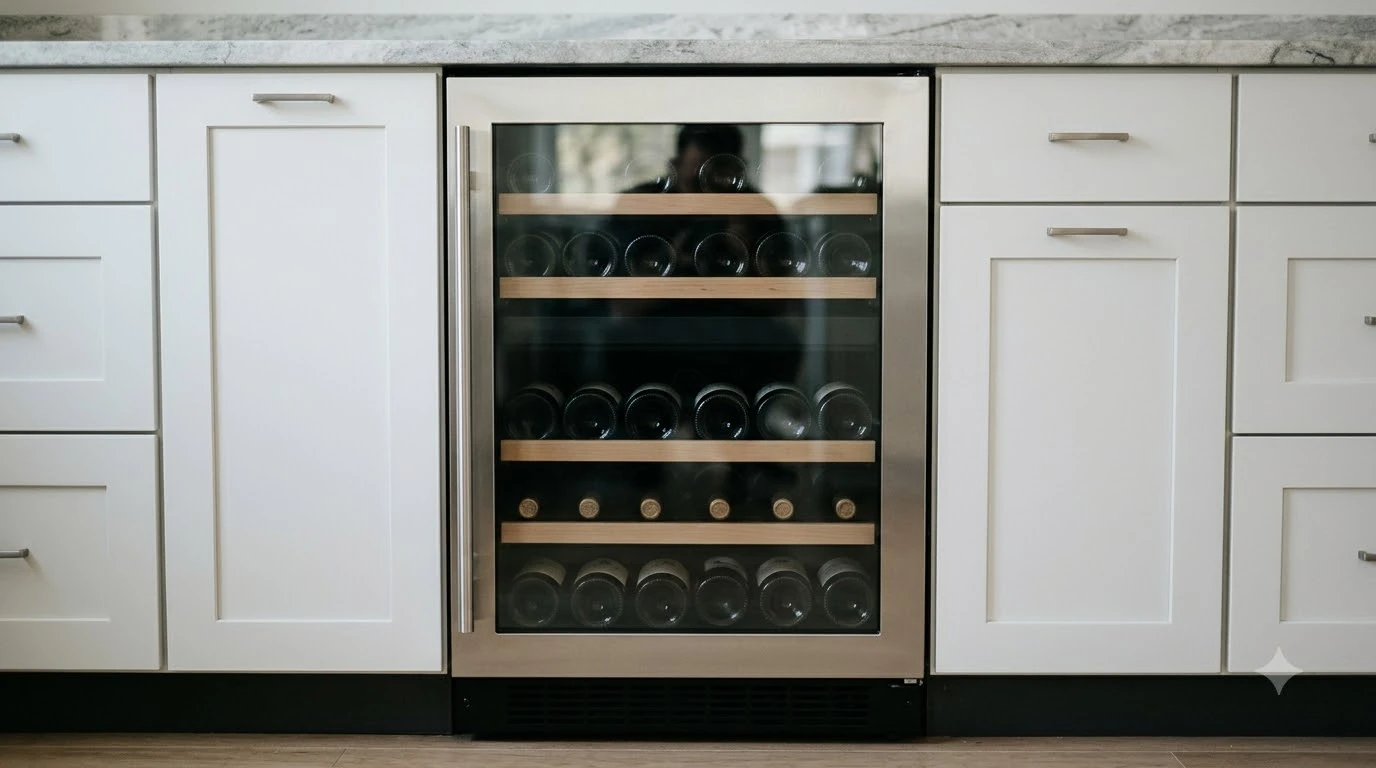
The Miele built in wine fridge KWT 6322 UG is a premium undercounter wine refrigerator designed for homeowners who want two independently controlled temperature zones, flexible bottle storage and an integrated kitchen appearance. Its 34-bottle capacity, UV-filtered glass door, FlexiFrame racks and Active AirClean filtration make it an appealing choice for a carefully organized wine collection. However, its relatively compact capacity and installation requirements mean it is better suited to serious home enthusiasts than large-scale collectors.
Miele’s KWT 6322 UG combines wine storage with kitchen cabinetry rather than functioning as a freestanding beverage cooler. Its emphasis is on preserving bottles in controlled conditions while keeping them accessible for everyday entertaining. This review examines its specifications, practical advantages, potential drawbacks and the installation considerations buyers should understand before choosing this model.
Specs and Key Features of the Miele KWT 6322 UG
The Miele KWT 6322 UG is a 24-inch built-under wine refrigerator with two temperature zones and space for up to 34 standard Bordeaux bottles. Its most distinctive features include adjustable FlexiFrame racks, Push2open access, Active AirClean filtration and a tinted glass door with UV protection.

The stainless steel and CleanSteel version has an understated appearance that works with contemporary kitchen cabinetry. The glass front allows the collection to remain visible without exposing bottles to the same amount of ultraviolet light as an ordinary clear-glass display. Interior LED illumination adds visibility when selecting bottles, while the pull-out shelving makes access easier than reaching into a deep fixed rack.
Miele lists four wooden shelves and three FlexiFrame wire racks, with five total shelf positions in its US product information. The FlexiFrame arrangement is particularly useful for households that purchase different bottle shapes rather than sticking exclusively to standard Bordeaux bottles. Its movable slats can be adjusted to accommodate larger bottles, although using more space for oversized formats can reduce the number of bottles that fit.
| Specification | Miele KWT 6322 UG |
|---|---|
| Appliance type | 24-inch built-under wine refrigerator |
| Standard bottle capacity | 34 Bordeaux bottles |
| Temperature zones | 2 independently controlled zones |
| Minimum temperature setting | 41°F |
| Storage volume | 126 liters |
| Wooden shelves | 4 |
| FlexiFrame racks | 3 |
| Appliance width | 23.5 inches |
| Appliance height | 32.25 inches |
| Appliance depth | 22.75 inches |
| Weight | 109 pounds |
| Electrical supply | 115 volts, 10-amp fuse rating |
| Door opening | Push2open concealed opener |
| Lighting | LED interior illumination |
| Air filtration | Active AirClean filter |
| Door protection | Tinted glass with integrated UV filter |
These specifications come from Miele’s US product information and product documentation. The manufacturer identifies the model as a built-under appliance, not a freestanding refrigerator intended to sit anywhere in a room. Buyers can consult the official Miele KWT 6322 UG product specifications for additional product details.
Temperature control is one of the main reasons to consider this appliance. Two independently adjustable zones allow different wine categories to be stored at different settings. For example, one compartment can accommodate bottles intended for longer-term storage while the other holds wines that are closer to their preferred drinking temperatures.
The appliance also incorporates DynaCool air circulation, which distributes cooled air throughout the interior. This helps limit temperature differences between storage positions. SoftClose assists with gentle door closure, and the low-vibration storage design helps reduce unnecessary disturbance to bottles.
Another useful detail is the removable magnetic NoteBoard labeling system. It provides a simple way to identify wines without attaching permanent labels to the shelving. This is helpful for households that organize bottles by grape variety, producer, region or intended occasion.
What Owners May Appreciate About the Storage Design
The strongest reasons to consider this Miele wine refrigerator are its flexible shelving, two-zone organization and attention to the storage environment. Its features address several practical problems associated with keeping a mixed collection in a kitchen appliance.
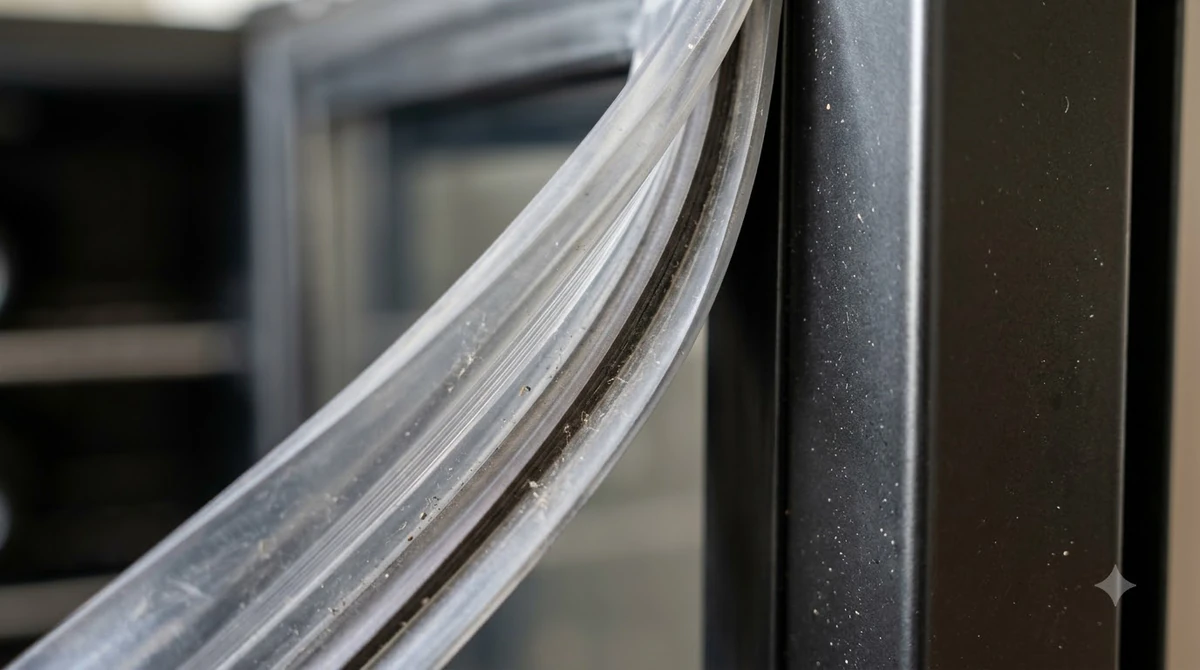
One of the more useful features is the FlexiFrame system. Standard wine refrigerators frequently organize their racks around conventional bottle dimensions. That works well for many Cabernet Sauvignon, Merlot and Pinot Noir bottles, but not necessarily for wider Champagne bottles, sparkling wine formats or unusually shaped white wine bottles.
Adjustable rack slats give owners more control over the available space. Rather than requiring every bottle to fit into identical fixed openings, the system can be rearranged to accommodate selected larger formats. This flexibility is especially helpful for people who regularly purchase Champagne, Burgundy-style bottles and sparkling wines alongside conventional reds.
It is important, however, to distinguish flexible storage from unlimited capacity. Miele’s stated 34-bottle figure refers to standard 750 ml Bordeaux bottles. A collection containing numerous wide-bodied bottles will generally occupy more space than a collection consisting entirely of standard formats.
The two temperature zones are another significant advantage. A household that regularly serves Sauvignon Blanc, Chardonnay, Pinot Noir and Cabernet Sauvignon can organize bottles according to storage or serving needs rather than keeping everything at one temperature.
For example, a wine enthusiast might use one zone for longer-term storage around 55°F and the other for whites intended for relatively prompt serving. Wine Enthusiast recommends approximately 53°F to 57°F for longer-term storage, while its guidance for short-term storage allows a broader 50°F to 59°F range. The ability to adjust two compartments independently offers more flexibility than a single-zone cabinet.
Light and odors are also relevant considerations. Miele includes a tinted glass door with UV filtration and an Active AirClean filter. The UV protection helps limit light exposure, while the filtration system is designed to reduce unwanted odors inside the cabinet.
These features are particularly relevant to cork-sealed bottles. Wine can be affected by prolonged exposure to unfavorable storage conditions, including excessive light, temperature fluctuations and unwanted environmental odors. Miele also describes its compressor arrangement as vibration-dampened, which is useful for bottles intended to remain undisturbed during storage.
The design is also practical for a kitchen where appearance matters. Push2open removes the need for a prominent projecting handle, while the stainless steel finish and glass door give the appliance a coordinated built-in appearance. SoftClose complements this arrangement by helping the door close gently.
For people who entertain regularly, these details can make the appliance more convenient. Bottles are visible, shelving pulls out for access, and the lighting makes it easier to identify a particular wine without repeatedly rearranging the collection.
The overall design also suits wine-focused dining occasions. A bottle of Chardonnay can be selected for a seafood dinner, while a Cabernet Sauvignon can be reserved for a richer beef dish. For a complementary dinner idea, the chicken Marsala recipe offers another occasion to choose a bottle from the cabinet.
Common Complaints and Limitations to Consider
The Miele KWT 6322 UG has an attractive feature set, but its 34-bottle capacity, installation restrictions and specialized storage layout will not suit every household. Its premium positioning also means buyers should examine their actual storage requirements before committing to a built-in appliance.
The first limitation is capacity. Thirty-four standard bottles might sound substantial, but it is a relatively modest collection size for someone who buys wine frequently or keeps bottles for several years. A regular wine enthusiast could fill the cabinet quickly, particularly if the collection includes multiple bottles of the same producer or vintage.
For perspective, a 750 ml bottle generally provides about five standard 5-ounce glasses. A full 34-bottle cabinet therefore represents approximately 170 glasses before accounting for oversized bottles or alternative formats. That is useful storage for a household that entertains regularly, but it may not be enough for a collector maintaining a larger inventory.
Capacity can also become less predictable when bottle dimensions vary. A standard Bordeaux bottle is not the same shape as every Burgundy, Champagne or sparkling wine bottle. FlexiFrame helps accommodate those differences, but rearranging racks can reduce the number of standard bottle positions available.
Another consideration is the built-under installation. Buyers cannot simply place this model beside a kitchen counter and expect it to operate correctly. It requires a suitable cabinet opening, sufficient depth, appropriate ventilation and access to the specified electrical supply.
That makes it less convenient for renters, homeowners planning a temporary kitchen arrangement or anyone who expects to move the appliance frequently. A freestanding wine refrigerator may be more appropriate if installation flexibility is a priority.
The glass front is another feature that deserves consideration. Although the integrated UV filter provides protection, a tinted glass door is not equivalent to storing bottles in a completely dark cellar. A kitchen with strong direct sunlight or intense artificial lighting may still be a poor location for a wine refrigerator.
The installation position should also be considered in relation to household heat sources. Placing the appliance near an oven, dishwasher or other equipment that produces substantial heat can create an unfavorable operating environment. A location with relatively stable surrounding temperatures is preferable.
Buyers should also consider the distinction between wine storage and wine serving. Dual temperature zones are useful, but they do not mean every bottle automatically reaches its ideal drinking temperature. A white wine intended for serving at 45°F to 50°F may require additional chilling depending on its compartment setting and the time it spends inside.
Likewise, a red wine stored at cellar temperature may need to warm slightly before serving. Light-bodied reds such as Pinot Noir are generally enjoyable around 55°F to 60°F, while fuller-bodied reds such as Cabernet Sauvignon are generally served around 60°F to 65°F.
Finally, the appliance’s smart functions should not be confused with essential refrigeration features. Miele lists networking-related capabilities and digital functions in its product information, but buyers should verify which services are available for their particular model and region. The core purchasing decision should remain focused on cooling performance, storage capacity, installation compatibility and service support.
Who Should Buy the Miele KWT 6322 UG and Who Should Skip It
This Miele model makes the most sense for homeowners who want an integrated wine cabinet with premium storage features and a relatively compact footprint. It is less suitable for buyers who need substantial cellar capacity, a portable appliance or a simple low-cost cooler.
Who should consider buying it
Homeowners with a planned 24-inch cabinet opening: The KWT 6322 UG is designed to fit beneath a counter in an appropriately prepared installation space. It can be a natural addition to a renovated kitchen, a dedicated entertaining area or a home bar with matching cabinetry.
Wine enthusiasts with mixed collections: The two temperature zones provide flexibility for people who purchase both reds and whites. A household might organize Sauvignon Blanc and Chardonnay separately from Cabernet Sauvignon and Syrah, depending on its storage and serving preferences.
Buyers who value adjustable bottle storage: FlexiFrame is particularly useful for anyone whose collection includes Champagne, sparkling wine and bottles that are wider than standard Bordeaux formats. The movable rack sections make the interior more adaptable than a fixed-format arrangement.
People who entertain regularly: The 34-bottle capacity offers room for several wine styles without requiring a full-size cellar. LED illumination, pull-out shelves and the glass front also make bottle selection convenient when preparing a meal or hosting guests.
Design-conscious kitchen planners: The concealed Push2open mechanism, stainless steel finish and integrated installation provide a more coordinated appearance than many freestanding wine coolers.
Who should skip it
Large wine collectors: A 34-bottle cabinet may not provide enough room for people who maintain substantial collections, buy cases or regularly acquire bottles for extended aging. A larger dedicated wine cabinet or cellar would offer more room to organize different vintages.
Renters and frequent movers: Built-under installation is less practical for people who cannot modify their kitchen cabinetry. A freestanding unit offers greater flexibility when relocating or changing the room layout.
Budget-focused buyers: The Miele name, integrated construction and specialized storage features place this model in a premium appliance category. Someone who simply needs a dependable place to chill a dozen bottles may find a smaller standalone wine refrigerator more appropriate.
People who primarily store oversized bottles: FlexiFrame improves flexibility, but a cabinet designed around 34 standard Bordeaux bottles should not be expected to hold the same number of large-format or unusually shaped bottles.
Homeowners without suitable ventilation: If the required cabinet ventilation cannot be provided, installation should not proceed until the space has been corrected. Proper airflow is essential to appliance operation and safety.
Tip: Count the bottles you actually own and measure their widest points before purchasing. If your collection contains several Champagne or Burgundy bottles, leave additional room rather than planning around the full 34-bottle Bordeaux capacity.
How the Miele Compares to Alternative Wine Storage Options
The KWT 6322 UG occupies a specific position in the wine refrigerator market: a premium built-under cabinet with two zones, adjustable racks and integrated kitchen styling. Its closest practical alternatives are not necessarily competing models with identical specifications, but different types of wine storage appliances that solve different household problems.
A single-zone wine refrigerator is the simplest alternative. It maintains one overall temperature throughout the cabinet and is often appropriate for people who primarily want to store bottles rather than keep reds and whites at separate serving temperatures. Wine Enthusiast explains that a consistent storage temperature around 53°F to 57°F is suitable for long-term storage of different wine categories.
For someone who purchases wine for aging, this approach can be perfectly reasonable. There is no requirement to store Cabernet Sauvignon at a different long-term temperature from Chardonnay. Serving temperatures differ, but stable storage conditions are more important for a collection that will remain in the refrigerator for extended periods.
A larger dual-zone freestanding wine cooler is another alternative. This type of appliance may offer more bottle capacity while avoiding the need for integrated cabinetry. It can be a sensible choice for a household that expects its collection to grow but does not want to redesign its kitchen around a built-under unit.
The trade-off is appearance and installation. Freestanding appliances generally occupy visible floor space and may not create the same integrated look as the Miele. Their shelf configurations and protection features also vary by manufacturer and model.
A dedicated wine cellar is the stronger option for substantial collections intended for long-term aging. It can provide significantly more storage capacity and allow more deliberate control over environmental conditions. However, a cellar requires dedicated space and careful planning, making it excessive for someone who owns only a few dozen bottles.
The following comparison summarizes the main differences between these storage approaches.
| Storage option | Main advantage | Main limitation | Best suited to |
|---|---|---|---|
| Miele KWT 6322 UG | Built-under design and two temperature zones | 34-bottle standard capacity | Premium kitchen installations |
| Single-zone wine cooler | One consistent storage temperature | No separate temperature compartments | General wine storage |
| Freestanding dual-zone cooler | Flexible placement and separate zones | Requires visible floor or counter space | Growing home collections |
| Dedicated wine cellar | Greater capacity and storage flexibility | Requires substantial planning and space | Serious collectors and long-term aging |
The Miele is therefore most attractive when cabinetry integration is a major priority. A freestanding cooler may be more practical if capacity matters more than appearance, while a single-zone model can make more sense for buyers who want straightforward long-term storage.
For readers comparing different appliance categories, the Brand x Type appliance reviews section provides another starting point for evaluating wine storage products and their intended uses.
Wine storage should also be considered separately from wine presentation and serving. A refrigerator can maintain bottles at suitable storage conditions, but it does not replace the need to choose the correct serving temperature for each wine. A bottle of Prosecco, for example, is generally served around 40°F to 50°F, while a full-bodied red usually benefits from a warmer serving temperature.
That distinction is useful for people who entertain frequently. The Miele can organize the collection and keep bottles ready for selection, while a separate serving routine ensures that each wine is presented at an appropriate temperature. For a casual sparkling cocktail occasion, the Aperol Spritz recipe is another example of how wine and entertaining can fit into a home beverage setup.
Frequently Asked Questions
These answers address additional practical considerations about the Miele KWT 6322 UG, including its controls, shelving, installation and everyday operation.
Can the Miele KWT 6322 UG store Champagne bottles?
Yes, the adjustable FlexiFrame racks are designed to accommodate bottles with different dimensions, including larger formats. However, Champagne bottles can occupy more shelf space than standard Bordeaux bottles. Adjusting the individual rack slats may reduce the total number of bottles that fit in the cabinet.
Does the Miele KWT 6322 UG have a child safety lock?
Yes, Miele includes a lock function in the listed safety features. The operating instructions explain how to activate or deactivate the safety lock through the control panel. This is useful in households where children might otherwise operate the temperature controls accidentally.
Can the interior lighting be adjusted?
Miele lists adjustable feature lighting among the model’s digital convenience capabilities. Its product information also identifies LED interior illumination. The precise availability of app-based lighting functions can depend on regional digital-service support and the required connectivity accessories.
What happens if the wine refrigerator door is left open?
The KWT 6322 UG includes acoustic and optical door alarm features. The operating instructions describe selectable audible alarm settings, including different door-alarm delay options. These alerts help draw attention to a door that has not been closed properly.
Can the Miele KWT 6322 UG be installed beside another wine refrigerator?
Miele identifies the model as suitable for side-by-side installation arrangements. However, the installation drawings specify additional requirements for combined installations, including appropriate spacing and ventilation provisions. A qualified installer should confirm the exact cabinetry arrangement and compatible installation components before two units are ordered.
The Miele KWT 6322 UG is a well-equipped built-under wine refrigerator for homeowners who value flexible storage, separate temperature zones and coordinated kitchen design. Its 34-bottle capacity makes it better suited to a curated household collection than a large wine cellar, but its thoughtful rack design and storage features make it a compelling premium option when the installation space is appropriate. Before purchasing, confirm the cabinet dimensions, ventilation opening, electrical requirements and the amount of bottle capacity your collection actually needs.
More in Model Reviews
 Magic Chef 44 Bottle Wine Cooler Review for Flexible StorageUpdated Nov 21, 2026
 Whynter 164 Bottle Wine Cooler Review: Capacity, Features, and FitUpdated Nov 21, 2026
 Insignia NS WC16BK6 Review: Compact 16-Bottle Wine StorageUpdated Nov 21, 2026
 Wine Enthusiast Electric Blue Omega Review: Opening, Pouring, and Preserving Made EasierUpdated Nov 21, 2026
 Koolatron 20 Bottle Wine Cooler Review: Features, Fit, and PerformanceUpdated Nov 21, 2026
 NewAir AWC 330E Review for Home Wine StorageUpdated Nov 21, 2026