

We may earn a commission when you buy through links on this page, at no extra cost to you. Learn more.
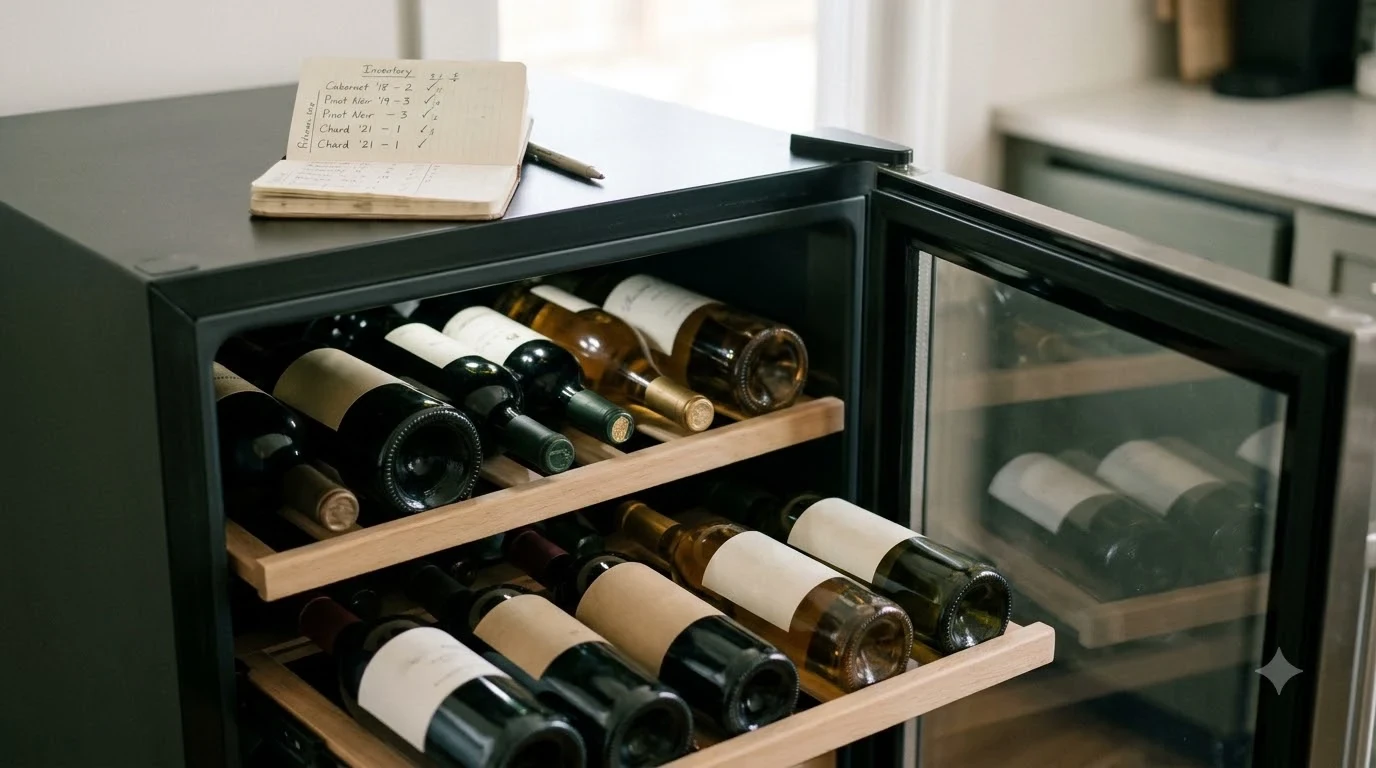
Wine fridge replacement shelves should match your cooler’s exact model, interior dimensions, and shelf-mounting system to provide a secure fit. The safest option is usually an original equipment manufacturer (OEM) shelf, although compatible third-party replacements can work when their measurements and mounting arrangements match. Before ordering, identify your refrigerator, measure the existing shelf and support rails, and choose a material that suits your bottle collection.
A missing, cracked, warped, or damaged wine refrigerator shelf does not necessarily mean you need a new appliance. Replacing the individual rack can restore storage capacity and make everyday bottle access easier. However, wine coolers use different shelf designs, including fixed wire racks, removable wooden shelves, sliding bottle trays, and full-extension assemblies. Understanding those differences helps you avoid ordering an attractive replacement that cannot actually fit.
Who This Is For
Wine fridge replacement shelves are useful for owners who want to repair an existing cooler, reorganize their bottle collection, or replace a shelf that has become difficult to use. The right replacement can restore the original layout without requiring an entirely new refrigerator. It can also make sense to upgrade a damaged rack to a more convenient sliding design when the manufacturer offers a compatible option.
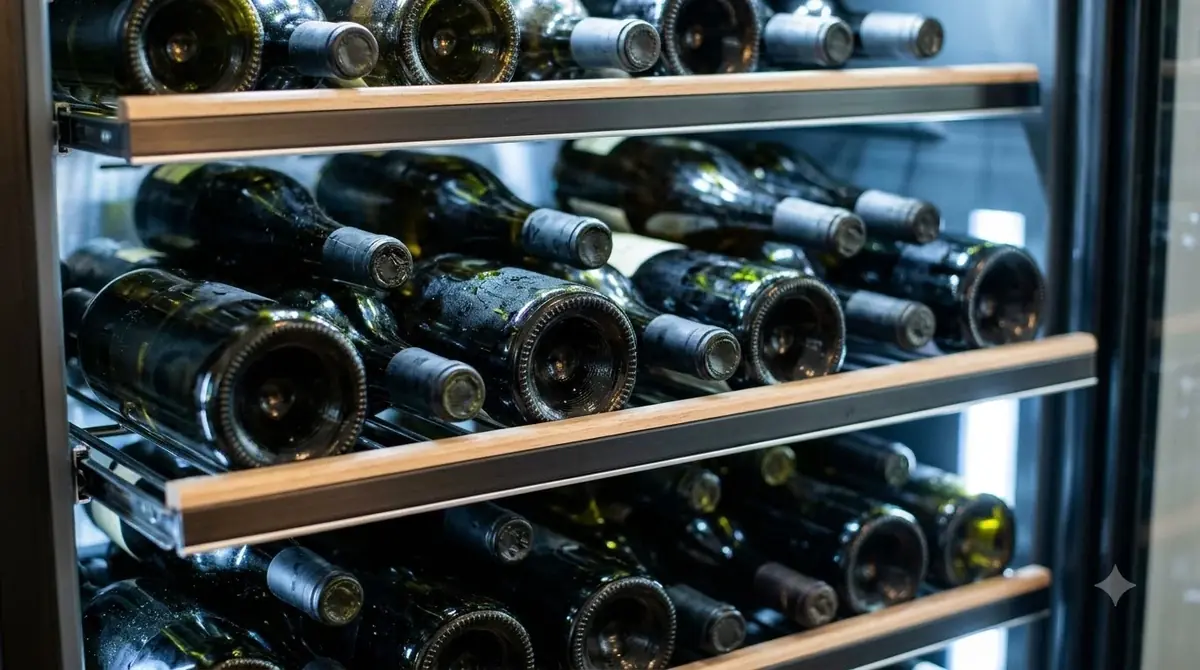
There are several situations where buying a replacement shelf is particularly practical:
- Broken or cracked shelves: A damaged support surface can make storing bottles unsafe. Replacing the affected component is preferable to continuing to use an unstable rack.
- Missing original shelves: A secondhand wine cooler may arrive without its complete set of racks. A matching replacement can restore the intended storage arrangement.
- Worn wooden shelves: Wood can become stained, rough, or damaged through prolonged exposure to moisture. A replacement restores a cleaner storage surface.
- Damaged sliding mechanisms: A shelf that sticks, tilts, or refuses to extend smoothly may need a replacement assembly or compatible rail components.
- Changing bottle collections: Owners who regularly store Champagne, Burgundy, or larger-format bottles may want a different shelf arrangement to improve accessibility.
- Secondhand appliance repairs: A cooler with an otherwise functional refrigeration system may be worth repairing rather than replacing because one rack is missing.
Replacement shelves are also relevant to people choosing between repairing an existing appliance and purchasing another cooler. If the refrigerator still maintains its intended temperature, the door seals properly, and its cooling system operates normally, a shelf replacement may be a straightforward repair. For a broader assessment of ownership costs, see how much a wine fridge costs.
However, not every shelf problem requires a new shelf. A loose retaining clip, displaced rail, or incorrectly positioned support can sometimes be corrected by following the appliance manufacturer’s instructions. Inspect the mounting hardware before assuming the entire rack needs replacement.
Key Factors to Compare
The most important considerations are model compatibility, shelf dimensions, mounting design, material, and bottle capacity. A replacement must fit the refrigerator mechanically before its appearance or finish becomes relevant.
| Factor | What to Check | Why It Matters |
|---|---|---|
| Model compatibility | Full appliance model number | Confirms whether the manufacturer approves the replacement |
| Shelf width | Interior width in inches or millimeters | Prevents interference with cabinet walls and door seals |
| Shelf depth | Front-to-back measurement | Ensures the rack fits without obstructing the door |
| Rail spacing | Distance between mounting points | Determines whether the shelf can sit securely |
| Vertical clearance | Gap above and below the shelf | Allows bottles to fit without contacting adjacent racks |
| Material | Wood, metal, wire, or coated construction | Affects weight, durability, cleaning, and appearance |
| Capacity | Manufacturer-rated bottle count | Helps maintain the intended storage configuration |
| Movement | Fixed, removable, or sliding | Determines bottle access and installation requirements |
Model number and manufacturer compatibility
Start by locating the refrigerator’s identification label. Depending on the appliance, it may appear inside the cabinet, along an interior side wall, near the door frame, or on the rear panel. Record the complete model number rather than relying on the brand name alone.
Two wine coolers from the same manufacturer can have different internal widths, rail positions, and shelf arrangements. Even models with similar bottle capacities may use different mounting hardware. A replacement advertised for a particular brand is not automatically suitable for every refrigerator made by that company.
Manufacturer parts departments and authorized appliance-parts suppliers are generally the best places to begin. Ask for the shelf part number and whether it replaces the original component for your exact model. If the original part has been discontinued, request confirmation of any approved substitute.
Dimensions and mounting hardware
Measure the original shelf from its outermost left edge to its outermost right edge. Then measure its depth, including any front trim or projecting handles that affect installation. For a sliding rack, measure the complete assembly separately from the removable shelf surface.
Rail spacing is especially important. A shelf may have the correct overall width but still fail to engage with the refrigerator’s support system. Compare the distance between mounting notches, hooks, clips, or slide attachment points. Also measure the vertical space available when the shelf is fully installed.
For example, EuroCave specifies a Compact collection sliding shelf measuring 535 mm wide, 529 mm deep, and 27 mm high. Those dimensions describe that particular accessory, not a universal standard for wine coolers. Its manufacturer also limits compatibility to specified Compact models.
Material and bottle capacity
Material influences both appearance and everyday use. Wooden shelves provide a traditional cellar-style finish, while metal and wire shelves are often lighter and offer more visibility inside the refrigerator. Neither material is automatically better for every appliance.
Capacity needs equal attention. A shelf designed for eight standard bottles may not accommodate eight unusually wide Champagne or Burgundy bottles. Check the manufacturer’s stated capacity and consider how the shelf supports each bottle rather than simply comparing the number of storage positions.
Tip: Photograph the original shelf, its mounting points, and the refrigerator’s model label before contacting a parts supplier. These three images can help customer service identify the correct component and prevent confusion between similar-looking replacement racks.
Step-by-Step: How to Find and Replace the Right Shelf
Finding a suitable replacement is easier when you follow a consistent process. Identify the appliance first, establish the required measurements, verify the mounting system, and only then order the replacement.
-
Identify the refrigerator.
Locate the manufacturer’s identification label and record the complete model number. Include the serial number if customer service requests it. Avoid using a generic description such as a 24-inch wine cooler because cabinet dimensions alone do not establish shelf compatibility.
-
Inspect the damaged shelf.
Remove bottles from the affected rack and examine its construction. Determine whether the problem involves the shelf surface, front trim, retaining clips, rollers, or sliding rails. If only a removable component is damaged, replacing the complete assembly may be unnecessary.
-
Measure the original shelf.
Use a tape measure to record the width, depth, and height. Measure from the outer edges and include projecting components where necessary. Record measurements in both inches and millimeters if you are comparing American and international parts listings.
-
Measure the mounting arrangement.
Check the distance between the side supports, rail grooves, mounting notches, and retaining tabs. For sliding systems, inspect the extension mechanism and determine whether the replacement includes new guides. Do not assume that matching shelf dimensions guarantee matching hardware.
-
Search for the OEM replacement.
Visit the manufacturer’s parts department or contact customer support. Supply the full model number and request the original shelf part number. Ask whether a newer replacement part supersedes the original and whether it includes all necessary mounting components.
-
Compare alternative shelves.
If the original part is unavailable, compare compatible third-party options. Request confirmation of the precise dimensions, mounting method, material, and load capacity. A generic rack should only be considered when its installation system is suitable for the refrigerator.
-
Check the installation instructions.
Before purchasing, review how the shelf is removed and installed. Determine whether it requires lifting, sliding, releasing clips, or attaching separate guides. Confirm whether the manufacturer recommends professional assistance for any complicated rail or cabinet work.
-
Install and inspect the replacement.
Remove all bottles, follow the appliance-specific procedure, and position the replacement without forcing it into place. Confirm that it is level, fully engaged, and stable before gradually returning bottles to the shelf.
This process is particularly useful for older wine coolers, where the original rack may no longer appear in standard parts catalogs. A supplier may be able to identify a replacement using an old part number or an exploded appliance diagram even when the shelf is not prominently advertised online.
Keep the measurements and part number for future reference. If another shelf becomes damaged, having this information available makes subsequent repairs considerably easier.
Types and Styles of Replacement Shelves Explained
Wine refrigerators use several different shelf constructions, each suited to particular storage and access requirements. The most common choices include wooden shelves, metal wire racks, fixed shelves, and sliding assemblies.
Wooden wine fridge shelves
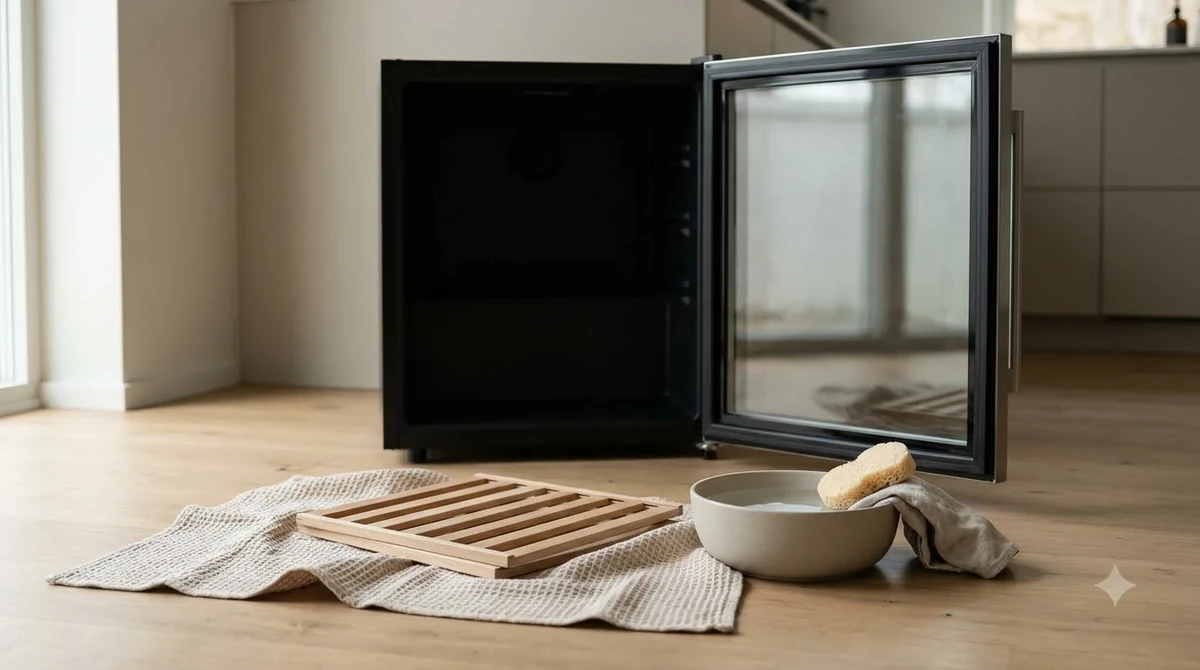
Wooden shelves are popular because they create a traditional wine-cellar appearance. Beech wood is a common material in dedicated wine-storage accessories, offering a natural finish that complements glass doors and interior lighting.
Kalamera, for example, offers a genuine beech wood replacement shelf for multiple compatible wine cooler models. Its product description identifies solid beech wood as the material and instructs buyers to confirm compatibility with customer service before ordering. The manufacturer’s beech wood replacement shelf specifications and installation notes also explain the intended rail installation.
The manufacturer’s installation instructions describe sliding the shelf onto the interior rails without tools. It also recommends ensuring that the shelf is fully seated and level before adding bottles. Excessive moisture should be avoided to protect the natural wood finish.
Wood is particularly appealing when matching the appearance of the original interior is important. However, wooden shelves are not automatically interchangeable between brands. The shape of the shelf, rail attachment, front trim, and available clearance remain essential considerations.
Metal and wire shelves
Metal and wire shelves are practical alternatives when the original refrigerator uses a similar design. Their open construction makes it easier to see bottle labels and inspect the contents without removing the entire rack.
These shelves can also be lighter than solid wooden assemblies. However, wire spacing and bottle-contact points should be considered carefully. A replacement must provide appropriate support for the bottles being stored, especially when the collection includes different bottle shapes.
Check the coating and finish before purchasing. Exposed metal edges, damaged coatings, or poorly finished joints may create problems during repeated loading and cleaning. The rack should sit securely without scraping the refrigerator’s interior.
Fixed and removable shelves
Fixed shelves are designed to remain in a particular position. They are generally straightforward in construction, but they can limit flexibility when storing bottles with different shapes or dimensions.
Removable shelves provide greater flexibility. Owners can remove one rack to create additional vertical space for larger bottles or adjust the arrangement to accommodate a changing collection. However, removable shelves still need to engage correctly with the manufacturer’s support system.
Sliding and full-extension shelves
Sliding shelves allow bottles to be brought forward for easier access. Some designs travel on simple side rails, while more advanced assemblies use full-extension slides and release mechanisms.
EuroCave provides a useful example of a specialized sliding design. Its Compact collection shelf has a maximum capacity of eight bottles, includes a pair of sliding guides, and uses a beech wood front panel. The design also incorporates a removable bottle-positioning insert intended to accommodate different bottle shapes.
The important distinction is that the word universal in a product description does not mean universal across all manufacturers. EuroCave specifically limits this accessory to its Compact collection and identifies the relevant manufacturing-date restriction. Owners of earlier appliances are directed to contact customer service.
Choosing between the main styles
For a straightforward replacement, match the original material and mounting design whenever possible. For an upgrade, consider whether your refrigerator supports a different rack configuration without requiring modifications to its cabinet or refrigeration components.
A wooden sliding shelf may improve access, but it is not a suitable upgrade if the refrigerator only supports fixed wire racks. Similarly, a generic wire shelf may look similar to the original while lacking the correct retaining tabs or rail dimensions.
Think about the bottles you store most often. Standard Bordeaux bottles generally fit more easily into conventional storage layouts than wider Champagne and Burgundy bottles. If your collection contains larger formats, verify the available clearance before changing the shelf arrangement.
Common Mistakes When Buying Replacement Shelves
Most unsuccessful shelf purchases result from incorrect measurements, assumptions about universal compatibility, or overlooking the mounting hardware. Avoiding these mistakes can save time and prevent damage to the refrigerator.
Assuming shelves are universal
This is the most common purchasing mistake. Wine refrigerators may share similar external dimensions but use completely different interior fittings. A shelf from one manufacturer can have the right width and still fail to engage with another appliance’s rails.
Even products described as universal may only be compatible with a specific product family. Always establish the intended compatibility before ordering, and ask the supplier to confirm the exact model.
Measuring the cabinet instead of the shelf
The refrigerator’s advertised external width is not the same as its usable internal shelf width. Insulation, interior panels, door seals, and mounting hardware all affect the available space.
Measure the actual shelf and its supporting structure rather than estimating dimensions from the appliance’s exterior. If the original shelf is missing, measure between the mounting points and provide photographs of the interior to the supplier.
Ignoring the rail and clip design
A shelf that rests on side supports is different from one that locks into retaining tabs or travels on ball-bearing slides. The mounting method determines whether the rack can be installed safely.
Whynter’s BWR-171DS and BWR-401DS manual describes aligning the shelf notch beneath a plastic post before lifting it out. Models equipped with roller systems also require engagement with small pegs on the extended rails.
That procedure illustrates why installation instructions matter. A replacement that looks similar but uses a different notch arrangement may not lock into the original support system.
For a practical example, consult the Whynter wine refrigerator instruction manual, which explains shelf removal and reinstallation for its BWR-171DS and BWR-401DS models.
Choosing a shelf based only on appearance
A natural wood finish may look attractive, but appearance cannot establish compatibility. A shelf must have the correct depth, width, support points, and vertical clearance.
Likewise, a metal rack that appears sturdy may not be designed for the refrigerator’s original bottle arrangement. Check its intended use and installation method before treating it as a substitute.
Forcing a shelf into position
Never force a replacement shelf into a refrigerator when the rails or mounting points do not line up. Excessive pressure can damage retaining clips, slide assemblies, or interior panels.
Perlick’s service instructions specifically warn against forcing sliding components together because the ball-bearing retainer can be damaged. If the replacement does not engage smoothly, stop and verify that the parts are correctly matched.
Overlooking delivery and return conditions
Replacement parts are not always stocked locally. Some manufacturers ship accessories directly from overseas facilities, which can result in longer delivery times than standard appliance accessories.
Kalamera, for example, estimates 15–25 business days for delivery of its replacement accessories. Its purchasing instructions also state that returns or exchanges will not be accepted when buyers order without obtaining the required compatibility confirmation first.
Before completing an order, review the return policy, shipping arrangements, and any restrictions on accessories. These details matter particularly when ordering a specialized wooden or sliding shelf.
Care and Storage Tips for Replacement Shelves
Proper installation and regular maintenance help replacement shelves remain stable and functional. Keep the mounting points clean, avoid overloading the rack, and follow the manufacturer’s instructions for cleaning and adjustment.
Install the shelf correctly
Always remove bottles before adjusting or removing a shelf. Follow the specific procedure in the refrigerator manual rather than assuming that every rack lifts or slides out in the same way.
For a simple removable shelf, check that its notches align with the retaining tabs or posts. For a sliding assembly, verify that both sides engage with their corresponding rails and that the shelf travels smoothly throughout its intended range.
After installation, gently check for movement or instability before loading bottles. The shelf should sit level and should not tilt when pulled forward or pushed back.
Clean wooden shelves carefully
Wooden wine shelves should be kept clean and reasonably dry. Use the cleaning method recommended by the manufacturer, and avoid soaking wooden components unless the manufacturer explicitly permits it.
For Kalamera’s beech wood replacement shelf, the manufacturer’s guidance specifically warns against excessive moisture. Dry the shelf appropriately before returning it to the refrigerator, and do not apply household oils or finishes without checking whether they are suitable for the original coating.
Maintain metal and wire racks
Inspect metal shelves for loose joints, damaged coatings, corrosion, and bent support sections. Clean them according to the manufacturer’s recommendations, paying particular attention to the areas where bottles contact the rack.
Do not use aggressive abrasive cleaners on coated surfaces. Whynter’s refrigerator manual also cautions against using solvent-based cleaning agents or abrasives on the appliance interior because they may damage or discolor its surfaces.
Check sliding rails periodically
Sliding shelves benefit from occasional inspection of their guides and retaining mechanisms. Look for uneven movement, loosened fasteners, damaged clips, or debris that could interfere with the sliding action.
If a shelf starts to bind, remove its contents and inspect the rails rather than repeatedly pulling harder. Follow the manufacturer’s maintenance instructions before applying any lubricant, because some sliding systems require particular products or procedures.
Preserve adequate bottle clearance
Arrange bottles so they do not press against the shelf above or interfere with the door. A shelf that accommodates standard 750 ml Bordeaux bottles may have less clearance for wider Champagne bottles or larger-format containers.
Store wine bottles horizontally when the refrigerator’s design permits, and avoid placing more weight on a replacement shelf than its manufacturer specifies. The original bottle capacity is a useful reference, but a different bottle shape can change how many containers fit comfortably.
Good shelf organization is only one part of proper wine storage. Stable temperature, suitable humidity, and limited exposure to unnecessary vibration also matter. Owners comparing storage equipment can read more about wine fridge energy efficiency and consider whether a dedicated cooler is appropriate by reviewing whether a wine fridge is necessary.
Frequently Asked Questions
Are wine fridge replacement shelves universal?
No. Even shelves described as universal can be limited to a particular appliance range. Compatibility depends on the support design, available clearance, and manufacturer specifications. A replacement intended for a different cabinet may require mounting hardware that your refrigerator does not have.
Can I replace just the sliding rails instead of the entire shelf?
Sometimes, but this depends on whether the rails are separately replaceable components. Some refrigerator designs use detachable slide assemblies, while others integrate the supports into a larger rack structure. Ask the manufacturer whether the rails, retaining clips, and shelf are available as individual service parts.
Can I use a refrigerator shelf in a wine cooler?
Only if the refrigerator shelf is specifically compatible with the wine cooler’s mounting arrangement and intended storage load. Ordinary food refrigerator shelves may have different edge profiles, support requirements, and dimensions. A glass shelf designed for another appliance should not be assumed suitable for supporting wine bottles.
Do replacement shelves come with installation hardware?
It depends on the accessory. Some replacement shelves are designed to reuse the original rails and clips, while complete sliding assemblies may include new guides. EuroCave’s Compact sliding shelf, for example, includes a pair of sliding guides, so buyers should compare the supplied components with the original appliance arrangement.
What if the manufacturer no longer makes my original shelf?
Ask customer service whether a superseding part number or approved replacement exists. Appliance-parts specialists may also identify an alternative using an exploded parts diagram or the original component number. If neither route produces a confirmed match, provide photographs and measurements to a specialist before considering a generic replacement.
Choosing the right wine fridge replacement shelves starts with the refrigerator’s model number, accurate measurements, and a clear understanding of its mounting system. An OEM replacement is generally the safest starting point, while a compatible third-party shelf can be a practical alternative when the manufacturer confirms the fit. Take the time to verify the details before ordering, and a simple shelf repair can help keep an otherwise functional wine cooler in service.
More in Wine Buying Guides
 Riesling Gift: Choose a Bottle They’ll LoveUpdated Nov 21, 2026
 Sweet Red Wine Gift: Choose a Bottle They’ll LoveUpdated Nov 21, 2026
 Malbec Gift: How to Choose a Memorable Bottle for Any OccasionUpdated Nov 21, 2026
 Sherry Gift Ideas That Match Every Wine LoverUpdated Nov 21, 2026
 Moscato Gift: How to Choose a Sweet Wine They’ll LoveUpdated Nov 21, 2026
 Merlot Gift: How to Choose a Bottle They’ll AppreciateUpdated Nov 21, 2026