

We may earn a commission when you buy through links on this page, at no extra cost to you. Learn more.
A best 200 bottle wine fridge is a cabinet sized for roughly two hundred bottles, and the right one depends on whether you age reds for years or keep a rotating stock for everyday drinking. Look for steady temperature control, a rack layout that lets you reach the middle bottles without moving the rest, and a footprint your room can actually hold. Dual-zone models suit people who serve reds and whites at different temperatures, while single-zone units are simpler when one serving style covers most of the collection.
Capacity labels on wine refrigerators are a starting point, not a promise. Bottle counts are usually quoted for standard 750 ml bottles, and wide Champagne bottles or magnums take up noticeably more room. This guide explains what to check before you buy a unit in this size class, how to decide between zoning options, and what to plan for once the cabinet is in your home.
Who a 200 Bottle Wine Fridge Suits
A cabinet in this size class fits collectors who have outgrown a countertop model but do not need a full wine cellar. It works well for households that buy by the case and want an organized, visible stock.
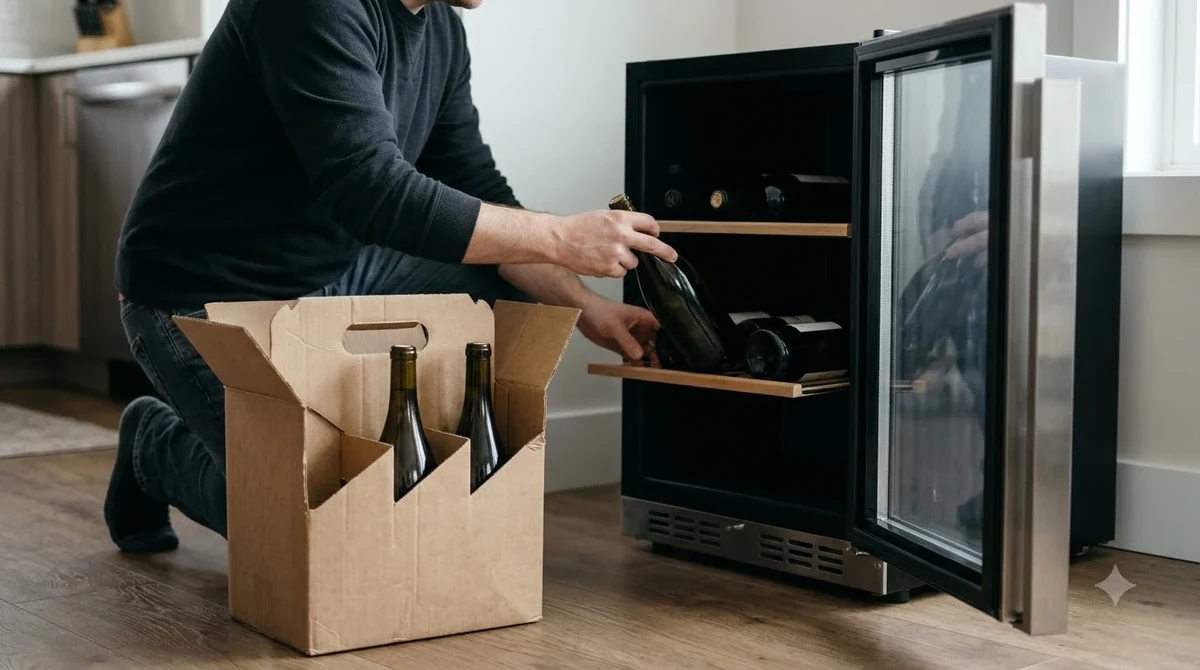
Think about how you actually drink before you commit. If most bottles are meant to be opened within a year or two, a large cabinet may hold far more than you need and sit half empty. If you are building a collection to age for many years, capacity matters more, because the bottles you bought first end up deepest in the rack and become harder to reach as the stock grows.
Count the bottles you already own and add room for growth. Many owners find that a 200 bottle cabinet fills faster than expected once they start buying in case lots, especially during sales and after tastings. If your collection is smaller today, the 12 bottle wine fridge range may be enough, and the 6 bottle wine fridge options suit a kitchen with very little space.
Single Zone vs Dual Zone Units
Single-zone cabinets hold one temperature across the whole interior. They are the simpler choice when every bottle will be stored and served within a similar range. Dual-zone models split the cabinet into two sections, usually a cooler one and a warmer one, so reds and whites can each sit at their own setting.
For a 200 bottle unit, dual zoning makes the most sense when you regularly serve both styles at different temperatures and do not want to move bottles between shelves before dinner. Check whether each zone has its own thermostat and whether a solid divider separates the two sections. A divider limits how much warm air from one side reaches the other each time a door opens.
| Feature | Single zone | Dual zone |
|---|---|---|
| Temperature setting | One setting for the whole cabinet | Separate settings for each section |
| Best for | One style of wine or one serving temperature | Mixed reds and whites |
| Typical use | Long-term aging of a single style | Everyday rotation with varied serving needs |
| Controls | Usually simpler | More controls and sometimes more features |
Temperature and Storage Basics
Stable temperature matters more than the exact number on the dial. The Wikipedia article on wine cellars states that wine can be stored satisfactorily between 7 and 18 °C (45 to 64 °F) as long as changes happen gradually. It gives 13 °C (55 °F) as an ideal figure for short-term storage and long-term aging, and it says wines age normally between 10 and 14 °C (50 to 57 °F).
The same article warns that swings of 14 degrees or more can make wine breathe through the cork and speed aging. That is the practical reason to favor a cabinet with a reliable thermostat and steady cooling over one that simply offers the lowest possible setting. A unit that drifts up and down every time the compressor cycles is less useful for aging than one that holds its setting with little change.
Serving temperature is a separate question. Reds are often poured a little cooler than room temperature, and whites a little warmer than straight from a cold cabinet, so a dual-zone unit or a short rest on the counter before pouring can close the gap. Keep the cabinet away from direct sun, heat sources and the oven wall, and avoid opening the door more than necessary, because every opening lets warm room air in.
Footprint, Venting and Placement
Capacity figures say little about the box that holds the bottles. Measure the opening and the depth before ordering, and check the manufacturer’s clearance notes for the back and sides. A freestanding cabinet needs open space around it so heat from the cooling system can leave. A built-in model needs a recess that matches its published dimensions and venting path, and a cramped recess can make the unit work harder than it should.
Think about noise and location too. A cabinet next to a bed or a home office will be heard more than one in a utility room, pantry or basement. Level the unit so the door closes square and the gasket seals evenly, because a loose seal lets warm air in each time the door opens. Confirm that the floor can take the full weight of a loaded cabinet, since 200 glass bottles add up quickly.
Electrical needs deserve a check before delivery day. Most freestanding units plug into a standard outlet, but a large cabinet running constantly is a good reason to avoid sharing a power strip or an extension cord with other appliances. Read the electrical section of the manual and confirm the plug and outlet match.
Layout Options: Racks, Shelves and Glass Doors
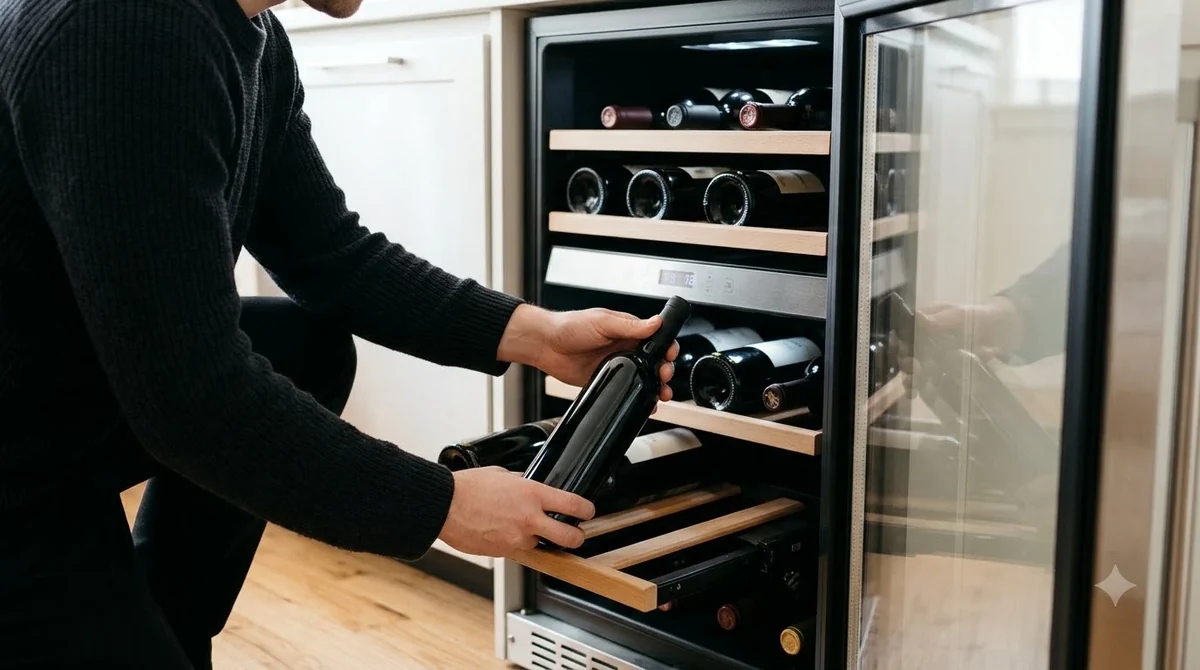
Interior layout decides how easy a 200 bottle cabinet is to use day to day. Sliding or pull-out racks let you reach back bottles without lifting the front row out of the way. Fixed wooden shelves are sturdier and handle irregular bottle shapes, but the back of the cabinet becomes harder to reach as the stock fills.
A glass door is convenient for showing a collection and for finding a label without opening the door. It also lets in more light, and direct sunlight through the glass can warm the interior. A solid door protects bottles from light and tends to hold temperature better, which matters most for wines you plan to age. Many owners choose a solid door for the aging section and keep a smaller glass-front unit for bottles they open soon.
Whatever the style, label the racks by variety, region or purchase date. A simple system keeps the collection easy to manage as it grows, and it prevents the common problem of buying a bottle twice because it was hidden in the back.
Tip: Count capacity by your largest bottles, not by standard 750 ml bottles. A cabinet listed for 200 standard bottles may hold noticeably fewer magnums or wide Champagne bottles, so measure the interior and test a few of your biggest bottles before you buy.
Frequently Asked Questions
How many bottles really fit in a 200 bottle wine fridge?
The listed number assumes standard 750 ml Bordeaux-style bottles. Champagne, magnums and tall bottles take more space, so the practical count is often lower. Compare the interior measurements with your largest bottles and leave some room for the racks to slide.
Can a wine fridge store wine for many years?
It can, as long as the temperature stays steady and the bottles are protected from light and vibration. The Wikipedia article on wine cellars describes 10 to 14 °C (50 to 57 °F) as the range for normal aging, so look for a cabinet that holds a setting close to that band with little drift.
Should I buy a single zone or dual zone unit?
Choose single zone if one temperature will cover nearly everything you own. Choose dual zone if you keep reds and whites that you serve at different temperatures. Dual zoning costs more and has more settings to manage, so it is worth it only when you use both sides regularly.
Do I need a dedicated outlet for a large wine cabinet?
Many freestanding units run on a standard household outlet, but a large cabinet that runs all day should not share a power strip or extension cord with other appliances. Check the manufacturer’s electrical notes and confirm that the outlet and plug match before delivery.
Start with an honest count of the bottles you own and the ones you expect to buy over the next few years. Then match the zoning and rack layout to how you actually drink. If you are planning a tasting or dinner party with a larger stock, the guide on how many glasses in a bottle of wine helps you size the amounts, and the by bottle count section lists other sizes if 200 turns out to be more than you need.
More in By Bottle Count
 Best 52 Bottle Wine Fridge Options for Every Kitchen and CollectionUpdated Nov 18, 2026
 Best 15 Bottle Wine Fridge Options for Quiet Storage and Ready-to-Pour ServingUpdated Nov 18, 2026
 Best 34 Bottle Wine Cooler Types for Kitchens, Bars, and Home CellarsUpdated Nov 18, 2026
 Best 166 Bottle Wine Cooler Types for Serious Collectors and HostsUpdated Nov 18, 2026
 Best 54 Bottle Wine Fridge Types for Undercounter and Home CellarsUpdated Nov 18, 2026
 Best 46 Bottle Dual Zone Wine Cooler for Built-In Kitchens and Home BarsUpdated Nov 19, 2026