

We may earn a commission when you buy through links on this page, at no extra cost to you. Learn more.
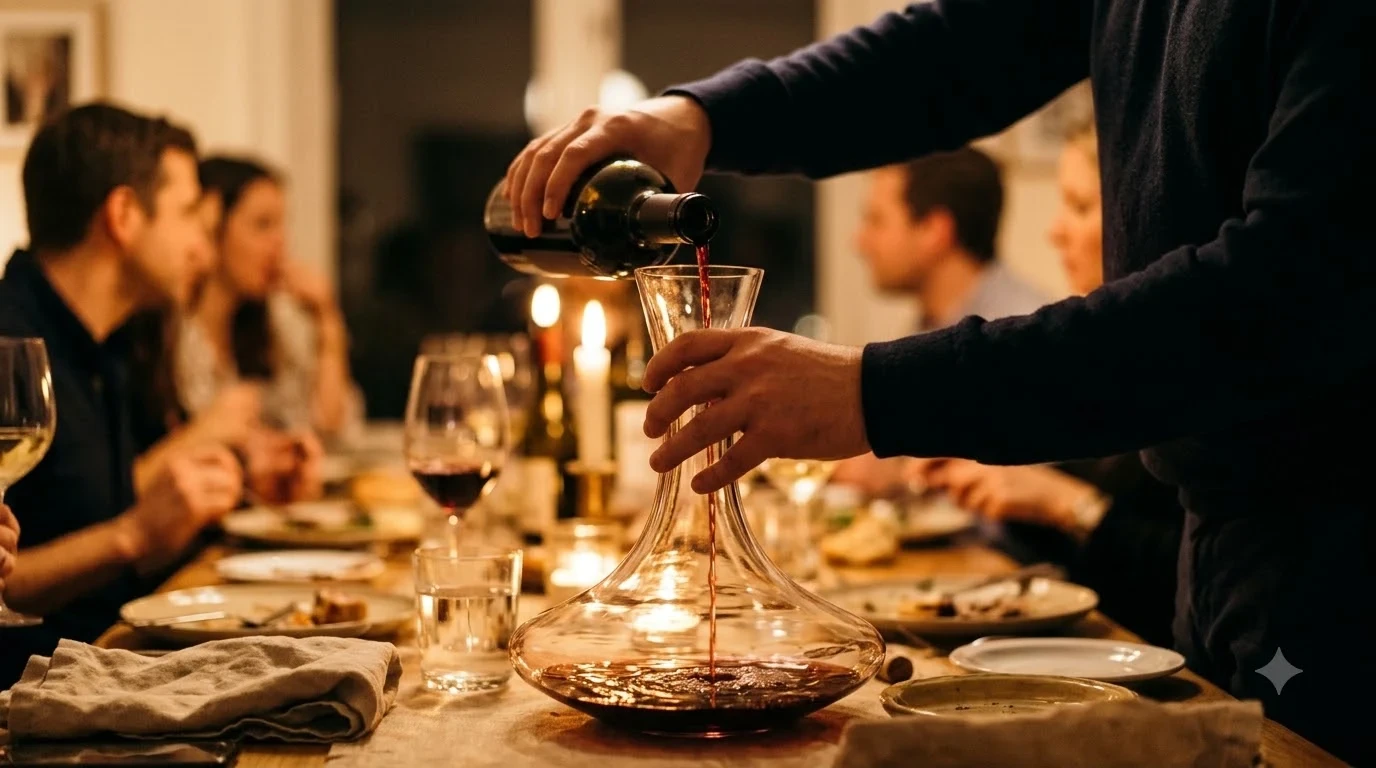
The best decanter for red wine is usually a wide-bottomed glass or crystal model that holds one 750 ml bottle, because a broad base and open surface let the wine breathe faster. Pick a shape you can clean easily, a size that matches how often you pour red, and a design that keeps sediment out of the glass. This guide explains which features matter and which styles suit different kinds of red.
Decanting does two jobs. It separates clear wine from sediment in older bottles, and it exposes the wine to air so tight flavors can soften. Not every red needs it, but bigger and more tannic wines usually gain the most. If you are also comparing general-purpose options, our wine decanter roundup covers a wider set of shapes. This page focuses on the choice that matters most for red wine: how much surface the wine touches and how easy the vessel is to live with.
Quick Comparison of Decanter Types
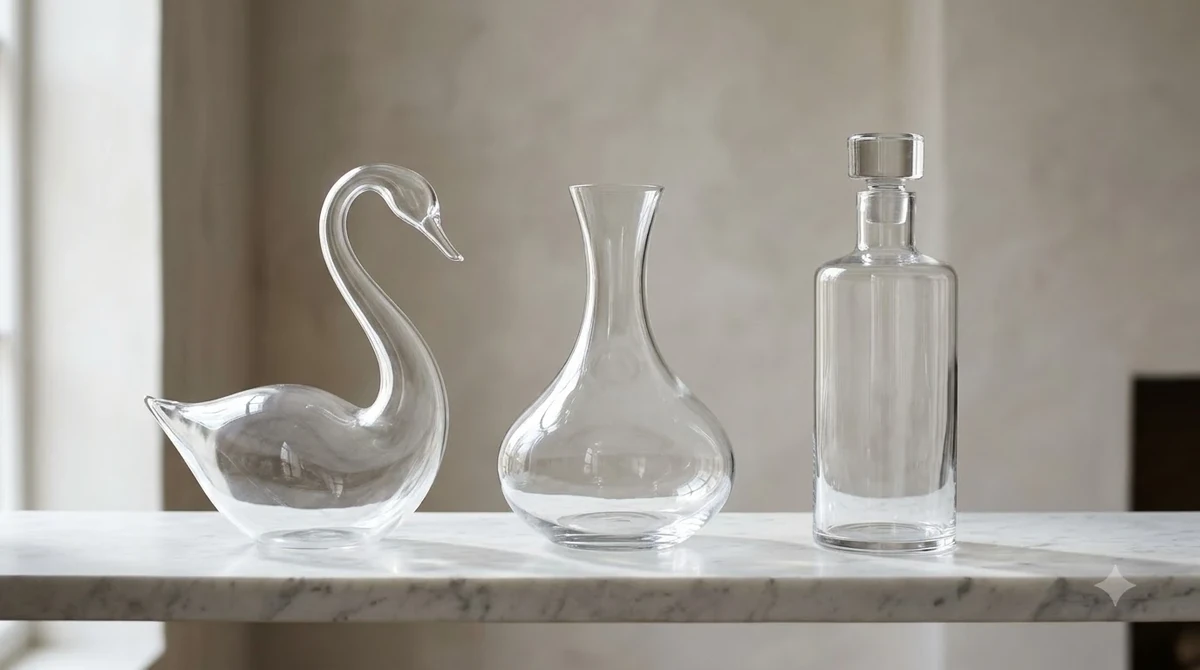
Most red wine decanters fall into a few shape families. The table compares them on the points that affect daily use: capacity, how much air the wine picks up, how easy the piece is to clean, and the kind of red it fits.
| Type | Capacity | Aeration | Cleaning | Good fit |
|---|---|---|---|---|
| Classic glass decanter | One 750 ml bottle | Moderate, rises with swirling | Easy through a wide opening | Everyday reds |
| Magnum decanter | About two standard bottles | Moderate | Takes more effort | Hosting and bigger pours |
| Long-neck, Venetian-style | One bottle | Strong, because the wine spreads over a wide body | Harder through a narrow neck | Older or tannic reds |
| Carafe without a stopper | One bottle | Good | Simplest of all | Casual pouring |
| Decanter with built-in aerator | One bottle | Fastest | More parts to rinse | Young reds you want open quickly |
Best for Everyday Reds That Need a Short Rest
A classic glass decanter holding one 750 ml bottle suits weeknight reds that taste a little closed when first poured. Cheaper reds can carry a sulphur smell, and the Wine Folly decanting guide notes that this smell can burn off quickly once the wine is in a decanter. For lighter bottles, a short rest is often enough, so a standard-size vessel covers most of what a regular drinker needs.
Why it stands out: the standard size fits most bottles and sits easily in a cupboard. A wide opening makes it simpler to get a brush or cloth inside.
Keep in mind: one bottle fills it, so it is less useful when you are pouring for several guests at once.
Best for: regular drinkers who open one bottle at a time and want a simple, everyday piece.
- Material
- Crystal glass
- Volume
- 750 ml recommended
- Size
- 4.88 W x 9.06 H in
- Care
- Dishwasher safe
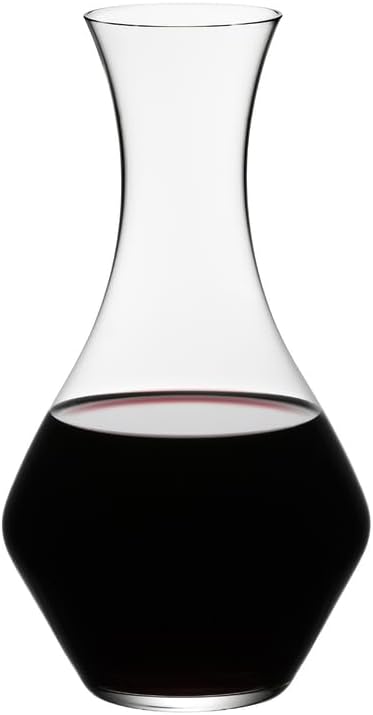
Weeknight reds that only need a short rest do not call for an ornate carafe, and this narrow Cabernet-style decanter keeps things simple. It is sized for one 750 ml bottle and stands about 9 inches tall. The clear glass is dishwasher safe, which makes frequent use easy, though the maker recommends a bottle cleaner to keep the inside spotless.
Pros & ConsView
- Sized for one standard 750 ml bottle
- Dishwasher safe for everyday use
- Slim 4.9 inch width suits small shelves
- Machine-made, not hand-blown
- Narrow body needs a bottle cleaner
Best for Big Tannic Reds That Need Time
Bold reds with firm tannins gain the most from decanting. The Wine Folly guide lists Syrah, Barolo, Brunello di Montalcino, and Chianti among the wines that benefit from a longer rest, and it suggests about two hours for Syrah. Those wines need a vessel that gives them plenty of contact with air, which is where a wide base and a generous bowl help.
Why it stands out: a broad, bowl-shaped body exposes more of the wine to air, and swirling in it is easy. That combination helps tight flavors open up over the course of an evening.
Keep in mind: the wider the base, the more care you need when lifting it. Pour slowly near the end of the bottle to keep any sediment in the original bottle.
Best for: people who cellar or buy structured reds and want the wine to show its full character at the table.

- Material
- Lead-free crystal glass
- Capacity
- 750 ml
- Size
- 6.5 W x 9.25 H in
- Top
- Angled pour spout
Bold reds that need time benefit from surface area, and this carafe provides it through a wide base that spreads the wine out. The open top lets the wine breathe before dinner. It holds a full 750 ml bottle and is hand blown from lead-free crystal. The angled top guides the pour straight to the glass, so you can serve at the table.
Pros & ConsView
- Wide base spreads wine across more surface
- Hand-blown lead-free crystal glass
- Angled top guides a clean pour
- No built-in aerator or filter
- Wide base needs a larger storage space
Best for Hosting and Larger Pours
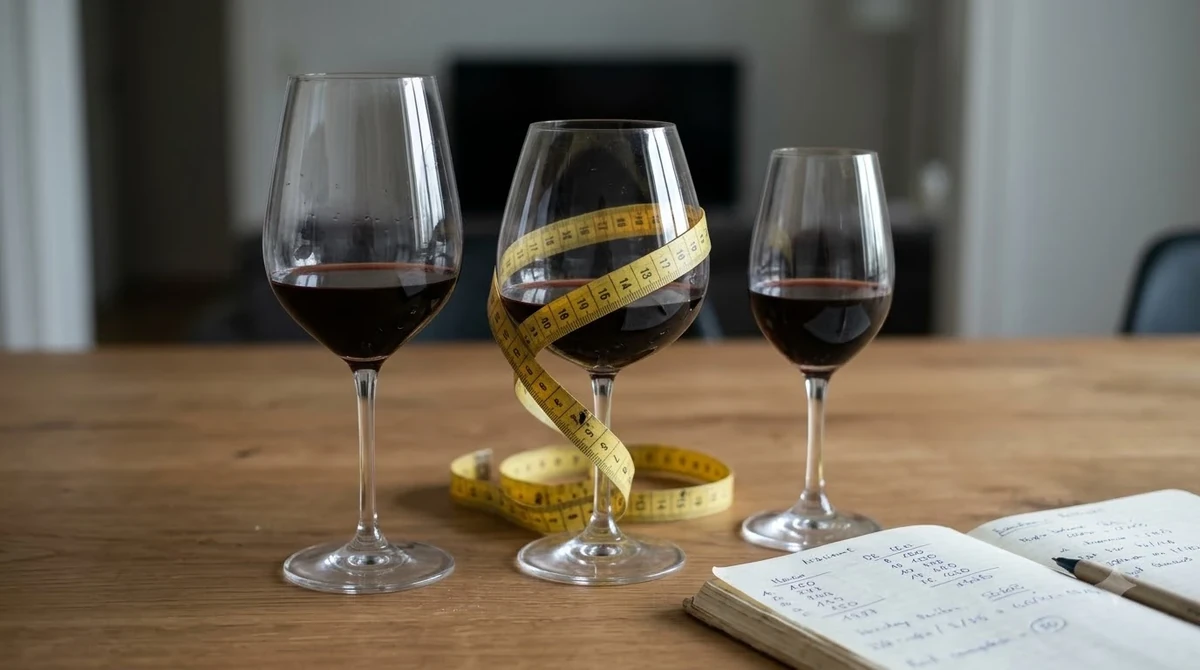
A magnum decanter holds about two standard bottles, which makes it practical for a dinner with several people. Decanters of this size are also useful when you want to pour the same wine across more than one course without opening a second bottle. The guide mentions the 750 ml and magnum sizes as the two common choices, so the decision is mostly about how many people you usually pour for.
Why it stands out: one fill covers a table, and the larger body keeps the wine open for longer during a meal.
Keep in mind: a full magnum is heavier and harder to clean through the opening. Plan on a little extra time at the sink. If you are building a matching set for entertaining, our decanter set guide lists companion pieces that pair well with a larger vessel.
Best for: hosts who open more than one bottle at a time and want a single piece that covers the whole table.

- Material
- Hand-blown lead-free crystal
- Fits
- Full 750 ml bottle
- Size
- 7.95 W x 9.45 H in
- Extras
- Aerator pourer
When friends come over and the bottles keep opening, a larger vessel saves repeated refills. This oversized carafe has a spacious interior sized for Cabernet or Merlot and fits a full 750 ml bottle with room to move. A wide mouth makes cleaning easier, and the pourer helps with serving. It is hand-blown lead-free crystal and described as dishwasher safe.
Pros & ConsView
- Spacious interior suits hosting
- Wide mouth makes cleaning easier
- Comes with an aerator pourer
- Large body takes up bar or table space
- Bulky shape is harder to store
Best for Fast Aeration Without a Long Wait
When you want a red to open quickly, a decanter with a built-in aerator or a simple pour-through method can do most of the work. The Wine Folly guide describes pouring between two decanters, or pouring from the bottle through a funnel, to add air quickly. A Vinturi-style aerator also works fast, according to the same source.
Why it stands out: the wine picks up air as it pours, so you can serve a young red much sooner than you would with a plain vessel.
Keep in mind: an aerator adds parts to rinse, and the air contact is brief compared with a long rest in a wide decanter. It does not separate sediment the way a standing decanter does.
Best for: people who want a red at its best within minutes rather than hours.

- Material
- Lead-free crystal glass
- Capacity
- 750 ml (one standard bottle)
- Aeration
- Built-in double-layer filter
- Size
- 7"W x 9.5"H
Built for the ordinary weeknight bottle, this decanter pairs a classic round body with a built-in double-layer filter that strains and aerates as you pour. Wait roughly 3 to 5 minutes and a standard 750 ml red is ready for dinner. The slanted top is shaped to limit drips, and the narrow neck gives a secure grip.
Pros & ConsView
- Built-in filter strains and aerates in one step
- Slanted top helps limit spills and drips
- Sized for one full 750 ml bottle
- Holds only one standard bottle
- Filter insert adds one more part to clean
Best for Gifts and Display Pieces
Decanters have traditionally been made from glass or crystal, and long-neck designs with a wide body are among the most recognizable shapes. The Venetian style, which uses a long, slender neck opening into a wide body, increases the exposed surface area of the wine. Reference material on decanters also notes that the volume of most decanters is roughly one standard bottle.
Why it stands out: a crystal or hand-finished piece looks good on a sideboard and makes a clear gift for someone who drinks wine regularly.
Keep in mind: crystal is more delicate than everyday glass, and the narrow neck of a long-neck design takes more effort to clean. The Wine Folly guide advises rinsing the outside with hot water and the inside with cold water, which helps prevent fogging on the glass.
Best for: gift buyers and collectors who care about how a piece looks as much as how it performs.

- Capacity
- 750 ml
- Material
- Lead-free crystal glass
- Size
- 8.5 x 10 inches
- Care
- Dishwasher safe
Younger, tannic reds open up when given room, and this decanter provides it. Its wide hand-blown body holds a full 750 mL bottle, so the wine has plenty of surface for aeration. An integrated glass handle and slanted spout make pouring controlled, while the wide opening makes it easy to clean, and the crystal glass is dishwasher safe too.
Pros & ConsView
- Wide body aerates a full 750 mL bottle
- Integrated glass handle and slanted spout
- Wide opening makes cleaning easy
- Holds only one standard bottle at a time
- Stands 10 inches tall, so it needs roomy storage
How to Choose a Red Wine Decanter
Start with the habits that matter most: how often you drink red, how many people you usually pour for, and whether you open structured bottles that need time. Those three answers point toward a size and a shape. The points below cover the details that affect the choice after that. Our aerators and decanters category lists current options grouped by these features.
- Capacity: one 750 ml bottle suits most households; a magnum suits hosting.
- Base width: a wide base gives more air contact for big reds.
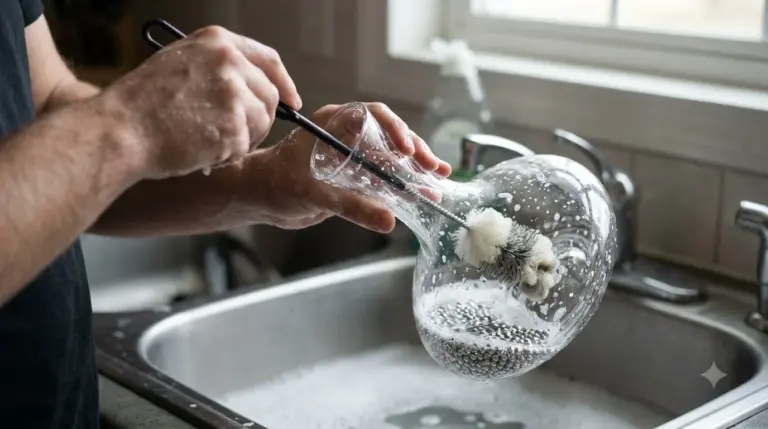
- Neck opening: a wide mouth is easier to clean; a narrow neck is harder to brush.
- Material: glass is practical for daily use; crystal suits gifts and display.
- Cleaning: avoid soap where you can, because residue can affect the aroma of later pours.
- Storage: a shape that fits your cupboard will get used more often than a larger piece that stays in a box.
Frequently Asked Questions
Does every red wine need decanting?
No. Many lighter reds are fine straight from the bottle. Bigger, more tannic reds such as Syrah or Barolo usually benefit the most, and older bottles may throw sediment that you want to leave behind.
How long should I decant red wine?
The Wine Folly decanting guide gives a range of about five minutes to two hours, depending on how much tannin the wine has. High-tannin reds need longer, and the guide suggests about two hours for Syrah.
Is an aerator the same as a decanter?
Not quite. An aerator adds air as the wine pours, which speeds up opening. A decanter also gives the wine time to sit, and it lets you pour off sediment from an older bottle.
How do I clean a decanter without soap?
Rinse the outside with hot water and the inside with cold water, which helps prevent fogging. The Wine Folly guide also suggests an occasional deeper clean, since soap residue can affect the aroma of the next wine.
Choosing a decanter comes down to the bottles you open most often. A standard glass piece handles everyday reds, a wide base helps structured wines, and a magnum covers a table of guests. Once you have the right vessel, the next question is how long the wine will keep after you open it, which our guide on how long red wine lasts after opening answers in detail.
More in Decanters & Aerators
 Best Whiskey and Wine Decanter: Choosing One Vessel for Both DrinksUpdated Nov 18, 2026
 Best Tower Decanter: How to Pick the Right Shape for Your WineUpdated Nov 18, 2026
 Best Cleaning Brush Decanter Options for Narrow Necks and Deep BowlsUpdated Nov 19, 2026
 Best U Shaped Decanter Picks for Aerating Bold Red WineUpdated Nov 18, 2026
 Best Electric Decanter Styles for Faster, Smoother Wine PoursUpdated Nov 18, 2026
 Best Hand Blown Decanter Styles for Every Bottle and TableUpdated Nov 18, 2026