

We may earn a commission when you buy through links on this page, at no extra cost to you. Learn more.
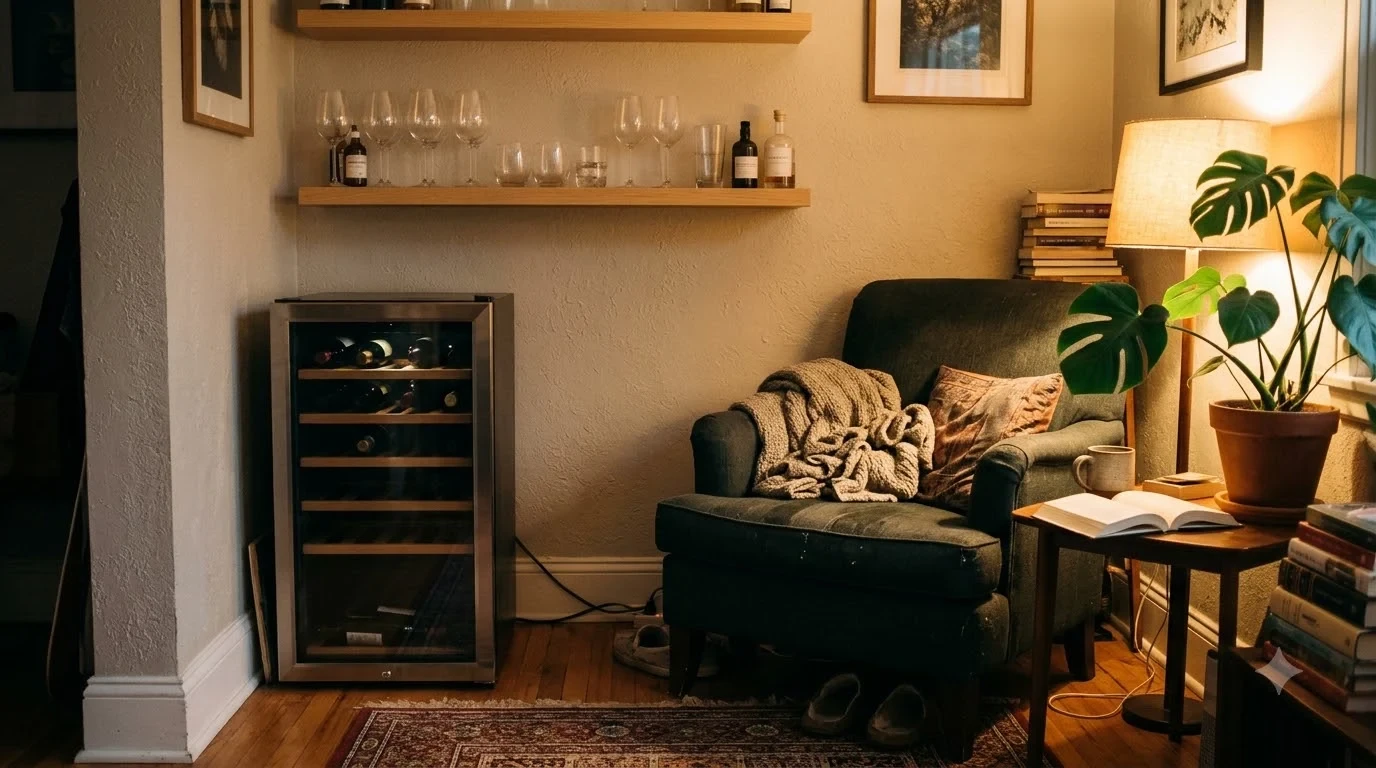
The best wine fridge bar cabinet combines a properly ventilated wine refrigerator, practical bottle capacity, and furniture with enough room for glasses, accessories, and serving supplies. For a built-in home bar, choose a front-venting refrigerator designed for enclosed installation. For a freestanding bar station, a standalone cooler paired with a separate cabinet offers more flexibility. The right combination depends on your wine collection, available floor space, and whether you also want chilled beer and other beverages.
A wine fridge can turn an ordinary sideboard or storage cabinet into a functional entertaining station. Instead of keeping bottles in a kitchen refrigerator and glasses in another room, you can organize your wine, stemware, openers, and serving accessories in one convenient location. However, not every wine cooler belongs inside furniture. Ventilation, dimensions, temperature zones, and door clearance matter just as much as appearance. This roundup covers five useful home bar configurations, from compact furniture combinations to larger entertaining stations, and explains how to choose components that work together.
Quick Comparison of Wine Fridge Bar Cabinet Setups
The most useful home bar arrangements fall into five categories, each suited to a different room, collection size, and entertaining routine. Compare the refrigerator format and furniture arrangement before committing to a particular design.
| Setup type | Typical capacity target | Installation | Best suited for |
|---|---|---|---|
| Compact wine fridge and bar cabinet | 12–24 bottles | Freestanding or approved built-in | Apartments and small rooms |
| Integrated undercounter wine bar | 28–60 bottles | Front-venting built-in | Kitchen and dining room bars |
| Dual-zone wine bar cabinet | 30–70 bottles | Built-in or freestanding | Red and white wine collections |
| Wine and beverage bar station | 20–50 wine bottles plus beverage space | Purpose-designed furniture or separate units | Mixed-drink entertaining |
| Large wine storage bar cabinet | 80–150+ bottles | Dedicated installation area | Large collections and entertaining rooms |
These figures are planning targets rather than specifications for particular appliances. Actual capacity depends on shelf configuration, bottle shape, and the space available for glassware and accessories. A refrigerator advertised for 50 standard Bordeaux bottles might hold fewer Burgundy bottles, Champagne bottles, or unusually shaped wine containers.
For a small home, the compact configuration generally makes the most sense. A larger entertaining room can accommodate an integrated or dual-zone arrangement, while households that regularly serve beer and soft drinks may prefer a separate beverage compartment. The most important distinction is whether the refrigerator can operate safely in the cabinet opening you have planned.
Best for Small Spaces: Compact Wine Fridge and Bar Cabinet
A compact wine refrigerator paired with a narrow bar cabinet is a practical choice for apartments, smaller dining rooms, and living areas without a dedicated beverage station. Aim for approximately 12–24 wine bottles and enough separate furniture storage for everyday glassware and accessories.
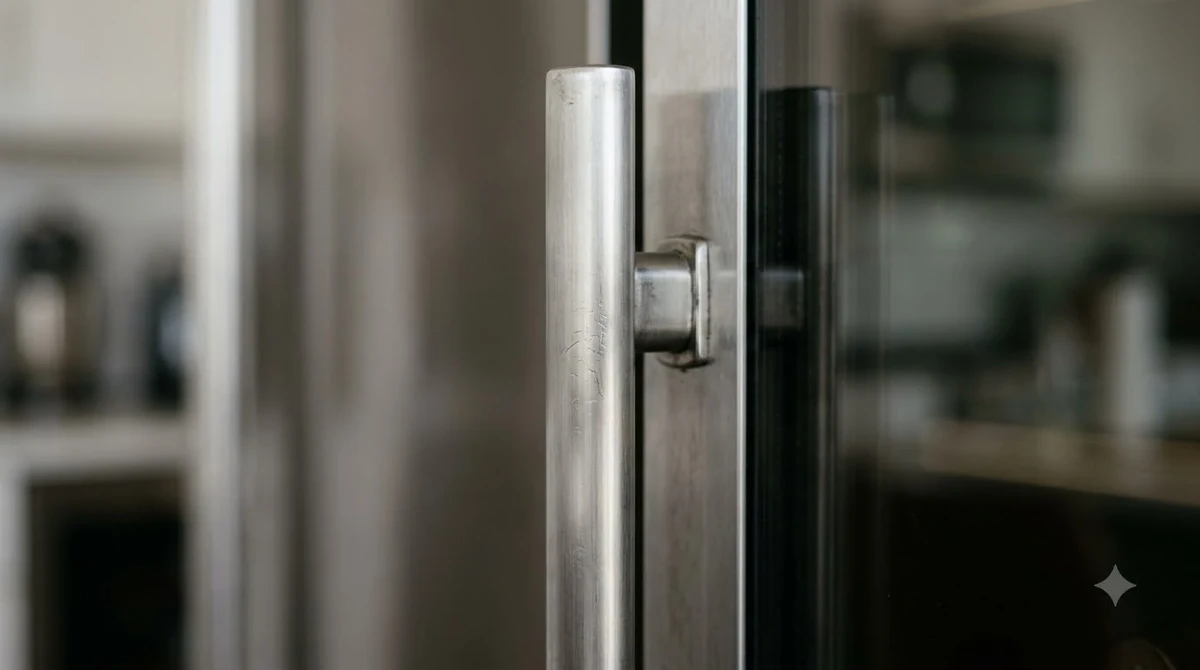
The advantage of this arrangement is flexibility. A compact refrigerator can sit beside a narrow cabinet, underneath a suitable counter, or in an open furniture bay, depending on its installation classification. This approach also allows you to replace the appliance independently if your collection grows or your storage needs change. A small bar cabinet can provide shelves for wine glasses, a drawer for corkscrews, and a top surface for serving without requiring a large built-in renovation.
Corbeil identifies 15-inch wine refrigerators as a common format for smaller kitchens and limited spaces. Its buying guidance also describes 18-inch formats as useful for kitchen islands and bars. These dimensions are useful starting points, but the width alone does not establish whether an appliance will fit a particular furniture opening. Measure height, depth, door projection, handle clearance, and ventilation space before purchasing.
What to look for
- Useful capacity: A 12–24-bottle target works for a modest selection of everyday reds, whites, and sparkling wines.
- Adjustable shelves: Sliding or removable racks help accommodate wider bottles and different bottle shapes.
- Glass protection: UV-protected glass is useful when the refrigerator will be visible in a bright living or dining room.
- Practical furniture: Choose a cabinet with room for wine glasses, napkins, bottle stoppers, and a corkscrew.
- Quiet operation: Noise deserves attention when the unit will sit close to a sofa, dining table, or conversation area.
A compact setup does not have to look like a small kitchen appliance placed beside a piece of furniture. Matching finishes, coordinated handles, and consistent proportions can make the refrigerator and cabinet appear like one deliberate home bar. Dark wood, natural oak, black metal, and neutral cabinetry are all useful design directions, depending on the surrounding room.
For a more furniture-centered arrangement, consider the differences explained in this guide to wine fridge cabinet furniture. It helps clarify whether a separate cabinet or an appliance integrated into custom furniture is the more suitable direction.
Choose this setup if: You want a compact wine-serving area without sacrificing an entire wall or installing a large custom bar.
Best for Built-In Bars: Integrated Undercounter Wine Fridges
An integrated undercounter refrigerator is the strongest choice for a permanent home bar because it can sit within properly designed cabinetry while keeping the appliance’s ventilation system functional. Look for a model specifically approved for built-in installation, with a front-facing ventilation grille and an installation manual that matches your cabinet design.
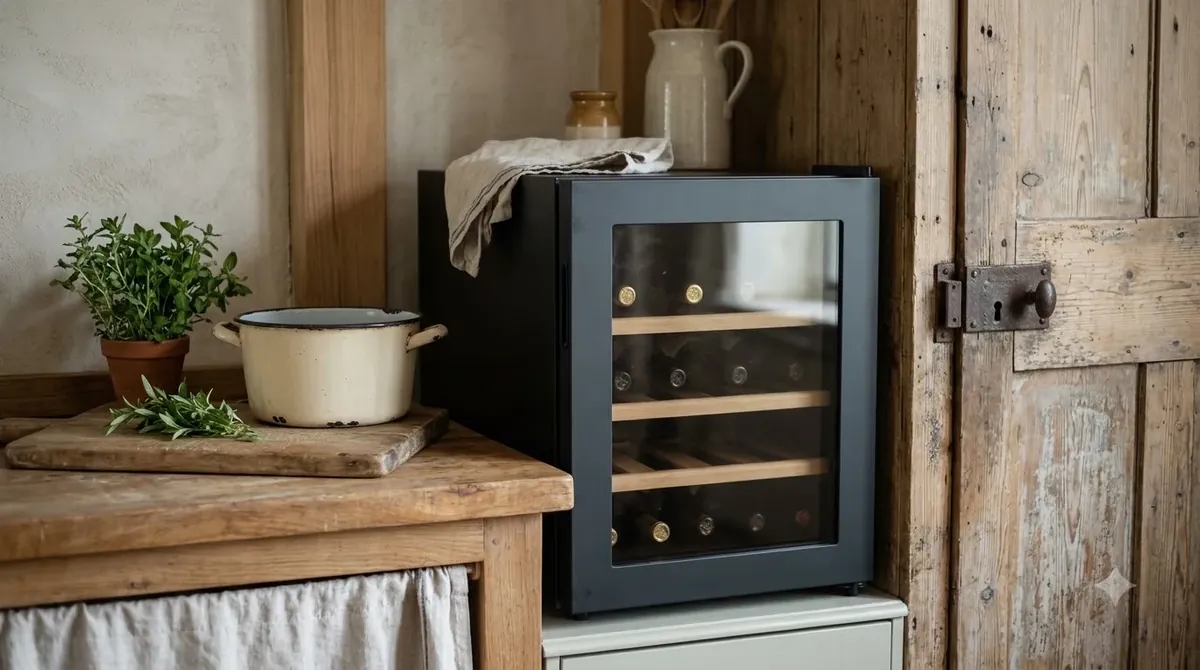
The visual advantage is significant. A refrigerator installed beneath a counter can sit alongside drawers, wine racks, glass storage, and serving shelves. The arrangement creates a continuous work surface for preparing drinks and setting out glasses. It is particularly useful in kitchen islands, dining-room bars, and renovated entertainment spaces where a freestanding refrigerator would interrupt the furniture layout.
However, an appliance that physically fits an opening is not necessarily suitable for built-in installation. Vinotemp distinguishes freestanding models, which release heat through the rear, from built-in models designed for recessed placement. A rear-venting appliance placed inside an enclosed wooden cabinet may struggle to release heat. This can cause poor operating conditions and unnecessary strain on its cooling system.
Measure the opening, not just the refrigerator
Start with the refrigerator’s published installation dimensions. Measure the cabinet opening’s width, height, and depth, including any door handles or protruding components that affect the final fit. Then account for the ventilation route, electrical outlet, baseboard, and door swing.
Front ventilation is essential for many undercounter designs, but the exact requirements vary by model. Some appliances require additional space above or behind the cabinet, even when their main exhaust is located at the front. Do not assume that every front-venting unit can be installed with zero clearance.
The manufacturer’s installation drawing should determine the final furniture dimensions. If you are ordering custom cabinetry, give the cabinetmaker the appliance manual before construction begins. This prevents an expensive situation in which the opening looks correct but blocks an intake grille or leaves insufficient room for the refrigerator door.
Tip: Never enclose a freestanding wine refrigerator simply because its exterior dimensions fit a bar cabinet. Confirm that the appliance is rated for built-in installation, then follow its exact ventilation and clearance requirements.
Door access is another important consideration. A refrigerator installed beside a wall or deep drawer bank may not open far enough to remove its shelves. Check the hinge direction and the clearance required to slide out a fully loaded rack. These details matter particularly when the refrigerator sits underneath a narrow countertop.
For buyers comparing installation options, the manufacturer’s Vinotemp wine refrigerator buying guide explains the difference between freestanding and built-in appliances and why installation instructions matter.
Choose this setup if: You are building a permanent home bar and want the refrigerator, countertop, and storage cabinets to form one coordinated installation.
Best for Red and White Wine: Dual-Zone Wine Bar Cabinets
A dual-zone wine refrigerator is a useful choice for households that regularly serve different wine styles at the same gathering. Separate temperature controls allow one compartment to hold white or sparkling wine at serving temperature while another keeps red wine ready for pouring.
A single-zone appliance maintains one temperature throughout the interior. This arrangement works well for a collection intended for consistent storage or a refrigerator dedicated to one main wine style. However, households that alternate between chilled Sauvignon Blanc, Chardonnay, Pinot Noir, Cabernet Sauvignon, and sparkling wine may find two independently controlled zones more convenient.
Haier describes dual-zone wine coolers with independent temperature settings adjustable between 5°C and 20°C on applicable models. The available range depends on the individual appliance, so compare the actual controls rather than assuming every dual-zone refrigerator offers identical settings.
How to organize the two zones
For a serving-focused setup, a practical arrangement is to dedicate the cooler zone to whites, rosé, and sparkling wines, while the warmer zone holds reds. Light whites and rosé are generally served around 45–50°F, while fuller-bodied white wines are often better around 50–55°F. Light reds can be served around 55–60°F, and fuller reds around 60–65°F.
These serving temperatures are useful targets for a home bar. They are not necessarily the ideal long-term storage temperature for every bottle. If you plan to age wine for years rather than keep it ready for dinner, a consistent storage environment around 55°F is generally more appropriate than constantly changing the settings to suit individual serving occasions.
Consider the following examples when deciding how much space each zone needs:
- White wine: Sauvignon Blanc and Riesling benefit from a chilled serving compartment, with high acidity making them refreshing choices alongside seafood and salads.
- Chardonnay: A moderate serving temperature around 50–55°F works well for fuller styles.
- Light red wine: Pinot Noir is generally more enjoyable slightly cooler than a full-bodied Cabernet Sauvignon.
- Full-bodied red wine: Cabernet Sauvignon and Syrah benefit from the warmer red-wine serving compartment.
- Sparkling wine: Champagne and other sparkling wines generally need a colder serving temperature of approximately 40–50°F.
The physical layout of the zones matters as much as the temperature controls. Some refrigerators divide the cabinet vertically, while others arrange separate compartments horizontally. Consider how often you retrieve bottles, whether the upper or lower section is easier to access, and how many bottles of each style you normally keep.
Also examine shelf spacing. Champagne bottles and some Burgundy formats can be wider than standard Bordeaux bottles. If the racks are tightly arranged, the advertised bottle count may not reflect the number of bottles you can comfortably store.
Haier’s wine cooler buying guide explains single-zone and dual-zone operation, capacity considerations, and protective features such as UV glass and anti-vibration systems.
Choose this setup if: Your home bar regularly serves both red and white wine and you want bottles ready at different serving temperatures without repeatedly adjusting one refrigerator.
Best for Mixed Drinks: Wine and Beverage Bar Stations
A wine and beverage bar station is the better choice when wine is only one part of your entertaining routine. Instead of dedicating every refrigerated shelf to wine, combine a wine refrigerator with a separate beverage center or a properly divided appliance designed to hold bottles and cans.
This configuration is useful for family rooms, finished basements, dining areas, and larger kitchens. Guests may want a chilled Sauvignon Blanc, a bottle of sparkling wine, a beer, or sparkling water. A mixed beverage arrangement reduces trips to the main kitchen refrigerator and gives everyone easier access to drinks.
The main decision is whether you need two separate cooling compartments or one appliance with different storage sections. A dedicated wine cooler provides wine-oriented racks and temperature controls. A beverage center is designed for a wider mixture of cans and bottles, although its temperature settings and internal layout may differ from those of a wine refrigerator.
Separate wine and beverage appliances
Two separate appliances offer more control over how each beverage is stored. The wine refrigerator can maintain appropriate wine temperatures, while the beverage refrigerator handles beer, soda, bottled water, and other drinks. This also allows you to choose different appliance sizes depending on your actual usage.
The disadvantage is the amount of furniture space required. Two refrigerators need adequate ventilation, power access, and enough room for their doors to open. If both are installed within the same bar, the cabinet design must account for each appliance’s independent cooling requirements.
Combination beverage centers
A combination beverage center may offer a more compact solution. Some appliances have separate storage sections or adjustable shelves that accommodate different containers. However, do not assume that a mixed beverage refrigerator automatically provides the same wine storage conditions as a dedicated wine cooler.
Check the temperature range, shelf design, bottle orientation, and whether the manufacturer explicitly describes the appliance as suitable for wine storage. A can-friendly wire shelf is not necessarily ideal for storing natural-cork wine bottles horizontally.
For a more detailed comparison of appliance arrangements, see this guide to the wine and beer fridge. It is particularly useful if your home bar needs room for both wine bottles and everyday beverages.
Furniture design should also reflect how the station will be used. Keep wine glasses close to the wine refrigerator, place everyday beverage glasses near the beverage compartment, and reserve a drawer for bottle openers, cocktail tools, coasters, and napkins. A counter section with enough working room makes the entire setup more useful than a cabinet that only looks attractive.
Choose this setup if: Your entertaining routine includes wine, beer, soft drinks, and sparkling water, and you want a centralized station rather than a wine-only cabinet.
Best for Large Collections: Full-Size Wine Storage Bar Cabinets
A large wine storage cabinet is suitable for households with growing collections, frequent entertaining, or a dedicated dining and lounge area. A practical planning target is approximately 80–150 or more bottles, with additional furniture storage for glassware, decanters, and serving equipment.
Larger refrigerators offer more flexibility for organizing wines by grape variety, region, and drinking occasion. One section might contain everyday bottles, while another holds special-occasion selections. You can also keep a wider range of wine styles available for guests without repeatedly restocking a small refrigerator.
Haier identifies large wine cooler formats wider than approximately 60 cm with capacities exceeding 100 bottles. Its guidance contrasts these with smaller-to-medium units around 50 cm wide and holding up to 100 Bordeaux bottles. These categories demonstrate why a full-size appliance should be treated as a separate furniture-planning project rather than an oversized version of a compact bar refrigerator.
Plan storage capacity realistically
Start with the number of bottles you currently own, then estimate how many you purchase and drink during an average month. Corbeil recommends planning for approximately 25% more capacity than the present collection. That extra room can accommodate future purchases without immediately requiring another refrigerator.
For example, a household currently storing 80 bottles can use the following calculation:
- Current collection: 80 bottles.
- Additional planning capacity: 20 bottles.
- Target rated capacity: approximately 100 bottles.
This is a planning estimate, not a guarantee that every 100-bottle refrigerator will physically accommodate 100 bottles from your collection. Wider Champagne and Burgundy bottles can reduce the available space, and additional room may be needed if you prefer easy access rather than tightly packed racks.
Furniture and storage organization
A large bar cabinet should provide more than a refrigerator opening. Consider closed cupboards for backup glassware, open shelves for frequently used bottles, and drawers for accessories. A separate display area can hold decanters, wine books, and serving equipment.
Lighting is another consideration. Warm LED lighting can make a wine bar more inviting, while a refrigerator with protected glass can provide an attractive view of the collection. Avoid placing the furniture in direct sunlight or next to a heat-producing appliance. Consistent temperatures are more important than making the bottles visible from every angle.
Large refrigerators also need suitable flooring and electrical access. A fully loaded appliance is substantially heavier than an empty one, so make sure the intended location can support its weight. Check the door opening, the route through the house, and the amount of clearance needed to remove interior racks for cleaning.
A large wine station is not necessarily the best choice for everyone. If you regularly drink only a few bottles each month, a smaller refrigerator with a separate storage cabinet may provide better use of available room. The larger format makes sense when the collection and entertaining needs genuinely justify the additional capacity.
Choose this setup if: You maintain a substantial wine collection and want a permanent storage and serving station with room for accessories and entertaining supplies.
How to Choose the Right Wine Fridge Bar Cabinet
The most reliable way to choose a home bar setup is to work from the installation location outward. Start with the available dimensions and ventilation, then decide on bottle capacity, temperature zones, furniture storage, and appearance.
-
Measure the available space.
Record the opening’s width, height, and depth. Include the refrigerator handle, door swing, countertop overhang, baseboard, and nearby walls. Measure the full furniture footprint rather than relying on the advertised refrigerator width alone.
-
Decide between built-in and freestanding installation.
If the refrigerator will sit inside enclosed furniture, choose a model explicitly rated for built-in use. If it will stand beside a bar cabinet, a freestanding model may be suitable, provided you leave the required ventilation clearance. Haier recommends 5–10 cm around the sides and back of its freestanding models, but the specific appliance manual takes priority.
-
Estimate your bottle capacity.
Count the bottles you currently own and allow approximately 25% additional capacity for collection growth. A 24-bottle unit may suit a modest collection, while households with 80 bottles should consider a refrigerator rated for approximately 100 bottles or more.
-
Choose the temperature arrangement.
A single-zone refrigerator is suitable for consistent storage or a collection focused on one type of wine. A dual-zone model is more convenient if you regularly serve red wine and chilled whites or sparkling wines.
-
Inspect the shelving.
Check whether the racks slide out, whether their spacing is adjustable, and whether they accommodate Champagne and Burgundy bottle shapes. A nominal capacity is less useful if your actual bottles cannot fit comfortably.
-
Compare protective features.
Look for UV-protected glass, low-vibration operation, stable temperature controls, and suitable lighting. Activated carbon filtration is another useful feature on selected models because it helps manage odors within the refrigerator.
-
Match the furniture to your routine.
Decide whether you need glass racks, enclosed drawers, wine display shelves, a serving counter, or additional beverage storage. Keep frequently used accessories within easy reach of the refrigerator.
-
Confirm installation and electrical requirements.
Review the appliance manual, required clearances, power outlet location, and floor support before ordering the furniture. For a custom bar, finalize these requirements before the cabinetmaker builds the appliance opening.
Which features deserve the most attention?
Not every attractive feature improves the usefulness of a wine bar. Prioritize the following considerations according to how you intend to use the refrigerator.
| Feature | Importance | Why it matters |
|---|---|---|
| Correct ventilation | Essential | Prevents installation problems and supports proper heat removal. |
| Accurate temperature control | Essential | Maintains suitable storage or serving conditions. |
| Appropriate bottle capacity | High | Provides enough room for current and future bottles. |
| Adjustable shelving | High | Accommodates different bottle shapes and sizes. |
| UV-protected glass | Useful | Helps protect wine from harmful light exposure. |
| Low-vibration operation | Useful | Helps keep bottles undisturbed during storage. |
| LED lighting | Useful | Improves visibility without relying on bright external lighting. |
| Door lock | Situational | Can restrict access in households with children or shared spaces. |
Furniture appearance should come after these functional requirements. A cabinet with beautiful wood grain and elegant hardware is not a good purchase if its appliance compartment blocks ventilation. Likewise, an expensive dual-zone refrigerator offers little benefit if you mainly store one type of wine.
For additional help comparing appliance specifications, consult the wine fridge Specs & Features guide. It can help narrow down the cooling and storage features that deserve attention before you settle on a particular configuration.
Consider the finished furniture layout
Think about the complete bar as a small working area. You need room to remove bottles, set down glasses, open wine, and serve guests. A refrigerator door that opens directly into a dining chair or a narrow walkway can make an otherwise attractive installation inconvenient.
For a dining-room bar, a sideboard arrangement often works well because it provides a countertop and enclosed storage. In a kitchen, an undercounter refrigerator can fit into an existing cabinet run. In a finished basement, a larger standalone bar can accommodate additional glassware and beverage storage.
A wine fridge sideboard is particularly useful when you want furniture that looks appropriate in a living or dining room rather than resembling a commercial refrigerator installation. Compare the available layouts in this guide to a wine fridge sideboard before deciding whether an integrated or separate furniture arrangement fits the room better.
Frequently Asked Questions
Can I put a wine fridge inside a wooden bar cabinet?
Yes, provided the refrigerator is specifically approved for that installation and the furniture preserves the required ventilation route. Some built-in models use front-facing ventilation, while freestanding units may release heat through their rear or sides. Wood itself is not the deciding factor; the appliance’s installation rating and clearance requirements determine whether the arrangement is appropriate.
Does a wine fridge bar cabinet need a dedicated electrical outlet?
The refrigerator needs an electrical supply that meets its manufacturer’s requirements, and the outlet must remain accessible according to the installation instructions. Avoid planning an arrangement that requires an extension cord or places electrical connections where spills can reach them. Confirm the circuit and outlet location with a qualified electrician when designing custom cabinetry.
Can a wine refrigerator be installed next to a dishwasher?
Some kitchen layouts can accommodate both appliances, but the refrigerator’s installation requirements must allow for nearby heat and moisture. Dishwashers can release considerable heat during their drying cycle, which may affect the surrounding area. Follow the wine refrigerator manufacturer’s location and clearance requirements before placing the appliances side by side.
Should a home bar wine refrigerator have a reversible door?
A reversible door can make installation easier when the cabinet layout restricts which direction the refrigerator can open. However, not every model supports a reversible hinge, and some require specific clearance around the handle and hinge side. Confirm the hinge configuration before finalizing a furniture opening, especially in narrow rooms.
Can a wine fridge bar cabinet store opened wine bottles?
Yes, although opened bottles need suitable closures and should generally be stored upright to reduce leakage. A standard still wine typically remains useful for approximately 3–5 days after opening when refrigerated, while sparkling wine generally lasts around 1–3 days with an appropriate sparkling-wine stopper. Storage time varies with the wine, closure, and handling.
The best wine fridge bar cabinet is the one that matches your actual collection, available room, and entertaining habits while providing safe ventilation and convenient storage. A compact combination is ideal for smaller spaces, whereas an integrated dual-zone refrigerator or larger beverage station makes more sense for a permanent entertaining area. Measure carefully, prioritize the appliance’s installation requirements, and choose furniture that makes serving wine as practical as displaying it.
More in Wine Fridge Features
 Wine Fridge for Champagne Bottles: Sizes and Storage GuideUpdated Nov 18, 2026
 Best Wine Fridge for Champagne Bottles: Shelf and Bottle FitUpdated Nov 18, 2026
 Best Wine Fridge with Display Shelf: Glass Doors and Open RacksUpdated Nov 18, 2026
 Best Wine Fridge With Drawers for Easy Access to Every BottleUpdated Nov 18, 2026
 Best Wine Fridge With Freezer: Combo Styles for Kitchens and BasementsUpdated Nov 18, 2026
 Best Wine Fridge for Magnum Bottles: Shelf Depth and Upright FitUpdated Nov 18, 2026