


We may earn a commission when you buy through links on this page, at no extra cost to you. Learn more.
The le creuset wine chiller is a freezer-ready, gel-filled bottle sleeve designed to cool standard 750 ml wine bottles and help maintain their serving temperature for hours. Its nylon exterior, elastic sides, and tapered shape make it a convenient option for outdoor dining, picnics, and casual entertaining. It is particularly appealing to wine drinkers who want a portable alternative to an ice bucket, although it works best when the bottle is already reasonably cool rather than starting at room temperature.
The Le Creuset Wine Cooler Sleeve takes a straightforward approach to wine service: keep the sleeve in the freezer, slide it over a bottle when needed, and let its insulated gel construction help manage the temperature. Unlike a traditional wine bucket, it does not require ice, water, or a dedicated serving station. The design also makes it easy to carry a chilled bottle from the refrigerator to a patio table or a friend’s house. The main considerations are preparation time, bottle compatibility, and realistic expectations about how quickly a sleeve can cool wine. This review examines its construction, owner feedback, everyday practicality, and the situations where another type of wine chiller may be a better choice.
Specs and Key Features
The Le Creuset Wine Cooler Sleeve is a reusable gel-filled accessory built around a flexible nylon exterior. Its main advantages are portability, compatibility with standard wine bottles, and the ability to maintain cooler temperatures without an ice-filled container.
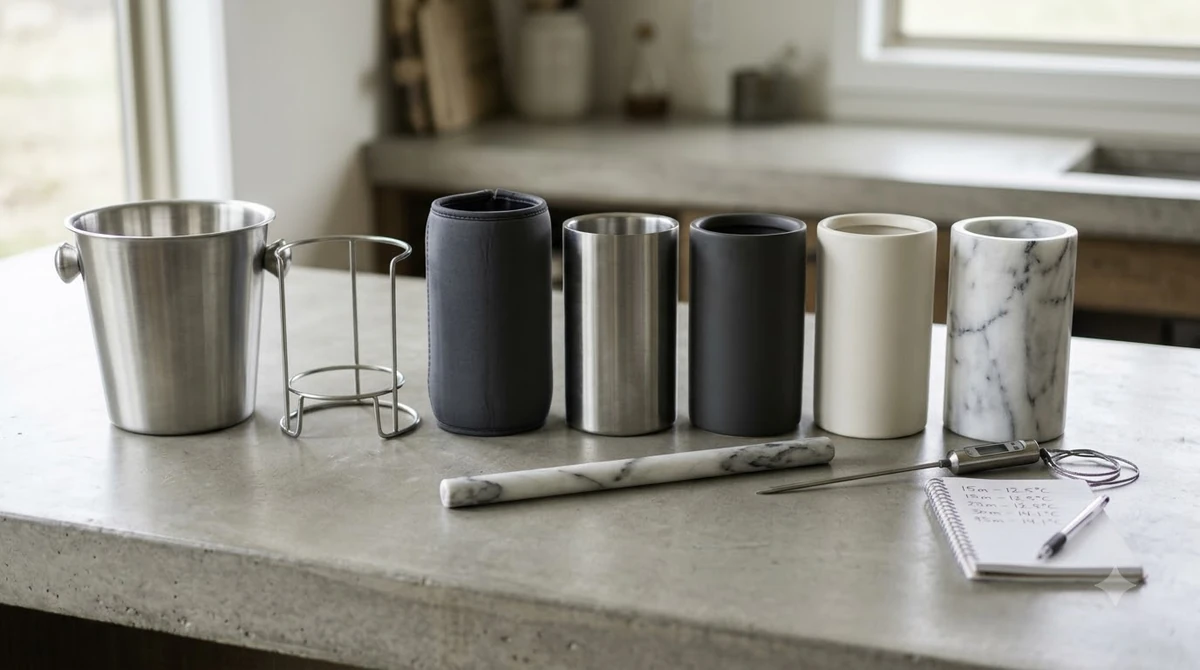
According to the manufacturer’s product information, the sleeve uses advanced interior gel to cool wine to serving temperature in approximately 30 minutes. Its tapered upper section and elastic sides help maintain contact with the bottle, while the flexible construction makes it easier to put on and remove than a rigid cooling container. The manufacturer identifies standard 750 ml bottles as its intended fit, making it suitable for many everyday still wines.
The dimensions listed by John Lewis are 23.5 x 15.5 x 3 cm, while Bloomingdale’s lists approximately 1 x 6.5 x 9 inches. These measurements describe a relatively compact accessory that can be stored flat in a freezer drawer. The listed exterior material is nylon, with cooling gel incorporated into the sleeve’s construction.
| Specification | Le Creuset Wine Cooler Sleeve |
|---|---|
| Product type | Reusable wine cooling sleeve |
| Exterior material | Nylon |
| Cooling construction | Interior cooling gel |
| Compatible bottle size | Standard 750 ml bottles |
| Listed dimensions | 23.5 x 15.5 x 3 cm |
| Manufacturer cooling claim | Approximately 30 minutes |
| Freezer preparation | Freeze before use |
| Cleaning | Hand wash |
| Dishwasher safe | No |
| Color options | Cerise, Flame, Burgundy, Shiny Black |
| Warranty information | Limited five-year warranty listed by Bloomingdale’s |
| Country of manufacture | China |
There is an important distinction between cooling performance and temperature maintenance. The gel absorbs heat from the bottle, while the insulated sleeve helps reduce the effect of warmer surrounding air. That combination is useful at an outdoor table, but it does not make the accessory equivalent to an ice bath. A bottle starting at room temperature may need more time to reach an appropriate serving temperature than one that has already spent several hours in the refrigerator.
Another useful feature is the lack of electrical components. There is no charging cable, battery, motor, or temperature control to manage. Once frozen, the sleeve is ready for use without additional equipment. The trade-off is that preparation depends on having freezer space available in advance.
The manufacturer’s product page confirms the nylon construction, gel cooling system, and hand-washing requirement. Its product information is available at Le Creuset’s official Wine Cooler Sleeve listing.
What Owners Like
The strongest practical advantages are portability, simple operation, and the ability to keep an already-chilled bottle cool without an ice bucket. Customer feedback also points to its usefulness for patio dining, picnics, and informal outdoor gatherings.
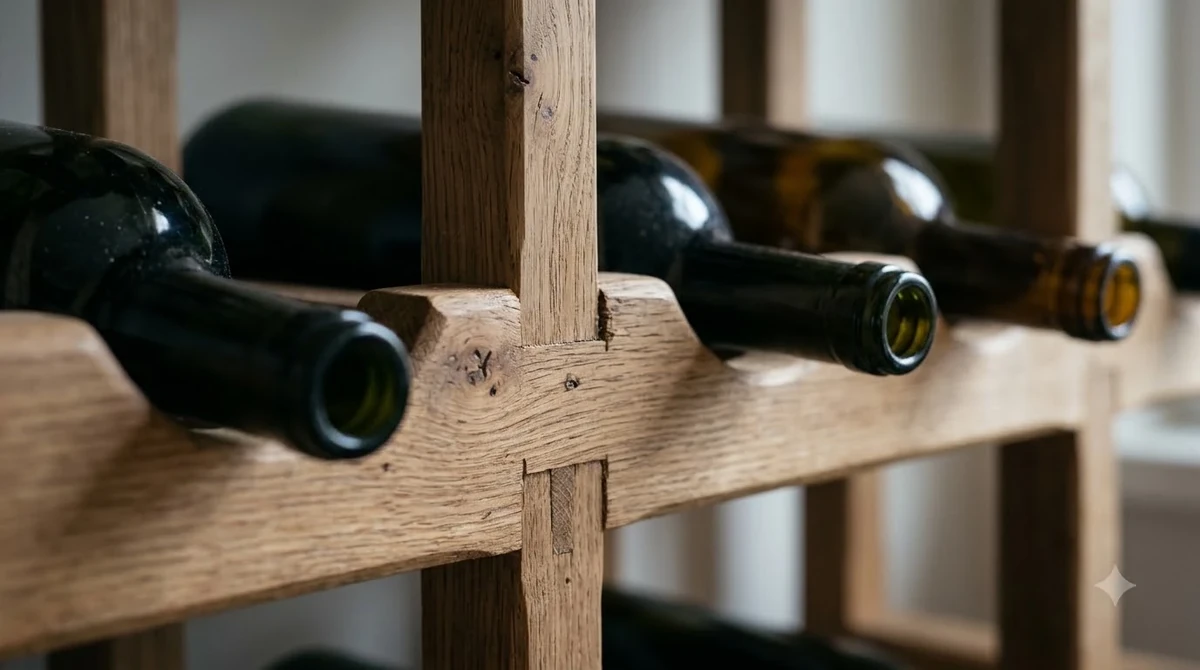
One of the most useful aspects of the design is its straightforward preparation. The sleeve stays in the freezer until a bottle is ready to serve. There is no need to prepare ice, find a suitable bucket, or deal with melting water around the table. This is particularly convenient when serving one bottle of Sauvignon Blanc, Chardonnay, rosé, or sparkling wine during an outdoor meal.
A customer review published by Bloomingdale’s specifically mentions using the sleeve to keep Chardonnay chilled on a patio. That feedback illustrates an important distinction: the sleeve’s most convincing everyday role is maintaining an existing chill while wine is being poured. It is less demanding than expecting a small gel accessory to rapidly cool a warm bottle.
Other positive feedback published by retailers highlights the sleeve’s appearance and convenience. The familiar Le Creuset color choices make it more decorative than many basic fabric wine sleeves. Cerise and Flame provide brighter options, while Burgundy and Shiny Black suit more understated table settings.
The flexible construction also makes storage relatively simple. A rigid ice bucket takes up dedicated cabinet space, whereas a soft-sided sleeve can lie flat in a freezer drawer when it is not being used. This is a meaningful advantage in smaller kitchens or homes where wine accessories are not used every day.
Useful for outdoor entertaining
Outdoor serving is where the design makes the most sense. A bottle of white wine can be removed from the refrigerator, covered with the frozen sleeve, and placed on a patio table without bringing out an ice bucket. The same approach works for a bottle of rosé during a picnic or a chilled sparkling wine served with appetizers.
For a typical outdoor dinner lasting 60 to 90 minutes, the sleeve offers a practical way to reduce warming during repeated pours. Its effectiveness will depend on the starting temperature, surrounding air temperature, sunlight, and how frequently the bottle is removed from the sleeve. Keeping the bottle in shade and returning it to the sleeve between pours should help it retain its chill.
Convenient as a gift
The sleeve also works as a wine-related gift because it has an immediately understandable purpose. Pairing it with a bottle of wine creates a more complete present for a host, a housewarming celebration, or someone who enjoys outdoor entertaining. Its recognizable brand styling adds visual appeal without requiring the recipient to learn how to operate an appliance.
For wine drinkers who already own corkscrews and basic pouring accessories, a reusable cooling sleeve can add a different kind of practical value. It is particularly useful for someone who regularly serves chilled wine but does not want to leave a large bucket on the table.
Common Complaints
The main limitation is cooling speed: a freezer-ready sleeve is useful, but it should not be treated as a guaranteed substitute for properly refrigerating a warm bottle. Other considerations include freezer preparation, bottle shape, and the fact that the sleeve partially covers the wine label.
Bloomingdale’s publishes two customer reviews that illustrate different expectations. One reviewer appreciated the convenience of keeping Chardonnay chilled on a patio. Another described the product as attractive but questioned whether it could fully chill a bottle, ultimately returning it because that was the performance expected.
These comments are not necessarily contradictory. Maintaining an already-cold bottle is easier than removing a substantial amount of heat from wine that has been sitting at room temperature. A gel sleeve can help with both tasks, but the starting temperature makes a significant difference to the result.
There is also a preparation requirement that some buyers may find inconvenient. The sleeve needs to spend time in the freezer before it is useful. Someone who decides to open a bottle unexpectedly cannot assume that a sleeve taken from a kitchen cupboard will provide immediate cooling.
Bottle fit is not universal
Although the manufacturer specifies standard 750 ml bottles, wine bottles are not all identical. A relatively narrow bottle of Riesling may fit differently from a wider Burgundy-style bottle. Sparkling wine bottles can also have wider shoulders and different body proportions.
The elastic sides and tapered top help accommodate variations, but they do not guarantee compatibility with every bottle shape. Very wide Champagne bottles, unusually shaped bottles, and large-format bottles deserve particular attention before purchase.
Another practical limitation is label visibility. Once the sleeve covers the central part of the bottle, guests may not be able to identify the producer or grape variety easily. This matters when several bottles are being served at the same gathering. One simple solution is to keep the bottle’s neck or an exposed section of its label visible whenever the fit allows.
It requires freezer space
The sleeve is compact, but it still needs a suitable freezer location. A crowded freezer, particularly one filled with frozen meals or large containers, can make storage inconvenient. Keeping it in a consistent location helps ensure that it is available when guests arrive.
Its passive construction also means that the user cannot select a specific temperature. Unlike an electric appliance, it does not offer a digital display or adjustable cooling setting. The accessory provides a relatively simple cooling method rather than precise temperature management.
These limitations are important because they help establish what the product is designed to do. It is a portable wine-serving accessory, not a refrigeration appliance or a replacement for advance chilling.
Who Should Buy and Who Should Skip
The Le Creuset sleeve is a sensible choice for wine drinkers who regularly serve chilled bottles at home or outdoors and want a compact alternative to an ice bucket. It is less suitable for buyers who expect rapid cooling from room temperature or need to accommodate unusually large bottles.
White wine drinkers are among the clearest potential buyers. Sauvignon Blanc, Pinot Grigio, and Chardonnay are generally served cooler than most red wines, making temperature maintenance especially useful during a meal. A serving range of approximately 45 to 50 F works for light whites and rosé, while fuller-bodied Chardonnay is generally better around 50 to 55 F.
The sleeve is also appropriate for sparkling wine. Champagne, Cava, and Prosecco are commonly served around 40 to 50 F. A bottle that has already been properly chilled can benefit from the sleeve during an extended dinner or celebration. For these occasions, the ability to keep a bottle cool without an ice bucket can be more important than its initial cooling speed.
Buy it if you want simple temperature maintenance
Consider the Le Creuset sleeve if you frequently move wine between the refrigerator, dining room, and outdoor table. It is particularly attractive for households that serve one bottle at a time rather than several bottles simultaneously.
It also makes sense for buyers who value compact storage and a decorative accessory. The available colors allow the sleeve to complement other Le Creuset kitchen items or match a particular table setting. The flexible nylon construction is easier to store than a rigid cooling vessel.
Another reason to consider it is its low-maintenance operating design. There are no electronic parts to configure, and the sleeve does not require an ongoing supply of ice. Freezer preparation and basic cleaning are the main routine tasks.
Skip it if you need rapid cooling
Someone who frequently purchases wine shortly before serving may prefer a more substantial cooling method. A refrigerator or an ice-and-water bath is more appropriate when the bottle starts warm and needs to reach serving temperature quickly.
Buyers who regularly serve magnum bottles or unusually wide sparkling wine bottles should also consider a different accessory. The standard 750 ml specification provides a useful starting point, but it should not be interpreted as universal compatibility with every bottle in that volume category.
Finally, people who prefer to display wine labels during formal service may find the sleeve less attractive than an open-sided cooling stand or a transparent wine bucket. Its main functional advantage comes from covering the bottle, which inevitably makes identification less convenient.
Tip: Refrigerate your wine before using the sleeve. For a bottle of Sauvignon Blanc, aim for approximately 45 to 50 F before serving; for sparkling wine, aim for approximately 40 to 50 F. The frozen sleeve is most useful for maintaining these temperatures during service rather than replacing the initial chilling process.
How It Compares to Alternatives
The Le Creuset sleeve is best understood as a portable, passive cooling accessory. Marble chillers, traditional ice buckets, and electric wine chillers solve related problems, but their designs and practical advantages are different.
A marble wine chiller uses the thermal properties of a heavy stone vessel to help maintain a bottle’s temperature. It offers a more permanent tabletop presentation and does not need the same flexible fit as a sleeve. However, marble is heavier and takes up more storage space. The marble wine chiller is worth considering if appearance and a substantial serving accessory matter more than portability.
An ice bucket provides a different level of cooling flexibility. Adding ice and water creates direct contact around much of the bottle, making it a useful option when the wine needs to cool more quickly. The disadvantages are additional preparation, dripping water, and the need to keep ice available.
An electric wine chiller is a better fit for people who want a more appliance-oriented approach. Depending on its design, it may provide controlled or powered cooling without requiring the user to freeze a sleeve in advance. However, it generally requires more counter or storage space and introduces electrical components. Buyers comparing powered solutions can also explore an electric wine chiller.
For wine drinkers who want a broader collection of serving accessories, the Accessory Brands section provides another starting point for comparing wine-related equipment. The right choice depends on how wine is served, how many bottles are usually involved, and whether portability or presentation is the priority.
Choosing by serving situation
For a picnic or a casual patio dinner, the Le Creuset sleeve has a clear practical advantage because it is light, reusable, and does not need ice. For a formal dinner with several bottles, a bucket or multiple cooling vessels may be more convenient.
For a permanent dining-room centerpiece, marble can be more attractive. For households that frequently need to cool bottles on demand, an electric unit may justify the additional space and setup.
There is no reason to expect one accessory to handle every wine-serving situation equally well. The sleeve’s value comes from combining basic temperature maintenance with portability and simple operation.
Frequently Asked Questions
Can the Le Creuset wine chiller be used for beer and soft drinks?
Le Creuset’s international product information describes the cooler sleeve as suitable for bottled drinks beyond wine. Its flexible construction can accommodate some differently shaped containers, although compatibility depends on their dimensions. Tall cans and unusually wide beverage bottles may not make sufficient contact with the cooling surface.
Can the Le Creuset sleeve be used for red wine?
Yes. It can help maintain the temperature of chilled red wine, particularly lighter styles such as Pinot Noir. Light reds are generally served around 55 to 60 F, while fuller-bodied reds are usually served around 60 to 65 F, so a bottle should not automatically be kept as cold as sparkling wine.
Does the sleeve need to be completely dry before freezing?
It is sensible to dry the exterior thoroughly after cleaning before returning the accessory to freezer storage. This helps prevent unwanted moisture from freezing onto surrounding items. Avoid storing the sleeve while it is still wet or contaminated with wine residue.
Can the Le Creuset wine cooler be used with a wine decanter?
The sleeve is designed around bottles rather than decanters, so a decanter should not be assumed to fit. Decanting is also a separate serving decision: young, full-bodied red wines such as Cabernet Sauvignon may benefit from approximately 30 to 60 minutes of aeration. A decanter with a wide base generally requires a dedicated cooling solution if temperature maintenance is needed.
Can the gel-filled sleeve be repaired if it leaks?
The manufacturer does not describe a user-repair procedure for damaged cooling gel compartments. If the sleeve develops a puncture or leakage, stop using it and contact the manufacturer or retailer about the available warranty process. Avoid attempting to open or refill the gel compartment yourself.
The Le Creuset Wine Cooler Sleeve is a well-considered accessory for maintaining the temperature of an already-chilled bottle without the inconvenience of an ice bucket. Its freezer-ready gel construction, flexible fit, compact storage, and recognizable styling make it particularly useful for outdoor dining and casual entertaining. Buyers who need rapid cooling or compatibility with larger bottles should consider other options, but for straightforward wine service, this sleeve offers a practical and attractive solution.
More in Wine Accessories
 Vinglace Wine Tumbler Review: A Glass-Lined Choice for Better SippingUpdated Nov 20, 2026
 ZWILLING Electric Wine Opener Review: Features and DrawbacksUpdated Nov 20, 2026
 Vinturi Electric Wine Opener Review for Easy UncorkingUpdated Nov 20, 2026
 Vinabon Wine Aerator Review for Easier, Cleaner Wine ServingUpdated Nov 20, 2026
 Vacu Vin Electric Wine Opener Review: Easy Cork Removal for Home Wine LoversUpdated Nov 20, 2026
 Rabbit Wine Accessories for Easier Home Wine ServiceUpdated Nov 20, 2026