

We may earn a commission when you buy through links on this page, at no extra cost to you. Learn more.
When comparing pinot noir vs primitivo, Pinot Noir is a lighter-bodied, high-acid cool-climate red with bright cherry and earthy notes, while Primitivo is a full-bodied, higher-alcohol warm-climate Italian red packed with jammy dark berries and spice. Pinot Noir typically sits between 12% and 14.5% ABV with silky, low-to-medium tannins that flatter delicate poultry and salmon. Primitivo—genetically identical to California Zinfandel—often reaches 14% to 16% ABV with plush, medium tannins built for grilled meats, rich tomato sauces, and aged cheeses.
Both grapes have thin to medium skins that produce approachable, fruit-forward red wines without the mouth-drying grip of Cabernet Sauvignon, which is why shoppers often weigh them side by side on the retail shelf. Yet their vineyard origins, ripening speeds, and cellar treatments create two completely different experiences in the glass. Exploring how these two varieties diverge across structure, regional styles, serving temperature, and dinner pairings makes choosing between them straightforward—a helpful foundation for any wine vs wine comparison.
Side-by-Side Comparison of Pinot Noir and Primitivo
Pinot Noir trades weight and warmth for brisk acidity and aromatic nuance, whereas Primitivo delivers concentrated dark fruit, higher alcohol, and a broader palate presence. The numbers below reflect typical dry table wine ranges across major producing regions rather than sweet passito bottlings.
| Attribute | Pinot Noir | Primitivo |
|---|---|---|
| Primary Origin | Burgundy, France | Puglia, Southern Italy (via Croatia) |
| Body | Light to medium | Medium-plus to full |
| Acidity | High | Medium |
| Tannins | Low to medium (silky) | Medium (ripe and plush) |
| Typical Alcohol (ABV) | 12%–14.5% (up to 15% in warm sites) | 13.5%–16% |
| Sweetness Style | Dry | Dry to slightly off-dry perception (plus sweet Dolce Naturale) |
| Core Fruit Notes | Red cherry, cranberry, raspberry, pomegranate | Blackberry, black cherry, dried fig, plum jam |
| Savory & Spice Notes | Forest floor, mushroom, rose petal, clove, cola | Black pepper, anise, dried herbs, tobacco, cocoa |
| Ideal Serving Temp | 55–60°F (up to 65°F for fuller styles) | 60–65°F |
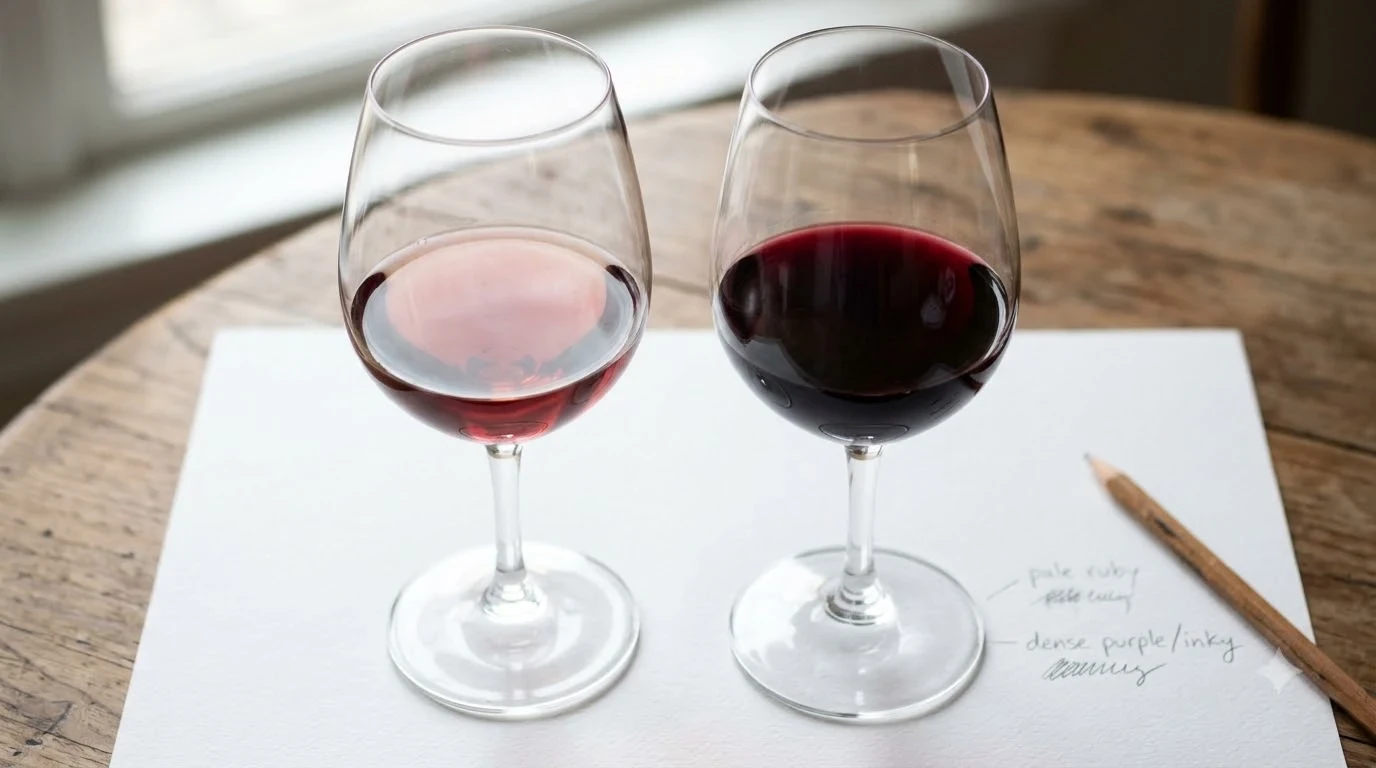
Color offers the fastest visual clue before taking a sip. Pinot Noir pours a translucent ruby or garnet hue because its thin skins contain relatively low levels of anthocyanin pigments. Primitivo pours a deep, opaque ruby-purple that often stains the side of a glass, driven by thick sun-baked skins and rapid sugar accumulation in southern Italy.
Residual sugar also shapes how each wine feels on the midpalate. Standard Pinot Noir ferments completely dry, letting crisp malic and tartaric acids carry the finish. Many commercial Primitivo bottlings retain a few grams per liter of unfermented grape sugar—or rely on glycerin from 15% ABV—creating a round, subtly sweet impression even when labeled as dry table wine.
Grape Origins, Genetics, and Vineyard Behavior
Pinot Noir is an ancient French variety suited to cool, marginal climates, while Primitivo is an early-ripening Balkan grape that thrives in the arid heat of southern Italy. Their viticultural personalities dictate everything from harvest dates to bottle availability.
Pinot Noir: The Cool-Climate Benchmark
Cultivated for centuries by Cistercian monks in Burgundy, Pinot Noir takes its name from the French words for pine and black, describing its tight, pine-cone-shaped clusters. According to Wine Enthusiast, thin skins and compact bunches make the vine highly vulnerable to spring frost, sunburn, and fungal rot, earning it the industry nickname “the heartbreak grape.”
Because Pinot Noir mutates easily, dozens of distinct clones exist across Burgundy, Oregon’s Willamette Valley, California’s Sonoma Coast, and New Zealand’s Central Otago. Cool nights preserve natural acidity during slow ripening, allowing complex floral and earthy compounds to develop before sugars climb too high.
Primitivo: Puglia’s Early-Ripening Zinfandel Twin
Primitivo traces its roots across the Adriatic Sea to coastal Croatia, where it is known as Tribidrag or Crljenak Kaštelanski, before arriving in southern Italy during the 1700s. DNA research confirmed that Primitivo is genetically identical to California Zinfandel, though Italian winemakers cultivate and vinify it differently than their American counterparts.
In the early nineteenth century, grower Nicolò Petrera isolated the vine in Gioia del Colle and named it after the Italian word prima (“first”) because it ripens weeks earlier than neighboring grapes. According to Decanter, Primitivo ripens so rapidly in Puglia’s August heat that clusters can shift from underripe to overripe within days, with careful growers harvesting when roughly 5% of berries on each bunch have begun to raisin.
Traditional Puglian vineyards train Primitivo as low, free-standing bush vines called alberello, some planted in the 1930s and 1940s. Although European Union vine-pull subsidies eliminated at least 80% of these historic bush vines over two decades, surviving old-vine plots yield tiny quantities of deeply concentrated fruit.
Aroma, Flavor, and Mouthfeel Differences
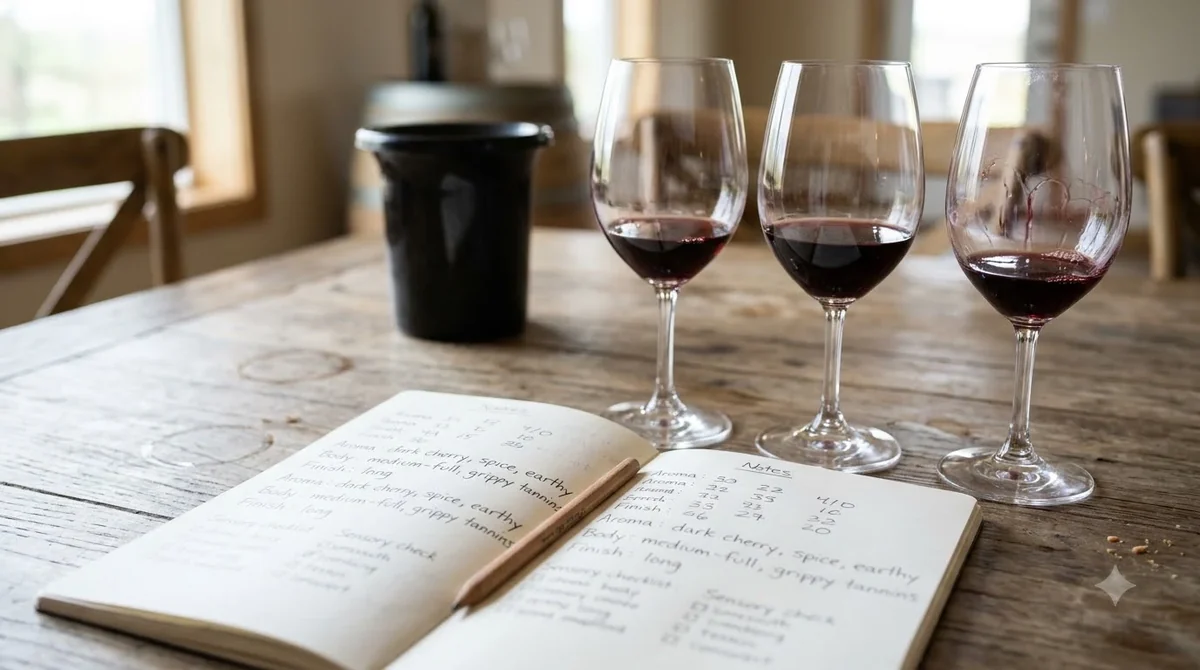
Pinot Noir tastes brisk, red-fruited, and savory, whereas Primitivo leans plush, dark-fruited, and warmly spiced. Comparing the two glasses side by side highlights the contrast between acid-driven lift and alcohol-driven weight.
A classic cool-climate Pinot Noir opens with tart red cherry, wild strawberry, cranberry, and crushed rose petal. As the wine breathes or spends time in bottle, secondary notes of damp forest floor, white mushroom, black tea, and subtle clove emerge. Even warmer-climate Pinot Noir from Santa Barbara or Russian River Valley balances its riper raspberry and pomegranate core with vibrant acidity that keeps the palate refreshing.
Primitivo hits the nose immediately with ripe blackberry, black cherry compote, dried fig, and plum preserves. Underlying accents of black pepper, star anise, dried Mediterranean herbs, and sweet tobacco keep the fruit from feeling one-dimensional. On the palate, higher alcohol lends a velvety, warming viscosity, while ripe, rounded tannins coat the tongue without sharp bitterness.
Tip: If you enjoy the red-berry brightness of Pinot Noir but want a little more warmth and spice without jumping all the way to a 15.5% ABV Primitivo, explore a grenache vs pinot noir comparison to find a middle-weight bridge.
Key Growing Regions and Stylistic Variations
Regional terroir splits both grapes into distinct stylistic camps, ranging from lean, mineral-driven bottlings to rich, oak-aged expressions. Knowing the major appellations on the front label predicts how heavy or fresh the wine will taste.
Classic Pinot Noir Appellations
France’s Côte d’Or in Burgundy remains the benchmark for structured, limestone-inflected Pinot Noir, typically bottling between 12.5% and 13.5% ABV with pronounced earthy and floral complexity. Germany’s Baden and Ahr valleys—where the grape is labeled Spätburgunder—and Austria’s Thermenregion produce similarly crisp, linear reds with pure red-currant fruit.
Across the Pacific, Oregon’s Willamette Valley bridges Old World restraint and New World fruit, balancing cherry and baking spice with brisk marine-influenced acidity. Warmer American appellations such as California’s Sonoma Coast, Carneros, and Santa Lucia Highlands yield deeper-colored Pinot Noir at 13.5% to 14.5% ABV, often framed by 20% to 40% new French oak barrels.
Primitivo Zones in Puglia
Puglia—the sun-drenched heel of Italy’s boot—produces three primary styles of Primitivo across distinct microclimates:
- Primitivo di Manduria DOC: Located along the Ionian Sea in the province of Taranto, this warm flatland appellation features iron-rich red clay and sand. Wines frequently reach 14.5% to 16% ABV with lush fig, black cherry, cocoa, and vanilla notes, while Riserva bottlings require extended aging in wood and bottle. Producers like Rivera also ferment select lots in glass-lined cement tanks to preserve mentholated herb and violet freshness.
- Gioia del Colle DOC: Situated inland in the province of Bari on the Murgia karst plateau at elevations between 650 and 1,400 feet, this zone experiences sharp day-to-night temperature drops over gravelly terra rossa and limestone soils. Estates such as Polvanera and Fatalone craft brighter, drier Primitivo with crunchy blackberry, blood orange, and white pepper character at moderate alcohol levels.
- Salento IGT: Spanning the broader Salento peninsula between the Adriatic and Ionian coasts, this designation relies on steady sea breezes to moderate summer heat. Salento Primitivo bottlings typically sit around 13.5% to 14.5% ABV and offer straightforward, juicy red and dark berry flavors for everyday drinking.
Food Pairing Strategies for Pinot Noir vs Primitivo
Pinot Noir pairs best with savory poultry, fatty fish, and mushroom-driven plates, while Primitivo excels alongside smoky grilled meats, rich tomato sauces, and aged hard cheeses. Matching weight, acidity, and sweetness prevents either wine from overpowering dinner.
Because Pinot Noir combines high natural acidity with low-to-medium tannins, it works as one of the most versatile dinner reds at the table. According to Wine Enthusiast, classic pairings include herb-roasted chicken, duck breast, pork tenderloin, and earthy wild mushroom risotto, where the wine’s tart cranberry and forest-floor notes cut through richness without clashing. Pinot Noir’s low tannin level also avoids the metallic bitterness that heavy reds create when paired with oily fish like cedar-plank salmon or seared tuna.
Primitivo requires bolder flavors and higher fat or protein levels to balance its high alcohol—often reaching 14% to 16% ABV according to Wine Enthusiast—and jammy dark fruit. Salt and char soften its ripe tannins, making Primitivo a natural partner for barbecued pork ribs, grilled lamb chops, sausage ragù over orecchiette pasta, and braised beef short ribs. Its subtle hint of residual sweetness also handles tangy barbecue glazes and caramelized roasted root vegetables better than bone-dry, high-tannin reds, though fiery chili heat will still amplify the wine’s alcohol warmth.
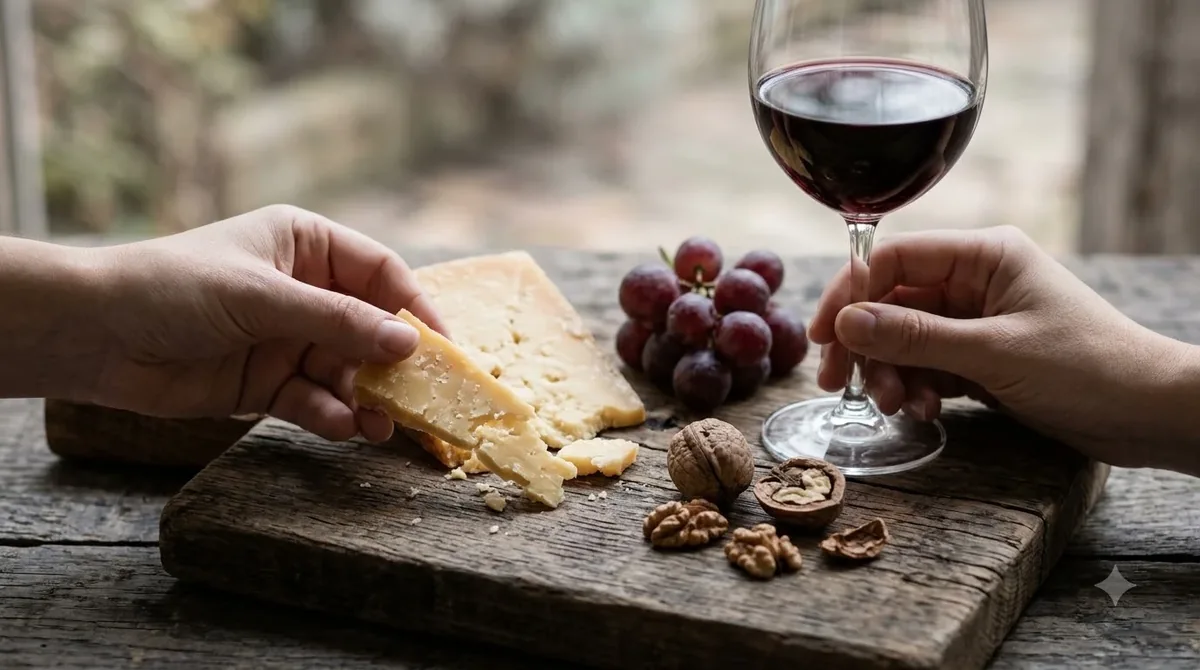
On a cheese board, serve Pinot Noir with bloomy-rind Brie, Camembert, or nutty Gruyère. Pair Primitivo with sharp aged Pecorino Romano, Parmigiano-Reggiano, or smoked provolone, where intense saltiness tames the fruit concentration.
Serving Temperature, Decanting, and Storage
Pinot Noir shows best slightly chilled around 55 to 60°F, whereas Primitivo performs better between 60 and 65°F with brief aeration before pouring. Proper temperature control keeps Pinot Noir crisp and prevents Primitivo’s high alcohol from tasting hot.
Lighter Pinot Noir bottlings from Burgundy, Germany, or Oregon benefit from 20 to 30 minutes in a refrigerator before serving so the glass lands near 55°F. According to Wine Enthusiast, fuller-bodied Pinot Noir expressions from California or Central Otago can be served closer to 65°F so their plush fruit aromatics stay open. Delicate Pinot Noir rarely needs heavy decanting—simply pouring into a wide-bowled Burgundy glass 15 minutes ahead of dinner lets subtle floral notes unfurl without oxidizing fragile aromatics.
Primitivo should be cooled slightly below room temperature to 60–65°F; pouring a high-alcohol bottle at a warm room temperature emphasizes ethanol fumes over blackberry and spice. Young, concentrated Primitivo di Manduria Riserva bottles benefit from 30 to 45 minutes in a decanter to soften oak spice and let dense dark fruit open up. Once opened, recork both wines and store them upright in the refrigerator, where delicate Pinot Noir shows best within a couple of days and fuller Primitivo holds for several days.
For unopened bottles, store both varieties horizontally on their sides in a dark space near 55°F so corks remain moist and sealed. Entry-level Salento Primitivo and everyday Pinot Noir are meant for early enjoyment within a few years of release, while top Premier Cru Burgundy or old-vine Gioia del Colle Primitivo can cellar gracefully for a decade or more.
How to Choose Between Pinot Noir and Primitivo
Choose Pinot Noir for light-to-medium-bodied elegance, brisk acidity, and versatile poultry or seafood pairings, and choose Primitivo for full-bodied richness, dark berry warmth, and hearty grilled dishes. Letting the meal, weather, and personal preference for acidity versus alcohol guide the bottle makes the decision simple.
Reach for Pinot Noir when:
- Dinner features roast chicken, duck, pork, salmon, or mushroom dishes rather than heavy red meats.
- You prefer bright red-fruit flavors, lively mouthwatering acidity, and subtle earthy complexity over sweet-tasting ripe fruit.
- You want a lighter, lower-alcohol red wine for warm weather or multi-course meals.
Reach for Primitivo when:
- The menu includes barbecued ribs, sausages, hearty beef pasta, or aged hard cheeses.
- You enjoy bold blackberry and plum jam flavors, velvety mouthfeel, and warming spice notes of black pepper and cocoa.
- You want maximum flavor concentration and plush texture at an approachable everyday price point compared to top-tier Burgundy.
Shoppers torn between Pinot Noir’s light body and a firmer, more structured Italian red can also explore a nebbiolo vs pinot noir matchup, while anyone debating a crisp white for seafood can compare pinot noir vs sauvignon blanc before heading to the store.
Frequently Asked Questions
Is Primitivo sweeter than Pinot Noir?
Yes, standard Primitivo generally tastes noticeably sweeter and fruitier than Pinot Noir, even when both bottles are fermented dry, because warm-climate ripeness and slight residual sugar soften its high alcohol.
Are Primitivo and California Zinfandel identical in the glass?
Although Primitivo and Zinfandel share identical DNA, they belong to distinct clonal selections that ripen and taste slightly different. Primitivo clusters generally have smaller berries and ripen earlier with slightly higher natural acidity and savory herbal notes, while California Zinfandel tends toward larger berries and bolder jammy bramble fruit.
Why is Pinot Noir usually more expensive than Primitivo?
Pinot Noir is notoriously difficult to farm because its thin skins and tight clusters make it prone to frost, mildew, and sunburn, resulting in lower vineyard yields and higher production costs. Primitivo thrives reliably in Puglia’s dry, sunny climate with fewer disease pressures, allowing wineries to bottle rich, concentrated wines at lower retail tiers.
How does soil depth affect Primitivo quality in Puglia?
According to Decanter, vineyard topsoil depth dramatically changes Primitivo concentration in zones like Sava near the Ionian Sea. Vines planted in topsoil shallower than 1 meter over porous limestone produce smaller berries with sharper mineral focus, whereas vines rooted in 4 meters of deep soil yield larger, less concentrated grapes.
What glass shape works best for serving Pinot Noir and Primitivo?
Pinot Noir performs best in a wide-bowled, tulip-shaped Burgundy glass that captures delicate rose-petal and cherry aromas and directs wine to the tip of the tongue. Primitivo shines in a slightly taller, medium-wide Bordeaux or universal red glass that allows high-alcohol vapors to dissipate while focusing dark fruit on the midpalate.
Pinot Noir and Primitivo occupy opposite ends of the approachable red wine spectrum, trading delicate cool-climate acidity for sun-drenched southern Italian richness. Checking the appellation on the label—whether Willamette Valley and Burgundy or Gioia del Colle and Manduria—helps match the bottle’s exact weight to tonight’s menu.
More in Wine vs Wine
 Chenin Blanc vs Pinot Gris: Acidity, Body, and Pairing DifferencesUpdated Nov 20, 2026
 Chianti vs Lambrusco: How Tuscany and Emilia-Romagna Reds CompareUpdated Nov 20, 2026
 Chianti vs Primitivo: Key Differences in Taste, Body, and PairingUpdated Nov 20, 2026
 Chianti vs Rioja: Key Differences in Taste, Aging, and PairingUpdated Nov 20, 2026
 Chianti vs Shiraz: How Acidity, Body, and Food Pairings CompareUpdated Nov 20, 2026
 Chianti vs Syrah: Key Differences in Taste, Body, and Food PairingUpdated Nov 20, 2026