

We may earn a commission when you buy through links on this page, at no extra cost to you. Learn more.
Comparing pinot noir vs riesling comes down to contrasting a light-bodied, dry red wine with silky tannins against a high-acid, aromatic white wine made in styles ranging from bone-dry to lusciously sweet. Both grapes thrive in cool climates and mirror their vineyard soils with remarkable clarity, making them favorites for food pairing. Choosing between them depends on whether a meal calls for savory red-berry depth and gentle grip or electric citrus acidity and adjustable sweetness.
Few grape comparisons highlight the versatility of cool-climate winemaking better than Pinot Noir and Riesling. While one is a thin-skinned black grape native to France and the other is a hardy white grape rooted in Germany, both reward careful vineyard farming and pair easily with complex dishes that overwhelm heavier wines. Understanding how their structure, regional styles, and serving needs diverge makes selecting the right bottle straightforward.
Core Differences Between Pinot Noir and Riesling
Pinot Noir is almost always fermented completely dry as a light- to medium-bodied red wine with low-to-medium tannins and bright acidity, whereas Riesling is a white wine prized for searing natural acidity and a spectrum spanning bone-dry to dessert-sweet. Both varieties avoid heavy new-oak masking in favor of pure fruit and site expression.
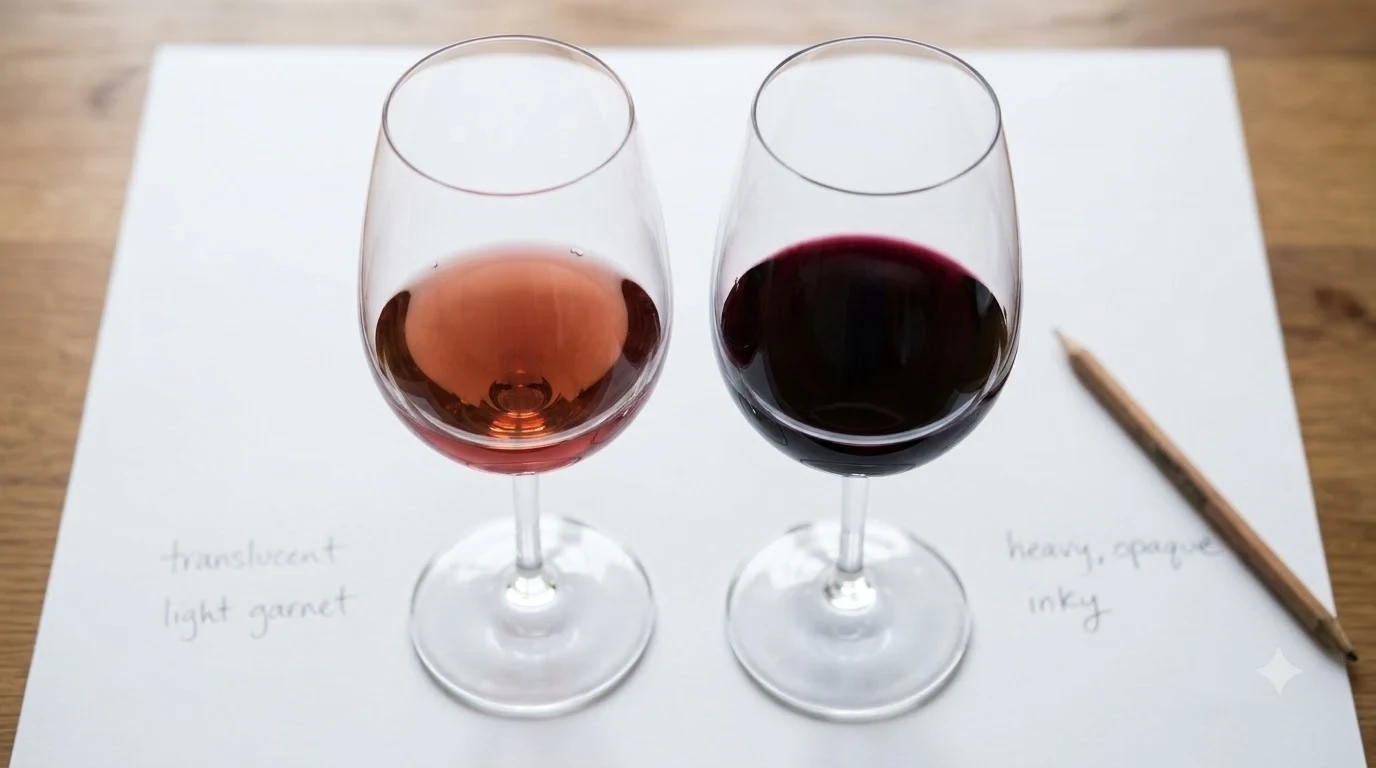
Because Pinot Noir has thin skins, it yields translucent ruby wines with modest anthocyanin pigment and supple, fine-grained tannins rather than the astringent grip found in Cabernet Sauvignon. According to Wine Enthusiast, typical Pinot Noir finishes between 12% and 15% alcohol by volume (ABV), balancing fresh red-fruit flavors like cranberry, raspberry, and cherry against savory notes of mushroom, forest floor, and dried herbs. Winemakers occasionally use Pinot Noir for white or sparkling wines—most notably in Champagne—but still red bottlings define the grape on retail shelves.
Riesling sits at the opposite end of the color spectrum while sharing Pinot Noir’s sensitivity to soil and microclimate. Young Rieslings burst with lime zest, green apple, white peach, and blossom aromas carried by some of the highest natural acidity in the wine world. Unlike Pinot Noir, which almost never carries noticeable sugar, Riesling winemakers routinely halt fermentation early to leave residual sugar, creating off-dry and sweet styles where vibrant tartness keeps the palate crisp rather than syrupy. Exploring broader Wine vs Wine matchups shows few pairs that share such high acidity across opposite grape colors.
| Attribute | Pinot Noir | Riesling |
|---|---|---|
| Wine Color & Style | Light- to medium-bodied red (also rosé and sparkling) | Light- to medium-bodied white (still and sparkling) |
| Sweetness Level | Almost always dry | Bone-dry to lusciously sweet |
| Acidity | High | Very high |
| Tannin | Low to medium, silky | None (white wine) |
| Typical ABV | 12%–15% (12%–13.5% in cool regions) | 7%–14% (below 11% off-dry/sweet; 11.5%–14% dry) |
| Primary Flavors | Cherry, raspberry, cranberry, mushroom, forest floor | Lime, green apple, white peach, apricot, wet slate |
| Ideal Serving Temp | 55°F–65°F | 43°F–55°F (43°F–50°F sweet; 45°F–50°F dry) |
Flavor Profiles, Acidity, and Sweetness Spectrum
Pinot Noir delivers a linear dry profile built on red berries, floral lift, and earthy complexity, while Riesling offers a broader stylistic range driven by residual sugar levels and aromatic compounds that evolve dramatically with age. Recognizing these flavor markers prevents mismatches at the dinner table.
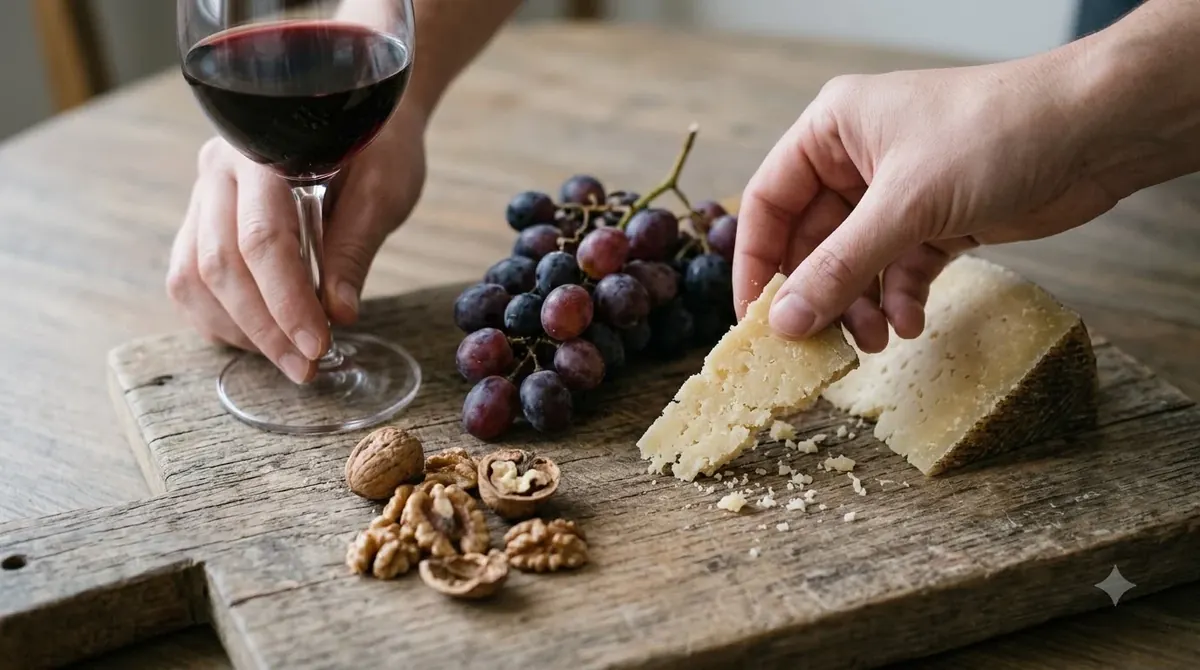
In the glass, Pinot Noir’s flavor profile shifts noticeably based on growing-season warmth. Cool-climate examples showcase tart cranberry, sour cherry, rose petal, and damp earth, while warmer-climate bottlings lean toward ripe raspberry, black cherry, cola spice, and subtle vanilla from modest French oak aging. Its acidity refreshes the palate without feeling sharp, and its gentle tannins provide just enough texture to frame savory proteins.
Riesling relies on high tartaric and malic acidity rather than tannin to create structure. Bone-dry styles emphasize razor-sharp lime, lemon oil, crushed rock, and green apple, while off-dry versions soften that citrus edge with juicy nectarine, apricot, and honeysuckle. As Riesling matures in bottle for five to twenty years, aromatic precursors called TDN develop signature notes of beeswax, toasted honey, smoke, and petrol or kerosene—a hallmark prized by collectors rather than a fault.
Tip: To spot whether a Riesling is dry or sweet before buying, look at the alcohol percentage on the front label. Bottles between 11.5% and 14% ABV are almost always fermented dry, while bottles between 7% and 10.5% ABV retain noticeable residual sugar.
How Wine Regions Shape Both Grapes
Cool coastal breezes, high altitudes, and northern latitudes allow both Pinot Noir and Riesling to ripen slowly without losing their signature acidity. While France dominates Pinot Noir’s prestige hierarchy and Germany anchors Riesling’s identity, several regions overlap and excel with both varieties.
Classic Pinot Noir Strongholds
Burgundy remains the benchmark for Pinot Noir, accounting for over 30 percent of global production on limestone and clay soils that impart firm minerality and savory depth. In the United States, Oregon’s Willamette Valley—officially established as an AVA in 1983 after first plantings in 1965—dedicates more than 70 percent of its wine production to Pinot Noir, bridging Burgundian earthiness with New World fruit. Farther south, Sonoma’s Russian River Valley relies on Pacific Ocean breezes and morning marine-layer fog to produce plush, floral reds, while New Zealand’s high-altitude Central Otago and Chile’s coastal Casablanca Valley deliver structured, bright-fruited bottlings. Drinkers comparing lighter reds can also explore how grenache vs pinot noir contrast in warmth and spice.
Classic Riesling Strongholds
Germany is Riesling’s historic homeland—first documented in a 1435 cellar ledger in Hessische Bergstrasse—and remains the world’s largest producer with roughly 24,000 hectares planted. Steep Devonian slate slopes along the Mosel River yield delicate, floral wines with piercing acidity, whereas south-facing vineyards along the Rhine in the Rheingau (roughly 80 percent south-facing) and drier Pfalz produce fuller, apricot- and citrus-driven dry styles. Just across the French border in Alsace, terraced vineyards at 200 to 400 meters altitude in the rain shadow of the Vosges mountains create powerful, dry, full-bodied Rieslings. Outside Europe, Austria’s rocky Wachau valley, Australia’s Clare and Eden Valleys, New York’s Finger Lakes, and Washington State turn out benchmark dry and off-dry bottlings.
Regions Where Both Grapes Thrive
Germany and Alsace prove that Pinot Noir and Riesling share an affinity for cool, marginal climates. In Germany, Pinot Noir is known as Spätburgunder and ranks as the country’s most planted red grape across all 13 wine regions, led by Baden, where roughly 35 percent of vineyard land grows Spätburgunder alongside crisp dry Rieslings. Alsace likewise pairs dry Riesling with increasingly structured, limestone-grown Pinot Noir, and Oregon’s Willamette Valley and New York’s Finger Lakes both produce vibrant expressions of each variety side by side.
Food Pairing: Matching Each Wine to the Meal
Pinot Noir excels with roasted poultry, fatty fish, pork, and earthy mushroom dishes thanks to its dry finish and silky tannins, whereas Riesling handles spicy Asian cuisines, salty cured meats, shellfish, and tart fruit desserts through its high acidity and flexible sweetness. Both wines rank among the most adaptable dinner partners on a restaurant list.
Pinot Noir’s low-to-medium tannin and bright acidity solve tricky pairing problems where heavier reds fail. Oily fish like grilled salmon, seared tuna, and trout clash with high-tannin Cabernet Sauvignon—which turns metallic against fish oils—but pair harmoniously with Pinot Noir’s light frame and red-berry lift. Roasted duck breast, herb-crusted pork tenderloin, roast chicken, and wild mushroom risotto mirror the wine’s savory forest-floor undertones while salt and fat soften its subtle grip.
Riesling thrives where red wines struggle, particularly with chili heat, sweet-and-sour glazes, and high-acid dressings. Because alcohol and tannin amplify capsaicin burn, dry or off-dry Riesling—with zero tannin, lower ABV, and a touch of residual sugar—cools the palate alongside Thai green curry, Sichuan noodles, and spicy pork tacos. Bone-dry Rieslings from Alsace, Austria, or Australia also cut cleanly through rich pork belly, Wiener schnitzel, raw oysters, and goat cheese, while sweet late-harvest styles match blue cheese and fruit tarts so long as the wine is at least as sweet as the dessert.
How to Read Labels and Decode Riesling Sweetness
Pinot Noir labels follow straightforward regional or varietal naming conventions, while Riesling labels rely on specific ripeness terms, dryness indicators, and back-label sweetness scales to signal whether a bottle tastes crisp or sweet. Knowing a few German and French label terms eliminates guesswork at the wine shop.
In Germany, the Prädikat system classifies Riesling by grape sugar ripeness at harvest rather than final sweetness in the bottle. According to Wine Enthusiast, the six Prädikat tiers climb from lightest to ripest: Kabinett, Spätlese, Auslese, Beerenauslese, Eiswein, and Trockenbeerenauslese. While Kabinett, Spätlese, and Auslese frequently retain noticeable residual sugar—often finishing with lower alcohol—winemakers can also ferment them completely dry by adding the word “Trocken” on the label, whereas “Feinherb” or “Halbtrocken” signals an off-dry balance.
Outside Germany, producers use clearer dryness cues. Many wineries in Alsace, New York’s Finger Lakes, and Washington State print the International Riesling Foundation (IRF) taste profile scale on the back label, placing a marker along a bar running from Dry to Medium Dry, Medium Sweet, and Sweet. Pinot Noir labels rarely mention sweetness because dry fermentation is the universal standard; instead, shoppers look for vineyard designations, village names in Burgundy, or AVA names like Willamette Valley and Russian River Valley to gauge whether a bottle leans earthy and light or riper and fuller-bodied.
Serving Temperature, Glassware, and Storage
Serving Pinot Noir slightly cool preserves its delicate red-fruit aromatics, while chilling Riesling thoroughly keeps its racy acidity crisp without muting its floral bouquet. Both varieties reward wide-bowled or tulip-shaped stemware and careful cellar storage.
Temperature control matters more for thin-skinned Pinot Noir than for heavier reds. Serving a bottle at warm room temperature emphasizes alcohol heat and flattens subtle rose-petal and cherry nuances; giving lighter Pinot Noirs a brief cellar chill and serving fuller California or Central Otago bottlings slightly below room temperature keeps the finish vibrant. Young, structured bottles benefit from brief gentle aeration in a wide Burgundy bowl glass—whose broad surface area funnels volatile aromatics toward the nose—while fragile aged bottles should be poured slowly without vigorous decanting.
Riesling performs best when chilled in the refrigerator and pulled out briefly before pouring. Sweet styles taste freshest well chilled, while dry, full-bodied bottlings from Alsace or the Wachau open up nicely when served slightly warmer in a standard white wine glass with a tapered rim. Unopened bottles of both grapes store well on their side in a cool, dark cellar with steady humidity; once opened and recorked in the fridge, delicate Pinot Noir is best enjoyed within a couple of days, while high-acid Riesling stays bright slightly longer.
How to Choose Between Pinot Noir and Riesling
Pick Pinot Noir when the occasion calls for a versatile, food-friendly red wine with red-berry depth and gentle tannins, and choose Riesling when a meal features chili spice, high acidity, shellfish, or dessert. Comparing both grapes against neighboring varieties also clarifies when another bottle fits even better.
- Choose Pinot Noir for savory meats and mild dishes: Roast chicken, duck, pork tenderloin, salmon, and mushroom pasta pair naturally with Pinot Noir’s dry palate and silky grip.
- Choose dry Riesling for sharp, salty, or rich white-meat dishes: Fried foods, pork schnitzel, raw oysters, ceviche, and fresh goat cheese shine alongside bone-dry Riesling’s lime-driven acidity.
- Choose off-dry Riesling for spicy food: Thai, Indian, Sichuan, and Mexican dishes with chili heat demand zero tannin and a touch of residual sugar to calm capsaicin burn.
- Consider adjacent styles when preferences shift: Drinkers who want firmer tannin and higher acidity in a pale red can compare nebbiolo vs pinot noir, while those seeking a crisp, herbaceous dry white without any sweetness spectrum can examine pinot noir vs sauvignon blanc.
Frequently Asked Questions
Is Riesling always a sweet wine?
No, many of the world’s finest Rieslings are fermented completely dry with zero perceptible sweetness. In Austria’s Wachau region—which accounts for 16 percent of Austria’s Riesling plantings according to Decanter—and Australia’s Clare and Eden Valleys, bone-dry styles are the overwhelming norm, and German bottles labeled Trocken or GG (Grosses Gewächs) are equally crisp and dry.
Can Pinot Noir be made as a white or sparkling wine?
Yes, because Pinot Noir’s dark pigment sits exclusively in its skins, winemakers can press whole grapes gently and separate the clear juice immediately to make white or sparkling wine. In Champagne, Pinot Noir is one of the three primary grapes alongside Chardonnay and Pinot Meunier, producing Blanc de Noirs sparkling wines with rich red-apple and brioche notes.
Which wine ages longer in the cellar, Pinot Noir or Riesling?
Top-tier Riesling typically outlasts Pinot Noir in the cellar because its combination of very high natural acidity and, in sweet styles, high residual sugar acts as a powerful natural preservative. While fine Burgundy or Willamette Valley Pinot Noir ages gracefully for over a decade, top German Spätlese, Auslese, and dry Grosses Gewächs Rieslings regularly evolve for decades in the cellar.
Why do some aged Rieslings smell like petrol or kerosene?
That distinctive aroma comes from a natural compound called 1,1,6-trimethyl-1,2-dihydronaphthalene (TDN), which forms as carotenoid precursors in the grape skins break down over time in bottle. Warm sun exposure on the vineyard and low yields increase TDN precursors, giving mature Rieslings from sunny sites a signature mineral-and-kerosene complexity alongside honey and dried apricot.
Which wine is better for guests with mixed tastes at a dinner party?
Serving both side by side works remarkably well because neither wine clashes with the other’s food pairings and both favor light-to-medium body over heavy oak or harsh tannin. Pouring a chilled off-dry Kabinett Riesling as an aperitif followed by a cool-climate Pinot Noir with the main course satisfies white-wine drinkers, red-wine fans, and complex multi-dish menus alike.
Pinot Noir and Riesling stand at opposite ends of the color chart yet share a cool-climate sensibility built on bright acidity, pure fruit, and transparency to vineyard soil. Matching Pinot Noir’s silky red-berry structure to savory poultry, salmon, and mushrooms while reserving dry or off-dry Riesling for spicy dishes, shellfish, and tart cheeses ensures the right bottle lands on the table every time.
More in Wine vs Wine
 Chenin Blanc vs Pinot Gris: Acidity, Body, and Pairing DifferencesUpdated Nov 20, 2026
 Chianti vs Lambrusco: How Tuscany and Emilia-Romagna Reds CompareUpdated Nov 20, 2026
 Chianti vs Primitivo: Key Differences in Taste, Body, and PairingUpdated Nov 20, 2026
 Chianti vs Rioja: Key Differences in Taste, Aging, and PairingUpdated Nov 20, 2026
 Chianti vs Shiraz: How Acidity, Body, and Food Pairings CompareUpdated Nov 20, 2026
 Chianti vs Syrah: Key Differences in Taste, Body, and Food PairingUpdated Nov 20, 2026