

We may earn a commission when you buy through links on this page, at no extra cost to you. Learn more.
Frappato food pairing works best with grilled fish, tuna, roasted vegetables, tomato-based pasta, roast chicken, and mild cheeses because this Sicilian red wine combines bright acidity, delicate red-fruit flavors, and low tannins. Its relatively light body makes it particularly versatile with dishes that can overwhelm heavier red wines. Serve it slightly chilled, around 54–60°F, to preserve its freshness and aromatic character.
Frappato offers a different approach to red wine at the dinner table. Rather than relying on powerful tannins, dense black fruit, or substantial oak flavors, this Sicilian grape brings strawberry, cherry, violet, and herbal notes to the glass. Its refreshing character makes it a natural companion for Mediterranean cooking, seafood, vegetables, and lighter meat dishes.
Although Frappato is associated with southeastern Sicily, particularly the Vittoria area, it also appears in wines from other parts of the island. Some bottles contain 100% Frappato, while others feature the grape in Cerasuolo di Vittoria alongside Nero d’Avola. Understanding these differences helps explain why some bottles work better with delicate seafood while others can accompany richer meat dishes.
Understanding Frappato’s Flavor and Structure
Frappato is a light-bodied, aromatic red wine with bright acidity, modest alcohol in many examples, and relatively low tannin. These characteristics make it especially compatible with food that needs freshness rather than the weight and structure of a powerful red wine.
Its recognizable flavors include wild strawberry, raspberry, red cherry, violet, rose, and sometimes pomegranate. Depending on the producer and winemaking approach, you may also notice dried herbs, sage, subtle spice, or earthy tobacco-like notes. The combination creates a wine that feels fragrant and lively without being overly heavy.
The grape’s low tannin is particularly important for food matching. Tannin creates a drying sensation that can interact with proteins and fats in food. Frappato has considerably less of this drying structure than Cabernet Sauvignon or many Syrah wines, so it can accompany dishes that would otherwise be difficult for a strongly tannic red.
Its acidity provides another useful pairing characteristic. Fresh acidity helps balance olive oil, tomato sauces, roasted vegetables, and moderately rich fish dishes. It also keeps the wine from feeling heavy alongside food containing butter, cheese, or cured meat.
Frappato is sometimes compared with Pinot Noir because both can produce relatively pale, aromatic reds. However, Frappato often emphasizes floral notes, fresh red berries, and a distinctly Mediterranean character. It is better understood as its own variety than as an Italian substitute for Pinot Noir.
Blending also changes the wine’s structure. Cerasuolo di Vittoria combines Frappato with Nero d’Avola, which contributes darker fruit, body, and additional tannin. A single-variety Frappato usually suits lighter dishes, while a structured blend can handle somewhat richer meat dishes.
Seafood, Tuna, and Mediterranean Fish Dishes
Seafood is among the strongest choices for Frappato, especially grilled tuna, swordfish, mullet, and fish soups. The wine’s bright acidity and restrained tannin complement the natural richness of fish without overpowering delicate flavors.
Grilled tuna is an especially convincing match. Unlike many white fish, tuna has a substantial texture and savory flavor that can work comfortably with a light red wine. Season the fish with olive oil, lemon, black pepper, and herbs, then grill it until just cooked through. Frappato’s strawberry and cherry notes provide an appealing contrast to the savory, slightly smoky character of the fish.
Swordfish is another excellent option. Its firm flesh makes it suitable for grilling, roasting, or cooking in a tomato-based sauce. A preparation with capers, parsley, lemon, and olive oil creates several complementary flavors: acidity from the lemon, savory depth from the fish, and herbal freshness that echoes the wine.
For a more traditional Sicilian direction, consider fish soup. A tomato-based broth containing firm white fish, herbs, garlic, and a moderate amount of olive oil gives Frappato enough flavor to engage with. The wine’s acidity works particularly well with the tomato component, while its low tannin avoids the harsh interaction that can occur between heavily tannic reds and seafood.
Fried fish can also work, particularly when the coating is light and the dish is served with lemon. The wine’s freshness cuts through the sensation of oil, while its red-fruit character adds more flavor than a neutral white wine might provide.
Sushi and sashimi are possible pairings, especially with tuna and other fuller-flavored fish. Choose preparations without excessive chili, very sweet sauces, or strong vinegar. Delicate white fish may be better with a crisp white wine, but tuna-based sushi can offer enough flavor and texture for Frappato.
Oily fish deserves some consideration. Unlike a strongly tannic red, Frappato has relatively little drying structure, making it a more sensible red-wine choice with tuna and other rich fish. Nevertheless, freshness and preparation matter. Heavy sauces, excessive sweetness, or intense smoke can overwhelm a delicate bottle.
Vegetables, Caponata, and Mediterranean Appetizers
Roasted vegetables, eggplant caponata, peppers, tomatoes, and herb-seasoned appetizers are excellent companions for Frappato. These dishes echo the wine’s Mediterranean character while allowing its acidity and floral aromas to remain noticeable.
Eggplant caponata is one of the most natural choices. This Sicilian preparation commonly combines eggplant, tomatoes, celery, olives, capers, and a sweet-sour dressing. Its combination of savory, acidic, and slightly sweet flavors provides plenty of complexity without requiring a heavily structured wine.
The important detail is the balance of sweetness. Caponata recipes vary, and some contain more sugar or sweetened vinegar than others. Keep the preparation moderately sweet so that the dry wine does not taste excessively sharp or sour beside it.
Roasted red peppers are another dependable match. Their natural sweetness develops during roasting, while light charring adds smoky flavors that complement Frappato’s herbal notes. Serve them with olive oil, garlic, parsley, and a little sea salt for a straightforward appetizer.
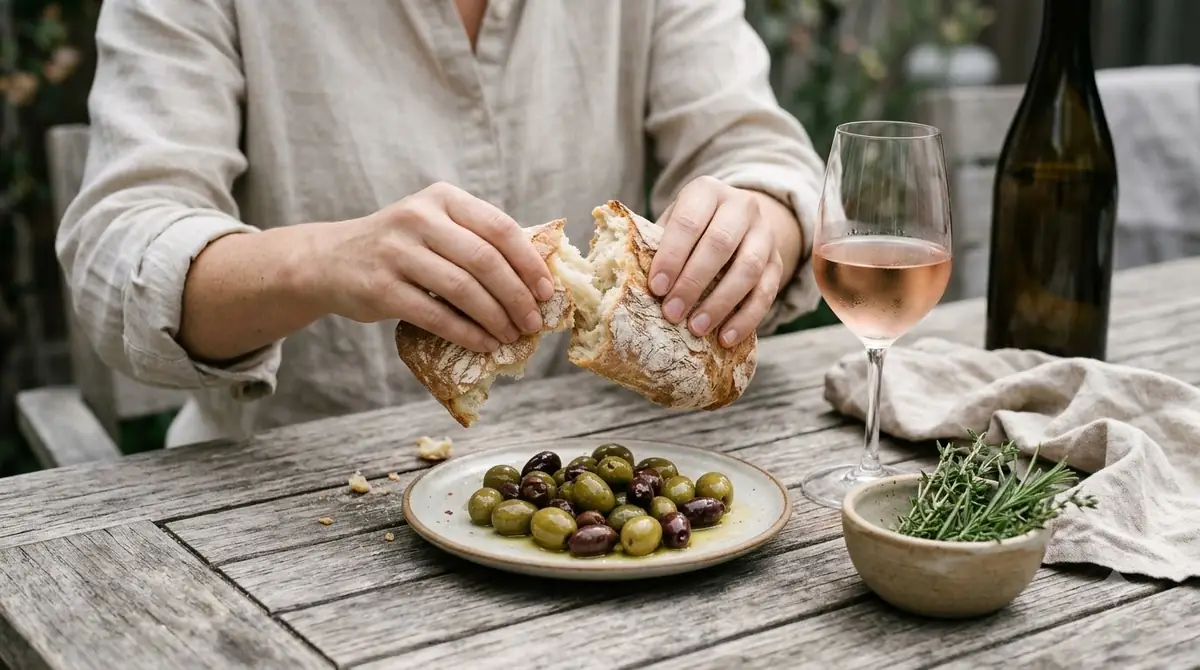
Sun-dried tomatoes work particularly well in antipasti, sandwiches, and pasta salads. Their concentrated savory flavor is more intense than that of fresh tomatoes, but their acidity helps maintain balance with the wine. Combine them with olives, grilled zucchini, or fresh herbs for a plate that suits Frappato’s aromatic profile.
Grilled vegetables are also recommended by Sicilian producer Feudi del Pisciotto for its 100% Frappato wine. Zucchini, eggplant, mushrooms, onions, and peppers all make useful options. The producer’s own description emphasizes strawberry, pomegranate, rose, and freesia, flavors that can complement the sweetness and fragrance of grilled vegetables. Its official Frappato wine profile and food-pairing recommendations also include cured meats, soups, stews, and fish dishes.
For an appetizer spread, arrange marinated artichokes, olives, roasted peppers, fresh tomatoes, and grilled eggplant. Avoid making every component intensely acidic or heavily spiced. A mixture of salty, savory, and naturally sweet ingredients gives the wine several complementary flavors to work with.
Chicken, Turkey, Pork, and Other Meat Pairings
Roast chicken, turkey, pork tenderloin, and lightly seasoned grilled meats are excellent choices for Frappato. Its low tannin and fresh red-fruit character complement lean proteins without overwhelming their texture or seasoning.
Roast chicken is one of the easiest matches. Prepare the bird with rosemary, thyme, garlic, lemon, and olive oil, allowing the skin to become golden and crisp. These ingredients connect naturally with the wine’s herbal and floral character. The acidity also helps balance the fat released during roasting.
Chicken with mushrooms is another useful combination. Mushrooms contribute savory, earthy flavors that work with the subtle dried-herb characteristics sometimes found in Frappato. A light pan sauce made with stock, herbs, and a small amount of butter keeps the dish balanced.
Turkey offers an especially interesting opportunity. Roast turkey with cranberry sauce is a recommended seasonal pairing because the wine’s acidity and red-fruit aromas complement the fruit component of the meal. The key is controlling the sweetness of the sauce. A tart cranberry preparation works better than a heavily sweetened version.
Pork tenderloin is another suitable choice. Its relatively lean texture makes it easier to pair with lighter reds than fatty, heavily smoked cuts. Season it with sage, rosemary, black pepper, or fennel, then roast or grill it. A side of roasted apples or grilled vegetables provides additional sweetness and acidity.
Charcuterie is a particularly practical option when serving Frappato before dinner. Prosciutto, mild salami, and other cured meats supply salt and fat that soften the wine’s already modest tannin. The combination creates a pleasant contrast between savory meat and fresh berry flavors.
However, not every meat dish is equally successful. Heavy braised beef, intensely smoky ribs, and very rich game preparations can overwhelm a delicate Frappato. These dishes generally benefit from a wine with more body, tannin, and concentration.
If serving a Cerasuolo di Vittoria blend rather than a lighter 100% Frappato, richer meat dishes become more realistic. Nero d’Avola contributes additional structure and darker fruit, giving the blend more capacity to match substantial food.
Pizza, Pasta, Tomato Sauces, and Italian Comfort Food
Frappato works particularly well with tomato-based Italian dishes, including margherita pizza, pasta alla Norma, tomato-and-eggplant sauces, and lightly seasoned meat sauces. Its acidity complements tomatoes, while its low tannin keeps the combination approachable.
Margherita pizza is a simple starting point. Tomato sauce, mozzarella, basil, and a crisp crust provide a combination of acidity, dairy richness, herbal fragrance, and carbohydrates. Frappato’s freshness balances the cheese, while its cherry and strawberry notes complement the tomato sauce.
For a more substantial pizza, consider roasted peppers, mushrooms, olives, or mild Italian sausage. These ingredients provide additional savory flavors without making the topping combination excessively rich. Avoid overwhelming the pizza with hot peppers or very smoky meats, particularly if the wine has a delicate, floral profile.
Pasta alla Norma is another natural match. This Sicilian dish traditionally combines pasta, tomato sauce, fried eggplant, basil, and ricotta salata. The tomato sauce supplies acidity, the eggplant contributes a soft, savory texture, and the cheese adds saltiness. These components create a satisfying match for a light-bodied Sicilian red.
Simple tomato pasta with garlic, olive oil, and fresh basil also works well. The sauce should have enough acidity to complement the wine without becoming excessively sharp. A small amount of grated hard cheese adds richness and savory depth.
For meat-based pasta, choose lighter preparations such as a modest pork or turkey ragù rather than an intensely concentrated beef reduction. Frappato can accompany a moderately rich sauce, but a dense, slow-cooked meat preparation may call for a more substantial red.
Vegetable lasagna, baked pasta with eggplant, and pasta with mushrooms are additional possibilities. The wine’s aromatic qualities complement the vegetables, while its acidity helps balance layers of cheese and tomato sauce.
For a broader look at grape styles and their characteristics, explore our Wine by Type resource. Comparing lighter reds with fuller-bodied varieties can help when planning a menu that includes several different dishes.
Cheese, Serving Temperature, and Menu Planning
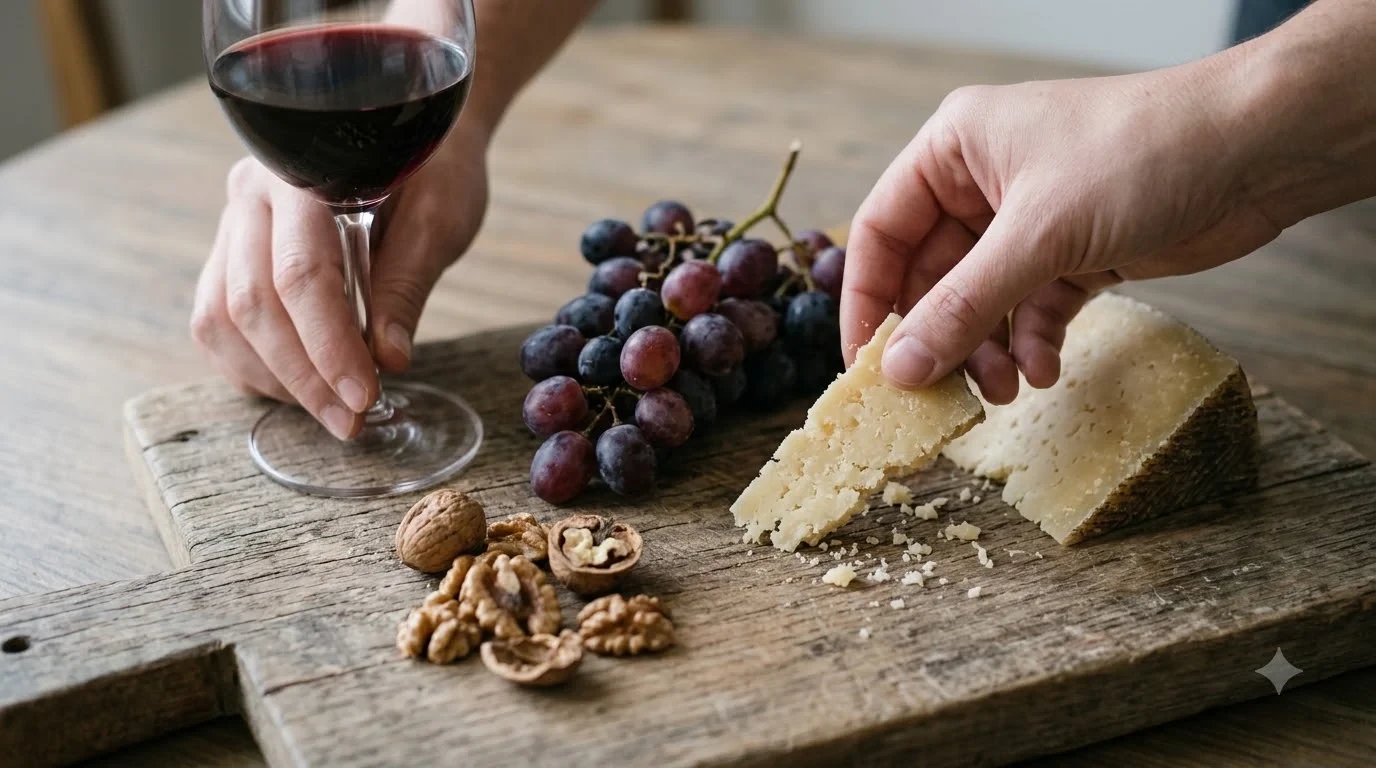
Fresh cheeses, moderately aged cheeses, and Italian cured-meat boards are practical choices for Frappato. Serve the wine slightly cooler than a typical full-bodied red, and build the menu around its freshness rather than heavy sauces or excessive richness.
Fresh mozzarella, ricotta, young pecorino, and mild semi-aged cheeses offer useful combinations. Their creamy or salty qualities complement the wine without dominating its fruit and floral aromas. Ricotta salata is especially useful alongside eggplant and tomato dishes because its saltiness provides a pleasant contrast.
For stronger cheeses, choose moderately aged examples rather than extremely pungent varieties. Salt can soften the perception of tannin, but intense cheese flavors may still overpower a light-bodied red. A small selection of mild and medium-intensity cheeses is usually more successful than a board dominated by very aged, sharp varieties.
Serving temperature makes a noticeable difference. Frappato is often best around 54–60°F, depending on the producer, style, and personal preference. Valle dell’Acate recommends 57–59°F for its Vittoria DOC bottling, while other references suggest temperatures closer to 54–57°F.
Start with the bottle slightly chilled and allow it to warm gradually in the glass. If the wine becomes too warm, its alcohol can feel more pronounced and its refreshing character less obvious. Excessive chilling can also mute its aromas, so avoid treating it like a sparkling wine or a very cold white.
| Food | Why It Works | Preparation Tip |
|---|---|---|
| Grilled tuna | Rich texture and savory flavor complement fresh red fruit. | Use lemon, olive oil, and herbs. |
| Eggplant caponata | Balances acidity, sweetness, and savory vegetable flavors. | Keep the sweet-and-sour dressing moderate. |
| Roast chicken | Lean meat allows the wine’s floral aromas to show. | Season with rosemary and thyme. |
| Margherita pizza | Tomato acidity and mozzarella richness complement the wine. | Use fresh basil and a moderate amount of cheese. |
| Prosciutto | Salt and fat soften the perception of tannin. | Serve with olives and bread. |
| Turkey with cranberry | Red-fruit flavors complement the tart fruit sauce. | Choose a relatively unsweetened cranberry preparation. |
| Grilled swordfish | Firm fish texture suits a light, fresh red. | Add capers, parsley, and lemon. |
For a dinner with multiple courses, begin with cured meats, olives, and roasted peppers. Follow with caponata or grilled tuna, then serve roast chicken, vegetable lasagna, or pasta alla Norma as the main course. This progression allows the wine to accompany several dishes without competing with a particularly heavy preparation.
Tip: Chill Frappato for approximately 20–30 minutes in the refrigerator before serving if the bottle is at ordinary room temperature. Aim for approximately 56–58°F, then let the wine warm slightly in the glass. This preserves its freshness while allowing strawberry, cherry, and floral aromas to develop.
Glassware can also influence the experience. A medium-sized red wine glass with a reasonably broad bowl provides enough space for the aromas to develop. There is no need for an unusually large glass, but a narrow glass may make the wine’s floral character less apparent.
Frappato generally does not require lengthy decanting. Young, fresh examples can usually be opened and served directly. If a bottle seems closed initially, give it 10–15 minutes in the glass before deciding whether it needs more air.
For those exploring other lighter red varieties, blaufrankisch food pairing offers another useful comparison, particularly for wines with fresh acidity and more noticeable savory structure. carignan food pairing is also worth exploring when planning meals involving grilled meats and Mediterranean ingredients, although Carignan often has more tannic weight than Frappato.
Foods to Avoid and Pairing Mistakes to Watch
Frappato is versatile, but its light body and modest tannin mean that very rich, heavily spiced, or intensely flavored dishes can overwhelm it. The best results come from matching the wine’s intensity rather than choosing food based only on its color or country of origin.
Heavy braised beef is one of the less suitable combinations. A slowly cooked beef cheek, dense short-rib preparation, or deeply reduced meat sauce can have far more concentration than a delicate Frappato. The wine may seem thin or overly acidic beside such a substantial dish.
Instead, choose roast chicken, grilled pork tenderloin, turkey, or moderately seasoned sausages. If the meal requires braised beef, a more structured wine such as Cabernet Sauvignon, Syrah, or a fuller Cerasuolo di Vittoria may provide a better match.
Very spicy dishes are another challenge. Chili heat can become more pronounced alongside alcohol and tannin, and even a relatively gentle red can feel uncomfortable with aggressively hot food. Frappato’s lower tannin is helpful, but it does not remove the problem completely.
For dishes containing chili, reduce the heat and emphasize ingredients such as roasted peppers, tomatoes, herbs, and olive oil. A mildly spiced sausage or pepper-based pasta is more suitable than an extremely hot chili preparation.
Excessively sweet sauces can also make a dry Frappato seem sour. This is particularly relevant with barbecue glazes, sweet cranberry sauces, and fruit-based reductions. The general pairing principle is to ensure that the wine is at least as sweet as the dessert or sauce. Since Frappato is generally dry, strongly sweet preparations are better accompanied by a sweeter wine.
Another common mistake is serving the wine too warm. A light Sicilian red does not need the same temperature as a full-bodied Cabernet Sauvignon. Warm serving conditions can make the alcohol more noticeable and reduce the refreshing quality that makes Frappato attractive with food.
Finally, avoid assuming that every Frappato bottle has identical weight. A single-variety wine from one producer may be particularly delicate, while another may have more concentration or extraction. Blends containing Nero d’Avola can also show greater structure. Adjust the food accordingly rather than treating every bottle as interchangeable.
For another lighter white-wine option when the menu centers on vegetables and delicate seafood, consider grenache blanc food pairing. Its different body and acidity characteristics provide an alternative when a red wine is not the best match.
Frequently Asked Questions
Is Frappato considered a natural wine?
No. Frappato is a grape variety, not a winemaking classification. It can be produced using conventional, organic, or low-intervention methods depending on the producer, vineyard practices, and cellar decisions. The grape name alone does not establish whether a wine is certified organic or made with minimal intervention.
Is Frappato always a single-variety wine?
No. Frappato can be bottled on its own or blended with other grapes. Cerasuolo di Vittoria DOCG is particularly associated with a blend of Frappato and Nero d’Avola, with the two varieties contributing different aromatic and structural characteristics. The resulting wine is generally more substantial than a delicate single-variety Frappato.
Can Frappato be aged for several years?
Some examples are intended for early drinking, while more concentrated bottlings can develop additional complexity with bottle age. Certain producers describe their wines as capable of aging for approximately four to six years. Storage conditions, vintage, and winemaking style all influence the result, so aging potential should be assessed bottle by bottle.
Is Frappato related to Sangiovese?
DNA research has identified Sangiovese as part of Frappato’s parentage. This genetic relationship is interesting because the varieties can produce noticeably different wines. Frappato is generally more floral and lighter in appearance, while Sangiovese often has more pronounced savory structure and firmer tannin.
What is the difference between Frappato DOC and Sicilia DOC Frappato?
Vittoria DOC identifies a specific denomination in southeastern Sicily, while Sicilia DOC covers a broader production area across the island. A Frappato labeled Sicilia DOC may come from a different Sicilian locality, such as Niscemi. The geographical designation therefore provides useful information about the wine’s origin, even when both bottles feature the same grape.
Frappato is one of the most food-friendly choices for anyone who enjoys aromatic, refreshing red wine. Start with grilled tuna, caponata, roast chicken, tomato-based pasta, or a modest cheese and charcuterie board, and serve the wine slightly chilled. With its combination of red fruit, floral aromas, bright acidity, and low tannin, Frappato brings an appealing Sicilian character to everyday meals and more elaborate Mediterranean menus.
More in Wine Types & Grapes
 What Does Ruby Port Taste Like? Flavor Notes, Styles, and Serving TipsUpdated Nov 21, 2026
 What Does Ribolla Gialla Taste Like? Crisp White and Amber Styles ExplainedUpdated Nov 21, 2026
 What Does Semillon Taste Like? Flavor Profile, Styles & PairingsUpdated Nov 21, 2026
 What Does Scuppernong Taste Like? Flavor, Styles, and Pairing GuideUpdated Nov 21, 2026
 What Does Saperavi Taste Like? Flavors, Styles, and Pairing GuideUpdated Nov 21, 2026
 What Does Natural Wine Taste Like? Flavors, Styles, and Serving TipsUpdated Nov 21, 2026