

We may earn a commission when you buy through links on this page, at no extra cost to you. Learn more.
Learning how to taste wine comes down to five steps: look, smell, sip, decide whether to swallow or spit, and think about what you noticed. Wine Folly’s tasting method is simple enough for beginners and detailed enough to help you describe what you like. You do not need expert vocabulary to get started, only a little attention to color, aroma, and texture.
This guide walks through a basic tasting routine, explains what to notice at each stage, and offers practical tips for serving and glassware so that your next glass gives you more to think about.
Step 1: Look at the color
Hold the glass against a white background and tilt it slightly. Note the color and how clear or opaque it looks. Compare it with other wines of the same type, because the same grape can look very different depending on its age and style.
Tilting the glass also shows the rim, the thin edge where the wine meets the glass. A pale rim with a faint tint can suggest an older wine, while a rim that is still bright often points to a younger one. Look for the same signs across several glasses to see how the wine changes from edge to center.
Color can offer useful clues. Wine Folly’s tasting tutorial notes that a darker or more opaque color can hint at a bolder, richer, more viscous wine. A pale, bright wine often suggests a lighter style, though that is only a starting point. Treat the color as a first impression, not a verdict.
Step 2: Swirl and smell
Place the glass flat on the table and move the base in small circles. Swirling releases aromas and brings air into the wine, which helps the smell open up. Then lift the glass and take a clear, deliberate sniff.
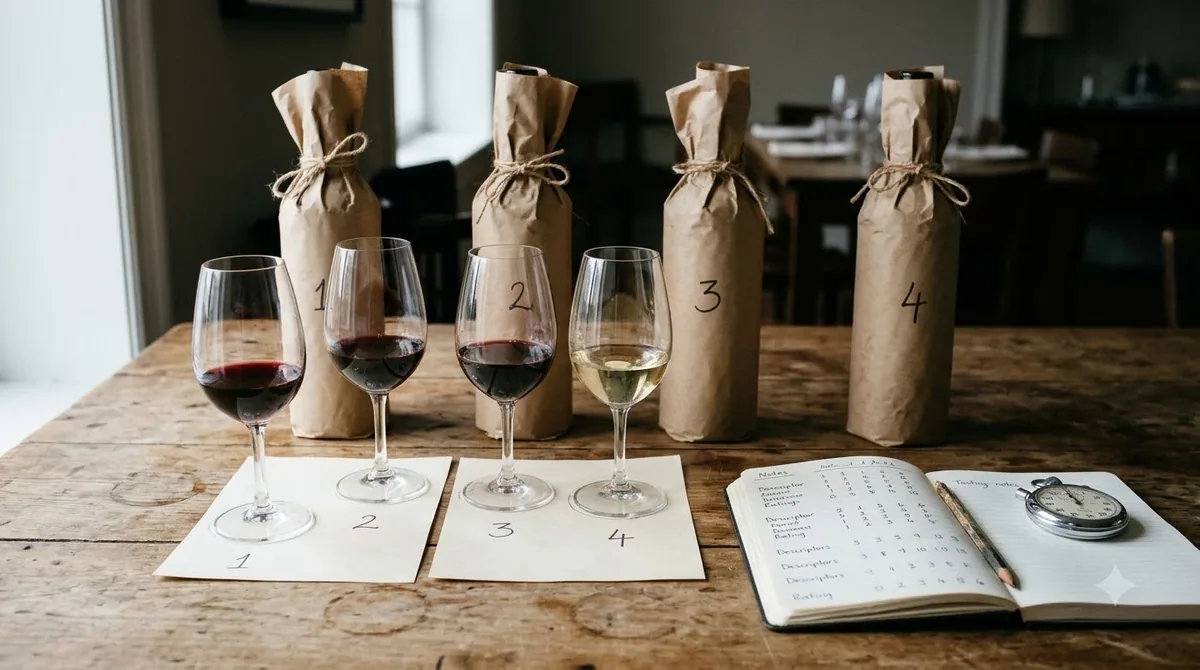
A helpful exercise is to name two fruits and two other aromas before you taste. You might notice cherry, citrus, or pear, and then something like cedar, pepper, or flowers. Wine Folly describes this as a “2 by 2” approach. The point is not to be exact but to train your nose to notice patterns.
| Stage | What to notice | Example question |
|---|---|---|
| Look | Color, clarity, depth | Is it pale and bright, or deep and dark? |
| Smell | Fruit, floral, spice, earth | What two fruits can I name? |
| Sip | Body, texture, sharpness | Does it feel light, round, or heavy? |
| Finish | What lingers after swallowing | Does the flavor fade fast or stay? |
| Think | Your overall impression | Would I buy this again? |
Step 3: Sip and let it coat your tongue
Take a small sip, enough to cover your tongue, and swish it gently so it reaches every part of your mouth. Pay attention to the flavors, the texture, and the body. A light wine may feel thin and quick, while a fuller wine feels weightier and lingers longer.
Wine Folly suggests smelling the wine again after the first sip. Many aromas shift once the wine is warm in your mouth, so the second smell can reveal something you missed the first time. This step is often where beginners notice the difference between what they smell and what they taste.
Also pay attention to sensations rather than only flavors. Ask whether the wine feels sharp, whether it makes your tongue feel dry, and whether you notice an alcohol warmth. Those textures are often easier to describe than specific fruit notes, and they help explain why two wines with similar flavors can feel very different.
Order matters when tasting several wines
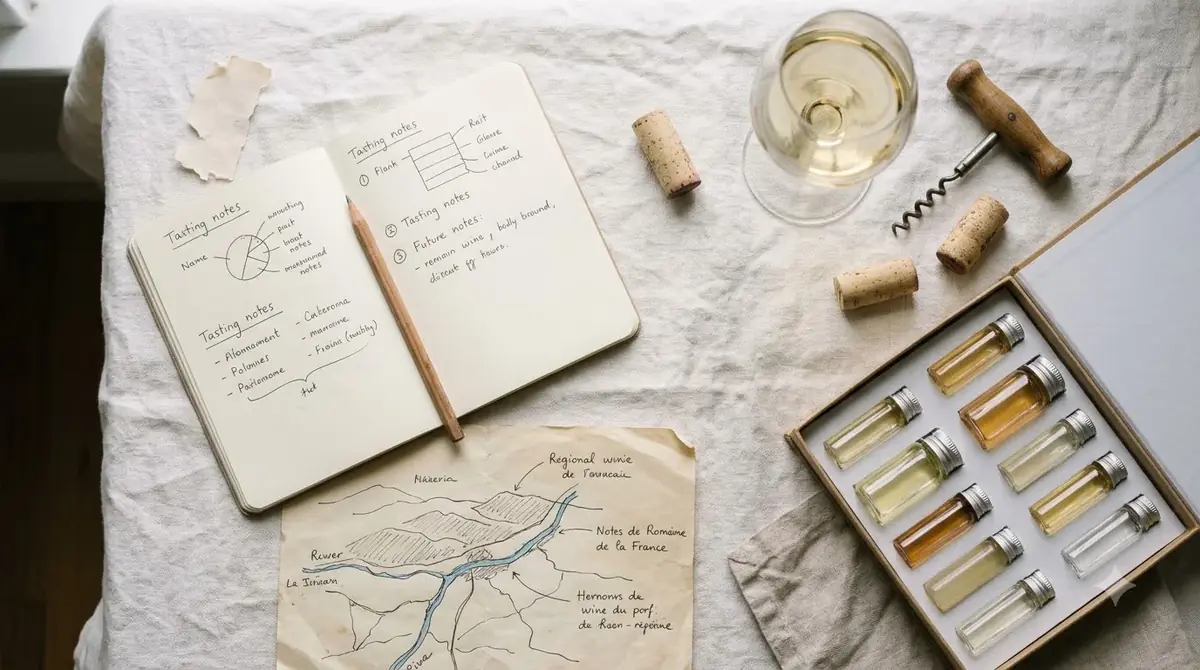
If you taste more than one bottle, start with the lighter styles and move toward the fuller ones. A delicate white tasted after a big, tannic red can seem thin and sour, while the same white tasted first gives a clearer picture of its fruit and acidity. Sparkling wines usually come first in a formal flight, followed by whites, rosés, light reds, and then bold reds.
Use a sheet of paper or a note app to write down the order and your impressions. When you come back to a wine after tasting others, it is easy to forget which glass held the one you liked best. Short notes made at each step turn a casual evening into a clear comparison.
Step 4: Swallow or spit
Spitting is a normal part of tasting, not a rude one. Wine Folly lists several good reasons to spit: you do not like the wine, you want to keep your palate fresh for other samples, or you need to drive. At a tasting with many bottles, spitting lets you compare more wines with a clear head.
At home, you can swallow whenever you like. The purpose of the exercise is to learn, so a sip and a few notes are often enough to understand a bottle.
Step 5: Think and take notes
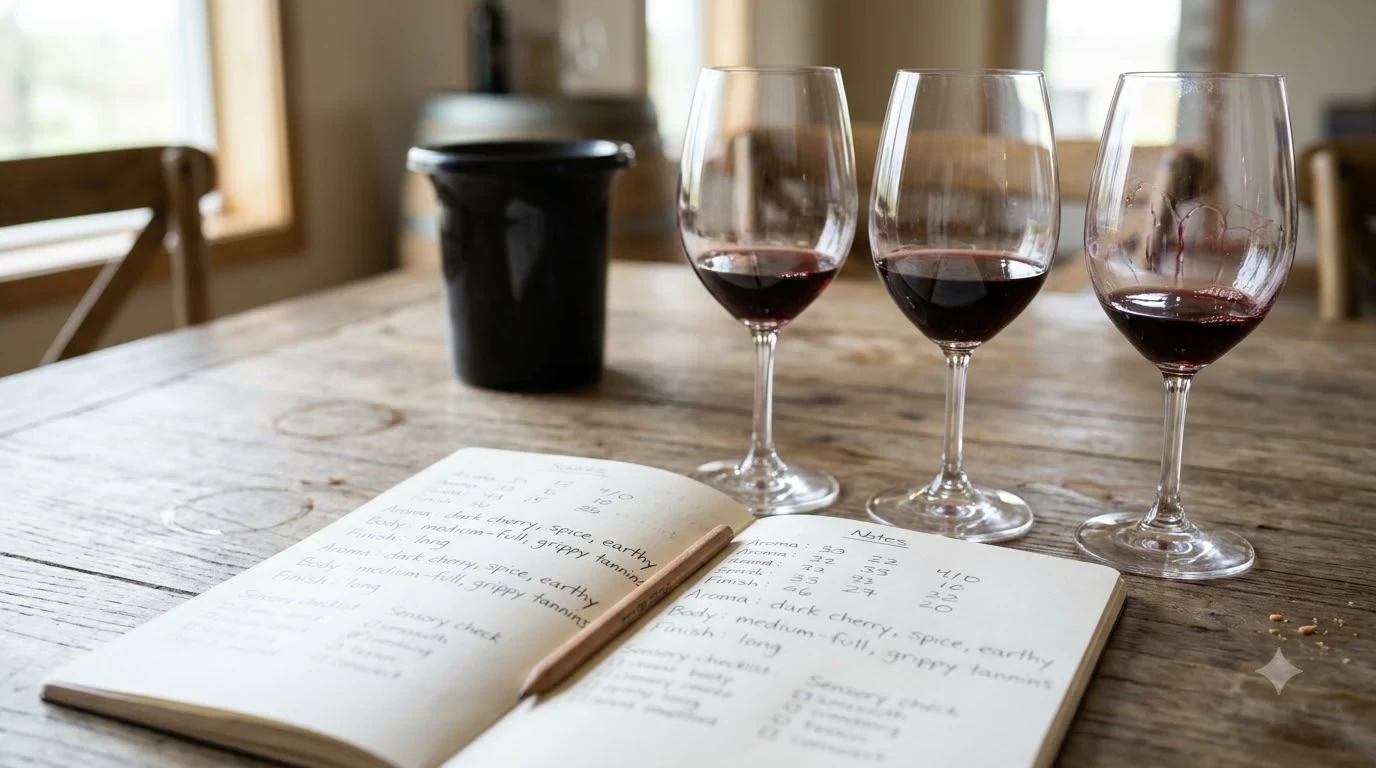
The last step is to form conclusions as you go. Wine Folly says there are no wrong answers, and that guesses are a fine part of learning. Write down the two fruits and two aromas you noticed, one word about the body, and whether you would pour the wine again.
A simple scorecard can help too. Rate each wine on four lines: color, aroma, body, and finish, using words rather than numbers. Over time, you will see which descriptors you use most and which wines earn them. That record becomes your own guide to shopping, pairing, and ordering at restaurants.
Notes also help you spot patterns over time. After a few bottles, you may find that you prefer lighter reds, or that you enjoy a sharper white more than a round one. Those patterns are more useful than any single rating.
Tools that improve the tasting
A standard wine glass makes a real difference. Its round bowl makes swirling easy, leaves room for aromas to collect, and has an opening wide enough to put your nose inside. A stemmed glass also helps keep the wine at its intended temperature, since holding the stem keeps your hand away from the bowl.
Temperature matters as well. Wine Folly gives about 60 degrees as an ideal serving temperature for red wine, and it recommends holding the glass by the top of the bowl rather than the bowl itself. A wine that is too warm can taste flat and alcoholic, while one that is too cold can hide its aromas.
Tip: Taste in a quiet room with a plain white background behind the glass. Strong perfume, candles, or food nearby can mask the aromas you are trying to notice.
Frequently Asked Questions
What is the first step in how to taste wine?
Start by looking at the wine. Hold the glass against a white background, note the color and clarity, and compare it with other wines of the same type before you smell or sip.
What does swirling wine do?
Swirling releases aromas and brings air into the wine, which helps you smell it more clearly. Wine Folly describes it as part of the smell step, and the round bowl of a wine glass is designed to make swirling easy.
Is it rude to spit wine during a tasting?
No. Spitting is a normal part of professional and casual tastings. It helps you keep a clear palate, and it is a sensible choice if you do not like a wine or need to drive.
Do I need special vocabulary to taste wine?
No. Simple words such as fruity, sharp, light, or heavy are enough to start. Naming two fruits and two other aromas is a practical way to build your vocabulary over time.
Tasting wine is a skill that improves with repetition. Use the five steps on your next bottle, take a few notes, and compare the results over several bottles. For more background on the basics of wine, visit our wine basics guide, and if you are tasting sparkling wines, our page on calories in champagne is a handy companion.
More in Wine Basics
 Which Rose Is Best for Your Taste, Budget, and Food PairingsUpdated Nov 21, 2026
 Is Cheap Wine Bad? How to Find Bottles Worth DrinkingUpdated Nov 21, 2026
 What To Write On A Wine Gift Tag: Thoughtful Messages For Every OccasionUpdated Nov 21, 2026
 Which Wine Is Best For Weight Loss? Compare Lower-Calorie ChoicesUpdated Nov 21, 2026
 What Is The Best Wine For Mimosas? Choose Bubbly That Balances Orange JuiceUpdated Nov 20, 2026
 Which Prosecco Is Best for Your Taste and OccasionUpdated Nov 20, 2026