

We may earn a commission when you buy through links on this page, at no extra cost to you. Learn more.
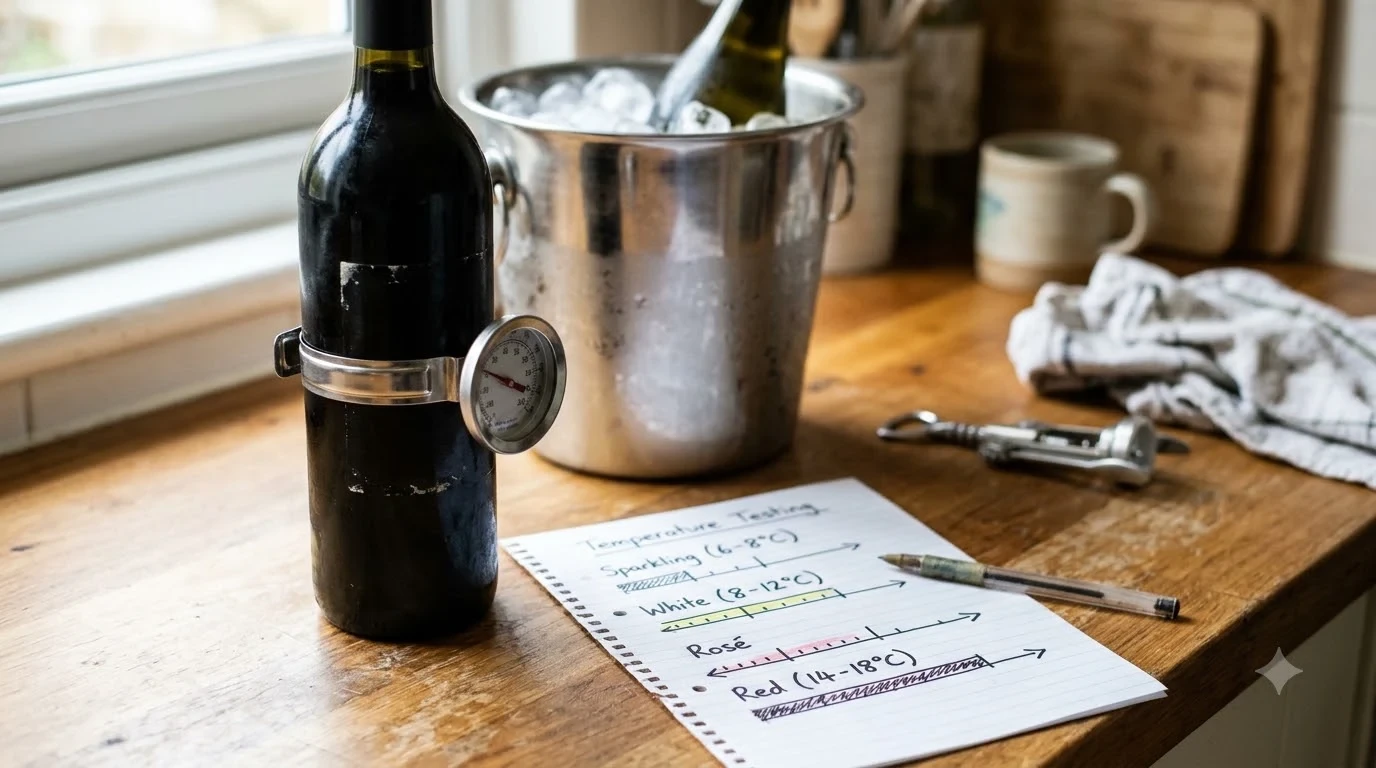
The best temperature for red wine depends on its body: light reds taste best lightly chilled at about 10 to 13 °C (50 to 55 °F), while full-bodied reds show best at about 15 to 18 °C (59 to 64 °F), a little below the warm room temperature many people serve them at. Temperature changes how much acidity, tannin, and aroma you notice, so a few degrees can make a bottle taste sharper or rounder. Start with the body of the wine, then adjust based on the room and the food you are serving.
This guide explains the serving temperature ranges commonly given for red wine, why temperature changes the way a wine tastes, and how to get a bottle to the right range at home. The ranges below follow the published tables and recommendations cited in this guide, and they are starting points rather than strict rules. A bottle that is a degree or two off will still taste like itself.
Quick Comparison
The table below lists the serving ranges by style. Use it as a quick reference when you open a bottle and want to know whether it needs a short time in the refrigerator or a few minutes on the counter.
| Red wine style | Typical examples | Serving range |
|---|---|---|
| Light-bodied | Beaujolais, Valpolicella | 10 to 12 °C (50 to 54 °F), or lightly chilled at about 13 °C (55 °F) |
| Medium-bodied | Grand Cru Burgundy, Sangiovese | 14 to 17 °C (57 to 63 °F) |
| Full-bodied | Cabernet Sauvignon, Nebbiolo-based wines | 15 to 18 °C (59 to 64 °F) |
| Medium and full-bodied Rioja or Bordeaux | Rioja, Bordeaux | About 15 to 18 °C (59 to 64 °F), described as room temperature in WSET guidance |
Why Serving Temperature Changes the Taste
Temperature affects how your palate perceives a wine’s structure. According to the wine tasting article on Wikipedia, lower temperatures emphasize acidity and tannins while muting the aromatics, and higher temperatures do the opposite by minimizing acidity and tannins and increasing the aromatics. That is why a red served too cold can taste harsh and closed, and a red served too warm can taste flabby and alcoholic.
The practical lesson is balance. A light red has less tannin to soften, so a little chill keeps it lively. A full-bodied red has more structure, so it needs enough warmth for its aromas to open, but not so much that the alcohol and tannins feel heavy.
Best for Light-Bodied Reds
Light-bodied reds such as Beaujolais and Valpolicella are the styles most likely to benefit from a slight chill. The published range is about 10 to 12 °C (50 to 54 °F), and WSET guidance describes light reds as lightly chilled at about 13 °C (55 °F). Those temperatures keep the fruit bright and the wine feeling fresh.
If the bottle has been sitting on the counter in a warm kitchen, put it in the refrigerator for a short time before pouring. Check it after a few minutes, because it is easy to overshoot the range and serve the wine too cold.
Best for Medium-Bodied Reds
Medium-bodied reds such as Grand Cru Burgundy and Sangiovese sit in a middle range of about 14 to 17 °C (57 to 63 °F). In this range the fruit and aromatics are easier to notice, and the tannins are present without dominating the glass.
A medium-bodied red left in a cool room often lands near the bottom of this range by itself. If the room is warm, a brief stop in the refrigerator can bring it back into range. Serving it in a glass with some room to swirl helps the aromas open as the wine warms slightly in the glass.
Best for Full-Bodied Reds
Full-bodied reds such as Cabernet Sauvignon and Nebbiolo-based wines are usually served at about 15 to 18 °C (59 to 64 °F). This range is the one most often described as room temperature in European cellars, though many modern homes run warmer than that.
For a full-bodied red, avoid serving it straight from a hot room or the bottle’s warm side near a stove. Give the wine a few minutes in a cooler spot to settle, which helps keep the alcohol and tannins in balance.
Best for Rioja and Bordeaux Styles
Rioja and Bordeaux are two classic red regions where the recommended range falls in the middle of the full-bodied category. WSET recommendations describe medium and full-bodied reds from these regions as room temperature, at about 15 to 18 °C (59 to 64 °F).
If you are serving a Rioja or Bordeaux with a meal, pour it a few minutes before the food arrives. The wine will open in the glass, and the temperature will settle without extra steps.
How to Get a Bottle to the Right Temperature
Most people have only two tools at home: the refrigerator and the room. Use them with a simple plan rather than guessing.
To chill a bottle, place it in the refrigerator for a short period and check it by hand. To warm a bottle that has become too cold, leave it in a cool room for several minutes. Avoid hot water, the oven, or direct heat, because uneven warming can make the wine taste flat in some parts of the bottle and sharp in others.
Tip: Pour a small amount first and taste it. If the wine tastes closed or hard, let it warm a few minutes. If it tastes flat or heavy with alcohol, give it a few minutes in a cooler place.
Common Mistakes With Red Wine Temperature
The most common mistake is serving red wine straight from a warm kitchen or a sunny table. Many homes run well above the ranges given here, and a full-bodied red can taste heavy and hot in that setting.
The second mistake is chilling every red the same way. A light red and a full-bodied red respond very differently to the same chill, so a single temperature rule does not suit every bottle in the cabinet.
Frequently Asked Questions
What is the best temperature for red wine?
For most red wines, the best range is about 15 to 18 °C (59 to 64 °F). Light-bodied reds such as Beaujolais are better lightly chilled, at about 10 to 13 °C (50 to 55 °F).
Should red wine be served chilled?
Light reds often benefit from a slight chill, while full-bodied reds are usually served closer to room temperature. Chilling reduces the aromatics and makes tannins more noticeable, so use it deliberately rather than as a default.
Is room temperature the right serving temperature for red wine?
Room temperature in the traditional sense refers to cool European cellars, which is close to the 15 to 18 °C (59 to 64 °F) range. Many modern homes are warmer than that, so a short stop in a cooler room can help.
How long should I chill a red wine?
Chill it in short intervals and check the temperature by hand or with a taste. It is easier to correct a wine that is a little too cold than one that has been over-chilled, so start with a brief stop and adjust from there.
Start with the body of the wine, aim for the range in the table, and adjust by taste. For the white side of the same question, the temperature for white wine guide covers the cooler ranges used for crisp and aromatic whites. If you are visiting wine country, the best Temecula wineries and best Paso Robles wineries guides show how regional climate shapes red wine styles, and the wine buying guide explains how to read a label before you open a bottle.
More in Wine Buying Guides
 Riesling Gift: Choose a Bottle They’ll LoveUpdated Nov 21, 2026
 Sweet Red Wine Gift: Choose a Bottle They’ll LoveUpdated Nov 21, 2026
 Malbec Gift: How to Choose a Memorable Bottle for Any OccasionUpdated Nov 21, 2026
 Sherry Gift Ideas That Match Every Wine LoverUpdated Nov 21, 2026
 Moscato Gift: How to Choose a Sweet Wine They’ll LoveUpdated Nov 21, 2026
 Merlot Gift: How to Choose a Bottle They’ll AppreciateUpdated Nov 21, 2026