

We may earn a commission when you buy through links on this page, at no extra cost to you. Learn more.
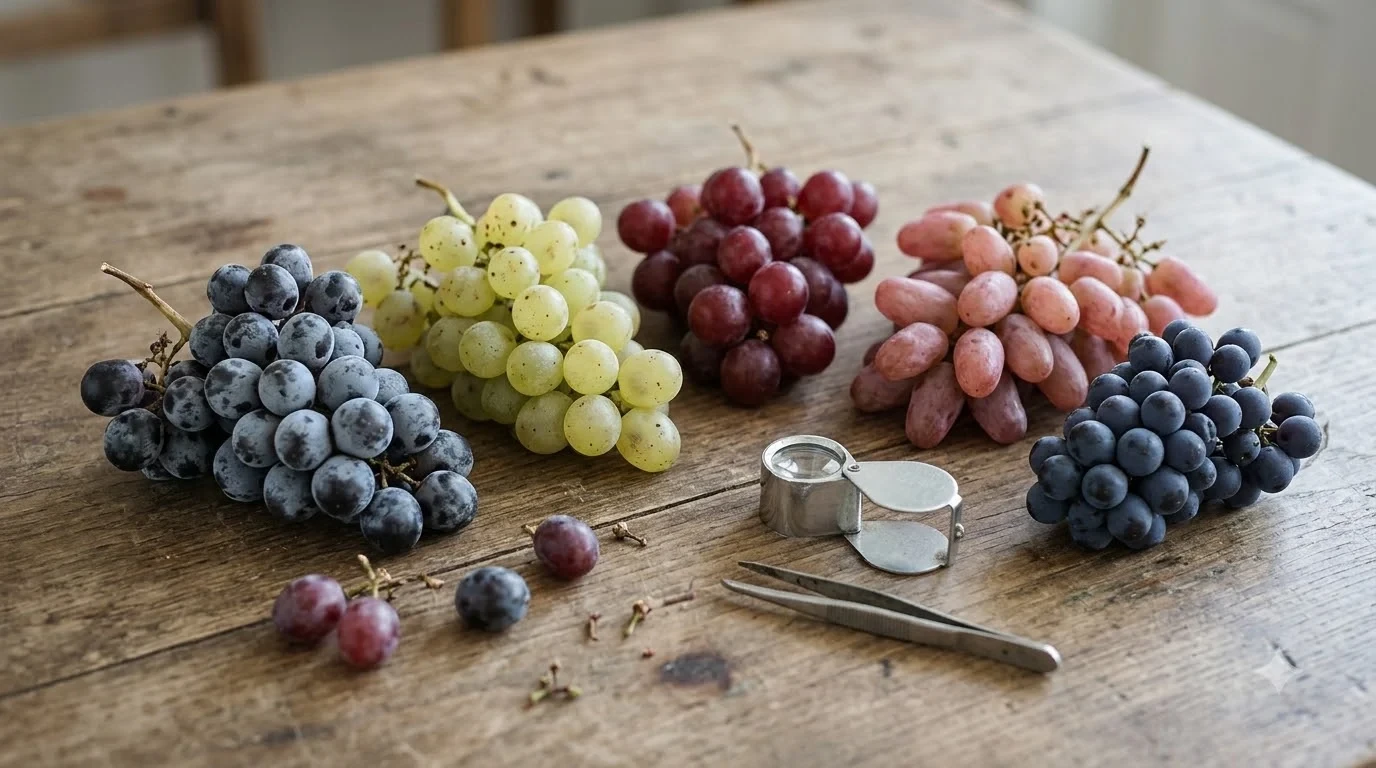
Pomerol wine grapes are primarily Merlot and Cabernet Franc, with smaller plantings of Cabernet Sauvignon, Malbec, and Petit Verdot producing some of Bordeaux’s most distinctive red wines. Located on Bordeaux’s Right Bank in southwestern France, Pomerol is known for its clay-rich soils, concentrated dark fruit flavors, velvety textures, and remarkable aging potential. Understanding the five permitted grape varieties helps explain why Pomerol wines can combine richness, freshness, aromatic complexity, and elegant structure.
Pomerol occupies a relatively small area of Bordeaux, but its reputation extends far beyond its geographical boundaries. Its wines are made exclusively as reds, with Merlot providing the foundation for most blends and Cabernet Franc frequently adding aromatic detail and structure. Cabernet Sauvignon, Malbec, and Petit Verdot play smaller supporting roles. The proportions vary between estates because vineyard location, soil composition, growing conditions, and winemaking decisions all influence the finished wine. Learning how these grapes work together makes it easier to understand Pomerol labels, recognize the region’s signature flavors, and choose bottles for different occasions.
Merlot: The Dominant Grape of Pomerol
Merlot is the defining grape of Pomerol, accounting for approximately 80% of the appellation’s vineyard plantings. Its naturally generous fruit, deep color, and supple texture establish the rich yet approachable character associated with many of the region’s finest reds.
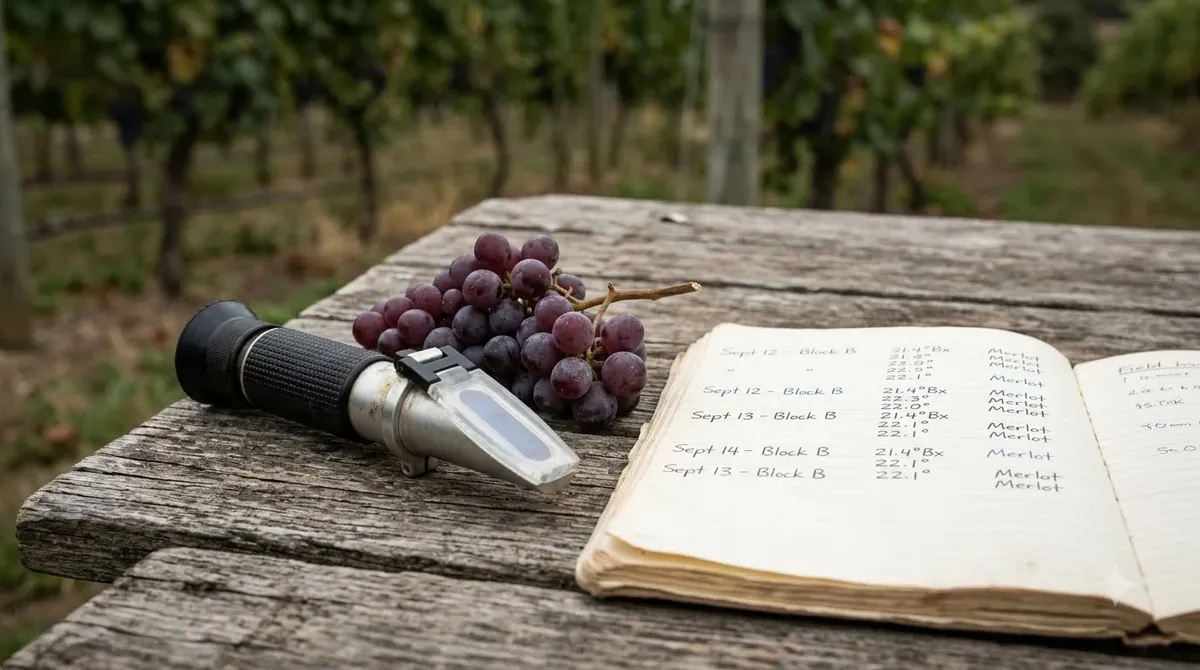
Merlot thrives in Pomerol because its growing cycle suits the local conditions. It generally ripens earlier than Cabernet Sauvignon, an advantage in a Bordeaux climate where autumn rainfall can complicate the harvest of later-ripening grapes. Its adaptability to different soil compositions also allows growers to cultivate it across the appellation’s varied gravel, clay, and sandy vineyard sites. The result is a grape capable of producing several expressions within a relatively small geographical area.
In the glass, Pomerol Merlot commonly shows ripe plum, black cherry, blackberry, and blueberry. Floral suggestions of violet may appear alongside cocoa, licorice, and subtle spice. With bottle age, the fruit can become more integrated, making room for earthy notes such as truffle, cedar, tobacco, and dried leaves. The exact profile depends on the vintage, vineyard, extraction, and aging decisions made by the producer.
Merlot also contributes much of the texture that distinguishes Pomerol from more Cabernet Sauvignon-dominated Bordeaux wines. Its tannins are generally medium and softer than those associated with Cabernet Sauvignon. This creates a rounded sensation across the palate, although concentrated examples can still have considerable structure. Acidity, alcohol, fruit concentration, and tannin balance determine whether a particular wine feels plush, firm, or especially fresh.
Not every Pomerol Merlot tastes the same. Grapes grown on clay-rich parcels may produce particularly concentrated wines, while sandy or gravelly sites can yield different expressions of fruit, body, and aromatic intensity. This diversity explains why two bottles carrying the same appellation name can offer noticeably different drinking experiences.
Cabernet Franc: Freshness, Floral Aromas, and Structure
Cabernet Franc accounts for approximately 15% of Pomerol’s vineyard area and is the most important supporting variety after Merlot. It contributes aromatic lift, freshness, and additional structure, helping balance Merlot’s generous fruit and rounded texture.
Cabernet Franc has a distinctive aromatic character that can include raspberry, red currant, fresh herbs, violet, and subtle pepper. Depending on the growing conditions and ripeness, it may also contribute leafy or savory notes. These characteristics complement Merlot’s darker fruit rather than simply repeating the same flavors. A blend containing both grapes can therefore offer more aromatic range than a wine made predominantly from Merlot alone.
Its tannins and acidity also play important roles. Cabernet Franc can provide a firmer framework and a fresher impression on the palate, particularly when the wine contains a substantial proportion of ripe Merlot. This is useful in warm vintages, when winemakers may seek enough freshness to keep the finished wine balanced rather than excessively broad or heavy.
Cabernet Franc is especially interesting because its expression changes according to vineyard conditions. Cooler or less exposed parcels can retain more herbal and red-fruit characteristics, while fully ripe fruit can show richer berry flavors and softer aromatic edges. In Pomerol, differences in soil and exposure allow individual estates to use the variety according to their preferred house style.
Some estates rely heavily on Cabernet Franc to give their blends a recognizable personality. Others use a smaller amount, allowing Merlot to dominate the aroma and palate. Neither approach defines the entire appellation. Instead, the balance reflects each producer’s vineyard holdings, the vintage, and the style of wine being made.
Cabernet Sauvignon, Malbec, and Petit Verdot
Three additional grape varieties are permitted in Pomerol: Cabernet Sauvignon, Malbec, and Petit Verdot. Their vineyard presence is considerably smaller than that of Merlot and Cabernet Franc, but they offer winemakers additional options for adjusting color, structure, tannin, and aromatic complexity.
Cabernet Sauvignon represents approximately 5% of the vineyard plantings according to the Pomerol appellation’s official vineyard information. It ripens later than Merlot and generally produces more firmly structured wines, with higher tannin and pronounced acidity. Its characteristic flavors include blackcurrant, blackberry, cedar, and savory spice. In a Pomerol blend, it can add definition and a firmer backbone to Merlot’s softer texture.
Because Cabernet Sauvignon ripens relatively late, its performance depends on the growing season and vineyard location. A successful harvest requires sufficient time for the grapes to reach suitable maturity. If ripeness is incomplete, its tannins and herbal characteristics can become more noticeable. When the fruit is properly ripe, it contributes depth and a longer-lasting impression on the palate.
Malbec, known locally in Bordeaux as Cot or Pressac, is another permitted variety. It can contribute deep color, dark berry fruit, plum, and substantial tannin. Although it is more strongly associated with regions such as Cahors and Argentina’s Mendoza, Malbec has a historical place in Bordeaux’s wider grape-growing tradition. Its limited presence in Pomerol provides an additional blending option.
Petit Verdot is also permitted, although it occupies a very small proportion of the appellation’s vineyards. This late-ripening variety can bring concentrated color, firm tannins, and spicy or floral aromatic notes. Its naturally powerful structure means that even a relatively small contribution can influence the overall balance of a blend.
| Grape variety | Approximate vineyard share | Main contribution |
|---|---|---|
| Merlot | 80% | Dark fruit, color, roundness, and body |
| Cabernet Franc | 15% | Floral aromas, freshness, and structure |
| Cabernet Sauvignon | 5% | Tannin, black fruit, and backbone |
| Malbec | Additional permitted variety | Dark color, plum, and tannin |
| Petit Verdot | Additional permitted variety | Color, spice, and firm structure |
The percentages for the three leading varieties are approximate vineyard planting figures, not mandatory proportions for individual bottles. Malbec and Petit Verdot are included among the permitted varieties, but their individual planting shares are not established by this simplified breakdown. For a wider look at how grape choices differ between wine-producing countries, explore Croatia wine grapes and their regional expressions.
Pomerol’s Clay, Gravel, and Iron-Rich Soils
Pomerol’s terroir is central to understanding its grapes and finished wines. The appellation covers approximately 813 hectares, with vineyards planted across a plateau that descends in terraces toward the River Isle. Its combination of clay, gravel, sand, and iron-rich subsoil creates distinct growing conditions for Merlot and the region’s supporting varieties.
The most famous soil feature is the iron-rich clay known locally as crasse de fer. This expression refers to the iron-bearing material found in the subsoil, which is an important part of Pomerol’s geological identity. Clay-rich sites can retain water, making them particularly valuable during periods of limited rainfall. Their characteristics also influence vine growth and the conditions under which grapes mature.
Gravelly soils behave differently. They generally provide better drainage and can warm relatively quickly, influencing the pace of vine development. Sandier parcels offer another set of growing conditions, often producing wines with a different balance of concentration and texture. These variations are important because Pomerol is not a uniform vineyard surface: neighboring plots can have substantially different soil compositions.
The appellation’s geography also helps explain differences between individual estates. Decanter describes a gravel bank that rises from southwest to northeast, with more clay concentrated on the northern and eastern sections of the plateau. The highest areas include the famous vineyards around Château Pétrus, where elevations reach approximately 39 meters, and Château Gazin, where they rise slightly above 40 meters.
These details should not be interpreted as a simple quality ranking based on elevation. Vineyard drainage, soil depth, water availability, exposure, vine age, and cultivation decisions all matter. A producer’s ability to match a particular grape variety to the conditions of its parcel is just as important as the general geological description.
Merlot benefits from the region’s clay-rich sites, while Cabernet Franc can contribute aromatic freshness and structure across different soil types. Cabernet Sauvignon requires particular attention to ripening conditions because of its later harvest. The combination of these factors helps explain why Pomerol producers frequently make decisions at the individual vineyard or parcel level rather than relying on one appellation-wide recipe.
For a closer look at the appellation’s plateau, soil composition, boundaries, and grape proportions, consult the official Pomerol vineyard and terroir information. It provides useful geographical context for understanding why the region’s clay, gravel, and sand support different expressions of its principal varieties.
For further geographical context, the official Wine Regions resource can help compare Pomerol with other wine-producing areas and explain how local geography shapes wine style.
How Pomerol Grape Blends Create Distinctive Wine Styles
Pomerol is not defined by a single mandatory blend ratio. Merlot provides the foundation, but the proportions of Cabernet Franc and the other permitted varieties can differ considerably between producers and vintages. These choices influence everything from the first aromas in the glass to the wine’s tannin structure and ability to develop over time.
A Merlot-dominant blend generally emphasizes dark fruit, rounded texture, and a generous middle palate. Plum, blackberry, and black cherry are common descriptors, with floral and earthy details emerging according to the vineyard and winemaking approach. These wines can feel rich without necessarily being aggressively tannic.
Increasing the proportion of Cabernet Franc can change the aromatic profile significantly. Raspberry, violet, herbal details, and fresh acidity may become more noticeable. The wine can feel more energetic and structured, while retaining the dark fruit character that comes from its Merlot base.
Cabernet Sauvignon can bring firmer tannins and a more pronounced black-fruit character. Malbec and Petit Verdot provide further opportunities to adjust color and structural intensity. Because these varieties are relatively uncommon in the appellation, their role is generally supplementary rather than dominant.
Why individual estates make different blends
Each estate works with its own collection of vineyard parcels. Some have more clay-rich land, while others include larger proportions of gravel or sand. The age of the vines, their exposure, and their ability to produce ripe fruit also influence which varieties perform best in a particular year.
Harvest decisions matter just as much. Merlot can reach maturity before Cabernet Sauvignon, so the varieties are not necessarily picked together. Producers assess fruit condition, tannin maturity, acidity, and weather forecasts before deciding when each parcel should be harvested. Separate fermentation and evaluation can then help winemakers determine which components belong in the final blend.
Barrel aging provides another stylistic choice. Bordeaux.com describes typical Pomerol maturation in oak barrels for approximately 12 to 18 months. Oak can contribute cedar, spice, and subtle toasted notes, while helping the wine develop a more integrated structure. The amount of new oak, the barrel size, and the aging period all affect how clearly the fruit remains expressed.
Tip: When comparing two Pomerol wines, look beyond the appellation name. A bottle with a higher proportion of Cabernet Franc may show more floral aromas and freshness, while a Merlot-dominant example may emphasize plum, blackberry, and a softer texture. Producer and vineyard conditions matter as much as the grape percentages.
These blending decisions are also why Pomerol should not be confused with a single-variety Merlot wine. Although Merlot dominates its vineyards, the appellation’s identity comes from the interaction between grape varieties, individual parcels, and winemaking choices.
Flavor, Aging, Serving, and Food Pairing
Pomerol wines typically combine concentrated fruit, medium-to-full body, and a rounded tannin structure. Their flavor profiles develop with bottle age, making them suitable for both relatively early drinking and longer-term cellaring, depending on the wine and vintage.
Young Pomerol often shows plum, black cherry, blackberry, blueberry, and violet. Some examples also display licorice, cocoa, and savory herbal details. The texture is frequently described as velvety because Merlot contributes a generous palate and relatively soft tannins. Cabernet Franc and other varieties can provide additional freshness and definition.
As the wine matures, primary fruit can gradually become less prominent. Earthy aromas such as truffle, dried leaves, and forest floor may emerge alongside cedar, tobacco, and graphite. These changes are not identical in every bottle. More concentrated wines from suitable vintages can develop additional complexity over many years, while lighter examples may reach their best drinking window sooner.
Bordeaux.com identifies five to ten years of cellaring as an ideal period for many Pomerol wines to reveal additional complexity. Particularly structured examples can age considerably longer when stored properly. Vintage conditions, vineyard quality, producer style, and the bottle’s storage history all affect its development.
Serving temperature and storage
Serve Pomerol at approximately 60–65°F, the recommended range for fuller-bodied red wines. Excessive warmth can make alcohol more noticeable and reduce the impression of freshness, while serving it too cold can make tannins seem firmer and suppress aromatic detail.
A 750 ml bottle provides approximately five standard 5-ounce glasses. For a young, concentrated Pomerol, decanting for 30–60 minutes can help the wine open up. Older bottles require more care because extended exposure to air can diminish delicate developed aromas. Pour gently and avoid disturbing any sediment that may have accumulated during bottle aging.
Store unopened bottles on their sides in a cool, dark location near 55°F, with stable temperature and limited vibration. After opening, refrigerate the bottle and aim to enjoy the remaining still wine within three to five days. Allow a chilled red to warm gradually before serving rather than exposing it to direct heat.
Food pairings for Pomerol
Merlot’s generous fruit and moderate tannins make Pomerol particularly suitable for rich meat dishes. Roast beef, grilled lamb, braised short ribs, and beef tenderloin are natural partners. The protein and fat in these foods soften the perception of tannin, while savory flavors complement the wine’s dark fruit and earthy character.
Mushrooms are another excellent match. A mushroom risotto, roasted portobello mushrooms, or beef with a mushroom sauce can echo the truffle and forest-floor notes that often emerge in mature Pomerol. Herbs such as thyme and rosemary also work well because they complement the wine’s savory aromatic components.
Hard and semi-hard cheeses, including aged Gouda and mature Comté, can provide a satisfying contrast to the wine’s fruit and structure. Avoid serving it with very spicy dishes, as alcohol and tannin can amplify the sensation of chili heat. Oily fish is also generally less suitable for tannic red wines than meat or earthy vegetable dishes.
Sweetness requires attention when choosing a dessert. A dessert should be at least as sweet as the wine; otherwise, the wine may seem less fruity and more bitter. Mature Pomerol is generally better suited to savory courses and cheese than to very sweet desserts.
Understanding Pomerol’s History and Choosing Bottles
Pomerol’s present-day identity developed over several centuries, rather than emerging as a Merlot-dominated appellation from the beginning. Its transition toward red wine production, the growth of its vineyard reputation, and its distinctive lack of an official estate classification all help explain how the region operates today.
The appellation’s vineyard history stretches back to the medieval period. According to the INAO, viticulture developed from the 12th century with the involvement of the Hospice of Pomerol, which welcomed pilgrims traveling toward Santiago de Compostela. The vineyards were subsequently affected by the Hundred Years’ War before being rebuilt and expanded during the 18th century.
Merlot gradually became the dominant variety over the following centuries. Its relatively early ripening suited the local growing conditions, while subsequent vineyard replanting strengthened its position. Decanter notes that the proportion of Merlot increased substantially following the great frost of 1956, when vineyard renewal helped establish the modern balance of varieties.
The appellation received official recognition in 1936. Its reputation developed further during the twentieth century, particularly as leading estates attracted international attention. Names such as Château Pétrus, Château Lafleur, Le Pin, Vieux Château Certan, and Château La Conseillante are closely associated with the region’s prestige.
One important difference between Pomerol and neighboring Saint-Émilion is that Pomerol has no official classification system for its individual estates. This means buyers cannot rely on a formal hierarchy of classified growths to evaluate every producer. Reputation, vineyard location, producer consistency, vintage conditions, and independent wine reviews become more useful considerations.
What to look for when buying Pomerol
Start with the producer rather than assuming that every bottle will deliver the same style. Established estates may have recognizable approaches to Merlot, Cabernet Franc, oak maturation, and vineyard management. Smaller producers can also offer distinctive expressions, particularly when their vineyard parcels are carefully cultivated.
Vintage is another important consideration. Weather conditions influence flowering, fruit development, ripening, and harvest timing. A warm growing season can encourage ripe fruit and generous texture, while cooler or wetter conditions may require more selective harvesting and careful attention to tannin maturity. Comparing producer notes and vintage assessments can help explain differences between bottles.
Second wines are another option for exploring the appellation. These wines may use fruit or lots that do not enter the estate’s principal bottling, allowing drinkers to experience a producer’s general approach in a different expression. Their quality and style still depend on the individual estate, so the name alone does not guarantee a particular level of concentration or aging potential.
Storage condition is especially important for mature Pomerol. Check the provenance of older bottles and look for signs of leakage, damaged capsules, or unusually low fill levels. Proper storage can preserve the wine’s fruit and structure, while poor temperature conditions may accelerate deterioration. These details can matter as much as the vintage when choosing a bottle intended for a special meal.
Finally, remember that Pomerol is a specific Bordeaux appellation, not simply another name for Merlot. Its character comes from the combination of Merlot, Cabernet Franc, smaller permitted varieties, and a complex mosaic of vineyard soils. Comparing it with regions that grow different varieties, including those featured in orange wine grapes and Texas wine grapes, provides useful perspective on how grape selection and local conditions shape the wine in your glass.
Frequently Asked Questions
Is Pomerol always a dry red wine?
Yes. Pomerol’s appellation designation covers still red wines rather than white, rosé, or sparkling wines. Its traditional profile is based on dry, Merlot-dominated blends, making it quite different from Bordeaux appellations that produce both red and white wines.
What is Cabernet Franc called locally in Pomerol?
Cabernet Franc is traditionally known in the Bordeaux area by the name Bouchet. This local name appears in discussions of historic vineyard plantings and grape varieties. It refers to the same variety used to provide aromatic freshness and structure in many Pomerol blends.
Does Pomerol have an official grand cru classification?
No. Pomerol has never established an official classification ranking its individual estates. This distinguishes it from neighboring Saint-Émilion, which operates a classification system. The appellation’s reputation instead developed through the recognition of individual producers and their wines.
Why is Château Pétrus associated with blue clay?
The vineyard around Château Pétrus contains a distinctive pocket of blue clay, covering approximately 20 hectares according to Decanter’s geological account. This clay lies above iron-rich sand and forms part of the area’s unusual subsoil composition. Another pocket of blue clay occurs around Château L’Église-Clinet and Château Trotanoy, although its underlying geology differs.
When did Pomerol become an officially recognized appellation?
Pomerol received appellation recognition in 1936, during the early development of France’s modern appellation system. Its geographical boundaries include the commune of Pomerol and part of Libourne. The appellation’s official recognition helped establish the geographical identity and production rules associated with its red wines.
Pomerol’s reputation rests on the relationship between Merlot, Cabernet Franc, its smaller permitted grape varieties, and the appellation’s distinctive clay-and-gravel soils. Merlot supplies richness and dark fruit, while Cabernet Franc adds aromatic freshness and structure, creating wines with both immediate appeal and the potential for long development in the bottle. Understanding these grapes provides a practical starting point for exploring the producers, vineyards, and individual styles that make Pomerol one of Bordeaux’s most recognizable red-wine regions.
More in Wine Regions
 Willcox Wine Trail: Discover Arizona’s High-Elevation Wine CountryUpdated Nov 20, 2026
 Yakima Valley Wine Region: Find the Best Styles to TryUpdated Nov 20, 2026
 Vosne Romanee Wine Tasting: Identify Aromas and Choose Better PairingsUpdated Nov 20, 2026
 Yakima Valley Wine Festival: Find the Best Seasonal Wine EventsUpdated Nov 20, 2026
 Wales Vineyards: Discover Cool-Climate Wines and Where to VisitUpdated Nov 20, 2026
 Yountville Wine Festival: Discover Napa Wines and Local FoodUpdated Nov 20, 2026