

We may earn a commission when you buy through links on this page, at no extra cost to you. Learn more.
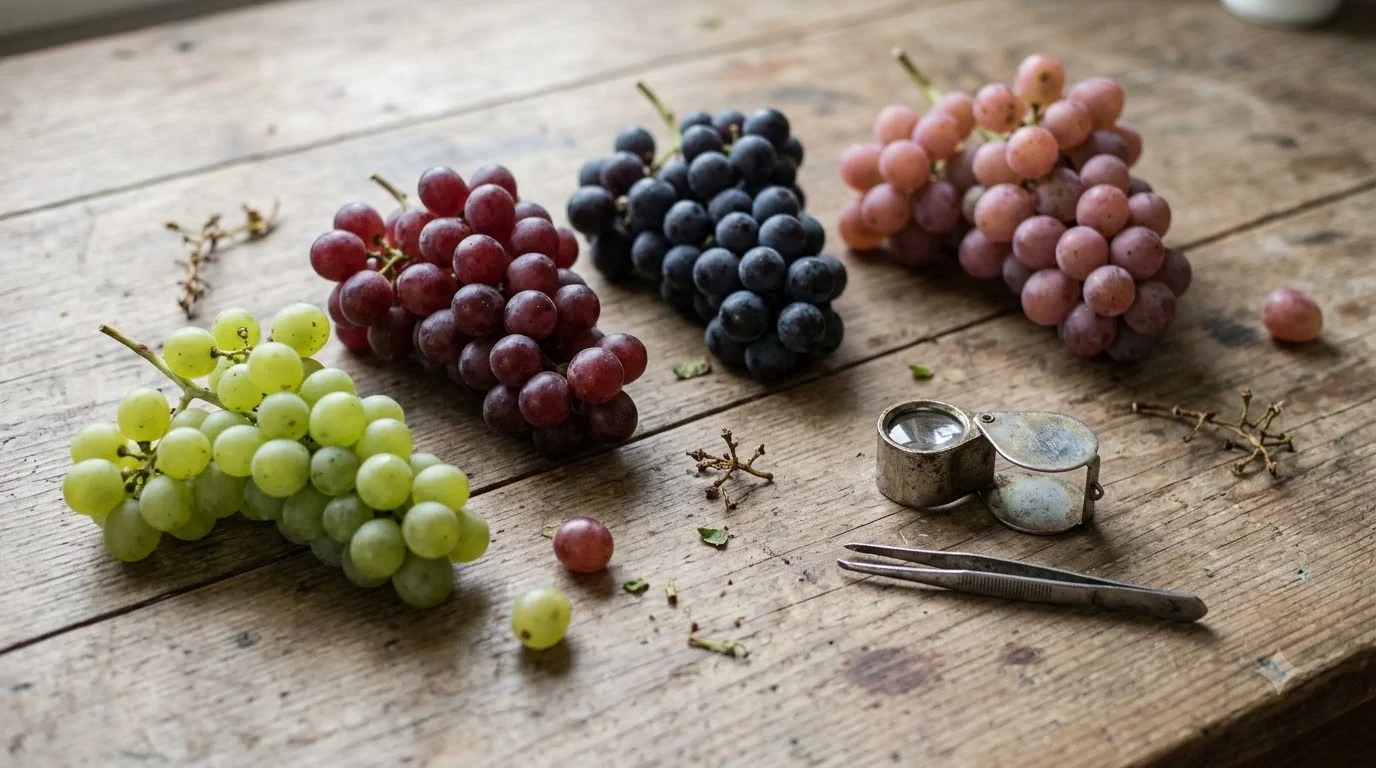
Cognac wine grapes are six approved white grape varieties, led by Ugni Blanc, that provide the acidity and low-sugar fruit needed to produce Cognac brandy. The six varieties are Ugni Blanc, Folle Blanche, Colombard, Montils, Sémillon, and Folignan. Ugni Blanc accounts for more than 98% of the region’s vineyards because it produces relatively neutral, highly acidic wine that works particularly well for double distillation. The other grapes offer additional aromatic characteristics and preserve the diversity of Cognac’s historic vineyard.
Cognac is often discussed alongside fine French wines, but its grapes serve a different purpose from those used to make ordinary table wine. Instead of aiming for a richly flavored bottle to drink directly, Cognac growers produce white wine intended for distillation and extended oak aging. Understanding the grape varieties explains why Cognac tastes different from other brandies, why one grape dominates production, and how the vineyards of western France developed their distinctive identity.
What Makes Cognac Grapes Different From Ordinary Wine Grapes?
Cognac grapes are selected for the quality of the wine they produce before distillation, rather than for the richness or immediate drinkability of the finished wine. High natural acidity, relatively low sugar, and suitable growing characteristics are essential because the fermented wine must become a balanced spirit that can mature in oak for years.
The Cognac geographical indication covers vineyards in western France, primarily across Charente and Charente-Maritime. According to the official Cognac industry organization, the vineyard extends across more than 87,648 hectares and includes six recognized growing areas, known as crus. The region has a long-established white-wine production tradition, even though its best-known product is distilled brandy.
The key distinction is that grapes for Cognac are harvested to make a base wine rather than a conventional finished white wine. Ugni Blanc, the dominant variety, typically produces wine with approximately 8-9% alcohol by volume. Its high acidity and comparatively low sugar content create favorable conditions for distillation.
Higher sugar levels generally produce more alcohol during fermentation. That is not necessarily desirable for Cognac production. A relatively low-alcohol base wine allows the distiller to concentrate the grape’s aromatic components through the two distillation stages. Natural acidity also helps preserve the wine before it is distilled.
These requirements explain why a grape that may seem unremarkable as a standalone drinking wine can be exceptionally useful to a distiller. The final spirit is shaped by the original grape, fermentation, distillation technique, the growing area, and subsequent maturation in oak.
Cognac’s rules also distinguish it from many international brandies. The name is protected by geographical regulations, and the grapes, winemaking, distillation, and aging must follow the requirements associated with the designated region. Simply using Ugni Blanc elsewhere does not make the resulting brandy Cognac.
Ugni Blanc: The Dominant Cognac Grape
Ugni Blanc is the most important of all cognac wine grapes, representing more than 98% of the vineyards in the Cognac geographical indication. Its high acidity, low sugar levels, relatively neutral character, and useful vineyard resistance make it particularly suitable for producing wine intended for distillation.
Ugni Blanc originated in Tuscany, Italy, where it is known as Trebbiano Toscano. It became established in France and eventually developed into the foundation of modern Cognac viticulture. Its ability to produce productive crops while maintaining the acidity required for distillation makes it valuable to growers throughout the region.
The grape has medium-sized, round berries and relatively thin skins. It is not particularly famous for producing intensely aromatic table wines. Instead, its restrained character provides a useful foundation for creating eaux-de-vie, the French term for the distilled spirits that eventually become Cognac.
According to the Cognac industry organization, Ugni Blanc produces a base wine containing approximately 8-9% alcohol by volume. Its high natural acidity contributes to the wine’s stability before distillation, while its relatively neutral flavor allows the distillation and aging processes to shape the finished spirit.
Ugni Blanc also offers practical vineyard advantages. It has relative resistance to certain diseases, including gray rot, which makes it more dependable than some historically important alternatives. That characteristic became particularly significant following the phylloxera crisis of the nineteenth century.
Why Trebbiano became essential to Cognac
Wine drinkers may recognize Trebbiano from Italian white wines, but the grape’s role in Cognac is quite different. In Italy, its identity is connected to regional wine styles and fresh white-wine production. In Charente, its French counterpart became valued primarily for the acidity and low alcohol of its fermented wine.
Its relatively restrained aromas are not a disadvantage in this context. Distillation concentrates and transforms the wine’s aromatic components, while maturation in oak adds further complexity. The result can develop floral, fruity, and layered characteristics that are not immediately apparent in the original fermented wine.
Ugni Blanc also illustrates why grape reputation depends on the intended product. A variety that does not necessarily produce the most expressive drinking wine can become the foundation of an internationally recognized spirit.
For readers exploring how grape selection changes across different regions, comparing these varieties with orange wine grapes provides another example of how grape characteristics and production methods influence the final drink.
Folle Blanche, Colombard, and Montils: Three Traditional Alternatives
Folle Blanche, Colombard, and Montils are three authorized Cognac varieties that offer different characteristics from dominant Ugni Blanc. Their contributions include aromatic intensity, distinctive regional history, and alternative ripening and acidity profiles, although they occupy much smaller roles in modern Cognac production.
Folle Blanche was historically one of the leading grapes in the Charente vineyards. Before the phylloxera crisis, it was an important foundation for the region’s wine spirits. Its grapes produce low-alcohol wines and can yield well-balanced, aromatic eaux-de-vie.
However, the nineteenth-century phylloxera outbreak devastated vineyards throughout France, including Cognac. When growers replanted their vines, Folle Blanche became less attractive because it was particularly sensitive to certain diseases after grafting. Ugni Blanc offered a more dependable alternative.
Today, Folle Blanche represents less than 1% of planted Cognac vines, according to the regional industry organization. Despite its limited presence, it remains valued for the aromatic character it can bring to a spirit.
Colombard and its aromatic potential
Colombard is another historic Charente grape. Its origins are associated with a natural cross between Gouais and Chenin, and it is among the oldest surviving varieties in the region.
Like Ugni Blanc, Colombard can maintain high acidity and relatively low sugar levels. Its more pronounced aromatic potential makes it interesting for blending, where it can contribute characteristics that complement the comparatively neutral profile of Ugni Blanc.
Colombard also has an important place in other French wine-producing areas. Its ability to retain acidity has made it useful for different wine styles, particularly in warmer growing environments. In Cognac, however, its principal role remains connected to the production of distillation wine.
Montils and its regional identity
Montils is a locally significant variety cultivated in the Charentes. Compared with Ugni Blanc, it ripens earlier and generally has lower acidity. These differences give it a distinct place among the approved Cognac grapes.
Although Montils can produce high-quality wine spirits, its overall production remains limited. It is also grown for Pineau des Charentes, a regional fortified wine that demonstrates the broader importance of the Charentes vineyard beyond Cognac itself.
These three grapes illustrate why the six authorized varieties should not be treated as interchangeable. Each has its own growing characteristics and aromatic contribution. Their smaller production shares do not make them irrelevant; rather, they provide options for producers interested in different spirit profiles.
| Grape variety | Approximate vineyard share or limit | Main characteristic | Role in Cognac |
|---|---|---|---|
| Ugni Blanc | More than 98% | High acidity, low sugar | Primary distillation grape |
| Folle Blanche | Less than 1% | Aromatic, low alcohol | Traditional aromatic contribution |
| Colombard | Small proportion | High acidity, pronounced aromas | Blending and aromatic complexity |
| Montils | Small proportion | Earlier ripening, lower acidity | Regional spirit production |
| Sémillon | Small proportion | Traditional white-wine variety | Authorized alternative variety |
| Folignan | Maximum 10% in a blend | Floral aromatic profile | Additional aromatic complexity |
The figures above distinguish the established vineyard share of Ugni Blanc and Folle Blanche from the authorized maximum for Folignan. The other varieties are permitted but do not have comparable individual vineyard-share figures established here. These percentages should not be added together as though they represented a complete breakdown of every vineyard planting.
Sémillon and Folignan: The Other Approved Varieties
Sémillon and Folignan complete the six authorized Cognac grape varieties. Sémillon connects Cognac with a familiar French white-wine grape, while Folignan represents a more recent effort to develop aromatic characteristics through grape breeding.
Sémillon is a traditional white variety also associated with Bordeaux, where it plays an important role in both dry and sweet wine production. In Cognac, its inclusion among the approved grapes provides another option for the region’s regulated distillation-wine production.
Its presence is relatively minor compared with Ugni Blanc. Cognac is not primarily known for Sémillon-based eaux-de-vie, and its contribution should not be confused with the much larger role it plays in certain Bordeaux wine styles.
Folignan’s development
Folignan has a particularly interesting history because it was developed through a cross between Ugni Blanc and Folle Blanche. The variety was selected by the BNIC Viticulture Unit, connecting two important parts of Cognac’s grape-growing heritage.
It combines a genetic background associated with the practical strengths of Ugni Blanc and the aromatic history of Folle Blanche. According to the official Cognac organization, Folignan can contribute strong floral aromas, including notes reminiscent of rose and lilac.
Folignan was officially incorporated into the Cognac appellation regulations in 2005. Its authorized contribution is limited to 10% of a blend, preventing it from replacing Ugni Blanc as the dominant grape while allowing producers to use its distinctive aromatic characteristics.
However, Folignan also has growing limitations. It tends to ripen early and is less resistant to certain vineyard problems than Ugni Blanc. These characteristics help explain why its presence remains much smaller than that of the region’s principal variety.
Its development demonstrates how Cognac’s grape-growing tradition can adapt without abandoning its historical foundations. Producers can investigate new varieties while maintaining the standards that define the protected spirit.
Tip: When comparing Cognac grape varieties, separate vineyard importance from aromatic contribution. Ugni Blanc dominates planting because of its reliability and distillation suitability, while Folle Blanche, Colombard, and Folignan are interesting partly because of their more distinctive aromatic characteristics.
How Acidity, Sugar, and Alcohol Shape Cognac Wine
The ideal Cognac base wine is highly acidic, relatively low in sugar, and modest in alcohol. These characteristics are important because the wine must remain suitable for distillation after fermentation, rather than delivering the ripe fruit concentration and alcohol level commonly sought in premium table wines.
In a conventional wine, sugar in grape juice ferments into alcohol. The amount of sugar present at harvest therefore influences the resulting wine’s potential alcohol content. Cognac producers favor grapes that naturally retain acidity without accumulating excessive sugar.
Ugni Blanc is particularly effective because it combines these characteristics. Its typical base wine contains approximately 8-9% alcohol by volume, according to the Cognac industry organization. This relatively low alcohol level allows distillation to concentrate the wine’s aromatic compounds into eau-de-vie.
High acidity is equally important. The wine is produced for distillation following the autumn harvest, and its natural acidity helps maintain suitable conditions before processing. It contributes freshness and structural balance to the raw material, even though the wine itself is not intended to be the finished product.
Why the base wine is not intended for ordinary drinking
A Cognac base wine can taste sharp, lean, and relatively simple compared with a conventional premium white wine. This is expected rather than a production failure. The producer is selecting grapes and managing fermentation to create suitable material for the still.
Distillation changes the relationship between the wine’s components. Volatile aromatic compounds are concentrated and separated during heating and condensation. The first distillation produces a liquid called brouillis, while the second creates the eau-de-vie that will mature in oak.
According to Decanter’s explanation of the production process, the first distillate typically reaches approximately 28-32% alcohol by volume. The second distillation produces an eau-de-vie of approximately 70-72% alcohol by volume after the unwanted heads and tails have been separated.
These stages help explain why grape selection matters so much. A producer cannot simply choose the ripest or sweetest grapes and expect the best Cognac. The starting wine must be suitable for the particular distillation process and subsequent aging.
For a useful comparison, consider the grapes used for Texas wine grapes. Warm-climate winegrowing can place different demands on acidity retention and harvest decisions. Cognac’s emphasis on relatively low sugar and high acidity provides a clear example of how production goals determine which grape characteristics are most valuable.
The Cognac Vineyard, Six Crus, and Grape Growing Conditions
Cognac’s vineyards are divided into six recognized crus, each with distinctive geographical and soil characteristics. These areas influence the character and maturation potential of the resulting eaux-de-vie, while the authorized grape varieties provide the common foundation for production.
The six crus are Grande Champagne, Petite Champagne, Borderies, Fins Bois, Bons Bois, and Bois Ordinaires, also known as Bois à Terroirs. They extend across the designated Cognac geographical area in western France, from inland vineyard districts toward the Atlantic coast.
Understanding the six Cognac crus
Grande Champagne is particularly associated with deep, crumbly chalk soils. Its eaux-de-vie are known for floral, fine-toned characteristics and can benefit from extended aging. The name refers to a Cognac growing area, not the sparkling-wine region of Champagne.
Petite Champagne surrounds Grande Champagne and also has chalk-influenced soils. Its less-crumbly chalk and more oceanic climate contribute to spirits commonly described as floral and lightly fruity.
Borderies is a relatively small area north of the Charente River. Its soils contain less chalk than the Champagne crus, and its aromatic spirits are generally considered to mature more quickly.
Fins Bois is the largest of the Cognac crus. It surrounds the first three major areas and includes substantial clay and limestone soils. Its eaux-de-vie are often fruity and can mature comparatively quickly.
Bons Bois forms a surrounding area with varied soils and climatic influences. This diversity creates different growing conditions across the cru.
Bois Ordinaires, or Bois à Terroirs, includes vineyards near the Atlantic coast and the islands of Oléron and Ré. Its maritime influence distinguishes it from the more inland growing districts.
Why geography matters alongside grape variety
Two producers can use Ugni Blanc and still make spirits with different characteristics. The grape variety is only one part of the equation. Soil composition, local climate, vineyard management, harvest timing, fermentation, distillation decisions, and oak maturation all contribute to the final result.
For example, Grande Champagne’s chalk-rich soils are associated with eaux-de-vie that benefit from longer aging, while Borderies is known for aromatic spirits that can mature more quickly. These are broad regional characteristics rather than guarantees that every bottle from one cru will taste identical.
Fine Champagne is another term worth understanding. It is a Cognac designation referring to a blend of Grande Champagne and Petite Champagne eaux-de-vie, with at least 50% coming from Grande Champagne. It does not indicate a separate grape variety or a sparkling wine.
The relationship between grapes and geography is also central to other wine-producing regions. Exploring Croatia wine grapes offers another perspective on how local varieties, climate, and historical growing areas shape regional wine identities.
From Cognac Grapes to Double-Distilled Brandy
Cognac production transforms harvested white grapes into an aged spirit through fermentation, two distillations, and oak maturation. The process is tightly controlled, with the grape variety providing the foundation and the distiller’s decisions determining how the original wine develops into eau-de-vie.
The process begins with the harvest, which generally takes place in autumn. The grapes are pressed, and their juice is fermented into a dry, acidic wine. The resulting base wine is relatively low in alcohol and intended specifically for distillation.
According to Decanter, the harvest usually runs from approximately mid-September to mid-October, although actual dates depend on growing conditions and the season. The fermentation process produces a wine around 9% alcohol by volume, making it appropriate for the traditional distillation method.
First distillation: Producing brouillis
The first distillation takes place in a Charentais copper pot still. The fermented wine is heated, allowing alcohol and volatile aromatic compounds to vaporize before they are condensed into a liquid distillate.
This first product is called brouillis. It generally reaches approximately 28-32% alcohol by volume and still requires another distillation before it becomes Cognac eau-de-vie.
Second distillation: Creating eau-de-vie
The brouillis undergoes a second distillation, often called the bonne chauffe. During this stage, the distiller separates the heads and tails from the central heart of the distillation. The heart becomes the eau-de-vie that will eventually mature in oak.
The resulting spirit typically reaches approximately 70-72% alcohol by volume. The timing and precision of these cuts influence the aromatic balance and structure of the finished spirit.
Some producers also distill on the lees, which means retaining dead yeast and other fermentation sediment during distillation. This approach can contribute additional complexity to the resulting spirit.
Oak aging and the finished spirit
Fresh eau-de-vie is not yet finished Cognac. It must mature in oak barrels for at least two years before release. During this time, interactions between the spirit and wood influence color, texture, and aromatic complexity.
The oak used for maturation commonly comes from the Tronçais and Limousin forests. Barrel age, grain characteristics, cellar humidity, and temperature all influence the aging process.
As the spirit matures, it develops characteristics that are not simply reflections of the original grape. Fruit and floral notes can become integrated with oak-derived aromas and other characteristics created through prolonged maturation.
The grape remains important throughout this process, but it is not the sole determinant of quality or flavor. A bottle of Cognac reflects the combined influence of vineyard conditions, grape selection, fermentation, distillation, blending, and aging.
For a detailed explanation of the traditional production stages, the Decanter guide to Cognac production and grape varieties provides additional background on the region’s distillation and maturation practices.
Frequently Asked Questions
These answers address common questions about Cognac grape identity, production regulations, and the relationship between the French spirit and other wine-growing traditions.
Are Cognac grapes used to make regular white wine?
Yes. The authorized grapes can be used for wine production outside the specific requirements for Cognac, although their characteristics and commercial applications vary. Ugni Blanc is also grown in other French and Italian wine regions, where it can be used in dry white wines and blends.
Is Saint-Émilion another name for Ugni Blanc?
Saint-Émilion is a historical regional synonym associated with Ugni Blanc in French terminology. It should not be confused with Saint-Émilion, the famous red-wine appellation in Bordeaux. The grape and the Bordeaux appellation represent different things.
Are Cognac grapes harvested by hand or machine?
Machine harvesting is common throughout the Cognac region because it allows growers to harvest large vineyard areas efficiently. Hand harvesting is also possible. The preferred method depends on vineyard conditions, producer practices, and harvesting requirements.
Can a Cognac producer use grapes from another French region?
No. Cognac’s protected geographical designation requires the grapes and the relevant production stages to originate within the defined Cognac area. Using the same grape variety outside the designated geographical boundaries does not qualify a spirit to carry the Cognac designation.
Does Cognac contain grape juice after aging?
No. Cognac is a distilled wine spirit, not a grape-juice beverage. The grape juice is fermented into wine, distilled into eau-de-vie, and then matured in oak barrels. The finished spirit is fundamentally different from fermented grape juice or ordinary table wine.
Cognac’s identity begins in the vineyard, where six approved white grape varieties provide the raw material for one of France’s most recognized spirits. Ugni Blanc remains the essential variety because its acidity, low sugar content, and growing characteristics suit the region’s traditional production methods. Understanding Folle Blanche, Colombard, Montils, Sémillon, and Folignan adds another dimension to appreciating how vineyard history and grape selection shape Cognac.
More in Wine Regions
 Willcox Wine Trail: Discover Arizona’s High-Elevation Wine CountryUpdated Nov 20, 2026
 Yakima Valley Wine Region: Find the Best Styles to TryUpdated Nov 20, 2026
 Vosne Romanee Wine Tasting: Identify Aromas and Choose Better PairingsUpdated Nov 20, 2026
 Yakima Valley Wine Festival: Find the Best Seasonal Wine EventsUpdated Nov 20, 2026
 Wales Vineyards: Discover Cool-Climate Wines and Where to VisitUpdated Nov 20, 2026
 Yountville Wine Festival: Discover Napa Wines and Local FoodUpdated Nov 20, 2026