

We may earn a commission when you buy through links on this page, at no extra cost to you. Learn more.
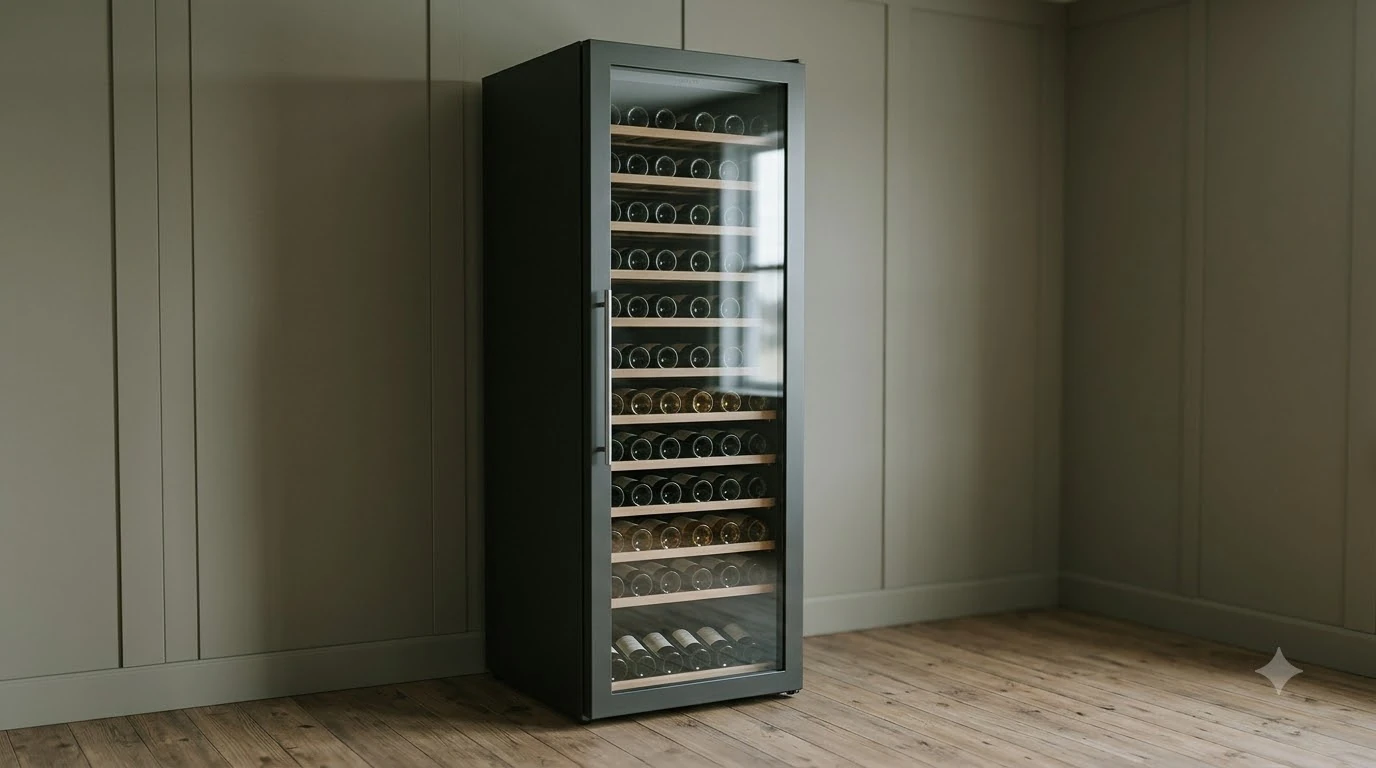
To learn how to stack wine bottles safely, use a stable wine rack or divided bin that supports each bottle horizontally without placing loose glass directly on other loose glass. Keep the rack level, spread the weight across its supports, and leave room for the widest bottles in your collection. For long-term storage, protect the bottles from heat, sunlight, and vibration as carefully as you protect them from falls.
A small collection can fit on a countertop rack, while a larger one may need fixed wine-cellar shelving or divided storage bins. The right arrangement depends on the rack design, bottle shape, closure, and how long you plan to keep the wine. The safest setup is the one that makes every bottle easy to remove without shifting the bottles around it.
Choose a Rack Designed for Horizontal Wine Storage
A purpose-built wine rack is the simplest option for storing standard 750-milliliter bottles on their sides. A six-bottle countertop rack can suit a small collection, while modular or cabinet systems can expand as the number of bottles grows.
Wine bottles are not shaped like ordinary cylinders. Their shoulders, necks, punt, and label create contact points that a wine rack is designed to accommodate. A proper rack supports the body of the bottle and prevents it from rolling forward or backward. That steady position also makes it easier to identify a label and take out one bottle without disturbing the rest. Wine Enthusiast’s rack-buying guidance describes racks as a way to keep bottles horizontal, supported, organized, and still.
Choose openings or cradles sized for the bottles you own. A narrow grid for Bordeaux-style bottles may not accept a broad Burgundy or sparkling bottle. Adjustable shelves help with mixed collections; a fixed rack works well when most bottles are similar. Give every bottle a secure resting place rather than squeezing in the maximum number.
Plan beyond the current bottle count. Wine Enthusiast recommends a rack or wine refrigerator with at least 25 percent more capacity than the collection already occupies. That leaves room for new bottles and avoids forcing extras into tight rows. The examples below apply that 25 percent margin and round up to a whole slot; they are planning estimates, not a claim that every shelf has the same load rating.
| Current collection | Rack capacity to plan for | Added room |
|---|---|---|
| 6 bottles | 8 slots | 2 slots |
| 12 bottles | 15 slots | 3 slots |
| 24 bottles | 30 slots | 6 slots |
| 48 bottles | 60 slots | 12 slots |
Prepare a Level, Stable Base Before Loading
Set the rack on a firm, level surface and confirm that its supports are secure before adding wine. A stable base matters whether the rack holds six bottles on a counter or several dozen bottles in a cabinet.
Check for rocking, bowing, loose fasteners, and moisture. A leaning rack can let bottles creep toward an edge, while a shelf that bends changes the angle of the bottles above it. Tighten hardware as directed and use the supplied wall anchors on tall units. A wall-mounted rack needs hardware rated for its loaded weight and attached to suitable structural support.
Load a cabinet evenly instead of putting every bottle on one shelf or concentrating the heaviest bottles at the top. Wine Enthusiast’s cabinet guidance emphasizes distributing bottles across the shelves and through the height of the cabinet so that weight is not concentrated in one area. Follow the cabinet’s stated shelf capacity and loading diagram; a decorative shelf or sliding shelf is not automatically a stacking platform. Some wine-cabinet manuals specifically warn against stacking bottles on sliding shelves because the moving shelf is designed for its rated bottle arrangement, not an extra layer.
Keep the rack clear of stairs, walkways, and worktop edges. A freestanding unit should sit flat and remain stable when a bottle is removed from its upper row. Open doors and sliding trays gently, and avoid pulling out more than one loaded moving section at a time.
Load Bottles in Supported Rows, Not Loose Piles
Place each bottle into an individual cradle, slot, or divided bin so that the rack carries its weight rather than the glass beneath it. Rows should stay level, with no bottle able to roll out when its neighbor is removed.

Start with the lowest fixed row and work upward, keeping bottles aligned with the rack’s supports. Set the bottle body into the intended contact points and make sure the neck is not hanging over an unsupported edge. In a cubby-style rack, each bottle should sit within its own opening. In a wine bin, use the bin’s dividers and loading instructions instead of building an improvised tower of bottles. If a bottle rests on another bottle’s neck, shoulder, or punt rather than on a designed support, change the arrangement. Pause after every 2 or 3 bottles to inspect the row: bottles should sit level, clear the door and rear wall, and rest without bending a support.
Some divided wine bins are built for horizontal rows with bottle necks alternating directions, using space efficiently because neck and base ends differ in width. Use that layout only when the bin is designed for it and contains bottles on every side. Do not copy it on an open shelf or bare tabletop. There is no universal safe number of loose layers; capacity depends on the structure, bottle dimensions, and maker’s loading limit.
Keep the labels facing outward where practical, but do not let label visibility compromise support. A bottle that is tilted sharply, wedged under pressure, or balanced on a narrow contact point is not properly stored. Leave enough clearance to grip the neck or body and slide the bottle out without lifting or shifting a neighboring row. If removing one bottle makes another bottle move, the row is too tightly packed or the rack is not supporting the bottles correctly.
Stack Wine Cases and Storage Bins With Care
For boxed storage, use wine cases or bins with internal dividers that keep bottles separated and prevent them from rolling. Keep the heaviest, fullest cases at the bottom and do not exceed the case, rack, or shelf maker’s load instructions.
A wine shipping case differs from a general moving box: purpose-made cases have partitions that separate bottles and limit glass-to-glass contact. An original carton can help during short-term storage or a move if it is clean, dry, undamaged, and sized for those bottles. For a 6- or 12-bottle carton, confirm that every partition is present before loading. Do not load a box with torn corners, a crushed base, or missing dividers.
Put cases on a flat floor or shelving rated for their loaded weight. Fully support the bottom case, align the edges, and avoid a leaning column. Do not place a heavy case on a smaller carton or let an upper case overhang. If the stack bows or rocks, unload it and make a lower arrangement.
For years-long storage, a wine case is not a substitute for a structural rack. Cardboard can absorb moisture, lose stiffness, and conceal a leak. A rack or purpose-built bin is easier to inspect and inventory; keep cartons away from pipes, drains, and damp concrete.
Allow for Champagne, Large Formats, and Different Closures
Not every bottle fits a standard wine-rack opening, so measure the widest and tallest bottles before filling the rack. Champagne, some sparkling wines, Burgundy bottles, and magnums can need a wider or deeper slot than a standard 750-milliliter bottle.
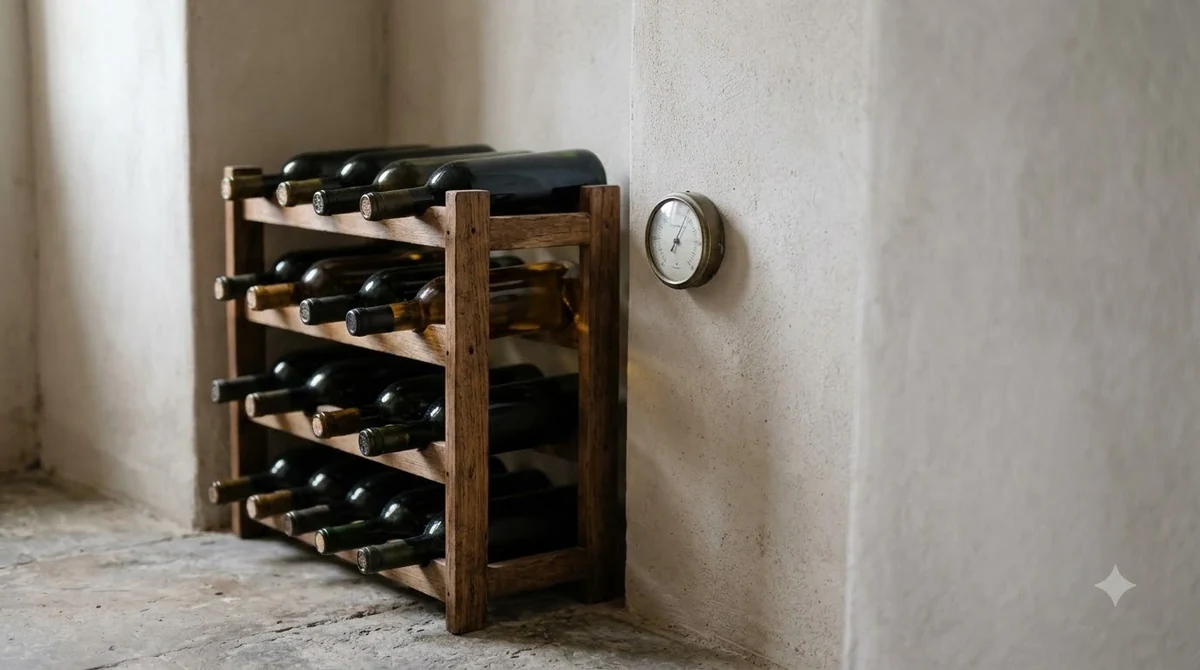
Wine Enthusiast recommends checking that an all-purpose rack fits Champagne-size bottles. A few wider bottles can block a row or stop a sliding shelf from closing. Adjustable shelves and dividers add flexibility, but lock each adjustment before loading; never force a bottle into a space that pinches its glass.
Large formats change weight distribution. A 1.5-liter magnum holds twice the wine of a standard 750-milliliter bottle, before accounting for extra glass. Put heavier bottles on lower fixed shelves when permitted, check the shelf rating, and use a dedicated cradle for unusual shapes.
Closure type matters to bottle position, but it does not replace the need for physical support. Natural cork bottles have traditionally been stored horizontally so the wine contacts the inner surface of the cork. The Australian Wine Research Institute’s storage review describes studies in which orientation made a difference for some cork-sealed samples, while other trials found little effect over five years. Decanter’s discussion of horizontal wine storage also explains that this is not a universal requirement and that modern closures, including screw caps with controlled permeability, make the relationship more nuanced. Screw-cap bottles can stand upright when the rack is designed for that position and prevents tipping. For long-term storage, follow the wine and closure maker’s guidance and prioritize stable cellar conditions. Horizontal slots remain a practical default for cork-finished collections. The article on why wine bottles have corks explains the traditional closure.
Protect the Stack From Heat, Light, and Vibration
A secure arrangement only solves the physical side of storage; wine also needs a steady environment. Aim for a consistently cool, dark location around 53–57°F, and avoid strong temperature swings, direct light, and repeated movement.
Wine Enthusiast identifies 53–57°F as a preferred range for storing wines and warns against large temperature fluctuations of more than 10–15°F. The Australian Wine Research Institute reports that extended storage above 25°C can affect wine quality, while temperatures above 40°C can cause visual and sensory changes within days. These are reasons to avoid garages, sunny windows, laundry rooms, and the upper shelves of hot kitchens. For storage lasting three years or longer, Wine Enthusiast gives a relative-humidity range of 50–75 percent as useful for reducing the risk of corks drying out. Very dry air can contribute to cork drying and leakage, while a damp wall or wet basement floor can damage labels, cartons, and the rack. A small thermometer and hygrometer help confirm actual conditions.
Keep bottles away from direct sunlight and strong artificial light. The Australian Wine Research Institute describes light exposure as a possible cause of lightstruck flavor. Use a dark room, closed cabinet, or shaded rack; dark glass does not make a sunny windowsill suitable. Read more about why many wine bottles are green. Minimize vibration and handling, too. Wine Enthusiast notes that racks keep bottles from rolling, while movement can disturb sediment in aging wines. Keep the rack away from washing machines, vibrating speakers, and frequently slammed doors.
Organization can prevent repeated handling. Group bottles by region, grape, style, or drinking window, and record the location of special bottles in a simple inventory. A collection for a dinner or party can be planned before the event; the guide to how many bottles of wine for 20 guests can help estimate how many slots you need to keep accessible. For broader storage questions, the site’s Wine Q&A is a useful next stop.
Tip: Before loading a new rack, place it in its final location, check that it is level, and test one bottle in each type of opening. A quick fit check with your widest bottle can prevent a full rearrangement later.
Frequently Asked Questions
These answers cover common situations that do not fit neatly into a standard rack plan. Bottle format, packaging, and the length of storage can change the best arrangement.
Can I store an opened wine bottle on its side?
Store an opened bottle upright in the refrigerator after replacing its closure, rather than laying it in a horizontal rack. The upright position reduces the chance of leakage around a reused cork or stopper. A bottle with a screw cap should also be closed securely before it goes back into the fridge.
Do all wine bottles have the same diameter?
No. Bottle dimensions vary by producer, region, and wine style, and sparkling bottles are often heavier and wider than standard still-wine bottles. Measure the widest bottles in your collection before buying a rack, especially if you plan to add magnums.
Can I stack wine bottles in a wooden crate?
Use a crate only if it was designed to hold wine bottles and has sound dividers or supports. A decorative wooden box without partitions can allow bottles to roll, knock together, or press against the sides. Inspect the base and joints before loading it, since a loose bottom can fail when the crate is lifted.
Should I put old bottles on the bottom shelf?
Older bottles are often best placed where they can remain undisturbed and be removed without reaching over other bottles. Many mature red wines develop sediment, so keeping those bottles in a stable horizontal position and avoiding repeated movement can make service easier. The bottom shelf is useful only if it is secure, clean, and convenient to access.
How often should I check a loaded wine rack?
Look over the rack every few months and after any nearby impact, leak, or move. Check for loose fasteners, bowed shelves, damaged dividers, seepage around corks, and bottles that have shifted out of their openings. A quick inspection is especially useful after seasonal changes if the rack sits in a room that becomes warmer or more humid.
For most home collections, the safest arrangement is simple: use a rack or divided bin made for wine, load it evenly, and keep every bottle fully supported. Match the openings to your bottle shapes and protect the finished stack from heat, light, and vibration. A stable setup makes the collection easier to use and reduces the risk of broken bottles.
More in Wine Basics
 Which Rose Is Best for Your Taste, Budget, and Food PairingsUpdated Nov 21, 2026
 Is Cheap Wine Bad? How to Find Bottles Worth DrinkingUpdated Nov 21, 2026
 What To Write On A Wine Gift Tag: Thoughtful Messages For Every OccasionUpdated Nov 21, 2026
 Which Wine Is Best For Weight Loss? Compare Lower-Calorie ChoicesUpdated Nov 21, 2026
 What Is The Best Wine For Mimosas? Choose Bubbly That Balances Orange JuiceUpdated Nov 20, 2026
 Which Prosecco Is Best for Your Taste and OccasionUpdated Nov 20, 2026