

We may earn a commission when you buy through links on this page, at no extra cost to you. Learn more.
The answer to why are wine bottles green is mainly light protection: green-tinted glass filters some of the light that can alter wine during storage. The tradition also has historical roots in early glassmaking, when natural impurities gave bottles a green appearance. Today, green glass serves a practical purpose, although clear, amber, and other colored bottles remain useful for different wines and packaging styles.
A wine bottle is more than a container. Its glass color influences how much light reaches the wine, while its shape and closure reflect centuries of winemaking and packaging traditions. Green bottles are familiar on shelves because they offer a balance of protection, practicality, and recognizable appearance. Understanding the reason behind that color also explains why some delicate white wines arrive in clear glass and why proper storage matters regardless of the bottle you choose.
Why Green Glass Became the Traditional Choice
Green glass became a familiar wine bottle material because it offered practical protection against sunlight while reflecting the limitations of historical glassmaking. The tradition developed over centuries, particularly during the 17th and 18th centuries, when dark olive-green bottles were widely used to preserve wine and other alcoholic beverages.
Early glassmaking did not always produce perfectly clear glass. Natural impurities in the materials used to manufacture glass often created green or amber tones. Rather than being considered a defect that needed to be removed, the tinted appearance eventually became useful for storing products that could deteriorate under prolonged exposure to sunlight. The history of traditional Champagne bottles reflects this connection between early glass production and the later appreciation of tinted packaging for wine preservation.
Historical records and archaeological discoveries support the practical importance of dark glass. According to South Carolina State Parks, wine bottles manufactured during the 17th and 18th centuries were generally made from dark olive-green glass. The color was intentionally chosen to help block sunlight and better preserve the contents. These bottles sometimes appear nearly black because their green tint is so deep. Similar glass containers were also used for rum and other spirits.
Over time, manufacturers gained greater control over glass color, but green remained associated with wine. Producers continued using it because it was recognizable, practical, and compatible with established bottle shapes. Champagne bottles, Bordeaux bottles, and Burgundy bottles developed distinct visual identities, yet colored glass became a common feature across many styles. The color was no longer simply the accidental result of early manufacturing. It had become part of a packaging tradition with a genuine preservation benefit.
How Light Exposure Changes Wine
Wine is sensitive to light because certain wavelengths can trigger chemical reactions that change its aroma, color, and overall character. Clear bottles allow considerably more light to reach the liquid than protective tinted glass, making the choice of packaging important for wines that may spend extended periods on shelves or in storage.
The problem is often described as lightstrike, sometimes referred to as the taste of light. This fault can develop when light interacts with naturally occurring compounds in wine, including photosensitive substances involved in reactions that affect aroma. These reactions can produce undesirable smells and reduce the freshness that makes a wine enjoyable. White wines and sparkling wines can be particularly vulnerable, although susceptibility varies with wine composition and storage conditions.
Light exposure can affect more than the wine’s smell. It may also change visual characteristics, including color intensity and yellow coloration. That matters because a white wine that should appear fresh and lively can develop unwanted visual changes during storage. A bottle may look attractive on a brightly illuminated store shelf while its contents are gradually exposed to conditions that can reduce quality. The problem is not limited to direct sunlight; artificial retail lighting can also contribute to light exposure.
An IVES study examining white wines under typical supermarket conditions found that a few wines in clear flint bottles developed lightstrike after just one to two days. All the tested flint-bottled wines developed the fault after three to four weeks. Green glass generally protected wine quality throughout the tested exposure period. The research also found that moving wine into a dark, cool environment after light damage did not reverse an established fault. That makes prevention more useful than attempting to correct the damage later. Read the IVES comparison of flint and green wine bottles for the experimental details.
How Green, Clear, and Amber Glass Compare
Different bottle colors offer different levels of protection against light. Green glass provides a useful middle ground between clear glass and darker amber glass, while flint glass prioritizes visibility rather than maximum light filtration.
Winemakers and packaging suppliers use several familiar color descriptions. The University of Minnesota’s enology guidance identifies champagne green as a darker green shade and antique green as a lighter, more yellow-green shade. Amber and blue are also available, alongside clear glass and frosted finishes. The appearance of a bottle therefore provides a general indication of its light-filtering characteristics, but the exact level of protection depends on the glass itself.
| Glass color | Typical light protection | Common packaging role |
|---|---|---|
| Clear or flint | Lowest of these three common choices | White wines and rosé wines where visible color matters |
| Green | Moderate protection compared with clear glass | Many red wines and traditional Champagne bottles |
| Amber or brown | Generally stronger light filtering than green | Wines requiring additional protection from light |
Research from IVES provides a practical comparison of clear and green bottles. During supermarket testing, a few flint-bottled wines developed lightstrike within one to two days, while green glass generally maintained quality over the tested period of up to 50 days. These findings do not mean that every green bottle guarantees 50 days of protection or that every clear bottle will deteriorate immediately. They show that bottle color can make a meaningful difference under particular lighting and storage conditions.
Amber glass can offer a further level of protection, making it an appealing choice for products that need additional shielding. However, a wine bottle’s shade alone does not establish its precise protective performance. Different shades, glass compositions, and bottle designs can transmit different amounts of light. A deep green bottle and a pale green bottle should not automatically be assumed to offer identical protection. Clear packaging can also be made more suitable for storage through measures such as protective sleeves and careful placement away from bright light.
Why Some Wines Are Bottled in Clear Glass
Clear glass is often selected because it allows buyers to see the wine’s natural color before opening the bottle. It is particularly familiar with white wines and rosé wines, and it has become a distinctive packaging choice for certain Champagne styles.
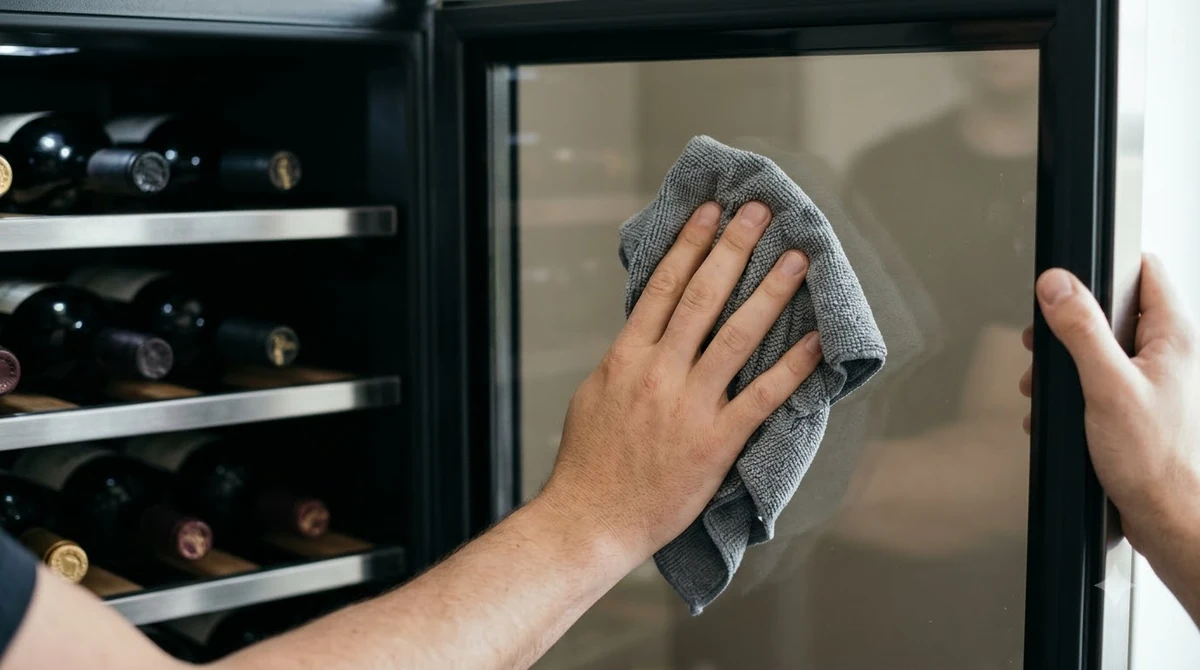
The visual appeal is straightforward. A pale pink rosé looks different from a deeper salmon-colored wine, while the golden tones of some white wines can help communicate their style. Clear glass allows those characteristics to remain visible instead of hiding them behind an opaque or dark container. The choice is particularly useful when the appearance of the wine is part of the producer’s presentation.
Champagne offers a recognizable example. Some producers use clear bottles for rosé Champagne and Blanc de Blancs cuvées, where showing the wine’s color helps establish the identity of the bottle. Other producers use clear glass for selected products to create a more contemporary visual style. The decision is not necessarily a sign that the wine is intended for immediate consumption or that the producer has ignored storage considerations.
There is, however, a practical tradeoff. Clear bottles allow more light through than traditional green glass, so they require greater care after packaging. A clear bottle displayed near a window or beneath strong retail lighting can experience more exposure than a comparable bottle in darker glass. Some packaging designs address this problem with an opaque sleeve or protective covering, which can shield the contents while allowing the producer to maintain a distinctive appearance. Clear bottles are therefore not inherently unsuitable, but their storage conditions deserve attention.
How to Store Wine in Any Bottle
Good storage protects wine regardless of whether its bottle is green, clear, or amber. Keeping wine away from direct sunlight, strong artificial lighting, and excessive temperature changes helps preserve the character intended by the producer.
A useful storage target for a general wine collection is approximately 55 degrees Fahrenheit. A stable, cool environment is preferable to a location where temperatures fluctuate throughout the day. A dark cupboard, wine refrigerator, or properly maintained cellar is generally more suitable than an exposed kitchen counter or a sunny windowsill. Green glass offers additional protection, but it should not be treated as a substitute for suitable storage.
Bottle orientation is another consideration. Bottles sealed with natural cork are generally stored horizontally so the wine remains in contact with the closure. This is especially useful for wines intended to remain in storage for extended periods. Producers also use screw caps and other closure systems, so the traditional cork arrangement is not universal. The choice of closure is separate from the decision to use green glass; a bottle can benefit from tinted packaging whether it has a natural cork or a modern closure. For more detail, see why do wine bottles have corks.
Tip: Store wine near 55 degrees Fahrenheit in a dark location, away from direct sunlight and bright retail-style lighting. A green bottle adds useful protection, but consistently cool, dark storage is still important.
Serving temperature also affects the enjoyment of wine, although it does not change the protective properties of the bottle. Light whites and rosés are generally served around 45 to 50 degrees Fahrenheit, while fuller-bodied whites are often better around 50 to 55 degrees. Light reds typically benefit from 55 to 60 degrees, and fuller reds from 60 to 65 degrees. These serving temperatures are different from long-term storage conditions, so a bottle should not be stored permanently at its intended drinking temperature simply because it is ready to serve.
For bottles already exposed to bright store lighting, choose a bottle that has been displayed away from strong illumination when possible. A lower shelf or a box-protected display can reduce exposure compared with a bottle positioned directly beneath bright lights. Remember that light damage can be permanent. Moving a compromised bottle into a dark cupboard may prevent further exposure, but it cannot restore aromas or characteristics that have already been altered.
What Bottle Color Does—and Does Not—Tell You
Bottle color can provide useful information about packaging choices and potential light protection, but it is not a reliable measure of wine quality. A dark green bottle does not automatically contain a more expensive, older, or better-made wine than a clear bottle.
Wine producers make packaging decisions for several reasons. Tradition, the intended storage period, the wine’s visual appearance, and the identity of the producer can all influence the selected glass. A red Bordeaux-style wine may arrive in a dark green bottle because colored glass is conventional for that category. A rosé Champagne may use clear glass because displaying its pink color is part of its presentation. Neither choice establishes the wine’s quality on its own.
Bottle shape also contributes to a wine’s appearance without determining the liquid’s quality. The University of Minnesota describes the traditional Bordeaux shape as having steep shoulders and straight sides, the Burgundy shape as having sloping shoulders, and the Hock shape as tall and slender. These familiar designs are associated with particular wine traditions and grape styles, but their appearance does not establish a universal rule for bottle color. Modern producers can choose packaging that suits their own wines and presentation preferences.
Even the presence of green glass should be interpreted as one part of a larger packaging decision. The bottle helps control light exposure, but the wine’s quality depends on factors such as grape condition, winemaking, closure integrity, and storage history. A well-made wine in a clear bottle can remain enjoyable when stored properly, while a bottle in dark green glass can still deteriorate if it is repeatedly exposed to excessive heat or unsuitable conditions.
For readers learning about packaging, closures, and other basic wine questions, the Wine Q&A collection provides additional background. Bottle color is a useful starting point for understanding preservation, but the most important lesson is to protect wine from unnecessary exposure and maintain stable storage conditions.
Frequently Asked Questions
The most common questions about green wine bottles concern their construction, closures, strength, and practical use. These details help explain how glass packaging works beyond its familiar color.
Does a green wine bottle require a cork?
No. Green glass can be used with natural cork, agglomerated cork, synthetic cork, or a screw cap. Some wines with remaining carbonation or additional fermentation in the bottle also use crown caps. The closure depends on the wine and the bottle finish rather than the color of the glass.
Are clear Champagne bottles weaker than green bottles?
No. Champagne bottles are designed to withstand the pressure created by carbonation, regardless of whether the glass is green or clear. Bottle strength is a separate packaging requirement from light protection, so clear glass does not automatically mean a less durable Champagne bottle.
Do all wine bottles have the same neck dimensions?
No. Wine bottle neck dimensions can vary, especially in their external finish. The University of Minnesota describes a typical 750 ml wine bottle with an inner diameter of approximately 18.5 mm at the mouth, expanding to about 21 mm farther down the neck. A common number-nine wine cork measures approximately 24 mm across.
Why are some wine bottles covered in wax?
Wax is sometimes used as a decorative or finishing treatment around the bottle opening. It creates a distinctive appearance and can provide an additional covering over the closure. Applying hot-dip wax is more labor-intensive than using a conventional capsule, so it is a packaging choice rather than a requirement for green glass bottles.
Can a wine bottle use a crown cap instead of a cork?
Yes. Crown caps are used for certain wines, especially pét-nat styles that retain carbonation or undergo additional fermentation in the bottle. A standard beer bottle crown cap commonly measures 26 mm, while a Champagne-style bottle uses a 29 mm crown cap. The required cap depends on the bottle finish and packaging design.
Green wine bottles became traditional because their tinted glass offered a useful defense against sunlight, and that practical advantage continues to matter today. Clear and amber bottles have their own purposes, but whatever the color, keeping wine away from excessive light and maintaining a cool, stable storage environment are essential parts of preserving its character.
More in Wine Basics
 What Is The Best Wine For Mimosas? Choose Bubbly That Balances Orange JuiceUpdated Nov 20, 2026
 Which Prosecco Is Best for Your Taste and OccasionUpdated Nov 20, 2026
 Which Wine Is Best For Health? Understand the Risks and BenefitsUpdated Nov 20, 2026
 Which Champagne Is Best for Your Taste and OccasionUpdated Nov 20, 2026
 What To Put In A Wine Gift Basket For A Thoughtful, Memorable GiftUpdated Nov 20, 2026
 What Is the Best Wine for Mulled Wine? Choose a Smooth, Fruity RedUpdated Nov 20, 2026