

We may earn a commission when you buy through links on this page, at no extra cost to you. Learn more.
What is blanc de blancs champagne? It is Champagne made exclusively from white-skinned grape varieties, usually Chardonnay, producing a sparkling wine known for its bright acidity, fresh citrus flavors, and elegant character. The name means “white from whites” and distinguishes this style from Blanc de Noirs, which uses dark-skinned grapes. Although Chardonnay is the most familiar grape in this category, a small number of other authorized white varieties can also be used. Blanc de Blancs can be crisp and youthful or creamy and complex after extended aging.
Blanc de Blancs Champagne offers a different expression of the Champagne region’s vineyards, emphasizing the freshness and structure of white grapes rather than the red-fruit character that Pinot Noir and Meunier can contribute to traditional blends. Understanding its grapes, production, flavor profile, and regional origins makes it easier to choose a bottle for an aperitif, seafood dinner, or special celebration. Here is what to look for when buying and serving this distinctive sparkling wine.
What Blanc de Blancs Means on a Champagne Label
Blanc de Blancs means “white from whites,” describing a sparkling wine made exclusively from white-skinned grape varieties. In Champagne, the designation identifies a wine without the region’s black grape varieties, Pinot Noir and Meunier, even though those grapes are important ingredients in many other Champagne styles.
Chardonnay is the grape most closely associated with Blanc de Blancs. However, Champagne regulations also permit Arbane, Petit Meslier, Pinot Blanc, and Pinot Gris in white-grape-only wines. These varieties are much less common than Chardonnay, so most bottles carrying the designation are primarily Chardonnay-based.
The distinction is about grape color and composition, not sweetness, age, or quality. A Blanc de Blancs can be Brut Nature, Extra Brut, Brut, or another permitted sweetness category. It can also be vintage or non-vintage. The words on the front label tell you about the grape composition, not necessarily whether the finished wine will taste especially dry, creamy, delicate, or intense.
There is also a difference between Blanc de Blancs and Blanc de Noirs. Blanc de Noirs is made exclusively from dark-skinned grapes, generally Pinot Noir, Meunier, or a combination of the two. Both wines can have a white appearance because the juice of these grapes is generally pressed away from the skins without extended color extraction.
The term appears on sparkling wines produced outside Champagne, too. However, Champagne has a defined geographical origin and production rules. A white-grape sparkling wine from California, Oregon, or another region may share some stylistic characteristics, but it is not Champagne simply because it uses the same grape-composition description.
Which Grapes Are Used in Blanc de Blancs Champagne?
Chardonnay is the dominant grape in Blanc de Blancs Champagne because it provides the acidity, citrus character, and structure associated with this style. The other four authorized white varieties offer additional possibilities, although they appear far less frequently in commercial Champagne production.
Chardonnay performs particularly well in Champagne’s cool growing conditions. Its relatively high acidity helps preserve freshness, while its flavor profile can range from green apple and lemon to ripe pear, citrus zest, and more mature notes of nuts and pastry. The grape can also reflect differences in vineyard location, harvest conditions, fermentation choices, and aging.
The Côte des Blancs is one of the best-known Champagne areas for Chardonnay. Its villages and vineyards are closely associated with Blanc de Blancs production, and wines from this area often show pronounced citrus, chalky impressions, and a firm mineral character. Other Champagne areas also produce Chardonnay-based wines, so the designation is not restricted to this subregion.
The four less common white grapes have their own characteristics:
- Arbane: An uncommon historic Champagne variety that contributes to the region’s grape diversity.
- Petit Meslier: A rare white variety valued for maintaining freshness and acidity.
- Pinot Blanc: A white grape that can contribute fruit and a different texture to a blend.
- Pinot Gris: Another authorized white variety, also known historically in Champagne as Fromenteau.
These grapes are not interchangeable with Chardonnay in every respect. Each can influence the resulting wine’s aromatic profile and structure. Nevertheless, Chardonnay remains the practical starting point when someone wants to understand the usual character of Blanc de Blancs.
It is also important not to confuse grape composition with the broader category of white Champagne. A conventional Champagne blend can include Chardonnay alongside Pinot Noir and Meunier. Blanc de Blancs specifically excludes those dark-skinned varieties, even when the resulting wine looks exactly like another white Champagne in the glass.
What Does Blanc de Blancs Champagne Taste Like?
Blanc de Blancs Champagne typically tastes fresh, citrus-driven, and lively, with high acidity and a fine sparkling texture. Common flavors include lemon, grapefruit, green apple, pear, white flowers, and chalky or saline impressions, although the exact profile changes with the producer, vineyard, and age of the wine.
Young examples frequently show lemon peel, lime, green apple, and white flowers. Some have aromas of honeysuckle, jasmine, or orange blossom, while others emphasize grapefruit, pineapple, and other fresh fruit. The acidity gives the wine a clean, energetic impression, making it particularly appealing as an aperitif or alongside delicate seafood.
Minerality is another expression commonly associated with the style. Drinkers may describe impressions of chalk, wet stone, graphite, flint, or sea spray. These are sensory descriptions rather than literal ingredients in the wine. The official Champagne organization also associates the style with saline sensations and the chalky character of its growing areas. Its official Blanc de Blancs Champagne profile describes these mineral impressions alongside the style’s floral and citrus characteristics.
Texture can vary considerably. A younger, relatively restrained Blanc de Blancs may feel lean and focused, with persistent bubbles and a crisp finish. A wine with more time aging on its lees, or one made using a more generous winemaking approach, may develop a broader, creamier mouthfeel.
Older bottles can show another layer of complexity. Aromas and flavors may move toward toasted bread, brioche, biscuit dough, almonds, hazelnuts, dried fruit, honey, and ripe apple. These characteristics give mature Blanc de Blancs a richer profile than the sharp citrus character associated with youthful examples.
Oak treatment can also influence the style. Some producers use oak vessels during fermentation or aging, potentially adding texture and subtle spice. Others favor stainless steel to preserve a more direct expression of fruit and acidity. Neither approach defines the category, and oak is not a requirement for Blanc de Blancs.
For a useful comparison, think of a young Blanc de Blancs as a fresh lemon and green-apple expression of Champagne, while a mature example may add toasted almond, pastry, and creamy complexity. Both can be excellent interpretations of the same grape-based style.
How Blanc de Blancs Is Made and Aged
Blanc de Blancs Champagne is generally produced using the traditional Champagne method, in which the wine undergoes a second fermentation inside the bottle. This process creates the carbon dioxide responsible for its bubbles and contributes to the wine’s texture and development during aging.
The process begins with harvesting white grapes, most commonly Chardonnay. The fruit is pressed, and the resulting juice is fermented into a still base wine. Producers may vinify individual vineyard parcels or grape selections separately before deciding how to assemble the final cuvée.
Blending decisions help determine the finished wine’s personality. A producer may combine wines from different vineyard sites, grape varieties, or harvest years. Non-vintage Champagne can incorporate reserve wines from earlier harvests to maintain a recognizable house style. A vintage Blanc de Blancs, by contrast, is associated with a particular harvest year.
After the base wine is prepared, the producer adds a mixture commonly called the tirage, which includes yeast and sugar. The wine is bottled and sealed, allowing a second fermentation to take place. Because the carbon dioxide cannot escape, it dissolves into the wine and creates the characteristic bubbles.
The wine then spends time aging on its lees, the spent yeast cells remaining after fermentation. This stage can contribute additional complexity and texture. Depending on the wine and its aging conditions, the resulting aromas may include bread, biscuit, brioche, and toasted nuts.
During traditional production, the bottles are gradually positioned to collect the yeast sediment near the neck. The sediment is removed through disgorgement, and a dosage may be added before the final cork is inserted. Dosage influences the wine’s sweetness category.
Understanding Champagne sweetness levels
Blanc de Blancs does not automatically mean dry Champagne. The sweetness designation on the label provides a better indication of the amount of sugar in the finished wine.
| Champagne category | Residual sugar per liter | General impression |
|---|---|---|
| Brut Nature | Less than 3 g/L | Very dry |
| Extra Brut | 0–6 g/L | Very dry |
| Brut | Less than 12 g/L | Dry |
| Extra Dry | 12–17 g/L | Slightly softer |
| Dry | 17–32 g/L | Noticeably sweeter |
| Demi-Sec | 32–50 g/L | Sweet |
| Doux | More than 50 g/L | Very sweet |
These categories describe sweetness rather than grape variety or production method. For example, a Brut Blanc de Blancs and a Brut Blanc de Noirs can both taste dry, even though their grape compositions are different.
Vintage and non-vintage labeling also provides useful information. Non-vintage wines often aim for consistency across releases, while vintage wines express the conditions of an individual harvest. Neither category is automatically better. A well-made non-vintage Blanc de Blancs can offer excellent freshness, while a carefully aged vintage bottling may develop greater complexity.
How Blanc de Blancs Compares With Other Sparkling Wines
Blanc de Blancs differs from other sparkling wines primarily through its grape composition, regional origin, and typical flavor profile. Comparing it with Blanc de Noirs, standard Champagne blends, Cava, and Prosecco helps clarify what makes this style distinctive.
Blanc de Noirs provides the closest comparison because it is also defined by grape color. Pinot Noir and Meunier can contribute greater red-fruit impressions and a fuller structure. Blanc de Blancs usually emphasizes citrus, white fruit, and acidity instead. These are general tendencies rather than fixed rules, since vineyard selection and winemaking can significantly change the final character.
Traditional Champagne blends commonly combine Chardonnay with Pinot Noir and Meunier. Chardonnay can supply freshness and structure, while the black grapes can contribute body, fruit, and additional depth. Blanc de Blancs removes that blending option and focuses exclusively on white grape varieties.
Cava offers another comparison. Traditional-method Cava is commonly produced using Macabeo, Xarel-lo, and Parellada, although other grapes are permitted in some styles. Its production method can resemble Champagne, but its geographical origin, grape varieties, and regional rules are different.
Prosecco is generally made from Glera and produced using the tank method. Its secondary fermentation takes place in pressurized tanks rather than individual bottles. This approach often preserves fresh fruit and floral aromas and produces a different bubble texture from traditional-method Champagne.
The following comparison summarizes the main distinctions:
| Wine style | Principal grapes | Production method | Typical profile |
|---|---|---|---|
| Blanc de Blancs Champagne | Usually Chardonnay | Traditional method | Citrus, apple, chalk, high acidity |
| Blanc de Noirs Champagne | Pinot Noir and/or Meunier | Traditional method | Red fruit, greater breadth, structure |
| Champagne blend | Chardonnay, Pinot Noir, Meunier | Traditional method | Balanced fruit, freshness, complexity |
| Cava | Macabeo, Xarel-lo, Parellada | Traditional method | Fresh fruit, citrus, sometimes herbal notes |
| Prosecco | Glera | Tank method | Floral, pear, apple, fresh fruit |
Another important distinction is geographical. Champagne is a protected appellation in northeastern France. A traditional-method sparkling Chardonnay from California or Oregon may have similar acidity and citrus flavors, but it cannot be called Champagne unless it comes from the legally defined Champagne region and meets the applicable requirements.
For readers interested in other white wines, what Chenin Blanc tastes like provides another useful comparison of acidity, fruit character, and the different ways a white grape can express itself.
Best Food Pairings and Serving Temperature
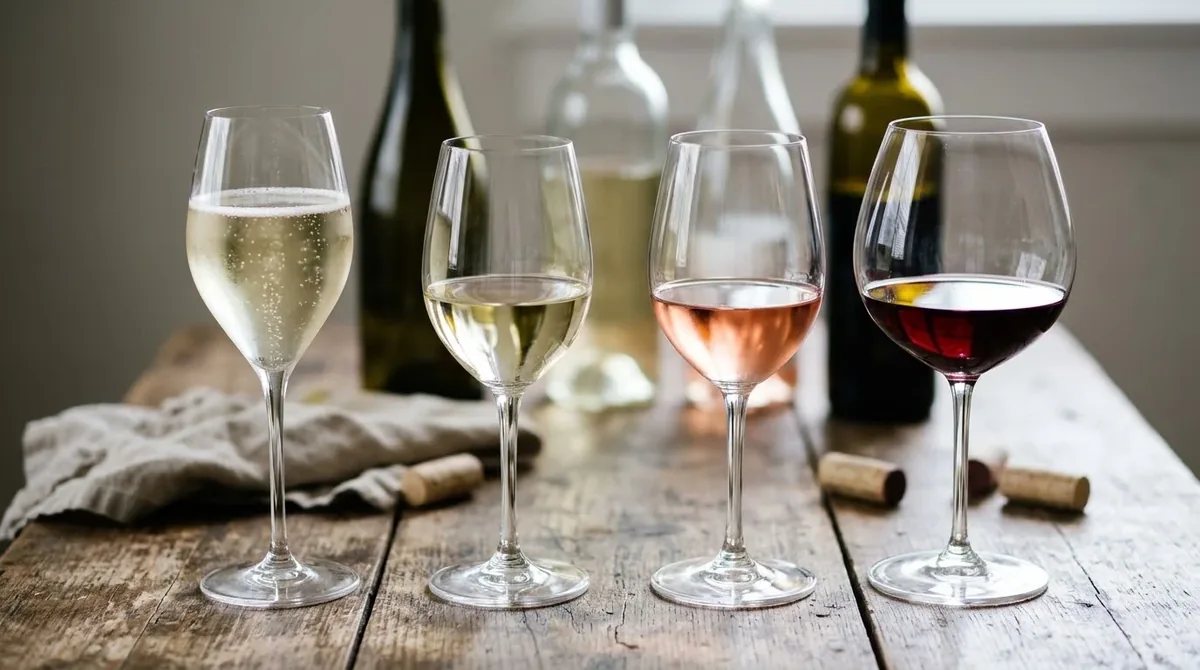
Blanc de Blancs Champagne pairs particularly well with seafood, shellfish, light appetizers, and creamy dishes because its high acidity refreshes the palate. Serving it at approximately 45–50°F helps preserve its freshness while allowing its citrus and floral aromas to show clearly.
Oysters are one of the classic pairings. Their delicate texture and natural salinity complement the wine’s citrus acidity and mineral impressions. Fresh oysters with a light lemon dressing are a particularly straightforward match for a crisp, non-vintage Brut Blanc de Blancs.
Scallops are another excellent choice. The official Champagne organization recommends scallop ceviche with cucumber sorbet, a combination that brings together delicate seafood, fresh acidity, and subtle vegetal flavors. Seared scallops can work just as well, particularly when served with a restrained butter or citrus sauce.
Lobster offers a richer pairing. Decanter identifies vintage Blanc de Blancs as a suitable match for lobster, especially when the wine has enough texture and maturity to complement the shellfish. Lobster with a moderate amount of butter or a light cream sauce can balance the wine’s lively acidity. Decanter’s Champagne food-pairing recommendations also highlight fresh oysters and young Camembert as good matches for non-vintage Blanc de Blancs.
Cheese provides another useful direction. Young Camembert and other creamy cheeses can soften the wine’s sharp edges, while its acidity refreshes the palate between bites. The contrast between a creamy cheese and a crisp Brut Champagne is one reason Blanc de Blancs works beyond seafood courses.
Other good food matches include:
- Sushi and sashimi: Fresh fish and clean citrus flavors work naturally with a restrained Blanc de Blancs.
- Crab cakes: The wine’s acidity balances the richness of crab and moderate amounts of mayonnaise or butter.
- Grilled sea bass: A simple preparation with lemon and herbs complements the wine without overwhelming it.
- Chicken with cream sauce: A fuller, mature Blanc de Blancs can match the dish’s richer texture.
- Light vegetable dishes: Asparagus, cucumber, and fresh herbs can work well when the preparation is not overly bitter or heavily seasoned.
Be more selective with heavily spiced food. Chili heat can feel more intense alongside alcoholic beverages, and strong seasoning may overpower the wine’s delicate flavors. Similarly, strongly sweet desserts can make a dry Brut Champagne seem sharper and less balanced.
Serving and storage recommendations
A serving temperature of 45–50°F is a useful target for Blanc de Blancs. At this temperature, the wine remains refreshing without being so cold that its aromas become difficult to appreciate. A particularly delicate or mature bottle may benefit from serving closer to the upper end of that range.
A standard 750-milliliter bottle provides approximately five servings when poured at 5 ounces each. Use a tulip-shaped sparkling wine glass when possible. Its narrower opening helps preserve effervescence while allowing more aromatic development than a very narrow flute.
Tip: Chill Blanc de Blancs gradually in the refrigerator rather than relying on prolonged freezing. Aim for 45–50°F, pour modest servings, and allow the wine a few moments in the glass to reveal its citrus, floral, and mineral aromas.
Store unopened bottles in a cool, dark location with a stable temperature. Around 55°F is a useful storage target, and bottles can be kept on their sides to maintain cork contact. Avoid locations with frequent temperature changes, direct sunlight, or strong vibration.
After opening, reseal the bottle with a sparkling wine stopper and refrigerate it. Blanc de Blancs generally retains its best sparkling character for approximately one to three days, depending on the wine and how effectively the closure preserves pressure.
For more practical advice about serving white wine, see how to serve Sauvignon Blanc. Although Sauvignon Blanc is a still wine with a different aromatic profile, the principles of controlling serving temperature and matching acidity with food are useful for understanding both wines.
How to Choose a Bottle of Blanc de Blancs Champagne
Choosing Blanc de Blancs Champagne is easier when you consider grape composition, sweetness, vintage status, and the style of the producer. A fresh non-vintage Brut is a versatile starting point, while a mature vintage bottle may suit a more substantial meal or a slower tasting occasion.
Start with the sweetness designation. Brut is a practical choice for most occasions because it generally offers a dry profile without the extremely restrained character of some Brut Nature and Extra Brut wines. If you enjoy very crisp sparkling wine, those drier categories are worth considering. Demi-Sec is a better direction when a noticeably sweeter style is desired.
Next, consider whether you want a youthful or mature profile. A non-vintage Blanc de Blancs often emphasizes fresh citrus, apple, and floral aromas. A vintage wine may show greater depth, depending on the growing conditions and its time aging in the bottle.
Look at the geographical origin when the label provides it. Champagne from the Côte des Blancs is a natural starting point for someone seeking Chardonnay-focused wines with fresh acidity and mineral character. However, Chardonnay from other Champagne areas can produce equally interesting interpretations, including fruitier and broader styles.
Producer style matters as well. Some Champagne houses favor a precise, restrained approach, emphasizing citrus and chalky impressions. Others create wines with more rounded fruit, creamy texture, or noticeable richness from lees aging and oak. Reading the producer’s description can help establish whether a bottle is intended as an aperitif or a more substantial dining wine.
There is no universal requirement that Blanc de Blancs must be expensive, exceptionally old, or vintage-dated. The designation describes the grape composition. Quality depends on the grapes, vineyard sites, production decisions, and the care taken during aging.
Finally, think about the occasion. For a reception or light appetizer, choose a fresh, dry non-vintage bottle. For lobster, roasted poultry, or a richer cheese course, a fuller and more mature example may be a better fit. The best bottle is the one whose texture, acidity, and sweetness work with the food and the experience you want.
Frequently Asked Questions
Is Blanc de Blancs Champagne always 100% Chardonnay?
No. Chardonnay is the most common grape, but Champagne also authorizes Arbane, Petit Meslier, Pinot Blanc, and Pinot Gris for white-grape-only wines. A bottle can therefore qualify as Blanc de Blancs without being exclusively Chardonnay. The exact grape composition depends on the producer’s blend.
Is Blanc de Blancs Champagne always vintage?
No. Blanc de Blancs is available in both vintage and non-vintage versions. Non-vintage Champagne may combine wines from multiple harvests, while vintage Champagne represents grapes from a designated harvest year. The grape designation and vintage status describe two separate characteristics.
Can Blanc de Blancs Champagne be aged for several years?
Yes. Some Blanc de Blancs develops additional complexity with bottle age, including toasted hazelnut, honey, dried fruit, and pastry aromas. The potential depends on the wine’s structure, production choices, and storage conditions. Not every non-vintage bottle is intended for extended cellaring.
Does Blanc de Blancs Champagne contain tannins?
It generally has very little noticeable tannin compared with red wines. White Champagne production typically involves pressing the grapes and separating the juice from the skins rather than extended skin contact. Its structure comes primarily from acidity, effervescence, and texture developed during winemaking and aging.
Is Blanc de Blancs Champagne the same as Chardonnay sparkling wine?
Not necessarily. Blanc de Blancs describes a wine made exclusively from white-skinned grapes, and in Champagne it most commonly features Chardonnay. A sparkling Chardonnay from another region may share similar flavors, but it does not automatically qualify as Champagne. Regional origin and production requirements determine whether a wine can carry the Champagne designation.
Blanc de Blancs Champagne is an excellent choice for anyone who appreciates fresh acidity, citrus aromas, fine bubbles, and the character of Chardonnay. Its range extends from crisp, youthful aperitif wines to mature bottles with creamy texture and toasted, nutty complexity. Pair it with oysters, scallops, lobster, or creamy cheese, serve it at 45–50°F, and choose the sweetness and maturity that best suit your meal.
More in Wine Types & Grapes
 What Does Mourvèdre Taste Like? Flavor Profile, Regions, and PairingsUpdated Nov 20, 2026
 What Does Marsanne Taste Like? Flavors, Styles, and Food PairingsUpdated Nov 20, 2026
 What Does Malvasia Taste Like? Styles, Flavors, and Food PairingsUpdated Nov 20, 2026
 What Does Grenache Blanc Taste Like? Flavor Profile, Styles, and PairingsUpdated Nov 20, 2026
 What Does Garnacha Taste Like? Key Flavors, Styles, and Pairing TipsUpdated Nov 20, 2026
 What Does Fruit Wine Taste Like? A Complete Flavor and Style BreakdownUpdated Nov 20, 2026