

We may earn a commission when you buy through links on this page, at no extra cost to you. Learn more.
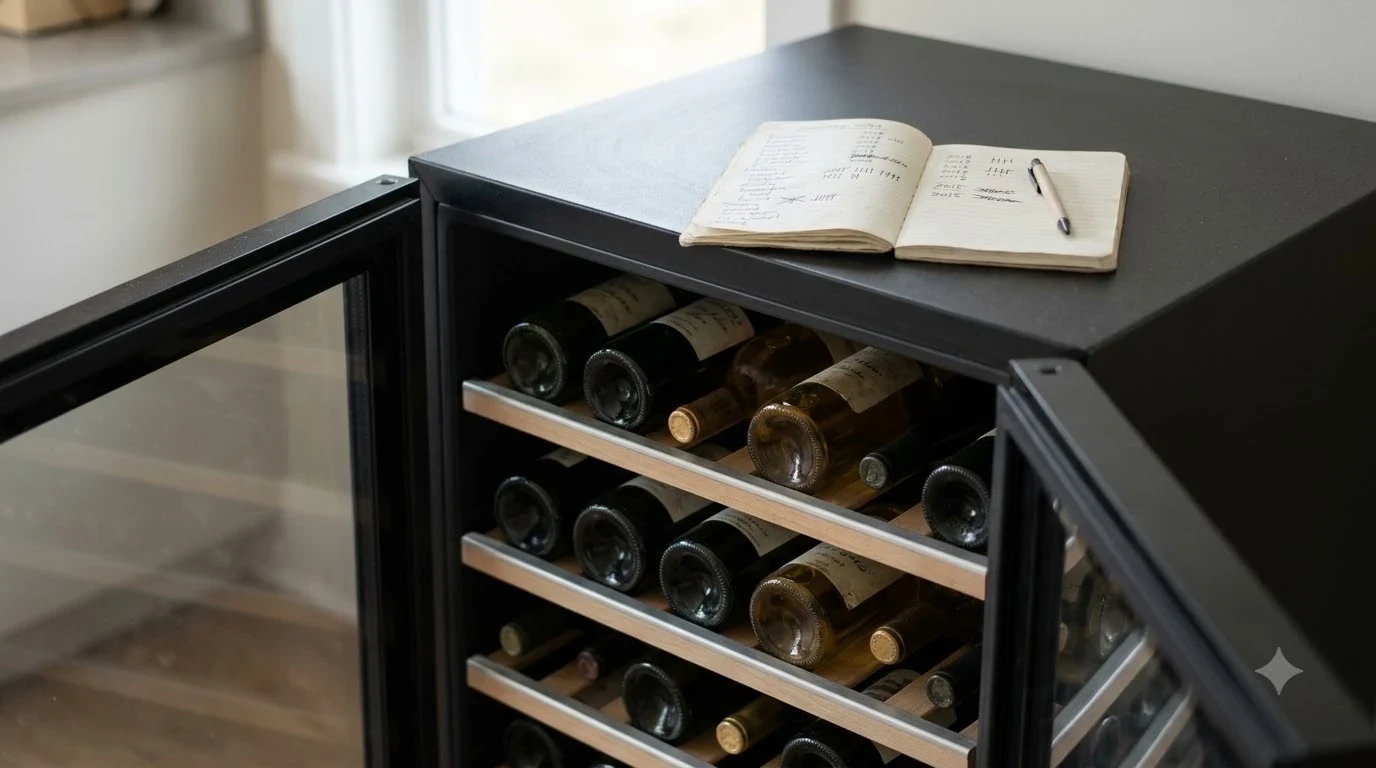
Wine fridge condensation is usually caused by warm, humid air meeting the cooler surfaces of the appliance, particularly its glass door, interior walls, or shelves. A small amount of moisture is often normal, especially in humid weather or after opening the door. However, persistent water buildup, damaged bottle labels, pooling underneath the cabinet, or a door that does not seal properly can indicate a problem that needs attention.
Understanding where condensation appears is the first step toward finding its cause. Exterior glass fogging, moisture on interior walls, wet wine bottles, and water collecting around the base of a wine refrigerator can have different explanations. This guide explains how to distinguish normal moisture from potential appliance problems, what you can safely check yourself, and when professional service makes sense.
Why Wine Fridge Condensation Happens
Wine fridge condensation develops when moisture in the surrounding air comes into contact with a surface that is colder than the air itself. The temperature difference causes water vapor to turn into liquid droplets. Humidity, door openings, cooling settings, and the condition of the door seal all influence how much moisture appears.
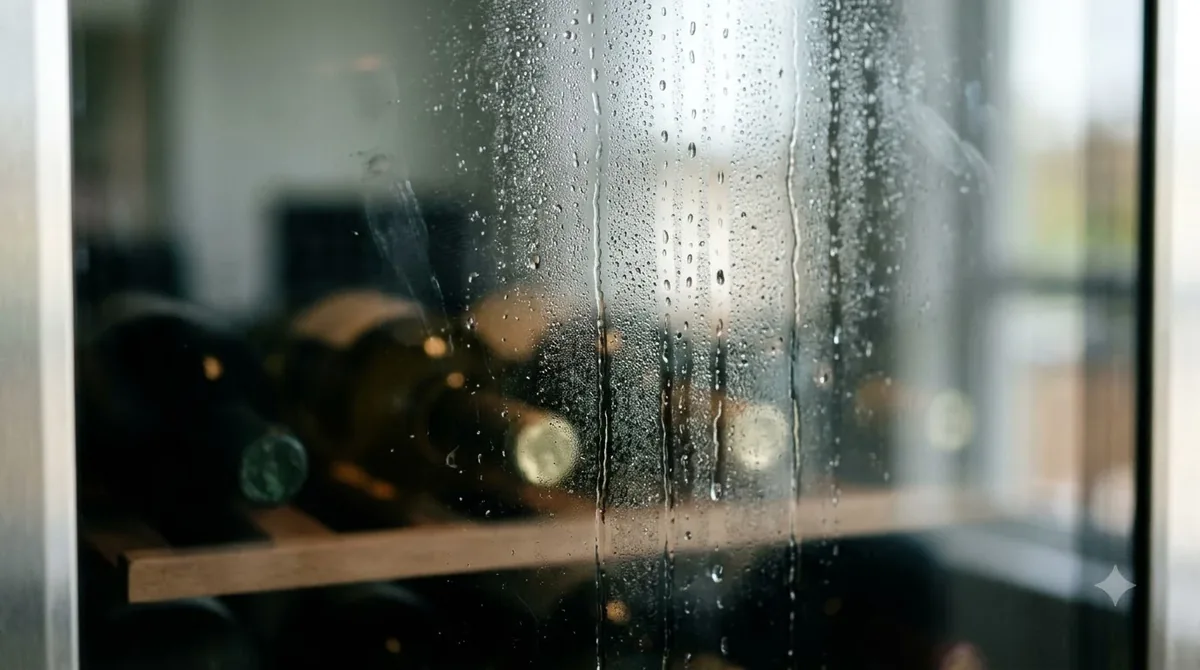
The process is similar to what happens when a cold drinking glass develops water droplets on a warm summer day. The water does not come from inside the glass. Instead, moisture in the surrounding air collects on its cold exterior surface. A wine refrigerator with a glass door can experience the same effect.
Room humidity is an important factor. In a humid kitchen, basement, or entertainment area, the air contains more water vapor. When that air meets the colder glass or cabinet surfaces, condensation becomes more likely. GE Appliances identifies the combination of low cooling settings, high temperatures, and high humidity as a common reason for moisture on the outside of wine center doors. Its wine center condensation troubleshooting guidance also recommends checking the door and its surrounding conditions.
Opening the door introduces another source of moisture. Warm room air enters the cabinet, mixes with the cooler interior air, and can leave droplets on shelves, bottles, and interior surfaces. This is especially noticeable when the door stays open during loading or when someone repeatedly checks the collection.
Condensation is not automatically evidence of a refrigeration failure. Wine storage cabinets are designed to maintain a suitable environment for bottles, and some models deliberately use collected moisture as part of their humidity-management systems. The important distinction is whether moisture behaves as expected or becomes excessive.
For example, a few droplets appearing after opening the door are different from water continuously collecting on the floor. Similarly, temporary exterior fogging during humid weather is different from a door gasket that allows warm air to enter throughout the day.
Exterior Glass Door Condensation and Humidity
Moisture on the outside of a wine refrigerator’s glass door is generally a humidity-related condition rather than a mechanical failure. The cold glass attracts water vapor from the surrounding room, producing fog, droplets, or visible water streaks.
This problem becomes more noticeable in summer, during rainy weather, or in rooms with limited air conditioning. A wine cooler installed near a kitchen, laundry area, window, or frequently opened exterior door may encounter particularly humid air.
According to GE Appliances, exterior door sweating is typically normal under high heat and humidity conditions. The manufacturer explains that moisture can sometimes bead and run down the glass during particularly humid conditions. Wiping the surface dry is an appropriate first response.
Vintec similarly explains that exterior condensation develops when water vapor touches the cold glass surface. Its support guidance identifies excessive environmental humidity as the reason for this type of fogging.
There are several practical ways to reduce exterior moisture:
- Keep the wine refrigerator away from direct sunlight and heat-producing appliances.
- Reduce unnecessary door openings, particularly during humid weather.
- Use room air conditioning or suitable dehumidification if the surrounding space is consistently damp.
- Maintain the ventilation clearances specified in the appliance installation instructions.
- Wipe exterior moisture away with a clean, soft, dry cloth.
- Make sure the door closes completely after every use.
It is also important to distinguish normal glass sweating from a sealing problem. If condensation repeatedly forms around one section of the door frame, inspect the gasket for gaps, dirt, or damage. A poorly seated seal can allow humid air to enter the cabinet and create additional moisture inside.
Do not assume that lowering the temperature will solve the problem. A colder glass surface can increase the difference between the surface temperature and the surrounding humid air, potentially making exterior condensation more noticeable.
Tip: If the glass door becomes wet during humid weather but the interior temperature remains stable and the moisture disappears after wiping, start by addressing room humidity rather than assuming the cooling system has failed.
Interior Moisture, Wet Bottles, and Back Wall Condensation
Some moisture inside a wine refrigerator is normal, particularly in cabinets designed to maintain humidity for long-term wine storage. However, persistent droplets on bottles, shelves, or labels deserve closer attention because they can indicate restricted water drainage or poor airflow.
Sub-Zero explains that condensation on interior shelving and drawers can occur when the door remains open for a period of time. In warm climates, this condition becomes noticeable more quickly. Closing the door allows the cabinet to recover and interior fogging to resolve naturally.
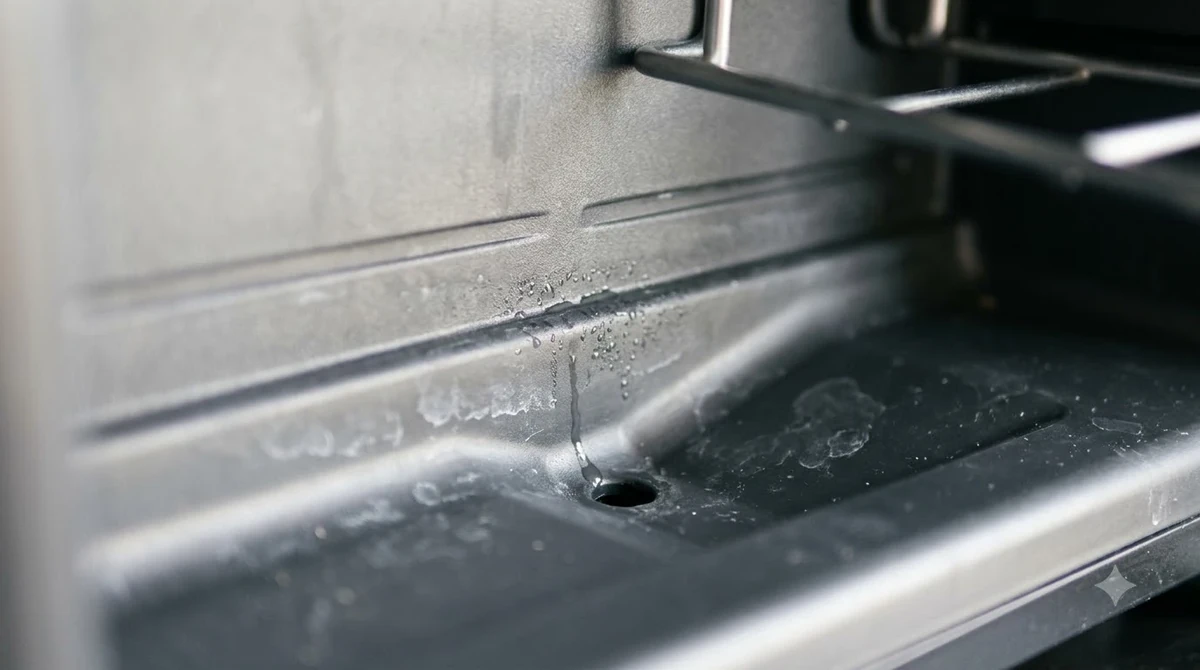
Vintec provides another useful distinction: moisture on the inside back wall is part of the humidity-management process in its wine cabinets. Water collects on the rear panel, travels downward into a tray, and may be reheated and redistributed as vapor. This system helps maintain the cabinet’s storage environment.
That means drying every interior surface whenever moisture appears is not necessarily appropriate. The correct response depends on the appliance design. Some wine cabinets use condensation as part of their normal humidity control, while other models have different drainage arrangements.
Wet bottles can have several explanations. A bottle placed directly against a cold back wall may collect moisture running down that surface. Vintec specifically warns that contact with the back panel can affect bottle labels and interfere with the movement of condensation into the collection tray.
To reduce unnecessary moisture around bottles:
- Leave approximately a finger’s distance between bottles and the rear wall when the cabinet design permits.
- Arrange bottles evenly instead of pushing them tightly against interior panels.
- Avoid blocking drainage channels or ventilation openings.
- Keep labels away from surfaces where water regularly runs down.
- Allow the cabinet to recover after loading several bottles.
- Close the door promptly after arranging or retrieving wine.
Pay particular attention to paper labels. Repeated exposure to moisture can weaken adhesive and cause labels to wrinkle, loosen, or peel. This is an important distinction between harmless temporary fogging and a moisture-management problem that deserves investigation.
Also consider the type of wine cabinet. A dedicated cellaring unit may maintain higher humidity than a refrigerator intended primarily for serving temperatures. Vintec recommends humidity above 50% for its single-zone cellaring cabinets set between 12°C and 14°C. That figure is specific to its guidance and should not automatically be applied to every wine refrigerator.
Common Causes and What They Mean
Identifying the location and pattern of the moisture helps narrow down the likely cause. A quick inspection of the door, surrounding room, bottle arrangement, and drainage area can often distinguish routine condensation from a condition requiring repair.
The following comparison summarizes common symptoms and appropriate first checks.
| Condensation symptom | Likely explanation | First action |
|---|---|---|
| Exterior glass fogging | Humid room air contacting cold glass | Wipe the glass and assess room humidity |
| Interior droplets after opening | Warm, moist air entering the cabinet | Close the door and allow recovery |
| Wet bottles near the back | Bottles contacting a condensation-covered wall | Reposition bottles with a small clearance |
| Moisture around the gasket | Dirty, damaged, or poorly seated door seal | Inspect and clean the gasket |
| Water underneath the cabinet | Possible drainage, collection tray, or sealing issue | Inspect accessible drainage components |
| Persistent interior moisture | Excess humidity, poor sealing, or appliance problem | Inspect the seal and cooling components |
Several conditions deserve particular attention.
High room humidity
High humidity is one of the most common explanations for moisture on the outside of a glass wine refrigerator. A cabinet located in a damp basement or warm kitchen may experience more condensation than the same model installed in a climate-controlled room.
The amount of moisture can change with the weather, even when the appliance itself operates normally. If the problem becomes more noticeable during rainy periods and improves when the room becomes drier, environmental humidity is a reasonable starting point.
Frequent door openings
Repeatedly opening the cabinet introduces warm, moist air. This can produce condensation on interior surfaces and require the cooling system to restore its operating conditions.
Planning bottle retrieval and loading can reduce unnecessary openings. When adding several bottles, organize them before opening the door so the cabinet remains open for a shorter period.
Incorrect bottle placement
Bottles touching the rear panel can interfere with water movement and expose labels to running condensation. Overloading shelves can also obstruct the intended arrangement and make it harder to close the door properly.
Door seal problems
A dirty, cracked, loose, or flattened gasket may prevent the door from sealing correctly. Warm air can then enter continuously, creating persistent moisture and potentially affecting temperature stability.
GE Appliances specifically recommends checking for bottles obstructing the door and inspecting the gasket for tears, looseness, and gaps. These are sensible first checks before assuming that an expensive refrigeration component has failed.
How to Reduce Wine Fridge Condensation
The best approach is to address the source of excess moisture rather than repeatedly wiping the same surfaces. Start with the room environment, then inspect the door seal, bottle arrangement, ventilation, and temperature settings.
1. Assess the surrounding environment
Check whether the appliance is installed in a consistently humid location. Basements, utility rooms, kitchens, and spaces close to exterior doors can expose the cabinet to substantial humidity changes.
If the room is damp, consider improving ventilation or using a room dehumidifier. Avoid placing the unit where it receives direct sunlight or heat from an oven, radiator, or other appliance.
GE Appliances specifies an operating ambient range for its wine centers of 55°F to 90°F. These are manufacturer-specific installation limits, not universal operating requirements. Always follow the environmental limits stated for the particular model.
2. Clean the door gasket
The gasket creates the seal between the cabinet and its door. Dirt, dust, and sticky residue can interfere with contact and allow humid air to enter.
Inspect the full perimeter, including the corners and lower edge. Clean accessible dirt with a soft cloth and mild cleaning solution suitable for the appliance. Dry the gasket afterward and check that it sits evenly against the cabinet.
Look for visible cracks, tears, permanent deformation, and areas that no longer make consistent contact. A damaged gasket generally needs replacement rather than repeated cleaning.
3. Check the door alignment
A door that is not aligned correctly may fail to close tightly. Check whether shelves, bottles, or other items are preventing complete closure. Also look for signs that the cabinet is unstable or uneven.
If the appliance has adjustable leveling feet, follow its installation instructions to correct the position. Do not force the door shut against an obstruction or attempt to bend hinges without the appropriate repair guidance.
4. Maintain appropriate ventilation
Wine refrigerators need adequate airflow to release heat generated during cooling. Restricted ventilation can interfere with normal operation and may contribute to temperature and moisture problems.
Check the installation manual for the required clearance around the cabinet. Freestanding models and built-in models can have different ventilation requirements, so there is no single clearance measurement that applies to every appliance.
Remove dust from accessible ventilation openings and condenser areas according to the manufacturer’s cleaning instructions. Disconnect power before carrying out maintenance that requires access to electrical or mechanical components.
5. Review the temperature setting
An unnecessarily cold setting can increase the temperature difference between the glass surface and the surrounding air. In a humid room, this can make exterior sweating more noticeable.
However, raising the temperature without considering wine storage requirements is not a good universal solution. Vintec recommends 12°C to 14°C for cellaring wines in its single-zone cabinets. Other appliances may have different operating ranges and intended uses.
Use the setting recommended for your particular cabinet and storage purpose. If moisture remains excessive despite appropriate settings and room conditions, investigate the seal and drainage system instead of continually changing the thermostat.
6. Keep the cabinet organized
Arrange bottles so they do not obstruct the back wall, door, or drainage channels. Avoid forcing additional bottles into spaces that interfere with shelf movement or door closure.
A well-organized cabinet also makes it easier to inspect the interior for unusual water accumulation. If moisture appears in one particular area, you can identify whether a bottle is touching a cold surface or blocking a drainage path.
Temperature, Humidity, and Proper Wine Storage
Managing condensation should not come at the expense of appropriate wine storage conditions. The cabinet needs to maintain a suitable temperature and humidity environment while allowing its intended cooling and drainage systems to operate correctly.
Temperature and humidity serve different purposes. Temperature consistency is important for storing wine, while humidity helps maintain suitable conditions around cork closures. Excessive exterior condensation, however, is often related to the humidity of the room rather than the humidity inside the wine cabinet.
Vintec recommends a cellaring temperature of 12°C to 14°C for its single-zone cabinets. It also recommends humidity above 50% for these units when operating within that temperature range. These figures illustrate why removing every trace of interior moisture is not necessarily desirable.
The following figures provide useful context for understanding the relationship between storage conditions and moisture.
| Storage factor | Reference figure | Practical meaning |
|---|---|---|
| Vintec single-zone cellaring temperature | 12–14°C (54–57°F) | Recommended range for cellaring |
| Vintec recommended cabinet humidity | Above 50% | Supports suitable cork conditions |
| Vintec multi-temperature white wine serving range | 6–8°C (43–46°F) | Serving-oriented cooling |
| Vintec multi-temperature red wine serving range | 16–18°C (61–64°F) | Serving-oriented cooling |
These values come from Vintec’s published cabinet guidance and should not be interpreted as universal specifications for every wine refrigerator.
It is also important to distinguish storage temperature from serving temperature. A cabinet intended to keep bottles ready for immediate service may operate differently from a dedicated cellaring cabinet. The correct temperature depends on the model and its intended purpose.
Wine storage also requires attention to the bottle itself. Natural cork closures benefit from suitable humidity conditions, while screw-cap bottles do not depend on cork moisture in the same way. This does not mean that screw-cap wines should be exposed to excessive condensation or poor temperature control.
If the refrigerator has a humidity-management tray or rear-wall drainage system, make sure bottles and accessories do not obstruct it. Some systems collect moisture and redistribute it as vapor. Removing or modifying these components without manufacturer guidance can interfere with their intended operation.
For general storage advice, see our guide to Wine Fridge Troubleshooting, which covers the broader relationship between appliance operation and wine storage conditions.
When Condensation Indicates a Repair Problem
Persistent moisture deserves attention when it continues after the door is closed, appears alongside temperature problems, or causes water to collect outside the appliance. These symptoms can point to a damaged gasket, blocked drainage system, dirty condenser, or another mechanical issue.
Temporary fogging after opening the door is usually less concerning than moisture that appears continuously. The duration, location, and quantity of water provide useful clues about whether the appliance is operating normally.
Check for a damaged gasket
Inspect the entire door seal rather than focusing only on the area where condensation is most visible. A small gap can allow warm room air to enter and create a recurring moisture problem.
Sub-Zero recommends replacing a gasket that is ripped, torn, or otherwise damaged. If moisture is seeping around the gasket, its guidance also recommends cleaning and drying the affected area. Its guidance on excessive wine storage moisture explains additional checks for persistent condensation.
If the door does not close properly even after removing obstructions and cleaning the seal, the hinge, alignment, or gasket may require professional attention.
Investigate water collecting underneath the cabinet
Water on the floor should not automatically be treated as ordinary glass-door condensation. Some wine refrigerators use a drain and collection tray to manage moisture generated during normal operation.
A blocked drain, incorrectly positioned tray, or damaged drainage component can allow water to escape its intended collection area. The design varies between appliances, so consult the relevant owner’s manual before attempting to access internal drainage components.
Look for excessive condensation on interior surfaces
Sub-Zero recommends checking the condenser for accumulated dirt when moisture becomes excessive. It also advises inspecting the gasket and arranging service if those checks do not resolve the problem.
Persistent interior moisture can also be associated with cooling or airflow problems. If the cabinet cannot maintain its intended temperature, condensation may be one of several symptoms rather than the underlying fault.
Recognize when professional service is appropriate
Contact a qualified technician if water repeatedly pools around the cabinet, the interior remains unusually wet, the door cannot maintain a proper seal, or the unit struggles to maintain its selected temperature.
Electrical components, refrigerant circuits, compressors, and sealed cooling systems should not be opened or repaired as routine household maintenance. A technician can check the appliance’s operating condition and identify whether the issue involves drainage, sealing, ventilation, or refrigeration components.
If your appliance also has cooling problems, our articles about Allavino wine fridge not cooling and Magic Chef wine fridge not cooling provide additional troubleshooting context for those symptoms.
Owners experiencing recurring moisture alongside other operating problems may also find our Allavino wine fridge repair information useful when deciding whether professional diagnosis is needed.
The important distinction is that a little condensation does not necessarily mean something is broken. Persistent leakage, damaged seals, and unstable cooling are stronger reasons to arrange an inspection.
Frequently Asked Questions
Can wine fridge condensation damage wine corks?
Exterior condensation does not directly damage a cork because it forms on the outside of the cabinet. However, persistent moisture inside a cabinet can affect labels and surrounding packaging. Vintec recommends humidity above 50% in its single-zone cellaring cabinets to help maintain cork integrity, so excessive drying is not an appropriate response to every moisture problem.
Should I use a dehumidifier inside my wine fridge?
No, placing an ordinary room dehumidifier inside a wine cabinet is not an appropriate general solution. It can interfere with the cabinet’s intended humidity-management system. If the room is excessively humid, address the surrounding environment rather than modifying the appliance interior.
Why does my wine fridge develop condensation after a power outage?
When cooling stops, the cabinet temperature can move closer to the surrounding room temperature. After power returns, cooling surfaces become colder again, and moisture may collect as the temperature changes. Avoid repeatedly opening the door during an outage, and allow the appliance to resume normal operation before assessing persistent moisture.
Can a wine refrigerator produce condensation without a glass door?
Yes. Solid-door wine refrigerators can develop moisture on interior walls, around seals, and near drainage components. Condensation depends on moisture in the air and differences in surface temperature, not on whether the cabinet has a glass door.
Does condensation mean my wine refrigerator uses too much electricity?
Condensation alone does not establish that an appliance is consuming excessive electricity. However, a poorly sealing door can allow warm air to enter and make the cooling system work harder. If moisture occurs alongside unusually frequent compressor operation or unstable temperatures, an inspection can help identify the underlying cause.
Wine fridge condensation is often a normal response to humidity and temperature differences, especially in rooms that experience warm or damp weather. Start by identifying where the water appears, checking the door seal, improving the surrounding environment, and keeping bottles clear of drainage areas. If moisture persists, leaks onto the floor, or accompanies cooling problems, arrange a professional inspection before a minor issue becomes a larger appliance repair.
More in Storage & Fridge Care
 How Long Can You Store Wine in a Wine Fridge? Protect Bottle QualityUpdated Nov 20, 2026
 Can You Store Beer in a Wine Fridge? Keep Both Drinks FreshUpdated Nov 20, 2026
 Is It Worth Repairing a Wine Fridge? Spot the Cheap Fixes Before You ReplaceUpdated Nov 20, 2026
 Wine Fridge Too Cold: Protect Your Wine and Fix the TemperatureUpdated Nov 20, 2026
 How to Reset Wine Fridge: Restore Cooling and SettingsUpdated Nov 20, 2026
 Wine Fridge Fan Not Working: Diagnose Problems and Restore CoolingUpdated Nov 20, 2026