

We may earn a commission when you buy through links on this page, at no extra cost to you. Learn more.
The best glass door wine refrigerator keeps bottles at a steady temperature, shows them off without letting light and heat in, and matches the number of bottles you actually store. Glass doors are popular because they make the collection visible, but a clear door also changes how the cabinet handles room temperature and light. Choose the size first, then confirm the cooling is steady, and only then compare the look.
A glass door wine refrigerator sits somewhere between a kitchen appliance and a piece of furniture. It has to hold wine at a stable temperature while still letting you see the labels. That balance is the reason many buyers struggle with the choice, especially when the unit will sit in a room with a window or a bright kitchen. This guide compares the main types and then walks through five situations so you can match the cabinet to your space.
Quick Comparison of Glass Door Wine Refrigerator Types
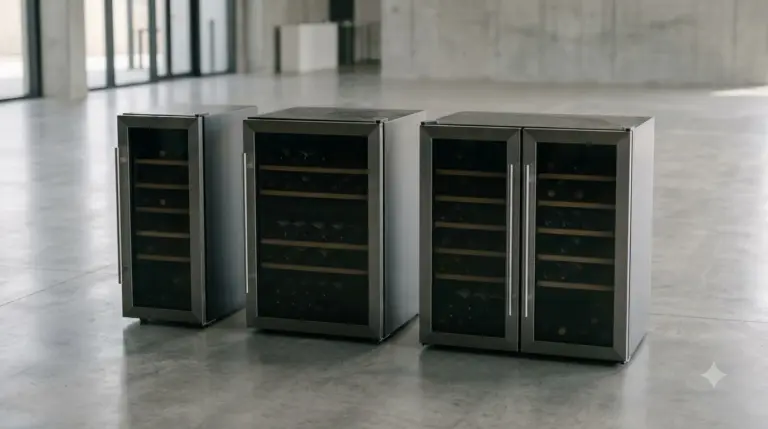
Glass door units come in several sizes and cooling layouts. The main differences are how many bottles they hold, whether they have one temperature zone or two, and whether they are built for a counter or a full cabinet opening. The table gives a starting point before you compare individual models.
| Type | Typical use | Temperature layout | Best fit |
|---|---|---|---|
| Compact single-zone | Everyday bottles | One steady zone | Apartments and offices |
| Dual-zone | Reds and whites together | Two zones at different temperatures | Mixed collections |
| Built-in under-counter | Kitchen run | Usually single or dual zone | Remodeled kitchens |
| Freestanding full-height | Larger collection | Often dual zone | Living rooms and dining areas |
Tip: Place the unit away from a sunny window and from the oven. Even with a glass door, heat and light are the two biggest threats to the wine inside.
Best for a Living Room Display
A glass door unit in a living room works as both storage and decor. The clear door lets guests see the bottles, and the cabinet can sit beside a sofa or dining table without looking out of place.
The trade-off is light. Wikipedia’s article on wine cellars lists light and vibration among the conditions that can spoil wine, and it describes the darkness of a traditional cellar as part of its value. A living room display should be placed away from direct sunlight, and bottles that stay in the cabinet for a long time are better kept on a shelf that is not in the full glare of a window.
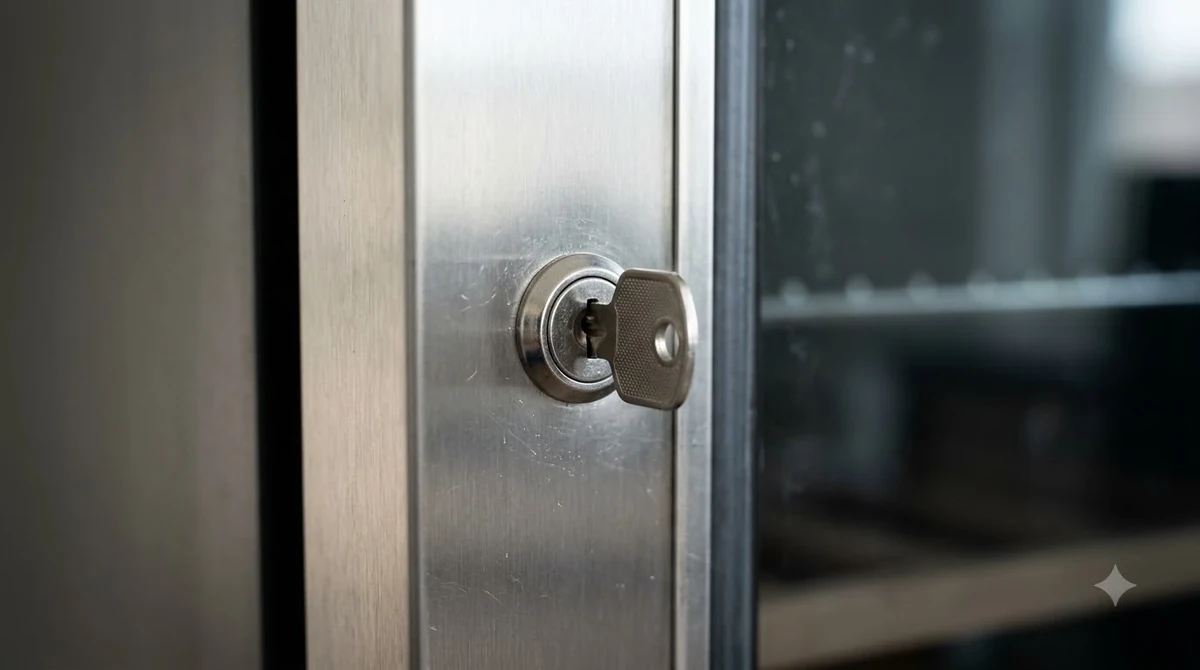
Check how much light reaches the bottles at different times of day. A north-facing wall or a corner away from a window is usually a better spot than a wall that gets sun in the afternoon.
Best for a Built-In Kitchen Run
A built-in glass door unit fits under a counter or into a tall cabinet opening, so it looks like part of the kitchen. It is a good match for a remodel where the wine storage should blend in with the cabinets.
Built-in units need airflow, and the manufacturer’s clearance guidance should be followed closely. Because the cabinet sits close to other appliances, the temperature around it can rise. Wikipedia notes that wine is stored best when the temperature stays steady and changes gradually, so avoid placing the unit next to a dishwasher or oven that heats the surrounding cabinet. A dual-zone built-in can keep reds at a different temperature from whites, which matters more in a kitchen where the wine is used at different times.
Best for a Small Apartment
A compact glass door refrigerator suits a small apartment, a studio, or an office where floor space is limited. These units hold a modest number of bottles and can sit on a counter or in a corner.
Small units are sensitive to where they are placed. Keep them away from heat sources and out of direct sun, and leave room behind and above the cabinet for the cooling system to vent. Wikipedia’s wine cellar article describes wine as keeping well between about 7 and 18 degrees Celsius if the changes are gradual, but a small unit near a heater can swing outside that range during the day.
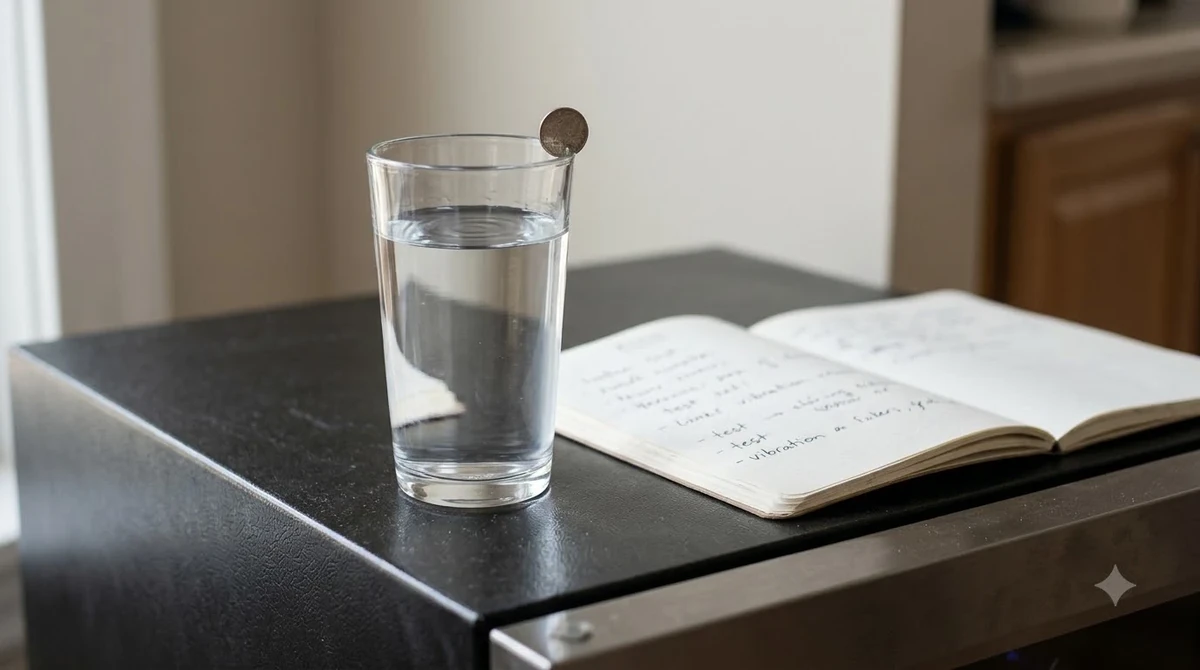
If you plan to store more bottles later, buy a unit with room to expand, since a second unit in a small space can cause heat and cooling problems of its own.
Best for a Mixed Red and White Collection
A dual-zone glass door unit suits a collection that includes both reds and whites, or sparkling wine that should be served colder. Two zones let each part of the collection sit at a temperature that suits it.
Wikipedia’s wine cellar article gives a clear range for aging: between 10 and 14 degrees Celsius (50 to 57 degrees Fahrenheit), wines age normally, and 13 degrees Celsius (55 degrees Fahrenheit) is described as ideal for short-term storage and long-term aging. A dual-zone cabinet makes it easier to hold the whites near the cooler end while keeping the reds closer to the middle. Look for a unit that holds its temperature when the door is opened, because frequent opening is the most common cause of swings.
Best for a Home Bar or Entertaining Space
When the cabinet is part of a home bar or entertaining area, the glass door works as a showpiece. Guests can see the bottles while you pour, and the unit can sit next to a bar counter or a cocktail station.
Entertaining also means frequent door openings. Each opening lets warm air in and cold air out, and the cooling system has to work harder to recover. Wikipedia notes that large temperature swings can make wine breathe through the cork and speed aging. A unit with a stable cooling system and an insulated door is the better choice for a bar that will be opened often. Keep the most-used bottles near the front so they are not hunted for during a party.
How to Choose the Right Glass Door Wine Refrigerator
Start with the number of bottles and the space, then check the cooling layout and placement. A good unit keeps the wine steady, fits the room, and shows the bottles without exposing them to direct light.
| Factor | What to check | Why it matters |
|---|---|---|
| Capacity | Bottle count for standard 750 ml bottles | Avoids overbuying or cramming |
| Temperature zones | One zone or two | Lets reds and whites sit at different temperatures |
| Door | Glass door and seal quality | Affects light exposure and cooling stability |
| Placement | Distance from sun, oven and heaters | Limits temperature swings |
| Airflow | Clearance for a built-in or freestanding unit | The cooling system needs room to vent |
Before you buy, decide where the unit will sit and how often the door will be opened. Those two details narrow the choice more than any single feature.
Frequently Asked Questions
Does a glass door hurt the wine inside?
A clear door lets more light reach the bottles, and light can affect wine over time. Keep the unit out of direct sun and choose a spot where the room light is indirect. Many buyers accept that trade-off because they want to see the collection.
What temperature should a wine refrigerator hold?
Wikipedia’s article on wine cellars gives 10 to 14 degrees Celsius (50 to 57 degrees Fahrenheit) as the range where wines age normally, with 13 degrees Celsius (55 degrees Fahrenheit) described as ideal for short-term storage and long-term aging. Check whether a unit can hold a steady temperature in the room where it sits.
Is a dual-zone unit worth the extra cost?
It is worth it for a collection that mixes reds and whites or includes sparkling wine. A single zone is enough for a cabinet that holds one style, but two zones give more control over how each bottle is kept.
Can a glass door unit go in a kitchen?
Yes, built-in and freestanding models both work in kitchens. Keep the unit away from the oven and dishwasher, and make sure the cooling system has the clearance the manufacturer specifies, since heat from nearby appliances can make the cabinet work harder.
Once you know the size and placement you need, compare the options in the wine fridges by type section or look at a french door wine cooler or a mini wine fridge if the space is tight. If you are also deciding how long to keep an open bottle in the cabinet, read how long wine lasts after opening. For background on temperature and light in wine storage, the Wikipedia article on wine cellars covers the basic conditions.
More in Wine Fridges by Type
 Best White Wine Fridge for Reliable Chilling and StorageUpdated Nov 20, 2026
 Best Smart Wine Fridge for Steady Temperatures and Remote ChecksUpdated Nov 18, 2026
 Best Black Under Counter Wine Fridge Options for Kitchens and IslandsUpdated Nov 18, 2026
 Best Black Slim Wine Fridge for Narrow Gaps and Dark KitchensUpdated Nov 18, 2026
 Best Built In Dual Zone Wine Fridge Options by Kitchen LayoutUpdated Nov 18, 2026
 Best Slim Built in Wine Cooler: 5 Space-Saving Styles for Tight KitchensUpdated Nov 18, 2026