

We may earn a commission when you buy through links on this page, at no extra cost to you. Learn more.
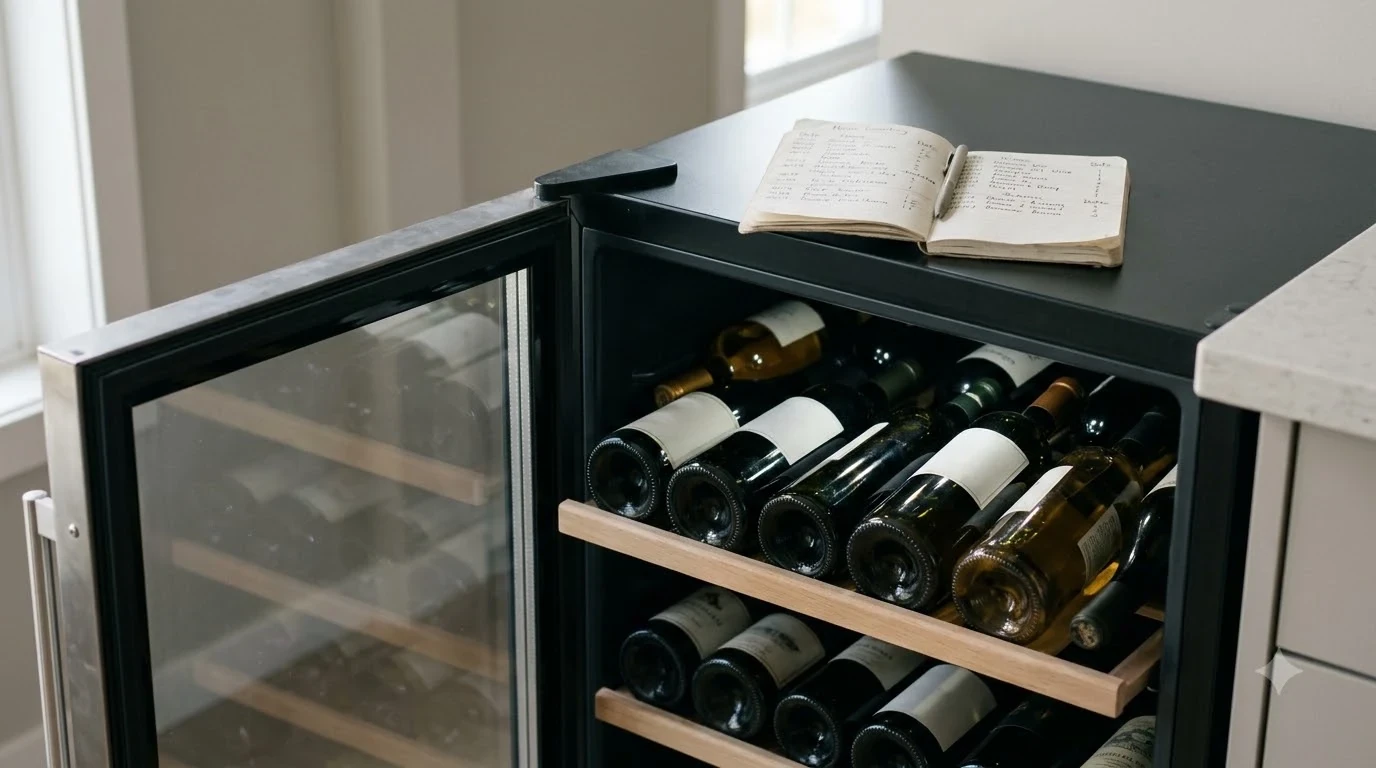
When your wine fridge fan not working is the problem, the most common causes are a failed fan motor, blocked airflow, evaporator ice buildup, or an electrical fault. Wine refrigerators rely on fans to circulate cold air or remove heat from the refrigeration system. A stopped fan can cause uneven temperatures, excessive compressor operation, and inadequate cooling. You can investigate several external causes safely before deciding whether professional repair or fan replacement is necessary.
A wine refrigerator needs consistent temperature control to protect the quality of stored bottles. Unlike a standard refrigerator, a wine cooler is designed to maintain relatively stable storage conditions rather than rapidly chill food and beverages. When a fan stops operating, the problem can affect both the cooling system and the conditions inside the cabinet.
Understanding which fan has stopped, what symptoms accompany the failure, and which checks are safe to perform can make troubleshooting much easier. This guide explains how wine fridge fans work, what causes them to stop, how to identify common problems, and when to call an appliance technician.
How Wine Fridge Fans Work and Why They Matter
Most compressor-based wine refrigerators use fans to manage airflow in different parts of the appliance. The evaporator fan circulates chilled air through the storage compartment, while the condenser fan helps remove heat from the refrigeration system. Understanding this distinction is the first step toward identifying a fan problem.
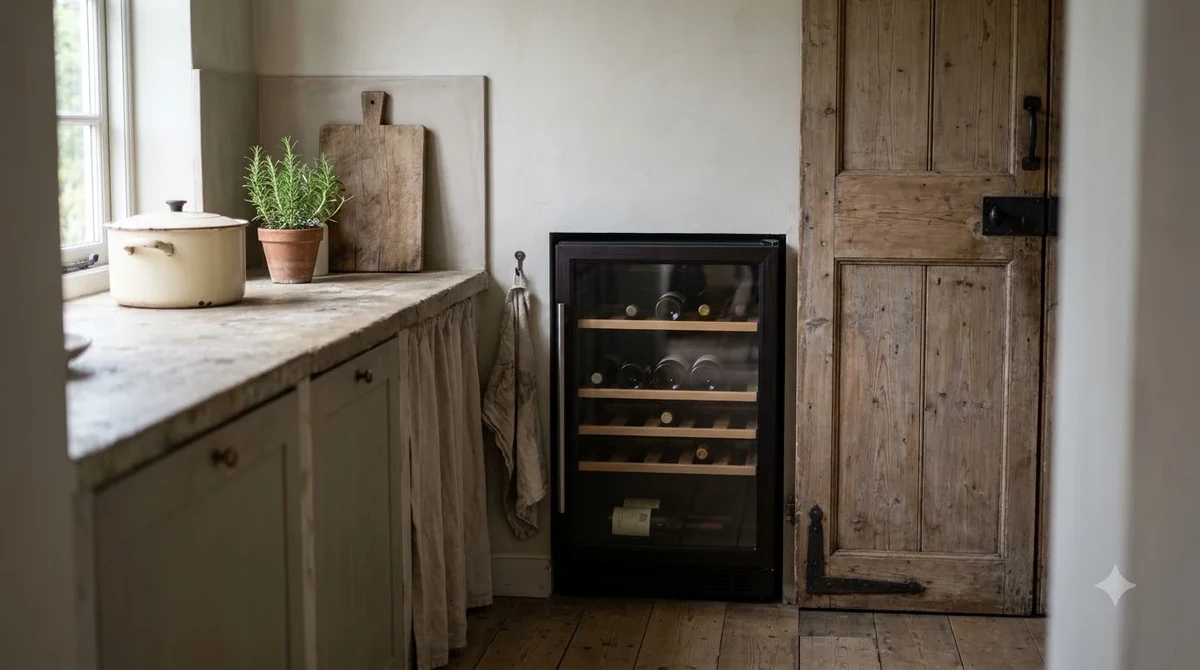
The evaporator fan is responsible for distributing cold air throughout the wine cabinet. Depending on the design, it may sit behind an interior panel or near the evaporator assembly. When this fan stops, cold air may no longer reach every shelf evenly. Bottles near the cooling components might remain colder than those farther away.
Some wine coolers use natural convection rather than a continuously operating internal fan, so the absence of visible airflow does not automatically indicate a fault. Other models activate their evaporator fans only during particular cooling cycles. Consult the operating instructions for the specific appliance before assuming that a stationary fan is defective.
The condenser fan performs a different job. It moves air across the condenser area, helping release heat extracted from inside the wine refrigerator. It is commonly positioned near the compressor and condenser coils, although its location varies between models.
If the condenser fan fails, heat can accumulate around refrigeration components. The compressor may become excessively hot, operate inefficiently, or activate its protective shutdown mechanism. A cooler that runs for unusually long periods without reaching its target temperature may have a condenser airflow problem.
These two fans should not be confused with the compressor. The compressor circulates refrigerant through the sealed refrigeration system, while fans move air around the appliance. A humming compressor does not prove that either fan is operating correctly.
Manufacturer troubleshooting documentation makes this distinction important. Sub-Zero identifies condenser airflow faults and evaporator fan circuit faults as separate diagnostic categories, with different possible causes and repair procedures.
For example, the KingsBottle KBU55, KBU56, and KBU328 beverage refrigerator models use compressor cooling with air-circulated fan cooling. Their troubleshooting instructions identify stopped or slow-running fans as potential causes of insufficient cooling.
Common Reasons a Wine Fridge Fan Stops Working
A fan that does not turn can have a mechanical, electrical, or airflow-related cause. The most important possibilities include a damaged motor, an obstructed fan blade, ice accumulation, a wiring problem, and a defective control component.
1. Failed fan motor. Fan motors operate repeatedly during normal refrigeration cycles. Over time, internal bearings, electrical windings, and other components can deteriorate. A motor may become noisy, rotate slowly, or stop completely. If the correct electrical supply reaches the motor but the fan does not operate, motor failure becomes a likely explanation.
2. Obstructed fan blades. Dust, loose wiring, insulation, or other objects can interfere with blade movement. Even a relatively small obstruction can prevent a fan from spinning properly. A damaged or loose blade may also produce rattling sounds when the motor attempts to operate.
3. Ice buildup around the evaporator. Excessive frost can obstruct airflow and interfere with fan movement. Poor door sealing, frequent door openings, and unsuitable operating conditions can contribute to frost accumulation. A fan may appear defective when ice is actually preventing its blades from rotating.
4. Electrical connection problems. A loose connector, damaged wire, failed power supply, or defective control board can interrupt power to the fan. In this situation, replacing the motor without diagnosing the electrical fault may not solve the problem.
5. Temperature sensor or control failure. Wine coolers use temperature sensors and electronic controls to determine when cooling components should operate. An incorrect temperature reading can interfere with normal cooling cycles and fan activation.
6. Restricted ventilation. Dust-covered condenser fins, blocked air grilles, and insufficient installation clearance can reduce cooling efficiency. These problems do not necessarily mean the fan itself has failed, but they can increase operating temperatures and put additional strain on refrigeration components.
The following table summarizes the main possibilities and their typical symptoms.
| Possible cause | Common symptom | Recommended response |
|---|---|---|
| Failed fan motor | Fan remains stationary | Professional motor diagnosis |
| Blocked fan blade | Rattling or restricted rotation | Inspect for obstructions with power disconnected |
| Evaporator icing | Visible frost and reduced airflow | Follow the manufacturer’s defrost procedure |
| Electrical fault | Fan does not receive proper power | Technician checks wiring and controls |
| Dirty condenser | Long cooling cycles and excess heat | Clean accessible condenser surfaces |
| Sensor or control failure | Irregular cooling or fan operation | Professional electrical diagnosis |
More than one problem can occur simultaneously. For instance, a poorly sealed door may cause evaporator icing, while restricted ventilation places additional demands on the condenser fan. Identifying the original cause is more useful than simply replacing whichever component appears faulty.
Warning Signs That Your Wine Fridge Fan Has Failed
A failed fan usually produces several noticeable changes in the refrigerator’s operation. Paying attention to temperature fluctuations, unusual sounds, and changes in cooling performance can help distinguish a fan problem from a more serious refrigeration-system failure.
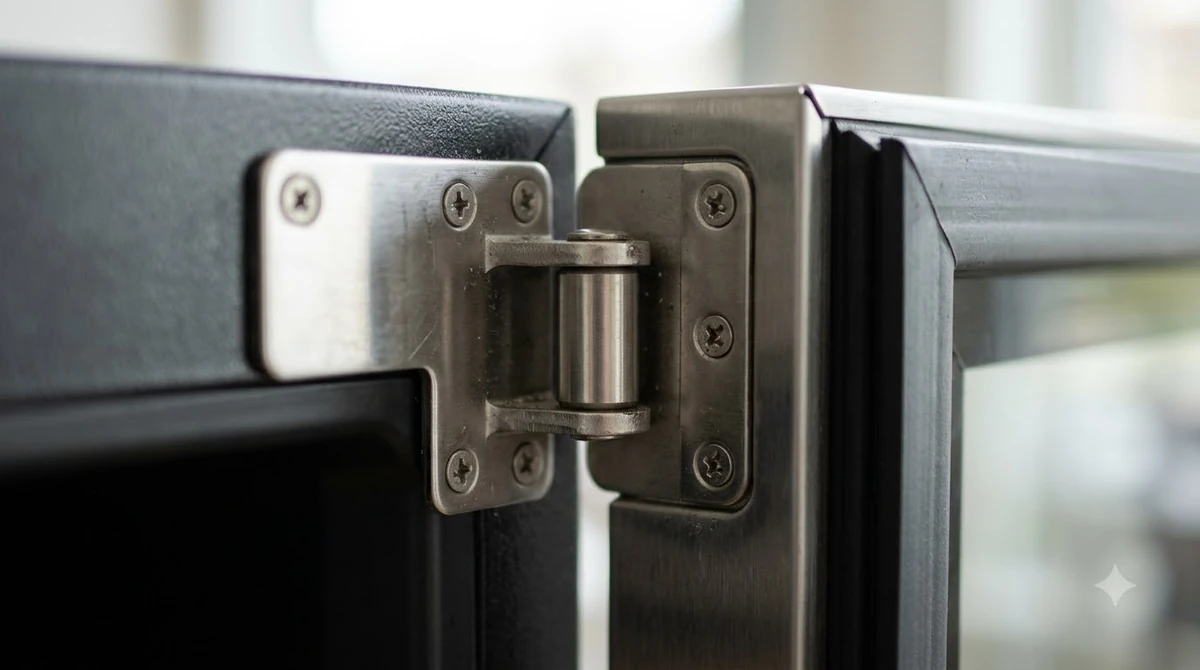
Unusually warm cabinet temperatures are among the most important warning signs. If the temperature display shows a normal setting but the actual cabinet temperature keeps rising, poor internal air circulation may be responsible. A failed evaporator fan can create warm areas even when parts of the cooling system remain operational.
Uneven temperatures between shelves provide another clue. Bottles stored near the cooling assembly may feel noticeably colder than bottles on higher or lower shelves. This pattern can suggest insufficient circulation, particularly in appliances designed around forced-air cooling.
Continuous compressor operation may also accompany a fan problem. When the cabinet cannot reach its programmed temperature, the refrigeration system may continue running for extended periods. However, continuous operation can also result from warm room conditions, a damaged door gasket, excessive bottle loading, or a refrigerant-system problem.
Unusual mechanical noises deserve attention. A clicking, scraping, buzzing, or rattling sound near a fan compartment may indicate blade obstruction, loose mounting hardware, or worn motor bearings. A quiet fan is not necessarily a failed fan, since some models operate intermittently or produce very little noise.
Excessive frost can indicate an airflow or defrost problem. If frost accumulates around the evaporator panel, cold air may not circulate as intended. Ice can also physically prevent an internal fan from rotating.
An unusually hot exterior or compressor compartment can suggest a condenser fan or ventilation problem. Some warmth around refrigeration components is normal, but excessive heat accompanied by poor cooling deserves investigation.
Do not rely on sound alone to diagnose the problem. A wine cooler can be quiet because it has reached its target temperature, because its fan is operating intermittently, or because a component has failed. Compare the observed behavior with the appliance’s normal operating cycle.
How to Troubleshoot a Wine Fridge Fan Safely
Start with simple external checks before considering component replacement. You can inspect the power supply, temperature setting, ventilation openings, door seal, and visible signs of frost without opening electrical compartments or disturbing refrigeration components.
Step 1: Check the power supply and controls
Confirm that the refrigerator is plugged into a functioning electrical outlet and that the control panel is switched on. Check the household circuit breaker if the display is blank or the appliance has stopped operating completely.
Review the temperature setting and operating mode. Some wine coolers have showroom, standby, or other operating modes that change normal cooling behavior. A recent power interruption may also have reset certain settings.
Allow for any built-in compressor delay after restarting the appliance. Some models include a protective delay before the compressor restarts. This is a model-specific feature, not a universal waiting period for all wine refrigerators.
Step 2: Inspect the ventilation openings
Check the front grille, rear ventilation area, and accessible air passages for dust or obstructions. Remove nearby objects that restrict airflow, and make sure the refrigerator has the clearance specified by its manufacturer.
Built-in wine coolers often depend on carefully designed front ventilation. Blocking the lower grille with decorative panels, stored objects, or accumulated dust can interfere with heat removal.
Also consider the room temperature. Different wine refrigerators have different ambient operating requirements. A refrigerator installed in a hot enclosed space can struggle even when its fans are functioning.
Step 3: Examine the door and gasket
Make sure wine bottles, shelves, and other objects do not prevent the door from closing completely. Inspect the rubber gasket for visible gaps, tears, deformation, or dirt that might interfere with the seal.
A leaking door allows warm, humid air to enter the cabinet. This can increase compressor operation and encourage evaporator frost formation. Both conditions can contribute to symptoms that resemble fan failure.
Step 4: Look for excessive frost
Open the door and visually inspect accessible interior surfaces for unusual ice accumulation. Do not remove internal panels or attempt to force a frozen fan blade to rotate.
If your manufacturer’s instructions recommend manual defrosting, follow the specified procedure. Some models require the appliance to remain switched off with the door open until accumulated ice has melted. Defrosting requirements vary, so do not assume that one model’s shutdown period applies to another.
Step 5: Check whether the fan operates during its normal cycle
Observe the appliance without touching moving parts. Listen for the fan during a cooling cycle and compare its behavior with the manufacturer’s operating instructions. Remember that an internal fan may not run continuously.
If the compressor is running but the fan remains stationary during a period when the manufacturer indicates that it should operate, a motor, connection, or control problem may exist. Stop troubleshooting if accessing the component requires removing an electrical cover.
Tip: Record the displayed temperature, actual cabinet temperature, unusual noises, and whether the compressor is running. These observations help a technician distinguish an evaporator fan problem from a condenser fan, sensor, or compressor fault.
Repairing or Replacing a Faulty Wine Refrigerator Fan
The correct repair depends on whether the problem originates in the fan motor, electrical supply, control system, or surrounding airflow components. A technician should establish the cause before installing replacement parts.
Fan motor replacement is appropriate when the motor has failed and the electrical supply and control signals are functioning correctly. A replacement should match the original component’s specifications, including voltage, mounting arrangement, blade dimensions, and electrical connector.
Wiring and connector repairs may be necessary when a fan receives insufficient or no electrical power because of a loose connection or damaged conductor. A qualified technician can inspect the relevant circuit and identify whether the fault lies in the wiring harness, power supply, or control board.
Control board replacement may be necessary if the board fails to supply the correct operating signal to an otherwise functional fan. This diagnosis requires appropriate electrical testing rather than assumptions based on a stationary fan.
Evaporator fan repairs may involve removing accumulated ice, correcting a door-seal problem, or replacing a damaged motor. If ice returns after defrosting, the underlying cause must also be investigated. Repeatedly melting the ice without addressing the source can allow the same problem to return.
Condenser fan repairs may involve removing an obstruction, repairing a connection, or replacing the fan motor. The technician should also examine the condenser for dust and restricted ventilation.
Sub-Zero’s official wine cooler troubleshooting guide explains the distinction between condenser airflow problems, fan motor faults, and other causes of warm temperatures. Its diagnostic instructions identify dirty condensers, obstructed blades, and disconnected or malfunctioning motors as separate possibilities.
This is why electrical testing matters. A fan that does not spin is not automatically defective, and installing a new motor without checking its circuit can lead to unnecessary replacement.
For manufacturer-specific repair information, KingsBottle’s technician repair instructions include separate procedures for evaporator fan replacement and condenser fan replacement. These procedures demonstrate why replacement components and repair steps should match the exact wine cooler model.
Before authorizing a repair, ask the technician to identify the failed component and explain whether the repair includes the fan, wiring, control board, or another refrigeration component. If the appliance is covered by a manufacturer’s warranty, contact the authorized service provider before attempting repairs that could affect coverage.
For a broader appliance-specific diagnosis, consult our guides to Allavino wine fridge not cooling and Magic Chef wine fridge not cooling. Different manufacturers use different fan arrangements, control systems, and replacement components.
Preventing Future Wine Fridge Fan Problems
Regular maintenance helps reduce the likelihood of fan obstruction, overheating, and unnecessary compressor operation. The most useful preventive measures involve keeping ventilation openings clear, maintaining the door seal, cleaning accessible condenser areas, and avoiding unsuitable installation conditions.
Clean the condenser regularly
Dust and lint can accumulate around condenser coils and ventilation grilles. This buildup restricts heat removal and can make the refrigeration system work harder than necessary.
Follow the manufacturer’s recommended condenser-cleaning schedule. The appropriate interval depends on the appliance design, installation location, and amount of dust in the surrounding environment.
Before cleaning, switch off and disconnect the appliance according to its instructions. Use an appropriate soft brush or vacuum attachment on accessible surfaces. Avoid bending delicate condenser fins, spraying water into electrical compartments, or removing components that are intended for technician servicing.
Maintain sufficient ventilation clearance
Do not push a freestanding wine cooler against walls or furniture if doing so blocks its ventilation openings. Built-in models should have the precise installation clearance and airflow arrangement required by the manufacturer.
A refrigerator installed in a poorly ventilated cabinet may experience elevated operating temperatures even if the surrounding room feels comfortable. Keeping the front grille unobstructed is particularly important for models that release heat through the lower front section.
Keep the door seal in good condition
Clean the gasket periodically and remove dirt that could prevent proper contact with the cabinet. Avoid placing oversized bottles or incorrectly positioned shelves where they can interfere with door closure.
Minimizing unnecessary door openings also reduces the amount of warm, humid air entering the wine compartment. This can help limit condensation, frost formation, and extended cooling cycles.
Load bottles appropriately
Avoid overloading shelves or covering internal air passages. Follow the manufacturer’s recommended bottle capacity and storage arrangement so that air can circulate as intended.
When adding a large quantity of room-temperature wine, load bottles in manageable batches where the manufacturer recommends doing so. A substantial load of warm bottles can increase cooling time even when the fan and compressor are operating correctly.
Monitor storage temperatures
Check the actual cabinet temperature periodically rather than relying exclusively on the control-panel setting. A separate suitable refrigerator thermometer can help identify persistent temperature differences or gradual warming.
For long-term wine storage, approximately 55°F is a commonly used target. More important than pursuing an exact number is maintaining reasonably stable conditions without repeated large fluctuations.
When a fan problem occurs, avoid leaving valuable bottles in a refrigerator that cannot maintain its intended temperature. Transfer them to another temperature-controlled storage location if necessary while the appliance is being repaired.
When to Call a Wine Refrigerator Repair Technician
Professional service is necessary when diagnosing electrical faults, replacing internal fan motors, or investigating refrigeration-system failures. If external checks do not resolve the problem, continuing to operate a malfunctioning cooler can place additional strain on its components and expose stored wine to unsuitable temperatures.
Call a technician if the fan remains stationary during its expected operating cycle. A motor, control board, wiring connection, or power supply may have failed. Determining which component is responsible requires testing that should be performed by someone qualified to work on refrigeration appliances.
Arrange service if the compressor repeatedly overheats or shuts down. A failed condenser fan can prevent adequate heat removal. Continuing to run the appliance under these conditions may cause additional mechanical problems.
Seek professional help if evaporator ice returns repeatedly. A door gasket, temperature sensor, defrost control, or airflow problem may be responsible. Repeated defrosting without diagnosing the underlying fault is not a dependable repair.
Stop using the appliance if you notice electrical warning signs. Burning smells, damaged power cords, sparking, or unusual electrical noises warrant immediate attention. Disconnect power if it is safe to do so, and do not continue operating the unit until it has been inspected.
For certain appliances, manufacturer-authorized service is particularly important. Sub-Zero troubleshooting documentation includes electrical checks involving fan motors, switches, and control boards. These are not suitable do-it-yourself procedures for owners without the appropriate training and equipment.
Before scheduling a repair, collect the following information:
- The manufacturer, model number, and serial number.
- The current temperature setting and actual cabinet temperature.
- Whether the compressor starts and continues running.
- Whether the internal fan, external fan, or both appear stationary.
- Any unusual clicking, scraping, humming, or rattling sounds.
- Visible frost, water accumulation, or blocked ventilation openings.
- Any error codes displayed on the control panel.
These details help the technician prepare for the appointment and identify likely replacement components. If the appliance is no longer cooling properly, our Haier wine fridge not cooling troubleshooting article provides another example of how manufacturer-specific cooling problems can differ.
For additional maintenance and appliance-care information, visit our Wine Fridge Troubleshooting section.
Frequently Asked Questions
Should a wine fridge fan run continuously?
Not necessarily. Some wine refrigerators use fans that operate only when the cooling system requires additional air circulation. Others use different control strategies depending on the temperature sensor readings and operating mode. Consult the operating instructions for the specific model rather than treating continuous fan operation as a universal requirement.
Can a wine fridge work without an internal fan?
Yes. Some wine refrigerators rely on natural convection rather than forced-air circulation. These designs distribute cool air through temperature differences inside the cabinet. However, a compressor-based model designed with an evaporator fan may not maintain its intended performance if that component stops working.
Can a wine cooler fan be replaced with a computer fan?
A standard computer fan is not automatically a suitable replacement. Refrigeration fans must meet the appliance’s electrical, airflow, temperature, mounting, and operating requirements. An incorrectly specified fan may produce inadequate airflow or fail prematurely. Use an approved replacement component that matches the manufacturer’s specifications.
Does a thermoelectric wine cooler use the same fan arrangement as a compressor model?
No. Thermoelectric wine coolers use a Peltier cooling module rather than a conventional compressor-based refrigeration system. Their fans help transfer heat away from the module and circulate air, and their failure can affect cooling performance. Troubleshooting procedures and replacement parts therefore differ from those used in compressor-based wine refrigerators.
Can a wine fridge fan make noise even when it is functioning properly?
Yes. Normal airflow and motor operation can produce a low humming or gentle whirring sound. Refrigeration systems can also produce occasional gurgling sounds as refrigerant circulates. A sudden change in noise, persistent scraping, or pronounced vibration is more concerning than consistent low-level operating noise.
A wine fridge fan that stops working can result from anything from a simple airflow obstruction to a failed motor or electronic control component. Begin with safe external checks, monitor the cabinet temperature, and arrange professional diagnosis when the fan remains inactive or cooling performance deteriorates. Regular condenser cleaning, proper ventilation, and a well-sealed door can help keep your wine refrigerator operating reliably and protect the bottles stored inside.
More in Storage & Fridge Care
 How Long Can You Store Wine in a Wine Fridge? Protect Bottle QualityUpdated Nov 20, 2026
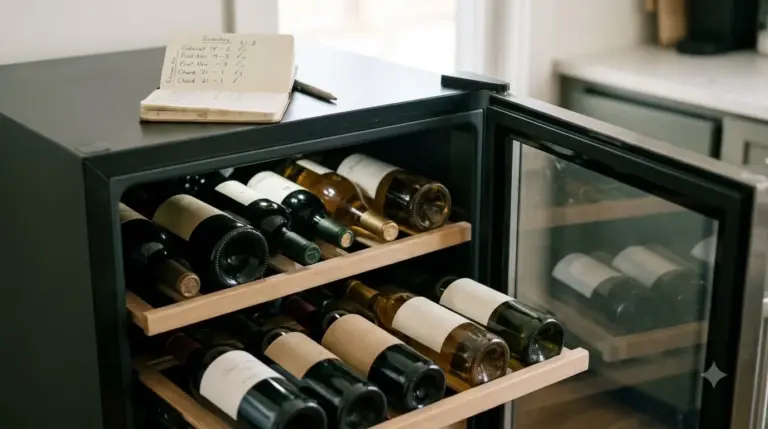 Can You Store Beer in a Wine Fridge? Keep Both Drinks FreshUpdated Nov 20, 2026
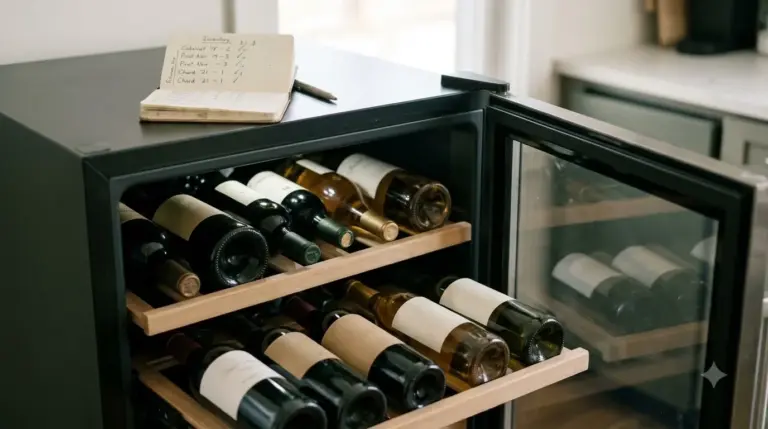 Is It Worth Repairing a Wine Fridge? Spot the Cheap Fixes Before You ReplaceUpdated Nov 20, 2026
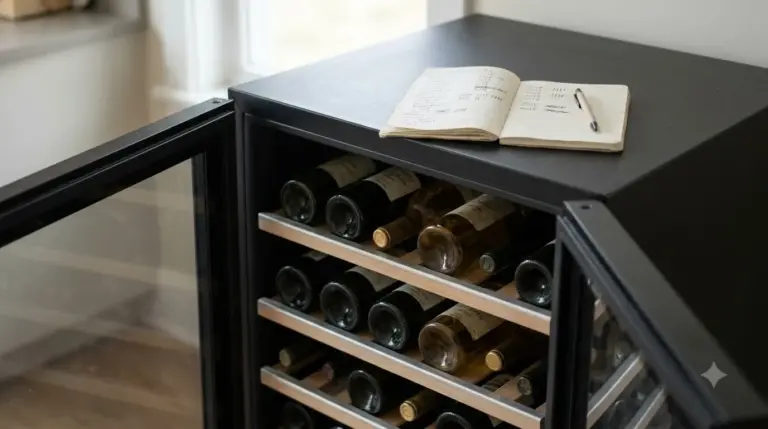 Wine Fridge Condensation: Identify Causes and Fix Moisture ProblemsUpdated Nov 20, 2026
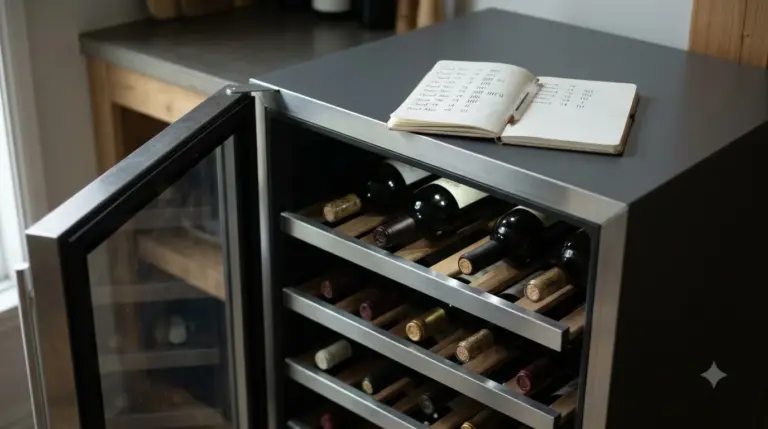 Wine Fridge Too Cold: Protect Your Wine and Fix the TemperatureUpdated Nov 20, 2026
 How to Reset Wine Fridge: Restore Cooling and SettingsUpdated Nov 20, 2026