


We may earn a commission when you buy through links on this page, at no extra cost to you. Learn more.
Yellow tail shiraz sugar content is approximately 1.1 grams per 100 mL, according to the brand’s US nutritional chart, equivalent to about 1.6 grams in a 5-ounce glass. That works out to approximately 8.25 grams in a standard 750 mL bottle. Although its ripe berry, plum, and vanilla flavors can suggest sweetness, Yellow Tail Shiraz is generally presented as a dry-style red wine rather than a sweet dessert wine. Regional nutritional listings and historical residual-sugar estimates differ slightly, so understanding the serving size and measurement is important.
Yellow Tail Shiraz is an approachable Australian red with concentrated fruit flavors, moderate structure, and a relatively substantial alcohol content. Its natural fruit character can make it taste sweeter than its measured sugar level suggests. This guide explains the published sugar figures, calculates the amount in common serving sizes, examines why different sources report different numbers, and explains how the wine’s flavor, alcohol, and food-pairing characteristics affect its overall impression.
How Much Sugar Is in Yellow Tail Shiraz?
The most useful starting point is the official US nutritional chart, which lists 1.10 grams of sugar per 100 mL. This is approximately 11 grams per liter, making it possible to calculate the sugar in a typical glass or an entire bottle without confusing serving sizes.
The official nutritional information also lists 1.10 grams of carbohydrates per 100 mL, meaning the listed carbohydrate amount and sugar amount are the same for this particular entry. The figures describe the nutritional composition rather than the intensity of fruit flavors or the wine’s perceived sweetness.
For a standard 5-ounce pour, which is approximately 148 mL, the calculation is straightforward: multiply 1.10 by 1.48. The result is approximately 1.63 grams of sugar. A 150 mL serving contains approximately 1.65 grams, while a full 750 mL bottle contains approximately 8.25 grams.
These figures are useful because wine information is frequently published using different serving measurements. A source might report sugar per 100 mL, another might use grams per liter, and a third might describe a standard glass. Converting everything to the same measurement makes the information easier to compare.
| Serving size | Approximate sugar | Calculation |
|---|---|---|
| 100 mL | 1.10 g | Official nutritional figure |
| 125 mL | 1.38 g | 1.10 × 1.25 |
| 150 mL | 1.65 g | 1.10 × 1.50 |
| 5 oz (148 mL) | 1.63 g | 1.10 × 1.48 |
| 187 mL | 2.06 g | 1.10 × 1.87 |
| 375 mL | 4.13 g | 1.10 × 3.75 |
| 750 mL | 8.25 g | 1.10 × 7.50 |
The calculations assume that the US nutritional figure applies consistently throughout the bottle. Actual nutritional composition can vary slightly between production lots and vintages. Yellow Tail explains that its published nutritional chart is based on particular vintage information and that differences between vintages are considered negligible.
For practical purposes, approximately 1.6 grams per 5-ounce glass is a useful estimate. It is more meaningful than describing the wine simply as low-sugar or sweet because it gives readers a measurable amount that can be compared with other wines.
Why Different Sources Report Different Sugar Figures
Yellow Tail Shiraz does not have one universally repeated sugar figure across every published source. The official US chart gives 11 g/L when converted from its 1.10 g per 100 mL measurement, while other listings report approximately 10 to 12 g/L.
For example, the LCBO product listing reports 10 g/L for Yellow Tail Shiraz. A Meininger listing gives a residual-sugar figure of 10.30 g/L. Wine Folly provides a historical estimate of 12 g/L, based on information collected in 2015. These numbers are relatively close, but they should not be treated as measurements from the same bottle or production lot.
There are several reasons for these differences. First, wine production is not perfectly identical from one vintage to another. Grapes develop under changing weather conditions, and fermentation outcomes can differ. Second, nutritional charts and technical product records may refer to different markets, production periods, and measurement methods.
There is also an important distinction between a nutritional sugar figure and a technical residual-sugar measurement. Both concern sugar remaining in wine, but their reporting context and underlying documentation may differ. A number from an older reference should not automatically replace a manufacturer’s current regional nutritional information.
For US readers, the official US chart is the most appropriate starting point for estimating the sugar in the version sold in that market. The LCBO figure and historical Wine Folly estimate provide useful context, but they should remain separate reference points rather than being averaged into an artificial single result.
Tip: Compare sugar figures using the same unit. Yellow Tail’s US figure of 1.10 g per 100 mL converts to 11 g/L. A listing showing 10 g/L is therefore reporting a similar amount, not a dramatically different sweetness category.
Readers interested in the wine’s other nutritional characteristics can also consult the official Yellow Tail nutritional information. The chart provides sugar, carbohydrate, calorie, alcohol, and pH figures for several wines in the range.
Is Yellow Tail Shiraz a Dry or Sweet Red Wine?
Yellow Tail Shiraz is generally considered a dry-style red wine, even though its flavor profile can seem fruit-forward and slightly sweet. Its ripe cherry, plum, and red-berry characteristics are not proof that it contains a large amount of residual sugar.
Wine sweetness is influenced by residual sugar, acidity, alcohol, fruit aromas, and the way these elements interact. A wine can smell strongly of ripe fruit and taste generous without being classified as a sweet wine. This distinction is particularly important with Australian Shiraz, which is often associated with concentrated fruit flavors.
Residual sugar is the sugar left after fermentation. During fermentation, yeast consumes naturally occurring glucose and fructose in grape juice and produces alcohol. When fermentation is complete, some sugar may remain. The amount left depends on the grapes, winemaking decisions, and fermentation conditions.
Yellow Tail describes its Shiraz as rich and smooth, with juicy red berries and hints of vanilla and spice. These characteristics contribute to its rounded flavor impression, but they do not necessarily indicate dessert-wine sweetness.
Wine Folly explains that dry wines can still contain residual sugar. Its general discussion also emphasizes that the perception of sweetness is not always an accurate way to determine a wine’s actual sugar concentration. Acidity and tannin can influence the way fruit and sweetness are experienced on the palate.
Fruitiness Versus Actual Sweetness
Consider the difference between tasting ripe blackberries and tasting sugar syrup. Both may create a sweet impression, but they are not the same sensation. Ripe fruit aromas can make a wine seem generous and soft even when its measured sugar remains relatively modest.
Vanilla and mocha aromas can contribute to this impression as well. These flavors are part of the aromatic profile that Yellow Tail describes for its Shiraz. They create associations with ripe fruit and dessert-like flavors, but an aroma does not directly reveal the amount of residual sugar.
For this reason, Yellow Tail Shiraz is better understood as a fruit-forward, dry-style red than as a sweet red wine. Someone accustomed to very austere, high-tannin reds may perceive it as noticeably softer and fruitier, while someone who regularly drinks sweet red blends may find it comparatively dry.
Residual Sugar, Alcohol, and the Wine’s Nutritional Profile
Sugar is only one component of the nutritional information for Yellow Tail Shiraz. The official US chart also lists 13.5% alcohol, 119 calories per 100 mL, 1.10 grams of carbohydrates per 100 mL, and a pH of 3.6.
The alcohol figure is particularly relevant because alcohol contributes energy independently of residual sugar. This explains why a red wine can contain a relatively modest amount of sugar while still having a substantial calorie figure. Looking only at the sugar content does not provide a complete picture of its nutritional composition.
Using the official US figures, the approximate values for a 5-ounce serving can be calculated as follows:
| Nutritional component | Per 100 mL | Per 5 oz (148 mL) |
|---|---|---|
| Calories | 119 kcal | 176 kcal |
| Carbohydrates | 1.10 g | 1.63 g |
| Sugars | 1.10 g | 1.63 g |
| Alcohol | 13.5% ABV | 13.5% ABV |
| Fat | 0 g | 0 g |
The serving calculations are mathematical estimates based on the brand’s published per-100-mL values. They are not separate laboratory measurements of a particular glass. The alcohol percentage remains the same concentration regardless of the size of the pour.
Why Alcohol Matters
Alcohol is produced during fermentation as yeast converts grape sugars. Its presence helps explain why the finished wine has energy that cannot be attributed entirely to sugar. A 13.5% ABV wine has a meaningful alcohol contribution even if its residual sugar is relatively low.
It is therefore useful to distinguish three different questions: how much sugar the wine contains, how many calories it provides, and how sweet it tastes. These measurements describe different characteristics and should not be used interchangeably.
For example, a wine with less sugar is not automatically lower in calories than every wine with more sugar. Differences in alcohol concentration can change the comparison. Similarly, a fruit-forward wine is not necessarily higher in sugar than a wine with more restrained aromas.
Readers comparing the wine’s nutritional composition with other varieties can also explore Yellow Tail Chardonnay sugar content. Chardonnay has a different flavor profile and alcohol concentration, making it a useful comparison for understanding how different wine styles can have different nutritional characteristics.
How Yellow Tail Shiraz Compares With Other Red Wines
Yellow Tail Shiraz sits in a category of fruit-forward red wines that can feel softer and rounder than more tannic alternatives. Its published sugar figure provides a useful reference point, but grape variety, acidity, tannin, and alcohol are also important when comparing wines.
Shiraz, also known as Syrah in many wine regions, is commonly associated with dark fruit, pepper, spice, and substantial structure. Yellow Tail emphasizes red cherry, plum, vanilla, mocha, and spice in its description. Its 13.5% alcohol level also contributes to a full, warm impression.
Cabernet Sauvignon generally has higher tannin than Shiraz, while Merlot is often softer and more approachable. Pinot Noir usually has lower to medium tannin and higher acidity. These structural differences can make two wines with similar residual sugar taste quite different.
For example, a Cabernet Sauvignon can seem more drying because of its stronger tannin structure. A Pinot Noir can taste fresher and more vibrant because of its acidity. A Shiraz can seem rounder because ripe fruit flavors and alcohol contribute to a generous palate.
Comparing Different Yellow Tail Bottles
The Yellow Tail range includes several varieties with different nutritional and flavor characteristics. The official US chart lists Shiraz at 1.10 grams of sugar per 100 mL, Merlot at 1.10 grams, and Pinot Grigio at 1.60 grams.
These figures show why it is useful to compare actual nutritional measurements rather than assuming that all red wines contain more sugar than white wines. Grape color alone does not determine residual sugar. Fermentation and the finished wine’s composition matter much more.
Yellow Tail Merlot provides an especially useful comparison because the official US chart lists the same sugar figure as Shiraz. However, Merlot generally has softer tannins, which can change the way the wine feels in the mouth.
For a white-wine comparison, Yellow Tail Pinot Grigio sugar content offers another reference. The US chart lists Pinot Grigio at 1.60 grams per 100 mL, compared with 1.10 grams for Shiraz. That difference is measurable, although the wines also differ in acidity, alcohol, aroma, and overall style.
Readers interested in the complete range can explore wine brands to understand how individual producers organize their wine collections and distinguish different varieties.
Serving Temperature and Food Pairings for Yellow Tail Shiraz
Yellow Tail Shiraz is particularly suitable for hearty dishes that complement its dark fruit flavors and structured red-wine character. Steak is the producer’s suggested pairing, while grilled lamb, roasted vegetables, and rich tomato-based dishes are also natural choices.
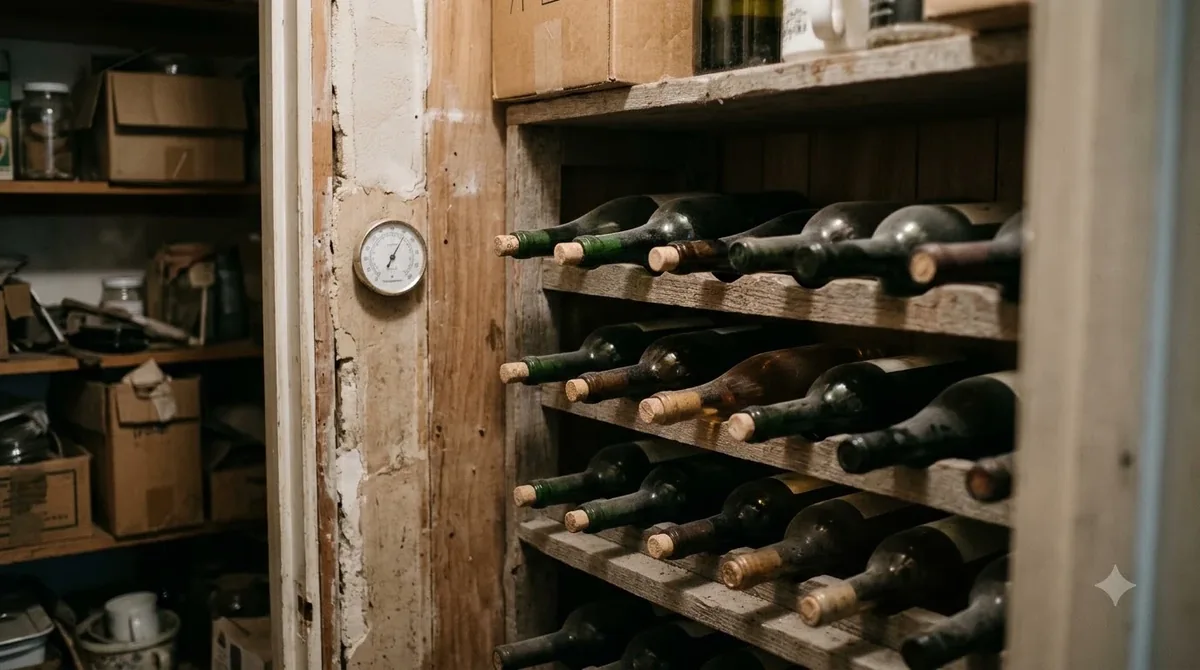
Serving temperature influences how the wine’s aromas and structure are perceived. A light red is generally served around 55–60°F, while a fuller-bodied red is better suited to approximately 60–65°F. Yellow Tail Shiraz is relatively full in flavor, so a temperature around 60–65°F is a practical starting point.
Serving it too warm can make alcohol seem more prominent and reduce the freshness of the fruit aromas. Serving it excessively cold can make the tannins seem firmer and mute some of its aromatic character. A short period in the refrigerator can help if the bottle has been stored in a particularly warm room.
Food Pairings That Complement Its Structure
Grilled steak: Beef is a classic partner for Shiraz. The protein and fat in a steak help soften the perception of tannin, while grilling creates savory flavors that complement the wine’s plum, berry, and spice characteristics. A ribeye or grilled sirloin makes a particularly suitable match.
Roasted lamb: Lamb has a savory flavor that works well with the ripe fruit character of Shiraz. Rosemary, black pepper, garlic, and roasted herbs create additional connections with the wine’s spice profile. A slow-roasted lamb shoulder is a good choice for a substantial meal.
Tomato-based pasta: The acidity of tomatoes makes acidity an important consideration when choosing a wine. A red wine with sufficient freshness can work well with tomato sauce, particularly when the dish also contains meat, mushrooms, or roasted vegetables.
Barbecue: Smoky grilled foods can complement the darker fruit and spice characteristics of Shiraz. Barbecue ribs and grilled beef are good options, although heavily sweet sauces can make a relatively dry wine seem less fruity by comparison.
Hard cheeses: Cheddar and aged Gouda offer rich, savory flavors that complement red wine. Salt and fat can also soften the perception of tannin, making these cheeses particularly suitable with a structured Shiraz.
Pairings That Require More Care
Very spicy dishes can make the alcohol and tannin in red wine seem more prominent. Hot chili sauces and heavily spiced dishes may therefore overpower the wine’s fruit character. A milder seasoning approach is usually more successful.
Oily fish can also be difficult to pair with tannic red wines. The texture and flavor of oily fish may clash with the wine’s structure. A fresher white wine is generally a more natural match for salmon, sardines, and similar dishes.
For serving and storage, a 5-ounce pour is a useful standard glass size. An unopened bottle should be stored away from direct sunlight and heat, ideally around 55°F. After opening, recork the bottle and keep it refrigerated; most still wines are best consumed within approximately 3–5 days.
Understanding the relationship between food, acidity, tannin, and alcohol makes it easier to select dishes that complement the wine rather than simply matching its color with the food.
Frequently Asked Questions
Does Yellow Tail Shiraz contain added sugar?
Yellow Tail explains that its wines are made from wine grapes and identifies sulfur dioxide as its preservative additive. The published ingredient information does not establish that sugar is added to the Shiraz. Residual sugar naturally remains when fermentation does not convert all the grape sugars into alcohol.
Does Yellow Tail Shiraz contain sulfites?
Yes, Yellow Tail identifies sulfur dioxide, commonly associated with sulfites in wine labeling, as a preservative used to maintain freshness. Sulfur dioxide is widely used in winemaking to help protect wine against oxidation and unwanted microbial activity. Its presence is separate from the wine’s residual-sugar measurement.
What does the pH of Yellow Tail Shiraz mean?
The official US nutritional chart lists a pH of 3.6 for Yellow Tail Shiraz. The pH scale measures acidity on a logarithmic basis, meaning a difference of one pH unit represents a tenfold difference in hydrogen-ion concentration. This measurement is not the same as total acidity, which is commonly reported in grams per liter.
Is Yellow Tail Shiraz made from one grape variety?
Shiraz is the principal grape variety identified by the product name, but the exact grape composition of an individual production lot should not be assumed from the front label alone. Some historical product descriptions and technical listings identify blends containing additional varieties. A Shiraz-Cabernet product is also sold separately in the Yellow Tail range.
Does Yellow Tail Shiraz need decanting before serving?
Young Yellow Tail Shiraz generally does not require extended decanting to be approachable. However, allowing it to breathe for approximately 15–30 minutes can help release its fruit and spice aromas. Older or more structured red wines may benefit from different handling depending on their age and condition.
Yellow Tail Shiraz has a relatively modest published sugar figure for a fruit-forward Australian red, with approximately 1.6 grams in a standard 5-ounce glass based on the official US nutritional chart. Its ripe fruit character, 13.5% alcohol, and smooth profile help explain why it can taste generous without being classified as a sweet red wine. For the clearest comparison, use the nutritional information for the relevant market and convert all figures to the same serving size.
More in Wine Brands
 Borsao Wine Review: Find the Right Spanish Garnacha for Your TableUpdated Nov 21, 2026
 Beringer White Zinfandel Review: Taste, Sweetness and Buying TipsUpdated Nov 21, 2026
 Bollinger Wine Price: Compare Bottles and Choose the Right ChampagneUpdated Nov 21, 2026
 Bolla Wine Review: How to Choose the Right Italian BottleUpdated Nov 21, 2026
 Black Tower Wine Price: Compare Bottles and Find the Right StyleUpdated Nov 21, 2026
 Black Tower Wine Review: Compare Styles and Choose the Right BottleUpdated Nov 21, 2026