

We may earn a commission when you buy through links on this page, at no extra cost to you. Learn more.
Dark horse wine alcohol content typically falls around 13% to 14.5% ABV, depending on the variety, vintage, and specific bottling. Dark Horse Chardonnay is listed at 13.5% ABV for its 2023 vintage, while its 2023 Cabernet Sauvignon is listed at 14.5%. These percentages represent moderate-to-full-strength wine, so comparing the specific variety helps you understand how much alcohol each glass contains.
Dark Horse is a California wine brand with a portfolio that includes familiar choices such as Cabernet Sauvignon, Merlot, Pinot Noir, Chardonnay, Sauvignon Blanc, and Rosé. Although these wines share a brand, their alcohol levels are not necessarily identical. Grape variety, growing conditions, fermentation, and the finished wine’s balance all influence the final ABV. Understanding these differences makes it easier to compare bottles, estimate alcohol per serving, and choose a wine that suits your meal and preferences.
Typical Alcohol Percentage Across Dark Horse Wines
Most Dark Horse still wines fall within a range of approximately 13% to 14.5% ABV, although individual bottlings can differ. The most useful starting point is to compare the specific wine and vintage rather than assuming every bottle from the brand has the same strength.
Wine Enthusiast provides useful examples of the differences between two popular Dark Horse varieties. Its listing for the 2023 Chardonnay reports 13.5% ABV, while its 2023 Cabernet Sauvignon listing reports 14.5% ABV. That one-percentage-point difference changes the quantity of pure alcohol in an equally sized serving.
Retail listings also demonstrate why shoppers should distinguish between individual products. BevMo lists a 750 ml Dark Horse Cabernet Sauvignon at 14.5% ABV. Other historical product specifications and retailer listings have reported different percentages for certain bottlings, including older Cabernet Sauvignon releases.
The following table summarizes useful reference points. These are documented product examples, not guaranteed specifications for every bottle or future vintage.
| Dark Horse wine | Reference vintage or listing | Alcohol content |
|---|---|---|
| Chardonnay | 2023 | 13.5% |
| Cabernet Sauvignon | 2023 | 14.5% |
| Cabernet Sauvignon | BevMo retail listing | 14.5% |
| Sauvignon Blanc | Historical retailer listing | 13% |
| Merlot | Historical retailer listing | 13.5% |
| Big Red Blend | Historical product specification | 13.5% |
The main takeaway is that Dark Horse is not a uniformly low-alcohol wine brand. Its standard offerings generally sit in the moderate-to-full-strength range for table wine. Cabernet Sauvignon can reach the upper end of that range, while some lighter-style whites have appeared at lower percentages.
For an individual purchase, the vintage matters because a wine’s alcohol percentage can change between releases. A retailer may also retain an older product description after a newer vintage becomes available. Treat published figures as specific product references rather than permanent specifications for the entire brand.
Dark Horse Chardonnay Alcohol Content
Dark Horse Chardonnay provides a useful reference for the brand’s white wines, with the 2023 vintage listed at 13.5% ABV by Wine Enthusiast. Its tropical fruit character and relatively full texture make it different from a particularly light, crisp white wine.
The official Dark Horse website describes its 2022 Chardonnay through aromas of white flowers, honeycomb, and lemon zest, followed by pineapple, guava, and peach. Toasted vanilla appears on the finish. These characteristics help explain why the wine can feel richer than a simple citrus-driven white, even though its alcohol percentage remains within a familiar range for California Chardonnay.
Winemaking also contributes to the finished style. Dark Horse reports that its 2022 Chardonnay fermented at approximately 55–62°F, using selected aromatic yeast to intensify natural aromas and fruit characteristics. After fermentation, the wine was stored in stainless steel tanks to preserve acidity and balance.
Wine Enthusiast lists the 2023 Chardonnay at 13.5% ABV in a 750 ml bottle and awards it 89 points. Its review mentions stone fruit, oak, vanilla, spice, peach, pear, and cinnamon. The combination of ripe fruit and oak creates a fuller impression than the alcohol percentage alone might suggest. Read the Wine Enthusiast review of Dark Horse 2023 Chardonnay for its complete tasting description and published alcohol specification.
Regular Chardonnay versus Buttery Chardonnay
Dark Horse also has a separately named Buttery Chardonnay in its portfolio. This distinction matters because the two wines should not automatically be treated as identical products. A buttery style generally emphasizes creamy texture, ripe fruit, vanilla, and oak-related characteristics, while another Chardonnay bottling may emphasize brighter fruit and freshness.
The style does not establish the ABV by itself. A wine that tastes creamy or buttery is not necessarily stronger than a brighter Chardonnay. Similarly, a particularly ripe fruit aroma does not prove that a wine has more alcohol. The best comparison uses the stated ABV of each specific bottling.
For more detailed information about the white-wine bottling, see our guide to dark horse chardonnay alcohol content. It is especially useful if Chardonnay is your preferred Dark Horse variety and you want to compare individual releases rather than rely on a brand-wide estimate.
Dark Horse Cabernet Sauvignon Alcohol Content
Dark Horse Cabernet Sauvignon generally sits toward the stronger end of the brand’s still-wine range, with the 2023 vintage listed at 14.5% ABV. Its fuller body, darker fruit character, and noticeable tannins make it a different drinking experience from the brand’s lighter white wines.
The official Dark Horse description of its 2022 Cabernet Sauvignon identifies dark berry, freshly ground coffee, toasted oak, cola, dark chocolate, and cinnamon. The wine is described as bold, well structured, and full bodied. These characteristics are consistent with the familiar California Cabernet Sauvignon style.
The brand also identifies California’s Lodi region as a source of grapes for its 2022 Cabernet Sauvignon. Its winemaking notes explain that individual lots were kept separate before blending. Some lots spent as many as 28 days on their skins, a process that helps extract color, flavor, and tannin from the grape skins.
Wine Enthusiast lists the 2023 Cabernet Sauvignon at 14.5% ABV in a 750 ml bottle and gives it 88 points. Its review describes dark berries, smoky herbs, tomato leaf, vanilla spice, red plum, and grippy tannins. Read the Wine Enthusiast review of Dark Horse 2023 Cabernet Sauvignon for the full tasting notes and bottle specifications.
Why Cabernet Sauvignon can feel stronger
Alcohol percentage is only one part of how a wine feels in the mouth. Cabernet Sauvignon typically has high tannin, while its fuller body and concentrated fruit can make the wine seem substantial. Tannin creates a drying sensation on the gums and cheeks, which is separate from the warmth associated with alcohol.
A 14.5% Cabernet Sauvignon can therefore feel more powerful than a 13.5% Chardonnay for several reasons. The red wine may have more tannin, a fuller structure, and darker flavor characteristics. The difference is not simply a matter of one wine containing more alcohol.
Serving temperature also influences the impression. Full-bodied red wines are generally served around 60–65°F. Serving Cabernet Sauvignon slightly cooler than a warm room can help preserve its balance and make its alcohol less prominent.
Our separate article on dark horse cabernet alcohol content provides a more focused comparison of Cabernet Sauvignon releases and their individual alcohol percentages.
How Much Alcohol Is in a Glass or Bottle?
A standard 5 oz glass of Dark Horse wine contains approximately 0.65–0.73 fluid ounces of pure alcohol when the wine measures between 13% and 14.5% ABV. A full 750 ml bottle contains approximately five standard 5 oz servings, making bottle size an important part of the calculation.
ABV means alcohol by volume. It expresses how much of a beverage’s total volume consists of pure alcohol. For example, a wine marked 13.5% ABV contains 13.5% alcohol by volume, regardless of whether it tastes fruity, dry, creamy, or particularly bold.
The calculation is straightforward:
Pure alcohol = serving volume × ABV percentage.
For a 5 oz serving of 13.5% wine, multiply 5 by 0.135. The result is 0.675 fluid ounces of pure alcohol. For a 5 oz serving of 14.5% wine, multiply 5 by 0.145 to obtain 0.725 fluid ounces.
| Wine strength | Pure alcohol in 5 oz | Approximate pure alcohol in 750 ml |
|---|---|---|
| 13% ABV | 0.65 fl oz | 3.30 fl oz |
| 13.5% ABV | 0.675 fl oz | 3.43 fl oz |
| 14% ABV | 0.70 fl oz | 3.55 fl oz |
| 14.5% ABV | 0.725 fl oz | 3.68 fl oz |
The figures are approximate and assume the stated ABV applies throughout the bottle. Actual serving sizes can vary, so a large restaurant pour may contain more alcohol than a standard 5 oz serving.
Comparing different pour sizes
Consider a 13.5% Chardonnay and a 14.5% Cabernet Sauvignon. If both are poured into identical 5 oz glasses, the Cabernet contains approximately 0.05 fluid ounces more pure alcohol. That difference becomes larger when comparing bigger servings or several glasses.
A 6 oz pour contains approximately 0.81 fluid ounces of pure alcohol at 13.5% ABV and 0.87 fluid ounces at 14.5% ABV. A 3 oz pour contains approximately 0.405 and 0.435 fluid ounces, respectively.
The practical lesson is that serving volume matters just as much as the difference between two percentages. A generously filled glass of a lower-ABV wine can contain more alcohol than a smaller glass of a stronger wine.
Tip: Use a measured 5 oz pour when comparing Dark Horse varieties. Wine glasses come in many shapes and capacities, and filling a large glass halfway does not necessarily produce a standard serving.
What Influences Alcohol Levels Between Dark Horse Vintages?
Dark Horse wines can differ in alcohol content because grapes do not produce identical results every growing season. Ripeness, growing conditions, grape selection, fermentation, and the final blending decisions all contribute to the finished wine’s strength.
One important factor is the amount of natural sugar in the grapes. During fermentation, yeast converts fermentable grape sugars into alcohol. Grapes harvested with higher sugar concentrations can therefore produce wines with higher potential alcohol, provided fermentation converts enough of that sugar.
Climate and grape ripeness
California growing conditions can influence grape development and sugar accumulation. Warmer conditions can accelerate ripening, although the final result also depends on vineyard location, water availability, crop management, and harvest timing.
Dark Horse’s official notes for its 2022 Chardonnay describe a warmer-than-normal growing season, followed by an August harvest. The brand also explains that higher temperatures hastened harvest and produced smaller yields of concentrated berries. These details illustrate why one vintage may differ from another, although they do not establish an exact alcohol change on their own.
Harvest timing is another important decision. Grapes picked earlier may retain more acidity and have less accumulated sugar, while later harvesting can produce riper fruit with higher potential alcohol. Winemakers balance these considerations to achieve the intended style.
Fermentation and blending
Fermentation determines how much of the grape’s available sugar becomes alcohol. Yeast selection, temperature, fermentation progress, and the winemaker’s desired style all influence the finished wine.
Blending also matters. A producer can combine different vineyard lots or grape varieties to create a particular flavor profile and structure. Dark Horse’s Cabernet Sauvignon production notes describe keeping individual lots separate before bringing them together during blending.
Even when the grape variety stays the same, the final wine can change from one vintage to another. That is why a Cabernet Sauvignon listed at 13.5% in one historical product specification should not automatically be assumed to have the same strength as a newer release listed at 14.5%.
For this reason, the most reliable comparison is between clearly identified vintages and their published specifications. A general brand estimate is helpful for initial shopping, but it cannot replace the specific product information.
How Dark Horse Compares With Other Wine Styles
Dark Horse’s typical 13%–14.5% range places many of its wines within the moderate-to-full-strength category for table wine. This is not unusual for California wines, especially fuller-bodied reds and ripe-fruit Chardonnay styles.
Comparing wines by grape variety provides additional context. Cabernet Sauvignon generally has higher tannin, Merlot has medium and softer tannins, Pinot Noir has low-to-medium tannin and high acidity, and Chardonnay usually has medium acidity. These structural characteristics help explain why wines with similar ABV can feel very different.
For example, a 14.5% Cabernet Sauvignon can seem more intense than a 13.5% Pinot Noir even if their alcohol percentages are relatively close. The difference can come from tannin, body, acidity, and the concentration of the fruit flavors.
Comparing alcohol strength and wine structure
It is useful to separate alcohol strength from the other characteristics that determine a wine’s style. A higher ABV does not automatically mean a sweeter wine, a better wine, or a more flavorful wine.
Dryness refers primarily to the amount of residual sugar remaining after fermentation. Body describes the weight and texture of the wine in the mouth. Acidity contributes freshness, while tannin creates a drying sensation in red wines.
Dark Horse’s Cabernet Sauvignon may feel more structured because Cabernet naturally has substantial tannin. Its Chardonnay, by comparison, has a different balance of fruit, acidity, and texture. Neither wine needs to be judged by ABV alone.
For readers comparing several familiar supermarket brands, our guide to Apothic Dark wine alcohol content offers another reference point for understanding how red blends compare with varietal wines.
Understanding alcohol percentage on the label
In the United States, wine labels generally express alcohol content as a percentage by volume. A bottle marked 13.5% contains 13.5% alcohol by volume. This is the same basic measurement used for beer, spirits, and other alcoholic beverages, although their typical strengths differ considerably.
Two wines can have the same ABV and still taste completely different. A dry Sauvignon Blanc may taste crisp and citrusy, while a full-bodied Cabernet Sauvignon may taste darker, more concentrated, and more tannic. The percentage describes alcohol concentration, not flavor intensity.
When comparing brands, it helps to look at ABV alongside grape variety, sweetness, body, and acidity. Our broader Wine Brands resource provides additional context for exploring different producers and wine styles.
Serving Temperature and Food Pairings
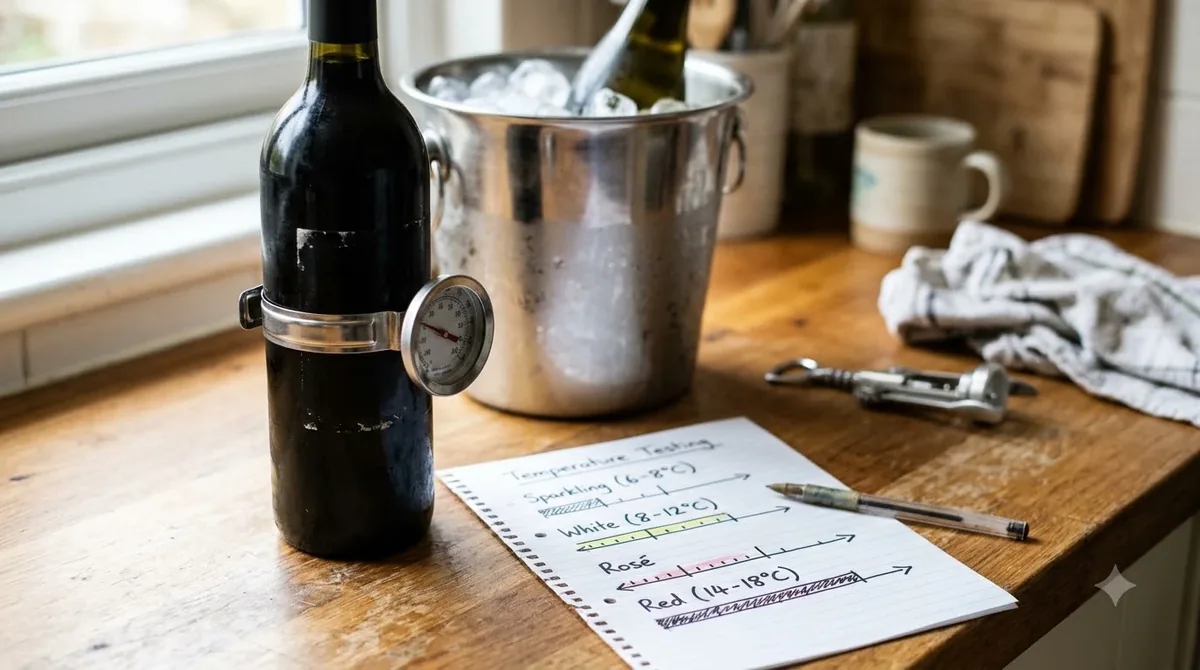
Dark Horse wines are best served at temperatures suited to their individual styles. A light white or Rosé generally benefits from 45–50°F, while a fuller Chardonnay is better around 50–55°F. Full-bodied Cabernet Sauvignon is generally served around 60–65°F.
Temperature affects how a wine’s aroma, acidity, body, and alcohol are perceived. A very warm red can emphasize alcoholic warmth, while an excessively cold white can suppress its aromas and make its texture seem less expressive.
Pairing Chardonnay
Dark Horse Chardonnay’s tropical fruit, peach, and toasted vanilla characteristics make it a natural companion for roasted chicken, grilled shrimp, creamy pasta, and dishes with lightly browned butter. Its fruit character can complement richer ingredients without requiring an especially heavy sauce.
For seafood, Chardonnay works particularly well with salmon, scallops, and shellfish prepared with butter or mild herbs. The wine’s medium acidity provides enough freshness to balance richness without overwhelming the food.
Serve a fuller Chardonnay around 50–55°F. This temperature allows its fruit and oak characteristics to remain expressive while keeping the wine refreshing.
Pairing Cabernet Sauvignon
Dark Horse Cabernet Sauvignon is well suited to grilled steak, burgers, roast beef, lamb, and aged hard cheeses. Its dark fruit, oak, and tannic structure can stand up to the savory flavors and richness of red meat.
Salt and fat help soften the perception of tannin, which explains why Cabernet Sauvignon often works so well with a fatty steak or a rich cheeseburger. A grilled ribeye, for example, provides enough richness to balance the wine’s firmer structure.
Serve Cabernet Sauvignon at approximately 60–65°F rather than allowing it to become excessively warm. A young full-bodied red can also benefit from 30–60 minutes of decanting, particularly when its tannins seem firm.
Choosing pairings by flavor and alcohol
Alcohol level matters when choosing food, particularly when a dish contains considerable chili heat. Alcohol and tannin can amplify the sensation of spicy food, making a full-strength Cabernet Sauvignon a challenging match for very hot chili sauces.
For spicy dishes, a wine with lower tannin and a refreshing character is often easier to enjoy. A crisp white may be a better choice than a powerful red, especially when the meal contains jalapeños, hot peppers, or strongly spiced sauces.
Acidic foods also require some attention. A wine should generally have equal or higher acidity than the dish to avoid tasting flat alongside acidic ingredients. Lemon-heavy seafood and tomato-based sauces, for example, can overwhelm a wine with insufficient freshness.
Oily fish can clash with tannic red wines, so a lighter white is usually a more suitable choice than Cabernet Sauvignon. Matching the weight, acidity, and texture of the food with the wine is often more useful than focusing exclusively on the ABV.
Frequently Asked Questions
Is Dark Horse wine considered a strong wine?
Dark Horse wines in the 13%–14.5% ABV range are stronger than many lighter alcoholic beverages but remain within the typical range for table wine. They are not fortified wines, which generally have substantially higher alcohol concentrations. The distinction between a standard table wine and a fortified wine is important when comparing beverage categories.
Does Dark Horse make wine with less than 13% alcohol?
The brand’s portfolio includes several styles, including sparkling wine and Rosé, so its offerings should not be assumed to share one fixed alcohol percentage. Historical specifications for individual Dark Horse products have included lower-ABV bottlings. Such figures apply to particular products and vintages, not necessarily every release in the same category.
Does a screw cap change the alcohol content of Dark Horse wine?
No. A screw cap is a closure rather than a factor that determines the wine’s original alcohol concentration. Dark Horse wines have used screw-cap closures, which make resealing convenient after opening. The closure itself does not make the wine stronger or weaker.
Can Dark Horse wine lose alcohol after the bottle is opened?
A bottle does not normally undergo a meaningful change in its labeled ABV simply because it has been opened for a short period. Exposure to air primarily affects oxidation and freshness. The wine may lose desirable aromas and flavors before any small alcohol evaporation becomes practically relevant.
Does Dark Horse produce wine in smaller bottles?
Yes. The official Dark Horse portfolio has included several 375 ml formats, including Brut Bubbles, Rosé, Pinot Grigio, Sauvignon Blanc, and Pinot Noir. A 375 ml bottle contains half the volume of a standard 750 ml bottle, making it a smaller-format option for occasions when a full bottle is unnecessary.
Dark Horse wine alcohol content generally ranges from approximately 13% to 14.5% ABV across the documented still-wine examples, with Chardonnay and Cabernet Sauvignon providing useful comparison points. The most important distinction is that individual varieties and vintages can have different percentages, even within the same brand. Comparing the specific bottle, serving size, and wine style gives you a clearer picture of what is in your glass.
More in Wine Brands
 Louis Latour Wine Price: Compare Bottles by Style and TierUpdated Nov 20, 2026
 Yellow Tail Moscato Price: What to Expect Before You BuyUpdated Nov 20, 2026
 Sutter Home Sweet Red Review: Find the Right Food PairingsUpdated Nov 20, 2026
 Franzia Chillable Red Review: Find the Right Serving StyleUpdated Nov 20, 2026
 Veuve Clicquot Rose Review: Flavor, Food Pairings and Buying AdviceUpdated Nov 20, 2026
 Rombauer Wine Price: Compare Bottles Before You BuyUpdated Nov 20, 2026