


We may earn a commission when you buy through links on this page, at no extra cost to you. Learn more.
The best 300 bottle wine fridge depends on how you balance long-term aging against ready-to-serve convenience: a single-zone compressor cabinet is best for uniform cellar aging at 55°F, while a dual-zone cabinet suits collectors who chill whites and reds at separate serving temperatures. Built-in front-venting models work best for kitchen or dining room cabinetry, whereas wide-shelf units prevent label damage on Burgundy and Champagne bottles. Garage-ready models with winter heating systems handle unconditioned basements and utility spaces without temperature swings.
Stepping up to a 300-bottle cabinet bridges the gap between casual kitchen storage and a full custom wine room. At roughly 25 cases of wine, capacity numbers alone do not tell the full story, since advertised counts rely on narrow 750 mL Bordeaux bottles and real-world collections hold wider shapes. Choosing the right configuration ensures steady temperature, proper humidity, and easy access to every rack without rearranging half your cellar.
Quick Comparison
Each 300-bottle cabinet style solves a different storage, installation, or bottle-shape challenge.
| Cabinet Type | Temperature Zones | Ventilation Style | Best Bottle Fit | Primary Advantage |
|---|---|---|---|---|
| Single-Zone Aging Cabinet | 1 zone (around 55°F) | Rear/side or front | Standard Bordeaux & mixed | Maximum bottle density and steady long-term aging |
| Dual-Zone Serving & Storage | 2 zones (40°F–50°F & 55°F–65°F) | Front or rear/side | Reds + whites/sparkling | Ready-to-pour temperatures without a second cooler |
| Built-In Front-Venting Column | 1 or 2 zones | Zero-clearance front | Standard & display racks | Clean flush integration into kitchen or bar cabinetry |
| Wide-Shelf / Luxury-Spacing Unit | 1 or 2 zones | Front or rear/side | Burgundy, Rhône, Champagne | Prevents torn labels and holds larger diameters easily |
| Garage-Ready / Climate-Controlled | 1 or 2 zones with heater | Front or rear/side | Bulk mixed storage | Maintains stable interior warmth during cold winters |
Best for Long-Term Cellar Aging: Single-Zone Compressor Cabinets
A single-zone compressor cabinet holds the entire interior at one steady temperature—typically 55°F—making it the most reliable choice for collectors aging reds, whites, and sparkling wines together over five or more years.
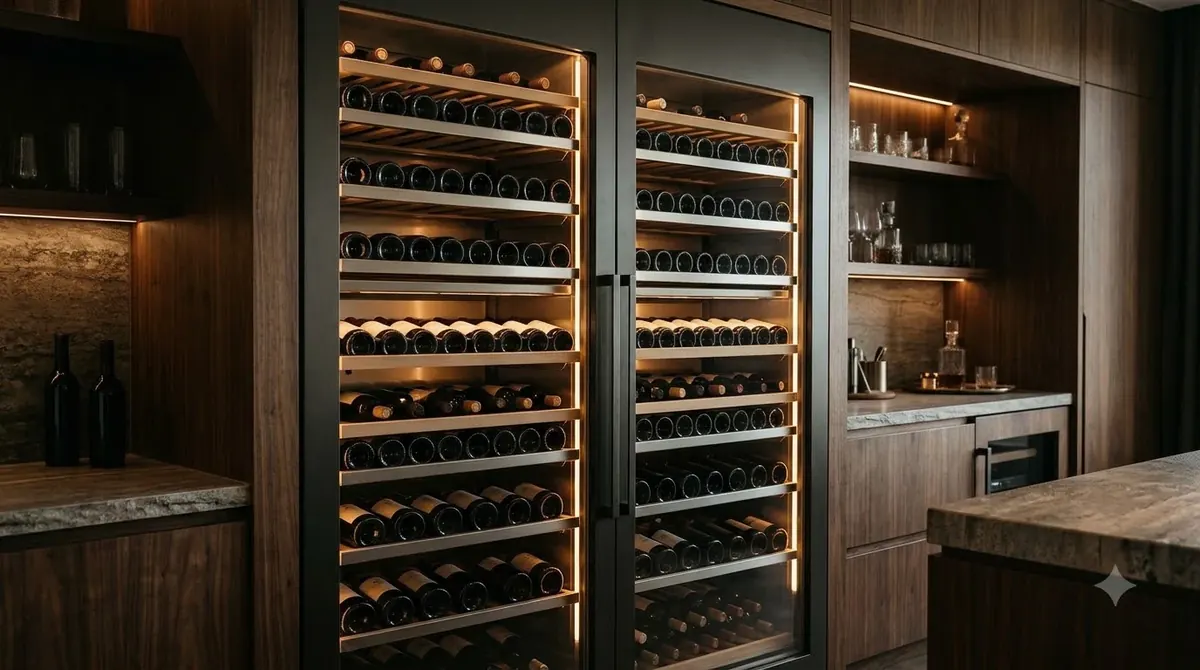
Why it stands out: Without an internal divider or secondary evaporator taking up vertical space, single-zone 300-bottle units maximize usable rack capacity and maintain tight thermal consistency from top to bottom. According to Wine Enthusiast’s buying guide, storing all wines at a uniform 55°F is ideal for long-term preservation because minor temperature fluctuations disrupt aging and degrade flavor. These cabinets also feature vibration-dampened compressors, UV-resistant double- or triple-pane glass, and activated carbon filters to protect corks from ambient odors.
Keep in mind: Whites and sparkling wines stored at 55°F will still need 30 to 45 minutes in an ice bucket or kitchen refrigerator before serving. This style is best for collectors who buy cases for multi-year cellaring and already keep a smaller 12 bottle wine fridge in the kitchen for tonight’s pours.
Best for Ready-to-Serve Variety: Dual-Zone 300-Bottle Wine Fridges
Dual-zone 300-bottle cabinets split the interior with an insulated thermal baffle so you can chill crisp whites and sparkling wines in one compartment while keeping reds at cellar or serving warmth in the other.
Why it stands out: Having two independent digital thermostats eliminates the wait before pouring, letting you pull a 45°F Sauvignon Blanc from the upper section and a 60°F Cabernet Sauvignon from the lower section at the same time. Larger dual-zone cabinets often place the divider roughly one-third of the way down, giving you around 80 to 100 bottles of chilled white capacity and 180 to 200 bottles of red storage. Reviewers at Wine Enthusiast highlight that whisper-quiet compressor systems under 40 dBA allow these tall cabinets to sit right in an open dining area without disrupting dinner conversation.
Keep in mind: The insulated divider and dual fan assemblies reduce total bottle count by roughly 15 to 25 bottles compared with an identically sized single-zone shell. Choose this configuration if you entertain frequently and want a single all-in-one appliance rather than pairing a cellar cabinet with a separate 6 bottle wine fridge.

- Capacity
- 179 bottles
- Zones
- Dual: 40-55°F / 55-65°F
- Cooling
- Compressor
- Install
- Easy install, 4 wheels
Two temperature zones let a mixed collection live together: the cooler upper zone runs 40 to 55 °F and the warmer lower zone 55 to 65 °F. The 24-inch cabinet holds up to 179 standard Bordeaux bottles on wood and wire shelves. A compressor, temperature memory after a power loss, a safety lock, and blue protective light round out the features.
Pros & ConsView
- Two zones for mixed red and white storage
- Holds up to 179 Bordeaux bottles
- Temperature memory and safety lock
- One door opens both zones at once
- 24 inch width needs wide floor space
Best for Kitchen & Dining Integration: Built-In Front-Venting Cabinets
Built-in front-venting 300-bottle fridges exhaust compressor heat through a lower front grille, allowing you to recess the cabinet flush into custom cabinetry or a butler’s pantry without leaving wide air gaps.
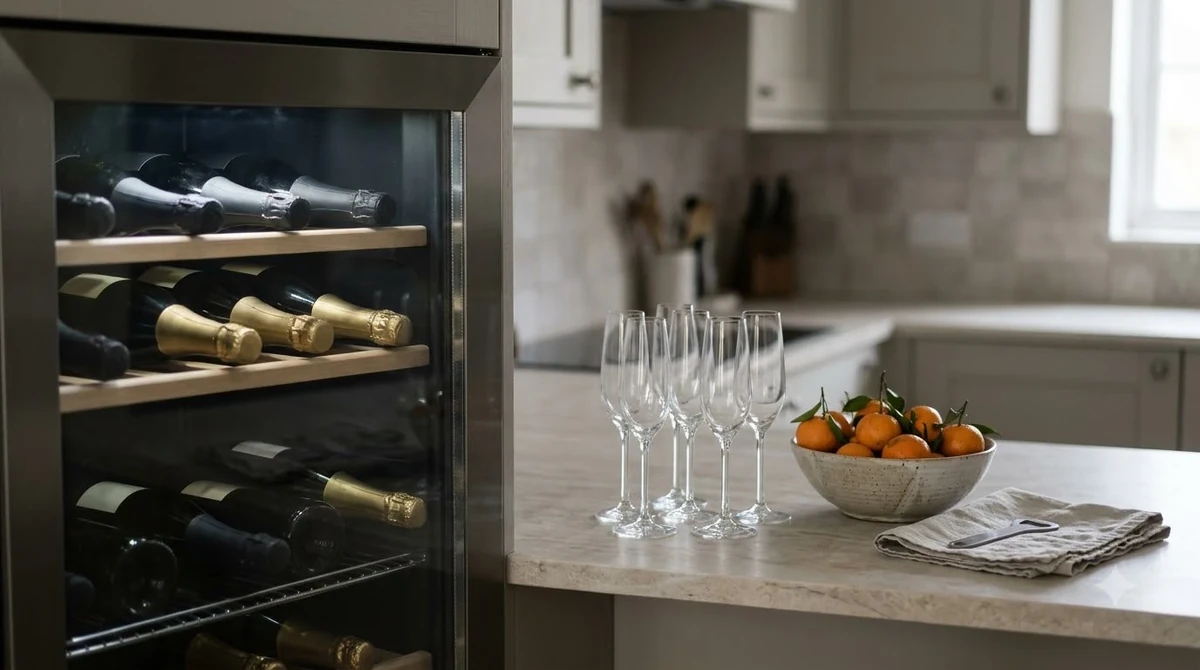
Why it stands out: Standard freestanding wine coolers require 3 to 6 inches of clearance at the rear and sides so the condenser can shed heat, which leaves awkward gaps in a finished room. Front-venting units—often configured as wide single-door columns or French-door side-by-side cabinets—install cleanly against back walls and adjacent millwork. Many models in this category include reversible doors, integrated security locks, and warm low-heat LED accent lighting that turns a large collection into an architectural focal point.
Keep in mind: Built-in 300-bottle cabinets are heavy—often exceeding 300 pounds empty—and require a reinforced, level floor plus a dedicated grounded outlet behind or beside the niche. They are best for homeowners remodeling a kitchen, dining room, or wet bar who want permanent, furniture-grade integration.
Best for Burgundy & Champagne Collections: Wide-Shelf Luxury-Spacing Units
Wide-shelf 300-bottle cabinets increase the vertical clearance between wooden slats—often called luxury spacing—so wider Pinot Noir, Chardonnay, Rhône, and Champagne bottles slide smoothly without scraping labels.
Why it stands out: Most manufacturers calculate capacity using slender 750 mL Bordeaux bottles that measure roughly 2.75 inches across, which forces wider bottles to wedge tightly or require removing entire shelves. Wide-spacing designs feature gliding ball-bearing beechwood or sapeli racks with generous row height and removable or adjustable cradles for magnums. Protecting intact labels preserves both visual organization and resale value if you ever catalog or trade older vintages.
Keep in mind: Wider shelf intervals mean a cabinet with the same exterior footprint may hold 220 to 260 mixed bottles rather than a strict 300. This type is ideal for collectors heavy on Oregon Pinot Noir, white Burgundy, or grower Champagne who value smooth drawer glide over maximum stacking density.

- Capacity
- 166 bottles
- Shelves
- 16
- Zone
- Single temperature
- Security
- Cylinder key lock
Sixteen shelves hold 166 bottles at one set temperature, with a showcase display shelf that angles labels forward so favorites face out. The listing does not state shelf spacing for large Burgundy or Champagne bottles, so check bottle diameter before buying. Fan-forced cooling, a carbon filter, double-pane UV-protected glass, beechwood shelves, and a cylinder lock cover the rest.
Pros & ConsView
- Showcase shelf angles labels forward
- UV-protected double-pane glass door
- Fan-forced cooling with carbon filter
- One temperature for every bottle
- Spacing for large bottles is not listed
Best for Basements & Garages: Climate-Controlled Heavy-Duty Models
Climate-controlled 300-bottle wine fridges combine heavy-duty insulation with an internal heating element—often called a winter system—so fluctuating garage or unfinished basement temperatures never chill your bottles below target.
Why it stands out: Standard wine coolers can only cool air down from ambient room temperature; if an unheated basement or garage drops to 40°F in January, a basic unit shuts off and lets reds freeze or stall. Garage-ready models pair wide ambient operating ranges (often 38°F to 100°F) with automatic heating cycles, thicker cabinet walls, and solid or low-emissivity insulated doors. When stocking up for large tastings or parties, knowing how many glasses in a bottle of wine helps you plan how many cases to stage in bulk racks versus quick-grab sliding shelves.
Keep in mind: Utilitarian bulk-storage models prioritize rugged compressors, double-stacked shelving, and thick door seals over showroom glass displays. They are best for collectors storing overflow cases in a cool basement, utility room, or insulated garage where ambient temperatures swing seasonally.

- Capacity
- 180 bottles
- Upper Zone
- 40-55°F
- Lower Zone
- 55-65°F
- Shelves
- 14 beech wood
The practical choice for mixed serving, where champagne and whites sit cold above and reds rest warmer below. Two independent zones share one tall cabinet with fourteen beech wood shelves, and the bottom shelf takes larger bottles. A fan spreads cold air to prevent big gaps between top and bottom shelves, while temperature memory restores the last settings after a power cut.
Pros & ConsView
- Separate upper and lower temperature zones
- Bottom shelf holds larger bottles
- Temperature memory after power loss
- Needs 24 hours to rest before startup
- Tall cabinet requires ample floor space
How to Choose
Evaluating five core specifications before ordering prevents costly delivery returns and cramped shelving later.
- Real-World vs. Advertised Capacity: Stated 300-bottle ratings assume uniform 750 mL Bordeaux bottles stacked neck-to-base with zero wasted space. If 30 percent of your collection consists of sloped-shoulder Burgundy bottles, heavy-punt Napa Cabernets, or sparkling wines, expect realistic capacity closer to 230–260 bottles. Compare sizes across different tiers in our By bottle count guide before finalizing dimensions.
- Cooling Technology and Noise: At the 300-bottle scale, every reliable unit uses a compressor rather than thermoelectric cooling, which lacks the thermal capacity for large cabinets. Check the decibel rating—40 dBA or lower is quiet enough for living spaces, while 42–46 dBA suits basements or pantries.
- Humidity and Cork Protection: Natural corks require 50 percent to 70 percent relative humidity to stay supple and prevent oxidation. Look for units with passive or active humidity management, frost-free automatic defrost cycles, and a drain system that recycles moisture rather than drying out the air.
- Shelf Construction and Glide: Full-extension ball-bearing telescopic rails let you read back-row labels without lifting heavy bottles out of the dark. Unfinished hardwood slats (such as beech, oak, or mahogany) absorb micro-vibrations better than coated wire racks and resist warping in humid interiors.
- Footprint, Swing Clearance, and Power: Tall 300-bottle cabinets typically stand 68 to 76 inches high and 24 to 30 inches wide, while side-by-side French-door designs span 48 to 60 inches wide. Measure doorway widths, staircase turns, and full 90-degree door swing clearance so pull-out shelves clear the door gasket completely.
Tip: Let a newly delivered 300-bottle compressor fridge stand upright and unplugged for at least 24 hours before powering it on so compressor oil settles back into the sump after tilted transit.
Frequently Asked Questions
How many bottles actually fit inside a 300 bottle wine fridge?
Most 300-bottle wine fridges hold between 230 and 275 bottles in everyday use. Manufacturers measure maximum capacity using slender 750 mL Bordeaux bottles stacked neck-to-base, so wider Burgundy, Rhône, and Champagne bottles reduce the total count unless you remove shelves to double-stack.
Should I buy a single-zone or dual-zone 300 bottle wine cooler?
Choose a single-zone cabinet set to 55°F if your primary goal is long-term aging for five years or longer, since uniform temperature protects corks and maximizes rack count. Pick a dual-zone model if you open whites and reds every week and want both ready at ideal serving temperatures without using a separate fridge.
Can a 300 bottle wine refrigerator go in a garage or basement?
Yes, provided the cabinet is rated for the room’s seasonal temperature swings and includes an internal heating element for winter months. Standard indoor wine fridges struggle when ambient air drops below 50°F or climbs above 85°F, which can overwork the compressor or chill reds too far.
How much space is needed around a freestanding 300 bottle wine fridge?
Freestanding rear-venting cabinets generally require 3 to 6 inches of clearance behind the unit and 2 to 4 inches on each side for proper condenser airflow. Front-venting built-in models exhaust air through the lower toe-kick grille and can sit nearly flush inside cabinetry with minimal side gaps.
Selecting the right 300-bottle wine fridge comes down to matching the cabinet’s thermal design and shelving layout to where you will place it and the bottle shapes you buy most. Measure your space carefully, factor in 15 to 20 percent extra room for wider bottles and future acquisitions, and prioritize quiet, vibration-isolated compressor cooling to keep every vintage resting safely for years.
More in By Bottle Count
 Best 52 Bottle Wine Fridge Options for Every Kitchen and CollectionUpdated Nov 18, 2026
 Best 15 Bottle Wine Fridge Options for Quiet Storage and Ready-to-Pour ServingUpdated Nov 18, 2026
 Best 34 Bottle Wine Cooler Types for Kitchens, Bars, and Home CellarsUpdated Nov 18, 2026
 Best 166 Bottle Wine Cooler Types for Serious Collectors and HostsUpdated Nov 18, 2026
 Best 54 Bottle Wine Fridge Types for Undercounter and Home CellarsUpdated Nov 18, 2026
 Best 46 Bottle Dual Zone Wine Cooler for Built-In Kitchens and Home BarsUpdated Nov 19, 2026