

We may earn a commission when you buy through links on this page, at no extra cost to you. Learn more.
The simplest answer to how to pronounce loureiro is “loh-RAY-roo,” with the stress on the middle syllable. Say it in three connected beats, rather than as separate words. The Portuguese grape name is easiest for English speakers when the “RAY” sound is clear and the final syllable stays light.
Loureiro is a white wine grape best known in Portugal’s Vinho Verde region, and its name can look more difficult to pronounce than it sounds. A little attention to its three syllables makes it easier to recognize on wine lists, ask for in restaurants and discuss with other wine drinkers. There is also a related Galician spelling worth knowing, particularly if you encounter wines from northwest Spain.
How to Pronounce Loureiro: The Basic Sound
Say Loureiro as “loh-RAY-roo,” using three syllables and placing the strongest emphasis on the middle syllable. The English pronunciation is represented in the International Phonetic Alphabet as /loʊˈɹeɪ.ɹu/; the mark before the second syllable identifies the stressed part.
A useful way to practice is to say “loh” as in “low,” follow it with “RAY,” then finish with a short “roo.” Keep the middle syllable clear and slightly stronger: loh-RAY-roo. It should sound like one continuous name, not three clipped beats. In ordinary conversation, the exact vowel color will vary with a speaker’s accent, but the stress pattern is the feature most likely to help an English speaker sound recognizable.
The name is Portuguese, so the English guide is an approximation rather than a claim that every Portuguese speaker pronounces it exactly like an American English speaker. The vowel in the first syllable can have a slightly different quality in Portuguese, and the unstressed ending can be lighter than the English spelling suggests. That is normal language variation, not a reason to add another syllable or move the stress.
If you are preparing to order a glass, it is more useful to remember the rhythm than to chase a perfect accent. Say the name once at a steady pace, then use it naturally in a phrase such as “a glass of Loureiro, please.” A calm, clear attempt is easier for a server to understand than an exaggerated imitation of a language you do not speak.
Why the Spelling Can Mislead English Speakers
English readers can be tripped up by the opening “ou” and the middle “ei,” which do not map neatly onto familiar English sounds. The most useful guide is the sound pattern: a rounded first syllable, a stressed “RAY”-like center and a short final syllable.
The accent mark is not written in Loureiro, but the stress still falls on the middle syllable in the standard English pronunciation guide. That detail matters because English readers sometimes assume a final “-o” or “-eiro” ending carries the emphasis. Here it does not. In Portuguese, unstressed vowels may also sound less fully articulated than their written letters suggest, which helps explain why a native pronunciation may not match an English spelling-based guess.
The letter “r” also deserves a little care. English speakers often use their familiar “r” sound, while Portuguese speakers use a different tongue position that can vary by region and by the position of the consonant. For a restaurant order, there is no need to reproduce a Portuguese consonant perfectly. Aim for the three-part rhythm and the prominent center syllable; that is the practical pronunciation goal.
A useful comparison is to think about learning the names of other wine grapes rather than translating every letter. The pronunciation guides for how to pronounce chardonnay and how to pronounce cuvee also work best when you learn the spoken form as a whole. Loureiro is another name that becomes easier after you hear or say it a few times.
Loureiro and Loureira: Two Related Forms
Loureiro is the Portuguese form most often seen on bottles from northern Portugal, while Loureira is a related Galician form used in Spain’s Galicia wine vocabulary. The spelling difference matters because the published English pronunciation for Loureira ends in “ra,” rather than the “roo” approximation used for Portuguese Loureiro.
The terms are connected by language and grape history. The Wines of Galicia profile of Loureira gives the pronunciation as “low-RAY-ra” and explains that the grape is associated with the Vale do Lima in northwest Portugal. It is recognized in several Galician appellations, including Rías Baixas, Ribeiro, Ribeira Sacra and Valdeorras, and is an authorized variety in Monterrei. The same source connects the name with laurel, or bay leaves, because the grape’s scent recalls the herb.
For a bottle labeled Vinho Verde from Portugal, use the Portuguese spelling Loureiro and the “loh-RAY-roo” guide. For a wine described with the Galician spelling Loureira, “low-RAY-ra” is the published approximation from Wines of Galicia. The grapes’ regional use can overlap, and a producer may use local terminology, so read the whole label rather than assuming that every similar name signals the same appellation. A pronunciation reference for how to pronounce claret is a useful reminder that wine vocabulary often travels across languages and historical naming traditions.
What Loureiro Tastes Like and Where It Grows
Loureiro is a white grape closely associated with Vinho Verde in northwest Portugal, especially the Lima Valley and nearby coastal river valleys. The variety is known for floral and citrus-led aromas, although its exact profile varies by producer and site.
The Wine Enthusiast guide describes floral and peach aromas and notes that the variety is suited to the wet coastal subregions of Lima, Cávado, Ave and Sousa. Decanter’s Portuguese grape guide highlights citrus and floral character, especially grapefruit, lime and mineral notes in wines from Lima. These descriptors help explain why Loureiro can be recognizable even when it appears as one variety in a regional blend.
Loureiro is not simply another name for Vinho Verde. Vinho Verde is a wine region and appellation in northwest Portugal; Loureiro is one grape variety that can be bottled on its own or used in a blend with other local varieties. Wine Enthusiast notes that the region has nine subappellations and seven major white grapes, and that most Vinho Verde wines are blends even as more varietal bottlings appear. A bottle can therefore say Vinho Verde without being made entirely from Loureiro.
The region’s Atlantic setting helps explain the fresh style. The Wine Enthusiast guide describes the region as bordered by the Atlantic Ocean to the west, mountain ranges to the east and south, and the Minho River to the north. Cool, breezy conditions and granite soils are part of the context for the region’s freshness, but they do not make every Vinho Verde taste the same. Loureiro’s aromatic floral character gives it a distinct place alongside varieties such as Alvarinho, Arinto and Avesso.
Loureiro is valued for more than a single scent or flavor. A wine may suggest orange blossom, elderflower, chamomile, bay leaf, lime, green apple, peach or other orchard fruit, depending on its growing site and winemaking. Decanter describes the grape’s profile as floral and citrus-driven, while the Aveleda producer page lists elderflower, chamomile, lime leaf, melon and passion fruit in its own Loureiro bottling. Those differences show why it is better to treat tasting notes as a set of likely clues than as a fixed recipe.
Single-Variety Loureiro and Regional Blends
Loureiro can be bottled by itself or blended with other regional grapes, and each choice changes how directly the grape speaks. Its aromatic character makes it useful in blends, while single-variety wines let the floral profile take center stage.
Loureiro has a long role in regional blends, where its fragrance and freshness can contribute aromatic lift. The Wine Enthusiast guide notes that Loureiro is grown throughout Vinho Verde as a blending grape, while also pointing to experimental wines made entirely from the variety, including an amphora-aged example from Aphros. Decanter similarly identifies Loureiro as an important grape in the Lima area and notes its floral, citrus-led character.
A single-variety Loureiro gives the drinker a more direct view of the grape’s aromatic character. The Aveleda Loureiro bottling, for example, is listed as DOC Vinho Verde and identifies Loureiro as its grape. Aveleda describes its wine as pale lemon-green, with elderflower, chamomile and lime-leaf aromas, then melon and passion-fruit notes on the palate. This producer example illustrates one style; it should not be treated as a universal template for every Loureiro wine.
Blends can taste different because other varieties bring their own structure and fruit. Alvarinho can contribute citrus, pear, peach and tropical notes; Arinto is known for lively acidity; and Trajadura can add a softer, rounder impression. The exact balance depends on the producer and subregion. A label listing Loureiro with Alvarinho or another variety tells you that you are not looking at a 100% Loureiro wine, even though Loureiro may still play a defining aromatic role.
Winemaking also changes the texture. Stainless-steel fermentation often preserves primary fruit and floral aromas, while time on fine lees can add weight and a rounder feel without erasing freshness. Aveleda says its Loureiro is harvested at night and aged on fine lees; it also notes granite soils for the wine. These are specific production choices, not rules that every producer follows. Some bottlings may use different fermentation vessels, lees regimes or blending proportions.
How to Choose, Serve and Pair a Bottle
Start by deciding whether you want to explore the grape on its own or taste it as part of a regional blend. A single-variety Loureiro is a direct introduction to the floral and citrus character; a Vinho Verde blend with Alvarinho, Arinto or Trajadura can show how the varieties work together.
Serve a fresh Loureiro cool, but not so cold that its floral aromas disappear. Aveleda recommends 50–54°F (10–12°C) for its Loureiro bottling, a practical range for this style of white wine. If the bottle has been in a very cold refrigerator, let it stand briefly before pouring. A white-wine glass with a modest bowl gives the aromatics room to gather while keeping the wine focused. Pour a standard 5-ounce serving and keep the bottle chilled between pours.
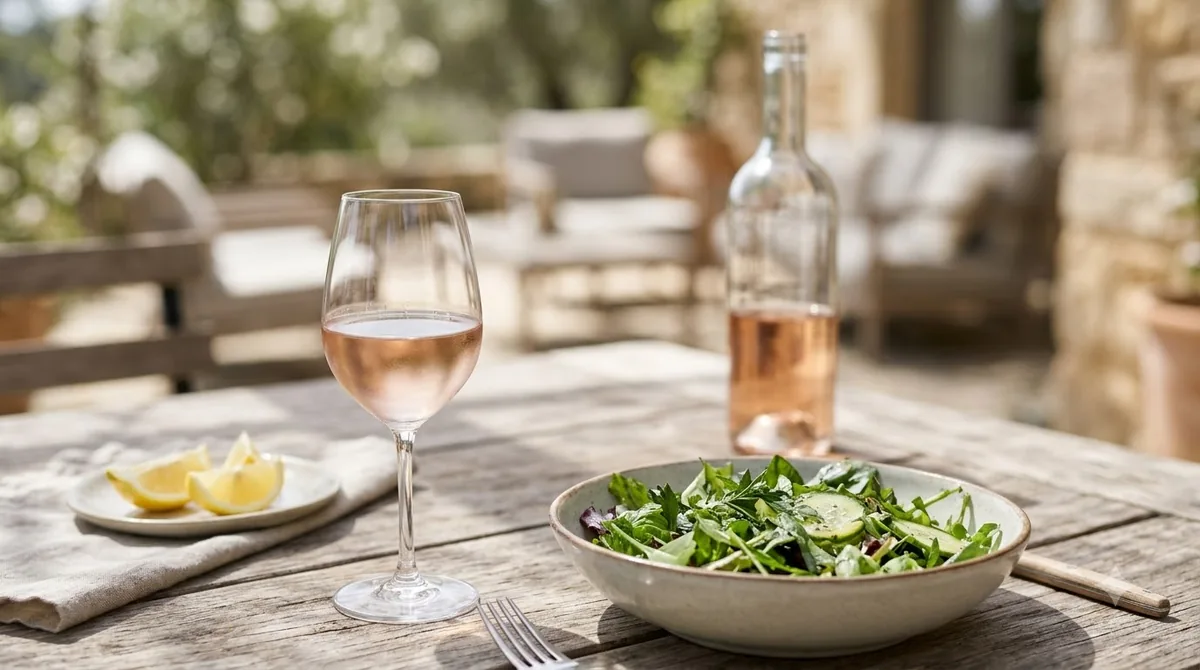
The wine’s freshness works naturally with seafood and lighter dishes. Aveleda suggests shrimp and mussels, fresh cheeses, vegetable salads and mild curry. The Wine Enthusiast Vinho Verde feature also lists goat cheese, spring rolls, sushi, sashimi, seafood salads, fish tacos, clams in garlic broth and grilled octopus as companions for Loureiro. These pairings make sense because the grape’s acidity and aromatics can refresh the palate without overpowering delicate flavors.
Pairing depends on how the dish is seasoned. Lemon-heavy seafood, herbs and lightly dressed vegetables can echo the wine’s citrus and floral notes. Salt and moderate richness can soften a wine’s sharp edges, while a strongly acidic dressing needs a wine with equally lively acidity. Very hot chili sauces can make alcohol feel more pronounced, so a light, fresh Loureiro is usually better with mild curry than with a fiery preparation. For a broader reference to styles and categories, browse Wine by Type before choosing a bottle for a meal.
Use the serving data below as a practical starting point, not a rule for every producer. The serving temperature and drinking window are the recommendations published for Aveleda’s specific bottling, and the pronunciation entry is the English-language IPA listed for the grape name.
| Detail | Specific figure | Practical use |
|---|---|---|
| English pronunciation | /loʊˈɹeɪ.ɹu/ | “loh-RAY-roo,” with stress on the middle syllable |
| Syllable count | 3 | Say “loh” + “RAY” + “roo” |
| Aveleda serving range | 50–54°F (10–12°C) | A cool but aromatic serving temperature |
| Aveleda suggested window | Within 5 years of bottling | Producer guidance for that bottling, not a universal aging rule |
Tip: Before ordering, practice “loh-RAY-roo” once, with the emphasis on “RAY.” Then say the grape name in a normal sentence; a natural pace is more helpful than an exaggerated accent.
For an extra reference, the Aveleda Loureiro producer page sets out its aroma notes, food suggestions and serving temperature. Its description offers a concrete example of what a Loureiro bottling can show, while reminding readers that an individual wine reflects its own vineyard and cellar decisions.
Frequently Asked Questions
These questions cover practical points that often arise when a reader sees Loureiro on a wine list, bottle label or regional description. They also distinguish pronunciation from grape identity, because similar spellings can refer to connected but locally named varieties.
Does Loureiro mean bay leaf?
The Portuguese noun loureiro names the bay laurel tree, Laurus nobilis, an evergreen native to the Mediterranean region. Its leaves are used as culinary bay leaves, so the plant association is literal rather than only a tasting-note metaphor. The grape’s floral and herbal scent helps explain why the name carries over.
Is Loureiro the same grape as Alvarinho?
No. Loureiro and Alvarinho are separate white grape varieties from northwest Iberia. Alvarinho is called Albariño in Spain, where it is strongly associated with Rías Baixas, while Loureiro has the related Galician form Loureira. The two varieties can appear together in a blend.
Can Loureiro wine be sparkling?
Yes, a grape variety does not dictate a single production method. Loureiro is most often encountered as a still white in familiar Vinho Verde examples, but sparkling wine can be made from many white varieties when the producer chooses an appropriate method. The word Loureiro identifies the grape, not the amount of carbonation in the bottle.
Is every Vinho Verde bottle made with Loureiro?
No. Vinho Verde includes several white and red varieties, and many bottles are blends. The region also produces red and rosé wines, so the Vinho Verde name alone does not guarantee that a bottle is white or contains Loureiro.
Should Loureiro be aged for a long time?
For the classic fresh, focused style, Decanter advises drinking traditional Loureiro wines young and fresh rather than expecting extended bottle development. That is a useful guide for typical aromatic bottlings, not a guarantee for every producer or special cellar selection. Producer guidance is the better reference for an individual wine.
Remember the three-syllable cue “loh-RAY-roo,” then connect the name with the fresh, aromatic white wines of northern Portugal. Once you recognize Loureiro on a wine list, you can order it confidently and know what kind of grape and regional style you are asking for.
More in Wine Types & Grapes
 Zinfandel Sugar Content: Dry Red vs. White Zinfandel GramsUpdated Nov 21, 2026
 Best Zinfandel Substitute Options for Sipping and CookingUpdated Nov 21, 2026
 Zweigelt Food Pairing: Best Dishes, Cheeses, and Serving TipsUpdated Nov 21, 2026
 Zinfandel Tannins Explained: How Structure Shapes Every BottleUpdated Nov 21, 2026
 Zinfandel Sweetness Level: Dry Red vs. Sweet White Zin ExplainedUpdated Nov 21, 2026
 Xinomavro Food Pairing: Best Dishes, Styles, and Serving TipsUpdated Nov 21, 2026