

We may earn a commission when you buy through links on this page, at no extra cost to you. Learn more.
The schioppettino grape is a rare, native red variety from Friuli-Venezia Giulia in northeastern Italy, prized for bright acidity, a medium-bodied frame, and unmistakable black-pepper character. It produces dry wines with red and dark berry fruit, floral and herbal notes, and tannins that are generally more refined than forceful. Most examples come from the eastern hills around Prepotto, where the variety was rescued after falling close to disappearance. Its combination of savory spice and freshness makes it a distinctive alternative to more familiar Italian reds.
Known locally as Ribolla Nera, Schioppettino is one of Friuli’s signature indigenous red grapes. Its story links an old rural tradition to a modern revival, and its wines offer a clear sense of place: peppery, lively, and structured without necessarily feeling heavy. Understanding its growing area, flavor profile, and food matches makes it easier to recognize a bottle and serve it well.
What Is Schioppettino?
Schioppettino is an indigenous black grape from Friuli-Venezia Giulia, the northeastern Italian region that borders Slovenia and Austria. Its heartland is the province of Udine, especially the municipality of Prepotto and nearby villages such as Cialla and Albana.
The grape is also called Ribolla Nera, a name that helps distinguish it from Ribolla Gialla, a separate white variety that is much better known outside the region. In Slovenia, where the grape has a historical presence near the border, it is also called Pocalza. The names can cause confusion, but Schioppettino is a distinct red grape with its own flavor and growing requirements.
In the glass, the variety is usually dry and medium-bodied, with bright natural acidity and a noticeable but generally polished tannin structure. The color can range from pale ruby to deeper ruby-purple, depending on the producer, vineyard conditions, extraction, and age. The aroma often combines fresh or dark berries with black pepper, green spice, flowers, and sometimes earthy or herbal notes. The pepper character is so recognizable that it can be the first clue that a wine is Schioppettino rather than a more familiar red.
The Friuli Colli Orientali consortium identifies Schioppettino as native to Friuli and probably originating around Prepotto. Its regional profile highlights wild blackberry, raspberry, blueberry, green-pepper-like spice, and an elegant palate; the consortium’s regional wine descriptions also record its traditional food matches.
The History of Schioppettino’s Revival in Prepotto
Schioppettino has deep roots in eastern Friuli, but it nearly disappeared during the upheavals of the nineteenth and twentieth centuries. Its recovery in the 1970s, led by the Rapuzzi family of Ronchi di Cialla, helped restore the grape to the region’s vineyards and gave it a recognized place among Friuli’s native varieties.
Local records mention the grape in the mid-13th century, and it was once grown widely in the upper Judrio Valley. Vineyard diseases and the disruption of traditional plantings later contributed to the loss of old vines. Many growers favored marketable international varieties such as Merlot and Cabernet Sauvignon, while Schioppettino’s delicate nature and irregular flowering made it harder to cultivate consistently.
A turning point came around 1970, when Paolo Rapuzzi and his family searched for surviving vines and built a winery around Friuli’s local grapes. Schioppettino was not yet formally registered, so the work involved identifying and propagating old plant material before official recognition and place-specific designations could follow.
| Period | Milestone | Why It Matters |
|---|---|---|
| Mid-13th century | Local written records mention Schioppettino. | Evidence of its long history in the Prepotto area. |
| Early 1900s | Many traditional plantings were uprooted. | The grape’s area and commercial importance declined. |
| 1970 | The Rapuzzi family began its recovery project. | Surviving vines were identified and propagated. |
| 1977 | Schioppettino entered Italy’s national grape register. | Formal recognition supported renewed planting. |
| 1995 | The Cialla subzone was established. | A defined local identity was created for wines from the area. |
| 2008 | The Schioppettino di Prepotto subzone was established. | The designation further connected the wine to its historic home. |
PromoTurismoFVG documents the early records, the Rapuzzi family’s work, and the creation of the Cialla and Prepotto subzones. Decanter likewise credits Rapuzzi with saving the variety and notes that modern plantings remain concentrated around Albana and Prepotto. The place name on the bottle is therefore a meaningful part of the wine’s identity.
Vineyards, Climate, and the Friulian Landscape
Schioppettino is closely tied to the hills of eastern Friuli, where cooler conditions and distinctive marl-based soils help shape its fresh, spicy style. It ripens late, so growers need a site that can bring the grapes to maturity without excessive heat or disease pressure.
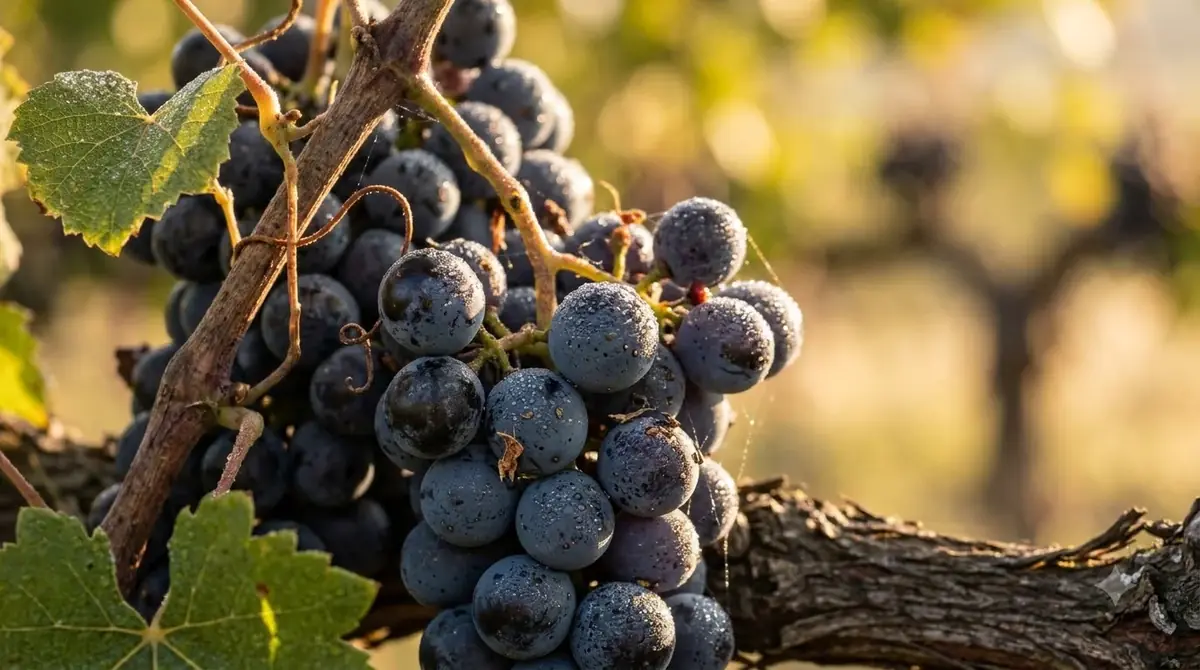
The Colli Orientali del Friuli DOC forms a hilly strip in Udine province and includes Prepotto. Its consortium describes more than 2,000 hectares of vineyards across the wider area; that figure covers all varieties, not Schioppettino alone. Differences in slope, exposure, and airflow help explain why neighboring vineyards can produce wines with varying concentration and aromatic intensity. One of the most important local soil terms is ponca, the calcareous marl and sandstone terrain characteristic of the eastern hills. Decanter’s report on Colli Orientali’s native reds notes that Colli Orientali and nearby Collio share this marl-based geology, while the former has a particularly meaningful tradition of native red grapes. Soil alone does not determine flavor, but ponca is part of the regional setting in which Schioppettino developed its recognizable style.
Site selection matters because the variety ripens late and can be delicate, with irregular flowering and susceptibility to disease. VinePair notes that its skins sunburn easily and that cooler temperatures help preserve the crisp fruit and savory aromas. Growers aim for full ripeness without losing the acidity that defines the wine.
In a suitable hillside site, fruit can reach maturity while retaining the acidity that keeps the finished wine lively. Elevation, exposure, harvest timing, and cellar decisions all contribute to variation among Prepotto bottlings.
Flavor, Structure, and Winemaking Style
Schioppettino is best known for the contrast between vivid acidity, berry fruit, and a savory pepper note. The typical wine is dry and medium-bodied, with refined tannins rather than the imposing grip associated with some thick-skinned reds.
Look for blackberry, raspberry, blueberry, and sour cherry alongside black or green pepper, violet-like florals, and fresh herbs. Some bottles emphasize crunchy red fruit, while others show darker fruit, earth, leather, or balsamic notes with age. Decanter’s notes on Prepotto examples describe dark berries, sour cherry, herbs, iris, violets, and the variety’s pepper signature.
Acidity is a defining structural feature, giving the wine energy and keeping its fruit clear beside earthy or savory notes. Tannins are often fine-grained or silky, especially in mature bottles, although extraction and aging can make individual examples firmer. Schioppettino is not automatically a heavy, high-tannin red; its appeal is the balance of aromatic intensity and freshness. Stainless-steel fermentation and aging can preserve fresh fruit and pepper, while time in wood may add texture, dried-fruit notes, and savory complexity. The Colli Orientali consortium notes that wood-aged Schioppettino can become especially structured and aromatic. The effect depends on the barrel and length of maturation, so oak does not taste identical in every bottle.
Young Schioppettino can be approachable when a producer emphasizes bright fruit and moderate extraction. With bottle age, some examples develop a silkier, more integrated character. Decanter compares mature wines to Pinot Noir in elegance, a comparison of texture and evolution rather than identical flavor.
Food Pairings for Schioppettino
Schioppettino is a natural partner for flavorful dishes with enough richness to meet its acidity and enough substance to stand up to its peppery aromas. Traditional matches include red meat, wild fowl, and medium-aged cheeses, while roast pork, duck, mushrooms, and herb-seasoned sausages work well at the table.
Serve it with grilled or roasted meats, game bird, or dishes built around mushrooms and herbs. Its acidity cuts through rich meat, while berry fruit and pepper complement browned flavors. Roast pork with rosemary, duck breast with restrained seasoning, or grilled sausages with white beans are practical choices.
Medium-aged cow’s-milk cheeses and other firm, savory cheeses have enough flavor to meet the wine’s aromatic character. Salt and fat soften the perception of tannin, making a cheese board a comfortable match. Add bread, cured meats, olives, and roasted vegetables; very delicate cheeses may disappear beside the wine.
Its acidity also works with tomato-based dishes, lentils, and earthy foods such as mushroom polenta or braised beans. Keep the preparation balanced: a dish that is much more acidic than the wine can make the wine seem flatter. Use caution with intense chili heat. Alcohol and tannin can make chili feel hotter, so a heavily spiced dish may exaggerate the wine’s warmth and peppery edge. Choose gentle herbs, black pepper, garlic, or moderate seasoning instead of a very hot chili sauce. Schioppettino is also not the best match for oily fish, where tannin in red wine can create an unpleasant clash; a crisp white wine is usually a more suitable choice for that course.
Tip: For a dependable first pairing, pour Schioppettino with roast pork, grilled duck, or a medium-aged cheese. Keep chili heat moderate so the wine’s peppery character stays aromatic rather than aggressive.
Serving Temperature and Choosing a Bottle
Serve Schioppettino slightly cool rather than warm. The Friuli Colli Orientali consortium recommends 16–18°C, which is about 61–64°F, a practical range that keeps the wine’s acidity and peppery aromas clear while allowing its fruit and texture to show.
If the bottle has been stored at room temperature, a short spell in the refrigerator can bring it into range; avoid serving it very cold, which can mute aromas and make tannins seem more noticeable. A standard 5-ounce pour gives the wine room to open in the glass, and a 750-milliliter bottle yields about five such servings. Use a medium-sized red-wine glass rather than an unusually narrow glass, since the wine’s pepper, herbs, and berry notes benefit from a little space. Decanting depends on the wine’s age and style. A young, concentrated bottle may benefit from 20 to 30 minutes of air if it seems closed, while a lighter example may open in the glass. Handle older bottles gently and decant only when sediment or a tight aroma makes it useful.
When choosing a bottle, look at both grape and origin. Friuli Colli Orientali DOC signals the wider eastern-hills area; Schioppettino di Prepotto points to its best-known home, while Cialla is another historic subzone associated with the grape’s revival. Producer style matters too: some wineries emphasize vivid berry fruit and pepper, while others use longer wood maturation for texture and complexity. A varietal Schioppettino from Prepotto or Cialla is a useful benchmark; then compare producers to find your preferred balance of fruit and savory development.
Store an unopened bottle away from light and temperature swings, ideally near 55°F and on its side if sealed with natural cork. After opening, reseal and refrigerate it; most still wines keep for roughly three to five days. Let the wine warm slightly in the glass before serving again.
How Schioppettino Compares with Other Red Wines
Schioppettino can appeal to drinkers who enjoy aromatic reds with freshness, spice, and moderate body, but it is not simply another version of Syrah, Cabernet Franc, Pinot Noir, or Merlot. Its particular mix of high acidity, peppery aromatics, and refined tannins gives it a recognizable Friulian identity.
VinePair uses Syrah and Cabernet Franc as reference points for Schioppettino’s savory, peppery character. This is a sensory comparison, not a claim that the grapes are blended or interchangeable: Schioppettino’s berry fruit, floral lift, and high acidity give it its own balance.
Within Friuli, Schioppettino differs from Refosco and Pignolo. Decanter describes it as more refined in tannin than Refosco, with a mid-weight palate and peppery finish; Pignolo is known for much more pronounced tannin and a longer aging trajectory. Schioppettino can therefore be an approachable entry to the region’s native reds.
For a broader comparison beyond Friuli, a fruit-forward German red such as Dornfelder offers a different expression of dark fruit, while the aromatic, often sweet Italian red Brachetto occupies a very different place at the table. Readers who want to compare styles across colors, sweetness levels, and regions can use the site’s Wine by Type overview. These alternatives are not substitutes for Schioppettino; they show how varied red wine can be in body, aroma, and sweetness. Schioppettino remains relatively uncommon outside Italy, so look beyond familiar red-wine labels. Searching for Friuli Colli Orientali, Prepotto, or Cialla is more likely to lead to the grape than a general search for Italian red wine.
Frequently Asked Questions
These answers clarify the grape’s name, revival, and signature pepper aroma, along with details that may not appear on a wine label.
What does the name Schioppettino mean?
The name’s origin is uncertain. One explanation links it to a slight crackling sensation in young bottled wine after malolactic fermentation, while another connects it to the sound made when chewing the ripe berries’ taut skins.
How many vines helped Paolo Rapuzzi revive Schioppettino?
VinePair reports that Rapuzzi found about 70 individual vines near Prepotto during his search for surviving plant material. Many had been kept more as a local tradition than as a source of commercial wine, making their identification important to the recovery effort.
What is Schioppettino called in Slovenia?
The grape is known as Pocalza in Slovenia. The name reflects its cross-border history in the area near Friuli, although its best-known modern growing center remains around Prepotto in Italy.
What gives Schioppettino its black-pepper aroma?
A naturally occurring aroma compound called rotundone is associated with the black-pepper character in Schioppettino. The compound is also found in other peppery wines, but its prominence is one reason the variety’s savory aroma is so distinctive.
Is Schioppettino a cross between Syrah and Cabernet Franc?
No. The comparison refers to aroma and flavor, especially the combination of pepper, herbs, and dark fruit, rather than to parentage. Schioppettino is treated as a native Friulian variety in the region’s wine documentation.
Schioppettino is a distinctive red for anyone drawn to fresh acidity, berry fruit, and a clear peppery signature. Look first to Prepotto and Cialla for its historic expressions, then compare producers to find the balance of fruit, spice, and maturation you enjoy most. Serve it around 61–64°F with roast meat, game, or savory cheese for a pairing that brings its Friulian character into focus.
More in Wine Types & Grapes
 What Does Mourvèdre Taste Like? Flavor Profile, Regions, and PairingsUpdated Nov 20, 2026
 What Does Marsanne Taste Like? Flavors, Styles, and Food PairingsUpdated Nov 20, 2026
 What Does Malvasia Taste Like? Styles, Flavors, and Food PairingsUpdated Nov 20, 2026
 What Does Grenache Blanc Taste Like? Flavor Profile, Styles, and PairingsUpdated Nov 20, 2026
 What Does Garnacha Taste Like? Key Flavors, Styles, and Pairing TipsUpdated Nov 20, 2026
 What Does Fruit Wine Taste Like? A Complete Flavor and Style BreakdownUpdated Nov 20, 2026