

We may earn a commission when you buy through links on this page, at no extra cost to you. Learn more.
Where is marsala from? It comes from the province of Trapani in western Sicily, inside a DOC zone that covers the whole province except the comuni of Pantelleria, Favignana and Alcamo. The rules were approved by Presidential Decree on 2 April 1969, and the name is reserved for fortified wines made under them. Every stage of production has to happen inside the zone, so a wine made elsewhere cannot carry the Marsala name. The town of Marsala gives the wine its name, but the producing area reaches well beyond the town itself.
Marsala is one of Italy’s most distinctive fortified wines, and its story is more tangled than a single bottle on a shop shelf suggests. Knowing where it comes from explains why it tastes the way it does, why the label terms look so confusing, and why one name can cover both a dry aperitif and a syrupy dessert wine. If you are still getting your bearings on how wines are grouped, our Wine by Type overview is a useful starting point. This guide covers the production zone, the land and climate behind it, the grapes, the aging and sweetness rules, the trade history that made the name famous, and the producers and pairings that matter today.
Where Is Marsala From: The Trapani Production Zone
The Marsala DOC is anchored in the far west of Sicily, and its boundaries are drawn with unusual precision. The wine can only be made in a defined area that covers nearly the entire province of Trapani, so geography shapes the wine as much as the grape does.
The zone includes every municipality in the province of Trapani except Pantelleria, Favignana and Alcamo. Producers must complete every step needed to make a Marsala ready for sale inside that zone, from fermentation through fortification and aging. The current framework dates to the Presidential Decree of 2 April 1969, which made Marsala one of the earliest DOC wines in Sicily. The rules have been revised several times since, most recently through ministerial decrees, so a producer working today follows a more detailed disciplinare than the one first approved. For the full legal text and zone boundaries, the WineWiki’s Marsala DOC profile sets out the municipalities and the decree history in one place.
The town of Marsala gives the wine its name, and its port is the reason the wine found an international audience, as the history section explains. The land around it is nearly flat. Inside the DOC, the terrain climbs from about 50 meters above sea level on the coastal strip to a maximum of 300 meters in the low hills just inland. Near the town, the Stagnone lagoon is a nature reserve of salt pans and four small islands with a long Phoenician history, and it gives the coastline a character that many visitors remember. Because the DOC is so tightly bounded, a Marsala label tells you the wine was made under these shared rules, not just that it came from Sicily.
Unfortified wine from the same area does not qualify. Marco De Bartoli’s Vecchio Samperi, for example, is made without fortification using the perpetuo method, which means older wine is continually topped up with small amounts of new wine. Because it is unfortified, it sits outside the DOC and cannot be sold under the Marsala name, even though it comes from the same land.
Soils, Climate and Vineyard Rules Behind the Wine
The land around Marsala is dry, low in fertility, and exposed to strong sun, and the DOC rules shape how vines are trained and how much fruit they can carry. The vineyards are built on conditions that favor heat-tolerant vines and tight yields.
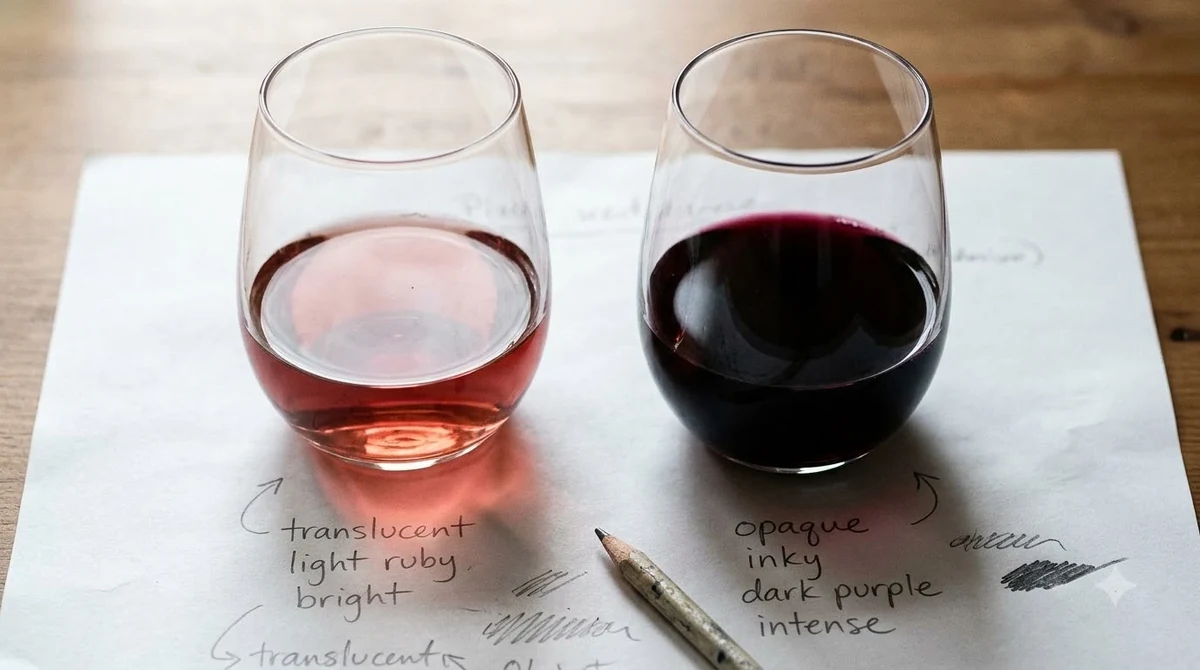
The climate is Mediterranean with an insular character. Winters can be rainy, while summers are hot and largely dry, sometimes torrid when hot winds arrive from Africa. Many vineyards face the sea and take in intense sunshine. The soils are arid and not very fertile. They can be clayey, siliceous or calcareous in origin, sometimes rich in the reddish soils known as terre rosse, and frequently sandy. Water tables are often shallow, which affects how growers manage the vines through dry summers.
The disciplinare is strict about how vines are grown. Only vertical training systems are permitted, including alberello, the bush vine, and spalliera, the trellised system. Horizontal systems are excluded. Forcing is banned, though emergency irrigation is allowed. Yields are capped at 10 tonnes per hectare for white varieties and 9 tonnes per hectare for black varieties, which limits how much fruit each hectare can carry into the cellar.
Those growing rules matter because the grapes have to do much of the work before any spirit enters the picture. Fortification adds strength and stability, but it does not create the base wine. Growers who choose their varieties carefully, and manage their vines against the heat and dry summers, give the cellar a more balanced starting point for the long aging that follows.
The Grapes Behind Oro, Ambra and Rubino
White Marsala draws on four permitted local varieties, while the rare red Rubino style is built from three black grapes and can include a small share of white ones. The grape list is one of the clearest ways to read what is in the glass.
The oro and ambra styles, which are the gold and amber colors, share one list of permitted white grapes: Grillo, Catarratto in all its varieties and clones, Ansonica known locally as Inzolia, and Damaschino. According to Difford’s Guide, a typical Marsala is a blend drawn from three local varieties, usually Grillo, Catarratto and Inzolia. Grillo is the one producers value most. It is a natural cross between Catarratto and Zibibbo, and its high natural alcohol means less fortification is needed to reach the legal strength. That practical advantage explains why it is so central to the modern wine.
The rubino style is the rare one. It must be built on Perricone, known locally as Pignatello, along with Calabrese, which is Nero d’Avola under its local name, and Nerello Mascalese. Up to 30% of its grapes can come from the white list. Difford’s Guide describes rubino as a new and rare style that must be made from red grapes, so most of what you find on shelves will be the white-grape styles.
The flavor follows the grapes and the style. Oro and ambra Superiore and Vergine wines tend to show roasted almond, dried apricot, orange peel, caramel, and tobacco, with a saline note from the coast. Fine leans toward fresher dried fruit and caramel. Rubino is spicier and more fruit-forward, with cherry and plum notes and a gentle tannic edge.
Age Categories, Sweetness and the Rules for Mosto Cotto
Every Marsala carries an age tier, a color and a sweetness level, and the rules for adding sugar change with each category. The table below summarizes the five aging tiers the DOC recognizes.
| Category | Minimum aging | Minimum ABV | Sweetening allowed |
|---|---|---|---|
| Fine | 1 year (at least 8 months in wood) | 17.5% | Yes |
| Superiore | 2 years | 18% | Yes |
| Superiore Riserva | 4 years | 18% | Yes |
| Vergine or Soleras | 5 years | 18% | No, bone-dry only |
| Vergine Stravecchio or Riserva | 10 years | 18% | No, bone-dry only |
Aging must take place in wooden vessels, preferably oak or cherry, with one exception: the first four months of Fine can be spent in other containers. The clock for the minimum aging period starts once the concia operations are complete. Those rules mean that a Superiore Riserva has spent at least four years in wood before it reaches the consumer, while a Vergine Stravecchio has spent a decade in the barrel.
Sweetness is set by the amount of residual sugar. Secco has less than 40 grams per liter, semisecco falls between 40 and 100 grams per liter, and dolce has more than 100 grams per liter. Producers can sweeten their wines in two ways. Mosto cotto is cooked grape must, and sifone is a mixture of grape must and added spirit. Mosto cotto must be added at a minimum of 1% in Fine ambra and Superiore ambra, and it is banned in the gold and ruby versions of Fine and Superiore. Vergine rules out mosto cotto, concentrated must and sifone altogether, which is why that style tastes dry.
Tip: Once opened, Marsala keeps for several weeks in the refrigerator, so a single bottle can carry a few braises or a dessert course without going to waste.
How Marsala’s Trade History Built Its Reputation
Marsala as the world knows it began with English merchants who fortified local wine so that it could survive long sea voyages. That trade shaped the wine’s style, its labels, and its reputation for decades.
In 1773, English merchant John Woodhouse arrived at Marsala, found the local wine aged in wooden casks, and added a splash of distilled spirit to stabilize it for the trip home. Difford’s Guide notes that he was attempting to emulate Sherry. For a time the wines were labeled ‘Sicily Madeira Wine’ until around 1830, because the Portuguese product was better known to buyers. The early export business was built on that fortified style, and it turned Marsala into an international commodity.
The trade expanded through the nineteenth century. Benjamin Ingham, another Englishman, set up a rival house and, according to Difford’s Guide, greatly improved the island’s viticulture. Vincenzo Florio then bought land between the Woodhouse and Ingham-Whitaker plants in 1833 and built a factory for Madeira-style wines. Florio was the last of the historic houses to be founded, and it eventually absorbed its English competitors. Sicilian ownership took over the industry that Englishmen had started.
Admiral Nelson also gave the wine a boost. Difford’s Guide reports that his victuallers bought Marsala as a cheaper alternative to rum for the Mediterranean fleet before the Battle of the Nile in 1798, and that he persuaded the British Admiralty to use it for toasts to victories. Growth did not last. A century after the early boom, more than 100 wineries lined the coast, but sweetened and adulterated industrial wines damaged the reputation. By the 1980s, few people outside Sicily saw Marsala as much more than a cooking wine. Quality-focused producers have since pushed the Vergine and Riserva styles back into serious conversation.
Producers, Pairings and Marsala’s Place Among Fortified Wines
A small number of historic houses make most of the wine, and Marsala sits in the same family as Madeira, Sherry and Port. Understanding both the producers and the flavor neighbors helps you choose a bottle with confidence.
Ten producers made roughly 77,000 hectoliters of Marsala from about 1,218 hectares of vineyard, according to WineWiki’s Marsala DOC profile. Cantine Florio accounts for about 90% of that output. The house was founded in 1833 by Vincenzo Florio, and its cellars sit on two hectares of tuff floors near the sea, holding more than 3,000 oak containers across four climatic environments. Cantine Pellegrino was founded in 1880 by the notary Paolo Pellegrino, is now in its sixth generation, and works four family estates that cover 150 hectares. Marco De Bartoli, who died in 2011, made his first wine, Vecchio Samperi, in 1980, and the winery is known for its traditional approach to the category.
Marsala is often compared with other fortified wines. Vino.com’s Marsala guide points to Madeira and certain oxidative Sherries as the closest flavor neighbors, because they share dried-fruit and caramel aromas. If you are weighing Marsala against the Portuguese style, see where is port from for a regional breakdown, since the production rules and grapes differ sharply from one country to the other.
Sweetness should guide your pairings. Dry Vergine works well as an aperitif, served lightly chilled with aged cheeses such as Parmigiano-Reggiano or Pecorino Stravecchio. Superiore Ambra Secco is the traditional choice for the Marsala sauce for chicken or veal, reduced with shallots, mushrooms and herbs. Dolce and semisecco styles suit zabaglione or tiramisu, since the wine’s toffee and almond notes echo the dessert. A general rule holds here: the wine should be at least as sweet as the dessert, or it will taste thin next to it.
Frequently Asked Questions
These questions cover the label terms, bottling rules and quality controls that come up most often for buyers new to the category.
Who checks that a Marsala meets the DOC rules?
The control body for the Marsala DOC is the Istituto Regionale della Vite e del Vino, based in Palermo. Its role is to confirm that wines meet the disciplinare before they can carry the Marsala name. The body sits outside the production zone, so the people checking the wine are separate from the cellars making it.
Can Marsala Vergine be sold in bulk?
No. Marsala Vergine may be sold to consumers only in bottle, and bottling must take place inside the production zone. That makes the most traditional style a bottled product from start to finish, not a commodity sold by the tanker load.
What do G.D., S.O.M. and L.P. mean on older labels?
These are historic label indications used for Marsala Superiore. G.D. stands for Garibaldi Dolce, a reference to the nineteenth-century general. S.O.M. means Superiore Old Marsala, and L.P. stands for London Particolar, a nod to the English market that once drove the trade.
Does a Marsala have to show a vintage year?
No. A vintage is an optional label term, and when it appears it refers to the year of the last concia. The word Vecchio is also optional and can appear only on wines that meet at least the Superiore minimums. Fine may carry the abbreviation I.P., short for Italia Particolare.
How much natural alcohol must the grapes have before fortification?
Grapes must reach a minimum natural alcohol of 12.00% vol before any spirit is added. That natural strength is the baseline the fortifying spirit builds on, so the grape choice and ripeness both matter from the start of the process.
Marsala’s origin is simple to state, but its rules reward a closer read. Once you know the zone, the grape list and the age tiers, a bottle on the shelf makes far more sense. A dry Fine or Superiore suits cooking, and a Vergine or Riserva rewards slow sipping after a meal.
More in Wine Types & Grapes
 What Does Ruby Port Taste Like? Flavor Notes, Styles, and Serving TipsUpdated Nov 21, 2026
 What Does Ribolla Gialla Taste Like? Crisp White and Amber Styles ExplainedUpdated Nov 21, 2026
 What Does Semillon Taste Like? Flavor Profile, Styles & PairingsUpdated Nov 21, 2026
 What Does Scuppernong Taste Like? Flavor, Styles, and Pairing GuideUpdated Nov 21, 2026
 What Does Saperavi Taste Like? Flavors, Styles, and Pairing GuideUpdated Nov 21, 2026
 What Does Natural Wine Taste Like? Flavors, Styles, and Serving TipsUpdated Nov 21, 2026