

We may earn a commission when you buy through links on this page, at no extra cost to you. Learn more.
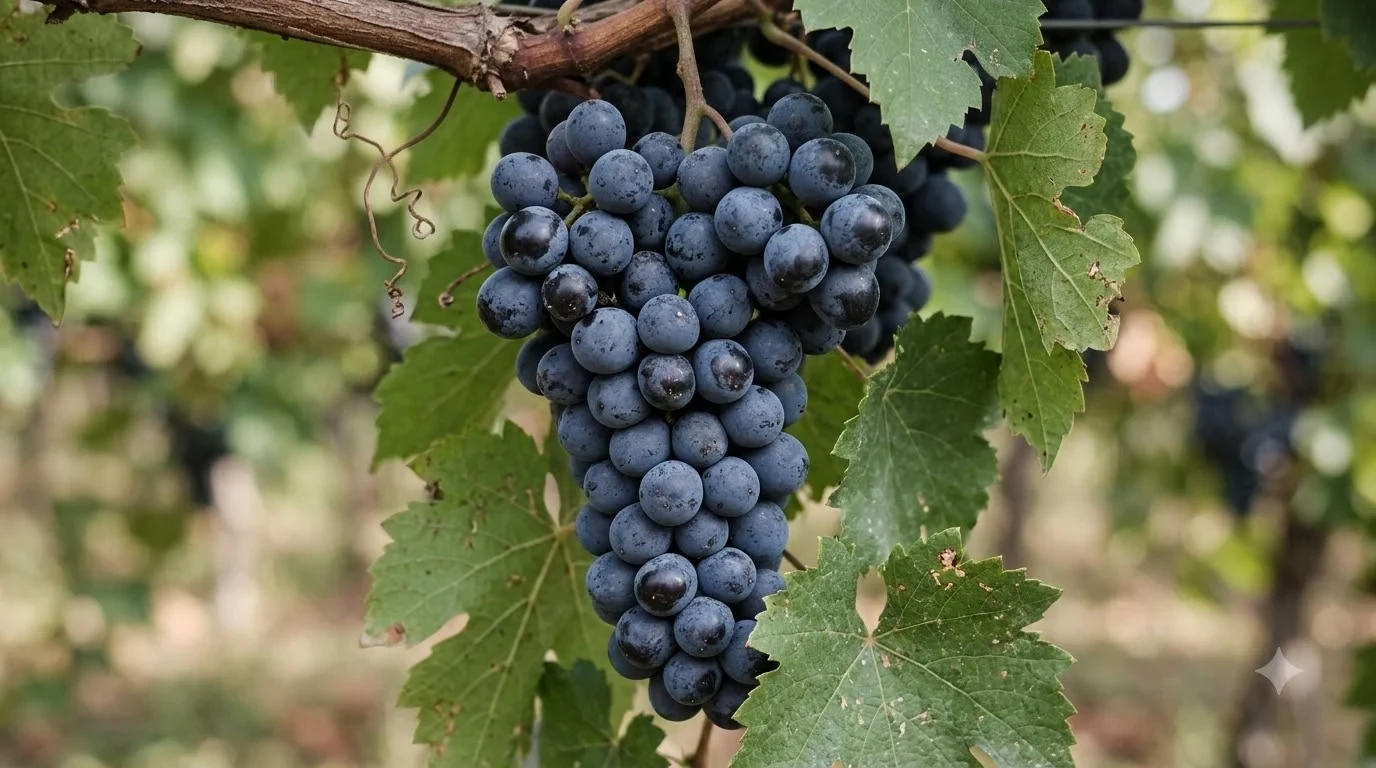
Norton history begins in early 19th-century Virginia, where Dr. Daniel Norborne Norton developed the distinctive American red grape that became a celebrated wine variety in Missouri and eventually the state’s official grape. First commercially documented in 1822, Norton gained international recognition during the 1800s, nearly disappeared during Prohibition, and experienced a remarkable revival through the efforts of American winemakers. Today, it remains an important symbol of regional winemaking in Missouri and Virginia.
American wine history is often told through familiar European varieties such as Cabernet Sauvignon, Chardonnay, and Pinot Noir. However, Norton represents a different story: a grape with deep American roots that developed its own reputation long before the modern American wine industry took shape. Its journey connects Virginia horticulture, German-American winemaking, European vineyard disease, Prohibition, and the renewed interest in native American grape varieties. Understanding this history also explains why Norton remains distinctive among American red wines.
Virginia Origins and Dr. Daniel Norton
Norton originated in Virginia during the early 19th century, with its development traditionally attributed to Dr. Daniel Norborne Norton of Richmond. His horticultural experiments helped establish a grape that would become one of America’s most historically significant wine varieties.
Dr. Norton was interested in cultivating grapes suited to American growing conditions. Between approximately 1818 and 1822, he worked with different grape varieties and experimented with their propagation and crossing. The precise genetic origins of Norton remain uncertain, and historical evidence does not establish a definitive parentage. The grape is classified as Vitis aestivalis, a species native to North America, although historical accounts have suggested possible European grape ancestry.
The name Norton comes from its association with Dr. Norton, but the grape also acquired another important historical name: Virginia Seedling. This designation appeared in a commercial nursery catalog published by William Prince Jr. in 1822. Prince operated the Linnaean Botanic Garden and Nurseries on Long Island, where American grape varieties were being introduced to interested growers.
In 1830, Prince described Norton in his publication A Treatise on the Vine. This early written recognition is particularly important because it demonstrates that the variety was already circulating commercially and attracting attention among American horticulturists during the first decades of the 19th century.
There is also a historical dispute surrounding the grape’s discovery. In 1861, F.W. Lemosy claimed that his father had discovered the vine growing wild in 1835 and provided a cutting to Dr. Norton. However, the earlier commercial catalog and written description suggest that Norton was already known before that date. The competing accounts have contributed to continuing uncertainty about its exact origin.
Although its parentage remains unresolved, the grape’s historical identity is clear. Norton became associated with American experimentation and the search for wine grapes capable of thriving outside the traditional European growing regions.
Missouri’s Early Wine Industry and the Norton Expansion
Norton became particularly important after reaching Missouri during the 1840s. The German-American winemaking community around Hermann recognized the grape’s potential, and the first Missouri Norton vintage was bottled in 1848.
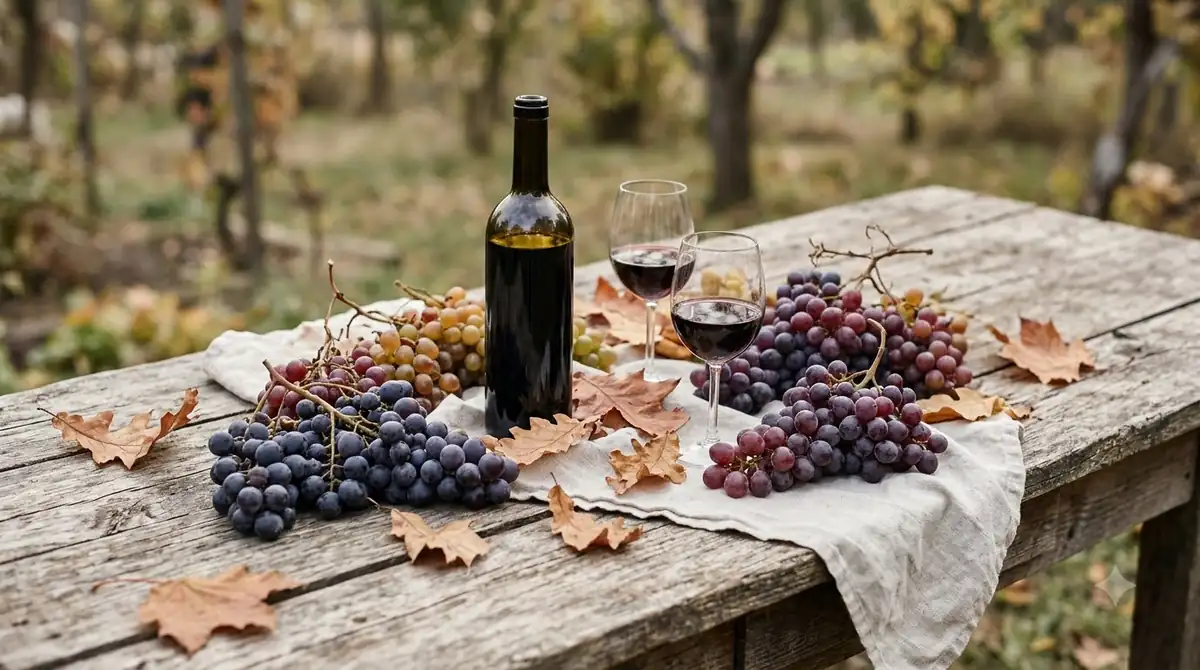
Hermann, located along the Missouri River, became a major center of early Missouri winemaking. German settlers brought European wine traditions, cellar practices, and a strong interest in grape cultivation. They also needed grape varieties capable of producing dependable harvests under the region’s climate conditions. Norton proved especially valuable in this environment.
Its reputation grew as Missouri wineries developed their vineyards and production facilities. Rather than relying exclusively on European grape varieties, growers increasingly recognized the importance of American grapes suited to local growing conditions. Norton offered a distinctive alternative and became central to the development of Missouri’s regional wine identity.
One of the defining moments came in 1873, when Stone Hill Winery in Hermann received a gold medal for its Norton wine at the Universal Exhibition in Vienna. This international recognition helped establish the reputation of Missouri wine beyond the United States.
The achievement was particularly significant because European wine culture traditionally placed considerable importance on established regional varieties and production traditions. A Missouri wine made from an American grape earning recognition at an international exhibition demonstrated that American winemakers could produce wines worthy of attention.
The grape’s reputation continued growing during the late 19th century. According to Missouri’s historical account, the French Academy of Sciences commissioned a study that praised Norton wines in 1874 for producing wines of exceptional quality. In 1883, the American Cyclopedia referred to Norton as the best medicinal wine of America, a historical description that should not be interpreted as a modern health claim.
By the end of the century, Norton had become an important commercial variety in the eastern and central United States. Missouri, particularly Hermann, had developed a reputation closely connected to the grape.
Phylloxera and Norton’s International Recognition
Norton’s reputation extended beyond American vineyards partly because of a crisis affecting European wine production. The phylloxera epidemic devastated vineyards across France during the 19th century, creating enormous demand for American grape material resistant to the pest.

Phylloxera is a tiny insect that attacks grapevine roots. European grape varieties belonging to Vitis vinifera proved highly vulnerable, and the epidemic destroyed vineyards across important wine-producing areas. French growers and researchers urgently sought ways to restore their vineyards without exposing newly planted vines to the same devastation.
American grape species offered an important solution because several possessed natural resistance to phylloxera. During the 1870s, American grape cuttings, including Norton, were sent to France for use in vineyard recovery efforts. American rootstocks eventually became essential to rebuilding European vineyards, generally through grafting European fruit-bearing vines onto resistant American roots.
Norton’s historical significance in this period should be understood in two ways. First, the grape demonstrated that American varieties could thrive in conditions that challenged many traditional European grapes. Second, it became part of a broader exchange of viticultural knowledge and plant material between the United States and Europe.
However, Norton should not be confused with the American rootstock varieties used extensively in modern European vineyards. Its importance in the historical phylloxera story comes from its inclusion among American grape material sent overseas, not from being the universal solution to the epidemic.
The combination of domestic awards, international recognition, and practical growing advantages helped establish Norton’s reputation. Between approximately 1870 and 1890, the grape experienced what Missouri’s historical timeline describes as its golden age.
Its growing popularity also illustrates an important distinction in American wine history. The development of a successful wine industry did not depend exclusively on importing European varieties. American grape species and locally adapted cultivars could also produce wines with their own recognizable identities.
Prohibition and the Near Disappearance of Norton
American Prohibition dramatically disrupted Norton’s development by destroying vineyards, interrupting commercial wine production, and changing the economic conditions that had supported regional wineries. A grape that had once enjoyed considerable recognition became difficult to find in commercial wine production.
Prohibition began nationally in 1920, following the ratification of the Eighteenth Amendment in 1919. The restriction on alcoholic beverage production and sales had devastating consequences for American wineries. Many vineyards were abandoned or removed, while wine businesses struggled to survive.
Missouri’s Norton vineyards were among those affected. The grape had depended on established regional growers and wineries, particularly around Hermann. When commercial production collapsed, much of the agricultural infrastructure supporting Norton disappeared.
Some wineries and vineyards survived through limited legal activities, but the broader industry experienced a major interruption. Grape varieties that were not commercially maintained became increasingly difficult to source, and Norton came close to disappearing as a regularly produced wine grape.
The decline also affected public familiarity. Earlier generations had associated Norton with Missouri’s wine reputation, but subsequent generations encountered a very different American wine market. After Prohibition, commercial wine production gradually recovered, but the industry increasingly emphasized varieties and styles that were gaining broader national recognition.
European varieties became particularly prominent in the developing American wine market. Cabernet Sauvignon, Chardonnay, and Pinot Noir attracted attention from growers and consumers, while Norton remained comparatively obscure.
This transition was not simply a matter of wine quality. It reflected changes in consumer preferences, vineyard investment, distribution, and the practical challenges of rebuilding regional wine industries. Norton had lost much of the commercial network that once supported its cultivation.
Nevertheless, surviving vines preserved an important connection to the grape’s earlier history. Those remaining plantings would become essential to the later revival of Missouri Norton.
The Revival in Missouri and the Return to Virginia
Norton’s revival depended on determined American winemakers who recognized the value of surviving vines and worked to restore commercial production. Stone Hill Winery in Missouri played a central role, while Dennis Horton helped bring the grape back to Virginia.
A major turning point came in 1966. Jim Held, who had recently reopened Stone Hill Winery, discovered surviving pre-Prohibition Norton vines on a property associated with illegal alcohol production. He recognized their significance and brought the variety back into commercial use.
These surviving vines provided valuable planting material at a time when Norton had become difficult to obtain. Their rediscovery helped reconnect Missouri’s developing wine industry with its historical grape-growing traditions.
The revival was not limited to Missouri. In 1988, Dennis Horton, a Virginia winemaker originally from Hermann, requested Norton cuttings from Stone Hill Winery. He brought the vines back to Virginia, the state associated with the grape’s original development.
The Smithsonian National Museum of American History documents this effort and explains that Horton’s first Norton vintage in Virginia, produced in 1992, showed promising results. His work helped demonstrate that Norton could again become a commercially viable variety in its historic home region.
Virginia’s Norton revival was particularly meaningful because the grape had largely disappeared from the state’s wine landscape during Prohibition. Returning the variety to local vineyards reconnected Virginia winemaking with a chapter of its 19th-century agricultural history.
Missouri also continued strengthening its Norton identity. Stone Hill’s role in preserving the variety and restoring its commercial availability helped create a foundation for subsequent generations of growers.
In 1993, an article in Gourmet magazine brought additional attention to Norton and Missouri wine. The article suggested that the grape could become an important regional symbol, drawing a comparison with Cabernet Sauvignon’s role in California wine.
These developments established Norton as more than a historical curiosity. It became a practical choice for winemakers interested in producing distinctive American red wines.
Missouri State Grape and Norton’s Modern Identity
Norton’s historical importance eventually received official recognition when Missouri designated Norton/Cynthiana as its state grape in 2003. The designation reflected the variety’s agricultural adaptability, cultural significance, and longstanding contribution to Missouri winemaking.
The Missouri legislature approved the designation on July 11, 2003, with the law becoming effective on August 28 of that year. The official state grape designation recognizes Norton as an important symbol of Missouri’s agricultural and wine heritage.
Its modern growing range includes Missouri and Virginia, with additional plantings in states such as Arkansas, Indiana, Georgia, Oklahoma, and Texas. Wine Enthusiast identifies Missouri and Virginia as particularly important growing regions.
Missouri growers value Norton for its hardiness and ability to tolerate conditions that can challenge some traditional European grape varieties. Its adaptability to regional heat and humidity has helped preserve its position among American wine grapes.
The grape is also known as Cynthiana. Although the names are commonly treated as referring to the same variety, historical discussions have sometimes distinguished them. For consumers, Norton/Cynthiana is the most recognizable combined designation.
Modern Norton wines are produced in several styles. Some winemakers favor traditional oak aging, while others use stainless-steel tanks to preserve fresh fruit characteristics. Some bottle Norton as a single-variety wine, while others blend it with European varieties to create different structural and aromatic profiles.
The grape’s official Missouri designation also gives it a special place in regional wine competitions. Missouri’s C.V. Riley Award recognizes outstanding Norton wines, connecting modern production with the state’s historic viticultural achievements.
Stone Hill Winery has remained an important part of that continuing story. Its historical association with the 1873 Vienna award and its role in preserving Norton vines make it one of the most recognizable names associated with the variety.
How Norton Wine Has Evolved in the Modern Era
Modern Norton is a distinctive American red wine characterized by dark fruit, noticeable acidity, and substantial body. Its flavor profile and winemaking versatility have helped it develop an identity separate from familiar international red varieties.
Missouri Wines describes Norton as bold, full-bodied, and complex, with berry, ripe cherry, currant, spice, vanilla, and chocolate characteristics. Wine Enthusiast additionally identifies dark berries, cloves, coffee, and earthy notes as common elements of the wine’s profile.
Although Norton can be powerful in flavor, its tannin level is generally lower than many consumers expect from a dark, full-bodied red. Wine Enthusiast describes it as relatively low in tannin while emphasizing its pronounced acidity. This combination makes Norton different from highly tannic Cabernet Sauvignon.
For a comparison, the following characteristics provide a useful starting point when exploring Norton alongside other familiar red wines.
| Wine | Typical body | Tannin | Acidity | Common characteristics |
|---|---|---|---|---|
| Norton | Full | Relatively low | High | Dark berries, cherries, spice, earth |
| Cabernet Sauvignon | Full | High | Medium to high | Blackcurrant, cedar, dark fruit |
| Merlot | Medium to full | Medium | Medium | Plum, cherry, chocolate |
| Pinot Noir | Light to medium | Low to medium | High | Red cherry, raspberry, earth |
| Syrah | Medium to full | Medium-plus to high | Medium to high | Blackberry, pepper, savory spice |
These are general stylistic comparisons rather than fixed laboratory measurements. Growing conditions, harvest decisions, fermentation, oak treatment, and bottle age can all change the characteristics of an individual wine.
Winemaking decisions are especially important with Norton. Stainless-steel fermentation and aging can preserve fresh fruit expression, while oak barrels can contribute additional texture and flavors such as vanilla, toast, and baking spice. Some producers also blend Norton with other grapes to adjust its structure and aromatic profile.
Its acidity gives Norton useful aging potential. Wine Enthusiast reports that aging periods approaching two decades are not uncommon for suitable examples. However, the longevity of an individual bottle depends on its fruit concentration, tannin structure, acidity, winemaking, and storage conditions.
Food pairing is another strength. Norton works well with smoked meats, lamb, venison, beef, aged cheddar, blue cheese, and barbecue dishes. Its acidity can complement rich foods, while its dark fruit and spice characteristics work naturally with roasted and grilled ingredients.
Tip: Serve Norton at approximately 60–65°F rather than at a warm room temperature. This range helps preserve its fruit, acidity, and aromatic detail. Pair it with smoked brisket, roasted lamb, or aged cheddar for a combination that reflects its American regional character.
For readers exploring other historically significant red grapes, the pinot noir history explains how a European variety developed its international reputation, while the cabernet sauvignon history follows another grape that became closely associated with American winemaking.
Norton also illustrates why wine history cannot be understood through European varieties alone. Its development, near disappearance, and recovery represent a distinctly American agricultural story. Readers interested in the broader range of wine styles and varieties can explore Wine by Type for additional context.
For a deeper look at Norton’s historical reputation, the Wine Enthusiast overview of Norton discusses its American origins, modern production styles, and distinctive characteristics.
Frequently Asked Questions
Is Norton related to Cabernet Sauvignon?
Norton and Cabernet Sauvignon belong to different grape species classifications and have separate histories. Cabernet Sauvignon is a Vitis vinifera variety with established French parentage, while Norton is classified as Vitis aestivalis. Their shared use in American vineyards does not mean they are closely related varieties.
Is Norton the same grape as Cynthiana?
Norton and Cynthiana are commonly treated as names for the same American grape variety. The combined name Norton/Cynthiana is used in Missouri’s official state grape designation. The historical use of the two names has sometimes generated debate among growers and wine historians.
Can Norton grapes grow in areas with cold winters?
Norton is valued for its adaptability to a range of American growing conditions, including regions with greater temperature variation than many traditional European wine-growing areas. However, winter hardiness does not mean that every climate is suitable. Vineyard site selection, frost exposure, soil conditions, and growing-season length remain important factors.
Did Norton wine ever win international awards?
Yes. Stone Hill Winery’s Norton received a gold medal at the 1873 Universal Exhibition in Vienna. The achievement was especially significant because it demonstrated that a wine made from an American grape could receive international recognition during the 19th century.
What is the difference between Norton and a Norton-style fortified wine?
Regular Norton is a wine fermented from Norton grapes, commonly produced as a dry red. Some Missouri producers also make fortified, Port-style wines using Norton, adding distilled spirit during fermentation to retain sweetness. These are different wine styles, and a Missouri Norton-based fortified wine should not automatically be confused with authentic Port, which is associated with Portugal’s regulated wine region.
Norton’s story is one of American experimentation, international recognition, near extinction, and determined recovery. From Dr. Daniel Norton’s Virginia vineyards to the historic wineries of Hermann and the modern vineyards of Missouri and Virginia, this grape remains an important part of the country’s wine heritage. Its distinctive acidity, dark fruit character, and historical significance make Norton a rewarding variety for anyone interested in discovering America’s traditional wine grapes.
More in Wine Types & Grapes
 Zinfandel Sugar Content: Dry Red vs. White Zinfandel GramsUpdated Nov 21, 2026
 Best Zinfandel Substitute Options for Sipping and CookingUpdated Nov 21, 2026
 Zweigelt Food Pairing: Best Dishes, Cheeses, and Serving TipsUpdated Nov 21, 2026
 Zinfandel Tannins Explained: How Structure Shapes Every BottleUpdated Nov 21, 2026
 Zinfandel Sweetness Level: Dry Red vs. Sweet White Zin ExplainedUpdated Nov 21, 2026
 Xinomavro Food Pairing: Best Dishes, Styles, and Serving TipsUpdated Nov 21, 2026