

We may earn a commission when you buy through links on this page, at no extra cost to you. Learn more.
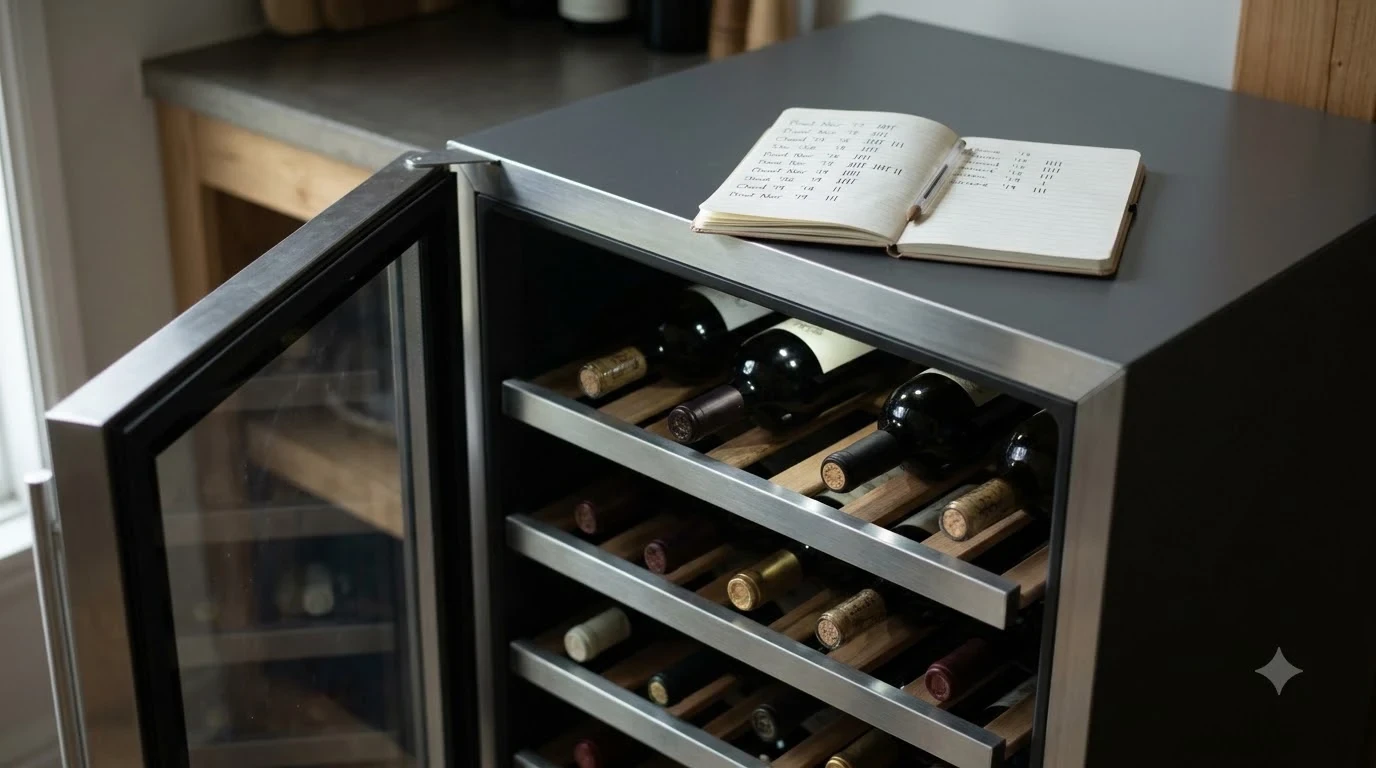
The answer to “how much does a wine fridge cost” depends mainly on capacity, cooling technology, installation style, and temperature controls: compact countertop models occupy the entry-level category, while large dual-zone and built-in cabinets generally cost considerably more. Premium wine storage cabinets and dedicated cellar cooling systems are separate categories with additional equipment and installation requirements. Choosing the right model means balancing your current collection, future bottle capacity, and the level of temperature protection your wines need.
Wine refrigerators range from simple countertop coolers to substantial cabinets designed for long-term collection storage. Rather than choosing solely by appearance or advertised bottle count, compare the cooling system, interior layout, ventilation, energy consumption, and features that matter to your collection. These details explain why similar-looking appliances can occupy very different positions in the market and help you avoid paying for functions you will rarely use.
How Wine Fridge Costs Vary by Size and Style
The biggest difference between wine fridge categories is the combination of bottle capacity, cooling performance, and installation design. A compact countertop cooler is generally the least expensive category, while a large dual-zone cabinet or integrated kitchen refrigerator usually requires a greater investment.
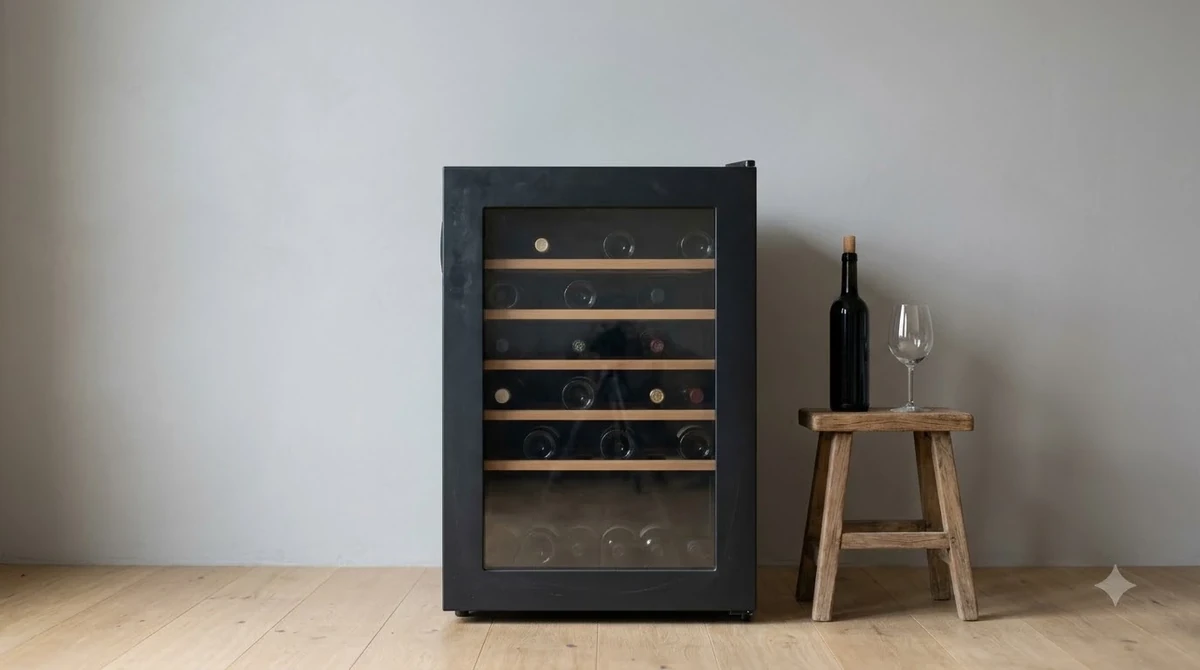
Compact appliances are intended for smaller collections, apartments, dining spaces, and occasional entertaining. They commonly accommodate approximately 6–18 bottles and can fit on a countertop or in a dedicated open space. These models usually have straightforward controls and limited storage flexibility. Their smaller cabinets make them convenient, but they can become restrictive when the collection includes several Champagne bottles or larger Burgundy formats.
Mid-capacity freestanding refrigerators are a practical choice for households that regularly purchase mixed cases or keep several wine styles available. Cabinets holding approximately 30–50 bottles are common in this category. Many use compressor cooling, adjustable shelving, and either single-zone or dual-zone temperature controls. Their larger interiors also provide room to organize bottles by grape variety, region, drinking occasion, or intended storage period.
Built-in and under-counter appliances serve a different purpose. They are designed to fit into kitchen cabinetry, bar areas, and planned entertainment spaces. A front-venting design is particularly important because heat must escape without relying on open space behind the appliance. Integrated finishes, specialized ventilation, and cabinetry compatibility contribute to their higher overall purchase and installation requirements.
| Cabinet width | Typical bottle capacity | Common application | Typical configuration |
|---|---|---|---|
| 15 inches | 20–35 bottles | Small kitchen or condominium | Compact freestanding or built-in |
| 18 inches | 30–70 bottles | Kitchen island or home bar | Medium-capacity cabinet |
| 24 inches | 40–60 bottles | Under-counter kitchen storage | Built-in or freestanding |
| 24–30 inches | 150 bottles or more | Large collection or cellar | Column-style storage cabinet |
These capacities are representative ranges rather than universal specifications. Corbeil’s buying guide uses these cabinet-width categories to illustrate how available storage changes with physical dimensions. A manufacturer may advertise a different capacity for a cabinet with a similar external width because of shelf arrangement, interior height, and cooling-system design.
A dedicated wine room is another category entirely. It requires more than a cabinet: the space needs appropriate insulation, controlled humidity, a properly sealed enclosure, and refrigeration designed for the room’s volume. A residential wine fridge cannot automatically substitute for a cellar cooling system. Collectors planning a dedicated room should consider the entire project rather than comparing the cooling appliance with a standard kitchen refrigerator.
Cooling Technology Affects Everyday Performance
Thermoelectric and compressor cooling are the two main technologies found in household wine fridges. Thermoelectric models generally favor quiet operation and smaller collections, while compressor models offer stronger cooling and better performance in warmer rooms.
Thermoelectric cooling
Thermoelectric refrigeration uses an electronic heat-transfer process rather than a conventional compressor and refrigerant cycle. The absence of a traditional compressor makes these appliances attractive for living rooms, bedrooms, offices, and other areas where background noise matters. Their relatively simple operation can also suit occasional wine drinkers who need a compact place to keep bottles ready for serving.
The main limitation is their dependence on surrounding conditions. Thermoelectric models generally need adequate clearance to release heat and can struggle when the room becomes warm. A cabinet that works well in an air-conditioned dining room may not maintain its target temperature as consistently in a hot kitchen or poorly ventilated utility room. Capacity is another consideration: these units are more commonly associated with smaller collections than large household cabinets.
Compressor cooling
Compressor refrigerators use a refrigerant-based system similar to the technology in a conventional household refrigerator. They can achieve lower internal temperatures and generally handle warmer ambient conditions more effectively. That makes them a common choice for larger cabinets, collections that require stable storage, and installations where room temperatures are not consistently cool.
The disadvantages include additional mechanical components, more weight, and the possibility of noticeable compressor noise. Modern models may use vibration-reduction features and improved insulation to reduce these concerns. Nevertheless, a refrigerator placed beside a bedroom or quiet dining area deserves more attention to its operating-noise specifications than one installed in a basement storage room.
Wine Enthusiast explains these differences in its guide to thermoelectric and compressor wine coolers. The practical choice depends on the room, collection size, and storage purpose rather than the idea that one technology is automatically superior.
Cooling technology should also be considered alongside temperature stability. A cabinet that reaches a low temperature briefly is not necessarily a good long-term storage appliance. Consistency matters more than an impressive minimum-temperature specification, especially when bottles are expected to remain inside for several years. Examine the stated operating range and recommended ambient conditions before deciding where the refrigerator will sit.
Capacity, Shelving, and Installation Shape the Fit
Advertised bottle capacity is not always the number of bottles a household can realistically store. Most manufacturers calculate capacity using standard Bordeaux-style 750-milliliter bottles, while wider Champagne, Burgundy, and larger-format bottles require additional shelf space.

This difference matters particularly for collections containing traditional-method sparkling wines, broad-shouldered Pinot Noir bottles, and large Napa Valley Cabernet Sauvignon bottles. A cabinet advertised for several dozen bottles might hold substantially fewer when its shelves are occupied by these shapes. Fixed racks can make the problem worse because they leave little room to change the distance between shelves.
Adjustable shelving is therefore a useful feature for mixed collections. Sliding shelves make it easier to retrieve a bottle without disturbing neighboring bottles, while removable shelves can accommodate larger formats. Examine the lower storage area as well: some models include a deeper section intended for Champagne or oversized bottles. These details often make a more meaningful difference than decorative lighting or a digital display.
It is also sensible to plan for future purchases. Corbeil recommends allowing approximately 25% more capacity than the current collection requires. Someone currently holding 24 bottles, for example, should consider a cabinet with room for at least 30 standard bottles rather than choosing a refrigerator that will immediately be full. Additional space can also improve access and organization.
Freestanding versus built-in ventilation
Installation style is one of the most important details to verify before ordering. Freestanding refrigerators generally release heat through their rear or side panels. They therefore need the clearance specified by the manufacturer. Placing this type of appliance inside a tight cabinet can trap heat, force the cooling system to work harder, and shorten equipment life.
Built-in wine fridges are designed to fit within cabinetry and typically use front ventilation, often through a grille near the lower front of the appliance. This arrangement allows them to release heat without relying on an open rear area. However, front ventilation does not eliminate every measurement requirement. The opening, door swing, electrical connection, baseboard arrangement, and manufacturer’s installation clearances must still be considered.
Measure the intended space before selecting a model. Record its width, height, depth, available door clearance, and nearby cabinet obstructions. Allow for the electrical outlet and any ventilation openings. A refrigerator that fits the visible cabinet opening may still be unsuitable if its handle cannot open fully or its front grille becomes blocked by a decorative panel.
For a kitchen renovation, decide on the refrigerator before finalizing the cabinetry. That allows the installer to account for the actual appliance dimensions rather than relying on a generic opening. For an existing kitchen, a freestanding model may be simpler because it does not require the same integration work, provided enough open space is available.
Single-Zone and Dual-Zone Controls Serve Different Jobs
A single-zone fridge is usually the practical option for a collection that will be stored together at approximately 55°F. A dual-zone model provides two independently controlled temperature areas, making it more convenient for households that want both storage and serving temperatures in one cabinet.
Long-term storage does not require different temperatures for red and white wine. A steady environment around 55°F is a useful general target for both. The distinction between wine styles becomes more important when preparing bottles for serving, because whites, sparkling wines, lighter reds, and fuller-bodied reds are usually served at different temperatures.
A dual-zone appliance allows the owner to set a cooler section for whites and sparkling wines, often around 45–50°F, while maintaining a warmer section for reds around 55–65°F. These settings are serving-oriented rather than separate long-term aging requirements. The arrangement can be useful when a household entertains frequently or regularly serves several wine styles on the same evening.
When a single zone makes more sense
A single-zone cabinet suits collectors who primarily store wine rather than preparing every bottle for immediate service. It also reduces the number of controls and cooling compartments in the appliance. For someone whose collection consists mainly of Cabernet Sauvignon, Pinot Noir, Chardonnay, Riesling, or mixed bottles intended for later enjoyment, one consistent storage temperature may be sufficient.
Single-zone storage can also be easier to manage in a compact refrigerator. Instead of dividing a limited cabinet between two temperature areas, the entire interior can be used for the same purpose. That can be particularly helpful when the appliance holds only a couple of cases and the owner values bottle capacity more than separate serving settings.
When dual-zone storage is useful
Dual-zone cooling becomes more attractive when the same appliance needs to handle several serving requirements. For example, one section can prepare Sauvignon Blanc and sparkling wine for dinner, while the other holds Merlot or Syrah closer to its preferred serving temperature. It also lets a collector reserve one compartment for more stable storage and the other for bottles intended for near-term consumption.
Not every dual-zone cabinet has identical compartment arrangements. Some split the interior into upper and lower sections with different usable capacities. Others have separate doors and independent controls. Check the temperature range and actual bottle capacity of each compartment rather than assuming that the advertised total capacity is divided evenly.
For a closer explanation of these arrangements, read our guide to what a dual-zone wine fridge is. The extra zone is most useful when it solves a genuine serving or storage problem, not simply because the specification sounds more advanced.
Electricity Use and Maintenance Add to Ownership Costs
Electricity is an ongoing ownership expense, but household wine fridges generally have relatively modest annual energy requirements. Cabinet size, cooling technology, room temperature, ventilation, and how often the door is opened all influence the appliance’s actual consumption.
FridgeCompare’s comparison of 156 ENERGY STAR-certified wine and beverage cooler models from 36 brands reports median annual consumption of 152 kilowatt-hours. Approximately eight out of ten models in its comparison fall between 99 and 199 kWh annually. These figures provide a useful benchmark for comparing appliances, although the combined category includes both wine coolers and beverage refrigerators.
| Annual electricity consumption | Relative position | What it indicates |
|---|---|---|
| 99 kWh | Lower end of central range | Relatively modest annual consumption |
| 152 kWh | Median | Typical benchmark in the comparison |
| 199 kWh | Upper end of central range | Higher consumption within the central range |
Annual kilowatt-hours are more useful for comparing energy performance than a short-term wattage figure alone. A refrigerator may draw different amounts of electricity as its compressor cycles, its interior temperature changes, and the room warms or cools. Use the annual consumption figure as a starting point, then apply your household electricity rate to estimate local running expenses.
For example, a model consuming 152 kWh annually uses an average of approximately 0.42 kWh per day. Multiplying that amount by the local electricity tariff gives a more relevant estimate for your home than relying on a general national average. A wine fridge installed in a warm utility room may consume more energy than an identical unit kept in a comfortably cooled interior space.
Energy efficiency is also connected to proper installation. Leave the required clearance around ventilation openings, keep the condenser grille free of dust where accessible, and avoid placing the cabinet next to an oven, heating appliance, or sunny window. A worn door gasket can allow warm air inside, making the compressor work harder to maintain its setting.
Tip: Compare annual kWh figures rather than relying only on a short-term wattage specification. Also check the appliance’s recommended room-temperature range and ventilation requirements before deciding where to install it.
Routine maintenance helps keep performance consistent. Corbeil recommends cleaning the interior twice a year with warm water and baking soda, avoiding strongly scented cleaning products, and removing dust from the ventilation grille. Inspect the door seal periodically and make sure bottles are not packed so tightly that air cannot circulate through the cabinet.
Replacement filters and damaged shelves may create additional maintenance needs. If a refrigerator includes a charcoal filter, find out whether it is replaceable and whether replacement parts remain available. Similarly, check whether door seals, shelves, and temperature sensors can be serviced. A model that is easy to maintain can be more practical over its service life than one with attractive features but limited parts support.
Our guide to wine fridge energy efficiency explains the role of annual consumption, ventilation, and appliance placement in more detail. For model comparisons, FridgeCompare also provides a wine and beverage cooler energy comparison using certified product information.
How to Choose a Sensible Budget for Your Collection
The most suitable purchase category depends on how many bottles you own, how you intend to use the refrigerator, and where it will be installed. A modest collection does not necessarily need a premium cabinet, while a growing collection intended for long-term storage deserves more attention to temperature consistency and construction.
For a casual wine drinker, a compact countertop appliance may provide enough room for everyday bottles and occasional entertaining. Prioritize usable bottle capacity, a dependable thermostat, suitable ventilation, and noise performance. A simple single-zone configuration is often adequate when the main purpose is keeping a few bottles ready for consumption rather than maintaining an extensive collection for years.
A household that regularly purchases wine by the case should consider a medium-capacity freestanding compressor cabinet. The advantage is not simply having more shelves: a larger interior provides greater flexibility for different bottle shapes, mixed collections, and future purchases. Adjustable racks and stable temperature control become increasingly useful as the refrigerator fills.
For a kitchen remodel, an integrated under-counter refrigerator may justify its additional requirements. Front ventilation, compatible dimensions, door clearance, and a finish that works with the surrounding cabinetry should be priorities. A built-in unit is not interchangeable with a standard freestanding refrigerator, even when their bottle capacities appear similar.
Collectors storing bottles for several years should focus on conditions that protect wine over time. Consistent temperature, suitable humidity, reduced vibration, UV protection, and odor management are more important than decorative features. These considerations are particularly relevant for collections containing age-worthy Bordeaux, Burgundy, Barolo, and Napa Valley Cabernet Sauvignon.
Make a written list of your priorities before comparing models. Include your present bottle count, the number of additional bottles you expect to acquire, the largest bottle formats in your collection, the installation location, and whether the refrigerator will be used for storage or serving. This prevents a feature-heavy appliance from distracting you from the practical requirements of your home.
Consider the warranty and availability of local service as well. A wine fridge contains cooling components that may eventually require repair, so understand the coverage for the compressor, electronics, and sealed refrigeration system. Confirm whether the manufacturer provides replacement shelves, filters, and door seals. These details are easy to overlook when shopping but can influence how convenient the appliance is to own over several years.
Finally, compare the complete ownership picture rather than focusing on the appliance alone. Delivery access, staircase clearance, cabinetry adjustments, electrical requirements, and ongoing maintenance can all affect the suitability of a model. Our guide to deciding whether you need a wine fridge and the broader Buying Basics section offer useful context before committing to a particular storage arrangement.
Frequently Asked Questions
Does a wine fridge need to stand upright after delivery?
Yes, keeping the cabinet upright is the normal way to position and operate it. If the appliance was transported on its side, follow the manufacturer’s instructions for how long it must stand upright before being plugged in. This allows the refrigeration system’s oil and internal components to settle appropriately.
Can a wine fridge sit on carpet?
A firm, level floor is generally preferable because it supports the cabinet evenly and helps maintain proper door alignment. Thick carpet can make leveling more difficult and may obstruct a low ventilation opening. Follow the installation manual’s requirements for flooring and clearance.
Should wine bottles be stored horizontally in a wine fridge?
Horizontal storage is particularly useful for natural-cork bottles because it keeps the wine in contact with the cork. This helps limit cork drying during extended storage. Bottles with screw caps do not depend on the same cork-moisture consideration, although horizontal racks can still make efficient use of cabinet space.
Can a wine fridge be used outdoors?
Only use an appliance specifically approved by its manufacturer for outdoor conditions. Standard indoor wine fridges are not automatically designed to withstand rain, condensation, direct sunlight, or large seasonal temperature swings. An outdoor installation needs equipment rated for the intended environment.
Can I use a wine fridge to chill wine quickly before serving?
A wine fridge can prepare bottles for serving, but its cooling system is designed to maintain temperatures rather than provide rapid chilling. For example, a bottle starting at a warm room temperature may need several hours to reach a sparkling-wine serving temperature. Plan ahead instead of repeatedly adjusting the thermostat to force a faster result.
The right wine fridge is the one that matches your collection, installation space, and storage goals without unnecessary features. Compare bottle capacity, cooling performance, temperature stability, energy consumption, and service requirements before making a decision. A well-chosen cabinet can make everyday serving easier while providing a more controlled environment for bottles you intend to keep.
More in Wine Buying Guides
 Cheap Red Blend: How to Find a Flavorful Bottle for LessUpdated Nov 20, 2026
 Pinot Grigio Gift: How to Choose a Bottle They’ll EnjoyUpdated Nov 20, 2026
 Best White Wine at Total Wine for Every MealUpdated Nov 20, 2026
 Wine Fridge Replacement Shelves: Find the Right FitUpdated Nov 20, 2026
 Best Sparkling Wine Under 20: Find Bubbles Worth BuyingUpdated Nov 20, 2026
 Best Wine For Birthday Celebrations With Perfect Party PairingsUpdated Nov 20, 2026