

We may earn a commission when you buy through links on this page, at no extra cost to you. Learn more.
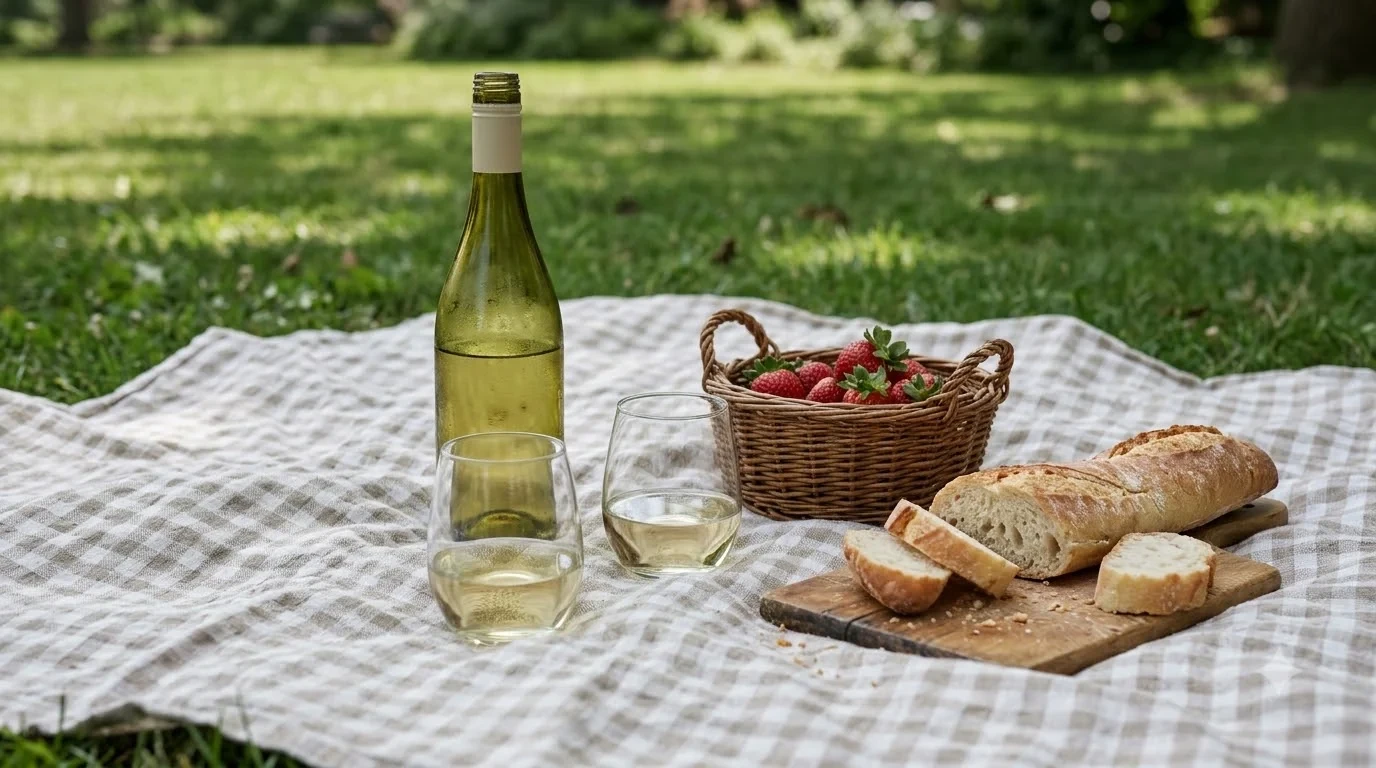
austin hope white wine includes a Paso Robles Cellar Select Sauvignon Blanc, an Austin Hope Chardonnay sourced from Monterey and Santa Barbara, and a small-batch Chenin Blanc. The wines span lively citrus and tropical fruit, broader orchard-fruit texture, and a richer, high-acid Chenin style. The best bottle for a meal depends on which of these characteristics you prefer.
Austin Hope is best known for Cabernet Sauvignon, but its white wines show a different side of the Hope Family Wines portfolio. The details matter because Austin Hope, Austin Hope Cellar Select, and the separate AUSTIN label are not interchangeable names. This article explains the white bottlings, how their origins and winemaking shape the glass, and how to serve them with food.
What Does Austin Hope White Wine Refer To?
Austin Hope white wine is not one fixed style or a single grape. The winery’s Cellar Select range includes Sauvignon Blanc and Chardonnay, while its portfolio also identifies a small-batch Chenin Blanc; the most visible current white release is the Paso Robles Sauvignon Blanc.
The distinction is useful because the brand name can appear across several kinds of wine. Austin Hope is the name of the winery’s premium label, while Cellar Select is the designation used for a group of limited releases. The winery describes those wines as experiments shaped by long-running relationships with local growers and selected vineyard blocks across Paso Robles and the wider Central Coast. Its Austin Hope Cellar Select range description explains how these small releases fit into the broader portfolio.
Austin Hope’s Sauvignon Blanc is the clearest point of entry for a shopper who searches specifically for an Austin Hope white. The winery describes it as a riper, fuller expression than the light, breezy version often associated with the grape, with pineapple and citrus at the center and partial French-oak aging adding a rounder impression. Those cues make it a good fit for someone who likes Sauvignon Blanc’s freshness but wants more weight than a sharply herbal, steel-only style.
Chardonnay and Chenin Blanc broaden the choice. The winery describes its Austin Hope Chardonnay as a focused but generous wine sourced from Monterey and Santa Barbara, with pear, golden apple, and tropical-fruit notes. Its Chenin Blanc is presented as a small-batch bottling from old vines planted in 1972. Releases and availability can change, so a shopper should identify the grape and bottling name rather than assume every white wine bearing the broader Hope name has the same profile.
Sauvignon Blanc: The Most Recognizable White Bottling
Austin Hope Cellar Select Sauvignon Blanc combines the grape’s citrus lift with a riper fruit profile and a softer, more rounded texture. Expect pineapple, lemon, and other citrus notes, with some oak-derived spice and creaminess rather than only grassy or green aromas.
The winery’s description emphasizes tropical pineapple and citrus, while Wine Enthusiast’s review of the 2024 Cellar Select Sauvignon Blanc noted apple and lemon-sorbet aromas, followed by green- and yellow-apple flavors. Wine Enthusiast gave that particular 2024 bottling 90 points and listed it at 13.5% alcohol in a 750-milliliter bottle. The score belongs to that reviewed wine and should not be treated as a guaranteed rating for every vintage or every white wine from the producer. Read Wine Enthusiast’s review of the 2024 bottling as a vintage-specific reference rather than a standing score for the label.
That review is helpful because it shows how a wine can remain recognizably Sauvignon Blanc without leaning into an aggressively grassy profile. The reviewer characterized the 2024 bottling as smoother than the regional norm and described a creamy palate. Fruit descriptors such as lemon sorbet and green apple suggest freshness; the creamier texture gives the wine more breadth at the table.
For readers who usually choose crisp whites, the difference is not that this bottling stops being Sauvignon Blanc. Its riper fruit and extra body can still suit shellfish, fresh herbs, and citrus-driven dishes, while also giving it room beside roast chicken or grilled vegetables. Keep vintage in mind: a review of the 2024 wine is a reference point for that bottle, not a promise that every release will show the same alcohol level or exact fruit notes.
Paso Robles Climate and the Wine’s Regional Character
Paso Robles gives the Austin Hope Sauvignon Blanc a warm-climate setting, but the region is not climatically uniform. Its long growing season, strong day-to-night temperature changes, varied soils, and multiple growing districts allow growers to produce whites with both ripe fruit and retained freshness.
The Paso Robles Wine Country Alliance describes more than 40,000 vineyard acres and more than 200 wineries across the region. It also notes that Paso Robles has a greater day-to-night temperature swing than any other California appellation. Warm afternoons can encourage fruit ripeness, while cooler nights help preserve the acidity that gives white wine shape. This contrast is one reason Paso Robles Sauvignon Blanc need not resemble a lean coastal Sauvignon Blanc or an especially tropical wine from a consistently warm site.
The scale of the appellation also matters. The Paso Robles AVA spans roughly 35 miles from east to west and 25 miles from north to south, and its western boundary lies only six miles from the Pacific Ocean. That geography creates a range of exposures and meso-climates rather than one uniform vineyard condition. A grape grown in an inland district may reach a different balance of sugar, acidity, and aromatic ripeness from fruit grown closer to the coastal influence.
Soils add another layer. The regional alliance identifies more than 30 soil series, including weathered granite, volcanic material, marine sedimentary rock, calcareous soils, and sandy or loamy areas around the Salinas and Estrella River plains. The practical point is that Paso Robles can support multiple white-wine expressions even within the same broad appellation. The winery connects its Sauvignon Blanc’s riper pineapple-and-citrus character to the region’s warmer conditions, but that does not mean every Paso Robles white tastes alike; grape, vineyard site, and harvest choices all matter.
Barrel Influence, Freshness, and Texture
The winemaking choice that most clearly distinguishes Austin Hope Sauvignon Blanc is partial barrel aging. The winery says French oak is used to round the texture and contribute subtle impressions, giving the wine more breadth than a style made entirely in stainless steel.
Stainless steel and oak serve different purposes in white-wine production. Stainless steel is a neutral vessel that helps preserve primary fruit and a clean impression, while oak can add texture and, depending on the barrel, notes that recall spice, toast, or vanilla. Using only a portion of the wine in barrel can combine the two approaches: some of the blend retains a direct fruit profile, while the barrel-aged part contributes a fuller feel. The aim is balance, not to turn Sauvignon Blanc into an overtly oaky Chardonnay.
Lees contact can also contribute to texture. Lees are the spent yeast cells left after fermentation; allowing a wine to rest on fine lees can build a rounder mouthfeel, and stirring can strengthen that effect. When tasting an oak-influenced Sauvignon Blanc, separate aroma from structure: pineapple, citrus, apple, and lemon describe the fruit, while creaminess describes texture. A wine can have lively acidity and a smooth mouthfeel at the same time.
This balance also helps explain why the bottle can appeal to two different kinds of white-wine drinkers. Someone who prefers classic Sauvignon Blanc may recognize the grape’s citrus and lively acidity, while a Chardonnay drinker may appreciate the broader texture and gentle oak. For a comparison with a more familiar, lighter-bodied retail style, the guide to Black Box Pinot Grigio alcohol content can help put alcohol percentage and body into perspective, although Pinot Grigio and Sauvignon Blanc remain different grapes with different flavor profiles.
Chardonnay, Chenin Blanc, and the Separate AUSTIN Label
Austin Hope’s white-wine choices extend beyond Sauvignon Blanc, but the labels deserve careful reading. The Cellar Select page lists an Austin Hope Chardonnay sourced from Monterey and Santa Barbara, and a Chenin Blanc made from old vines; Hope Family Wines also has a separate AUSTIN label with its own Chardonnay expression.
The Austin Hope Chardonnay is described as a balance of California richness and fresh varietal character. Its fruit profile includes pear, golden apple, and tropical fruit, and the winery sources it from Monterey and Santa Barbara. The Austin Hope Chenin Blanc is a more specialized choice: a small-batch bottling from old vines planted in 1972, described as rich and textured while retaining acidity. Both offer a different profile from the Paso Robles Sauvignon Blanc, and the exact expression can vary by release.
The separate AUSTIN label is another source of confusion. Hope Family Wines also lists an Austin Chardonnay under that range, with tropical notes, melon, honeydew, lemon zest, and a crisp finish. It is not the same bottle as Austin Hope Chardonnay in Cellar Select. When shopping, use the complete name on the front label: Austin Hope Chardonnay, Austin Hope Cellar Select Sauvignon Blanc, or Austin Chardonnay.
For readers comparing other bottles from the producer, the austin hope cabernet tasting notes page covers the better-known red-wine side of the label. It is useful context for understanding why the name may be more strongly associated with Cabernet Sauvignon, but a white wine should be assessed on its own grape, origin, vintage, and cellar approach. A white bottle does not share Cabernet’s tannin structure or food-pairing behavior merely because the labels share a producer name.
Serving Temperature and Food Pairings
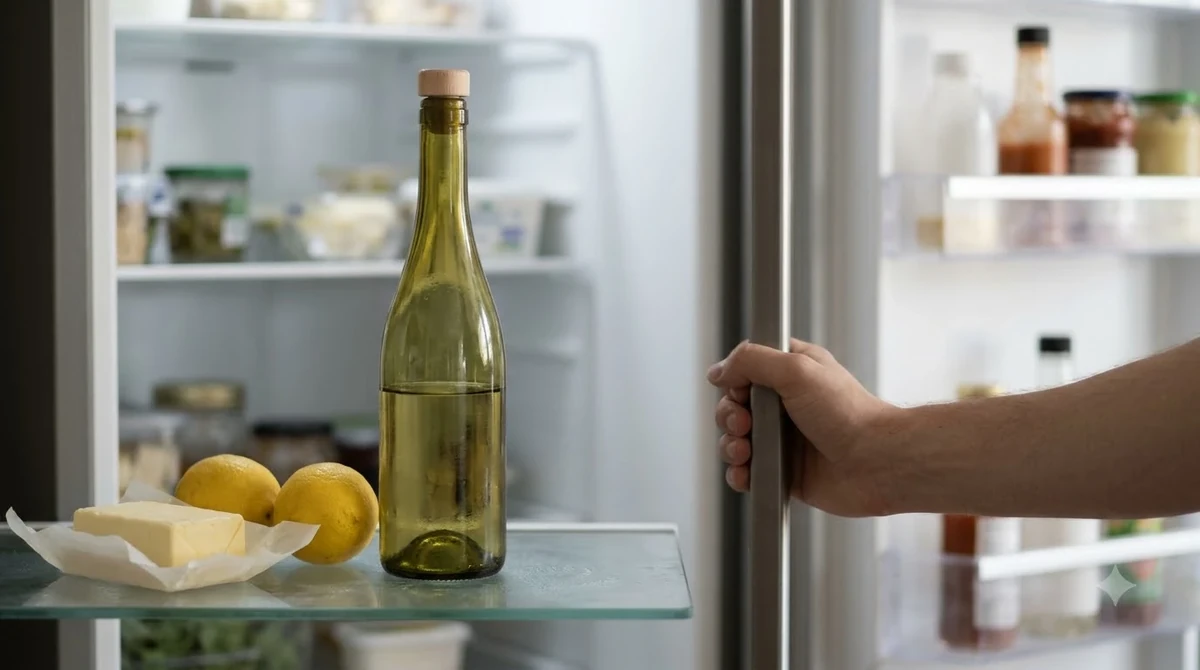
Serve Austin Hope Sauvignon Blanc chilled but not icy, generally around 45 to 50 degrees Fahrenheit. A fuller Chardonnay is usually more expressive around 50 to 55 degrees, while a fresh Chenin Blanc can often be served near the cooler end of the white-wine range, depending on its weight and texture.
Temperature affects aroma and structure: very cold wine can mute fruit and tighten texture, while warm white wine can seem broad and less refreshing. If a bottle comes straight from a refrigerator, a few minutes in the glass can let its aromas open. A standard 750-milliliter bottle yields about five 5-ounce pours, a useful serving size that leaves room for the wine to develop in the glass.
| White wine | Serving temperature | Food matches | Why it works |
|---|---|---|---|
| Austin Hope Sauvignon Blanc | 45–50°F | Oysters, sushi, goat cheese, herb salads | Citrus and lively acidity complement fresh, briny, or herbal flavors. |
| Austin Hope Chardonnay | 50–55°F | Roast chicken, grilled prawns, salmon, creamy pasta | Broader fruit and texture can meet richer dishes without relying on tannin. |
| Austin Hope Chenin Blanc | 45–50°F | Roast pork, spicy vegetable dishes, blue cheese | Freshness can balance savory richness, while fruit works with moderate spice. |
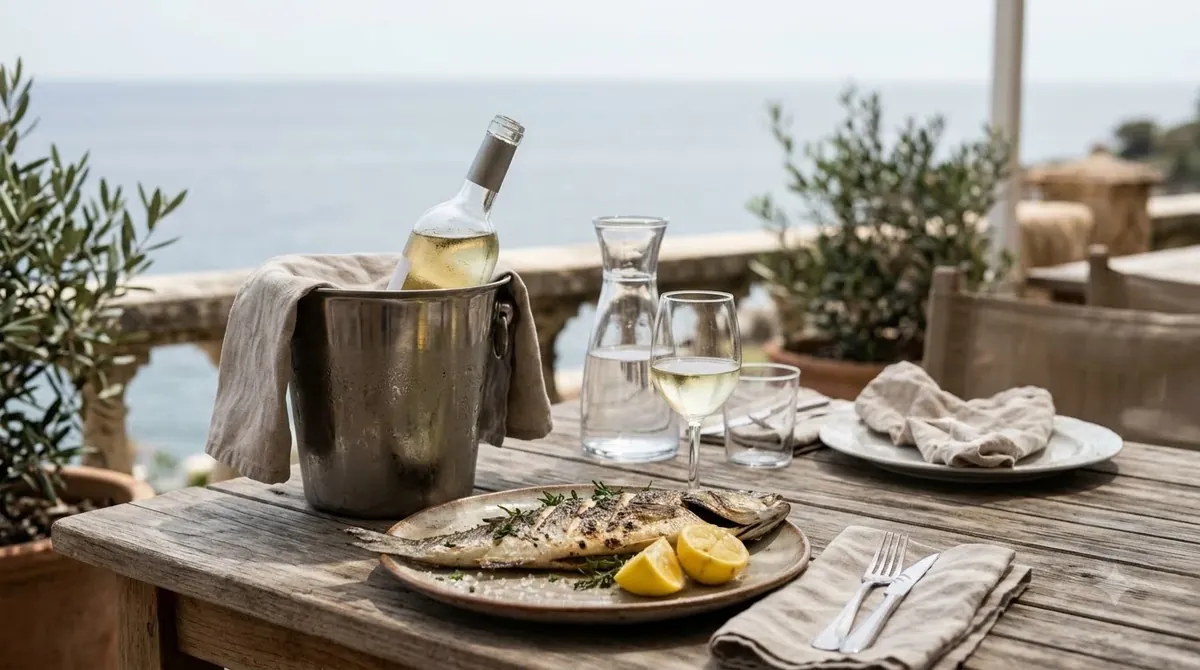
For Sauvignon Blanc, fresh oysters and sushi are natural starting points. Citrus, herbs, and acidity refresh the palate, while the wine’s fuller texture gives it presence for richer sushi toppings or grilled seafood. Goat cheese, lemon-vinaigrette salads, asparagus, and green herbs also echo its fresh side. Chardonnay handles richer food more comfortably: try roast chicken, grilled prawns, salmon, or pasta with a light cream sauce, especially when the dish includes lemon, herbs, or browned butter. Chenin Blanc can suit pork, poultry, vegetables, and cheese; moderate spice works best when it does not overwhelm the wine’s fruit.
Tip: Match the weight of the food to the weight of the wine, then use acidity as the final check. A lemony seafood dish often suits Sauvignon Blanc, while a richer chicken or pasta preparation is more likely to favor Chardonnay; for sweet food, choose a wine at least as sweet as the dessert.
Salt and fat can soften tannin in red wine, but these white bottlings are not built around the structure of Cabernet Sauvignon or Syrah, making them more natural choices for delicate fish and seafood than a firm, tannic red. Very hot chili can make alcohol seem more pronounced, so pair spicy food with care. For a broader look at choosing a producer and label, the Wine Brands section offers context beyond one bottle. Serve the wines in ordinary white-wine glasses: a slightly larger bowl helps Chardonnay show its fruit and texture, while a narrower bowl can keep Sauvignon Blanc’s aromas focused. Use clean glassware, avoid overfilling, and keep the bottle cool between pours.
Frequently Asked Questions
Does a 90-point review apply to every Austin Hope Sauvignon Blanc vintage?
No. The 90-point score from Wine Enthusiast applies to the specific 2024 Cellar Select Sauvignon Blanc it reviewed, not automatically to other years or other white wines. Wine Enthusiast groups scores from 90 to 93 in its “Excellent” range, so the number is a vintage-specific evaluation rather than a permanent grade for the label.
When was the Paso Robles AVA established?
The Paso Robles American Viticultural Area was established in 1983 and expanded in 1997 and 2009. Those changes reflect the scale and geographic diversity of the appellation, which includes multiple distinct grape-growing areas rather than one uniform site.
Which other grape varieties grow in Paso Robles?
The Paso Robles Wine Country Alliance says more than 60 wine-grape varieties are grown in the region. Alongside Sauvignon Blanc and Cabernet Sauvignon, its examples include Syrah, Viognier, Roussanne, and Zinfandel, illustrating the region’s broad range of red and white grapes.
Does Cellar Select include red wines as well as whites?
Yes. The winery’s Cellar Select page also lists red varieties such as Graciano, Cabernet Franc, Malbec, and Petit Verdot. The range is not a white-wine tier; it is a collection of limited bottlings that can include several grapes and styles.
Is Chenin Blanc originally from California?
No. Chenin Blanc has deep roots in France’s Loire Valley and later became part of California’s wine history. The Austin Hope bottling is a California expression of that grape, made from old vines in Paso Robles rather than from its historic French home.
Austin Hope white wine is best approached by grape and bottling, not by the producer name alone. Start with Cellar Select Sauvignon Blanc for ripe citrus and a fuller texture, choose Chardonnay for broader orchard fruit, or seek out Chenin Blanc for a distinctive small-batch alternative. Serve each at the right temperature and pair its weight and acidity with the food on the table.
More in Wine Brands
 Underwood Wine Price: Compare Bottles, Cans, and Pack SizesUpdated Nov 21, 2026
 Zenato Wine Price: Compare Styles and Choose the Right BottleUpdated Nov 21, 2026
 Zuccardi Wine Price: Compare Bottles and Find the Right RangeUpdated Nov 21, 2026
 Yellow Tail Moscato Review: Taste, Sweetness and Serving TipsUpdated Nov 21, 2026
 Wolf Blass Yellow Label Review: Choose Your Best StyleUpdated Nov 21, 2026
 Wolffer Estate Rose Review: Choose the Right Bottle for Your TableUpdated Nov 21, 2026