

We may earn a commission when you buy through links on this page, at no extra cost to you. Learn more.
Bollinger red wine is La Côte aux Enfants, a rare, still red Pinot Noir made from a single vineyard in Aÿ, Champagne. Unlike Bollinger’s familiar sparkling wines, it is bottled under the Coteaux Champenois appellation because it is not sparkling. The wine is released only when the house considers the grapes exceptional, so it is a limited-production bottle rather than a regular, widely distributed label.
The name can confuse Champagne drinkers because Bollinger is best known for structured sparkling wines such as Special Cuvée and La Grande Année. La Côte aux Enfants belongs to a different part of the region’s history: before Champagne became internationally known for bubbles, the vineyards around Aÿ were also valued for Pinot Noir table wines. Understanding the appellation, vineyard, production choices, and serving style makes it easier to know what this unusual Bollinger bottle is—and what it is not.
What Is Bollinger Red Wine?
Bollinger red wine refers to La Côte aux Enfants, a dry, still red made from 100% Pinot Noir grown in the La Côte aux Enfants vineyard outside Aÿ. It is a Coteaux Champenois, not a red version of Bollinger Champagne, and the 2016 vintage was listed by Decanter as a medium-bodied, oaked wine with 12% alcohol.
The distinction between Champagne and Coteaux Champenois is important. Champagne is a sparkling wine appellation, while Coteaux Champenois covers still wines made in the Champagne growing area. These still wines can be red, white, or rosé; La Côte aux Enfants is the red expression. Since it has no bubbles, calling it “red Champagne” is convenient shorthand but not its formal wine designation. The Decanter profile of Bollinger makes that labeling distinction clear.
It is also separate from Bollinger’s better-known sparkling range. Special Cuvée is a non-vintage Brut Champagne, while La Côte aux Enfants is a still Pinot Noir from one named site. Readers comparing the house’s sparkling style can start with these Bollinger Special Cuvée tasting notes; the two wines share a producer, but they serve different purposes and should not be expected to taste alike.
The Aÿ Vineyard and Its Champagne Roots
La Côte aux Enfants comes from a steep, chalky hillside on the outskirts of Aÿ, one of Champagne’s historic Pinot Noir villages. Bollinger’s official description identifies the holding as a single 4-hectare parcel, patiently reassembled by Jacques Bollinger in the early 20th century from more than 50 separately owned plots.
The slope is more than a scenic detail. Vineyard exposure, soil, and the difficulty of working a steep site all influence the character and effort involved in producing a small still red in a region dominated by sparkling wine. Bollinger describes the vineyard as a legendary parcel and says the grapes are only used for this red when maturity is considered exceptional. That selective approach means the wine is not a dependable annual release in the way a standard-volume house cuvée might be.
Aÿ also has a long association with red Pinot Noir. Bollinger notes that wines from the village were prized at the French court and favored by King Henri IV. Decanter adds that the La Côte aux Enfants plot was historically divided among 50 owners before Jacques Bollinger gradually brought it together; Bollinger now owns the full parcel. This background explains why a still red from Champagne is not a novelty invented to fill a gap in the portfolio. It draws on a local tradition that predates the region’s modern fame for sparkling wine.
Grapes, Fermentation, and Oak Aging
La Côte aux Enfants is made entirely from Pinot Noir, with Bollinger applying a Burgundian approach rather than the traditional bottle-fermentation process used for Champagne. The 2016 vintage included one-third whole clusters and spent eight months in small oak barrels, while the 2019 description also specifies one-third whole-bunch fermentation and a slow, gradual cold soak before fermentation.
Whole-cluster fermentation means that some grape bunches enter the fermenter with their stems rather than being fully destemmed. Bollinger explains that the stems must be sufficiently lignified, or woody, to avoid unwanted green flavors; the technique can contribute aromatic complexity and structure. For the 2016 wine, one-third of the crop was handled this way. That percentage is a vintage-specific production detail, not a universal rule for every bottle carrying the La Côte aux Enfants name.
The oak treatment is similarly precise. Bollinger states that the 2016 wine aged for eight months in small oak barrels, a process that can shape texture and add restrained spice without turning the wine into an overtly oaky red. The 2019 page says the wine was aged in small oak barrels but does not repeat the eight-month figure, so it is better not to assume every vintage followed an identical schedule. A producer’s La Côte aux Enfants 2016 technical description gives a useful example of how the house handles a particular release.
| Documented detail | La Côte aux Enfants reference | What it tells you |
|---|---|---|
| Vineyard area | 4 hectares | A single, defined site outside Aÿ |
| Grape variety | 100% Pinot Noir | No blend with Chardonnay or Meunier |
| Whole-cluster share | One-third in 2016 | Stems contribute to the fermentation approach |
| Oak aging | 8 months in 2016 | Small-barrel maturation |
| Serving guidance | 16°C / about 61°F | Bollinger’s recommendation for the 2016 vintage |
These figures describe documented producer information for the cited vintages, not a formula that should be projected onto every later release. In particular, the share of whole clusters, length of maturation, and sensory profile can shift with growing conditions and the decisions made for each harvest. The broader constant is the use of single-site Pinot Noir and careful, Burgundy-style red-wine methods.
What Does La Côte aux Enfants Taste Like?
Expect a concentrated but finely detailed Pinot Noir, with red and dark fruit, savory spice, and a firm sense of structure rather than the broad sweetness or heavy extraction associated with some powerful reds. Bollinger’s descriptions of the 2016 and 2019 vintages mention black cherry, redcurrant, blackcurrant, blackberry, violet, liquorice, pepper, and earthy or woody notes.
The fruit profile can move between red-fruited brightness and darker, denser tones. In the 2016 vintage, Bollinger cites black cherry, redcurrant, and blackcurrant, with violet and leather on the palate. Its 2019 description points to dark-fruit aromas reminiscent of cherry and blackberry, with liquorice and sweet spice; the palate adds violet, bergamot, pepper, truffle, and forest-floor character. These are vintage-specific tasting descriptions, so a different release may emphasize another part of the profile.
Texture is a useful way to understand the wine. Bollinger describes the 2016 as elegant, with supple tannins and a balance of red and black fruit, while the 2019 is described as full-bodied with silky tannins. Decanter classifies the 2016 as medium-bodied and dry. Taken together, those descriptions suggest a red with meaningful concentration but a Pinot Noir frame: freshness, aromatic detail, and tannin that supports the fruit rather than overwhelming it.
It is reasonable to compare the wine with serious Burgundy because both rely on Pinot Noir and can show red fruit, earthy notes, and oak-derived spice. That comparison is a style reference, not a claim that Champagne and Burgundy taste the same. The cooler Champagne setting can give Pinot Noir a different balance of acidity and ripeness, and Coteaux Champenois reds are often described as lighter and fresher than many wines from Burgundy’s warmer or more southerly sites.
How to Serve and Pair This Still Red
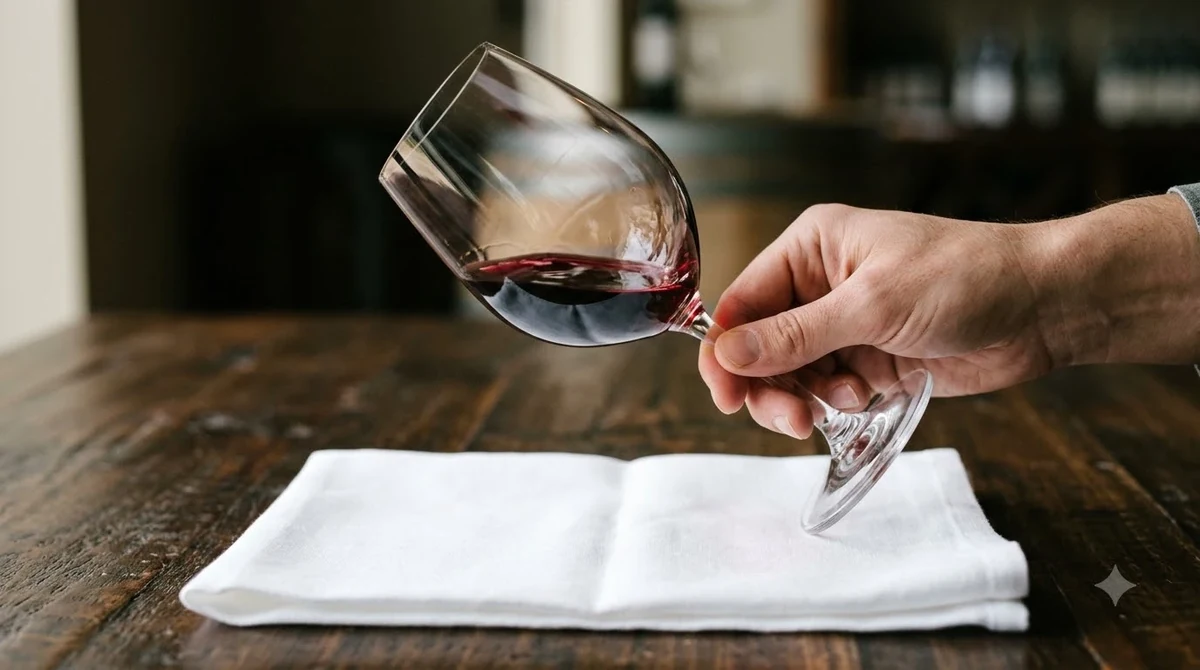
Serve La Côte aux Enfants slightly cool, around 60–61°F, rather than at a warm room temperature. Bollinger recommends 16°C for its 2016 and 2019 vintages, which is approximately 61°F; this temperature helps preserve Pinot Noir’s aromatic detail while allowing the fruit and oak to show clearly.
Choose food that respects the wine’s acidity and moderate-to-firm structure. Roast chicken, duck breast, pork tenderloin, veal, and simply prepared beef are natural matches because their savory flavors complement Pinot Noir without burying its more delicate aromas. Poultry and duck are particularly suitable choices, while veal, roast pork, or a mushroom dish can also work when the seasoning stays balanced.
Be cautious with very sweet sauces, intense chili heat, and heavily smoked or charred dishes. A sauce sweeter than the wine can make the wine taste sharper and less generous, while chili heat can feel more pronounced alongside alcohol and tannin. Oily fish is also a difficult match for tannic red wine; for salmon or tuna, choose a preparation with restrained seasoning and consider a fresher white instead. Readers looking for a contrasting Bollinger style can compare the red with Bollinger white wine, which covers a different set of grape and pairing decisions.
Tip: Chill the bottle to about 60–61°F, then pour a small first glass before deciding whether to decant. For a structured young red, 30–60 minutes of air can help, but La Côte aux Enfants is rare and vintage-dependent, so avoid assuming that a long decant is always better.
Use a standard red-wine glass with a moderately wide bowl and pour about 5 ounces. A 750 ml bottle yields roughly five such glasses. If the bottle is not finished, reseal it and refrigerate it; most opened still wines keep their best character for about 3–5 days, although a delicate older Pinot Noir may lose freshness sooner.
Finding a Bottle and Understanding the Vintages
La Côte aux Enfants is a limited-production wine, not an everyday Bollinger label stocked as consistently as Special Cuvée. Bollinger says it makes the red only in the finest vintages, and its published vintage pages include 2015, 2016, and 2019 releases; availability can vary substantially by importer, retailer, and market.
Scarcity is part of the wine’s identity, but it should not be confused with a guarantee that every old bottle is ready to drink or that every vintage will have the same aging curve. Bollinger describes both the 2016 and 2019 as having significant aging potential, yet bottle condition, storage history, and the characteristics of an individual harvest matter. For an older bottle, provenance is especially important: consistent cool storage near 55°F, protection from light, and minimal temperature swings give the wine a better chance of developing as intended.
When comparing listings, look for the complete name La Côte aux Enfants, the vintage, and the Coteaux Champenois designation. Do not mistake Bollinger’s La Côte aux Enfants Champagne bottling for the still red; the same vineyard name appears on a separate sparkling wine made from Pinot Noir. The difference matters because one is a still red wine and the other is a Champagne cuvée. For more context on how houses and labels fit together, the broader Wine Brands section can help distinguish a producer’s core range from rare site-specific bottlings.
It also helps to approach the wine as a special-occasion bottle rather than a direct substitute for a familiar Champagne. If you want Bollinger’s signature sparkling profile, choose a Champagne cuvée; if the attraction is a distinctive Pinot Noir from Aÿ, La Côte aux Enfants is the relevant bottle. That distinction keeps expectations grounded and makes the rarity easier to understand.
Frequently Asked Questions
These answers clarify details that often get lost when the wine is described simply as “red Champagne.” The key distinctions involve the vineyard’s name, Bollinger’s parallel wines from the same site, and the house’s historical use of the red wine.
Why is the vineyard called La Côte aux Enfants?
The name has more than one proposed origin. Bollinger notes that a 1944 French wine atlas recorded the place as “Côte aux enfers,” and one local story links the name to women carrying baskets of soil back up the steep slope after storms. Another explanation says the hillside was so steep that harvesting required the agility of children; the house does not claim that either story is proven.
Does Bollinger make a sparkling wine from La Côte aux Enfants too?
Yes. Bollinger has also produced a blanc de noirs Champagne from a different part of the vineyard, using Pinot Noir from the north-west-facing section. Decanter reports that this Champagne was launched in 2012, so the shared vineyard name does not mean the still red and sparkling wine are the same cuvée.
Was the red originally intended for another Bollinger wine?
Bollinger’s page for the 2015 release says the red had initially been used in the blend for La Grande Année Rosé. The house later chose to offer the wine on its own because of its purity and quality. That history helps explain the close relationship between the still red and Bollinger’s rosé production.
Is every Coteaux Champenois wine made from Pinot Noir?
No. The appellation also includes still white and rosé wines, and the permitted grape varieties are shared with Champagne, including Pinot Noir, Pinot Meunier, and Chardonnay. La Côte aux Enfants is specifically a red made entirely from Pinot Noir, not a definition of the whole appellation.
Did Champagne always focus on sparkling wine?
No. Wine Enthusiast describes the Marne Valley’s earlier reputation for still Pinot Noir, including pale red wines from grapes that could struggle to ripen in the region’s northern climate. The rise of bottle-fermented sparkling wine shifted commercial attention toward Champagne as it is best known today, but still Coteaux Champenois preserves part of that older tradition.
Bollinger red wine is a rare expression of Aÿ Pinot Noir, not a red Champagne in the sparkling sense. La Côte aux Enfants rewards readers who value site-specific wine, precise production choices, and a style that sits between the freshness of Champagne and the savory detail associated with fine Pinot Noir.
More in Wine Brands
 Underwood Wine Price: Compare Bottles, Cans, and Pack SizesUpdated Nov 21, 2026
 Zenato Wine Price: Compare Styles and Choose the Right BottleUpdated Nov 21, 2026
 Zuccardi Wine Price: Compare Bottles and Find the Right RangeUpdated Nov 21, 2026
 Yellow Tail Moscato Review: Taste, Sweetness and Serving TipsUpdated Nov 21, 2026
 Wolf Blass Yellow Label Review: Choose Your Best StyleUpdated Nov 21, 2026
 Wolffer Estate Rose Review: Choose the Right Bottle for Your TableUpdated Nov 21, 2026