

We may earn a commission when you buy through links on this page, at no extra cost to you. Learn more.
Trapiche Malbec is a dry, full-bodied red from Argentina, made from Malbec, the grape that became Argentina’s signature red after it was planted in Mendoza. Malbec is known for plum and blackberry fruit, soft vanilla and cocoa notes, and medium tannin. This guide explains what to expect from a Malbec of this style, where the grape comes from, how to serve it and what to pair it with.
Malbec is one of the most recognizable red grapes in the world. Many bottles labeled Malbec are sold at everyday prices, and the grape’s accessible fruit makes it a common choice for weeknight dinners and casual gatherings. The sections below cover the grape’s background, the flavor profile, the Argentine connection, and practical tips for serving and buying a bottle like Trapiche Malbec.
Where Malbec Comes From
Malbec did not start in Argentina. According to Wine Folly’s Malbec guide, the grape comes from Sud-Ouest in southwest France, where it is also called Côt or Auxerrois. The guide describes it as a natural cross of Prunelard and Magdeleine Noire de Charentes. In France, Malbec has long been an important blending grape in Bordeaux, although it never became a top grape there.
The grape’s reputation changed after it reached Mendoza. The guide credits French botanist Michel Pouget with planting it there in 1868, and it describes Malbec as Argentina’s most important planted red grape variety, with about 40 percent of the country’s red grape vineyards. Argentina’s success with the grape is one of the main reasons Malbec is now associated with the country worldwide.
Flavor and Structure
Typical Malbec flavors include red plum, blackberry, vanilla, sweet tobacco and cocoa. The wine is dry and full-bodied, with medium tannins and medium-low acidity. That combination gives many Malbecs a plush, round feel on the palate, which is why the style is often described as approachable compared with firmer reds such as Cabernet Sauvignon.
The softer structure has a practical effect. Malbec can be enjoyed young, and it does not usually demand long aging to become drinkable. Some bottles from strong vintages and top sites can develop more complexity with time, but most everyday bottles are built to be opened within a few years of release.
Why Mendoza Matters
Within Mendoza, the guide points to the Uco Valley and Luján de Cuyo as sub-regions that consistently produce top-rated examples. Vineyards in these areas sit at different elevations and soils, which gives winemakers a range of styles to work with. A bottle labeled simply Mendoza Malbec may taste different from one labeled with a specific sub-region, so the origin on the label is worth a second look.
Outside Argentina, the guide names Cahors in France and Walla Walla on the Oregon and Washington border as places where Malbec is grown with notable results. Those examples show that the grape can travel, although Argentina remains the best-known source for the style most shoppers buy.
| Element | What to expect |
|---|---|
| Fruit | Red plum, blackberry |
| Secondary notes | Vanilla, sweet tobacco, cocoa |
| Body | Dry and full-bodied |
| Tannin and acidity | Medium tannin, medium-low acidity |
| Typical alcohol | About 13.5 to 15 percent |
How to Serve Malbec
Wine Folly gives a serving range of 60 to 68 degrees Fahrenheit (15 to 20 degrees Celsius) for Malbec. That range keeps the fruit lively and stops the alcohol from feeling heavy. A bottle left in a warm room can taste flabby, so a short time in a cooler spot before opening often makes a difference.
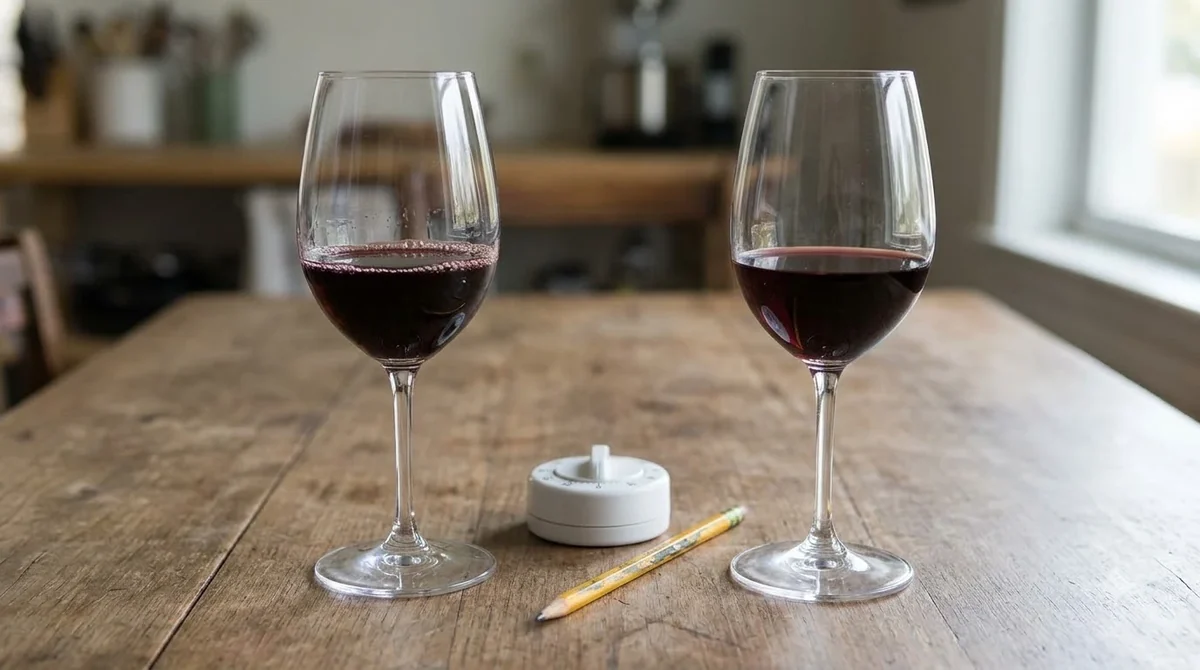
A simple way to test a bottle is to pour two glasses from the same bottle, one right away and one after about 30 minutes. The difference shows how the wine opens up, and it helps you decide whether to decant the next time you buy the same style.
Open the bottle about 20 minutes before pouring, or pour into a decanter if the wine tastes tight. Use a large red wine glass so the aromas of plum and vanilla can come forward. Malbec keeps well for a day after opening when the cork is replaced and the bottle is stored cool.
Tip: If a Malbec tastes sharp or thin, it is often too warm or too cold. Give it a few minutes in the glass before judging the bottle.
Food Pairing Ideas
Malbec fits grilled and roasted meats especially well. Grilled steak, pork ribs with a smoky sauce and roast chicken with herbs all match the wine’s plum fruit and soft tannin. Hard cheeses such as aged cheddar or Gouda also work, because their salt and fat balance the wine’s body.
For a lighter meal, try Malbec with grilled portobello mushrooms, lentil stew or a bean dish with smoked paprika. The wine’s sweet spice can echo the seasoning in these dishes, and its medium tannin keeps the pairing from feeling heavy. Pair Malbec with a dish that has some char or savory depth, and it will feel complete.
Buying a Malbec Like Trapiche
Start by reading the label. Check the grape, the region and the vintage, and note whether the bottle lists a sub-region such as Uco Valley or Luján de Cuyo. Those details tell you more about the style than the brand name alone, especially when you are comparing several bottles at similar prices.
Store the bottle on a shelf away from heat and direct light until you are ready to open it, and buy from a retailer that keeps wine in a stable temperature. Malbec is sturdy, but a bottle that has spent a summer in a hot delivery van will not taste as fresh as one that has been kept cool.
Look for a producer description that explains the winemaking. A clear description of the fruit and the aging helps set expectations, and independent reviews can show how a given vintage tastes. If you are shopping for a gift or a group, a Malbec is a safe choice because its fruit-forward style appeals to many drinkers.
For a comparison with other approachable reds, our notes on Stella Rosa red show a much sweeter style, while Pedernales wine and Spottswoode wine give a sense of how producers approach structure and fruit in other settings. For a broader view of how wine brands differ, the wine brands guide is a useful next step.
Frequently Asked Questions
What does Malbec taste like?
Malbec usually tastes of red plum and blackberry, with vanilla, sweet tobacco and cocoa notes. It is dry and full-bodied with medium tannin and medium-low acidity.
Where is Malbec from?
The grape originated in southwest France, where it is also called Côt or Auxerrois. It became famous in Argentina after it was planted in Mendoza, and Argentina remains its best-known source today.
Should Malbec be served cold or at room temperature?
Malbec is best served at a cool-leaning temperature, in a range of about 15 to 20 degrees Celsius. A bottle that is too warm can taste heavy, so a short chill helps.
Does Malbec need to be aged?
Most everyday Malbec is made to drink within a few years of release. Some premium bottles from strong vintages can develop more complexity over time, so check the producer’s notes before holding a bottle.
A Malbec like Trapiche rewards a simple approach. Serve it at a cool-leaning temperature, pair it with grilled or roasted food, and give it a few minutes in the glass to show its fruit and soft structure. Once you know the style, comparing bottles from different Mendoza sub-regions becomes an easy and enjoyable next step.
More in Wine Brands
 Underwood Wine Price: Compare Bottles, Cans, and Pack SizesUpdated Nov 21, 2026
 Zenato Wine Price: Compare Styles and Choose the Right BottleUpdated Nov 21, 2026
 Zuccardi Wine Price: Compare Bottles and Find the Right RangeUpdated Nov 21, 2026
 Yellow Tail Moscato Review: Taste, Sweetness and Serving TipsUpdated Nov 21, 2026
 Wolf Blass Yellow Label Review: Choose Your Best StyleUpdated Nov 21, 2026
 Wolffer Estate Rose Review: Choose the Right Bottle for Your TableUpdated Nov 21, 2026