

We may earn a commission when you buy through links on this page, at no extra cost to you. Learn more.
The yellow tail big bold red price is typically about $5.99 to $7.35 for a 750 ml bottle at the New York retailers tracked by WinesRate. This Australian red blend offers ripe dark-fruit flavors, raspberry, strawberry jam, spice, and vanilla, making it an approachable option for casual dinners. Its listed alcohol content is 13.5% ABV, and larger 1.5 L bottles are also available from some retailers.
Yellow Tail Big Bold Red is aimed at wine drinkers who enjoy generous fruit flavors without paying for a premium-priced bottle. However, the amount you pay depends on your state, retailer, bottle size, and local availability. Understanding the usual retail range, the wine’s flavor profile, and the differences between bottle formats makes it easier to decide whether this blend belongs in your shopping cart.
Who Should Consider Yellow Tail Big Bold Red?
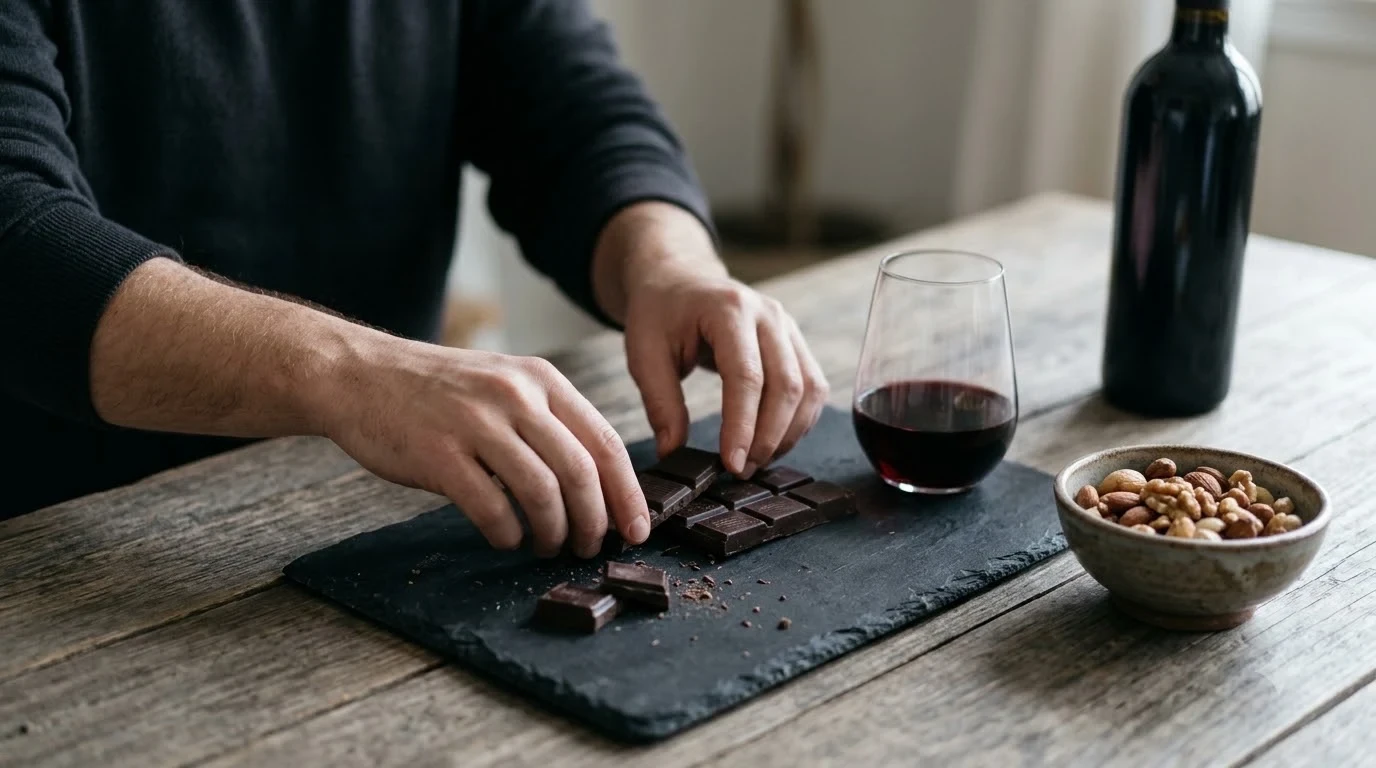
Yellow Tail Big Bold Red is a practical choice for shoppers looking for an affordable Australian red blend with noticeable fruit flavors and a smooth, approachable character. It suits casual meals, informal gatherings, and occasions when a familiar, fruit-forward wine is more important than a complex tasting experience.
The wine comes from South Eastern Australia, and the producer describes its style as bursting with ripe dark fruits. Its aromatic profile includes red fruit, cherry, dark chocolate, and oak, while the flavor description emphasizes dark fruit, spice, and vanilla. These characteristics give shoppers a useful starting point when deciding whether the bottle matches their preferences.
Its medium-bodied description from Total Wine also helps establish expectations. This is not positioned as a particularly delicate red, nor should buyers automatically expect the firm structure and pronounced tannins associated with a traditional Cabernet Sauvignon. Instead, its fruit-forward presentation makes it easier to serve in relaxed settings where guests have different levels of wine experience.
There are several types of shoppers who may find this bottle appealing:
- Budget-conscious shoppers: People seeking an everyday red wine without committing to an expensive bottle.
- Fruit-forward wine drinkers: Those who enjoy raspberry, strawberry jam, ripe dark fruit, and hints of vanilla.
- Casual hosts: People who want a recognizable Australian wine for a dinner with friends.
- Newer red-wine drinkers: Those who prefer accessible fruit flavors over particularly dry, tannic, or austere wines.
- Shoppers buying for a group: People considering a larger bottle for a shared meal or gathering.
It may be less suitable for someone who specifically wants a lean, high-acidity red, a strongly tannic wine, or a traditional single-varietal expression with clearly defined vineyard character. Those preferences may point toward a different style of Australian wine.
It also helps to distinguish the wine from other bottles in the brand’s range. Shoppers comparing the broader selection can explore Yellow Tail red wine to understand how different red varieties and blends serve different tastes and occasions.
Key Factors That Determine the Bottle Price
The main factors affecting the cost are bottle size, retailer, state, and local availability. Comparing the standard 750 ml format with the larger 1.5 L bottle is especially useful because the total purchase price does not tell the whole story about value.
WinesRate lists a typical observed New York retail range of approximately $5.99 to $7.35 for a 750 ml bottle across its tracked retailers. That is a useful regional reference rather than a guaranteed nationwide price, and prices vary by state and retailer. Total Wine and H-E-B also list the product in their online catalogs, illustrating how widely the bottle is distributed through different retail channels.
For shoppers considering a larger format, WinesRate reports 1.5 L listings ranging from approximately $10.99 to $14.70 among the New York retailers it tracks. These figures are for the larger bottle, not the standard 750 ml format, and prices vary by state and retailer.
| Buying factor | Observed information | What it means |
|---|---|---|
| Standard bottle | 750 ml | Conventional household purchase |
| Standard bottle price | About $5.99–$7.35 | New York retailer comparison |
| Large bottle | 1.5 L | Twice the standard bottle volume |
| Large bottle price | About $10.99–$14.70 | New York retailer comparison |
| Alcohol content | 13.5% ABV | Producer-listed strength |
| Standard servings | About 5 glasses | Based on 5 oz pours |
| Large-bottle servings | About 10 glasses | Based on 5 oz pours |
The 750 ml and 1.5 L prices above are reported by WinesRate from its retailer listings. Its comparison page identifies the bottle sizes separately, which matters because comparing the total prices without considering volume can make a larger bottle appear more expensive than it really is.
For a simple volume comparison, a 1.5 L bottle contains twice as much wine as a 750 ml bottle. That translates to approximately ten standard 5 oz pours instead of five, assuming consistent serving sizes. A household that regularly serves several guests may therefore find the larger format more convenient.
Retailer pricing can also differ because of location-specific inventory, shipping arrangements, taxes, and promotional activity. Total Wine explicitly notes that price, vintage, and availability may vary by store. A bottle displayed online may not necessarily be available at the nearest physical location.
How to compare the actual value
Start with the standard bottle if you have never purchased this particular blend. It gives you an opportunity to decide whether the fruit-forward profile suits your palate before buying more wine.
If you already enjoy the style and expect to serve several people, compare the larger bottle’s price per milliliter. Do not assume that a larger container automatically offers better value. The retailer’s actual listed price and the availability of the correct size matter more than the bottle’s appearance.
For additional product information, the official Yellow Tail Big Bold Red product page provides the producer’s flavor description, suggested pairing, and alcohol information.
Step-by-Step: How to Find the Right Bottle
A sensible purchase starts with checking the bottle format and comparing local retailers rather than choosing the first listing you encounter. The following steps help shoppers evaluate the product and avoid confusion between similar Yellow Tail wines.
-
Confirm the exact wine name.
Look for Yellow Tail Big Bold Red rather than assuming every red bottle from the brand has the same flavor profile. The brand also offers Cabernet Sauvignon and Shiraz Cabernet, which are different selections with their own characteristics.
-
Choose your preferred bottle size.
The standard 750 ml bottle is a straightforward option for a smaller household or an initial purchase. The 1.5 L format is worth comparing if you expect to serve approximately ten standard 5 oz glasses at a gathering.
-
Compare at least two retailers.
Check local wine shops and larger retailers. WinesRate provides a useful comparison of multiple New York listings, while Total Wine and Binny’s offer separate retailer product pages for the same wine.
-
Check the location-specific listing.
Online prices are not necessarily identical across every store. Verify the selected store, delivery area, and available bottle size before making a purchasing decision.
-
Consider the alcohol content.
The producer lists Big Bold Red at 13.5% ABV. Shoppers comparing it with other red wines can use this figure to understand its stated alcohol strength.
-
Match the wine to your food.
Its fruit-forward character and suggested pepper-steak pairing make it a natural candidate for grilled meat, burgers, and dishes with savory seasoning.
-
Decide whether to buy one bottle or a larger format.
If the wine is unfamiliar, start with 750 ml. If you already know you enjoy its flavor profile and have several guests to serve, compare the cost and availability of the 1.5 L option.
Following these steps separates the product decision from the price decision. A bottle may be inexpensive but still unsuitable for someone who prefers lighter reds or more restrained fruit. Equally, the cheapest available listing may not be the most convenient option if delivery charges or travel costs are involved.
Tip: Compare prices using the same bottle size. A 1.5 L bottle contains twice the wine of a 750 ml bottle, so comparing only the total checkout amount can give a misleading impression of value.
Types and Styles Explained: What Does Big Bold Red Taste Like?
Big Bold Red is an Australian red blend with a fruit-forward profile, medium-bodied presentation, and noticeable oak and spice characteristics. Its combination of ripe berries, dark fruit, and vanilla makes it different from a particularly lean or strongly tannic red wine.
The producer’s description focuses on ripe dark fruit, cherry, dark chocolate, oak, spice, and vanilla. Total Wine adds a useful retail description of raspberry and strawberry-jam flavors, while Binny’s mentions plum, fruit cake, and a touch of sweetness. Taken together, these descriptions suggest a generous, ripe-fruit style rather than a restrained, mineral-driven red.
Fruit character
Raspberry and strawberry jam are among the most recognizable flavor references associated with this wine. These notes suggest ripe berry fruit rather than the sharp, tart character sometimes found in lighter red wines.
Dark-fruit flavors provide another dimension. They can make the wine seem fuller and richer, particularly alongside savory foods. The producer also mentions cherry, while the retailer descriptions introduce plum and fruit cake as additional flavor references.
Oak, spice, and vanilla
Oak contributes to the wine’s broader flavor profile. The producer identifies oak in the aroma description, and Total Wine describes a bold oak character alongside spice and ripe fruit.
Vanilla is another useful reference when deciding whether this wine fits your preferences. It gives shoppers an idea of the wine’s flavor direction without suggesting that it tastes like a sweet dessert wine. The overall presentation remains that of a fruit-forward red blend.
Sweetness and body
The producer uses the phrase “sweet nature” to describe Big Bold Red, while Binny’s notes a touch of sweetness. This is useful information for shoppers who prefer fruit-led reds rather than wines that seem aggressively dry or austere.
However, perceived fruitiness and actual sweetness are not interchangeable. A wine can smell and taste strongly of ripe berries without containing enough residual sugar to qualify as a sweet wine. Buyers who are particularly sensitive to sweetness should consider this distinction rather than relying only on tasting-note language.
Total Wine classifies the wine as medium-bodied. This means shoppers should not automatically expect the weight of an especially concentrated, full-bodied red. It is better understood as a relatively accessible blend with generous fruit and supporting oak notes.
How it differs from other red styles
Big Bold Red should not be confused with a Cabernet Sauvignon simply because both may feature dark fruit and oak. Cabernet Sauvignon generally has higher tannin, giving it a firmer structure. Merlot tends to have softer, medium tannins, while Pinot Noir usually has lower-to-medium tannin and higher acidity.
Shiraz, another familiar Australian red-wine style, can offer darker fruit and spice with medium-plus to high tannin. Big Bold Red has its own blended identity, so buyers should not assume that its flavor or structure will be identical to a single-grape Shiraz or Cabernet Sauvignon.
Shoppers interested in the product’s stated strength can also read our Yellow Tail Big Bold Red alcohol content guide for a closer look at the 13.5% ABV figure and how to interpret it when comparing wines.
Common Buying Mistakes to Avoid
Most purchasing mistakes happen because shoppers confuse bottle sizes, assume that every retailer carries the same stock, or interpret fruit-forward tasting descriptions as proof of sweetness. A few simple checks can make the buying process much clearer.
Confusing Big Bold Red with another Yellow Tail wine
Yellow Tail has multiple red wines, and their names are not interchangeable. Big Bold Red is a blend, whereas Cabernet Sauvignon and Shiraz Cabernet are separate products identified on the producer’s website.
That distinction matters because grape variety and blending choices affect tannin, acidity, fruit character, and the way a wine works with food. Someone who enjoys a soft, fruit-forward blend should not automatically assume that a bottle of Cabernet Sauvignon will provide an identical experience.
Comparing different bottle sizes without calculating volume
A 1.5 L bottle contains twice the wine of a 750 ml bottle. Looking only at the total price can make the larger format seem expensive, even when its cost per milliliter is competitive.
For a fair comparison, divide the total bottle price by its volume. A standard bottle contains 750 ml, while the larger format contains 1,500 ml. This calculation is particularly helpful when comparing several retailer listings.
Assuming every online price is available locally
Retailers often display prices based on a particular location or store. Total Wine specifically warns that pricing, vintage, and availability may vary by location. A listing that appears in a search result does not guarantee that the product is available for immediate pickup.
Check the local store’s inventory and delivery arrangements before planning a purchase. This is especially important if you need multiple bottles for an event.
Expecting a dry, tannic Cabernet-style experience
The word bold can lead shoppers to expect a highly structured red with pronounced tannins. However, Total Wine describes Big Bold Red as medium-bodied, and the producer emphasizes fruit, spice, and vanilla.
Buyers who prefer firm tannins and a more structured profile may be happier comparing it with Cabernet Sauvignon. People who enjoy ripe fruit and a more approachable red blend may find Big Bold Red a closer match.
Assuming the wine is a dessert wine
Descriptions such as strawberry jam, fruit cake, and sweet nature can suggest considerable sweetness. However, these are tasting references, not a complete measurement of residual sugar.
It is more useful to consider the overall flavor profile and compare it with other wines you already enjoy. If you regularly prefer very dry reds, the producer’s fruit-forward description is worth considering before purchasing.
Serving, Care, and Storage Tips
Big Bold Red is best treated like an approachable medium-bodied red wine: serve it slightly cooler than a warm room and store opened bottles in the refrigerator. Proper temperature and storage help preserve the wine’s fruit character after opening.
Serving temperature
A temperature around 60–65°F is a useful starting point for fuller red wines. If the bottle has been stored in a warm kitchen or living area, a short period in a cooler environment can help bring it closer to that range.
Serving red wine too warm can make alcohol seem more prominent and reduce the freshness of its fruit character. Conversely, serving it excessively cold can mute aromas and make the wine seem firmer than expected.
Glassware and pouring
A standard red-wine glass with a reasonably wide bowl is suitable for Big Bold Red. It provides room for aromas to develop while allowing the wine to be swirled without spilling easily.
A standard wine pour is approximately 5 oz. That means a 750 ml bottle provides about five standard servings, while a 1.5 L bottle provides approximately ten. Actual glass sizes and pours can vary, so these figures are practical serving estimates rather than exact guarantees.
Food pairing ideas
The producer specifically recommends pepper steak, which makes sense for a fruit-forward red with oak and spice notes. The savory character of grilled beef can complement ripe fruit, while seasoning and fat can help soften the perception of tannin in red wine.
Other suitable meal ideas include:
- Grilled burgers: The savory meat and browned exterior provide a good match for ripe berry flavors.
- Beef meatballs: Tomato-based sauces and seasoned meat offer a useful combination of acidity, savory flavors, and protein.
- Barbecue ribs: The wine’s dark-fruit and spice profile can work with smoky, moderately sweet barbecue sauces.
- Roasted mushrooms: Their earthy, savory character provides an alternative to meat-based dishes.
- Hard cheeses: Mature cheddar and similar cheeses can complement the wine’s fruit and oak character.
Pay attention to sauce sweetness when pairing the wine with food. A very sweet barbecue sauce can make a relatively dry red seem more tart or less fruity. The general pairing principle is to avoid serving a wine that tastes less sweet than a particularly sweet dish.
Storing an opened bottle
Once opened, reseal the bottle and place it in the refrigerator. Even red wine benefits from cooler storage after opening because lower temperatures slow the oxidation process.
For still wines, three to five days in the refrigerator is a common practical storage window. Big Bold Red is best enjoyed while its fruit remains fresh and expressive, rather than being left open for an extended period.
If you intend to serve the remaining wine later, remove it from the refrigerator ahead of time so it can approach a suitable serving temperature. Keeping the bottle tightly closed also helps limit unnecessary exposure to air.
For unopened bottles, choose a cool, dark location away from direct sunlight and substantial temperature changes. A storage temperature near 55°F is a useful general target for wine. Avoid leaving bottles in a hot vehicle, beside an oven, or near a sunny window.
Frequently Asked Questions
Is Yellow Tail Big Bold Red a blend or a single grape wine?
It is identified by retailers as an Australian red blend rather than a single-varietal Cabernet Sauvignon or Shiraz. The producer’s US product page describes its style and flavors without providing a complete grape-by-grape composition. Buyers should therefore treat it as a blended red rather than assume a specific varietal recipe.
Does Yellow Tail Big Bold Red have a vintage year?
WinesRate lists the product as NV, meaning non-vintage, in its retailer comparison. This means the listing does not identify the wine with a single vintage year. It is useful to distinguish this from wines sold specifically by a named harvest year.
Does Big Bold Red need decanting before serving?
Decanting is not generally necessary for a casual, fruit-forward red intended for relatively immediate enjoyment. Pouring it into a glass and allowing a few minutes for the aromas to develop is a reasonable approach. Longer decanting is more commonly useful for young, particularly structured full-bodied reds or older wines that require separation from sediment.
Can Yellow Tail Big Bold Red be used for cooking?
A fruit-forward red blend can be used in some savory recipes, including beef stews and tomato-based sauces. However, its fruit and oak characteristics may influence the finished dish, especially if the recipe reduces the wine significantly. Choose a wine whose flavor you would also be comfortable serving alongside the meal.
Is a 1.5 L bottle the same wine as the 750 ml version?
The 1.5 L format is listed by WinesRate under the same Yellow Tail Big Bold Red product name. It contains twice the volume of the standard bottle, making it useful for larger gatherings. The larger format does not mean that the wine contains twice the alcohol concentration; the producer’s listed ABV remains 13.5% for the product.
Yellow Tail Big Bold Red is an accessible Australian red blend for shoppers who enjoy ripe berry fruit, dark-fruit flavors, spice, and vanilla. The standard 750 ml bottle is a sensible starting point, while the 1.5 L format may be more convenient for larger groups. Compare local retailer listings, account for bottle size, and choose the format that fits your budget and occasion.
More in Wine Brands
 Underwood Wine Price: Compare Bottles, Cans, and Pack SizesUpdated Nov 21, 2026
 Zenato Wine Price: Compare Styles and Choose the Right BottleUpdated Nov 21, 2026
 Zuccardi Wine Price: Compare Bottles and Find the Right RangeUpdated Nov 21, 2026
 Yellow Tail Moscato Review: Taste, Sweetness and Serving TipsUpdated Nov 21, 2026
 Wolf Blass Yellow Label Review: Choose Your Best StyleUpdated Nov 21, 2026
 Wolffer Estate Rose Review: Choose the Right Bottle for Your TableUpdated Nov 21, 2026