

We may earn a commission when you buy through links on this page, at no extra cost to you. Learn more.
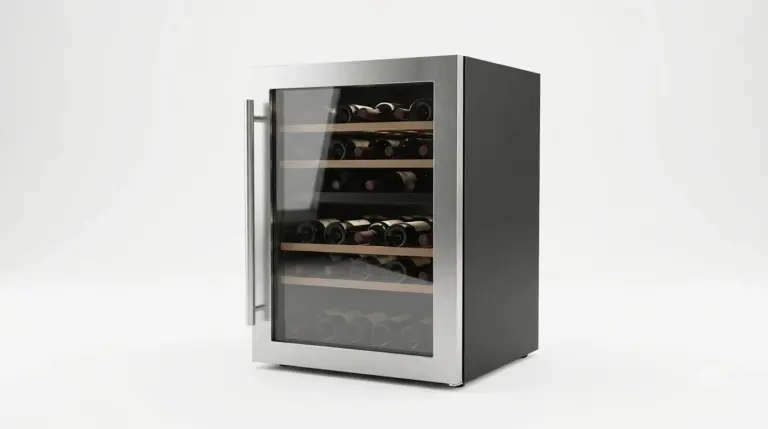
A Yeego wine fridge is worth considering if you want a compressor-based wine cooler with modern styling, flexible installation options, and capacities ranging from compact collections to 165 bottles. Yeego sells single-zone and dual-zone refrigerators, including narrow undercounter units and larger wine cabinets. Its product range offers useful features such as adjustable shelving, digital temperature controls, front ventilation, and glass doors. However, buyers should compare individual model specifications, installation requirements, warranty terms, and available owner feedback before choosing one.
Yeego is a wine and beverage refrigeration brand with a product lineup aimed at home kitchens, entertainment spaces, and private wine collections. Its catalog includes small refrigerators for a handful of bottles, mid-sized cabinets for regular wine drinkers, and tall units designed for larger collections. The brand also offers beverage refrigerators and combination wine-and-drink appliances. This guide examines Yeego’s product families, available features, common ownership considerations, and the information worth checking before purchasing.
Brand Overview: What Yeego Offers Wine Buyers
Yeego focuses on wine coolers and beverage refrigerators rather than producing a broad range of household appliances. Its catalog emphasizes contemporary cabinet designs, digital temperature controls, compressor cooling, and different installation formats for residential spaces.
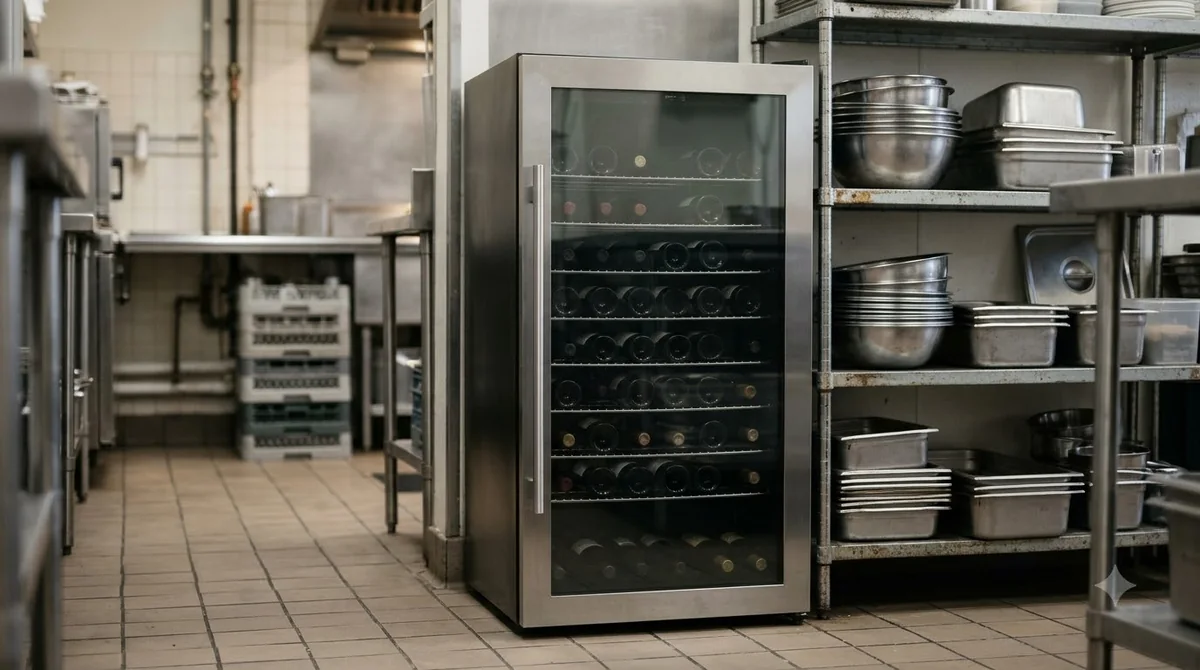
The company’s product descriptions identify Yeego as a factory seller specializing in wine coolers and beverage refrigerators. Its product documentation emphasizes fashionable design and practical refrigeration features. The brand’s website organizes its wine refrigerators into several width and capacity categories, making it possible to compare compact appliances with larger collection-storage cabinets.
One of Yeego’s distinguishing characteristics is the breadth of its wine refrigeration lineup. Its catalog includes 12-inch, 15-inch, 24-inch, and 30-inch product categories, along with freestanding wine cellars. Some models are designed for undercounter installation, while others can stand independently. This distinction matters because a refrigerator intended for a kitchen cabinet opening needs suitable ventilation and dimensions, not simply enough room for its exterior.
Yeego also offers both single-zone and dual-zone designs. A single-zone refrigerator maintains one general storage environment, making it appropriate for buyers who primarily collect one type of wine or prefer storing their bottles together. A dual-zone model offers separate temperature settings, which can be more useful for households that regularly purchase both red and white wines.
Another point of interest is the use of compressor-based cooling across several of the brand’s larger models. The manufacturer lists features such as automatic defrosting, internal circulation fans, adjustable wooden shelves, and insulated glass doors on selected products. These specifications provide a useful starting point, although actual performance and long-term reliability should be evaluated separately from marketing descriptions.
Buyers researching Yeego may also want to compare other appliance brands. Our guides covering whether Black and Decker is a good brand, whether Rovsun is a good brand, and whether Galanz is a good brand provide additional brand-shopping context. You can also explore other brand hubs when comparing home refrigeration products.
Product Lines Explained: Compact, Undercounter, and Large Cabinets
Yeego’s product lineup covers several different storage needs, from six-bottle compact refrigerators to a tall cabinet advertised for 165 bottles. Understanding these product families is more useful than selecting a refrigerator based only on its exterior appearance or advertised capacity.
The compact range includes smaller freestanding models. The manufacturer’s YG-CW-20FD manual lists six bottles and 0.71 cubic feet of storage, while the YG-CW-25FD accommodates eight bottles. The YG-CW-33FD is specified for 12 bottles. These smaller appliances are appropriate for limited collections, apartments, and entertainment spaces where a full-height refrigerator would occupy too much room.
The 12-inch and 15-inch families offer a step up in storage capacity. The product catalog includes a 23-bottle 12-inch refrigerator, a 17-bottle 12-inch dual-zone model, and 15-inch units advertised for 28 or 33 bottles. The YEG-WD15 dual-zone model is particularly relevant to buyers who need a narrow cabinet with separate temperature controls.
The 24-inch family covers a wider range of capacities. The YEG-WD24 is advertised for 52 bottles, while taller cabinets include 89-bottle and 165-bottle configurations. Yeego also lists dual-zone versions in its larger refrigerator categories. These options provide more flexibility for households that have outgrown a compact cooler.
| Product family | Advertised capacity | General configuration | Best suited to |
|---|---|---|---|
| YG-CW-20FD | 6 bottles | Compact, freestanding | Very small collections |
| YG-CW-25FD | 8 bottles | Compact, freestanding | Occasional wine storage |
| YG-CW-33FD | 12 bottles | Compact, freestanding | Small household collections |
| 12-inch series | 17-23 bottles | Single or dual zone | Narrow installation spaces |
| 15-inch series | 28-33 bottles | Single or dual zone | Undercounter storage |
| YEG-WD24 | 52 bottles | 24-inch dual zone | Medium-sized collections |
| 24-inch tall series | 89-165 bottles | Tall cabinet configurations | Growing or large collections |
These capacities are manufacturer-advertised figures rather than guaranteed counts for every bottle shape. Standard Bordeaux bottles are relatively narrow, while Burgundy bottles, sparkling wine bottles, and larger formats can require more shelf space. Buyers should treat the advertised capacity as a reference point and allow room for the bottles they actually own.
For a particularly large collection, the YG-WS428 is one of the more substantial options in the lineup. Yeego lists a 165-bottle capacity, a height of 69.3 inches, and a width of 23.4 inches. Its removable shelves and bottom drawer provide additional organizational flexibility, although the refrigerator’s depth of 26.4 inches also deserves attention during kitchen planning.
For current model details and available configurations, consult Yeego’s official wine refrigerator collection, which organizes its products by width and installation style.
What the Brand Does Well: Features and Practical Advantages
Yeego’s strongest selling points are its selection of cabinet sizes, availability of dual-zone models, and attention to installation flexibility. Several products also include features that are useful for organizing a mixed wine collection rather than simply cooling bottles.
Temperature flexibility is an important advantage. The YEG-WD15 offers separate zones with a stated range of 40°F to 65°F for each zone. The YEG-WD24 has a different specification, with its upper compartment covering 40°F to 54°F and its lower compartment covering 54°F to 65°F. These differences make it important to examine the temperature specifications of the exact model rather than assuming that every dual-zone Yeego refrigerator operates identically.
Dual-zone refrigeration is particularly useful for households that regularly serve both red and white wines. A cooler with separate compartments can maintain different storage or serving temperatures without requiring two appliances. For example, a household could keep Sauvignon Blanc and sparkling wine in a cooler compartment while maintaining a warmer setting for Cabernet Sauvignon or Merlot.
Yeego also emphasizes adjustable shelving. The YEG-WD15 includes five adjustable beech wood shelves, while the YEG-WD24 lists five removable beech wood shelves. These shelves make it easier to rearrange the interior when a collection includes bottles with different shapes and dimensions. A removable shelf can also create additional vertical clearance for wider sparkling wine bottles.
Another useful feature is front ventilation on selected built-in models. This design directs exhaust airflow through the front rather than relying on unrestricted ventilation around the entire cabinet. It is important for undercounter installation, where surrounding cabinetry can restrict airflow. The manufacturer’s specifications identify front ventilation on both the YEG-WD15 and YEG-WD24.
Several Yeego models also include UV-resistant glass doors. The larger YG-WS428 is advertised with dual-pane low-E argon-filled glass, which is designed to reduce heat exchange and filter ultraviolet light. This can be useful when the refrigerator is positioned in a bright kitchen or entertainment area, although a glass door should not be treated as a substitute for sensible bottle placement and light management.
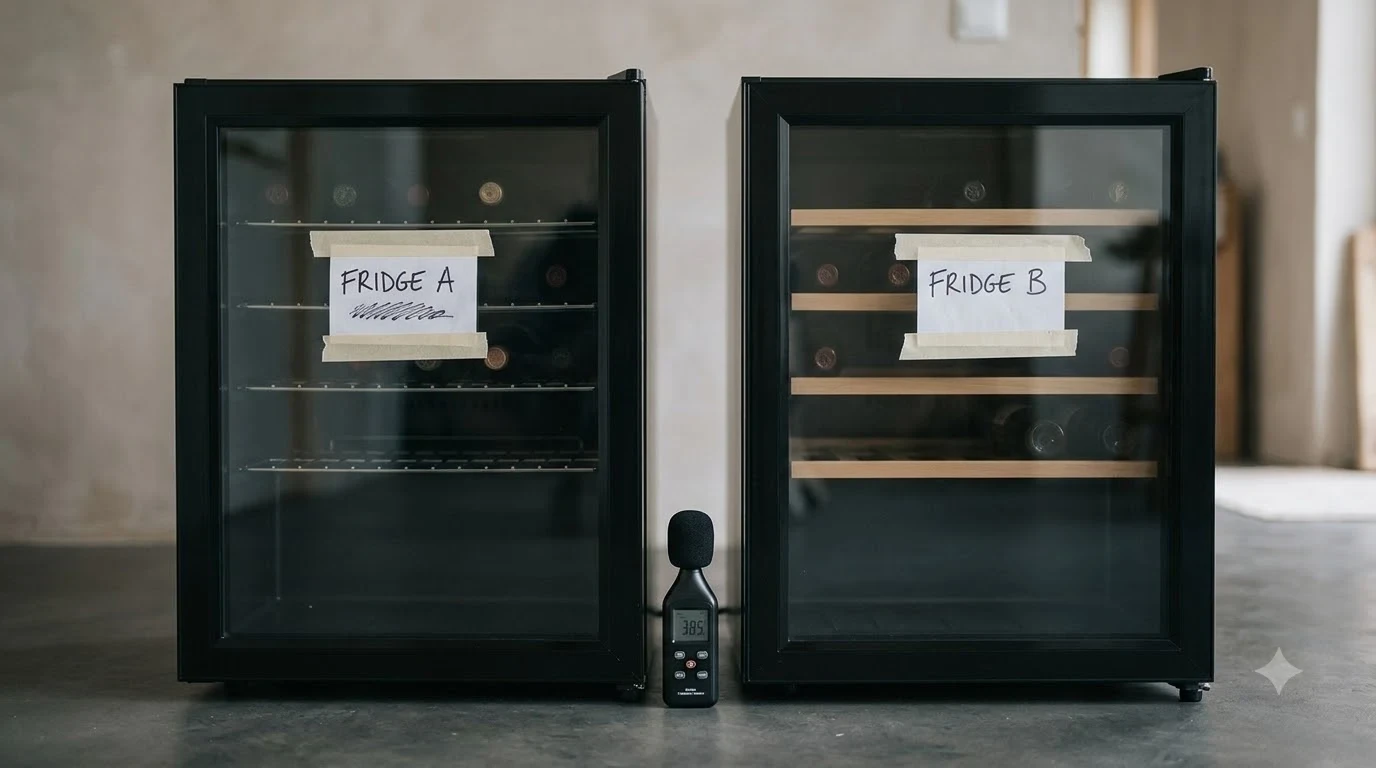
Noise specifications are another comparison point. Yeego lists maximum noise levels of 42 dB for the YEG-WD15 and YEG-WD24 and 41 dB for the YG-WS428. These figures offer a manufacturer-stated reference, but the sound experienced in a particular home can depend on leveling, installation, surrounding cabinetry, and compressor operation.
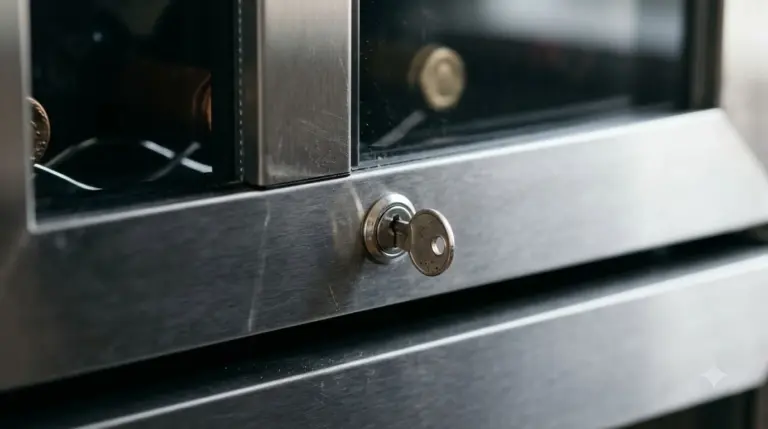
The larger models also provide additional organizational features. Depending on the configuration, buyers may find reversible doors, adjustable leveling legs, locks, charcoal filters, automatic defrosting, and digital control panels. These details are not necessarily standard across the complete range, so comparing the specification sheets is essential.
Common Complaints and Ownership Considerations
Yeego offers several attractive specifications, but a careful purchase requires looking beyond advertised capacity and appearance. Installation limitations, bottle compatibility, temperature expectations, and the availability of model-specific support all deserve attention.
One possible source of disappointment is advertised bottle capacity. Manufacturers generally calculate capacity using standard bottle dimensions, often based on traditional Bordeaux-style bottles. Real collections are rarely so uniform. A refrigerator advertised for 52 bottles may accommodate fewer when filled with wider Burgundy bottles, Champagne bottles, or unusually shaped bottles.
This is especially relevant for sparkling wine enthusiasts. Champagne bottles are typically wider than standard Bordeaux bottles and may require shelf rearrangement. Some Yeego product descriptions specifically mention removing shelves to accommodate taller or larger bottles. Buyers who regularly store sparkling wine should investigate shelf spacing before making a decision.
Installation requirements are another potential problem. The YEG-WD15 manual specifies a clearance of 1/4 inch on each side and above the unit for built-in installation. The separate compact YG-CW manual describes freestanding installation and requires 3/4 inch at the sides, 4 inches above, and 2 inches behind. These are materially different instructions for different product configurations.
That distinction is important because not every Yeego wine cooler is suitable for recessed kitchen installation. A freestanding model placed inside a tightly enclosed cabinet can struggle to release heat. This may affect cooling performance and appliance operation. Buyers should never assume that a refrigerator can be built in simply because its width matches an available cabinet opening.
Another consideration is the difference between manufacturer claims and independently documented ownership experience. Yeego product pages include review sections and customer questions, but the amount of feedback varies by model. A product page with limited customer feedback cannot establish long-term reliability, compressor lifespan, or consistent temperature performance across multiple years of ownership.
Warranty terms also require careful attention. The YEG-WD15 product page lists a one-year unit warranty, two years for parts, and three years for the compressor. The YG-CW instruction manual describes a one-year parts warranty and explains that service labor and freight charges may remain the owner’s responsibility. These documents relate to different product configurations, so the warranty for a specific purchase should be confirmed in writing.
Buyers should also consider replacement parts and service arrangements. A wine refrigerator is a specialized appliance, and a failed temperature controller, fan, door seal, or compressor can interrupt storage for an entire collection. Before purchasing, it is sensible to identify the customer service contact, determine whether replacement components are available, and understand how warranty claims are handled.
None of these considerations automatically makes Yeego a poor choice. They simply mean that its specifications should be evaluated alongside installation instructions, warranty coverage, and the amount of credible owner feedback available for the particular model.
How to Choose a Yeego Wine Fridge
The right Yeego refrigerator depends on the size of the collection, the types of wine being stored, the available installation space, and whether separate temperature zones are necessary. Starting with these practical requirements makes it easier to narrow down the lineup.
1. Match Capacity to Your Collection
Begin by counting the bottles you currently own and estimating how much the collection might grow. A six-bottle compact refrigerator is suitable for a very small selection, but it will become restrictive if you regularly purchase wine by the case. A 28-bottle model provides more flexibility for a household that keeps several wines available throughout the week.
For a larger collection, the 52-bottle YEG-WD24 offers a middle ground between compact undercounter storage and a tall cabinet. Buyers with more extensive collections can consider the 89-bottle and 165-bottle configurations. Leaving some unused capacity is often preferable to filling every shelf immediately, especially when the collection includes wider bottles.
2. Decide Whether You Need One or Two Zones
A single-zone refrigerator is appropriate if most of the collection consists of similar wines and one temperature setting is sufficient. It is also a straightforward choice for buyers who primarily want consistent storage rather than separate serving temperatures.
A dual-zone model is more versatile for mixed collections. A household that regularly purchases Chardonnay, Riesling, Pinot Noir, and Cabernet Sauvignon may appreciate having separate compartments. However, check the actual temperature ranges because Yeego models do not all have identical upper and lower zone specifications.
Remember that storage temperature and serving temperature are not necessarily the same. A refrigerator’s temperature range should accommodate the conditions you want for your collection, while individual bottles can be brought to their preferred serving temperature before opening.
3. Measure the Installation Space
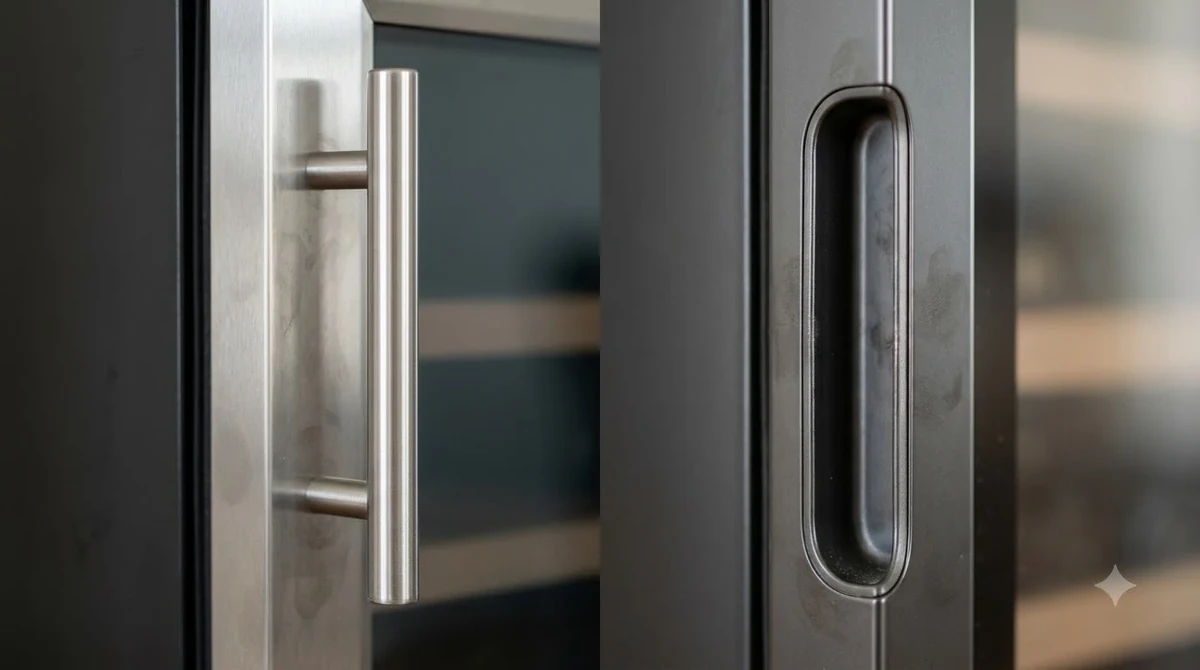
Measure the opening’s width, height, and depth before selecting a model. Include space for the door to open, the handle to clear nearby cabinets, and access to electrical connections. A refrigerator that fits the cabinet opening but cannot open fully may become frustrating to use.
For example, the YEG-WD15 measures 14.8 inches wide, 22.4 inches deep, and 34 inches high. The YEG-WD24 measures 23.4 inches wide, 22.4 inches deep, and 32.3 inches high. These measurements are useful starting points, but the required installation clearances must also be included.
4. Compare Cooling and Interior Features
Look at the cooling system, temperature adjustment range, shelving material, door construction, and noise specifications. Compressor cooling is a key characteristic of several Yeego models. Buyers may also prefer adjustable wooden shelves, automatic defrosting, digital controls, and a reversible door.
For a refrigerator installed in a shared living area, the manufacturer’s noise specification is particularly relevant. The stated 41 dB maximum for the YG-WS428 is slightly lower than the 42 dB specifications for the YEG-WD15 and YEG-WD24. That small numerical difference should not be interpreted as a guarantee of a noticeably quieter experience in every installation.
5. Compare Warranty and Support
Warranty coverage is an important part of the purchasing decision. Confirm the length of coverage for the refrigerator, parts, and compressor, along with any labor, freight, or return restrictions. Keep the receipt, product model, serial number, and instruction manual together.
Yeego identifies [email protected] as its customer support email. When contacting support, include the model number, a description of the problem, and any relevant photographs or error information. Written communication can help establish exactly which warranty terms and troubleshooting instructions apply to the appliance.
Tip: Before purchasing a built-in Yeego wine refrigerator, compare the cabinet opening with the appliance’s complete installation diagram, including ventilation clearance, door swing, handle depth, and electrical access. A correct width measurement alone is not enough to establish installation compatibility.
Warranty and Support: Manuals, Installation, and Maintenance
Yeego provides instruction manuals for its wine refrigerators, and locating the correct document is one of the most useful steps before installation. Different model families can have different control panels, ventilation requirements, temperature ranges, and warranty provisions.
The YEG-WD15 instruction manual is available through the product documentation linked to its official product page. It covers safety instructions, installation, parts identification, operating controls, troubleshooting, and warranty information. The manual identifies the model as YEG-WD15 and specifies a 115V/60Hz electrical supply, R600a refrigerant, and a 40°F to 65°F operating range.
Other Yeego manuals are also available through retailer-hosted PDF documentation and manual libraries. The compact YG-CW manual, for example, covers models with six, eight, and 12-bottle capacities. It includes operating instructions and a troubleshooting section for cooling problems, ventilation issues, unusual noise, and frost accumulation.
Finding the Correct Yeego Wine Cooler Manual
For the most reliable instructions, identify the model number before downloading a manual. The model number is generally found on the appliance identification label or purchase documentation. Searching for a general phrase such as Yeego wine cooler manual may produce documents for several different products, which is why matching the model number is important.
For example, the YEG-WD15 manual explains the control panel and installation requirements for that refrigerator. It should not automatically be treated as the correct installation guide for a six-bottle compact model or a tall 165-bottle cabinet.
The compact YG-CW manual explains how to use the plus and minus buttons to adjust the temperature in 1-degree increments between 40°F and 65°F. It also describes a three-to-five-minute waiting period before restarting the appliance after a power interruption. These instructions are useful, but control-panel operations can differ across Yeego model families.
Initial Installation
Allow the refrigerator to stand upright before connecting it to power after transportation. The YEG-WD15 manual recommends approximately 24 to 36 hours, while the compact YG-CW manual recommends approximately 24 hours. Following the specific instructions supplied with the appliance helps reduce the risk of cooling-system problems associated with transportation.
Place the appliance on a level surface that can support its weight when fully loaded. Use the adjustable leveling feet where provided. Avoid positioning the refrigerator next to an oven, radiator, or other heat source, and keep it away from direct sunlight.
Ventilation is equally important. A built-in refrigerator needs the clearance specified in its manual, and its front ventilation grille must remain unobstructed. Freestanding models require their own recommended side, rear, and top clearances.
Cleaning and Routine Maintenance
Disconnect the refrigerator from power before cleaning or performing maintenance. Remove the bottles and shelves as appropriate, then clean the interior using a soft cloth and a suitable mild cleaning solution. Avoid abrasive materials that could damage interior surfaces or door seals.
Keep the door gasket clean and inspect it periodically for damage. A poorly sealing door can allow warm air to enter, making temperature control more difficult. Avoid leaving the door open for extended periods, particularly when loading several bottles.
The compact YG-CW manual also emphasizes cleaning the back and bottom of the appliance. It specifically warns that failing to clean the condenser every six months can contribute to malfunction. Maintenance procedures may vary by design, so owners should follow the instructions for their exact model rather than applying one manual to the entire product range.
For support questions, contact Yeego using the service address provided in the applicable documentation. Include the model number, serial number, purchase date, and a clear description of the problem. This information can help the service team identify the correct replacement parts and warranty provisions.
Is Yeego a Good Brand? Final Buying Considerations
Yeego has a varied wine refrigeration lineup, with useful options for both small households and larger collectors. Its strongest advantages are the number of available cabinet sizes, the presence of dual-zone configurations, and features such as front ventilation, adjustable shelving, and digital temperature controls.
Its smaller refrigerators are appealing for buyers who need a dedicated space for a limited collection. The 15-inch YEG-WD15 is an interesting option for buyers seeking a narrow dual-zone refrigerator, while the 24-inch YEG-WD24 provides more storage capacity without requiring a tall cabinet. The YG-WS428 targets a different buyer altogether, with its advertised 165-bottle capacity and taller design.
However, the brand’s extensive product selection should not be mistaken for proof that every model offers identical performance or reliability. The available specifications are model-specific, and warranty terms can differ between product families. Buyers should also distinguish between manufacturer claims, customer comments, and independently established long-term performance.
Yeego is therefore worth including on a wine refrigerator shortlist, particularly when its dimensions and features match a specific installation. A sensible purchase decision should also account for the intended bottle mix, temperature requirements, ventilation, service arrangements, and the cost of replacing a specialized appliance if it develops a problem.
Frequently Asked Questions
Does Yeego manufacture its own wine refrigerators?
Yeego describes itself as a factory seller specializing in wine coolers and beverage refrigerators. That description does not independently establish which factories manufacture every component or whether all models share the same production facility. Buyers seeking manufacturing details should request clarification about the specific model and its place of manufacture.
Can a Yeego wine fridge be used in a garage?
Suitability depends on the model’s approved ambient operating temperature range and the conditions in the garage. The YEG-WD15 manual recommends an ambient temperature of approximately 72°F to 78°F for best performance and warns against installation where temperatures fall below 60°F. An unconditioned garage with substantial seasonal temperature swings may therefore be unsuitable for that model.
Does a Yeego wine refrigerator have a Sabbath mode?
The cited product specifications and manuals do not establish Sabbath-mode availability across the Yeego lineup. Buyers who require this feature should request written confirmation for the exact model before ordering. Do not assume that a digital control panel automatically includes a Sabbath setting.
Can Yeego wine coolers store open wine bottles?
Opened bottles can generally be placed upright if the shelf configuration provides sufficient clearance. Use a suitable closure to reduce exposure to oxygen and avoid storing bottles where they can fall when the door opens. The refrigerator is designed primarily for wine storage, not for preserving every type of opened beverage or food product.
Can the temperature display on a Yeego cooler show Celsius?
Some Yeego instruction documentation describes switching between Fahrenheit and Celsius using a dedicated control-panel button. The compact YG-CW manual also describes a separate temperature adjustment process using plus and minus controls. Because panel designs vary, the correct button sequence should be confirmed in the manual supplied for the particular refrigerator.
A Yeego wine fridge can be a practical choice for buyers who want dedicated wine storage with a selection of cabinet sizes and cooling configurations. Compare the exact model specifications, installation instructions, and warranty coverage before committing to a purchase. The best choice is the refrigerator that fits your collection and installation space without compromising ventilation or convenient access.
More in Brand Hubs
 Icyglee Wine Fridge: Compare Capacities, Features and ModelsUpdated Nov 20, 2026
 Fomup Wine Fridge: Explore Models, Features, and Buying TipsUpdated Nov 20, 2026
 Aaobosi Wine Fridge: Compare Models and Choose the Right CoolerUpdated Nov 20, 2026
 Orymuse Wine Fridge Reviews: Compare Capacities, Features and WarrantyUpdated Nov 20, 2026
 Tylza Wine Fridge: Find the Right Cooler for Your CollectionUpdated Nov 20, 2026
 Vintec Wine Fridge: Features, Warranty, and Buying AdviceUpdated Nov 20, 2026