

We may earn a commission when you buy through links on this page, at no extra cost to you. Learn more.
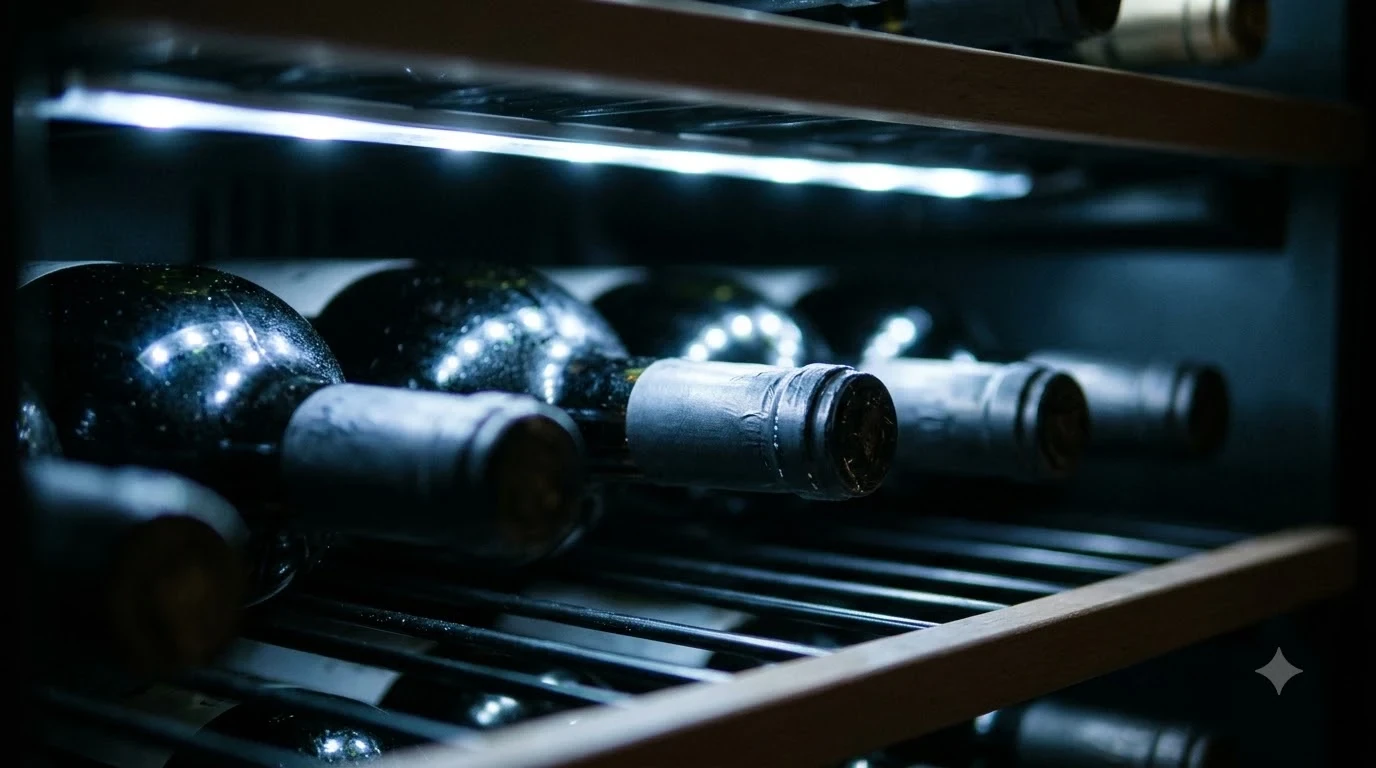
An aaobosi wine fridge can be a practical choice for wine drinkers who want compressor cooling, dual temperature zones, and flexible installation without moving into a traditional wine cellar. The brand offers compact wine refrigerators as well as larger wine-and-beverage combinations, with features such as digital temperature controls, glass doors, and adjustable wooden shelves. However, model specifications, actual bottle capacity, long-term reliability, and customer support deserve careful attention before purchasing.
AOBOSI, also written as AAOBOSI in some product listings and retailer descriptions, has developed a selection of household appliances that includes wine refrigerators and beverage coolers. Its wine cooler range is aimed at homeowners who want dedicated bottle storage, convenient serving temperatures, and appliances that can fit into kitchens, home bars, and entertainment areas. The most useful way to evaluate the brand is to compare individual models rather than assume every refrigerator has the same features or performance. This brand guide examines the product range, common owner experiences, installation considerations, and the questions worth asking before choosing an AOBOSI wine cooler.
Brand Overview: What AOBOSI Offers Wine Collectors
AOBOSI offers wine refrigerators built around compressor cooling, digital temperature adjustment, and enclosed bottle storage. Its selection includes compact dual-zone appliances and wider wine-and-beverage refrigerators, making the brand relevant to both dedicated wine drinkers and households that want cold drinks available in the same cabinet.
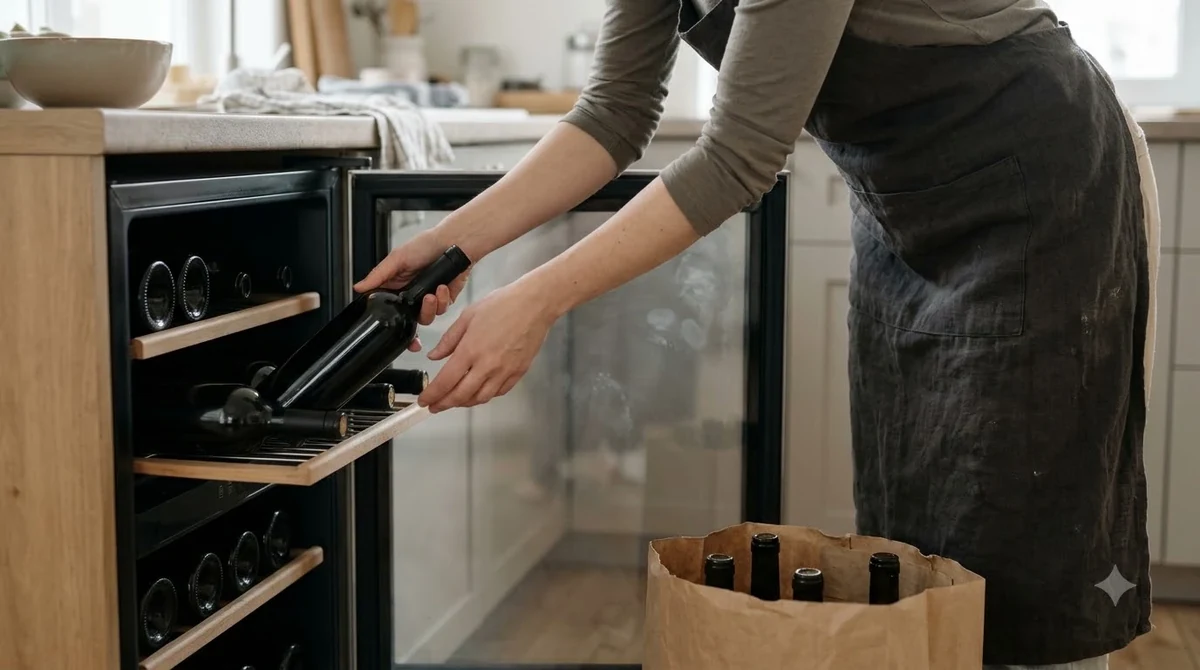
One important distinction is the variation in the brand name. Some product pages use AOBOSI, while marketplace listings and independent review websites sometimes write AAOBOSI. These naming variations can make product research confusing, particularly when different retailers list similar-looking appliances with slightly different capacity claims. Buyers should compare the model number, manufacturer specifications, and installation dimensions instead of relying on the brand spelling alone.
The manufacturer’s product catalog includes appliances such as the JC-85B, a 15-inch dual-zone refrigerator advertised for 28 bottles. Its stated temperature ranges are 41–54°F in the upper compartment and 54–68°F in the lower compartment. This configuration allows a household to maintain separate conditions for wines that are intended to be served at different temperatures.
The brand also lists other configurations, including the YC-100B and larger wine-and-beverage appliances. The range is therefore not limited to one refrigerator size or one storage arrangement. Some models are intended primarily for wine, while combination units divide their interiors between wine bottles and cans.
That variety is useful, but it also means that specifications should never be transferred from one model to another. A 24-inch combination refrigerator with two doors and separate bottle and can compartments is not interchangeable with a narrow 15-inch wine refrigerator. Their cooling ranges, usable storage, dimensions, and installation requirements can differ considerably.
AOBOSI’s overall appeal is its emphasis on practical household features. Digital controls simplify temperature adjustments, glass doors make bottle identification easier, and wooden shelving provides a familiar arrangement for horizontal wine storage. Dual-zone models also offer greater flexibility than a basic beverage refrigerator with one temperature setting.
However, brand recognition alone is not a reliable indication of long-term appliance quality. The available owner feedback includes both favorable experiences and reports of equipment failures or difficulties receiving technical assistance. AOBOSI is best evaluated as a value-oriented appliance option whose individual models need to be checked carefully before purchase.
For readers comparing several appliance manufacturers, our guides to whether Black and Decker is a good brand and whether Galanz is a good brand offer useful additional context about evaluating household appliance brands.
Product Lines Explained: Wine-Only and Wine-and-Beverage Models
AOBOSI’s product range includes narrow dual-zone wine refrigerators, larger upright wine coolers, and combination beverage refrigerators. The biggest purchasing decision is whether the appliance will store wine exclusively or divide its space between wine and other drinks.
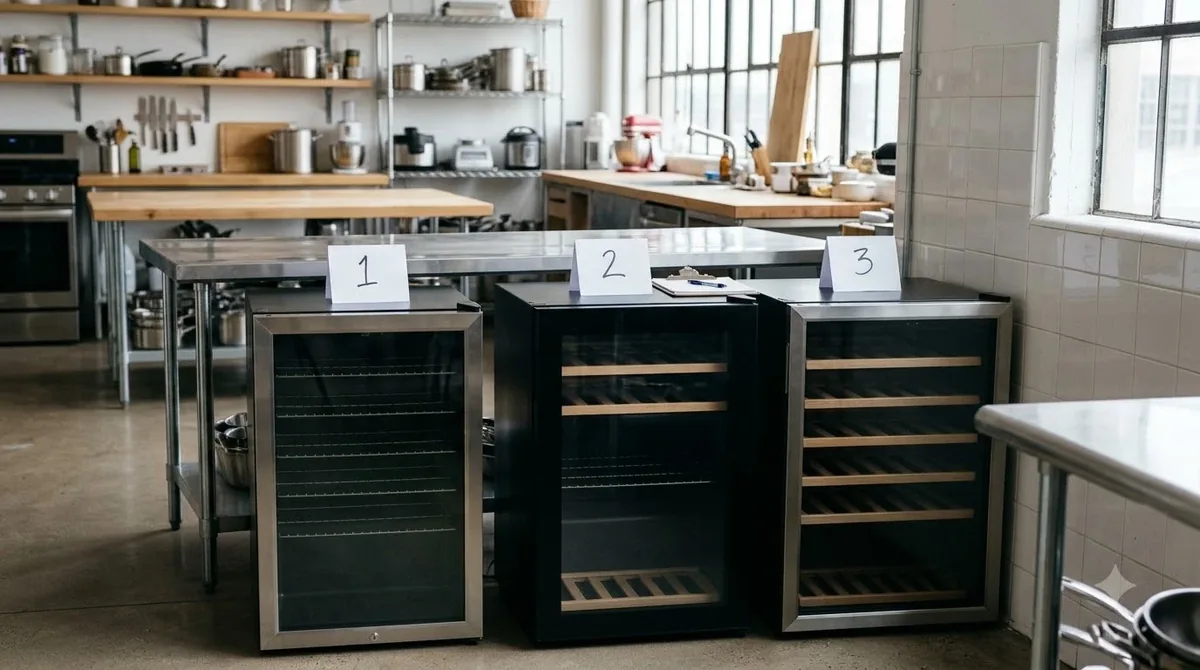
The following table summarizes several identifiable configurations using manufacturer specifications and published independent product information. These models should be treated as separate configurations, not as a promise that every AOBOSI refrigerator has identical dimensions or features.
| Model or configuration | Advertised capacity | Temperature information | Best suited to |
|---|---|---|---|
| JC-85B | 28 bottles | Upper 41–54°F; lower 54–68°F | Compact dual-zone wine storage |
| YC-100B | 30 bottles | Upper 41–55.4°F; lower 55.4–66.4°F | Smaller household collections |
| YC-150B | 5.30 cubic feet | Model manual documents a larger refrigerator configuration | More substantial wine storage |
| 24-inch wine-and-beverage configuration | 19 wine bottles and 57 cans | Wine 41–64.4°F; beverages 35.6–50°F | Home bars and mixed beverage storage |
The JC-85B is particularly interesting for households with limited kitchen space. Its manufacturer lists dimensions of approximately 22.7 inches deep, 14.96 inches wide, and 34.2 inches high. That relatively narrow footprint makes it worth considering for a small kitchen or a dedicated under-counter installation, provided the actual cabinet opening and ventilation requirements are compatible.
The YC-100B is another compact option, with an advertised 30-bottle capacity and two temperature zones. The manufacturer’s information lists a 3.53-cubic-foot volume for this model. It provides an alternative for buyers who want a slightly different storage configuration and should be compared directly with the JC-85B rather than assumed to be the same appliance under another name.
The YC-150B occupies a larger category. The manufacturer’s compressor wine cooler manual identifies it as a 5.30-cubic-foot appliance, giving buyers a larger-volume option. Its dimensions and required cabinet space should be checked independently because a refrigerator’s cubic-foot capacity does not automatically establish how many bottles of different shapes will fit.
The 24-inch combination category takes a different approach. An independent review by The Gadgeteer describes a model with space for 19 wine bottles and 57 cans, divided between two separate cooling zones. This arrangement is useful for households that want wine, soft drinks, and other beverages in one appliance rather than purchasing separate refrigerators.
There are also practical differences in shelving. Wine-only models generally prioritize horizontal bottle storage, whereas combination refrigerators use different shelf arrangements for cans and bottles. A wide sparkling-wine bottle, a Burgundy bottle, or a Champagne bottle may occupy more space than a standard Bordeaux bottle.
Consequently, the advertised bottle count should be treated as a maximum based on a particular bottle shape and shelf arrangement. A collection containing many oversized bottles may fit substantially fewer than the headline capacity.
For a useful starting point, choose the product category first, then compare its model-specific specifications. This prevents the common mistake of buying a combination beverage refrigerator when the real requirement is a dedicated wine storage appliance.
What the Brand Does Well: Temperature Control and Practical Features
AOBOSI’s strongest selling points are its dual-zone configurations, compressor-based cooling, and convenient storage features. These characteristics can make its refrigerators attractive for people who serve both white and red wines or want a dedicated cooling space for a developing collection.
Temperature flexibility is particularly valuable because different wines are best served at different temperatures. A refrigerator with separate compartments can maintain a cooler environment for sparkling wine and lighter whites while keeping another section suitable for fuller-bodied reds.
The JC-85B illustrates this approach with its upper 41–54°F range and lower 54–68°F range. The manufacturer also describes a digital control panel, temperature memory, and a control lock. These features reduce the need to repeatedly adjust the appliance after ordinary interruptions or accidental button presses.
Temperature memory is a useful practical feature in a household appliance. If power is interrupted, a memory function can restore the previous selected settings when the refrigerator resumes operation. This does not replace monitoring the actual interior temperature, but it helps avoid having to reprogram the appliance every time power is restored.
Another advantage is the use of compressor cooling. Compressor refrigerators are designed to maintain refrigerated conditions across a range of operating environments, although actual performance depends on ambient temperature, ventilation, door openings, and the appliance’s condition.
The Gadgeteer’s review of a 24-inch AOBOSI combination refrigerator provides a useful example of measured performance. The reviewer selected 40°F for the beverage compartment and 52°F for the wine compartment, then checked beverages after more than 24 hours. The measured temperatures were within 2°F of the selected settings across the tested locations.
That result is encouraging for the particular appliance reviewed, but it should not be interpreted as a laboratory guarantee for every AOBOSI model. It is also important to distinguish the reviewer’s measurements from the manufacturer’s published specifications.
The same review describes relatively quiet operation during normal use. This is encouraging for people considering a refrigerator in an office, dining area, or home entertainment room. Nevertheless, compressor appliances make operating sounds, and the experience can vary with installation, leveling, surrounding surfaces, and the frequency of cooling cycles.
Interior presentation is another appealing feature. Glass doors make it easier to see bottles without opening the refrigerator, while interior LED lighting helps identify labels and stored beverages. Wooden shelves also provide a traditional wine-storage appearance that suits many home bars and kitchens.
For the JC-85B, the manufacturer describes beechwood shelving that can be removed or adjusted to accommodate different bottle arrangements. This is particularly useful for households that store a combination of regular wine bottles and occasional larger formats.
Some AOBOSI appliances also offer front-facing ventilation. This is an important feature for under-counter installations because a refrigerator intended for built-in use needs an appropriate ventilation arrangement. However, buyers should verify the precise model’s installation instructions instead of assuming that all appliances in the brand’s catalog are suitable for enclosed cabinetry.
Tip: For wine service, a useful starting point is 45–50°F for light whites and rosé, 50–55°F for fuller-bodied whites, 55–60°F for lighter reds, and 60–65°F for fuller reds. Compare these serving temperatures with the refrigerator’s actual zone ranges before choosing a dual-zone model.
Overall, AOBOSI offers a reasonably broad set of features for a household wine refrigerator. The main advantage is flexibility rather than a single standout technology: separate temperatures, practical shelving, digital controls, and several appliance sizes make it easier to match a refrigerator to a particular room and collection.
Common Complaints: Reliability, Noise, and Customer Support
Owner feedback about AOBOSI wine coolers is mixed, with positive comments about appearance, temperature flexibility, and quiet operation alongside complaints involving failures, noise, and after-sales support. These differences make it important to consider long-term ownership rather than focusing exclusively on the feature list.
Some owners appreciate the dual-zone arrangement and report that their refrigerators maintain the selected settings satisfactorily. On the manufacturer’s JC-85B product page, one customer describes the refrigerator as quiet and appreciates its temperature memory. Another reports being pleased with the size and separate temperature controls.
Other feedback raises concerns. The same product page includes a complaint about a unit becoming louder than expected when its compressor starts. Compressor noise is not necessarily evidence of a malfunction, but the sound may be noticeable in a small apartment, quiet office, or open-plan kitchen.
More concerning are reports of premature equipment failures. One customer on the manufacturer’s product page describes a refrigerator that stopped operating after approximately one year and five months. The customer also reports difficulty finding repair information. Another describes a flashing display and unsuccessful attempts to obtain technical assistance after the warranty period.
These are individual customer accounts rather than proof of a widespread manufacturing defect. Nevertheless, they identify important questions that prospective buyers should investigate. Refrigerator failures can involve the compressor, electronic control board, temperature sensor, electrical supply, or other components, and a particular symptom does not establish the cause.
Independent review aggregation offers another perspective. BestViewsReviews analyzed 114 reviews of an AAOBOSI 15-inch refrigerator advertised for 30 bottles. Its analysis reported approximately 60% positive sentiment and 36% negative sentiment.
That distribution suggests that the product has attracted both satisfied customers and a meaningful number of dissatisfied reviewers. It should not be interpreted as a precise probability that an individual refrigerator will fail. Review aggregation methods also depend on the sources and opinions included in the analysis.
Installation and shipping complaints deserve attention as well. Large glass-door appliances can be vulnerable to transport damage, misalignment, and cosmetic problems. The Gadgeteer’s review describes a difficult delivery experience, although the appliance itself remained functional.
The same reviewer identified a few smaller usability limitations. The shelves did not slide especially smoothly, and larger Champagne bottles could be tight in some wine racks. These are practical issues that matter when a collection contains bottles outside the standard Bordeaux format.
Buyers should also be cautious about assuming that a quiet-running model will remain inaudible in every room. An uneven floor, cabinet vibration, loose shelving, and poor clearance can all affect perceived operating noise. A refrigerator positioned next to a bedroom or workspace deserves more careful consideration than one installed in a utility room.
Customer service is another important purchasing consideration. A refrigerator is a long-term household appliance, and access to troubleshooting instructions, replacement components, and warranty assistance can matter as much as the initial feature list.
Before ordering, identify the seller responsible for the transaction, the manufacturer’s support contact, the warranty procedure, and the availability of replacement parts. Save the invoice, model number, serial number, and any correspondence about installation or warranty coverage.
For an additional comparison, the ROVSUN brand guide can help readers assess another appliance brand offering household cooling products. Comparing warranty terms and product-specific support is more useful than relying on brand names alone.
For a more detailed look at the independent review of the combination refrigerator, read The Gadgeteer’s AOBOSI 24-inch wine and beverage cooler review, which discusses temperature measurements, bottle fit, shelf operation, and everyday use.
How to Choose an AOBOSI Wine Cooler
The right AOBOSI refrigerator depends on collection size, available space, temperature requirements, and the types of bottles stored. A narrow dual-zone unit can work well for a modest wine collection, while a larger combination refrigerator is more appropriate when cans and other drinks also need dedicated cooling.
1. Estimate your real bottle requirements
Start by counting the bottles that need regular storage rather than the number you hope to own eventually. A collection of 15 bottles may fit comfortably into a 28-bottle refrigerator, leaving room for occasional purchases and different bottle shapes.
However, advertised capacity is usually based on standard 750 ml bottles. Champagne bottles, sparkling wine, and some Burgundy formats can be wider than conventional Bordeaux bottles. If these wines make up a substantial portion of the collection, examine shelf spacing and removable-shelf arrangements carefully.
It is generally sensible to leave some unused space rather than buy a refrigerator that is completely full from the beginning. Extra room makes bottle retrieval easier and provides flexibility when the collection changes.
2. Decide whether dual-zone cooling is necessary
A single-zone wine refrigerator is often sufficient when most of the collection consists of wines that can be stored under one consistent set of conditions. A dual-zone appliance becomes more useful when the owner wants separate storage temperatures for whites, sparkling wines, and reds.
For example, the JC-85B’s upper compartment reaches 41–54°F, while the lower compartment reaches 54–68°F. This provides a broad separation between colder storage for wines intended for cooler service and a warmer compartment for wines that benefit from a higher serving temperature.
However, a dual-zone appliance is not automatically better for everyone. It may take more room, introduce more controls, and require a larger initial investment than a simpler refrigerator. Choose it because the separate temperatures solve a real storage problem.
3. Measure the installation area carefully
Physical measurements should be checked before selecting any wine cooler. Record the available width, height, and depth, then compare them with the appliance dimensions and the installation clearances specified by its manual.
The JC-85B is listed at approximately 14.96 inches wide, 22.7 inches deep, and 34.2 inches high. These measurements provide a useful starting point, but the required opening may be different from the appliance’s external dimensions.
Check the location of electrical outlets, nearby cabinets, door swings, and ventilation openings. A refrigerator that fits physically may still be unsuitable if its airflow is obstructed or its door cannot open far enough to remove bottles comfortably.
4. Choose between wine-only and combination storage
A wine-only refrigerator is generally the more sensible choice for a household whose main priority is storing wine. Its shelving is arranged around bottle storage, and the internal space is dedicated to the collection.
A wine-and-beverage refrigerator makes more sense in an entertainment area where cans and wine bottles need to be accessible at the same time. The reviewed 24-inch AOBOSI combination model, for example, accommodates 19 wine bottles and 57 cans according to The Gadgeteer.
Consider the drinks that will actually be stored. If the appliance will mostly contain wine, the combination layout may use space less efficiently than a dedicated wine cooler. If the household regularly serves canned beverages alongside wine, the separate compartments may provide a better overall arrangement.
5. Examine the temperature ranges
Temperature ranges should be compared with the wines and drinks the household plans to store. A refrigerator that cannot reach a sufficiently cool temperature may be unsuitable for someone who regularly serves sparkling wine or very cold white wines.
At the other end of the range, a warmer compartment may be useful for red wines that are intended to be served slightly below typical room temperature. Remember that storage and serving are different purposes: a bottle does not necessarily need to remain at its exact serving temperature throughout its storage period.
6. Compare the warranty and seller arrangements
Ask who will handle a warranty claim and whether support is provided directly by the manufacturer or through the retailer. A clear support procedure can make a considerable difference if the refrigerator develops an electronic or cooling problem.
The older AOBOSI compressor wine cooler manual specifies a 12-month manufacturer’s warranty against manufacturing faults and describes a possible additional six-month warranty through registration. This should not be assumed to apply automatically to every newer product or retailer listing.
Read the documentation supplied with the exact model and purchase. Verify registration requirements, deadlines, exclusions, and whether labor, shipping, or replacement components are covered.
These steps are particularly important when buying a refrigerator for a built-in installation, because removing and replacing an appliance can be more complicated than moving a freestanding unit.
Warranty and Support: What Buyers Should Verify
Warranty coverage is an important part of evaluating AOBOSI because customer reports include concerns about repairs and technical assistance. The manufacturer’s older compressor wine cooler manual provides a documented warranty arrangement, but the precise coverage must be confirmed for the model being purchased.
The manual describes a 12-month manufacturer’s warranty against manufacturing faults from the date of purchase. It also explains that an additional six months may be available through registration on the manufacturer’s specified website or submission of the warranty card.
That information is useful, but it should not be treated as a universal guarantee for the entire current product catalog. Product lines can have different documentation, and warranty arrangements may change between sellers and models.
Before purchasing, look for the following information:
- The length of the manufacturer’s written warranty.
- The date from which coverage begins.
- Whether online registration is required for extended coverage.
- How to contact technical support.
- Whether replacement parts are available for the model.
- Whether the seller provides a separate return or replacement policy.
- Who pays shipping or service costs when a refrigerator needs repair.
The manufacturer’s website lists a US customer service telephone number and weekday operating hours. Buyers should verify that the contact information and service arrangements still apply to their specific purchase before relying on them.
It is also sensible to retain the original packaging until the refrigerator has been installed and confirmed to be operating correctly. Large glass appliances can be difficult to transport safely without their protective materials.
Documentation is especially valuable if a temperature display begins showing an error. The older AOBOSI manual identifies HH and LL display indications as possible temperature-probe problems and advises prompt attention. A buyer should follow the instructions for the exact model rather than attempting unauthorized electrical or refrigeration repairs.
For ordinary maintenance, the manual recommends unplugging the refrigerator, removing the contents and shelves, and cleaning the interior with a mild baking soda solution. Wooden shelves should be allowed to dry before being returned to the appliance.
Warranty quality and customer support should be treated as part of the buying decision, not as details to investigate only after something goes wrong. A refrigerator with useful storage features is less attractive if obtaining replacement components or service becomes unnecessarily difficult.
Readers interested in comparing additional appliance manufacturers can browse our brand hubs for more information about product categories, ownership considerations, and purchasing decisions.
Frequently Asked Questions
Is AOBOSI the same company name as AAOBOSI?
AOBOSI is the spelling used on the manufacturer’s wine refrigerator product page, while AAOBOSI appears in some retailer and independent review listings. These naming differences can make product searches confusing. Match the model number and manufacturer documentation before concluding that two listings describe the same appliance.
Does an AOBOSI wine refrigerator require a dedicated electrical outlet?
The older compressor wine cooler manual specifies a grounded three-pin electrical outlet and recommends a separate circuit for the appliance. It also warns against removing the grounding pin or using an extension cord. Electrical requirements should be confirmed against the manual supplied with the particular refrigerator.
How long should an AOBOSI wine fridge stand upright after delivery?
The Gadgeteer’s review of the 24-inch combination model describes allowing the refrigerator to remain upright for at least 12 hours after transportation before operation. This allows the refrigerant system to settle following movement. Follow the exact model’s installation instructions if they specify a different waiting period.
Can AOBOSI wine refrigerators accommodate half bottles and magnums?
Storage flexibility depends on the shelf design and the dimensions of the particular bottle. Removable wooden shelves can provide additional room for some nonstandard formats, but the advertised capacity is generally based on standard bottles. Measure unusual bottles and compare their dimensions with the available shelf clearance before purchasing.
Can an AOBOSI wine fridge be used in an unheated garage?
Garage suitability depends on the refrigerator’s specified operating ambient-temperature range. A compressor refrigerator may struggle when the surrounding environment falls outside its intended operating conditions, even if the selected internal temperature is appropriate. Check the model’s operating-temperature specifications before placing it in a garage or other unconditioned space.
AOBOSI offers several useful wine refrigerator configurations, particularly for buyers interested in dual-zone cooling, compact installation, and combined wine-and-beverage storage. Its features are appealing, but mixed owner feedback and the importance of model-specific specifications make careful research essential. Compare capacity, dimensions, ventilation, warranty coverage, and customer support before choosing an aaobosi wine fridge, and select the appliance that best fits the collection and installation area rather than relying on advertised bottle counts alone.
More in Brand Hubs
 Icyglee Wine Fridge: Compare Capacities, Features and ModelsUpdated Nov 20, 2026
 Fomup Wine Fridge: Explore Models, Features, and Buying TipsUpdated Nov 20, 2026
 Orymuse Wine Fridge Reviews: Compare Capacities, Features and WarrantyUpdated Nov 20, 2026
 Tylza Wine Fridge: Find the Right Cooler for Your CollectionUpdated Nov 20, 2026
 Vintec Wine Fridge: Features, Warranty, and Buying AdviceUpdated Nov 20, 2026
 Phiestina Wine Cooler Options for Better Wine StorageUpdated Nov 20, 2026