

We may earn a commission when you buy through links on this page, at no extra cost to you. Learn more.
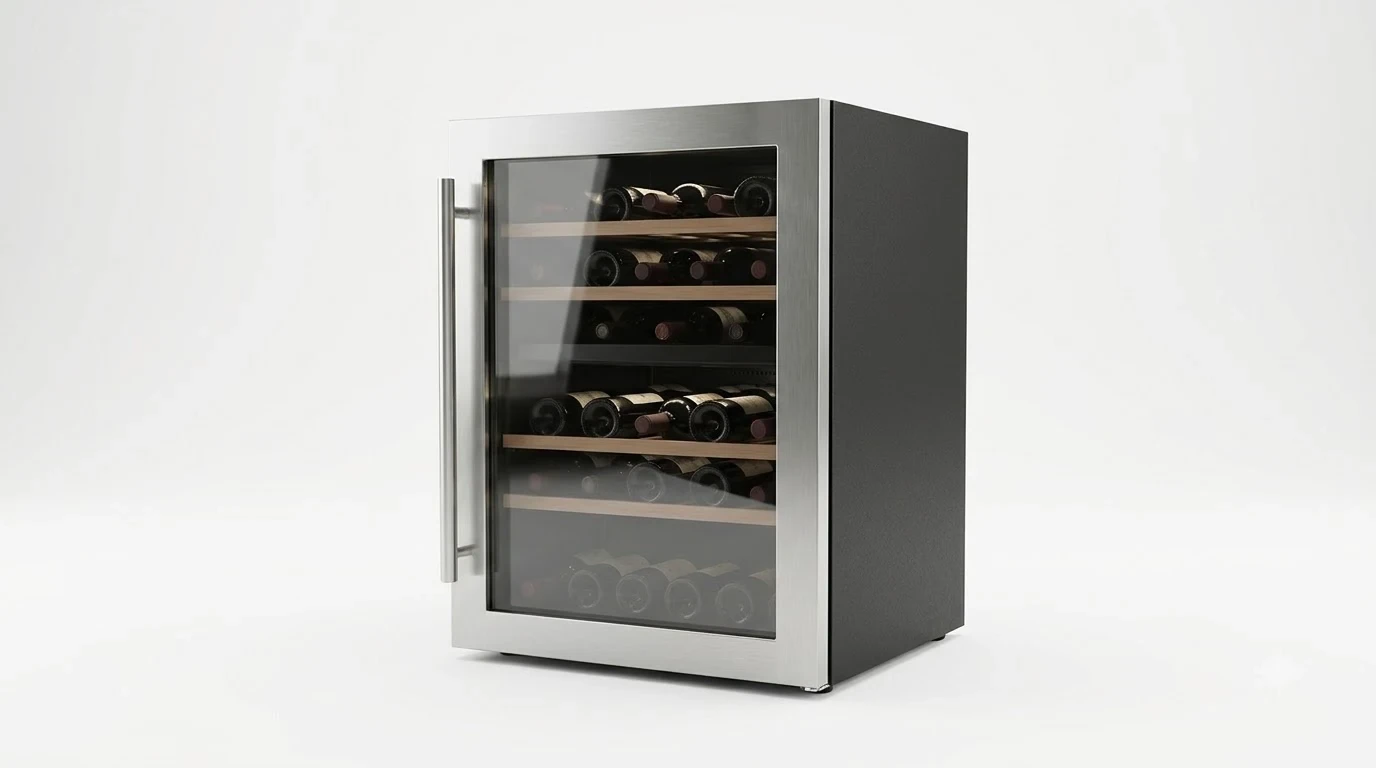
A fomup wine fridge is a practical option for shoppers seeking dedicated wine storage, large bottle capacities, adjustable temperature controls, and modern glass-door designs. The brand’s lineup includes compact beverage refrigerators, mixed wine-and-drink coolers, and tall wine cabinets advertised for capacities reaching approximately 190 bottles. FoMup offers useful features, but buyers should compare individual model specifications, installation requirements, and available customer support before choosing a unit.
Wine refrigerators are available in many configurations, from small countertop appliances to full-height cabinets designed for substantial collections. FoMup occupies several parts of this market, with products aimed at homeowners, entertainers, and people who want to keep wine separate from everyday food refrigeration. Its range includes single-purpose wine storage and dual-zone beverage combinations, making the individual model more important than the brand name alone. Understanding the differences can help shoppers interpret FoMup wine fridge reviews and decide whether a particular refrigerator fits their kitchen, collection, and expectations.
Brand Overview: FoMup’s Refrigeration Range and Market Position
FoMup is positioned around beverage refrigeration, with a product lineup that covers wine storage, everyday drinks, and specialized cooling cabinets. Its range emphasizes large stated capacities, glass-door presentation, adjustable shelving, and digital temperature controls rather than a narrowly focused selection of wine-only appliances.
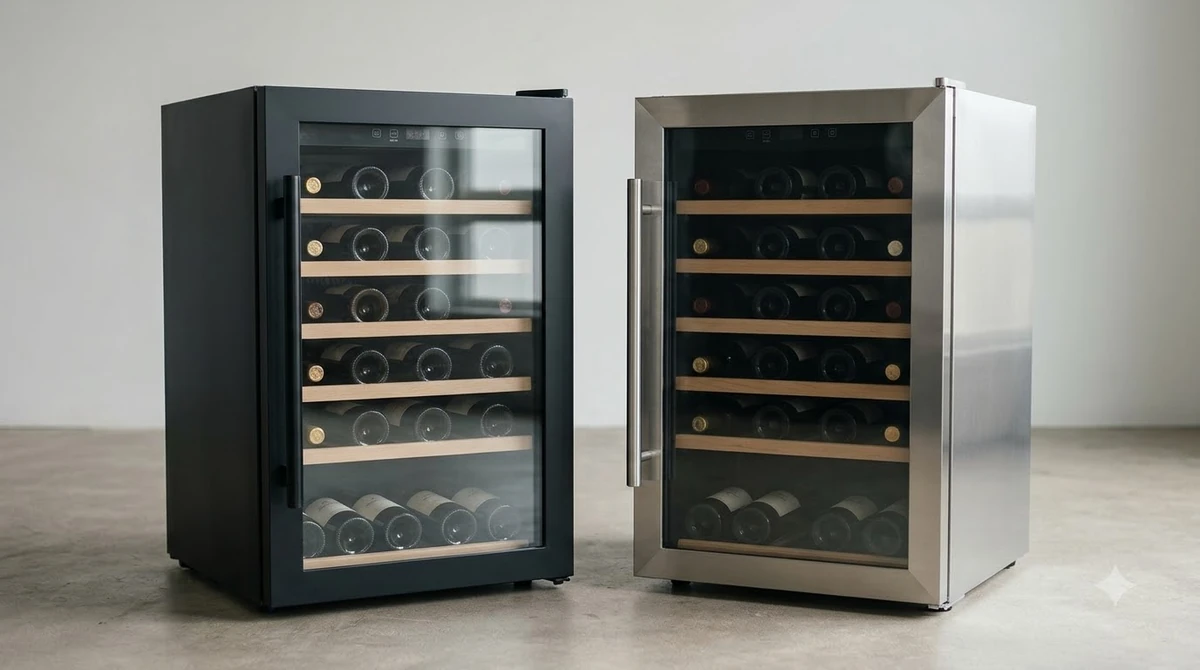
The official FoMup product website organizes its products into several categories. These include beverage refrigerators, wine-and-beverage refrigerators, wine fridges, outdoor refrigerators, and electric cooler cabinets. This broad assortment gives buyers several ways to approach beverage storage, although shoppers should distinguish a wine cellar from a general-purpose beverage cooler. The two appliances may look similar, but their shelf arrangements and temperature capabilities serve different purposes.
FoMup’s wine refrigeration range includes tall cabinets advertised for 173, 180, and 190 bottles. The official product descriptions also identify dual-zone wine and beverage combinations, including a 24-inch model advertised for 18 wine bottles and 88 cans. These capacities suggest that the brand targets both everyday households and people with larger collections. However, stated bottle capacities generally assume standard Bordeaux-shaped bottles. Champagne bottles, Burgundy bottles, and unusually wide designs can reduce the number that fit comfortably.
One useful distinction is that FoMup’s product descriptions emphasize practical refrigeration features rather than advanced cellar-management technology. The official website highlights adjustable temperatures, modern finishes, and different storage capacities. A product description alone does not establish long-term reliability, temperature uniformity, or the availability of replacement components. Those questions deserve separate attention before making a purchase.
Shoppers researching competing appliance labels can also compare whether Black and Decker is a good brand. Looking at each company’s individual product specifications is more useful than assuming that every refrigerator sold under one name shares the same performance or construction quality.
Product Lines Explained: Wine Cabinets, Dual-Zone Coolers, and Beverage Fridges
FoMup’s lineup includes several distinct refrigeration formats, from tall wine cabinets to under-counter beverage combinations. Choosing the correct category first makes it easier to compare capacity, temperature settings, shelf layouts, and installation requirements.
The following table summarizes the main product categories and advertised configurations on FoMup’s official website, together with additional specifications documented for the FM24WS wine refrigerator and the reviewed 24-inch beverage model.
| Product category | Advertised capacity or configuration | Best suited to | Important consideration |
|---|---|---|---|
| Compact beverage refrigerator | 126 cans | Smaller rooms and home bars | Check available shelf space |
| 24-inch beverage refrigerator | 200 cans | Everyday canned drinks | Not primarily designed for wine collections |
| Dual-zone wine and beverage refrigerator | 18 bottles and 88 cans | Mixed beverage storage | Compare both temperature ranges |
| Dual-zone beverage refrigerator | 20 bottles and 60 cans | Wine and everyday drinks | Separate zones have different settings |
| Tall wine refrigerator | 173 bottles | Growing wine collections | Requires substantial floor or cabinet space |
| Large wine cabinet | 180 bottles | High-capacity wine storage | Confirm dimensions and ventilation |
| Large sliding-shelf wine refrigerator | 190 bottles | Large collections and organized access | Capacity assumes standard bottles |
The table illustrates why comparing FoMup refrigerators by capacity alone can be misleading. A 200-can beverage cooler is not interchangeable with a 190-bottle wine cabinet. Even the two dual-zone configurations have different advertised bottle-and-can combinations. Buyers should consider what they actually intend to store rather than choosing the largest number displayed in a product description.
Tall wine refrigerators
The tall wine refrigerator category is the most relevant part of the lineup for people building a dedicated wine collection. The FM24WS manual describes a large cabinet with approximately 190 standard Bordeaux bottles, 16 shelves, a digital control panel, and a reversible door. Its listed dimensions are 27.17 inches deep, 23.54 inches wide, and 76.77 inches high. At that height, measuring the installation location is particularly important.
The manual also describes a double-layer tempered-glass door, activated carbon filter, automatic defrosting, and blue LED lighting. These features support convenient storage and presentation, but they do not automatically make the appliance equivalent to a professionally managed wine cellar. Buyers storing expensive bottles for extended periods should pay particular attention to actual temperature stability and the surrounding room conditions.
Dual-zone wine and beverage refrigerators
Dual-zone appliances divide the interior into separate temperature-controlled sections. The official FoMup website lists a combination advertised for 18 bottles and 88 cans, while Wine Cooler Guru discusses a different 24-inch configuration holding approximately 20 standard wine bottles and 60 standard cans.
The second configuration has separate advertised temperature ranges of 35–50°F for beverages and 41–64°F for wine. That division is useful when a household regularly serves chilled canned drinks alongside wine. It also means that the refrigerator should be selected according to the needs of both zones rather than the wine section alone.
Compact and general beverage refrigerators
The compact models are aimed at people who need additional drink storage without installing a full-height wine cabinet. FoMup advertises a 17-inch refrigerator for 126 cans and a 24-inch beverage refrigerator for as many as 200 cans. These configurations are more appropriate for soda, beer, sparkling water, and other everyday beverages than for a carefully organized wine collection.
What the FoMup Brand Does Well
FoMup’s strongest selling points are its range of storage capacities, practical temperature controls, and selection of installation formats. The combination of tall wine cabinets and dual-zone beverage refrigerators gives buyers more flexibility than a lineup restricted to one refrigerator size.
Large stated storage capacities. The brand advertises wine cabinets holding 173, 180, and 190 bottles. This range gives collection owners options for different storage needs. A larger cabinet can also reduce the need to operate multiple small refrigerators, provided the available space and electrical requirements are suitable.
Nevertheless, bottle capacity deserves careful interpretation. Manufacturers generally calculate wine-fridge capacity using standard 750 ml Bordeaux bottles arranged in a specified pattern. A collection containing large Champagne bottles, wide Pinot Noir bottles, or other unusual shapes may occupy considerably more shelf space. Buyers should treat the published number as a reference rather than a guarantee that every collection will fit.
Separate temperature zones. FoMup’s dual-zone products are useful for households that keep different drinks at different temperatures. According to Wine Cooler Guru’s review of the 20-bottle and 60-can model, its beverage section has a stated range of 35–50°F, while the wine section has a range of 41–64°F. That separation makes it possible to keep canned drinks colder without forcing the wine compartment to use the same setting.
For serving purposes, sparkling wines generally work well around 40–50°F, light whites and rosé around 45–50°F, and full-bodied whites around 50–55°F. Light reds are commonly served at 55–60°F, while full-bodied reds are better around 60–65°F. These serving temperatures are useful reference points, although long-term storage and serving preparation are not exactly the same task.
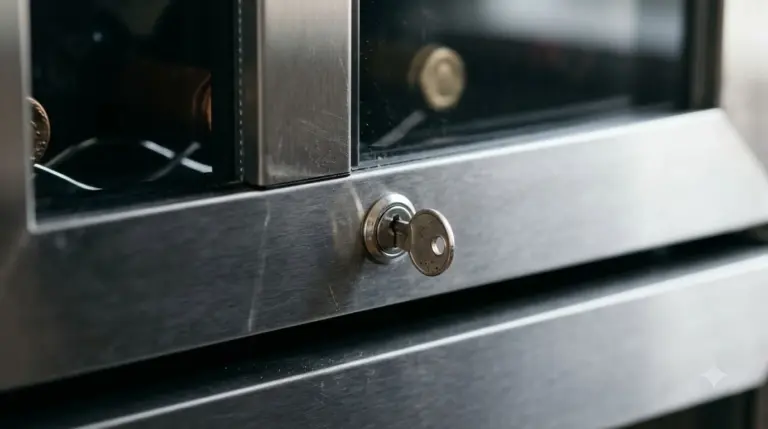
Convenient shelf and door features. The FM24WS manual describes sliding shelves, a reversible door, and a safety lock. Sliding shelves help users reach bottles toward the back without removing several bottles first. A reversible door can also help when the refrigerator must fit into a particular kitchen or utility-room layout.
Presentation and visibility. Glass doors and interior lighting make the refrigerators suitable for visible installation in a home bar or entertainment area. The stainless-steel appearance described in FoMup’s product lineup can also complement other kitchen appliances. For some buyers, this presentation matters because the refrigerator will remain visible rather than being hidden in a basement or storage room.
Automatic defrosting on documented models. The FM24WS manual identifies an automatic defrost system. This reduces the need for routine manual defrosting and simplifies normal ownership. The same manual describes an activated carbon filter intended to help control unwanted interior odors.
These are useful practical features, particularly for households that prefer straightforward refrigeration over complicated electronics. Still, they should be considered alongside installation, service, and long-term performance rather than as standalone proof of appliance quality.
Common Complaints and Limitations in FoMup Wine Fridge Reviews
FoMup wine fridge reviews provide a mixed picture of convenience and minor usability problems. The available independent discussion is particularly useful for understanding the smaller dual-zone beverage refrigerator, but its observations should not automatically be applied to every FoMup wine cabinet.
Wine Cooler Guru’s discussion of the FoMup dual-zone refrigerator identifies several drawbacks in its review of the 24-inch, 20-bottle and 60-can refrigerator. These include wire shelves that make upright cans less stable during loading, an interior light that switches off automatically, and a power button that does not completely shut down the appliance. These are practical details that may become noticeable during everyday use even if the refrigerator performs its basic cooling function.
Shelf design and loading convenience
The combination of wire and wood shelves gives the mixed beverage model separate storage arrangements for different drinks. However, Wine Cooler Guru notes that the spacing of the wire shelves can make upright cans unstable while loading. This is more of a convenience problem than a fundamental refrigeration defect, but it matters to buyers who regularly fill the beverage compartment.
The same consideration applies to wine-only cabinets. A capacity figure based on standard Bordeaux bottles may not reflect the number of large-format or unusually shaped bottles a collector owns. Sliding shelves improve access, but they cannot compensate for insufficient clearance between shelves. Checking the interior arrangement is therefore important for collections containing different bottle styles.
Lighting and controls
The automatically switching-off interior light is another reported drawback of the smaller dual-zone model. Buyers who want continuous display lighting may find this disappointing, particularly when the refrigerator is part of a home bar. Those who mainly use the appliance for storage may consider it a minor inconvenience.
Wine Cooler Guru also reports that the power button on the reviewed beverage model does not completely switch the refrigerator off. The reviewer indicates that unplugging the appliance is necessary for a full shutdown. This is an important operational distinction, especially for anyone who expects a conventional on/off control.
Shipping damage and long-term reliability
Wine Cooler Guru mentions customer reports of shipping-related dents and cosmetic damage. Such complaints do not establish that the refrigeration system itself is unreliable, but they demonstrate why inspection at delivery matters. A large refrigerator is difficult to return or reposition after installation, so checking the exterior, glass, door alignment, and accessories before accepting the delivery is sensible.
There is also a limitation in the available reliability evidence. A review of a particular beverage refrigerator cannot establish the long-term durability of FoMup’s entire range. The tall wine cabinets, compact beverage coolers, and dual-zone appliances have different dimensions and configurations. Buyers should look for documentation and feedback associated with the exact model they intend to purchase.
Shoppers comparing alternative appliance brands may also find it useful to investigate whether ROVSUN is a good brand. A fair comparison should consider actual capacity, cooling zones, service terms, and installation specifications rather than relying on general brand impressions.
Tip: Photograph the refrigerator from every side immediately after delivery. Check the glass, door alignment, shelves, handle, and electrical cord before installation. For the FM24WS, the manual specifically recommends leaving the appliance upright for more than 24 hours before switching it on.
How to Choose a FoMup Wine Fridge
The right FoMup refrigerator depends on collection size, available space, storage temperature, and whether the appliance will also hold everyday drinks. Start with the intended use, then compare the actual dimensions and temperature specifications of the particular model.
1. Decide how many bottles you need to store
A small wine collection does not automatically require a tall 190-bottle cabinet. If you regularly keep only a few bottles available for dinner, a compact refrigerator or smaller wine cooler may be more appropriate. A larger cabinet becomes more useful when you buy wine by the case, maintain different wine styles, or want space for bottles intended for future occasions.
Allow room for collection growth without treating maximum capacity as a target. A refrigerator filled to its advertised limit may leave little flexibility for unusual bottle shapes or easier shelf access. It is also useful to consider whether the collection consists mainly of standard 750 ml bottles or includes larger formats.
2. Choose single-purpose or dual-zone storage
A wine-only refrigerator is generally the more direct choice when wine is the primary purpose. A dual-zone beverage refrigerator makes more sense when you also want to store soda, beer, sparkling water, or other canned drinks. Independent compartments allow different temperature settings without requiring separate appliances.
Consider the intended wine styles when comparing temperature ranges. The FM24WS offers a documented adjustment range of 40–65°F, while the reviewed 20-bottle and 60-can beverage configuration has a separate wine section advertised for 41–64°F. Both ranges accommodate many everyday wine-storage and serving requirements, but buyers should determine whether the actual settings suit their preferred wines.
3. Measure the installation location
Measurements should include height, width, depth, door clearance, and the space needed to move bottles in and out. The FM24WS measures 27.17 inches deep, 23.54 inches wide, and 76.77 inches high. Those dimensions make it a substantial appliance rather than a small under-counter cooler.
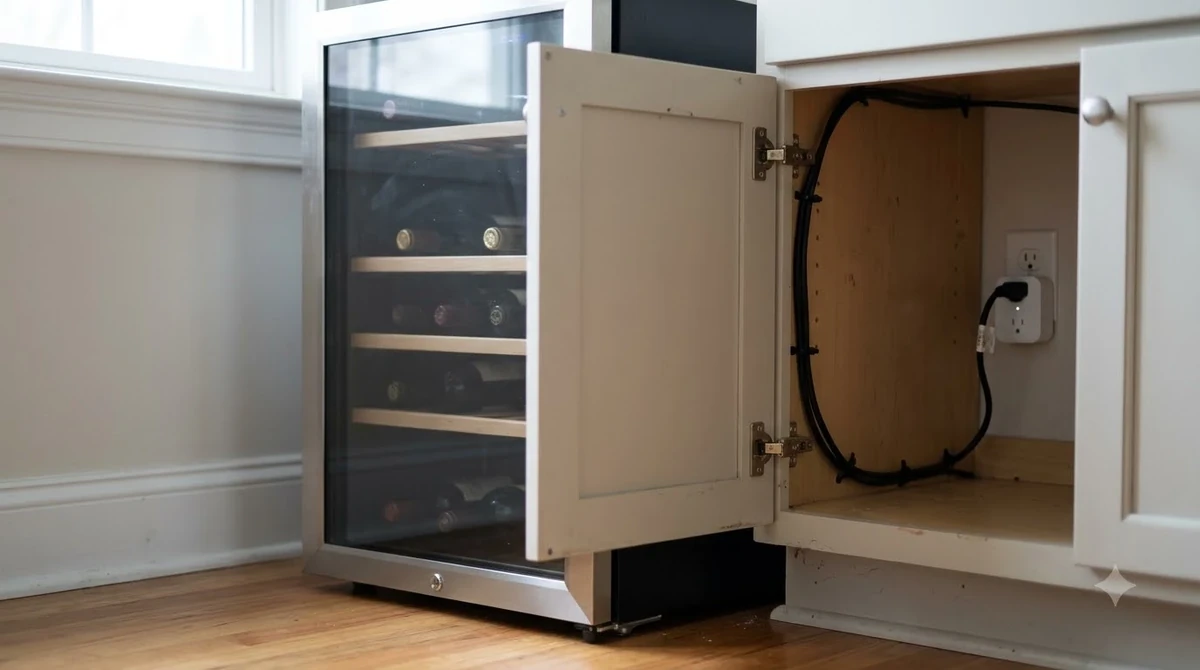
For under-counter installation, confirm that the exact model is designed for that configuration. Front ventilation is especially important because a refrigerator that releases heat through the sides or rear may require additional clearance. Wine Cooler Guru describes the smaller dual-zone beverage refrigerator as suitable for built-in or freestanding use because of its front ventilation. That installation feature should not be assumed for every FoMup refrigerator.
4. Compare energy and noise specifications
The FM24WS manual lists annual energy consumption of 250 kWh and a noise specification of 35 dB. These figures are useful for estimating household operating requirements and comparing similarly sized refrigerators. However, a listed noise rating does not necessarily represent every sound the appliance may produce during compressor starts, cooling cycles, or vibration against surrounding cabinetry.
Consider the intended location as well. A refrigerator placed beside a bedroom or quiet living area may need more careful noise evaluation than one installed in a utility room. Proper leveling and sufficient ventilation also help prevent unnecessary vibration.
5. Check the support arrangements before buying
Warranty language, technical support, and replacement-part availability are particularly important for large refrigeration appliances. The FM24WS manual identifies 12 months of technical support, but technical support should not automatically be interpreted as a comprehensive parts-and-labor warranty. Confirm the actual written coverage, exclusions, and process for submitting a claim before completing the purchase.
It is also useful to confirm who handles delivery damage, replacement shelves, door-reversal accessories, and compressor-related service. Keep the purchase documentation and product identification information together so that support staff can identify the exact refrigerator.
For a broader comparison of manufacturers and appliance categories, the site’s brand hubs offer another starting point for evaluating competing labels and product ranges.
Warranty and Support: What Buyers Should Verify
FoMup’s documented support information provides a starting point, but buyers should confirm the precise coverage attached to their chosen refrigerator. The FM24WS manual states that FoMup provides 12 months of technical support, with customers directed to the after-sales service team for questions and assistance.
This is useful information, but technical support and warranty coverage are not necessarily identical. Technical assistance may help with operating instructions, troubleshooting, or installation questions without covering every replacement component or repair expense. A separate warranty document or retailer policy may define the actual coverage period and conditions.
Before purchasing a tall wine cabinet, establish how service is arranged if the refrigerator stops cooling. Ask whether support is provided directly by FoMup, through the seller, or through another service provider. For a large appliance weighing more than 200 pounds, transportation and repair logistics can be significant considerations.
Keep the documentation and delivery information
Save the order confirmation, receipt, product listing, model number, and any warranty documents. Photographing the appliance upon arrival is also useful if the cabinet has a damaged door, dented panel, missing shelf, or other delivery problem. Report visible damage promptly through the seller’s stated process.
The FM24WS manual also advises contacting customer support for guidance about reversing the door and obtaining related accessories. This matters because door reversal may involve specific hardware or instructions rather than simply moving the hinges without preparation.
Understand basic troubleshooting
The FM24WS manual identifies several initial checks for common operating problems. If the appliance does not run, verify the electrical connection and circuit breaker. If the temperature is not sufficiently cold, examine the door closure, frequency of door openings, and ventilation grilles. If excessive noise occurs, check whether the refrigerator is level or whether surrounding objects are vibrating against it.
For cleaning, the manual recommends unplugging the refrigerator and using a soft cloth with mild detergent and water. Its automatic defrost system reduces routine maintenance, while the activated carbon filter is intended to help manage interior odors. Filter replacement intervals should be confirmed through the documentation for the specific model.
Overall, FoMup’s support documentation contains useful operational instructions, but buyers should not rely on a general product-page description to establish their legal warranty rights. The retailer’s written terms and the documentation supplied with the appliance remain important parts of the purchasing decision.
Frequently Asked Questions
Is FoMup a wine fridge manufacturer or a general appliance brand?
FoMup’s official website presents a refrigeration-focused assortment that includes wine coolers, beverage refrigerators, outdoor refrigerators, and electric cooler cabinets. Its online presentation emphasizes beverage storage rather than a broader household appliance catalog. Buyers should identify the exact model and its manufacturer documentation when evaluating a particular product.
Can the FoMup FM24WS store sparkling wine bottles?
The FM24WS manual describes a cabinet designed around standard Bordeaux bottles, not a universal bottle-shape guarantee. Champagne bottles often have wider bodies than standard Bordeaux bottles, which can reduce the number that fit on a shelf. Measure the available shelf clearance before planning to store a substantial sparkling-wine collection.
Does the FoMup FM24WS have a power-loss memory function?
Yes, the FM24WS manual describes a temperature memory function that retains the preferred settings after a power interruption. This is useful when electricity is temporarily interrupted. However, memory functionality does not mean the refrigerator can maintain its cooling temperature while disconnected from electricity.
Can a FoMup wine refrigerator be transported immediately after being moved?
The FM24WS manual recommends allowing more than 24 hours before starting the appliance after delivery so the refrigerant can settle. Follow the specific transportation and setup instructions supplied with the model. Keep the refrigerator upright during normal handling whenever the manufacturer’s instructions require it.
Does FoMup provide replacement carbon filters for its wine cabinets?
The FM24WS manual describes an activated carbon filter and recommends periodic replacement, but it does not establish a universal replacement schedule or identify a specific filter part number. Contact customer support with the exact model information before ordering replacement components. Confirm compatibility rather than assuming filters from another refrigerator will fit.
FoMup offers a varied selection of wine and beverage refrigerators, with particularly interesting options for buyers who want large bottle capacities or separate drink-storage zones. Its documented features include digital controls, reversible doors, sliding shelves, and automatic defrosting on selected models, although independent feedback also identifies some practical usability drawbacks. The best purchase is the model that fits the available space, collection size, and temperature requirements, with clear support and warranty terms confirmed before ordering.
More in Brand Hubs
 Icyglee Wine Fridge: Compare Capacities, Features and ModelsUpdated Nov 20, 2026
 Aaobosi Wine Fridge: Compare Models and Choose the Right CoolerUpdated Nov 20, 2026
 Orymuse Wine Fridge Reviews: Compare Capacities, Features and WarrantyUpdated Nov 20, 2026
 Tylza Wine Fridge: Find the Right Cooler for Your CollectionUpdated Nov 20, 2026
 Vintec Wine Fridge: Features, Warranty, and Buying AdviceUpdated Nov 20, 2026
 Phiestina Wine Cooler Options for Better Wine StorageUpdated Nov 20, 2026