

We may earn a commission when you buy through links on this page, at no extra cost to you. Learn more.
The best outdoor wine fridge is one that keeps wine inside a steady, cool range even when the air around it is hot, so the first thing to check is how well the unit holds temperature on a warm day, not just how it looks on a patio. Wine does not like heat or big temperature swings, and an outdoor setting usually brings both. The sections below explain what the storage research says about temperature, how the main outdoor setups compare, and what to look for before you buy or install a unit for a deck, patio, or pool house.
Outdoor wine coolers and refrigerators are popular with people who entertain on a deck or patio and want a few bottles within reach. The idea is appealing, but the setting asks more of the appliance than an indoor kitchen does. Direct sun, high summer air temperatures, and cold winter nights can all push a unit outside the range where wine keeps well. This guide walks through the main types, the temperature facts that matter, and the practical points that separate a useful outdoor unit from one that struggles.
Quick Comparison of Outdoor Wine Fridge Setups
Outdoor wine fridges are not one product category. Some are built to be placed outside, some are kept in a covered area, and some are simply indoor units moved to a sheltered spot. The table below compares the main setups by how well they manage heat, how easy they are to use, and how much they expose the wine to the weather.
| Setup | Heat exposure | Temperature control | Best for |
|---|---|---|---|
| Freestanding outdoor-rated unit | Designed for outdoor air, check the rating | Varies by model, confirm the range | Regular entertaining outside |
| Covered patio or pool house unit | Lower, shaded and sheltered | Usually steadier than open air | Frequent use in a shaded spot |
| Indoor unit near a door | Low | Steady | Keeping bottles close to the patio |
| Small or mini unit | Depends on placement | Limited capacity makes it easier to manage | A few bottles for a single evening |
The main point of the table is that placement often matters as much as the appliance. A covered, shaded spot improves almost any setup, while direct sun can challenge even a well-built unit. Before you choose a model, decide where it will sit, because that choice shapes everything else.
Best for Frequent Outdoor Entertaining: Freestanding Outdoor-Rated Units
A freestanding unit rated for outdoor use is the most direct answer for someone who hosts often on a deck or patio. These units are built to handle a wider range of air temperatures than a standard indoor model, and they often include features such as a sealed exterior or a dual-zone interior for different wine types.
The rating is the first thing to check. Look for the manufacturer’s stated outdoor or ambient temperature range, and compare it with the highest temperatures your area sees in summer. A unit that is rated only for indoor use may run hard in the heat, and that extra strain can shorten its life. Ask the manufacturer about the cooling range and how the unit handles temperature swings, since a fridge that holds one set point on a mild day may drift when the sun hits the cabinet.
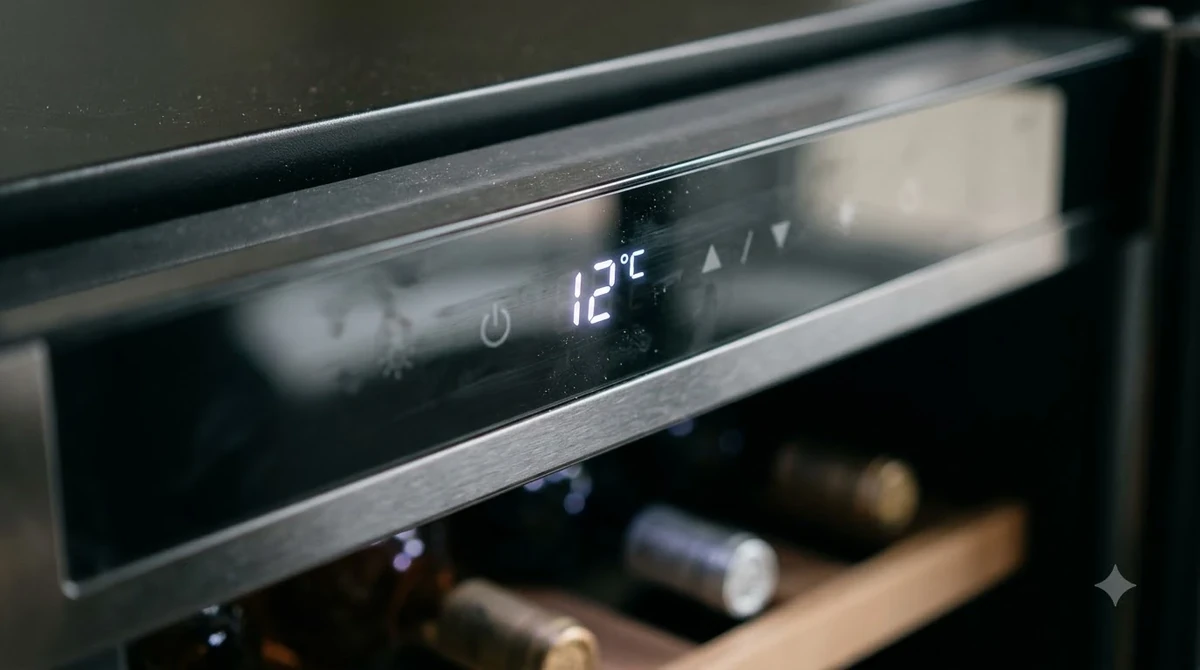
Wine itself is the real reason to pay attention. According to the Wikipedia article on wine cellars, wine can be stored satisfactorily between 7 and 18 degrees Celsius (45 to 64 degrees Fahrenheit) as long as any variations are gradual, and 13 degrees Celsius (55 degrees Fahrenheit) is described as ideal for short-term storage and long-term aging. A freestanding outdoor unit should hold the interior well inside that range, not just stay barely below the top of it.
Best for a Shaded Patio or Pool House: Covered Outdoor Units
A covered spot gives you most of the benefit of an outdoor unit without full exposure to the weather. Under a roof, a pergola, or a pool house wall, the appliance sees less direct sun, lower peak air temperatures, and less rain. That makes it easier for the unit to hold a steady interior temperature through a long afternoon.
Shade is not the only factor. Make sure the unit has room to breathe. Vents and the back of the cabinet need clear air, and a tight nook against a wall can trap heat and force the compressor to work harder. Keep the unit off a surface that gets hot from the sun, and leave enough clearance for the fan. A covered area also needs protection from rain and standing water, so choose a spot that stays dry.
Think about how often you will open the door, too. Each time the door opens on a hot day, the interior warms, and it takes time to recover. A covered unit near the patio door saves steps and reduces the number of trips, which in turn keeps the interior temperature more consistent.
Best for Keeping a Few Bottles Close: Indoor Units Near the Patio
For many households, the simplest approach is to keep the wine indoors and bring out only the bottles you plan to serve. An indoor unit near a patio door or in a kitchen next to the outdoor seating area avoids the heat and weather problems of an outdoor setup, and it keeps the wine in the range where it ages and tastes best.
This approach trades some convenience for stability. Carrying a bottle outside for an hour is a small task, and it lets you serve a wine at the right temperature without risking the cellar. The Wikipedia article on wine cellars notes that wine left exposed to heat or temperature fluctuations can spoil, and that passive storage works best in naturally cool, damp areas with only minor seasonal and daily variation. An indoor unit fits that profile far more easily than an outdoor one.
If you still want a unit close to the patio, a compact indoor model placed near the door gives you a short walk without any outdoor exposure. It is an especially practical choice in climates with long, hot summers.
Best for a Few Bottles at a Time: Small and Mini Units
A small or mini unit is a good fit when you only need a few bottles on hand for a single evening or a weekend. Its smaller interior is easier to keep at a stable temperature, and it takes less space on a deck or in a pool house. A small unit also means you are not tempted to store bottles that will sit in the heat for weeks.
Capacity is the trade-off. A smaller interior holds fewer bottles and may not leave room for a mix of white and red wines. If you plan to serve several wines at a party, choose a size that lets you keep the reds and whites separate, or pair the small unit with an indoor cellar for the rest of your collection. For more on capacity, see our guides to mini wine fridges and small wine fridges.
Plan to rotate the bottles. A small unit works best when the stock turns over quickly, so buy only what you will drink in the next few weeks, and check the interior temperature with a simple thermometer before each event.
Best for Long Storage: Keep Bottles Indoors
If you plan to keep wine for more than a few weeks, an outdoor unit is rarely the right place for it. Long storage depends on stable temperature, and the wider the swings, the more the wine suffers. The Wikipedia article on wine cellars notes that swings of 14 degrees or more can cause wine to breathe through the cork and speed aging, which is a clear reason to keep long-term bottles away from an outdoor unit.
A practical approach is to use the outdoor unit as a serving station and store the rest in a cooler, steadier spot. Move bottles from the indoor cellar to the outdoor fridge a day or two before a party, and return any unopened bottles afterward. That keeps the bulk of your collection stable while still giving you a convenient supply for the patio.
When you are not sure how long a bottle should last once it is open, read our guide to how long does wine last after opening, which covers the storage side of serving wine outside.
How to Choose
Start with where the unit will sit and how hot that spot gets. Then decide how much wine you need on hand and how often you will open the door. These three answers narrow the options quickly.
- Placement: a covered, shaded spot with clear air around the vents is far better than open sun.
- Rating: check the manufacturer’s stated outdoor or ambient range against your local summer highs.
- Temperature control: look for a steady interior, and ask how the unit recovers after the door opens.
- Capacity: choose a size that matches how many bottles you will serve in a typical week, not how many you hope to own.
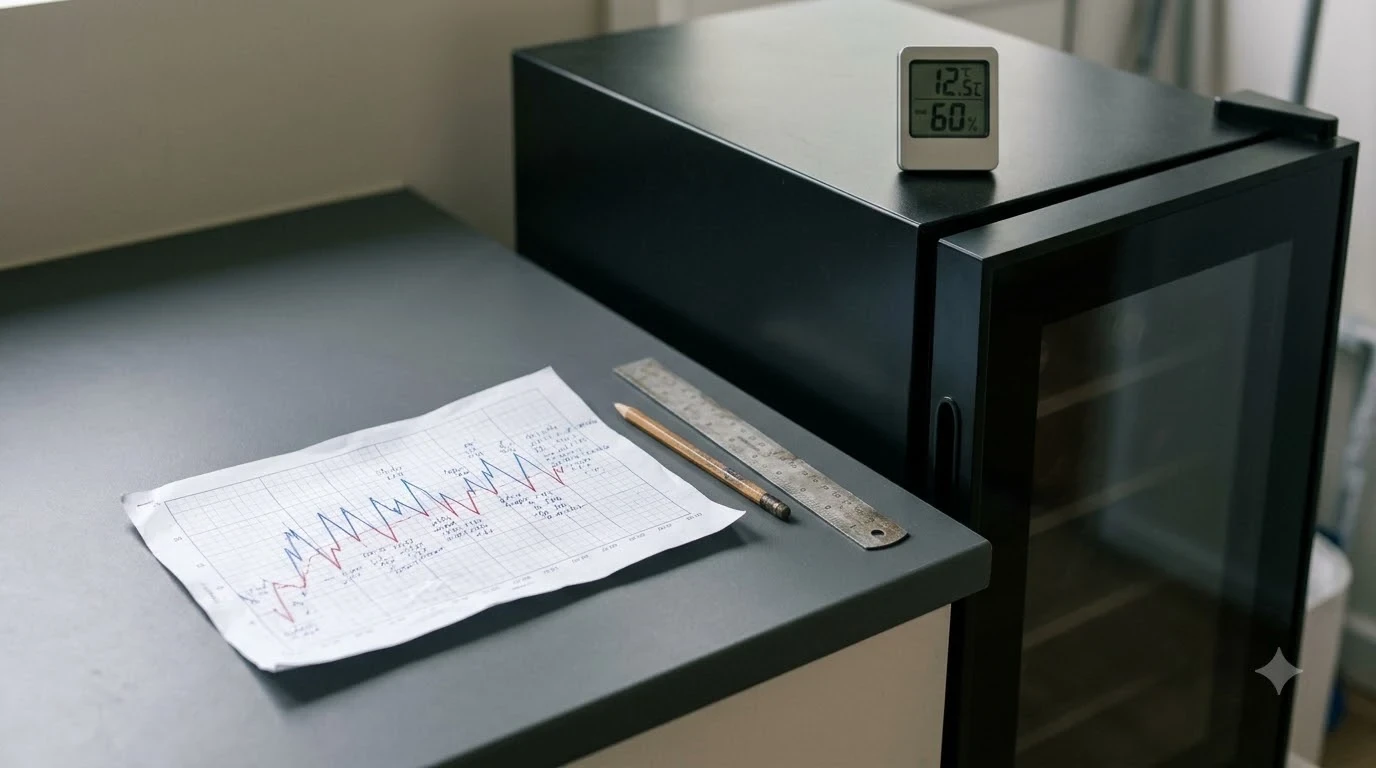
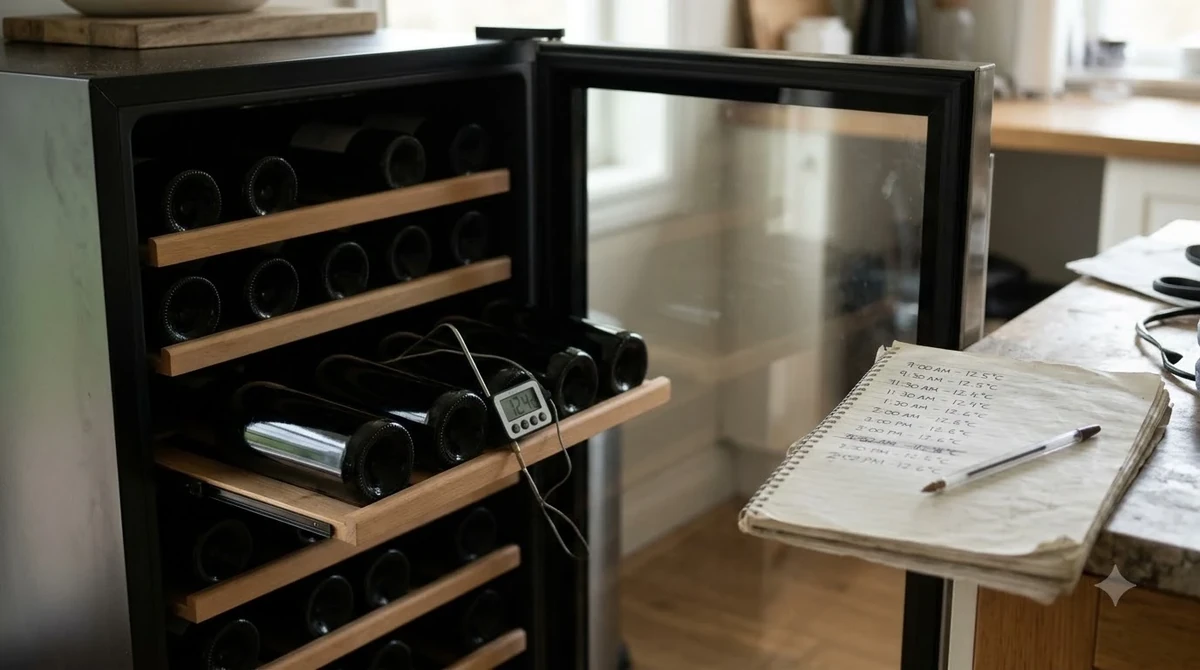
Tip: Place a simple thermometer inside the unit and check it during a hot afternoon before you rely on it for a party.
Frequently Asked Questions
Can I keep wine in an outdoor wine fridge all summer?
It is not a good idea for long periods. Wine stored between about 7 and 18 degrees Celsius with only gradual variation keeps well, but outdoor summer heat can push the interior beyond that range. Use the outdoor unit for bottles you plan to drink soon, and keep the rest in a cooler, steadier place.
What temperature should a wine fridge be?
The Wikipedia article on wine cellars describes 13 degrees Celsius (55 degrees Fahrenheit) as ideal for short-term storage and long-term aging, and notes that wines age normally between 10 and 14 degrees Celsius. Set your unit to a steady point in that range for the wine types you keep, and check it with a thermometer.
Does direct sun damage a wine fridge?
Direct sun raises the temperature of the cabinet and the air around the vents, which makes the compressor work harder and can make the interior drift. A shaded spot with clear space around the unit usually performs better and keeps the wine in a steadier range.
Is an indoor wine fridge better than an outdoor one?
For long-term storage, an indoor unit is usually the better choice because it avoids heat and weather. An outdoor unit makes sense for regular outdoor entertaining, as long as it is rated for the conditions and placed in a covered spot. Many people use both, with the bulk of the collection indoors and a small outdoor supply for serving.
Choosing the best outdoor wine fridge comes down to matching the unit to the spot and the way you entertain. A freestanding outdoor-rated unit suits frequent use, a covered unit suits a shaded patio, an indoor unit near the door suits steady storage, and a small unit suits a few bottles at a time. For a broader view of the category, browse our wine fridges by type guide, and if you need a specific size, see the by bottle count section.
For background on storage temperatures and why swings matter, read the Wikipedia article on wine cellars. It is a helpful reference before you decide where a unit should sit.
More in Wine Fridges by Type
 Best White Wine Fridge for Reliable Chilling and StorageUpdated Nov 20, 2026
 Best Smart Wine Fridge for Steady Temperatures and Remote ChecksUpdated Nov 18, 2026
 Best Black Under Counter Wine Fridge Options for Kitchens and IslandsUpdated Nov 18, 2026
 Best Black Slim Wine Fridge for Narrow Gaps and Dark KitchensUpdated Nov 18, 2026
 Best Built In Dual Zone Wine Fridge Options by Kitchen LayoutUpdated Nov 18, 2026
 Best Slim Built in Wine Cooler: 5 Space-Saving Styles for Tight KitchensUpdated Nov 18, 2026