

We may earn a commission when you buy through links on this page, at no extra cost to you. Learn more.
The best wine rack island depends on whether you prioritize bottle capacity, climate control, or mobile prep space in your kitchen. Stationary butcher-block islands with built-in cubbies work best for home cooks who keep a dozen everyday bottles on hand, while rolling bar carts with drop leaves suit smaller apartments and flexible entertaining. For collectors who store delicate vintages near warm cooking zones, an island housing a dedicated dual-zone wine cooler protects bottles from kitchen heat.
Adding a kitchen island with integrated wine storage turns dead floor space into an organized prep zone, casual serving bar, and accessible bottle library. Because kitchens naturally fluctuate in temperature and light, choosing the right layout keeps your bottles safe from heat and vibration while keeping corks horizontal and ready to pour.
Quick Comparison
Each wine rack island configuration balances counter workspace, bottle capacity, and environmental protection differently depending on your kitchen footprint and drinking habits.
| Island Type | Typical Capacity | Mobility | Temperature Protection | Best Kitchen Size |
|---|---|---|---|---|
| Stationary Prep Island with Cubbies | 12 to 24 bottles | Fixed | Ambient room temp only | Medium to large kitchens |
| Rolling Wine Cart with Drop Leaf | 6 to 15 bottles | Locking casters | Ambient room temp only | Small kitchens and apartments |
| Wine Cooler Hybrid Island | 18 to 46 bottles | Fixed | Active single or dual-zone cooling | Open-concept and sunny kitchens |
| Counter-Height Tasting Table Island | 15 to 30+ bottles | Fixed | Ambient room temp only | Dining-kitchen hybrids |
| Compact Side-Rack Baker’s Island | 4 to 10 bottles | Fixed or wheeled | Ambient room temp only | Galley and narrow kitchens |
Best for Everyday Home Cooks: Stationary Prep Island with Cubbies
A stationary wood or stone-topped island with built-in horizontal cubbies gives serious home cooks a rock-solid work surface alongside easy access to one or two cases of dinner wine. Because the frame stays anchored in place, heavy bottles never rattle when you chop vegetables or knead dough.
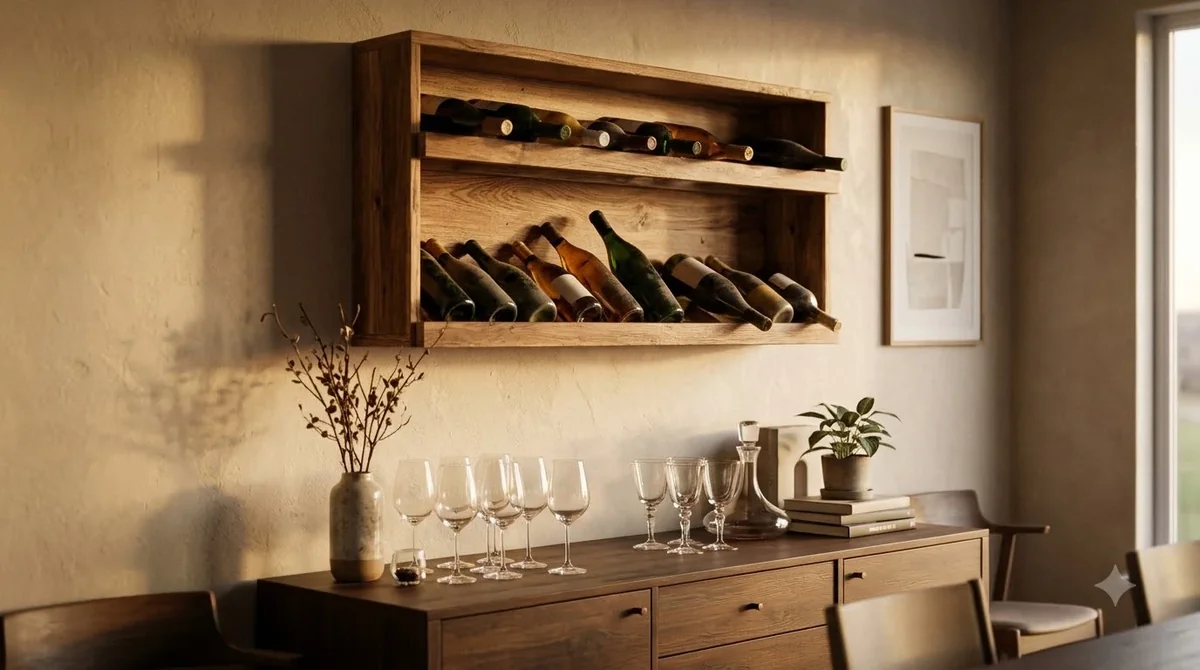
Why it stands out is the sheer structural stability and storage density you get in a single piece of furniture. Most stationary models pair a thick butcher-block, granite, or quartz top with deep utensil drawers, closed cabinets for pots, and a grid of individual wooden slots that keep cork-sealed bottles lying flat. According to Wine Enthusiast’s wine storage guide, keeping corks hydrated on their sides prevents air from seeping into the bottle and prematurely oxidizing the wine.
Keep in mind that ambient kitchen islands do not chill bottles, so you should place this style away from oven vents, dishwashers, and sunny windows. It works best for households that rotate through everyday reds and whites within a few weeks rather than aging bottles for years.
Best for Small Kitchens and Entertaining: Rolling Wine Cart with Drop Leaf
A rolling island with a hinged drop-leaf extension and locking casters lets you prep dinner in a tight galley kitchen and wheel the entire wine station into the dining area when guests arrive. Folding the leaf down shrinks the footprint immediately so walkways stay clear during busy weeknights.
Why it stands out is adaptability across multiple rooms without sacrificing dedicated wine rack organization. Quality mobile carts include heavy-duty rubberized wheels with foot brakes, hanging stemware rails underneath the overhang, and scalloped wooden cradles that prevent bottles from rolling when you push the cart across tile or hardwood transitions. When the drop leaf flips up and locks on support brackets, you gain enough extra surface area for cheese boards, decanters, and two bar stools.
Keep in mind that casters add height and slightly reduce total weight capacity compared to solid-base cabinetry. Avoid overloading the top with heavy countertop appliances if you plan to roll the island regularly with full bottles below.
Best for Warm or Sunny Kitchens: Wine Cooler Hybrid Island
A hybrid island engineered with an open bay or built-in compressor wine fridge protects temperature-sensitive bottles from stove heat and afternoon sunlight. Instead of relying on room air, this design combines a standard prep counter with active climate control.

Why it stands out is true cellar-grade preservation right where you cook and socialize, echoing the kitchen zone setups highlighted in Wine Enthusiast’s room-by-room storage ideas. Dual-zone units let you hold crisp whites and sparkling wines at serving chill while keeping reds at a steady cellar temperature, all behind UV-tinted glass doors. Proper hybrid islands also incorporate rear or front toe-kick ventilation slots so compressor heat dissipates safely instead of warming the surrounding cabinetry.
Keep in mind that powered islands require access to a grounded floor or wall outlet, which limits where you can position them in the middle of a room. You will also want to verify front-breathing ventilation specs before sliding a freestanding cooler into an enclosed island cavity.
Best for Hosting and Casual Dining: Counter-Height Tasting Table Island
A counter-height tasting table island blends an overhanging breakfast bar with high-capacity central wine racking, turning your kitchen center into a natural gathering spot. Guests can pull up stools on one side while you pour from open racks and stemware holders built into the base.
Why it stands out is social flow paired with generous bottle capacity, easily holding how many bottles in a case of wine you bring home from a weekend tasting trip plus room to spare. Many designs feature X-brace diamond bins or open lattice columns flanked by closed end cabinets for corkscrews, foil cutters, and cloth napkins. The deeper overhang protects seated knees from bumping into bottle necks while providing a wide buffet surface for appetizers.
Keep in mind that open-sided diamond bins expose bottles to overhead kitchen lights and room drafts. Reserve those visible slots for fast-turnover bottles and store light-sensitive sparkling wines or delicate Pinot Noirs in lower, shaded cubbies.
Best for Tight Walkways: Compact Side-Rack Baker’s Island
A narrow baker’s island with an end-mounted vertical wine rack delivers extra counter space and four-to-ten-bottle storage without blocking narrow kitchen traffic lanes. Placing the bottle cradles on the short end rather than the broad front keeps the overall depth slim.
Why it stands out is smart use of vertical and peripheral real estate when a full-width island would crowd your refrigerator or oven doors. Open slatted lower shelves hold mixing bowls or Dutch ovens, while the side wine ladder keeps dinner pairings within arm’s reach of the stove. If you outgrow the modest bottle count later, you can easily pair this compact footprint with a wall mounted wine rack on an adjacent dining wall for overflow.
Keep in mind that end-mounted racks typically hold standard 750 mL Bordeaux and Burgundy bottles well, but wider Champagne or magnum bottles may stick out into the walkway. Always measure the aisle clearance on the rack side before committing to a layout.
How to Choose
Start by measuring your available floor clearance on all four sides of the proposed island footprint. Kitchen designers generally recommend leaving at least 36 to 42 inches of open walkway around an island so oven doors, dishwasher hatches, and cabinet drawers can swing open without hitting the frame or protruding bottle necks.
Next, evaluate your kitchen’s microclimate and bottle turnover rate. Wine stores best near a steady 55 degrees Fahrenheit away from direct sunlight and vibrating appliances. If your kitchen runs warm during summer cooking or sits bathed in afternoon sun, stick to a smaller ambient rack for bottles you plan to drink within a month, or choose a hybrid island with an insulated cooler.
Finally, check the rack geometry and countertop material against how you actually cook. Individual scalloped wood cubbies cradle bottles securely and prevent labels from scuffing, whereas open X-bins hold varied bottle shapes faster. Pair your base with a durable top—end-grain or edge-grain butcher block handles daily knife prep warmth, while sealed stone resists red wine spills effortlessly. For more ways to organize your collection across other rooms, browse our full Racks & Storage directory.
Tip: Before loading your new island, keep wide-shouldered Burgundy, Champagne, and Pinot Noir bottles in mind—look for rack slots at least 3.75 inches wide so heavier glass slides in smoothly without tearing paper labels.
Frequently Asked Questions
Is it safe to store wine inside a kitchen island?
Yes, provided you use the island for short-to-medium-term storage and position it away from direct oven heat, dishwashers, and sunny windows. Kitchens experience daily temperature swings that can age wine prematurely over several years, so ambient island racks are best for bottles you plan to open within a few weeks or months.
How much clearance do I need around a wine rack island?
Aim for at least 36 inches of clear floor space on every side for basic foot traffic, and 42 to 48 inches on sides facing an oven, refrigerator, or dishwasher. If your island includes bar seating or a drop leaf, factor in an extra 24 inches so guests can pull out stools comfortably.
Should wine bottles in an island rack be stored horizontally or upright?
Natural cork-sealed bottles should always rest horizontally in your island rack so the wine stays in contact with the cork, keeping it moist and swollen against air intrusion. Bottles sealed with screw caps or synthetic closures can sit either way, though horizontal slots still save space and prevent tipping.
Can I put a wine fridge inside a standard wooden kitchen island?
Only if the island cabinet is designed with proper ventilation and you choose a front-venting built-in wine cooler rather than a rear-venting freestanding unit. Compressors generate heat that must escape through a front grille or open back; trapping that heat inside closed wood cabinetry will overheat the unit and warm your bottles.
Matching your kitchen layout to the right island style gives you extra prep counter space while keeping your favorite bottles organized and ready for dinner. Whether you choose a mobile drop-leaf cart for a compact apartment or a stationary butcher-block centerpiece with built-in cubbies, measuring your walkways and respecting kitchen heat will protect both your workflow and your wine.
More in Racks & Storage
 Best Wine Barrel Racks for Distinctive Bottle StorageUpdated Nov 20, 2026
 Best Wine Storage Tower: Sizing, Protection and Room LayoutUpdated Nov 18, 2026
 Best Pyramid Wine Rack: Materials, Sizes and Where It FitsUpdated Nov 18, 2026
 Best Kitchen Cabinet Wine Rack Insert for Built-In Bottle StorageUpdated Nov 18, 2026
 Best 16 Bottle Wine Rack Options for Kitchens, Bars and CellarsUpdated Nov 18, 2026
 Best 48 Bottle Wine Rack Options for Cellars, Kitchens, and Tight SpacesUpdated Nov 18, 2026