

We may earn a commission when you buy through links on this page, at no extra cost to you. Learn more.
The best wine rack console for most living and dining rooms is a solid-wood buffet-style cabinet with built-in horizontal cubbies and enclosed stemware storage. That layout keeps corks hydrated on their sides, shields bottles from harsh afternoon light, and gives you a flat countertop for decanting and serving. If you live in a smaller apartment, a slim vertical tower console maximizes floor space, while high-volume hosts will get more mileage out of a wide credenza with modular X-bins and drawer space for bar tools.
A wine rack console bridges the gap between everyday dining furniture and dedicated cellar storage. Unlike basic wire frames that belong tucked inside a pantry, a well-proportioned console sits comfortably in a dining room, open-concept kitchen, or entryway while keeping a dozen to three dozen bottles organized and within arm’s reach. Choosing the right style comes down to how many bottles you keep on hand, how long you plan to hold them, and what else you want the piece to store.
Quick Comparison
Each wine rack console design balances bottle capacity, light protection, and serving surface area differently depending on your room layout.
| Console Type | Typical Capacity | Best Room Placement | Light Protection | Extra Storage |
|---|---|---|---|---|
| Buffet Credenza with Cubbies | 18 to 30 bottles | Dining room or living area | Moderate to high (recessed grid) | Drawers and cabinet shelves |
| Slim Vertical Bar Console | 8 to 15 bottles | Apartments, nooks, or hallways | Low to moderate (open rack) | Hanging stemware rack |
| Enclosed Door Wine Cabinet | 12 to 24 bottles | Bright rooms with natural sun | High (solid or tinted doors) | Adjustable interior shelving |
| X-Bin & Lattice Credenza | 24 to 48+ bottles | Large dining rooms or basements | Low (open-front diamond bins) | Wide serving tabletop |
| Industrial Metal-and-Wood Console | 12 to 20 bottles | Modern kitchens or lofts | Low (open wire or cradle slots) | Open lower display shelves |
Best for Entertaining & Dining Rooms: Buffet Credenza with Cubbies
A wide buffet credenza with an integrated center grid is the most versatile layout for hosts who want dedicated bottle storage alongside room for glassware, linens, and serving platters.
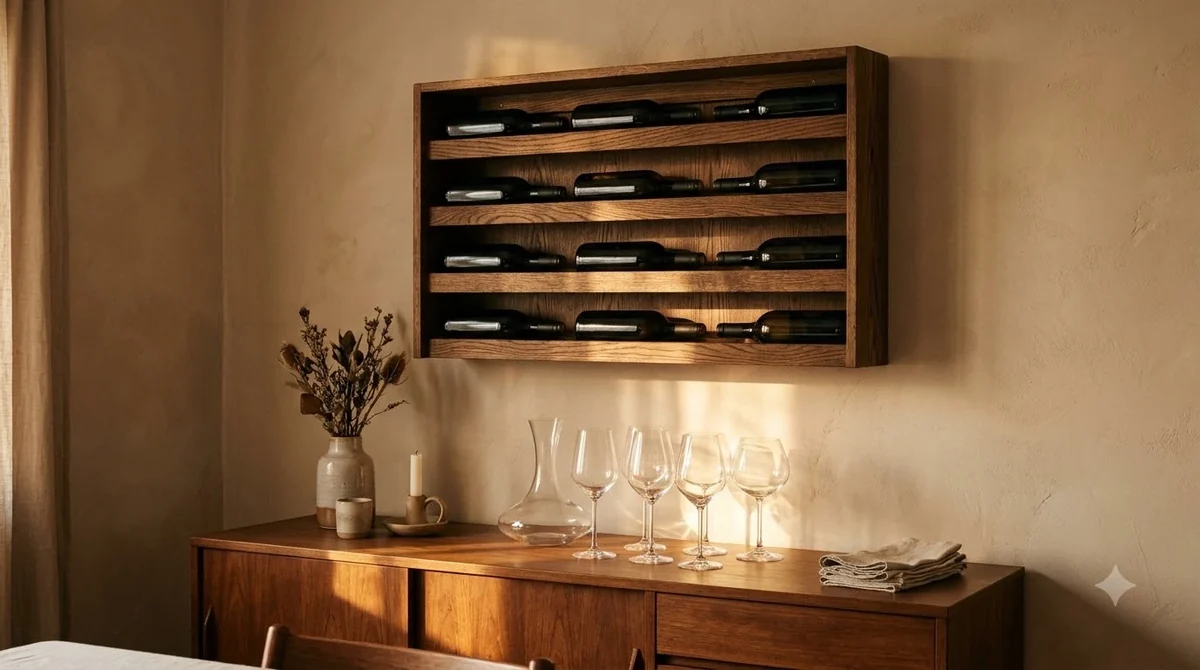
Why it stands out: Individual square or scalloped cubbies hold each bottle horizontally on its own cradle, which prevents labels from scuffing when you slide a bottle out during dinner. As Wine Enthusiast emphasizes in its wine storage guide, storing cork-sealed bottles on their sides keeps the cork moist so air cannot seep in and prematurely oxidize the wine. Flanking side cabinets and top drawers also let you tuck away corkscrews, foil cutters, cloth napkins, and extra stemware out of sight, leaving the top surface completely clear for a decanter and ice bucket.
Keep in mind: Grid-style cubbies are typically sized around standard 750ml Bordeaux bottles, meaning wider Burgundy, Pinot Noir, or Champagne bottles can be a tight fit. Check the interior slot dimensions—aim for at least 3.75 inches square—and confirm the overall depth is at least 15 inches so bottle necks do not protrude past the front edge. This style works best for homeowners with a dedicated dining wall who want a true piece of dining furniture rather than an exposed wine rack.
Best for Small Spaces & Apartments: Slim Vertical Bar Console
When floor space is tight, a tall, narrow console under 26 inches wide tucks neatly into kitchen corners, breakfast nooks, or hallway alcoves without crowding walkways.
Why it stands out: Vertical bar consoles stack storage upward rather than outward, combining a lower horizontal bottle rack with an upper shelf and under-shelf stemware rails. Even with a compact footprint, the waist-high counter gives you just enough room to uncork a bottle and pour two glasses without clearing off your kitchen counter. Many designs also include a raised gallery rail along the back edge of the tabletop to keep decanters and glassware from sliding off if the unit gets bumped in a narrow hallway.
Keep in mind: Tall, narrow furniture becomes top-heavy once you load 10 to 15 full glass bottles onto the lower tiers, which adds roughly 30 to 45 pounds of weight. Always look for a console with adjustable leveling feet for uneven floors and install the included anti-tip wall strap into a stud. Because open-frame vertical consoles expose bottles to ambient room light, they are best suited for everyday drinkers who rotate through their bottles within a few months rather than collectors holding bottles for years.
Best for Bright Rooms & Multi-Year Holding: Enclosed Door Wine Cabinet
If your dining or living area gets abundant afternoon sunlight, an enclosed console with solid wood or louvered doors protects bottles from UV degradation and rapid temperature swings.
Why it stands out: Ultraviolet rays can break down delicate compounds in wine and cause premature aging, even through tinted glass bottles. Solid-door cabinets block direct light completely while keeping your collection looking tidy and understated when guests walk into the room. Inside, removable horizontal racks let you mix standard wine storage with upright shelves for spirits, bitters, or aperitifs, giving you a self-contained bar cabinet that blends smoothly with living room cabinetry.
Keep in mind: A closed wooden cabinet insulates against brief room drafts, yet it is still passive storage—it will not chill wine below your home’s ambient temperature. According to Wine Folly, ideal long-term wine storage sits between 55°F and 59°F, and wine stored at warm room temperatures ages up to four times faster than in a cellar. Place an enclosed console on an interior wall away from sunny windows, radiators, and kitchen appliances, and save it for bottles you plan to open within a year or two.
Best for High-Capacity Collectors: X-Bin & Lattice Credenza
For buyers who regularly bring home wine by the case, a wide credenza outfitted with diamond X-bins or lattice compartments stores three to four cases without needing a basement cellar.
Why it stands out: Diamond bins eliminate the wasted space between individual wooden dividers, allowing bottles to nestle snugly on top of one another in triangular stacks. That high-density geometry lets a standard 48-to-60-inch sideboard hold 36 to 48 bottles while maintaining a low, grounded profile that doubles as a buffet server. Grouping identical bottles in the same diamond quadrant also makes inventory simple—you can dedicate one bin to everyday Pinot Grigio, another to weeknight reds, and a third to dinner-party Cabernet.
Keep in mind: Pulling a bottle from the bottom of a full diamond stack requires shifting the bottles resting above it, which can stir up sediment in older reds and scuff paper labels over time. X-bin consoles work best when you organize each compartment by grape or drinking window rather than mixing single rare bottles together. If you frequently buy 12-bottle shipments—see our breakdown of how many bottles in a case of wine to plan your bin math—look for reinforced center support legs underneath the cabinet so the bottom panel never bows under the load.
Best for Modern & Open-Concept Kitchens: Industrial Metal-and-Wood Console
A console pairing a powder-coated steel frame with thick wood shelves brings an airy, architectural look to contemporary lofts and open-plan kitchens.
Why it stands out: Metal-and-wood consoles use slender steel cradles or wave-shaped bars that keep bottle labels visible at a glance, making it effortless to pick a bottle without sliding each one out of a deep wooden slot. Powder-coated steel resists moisture and spills far better than unfinished softwood, and open lower shelving provides generous airflow around every bottle. Pairing this style with a matching wall mounted wine rack above the counter creates a cohesive home bar station without closing off a bright, modern room.
Keep in mind: Thin wire cradles without protective rubber caps or smooth rolled edges can scratch foil capsules and tear fragile paper labels if you slide bottles in and out carelessly. Check that the steel frame uses welded joints rather than flimsy sheet-metal tabs, and confirm that the wooden tabletop is thick enough to support heavy barware without flexing. Because the open frame offers zero light blocking, position this console away from south-facing windows and direct overhead spotlights.
How to Choose
Before ordering a wine rack console, measure both your wall space and your typical bottle shapes so the piece fits your home and your drinking habits.
- Measure slot width and cabinet depth: Standard Bordeaux bottles measure roughly 3 inches in diameter and 12 inches long, whereas Champagne and Burgundy bottles often reach 3.5 inches wide and 13 inches tall. Verify that cubbies are at least 3.75 inches wide and the console depth is 14 to 17 inches so bottle necks do not overhang the front edge.
- Check structural support and weight capacity: A single full 750ml wine bottle weighs nearly 3 pounds, meaning a 30-bottle console carries close to 90 pounds in wine alone before you add glassware or a heavy tabletop tray. Prioritize solid hardwood, thick engineered wood with steel bracing, and center support legs on spans wider than 42 inches.
- Match storage style to your turnover rate: Open racks and metal cradles make labels easy to browse for bottles you drink within a few weeks or months. If you hold bottles for six months to two years, prioritize recessed cubbies or solid doors that block UV light.
- Audit your room’s microclimate: Even the sturdiest console cannot regulate temperature. Keep your unit away from ovens, dishwashers, exterior walls, and heating vents where daily temperature swings can expand and contract corks.
- Plan for glassware and bar accessories: Built-in stemware racks, cutlery drawers, and adjustable side shelves turn a basic storage rack into a functional serving station, keeping corkscrews, stoppers, and decanters organized in one spot.
Tip: Leave 20 to 25 percent empty capacity when sizing your console so you have breathing room for holiday gifts, mixed cases, and wider sparkling wine bottles without overstuffing the slots.
Frequently Asked Questions
Should a wine rack console store bottles horizontally or upright?
Bottles sealed with natural corks should always be stored horizontally so the wine stays in continuous contact with the cork, preventing it from drying out and letting oxygen spoil the wine. Bottles sealed with screw caps or glass stoppers do not rely on moisture for their seal and can safely sit upright on a console shelf.
Can you put a wine rack console in the kitchen?
You can place a wine rack console in an open-concept kitchen or breakfast area as long as it sits well away from heat-generating appliances like ovens, stoves, dishwashers, and refrigerator exhaust vents. Consistent room temperature matters more than hitting cellar chill for short-term storage, so choose an interior wall out of direct sunlight.
What is the ideal height and depth for a wine rack console?
Most buffet-style wine consoles stand 32 to 36 inches tall—matching standard dining sideboard and kitchen counter heights for comfortable pouring—and measure 14 to 18 inches deep so 750ml bottles lie completely inside the frame. Tall bar-style consoles range from 42 to 60 inches high when they include upper stemware racks or hutch shelves.
How do you protect wine from light in an open wine console?
Position open-rack consoles in a shaded corner or against an interior wall where direct sunlight never hits the glass, and avoid aiming warm halogen spotlights directly at the bottles. If your room receives heavy daylight, opt for an enclosed door cabinet or keep light-sensitive white and sparkling wines in lower, shadowed cubbies.
Finding the right console comes down to matching bottle capacity and light protection to the room you entertain in most. Whether you need a compact vertical tower for a city apartment or a full buffet credenza for weekend dinner parties, choosing sturdy construction and proper horizontal cradles keeps every bottle ready to pour. Browse our complete Racks & Storage hub to compare additional cellar and countertop options for your home.
More in Racks & Storage
 Best Wine Barrel Racks for Distinctive Bottle StorageUpdated Nov 20, 2026
 Best Wine Storage Tower: Sizing, Protection and Room LayoutUpdated Nov 18, 2026
 Best Pyramid Wine Rack: Materials, Sizes and Where It FitsUpdated Nov 18, 2026
 Best Kitchen Cabinet Wine Rack Insert for Built-In Bottle StorageUpdated Nov 18, 2026
 Best 16 Bottle Wine Rack Options for Kitchens, Bars and CellarsUpdated Nov 18, 2026
 Best 48 Bottle Wine Rack Options for Cellars, Kitchens, and Tight SpacesUpdated Nov 18, 2026