

We may earn a commission when you buy through links on this page, at no extra cost to you. Learn more.
This wine jello shots recipe combines dry wine, flavored gelatin, and boiling water into chilled, one-ounce party servings. One 3-ounce package of gelatin and 8 ounces of wine make 16 portions. The cups need at least 3 hours in the refrigerator, so you can prepare them before guests arrive and serve them cold.
Wine gives a classic gelatin shot a fruitier, lower-alcohol base than vodka, while the gelatin supplies sweetness, color, and structure. The easiest version uses a berry, peach, or citrus gelatin flavor with a wine that supports it rather than fighting it. Use the proportions below as the starting point, then adjust the flavor pairing on your next batch.
Ingredients and Proportions for a 16-Shot Batch
This batch makes 16 small servings, each holding about 1 ounce of mixture. It uses 3 ounces of flavored gelatin, 1 cup of boiling water, and 1 cup of chilled wine, keeping the total liquid at 2 cups.
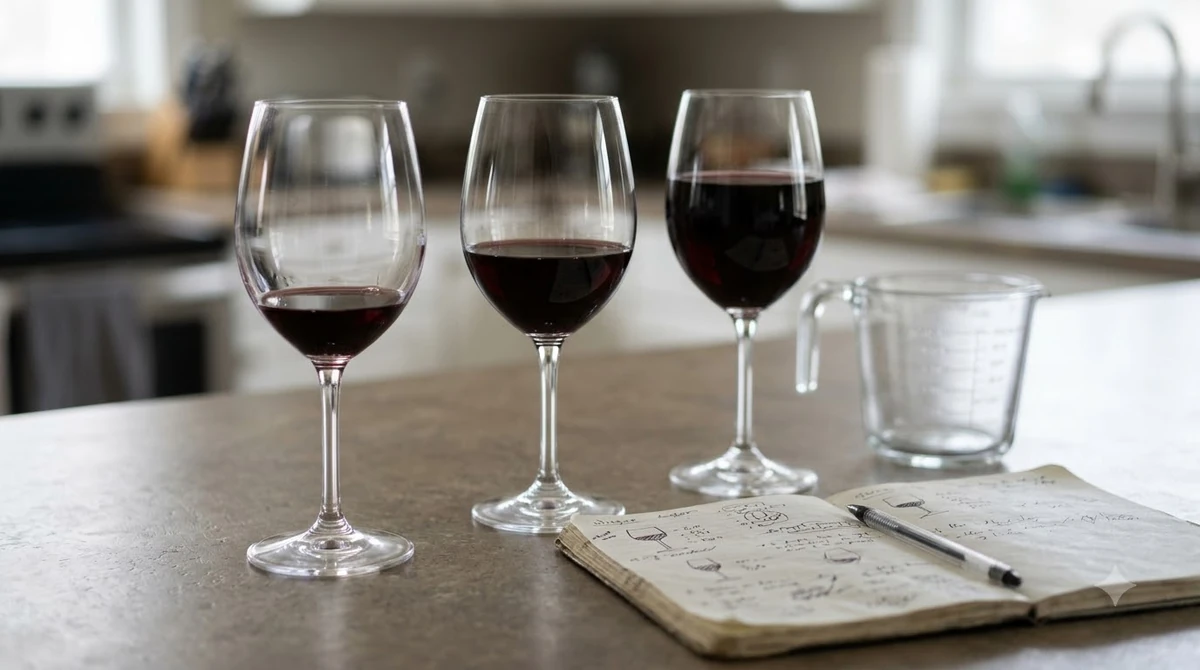
Gather the ingredients before heating the water. A 3-ounce box of flavored gelatin is the standard size for this formula; choose cherry, raspberry, strawberry, peach, lemon, or orange according to the wine you plan to use. Measure the wine rather than pouring by eye, because extra liquid can leave the finished shots loose.
| Ingredient or tool | Amount | Purpose |
|---|---|---|
| Flavored gelatin | 3 ounces (1 box) | Sets the mixture and adds fruit flavor |
| Boiling water | 8 fluid ounces (1 cup) | Dissolves the gelatin crystals |
| Chilled wine | 8 fluid ounces (1 cup) | Adds wine character and replaces the cold liquid |
| Small cups | 16 cups, about 1 ounce each | Portions the finished batch |
| Refrigeration | At least 3 hours | Allows the gelatin to set |
Choose a wine you would be happy to drink by the glass. A simple, fresh bottle works better than a heavily oaked or very tannic wine because the gelatin adds a pronounced sweet note and the small portions do not leave much room for subtle aromas. Dry wine is a dependable starting point; fruit-forward off-dry wine can work too, especially with citrus or stone-fruit gelatin.
The finished mixture contains about 6% alcohol by volume if the wine is 12% ABV: the 8-ounce wine portion is diluted by the 8 ounces of boiling water. That is an estimate for the liquid before setting, not a guarantee for every bottle, and the portions still contain alcohol. Make the size and ingredients clear to guests, and do not serve them as nonalcoholic candy.
Tip: Chill the wine before starting. Cold wine cools the dissolved gelatin mixture quickly, helps protect the wine’s fresh aromas, and gives you a more predictable set.
Choose a Wine and Gelatin Flavor That Work Together
The easiest pairings match the wine’s fruit character to the gelatin while keeping sweetness and acidity in balance. For a first batch, use a dry, fruit-forward wine and a familiar gelatin flavor rather than combining several strong flavors.
For red wine, choose a lighter style such as Pinot Noir or Gamay and pair it with cherry, raspberry, or black-cherry gelatin. Pinot Noir usually has low-to-medium tannin and high acidity, so it is less likely than high-tannin Cabernet Sauvignon to seem bitter beside sweet gelatin. For white wine, try high-acid Sauvignon Blanc or Riesling with lemon, peach, or green-apple gelatin; medium-acid Chardonnay suits peach or pear, while naturally sweet Moscato works best with a restrained gelatin flavor.
Dry rosé is flexible with strawberry, watermelon, raspberry, or pink grapefruit gelatin. Its red-fruit notes connect with berries, while refreshing acidity keeps the mixture lively. For a fortified-wine direction, Wine Enthusiast’s wine-jelly recipe shows how Madeira can work in a set dessert; use the simpler gelatin-and-wine ratio above for these small shots.
Think about the color as well as flavor. Red wine can turn pale peach gelatin muddy, while white wine keeps lemon and peach shades clearer. Rosé adds a soft pink cast. If you want a vivid result, choose a gelatin color that can blend with the wine rather than expecting a pale flavor to cover a deep red base.
How to Make Wine Jello Shots Step by Step
The method is simple: dissolve the flavored gelatin in boiling water, let the mixture cool briefly, stir in cold wine, and portion it into cups. The important detail is to add the wine after the gelatin has dissolved, not to boil wine with the powder.
Set out a heatproof mixing bowl, a whisk, a liquid measuring cup, and 16 small serving cups. For an easy transfer, place the empty cups on a rimmed baking sheet or tray before filling them; the tray makes it easier to move the entire batch into the refrigerator without spilling.
- Measure the wine. Pour 8 fluid ounces of wine into a measuring cup and keep it in the refrigerator while you prepare the gelatin. A dry Pinot Noir, Sauvignon Blanc, or rosé is a practical first choice.
- Dissolve the gelatin. Bring 8 fluid ounces of water to a boil. Pour it into the mixing bowl, add the full 3-ounce package of flavored gelatin, and whisk for about 2 minutes, or until no visible granules remain at the bottom.
- Cool the base briefly. Let the bowl stand for about 5 to 10 minutes, stirring once or twice. It should still be fluid, but it should no longer be sending up strong steam. Do not leave it until it begins to set around the sides.
- Add the wine. Pour in the chilled 8 ounces of wine in a slow stream while whisking gently. Mix until the color is even. Avoid vigorous beating, which can create a foamy cap that will remain visible as the shots chill.
- Fill the cups. Divide the mixture among 16 small cups, aiming for about 1 fluid ounce in each. If you use 2-ounce cups, fill them halfway so there is room to cover the tops and carry them without splashing.
- Chill until firm. Set the tray on a level refrigerator shelf and refrigerate for at least 3 hours. Test one cup by gently tilting it; the center should hold its shape instead of flowing like liquid.
Liquor.com’s basic Jell-O shot formula also uses a 3-ounce gelatin amount, 8 ounces of boiling water, and 8 ounces of cold non-boiling ingredients, portioned into 16 one-ounce servings. This recipe uses wine for the full 8-ounce cold portion, instead of splitting it between spirits and water. The method keeps the liquid volume consistent while making the wine the main flavor in each portion.
Once set, cover the cups with their lids or a tray cover. Leave surface bubbles alone instead of stirring partially thickened gelatin, which can create uneven texture.
Fix Soft, Rubbery, or Uneven Gelatin
Most texture problems come from inaccurate liquid measurements, incomplete dissolving, or not allowing enough chilling time. Keep the total liquid close to 16 ounces for a 3-ounce package of flavored gelatin, and give the cups a full refrigerator chill before judging the result.
If the shots are still loose after 3 hours, return them to the refrigerator for another hour or two; a crowded refrigerator, warm cups, or an uneven shelf can slow the set. If they remain soft, serve them with small spoons in dessert cups. For the next batch, reduce the wine to 6 ounces and add 2 ounces of cold water, keeping total liquid at 16 ounces while lowering the wine concentration.
A rubbery texture can mean the liquid-to-gelatin ratio was too low or liquid evaporated during preparation. Graininess usually means crystals did not dissolve. Measure accurately, whisk the powder into freshly boiled water until uniform, and do not simmer the mixture or sprinkle dry gelatin directly into cold wine.
For an even texture, use wine straight from the refrigerator, keep the tray level, and avoid moving the cups during the first 30 minutes. Cover once cool and refrigerate until serving; for best texture, make the shots no more than 1 to 2 days ahead.
Serve the Shots with Food That Matches Their Sweetness
Wine jello shots are sweet, chilled party bites, so pair them with snacks that balance sugar, acidity, and texture. Salty or fatty foods can soften the impression of tannin in a red-wine version, while bright, acidic bites work best with a wine that has equal or higher acidity.
For cherry or raspberry shots made with Pinot Noir, set out aged cheddar, salted almonds, mushroom tartlets, or roast beef. For lemon or peach shots made with Sauvignon Blanc or Riesling, try goat cheese crostini, cucumber bites with herbs, green apple, or melon. Highly acidic foods need wine with equal or greater acidity, so crisp Sauvignon Blanc is a better match than a soft, low-acid white.
Rosé and strawberry shots suit a board with prosciutto, fresh strawberries, olives, and mild cheese. Salt and fat soften tannin, but avoid pairing a strongly tannic red-wine shot with oily fish, which can taste metallic or harsh. If pouring a separate glass beside the shots, remember that wine should be at least as sweet as the dessert: demi-sec sparkling wine, Moscato, or lightly sweet Riesling will match sugary berry gelatin better than a dry sparkling wine. For a colder-weather menu, pair berry bites with the red wine hot chocolate recipe; for more food ideas, browse Wine Recipes & Cocktails.
Variations for Red, White, Rosé, and Sparkling Wine
The base method is flexible as long as the total liquid remains close to 16 ounces and the wine goes in after the hot gelatin has cooled briefly. Change one main flavor at a time so you can tell whether the wine, gelatin, or garnish is responsible for the result.
Red and white: Use light-bodied Pinot Noir or Gamay with cherry or raspberry gelatin, or Sauvignon Blanc with lemon and Riesling with peach. Blackberry gelatin gives red wine a deeper color; a strip of orange zest can add aroma, but remove it before portioning. For a sweeter variation, Moscato with peach or orange gelatin works best in small portions.
Rosé and Madeira: Dry rosé with strawberry or raspberry gelatin makes a pink shot; pale rosé gives a softer shade than a darker one. For a nutty, fortified-wine version, use dry or medium-dry Madeira with orange or lemon gelatin as the measured 8-ounce wine portion, not as an extra ingredient. This flavor is stronger than delicate peach, so citrus is the better match. To offer another fortified-wine drink alongside it, consider the sherry cocktail recipe or the refreshing port and tonic recipe.
Sparkling wine: Prosecco is made primarily from Glera and commonly has 11% to 12% ABV, but its bubbles will not survive mixing; expect a still shot with pear and apple notes. Champagne and Cava also lose carbonation when stirred, so pour them alongside the cups instead. Garnish after the mixture begins to set with a raspberry, orange-peel strip, or tiny mint leaf so the fruit does not sink.
Frequently Asked Questions
These quick answers cover substitutions and serving details that are not part of the basic 16-shot method. They are especially useful when adapting the recipe for a different mold, fruit garnish, or alcohol-free batch.
Can I replace the wine with juice?
Yes. Replace the 8 ounces of wine with 8 ounces of chilled white grape, cranberry, or apple juice and keep the 8 ounces of boiling water and 3 ounces of flavored gelatin unchanged. The result is a gelatin dessert rather than an alcoholic shot, and the juice’s sweetness will affect the final flavor.
Can I add fresh fruit to the cups?
Small pieces of berries, grapes, or citrus segments can be added once the mixture has thickened slightly. Avoid raw pineapple, kiwi, papaya, and fresh figs because enzymes in these fruits can stop gelatin from setting; cooked fruit or canned pineapple is a better choice.
Can I make the shots in silicone molds?
Yes. Set the silicone mold on a rigid tray before filling it, then chill it until firm so the flexible mold does not bend while you move it. To release the shapes, briefly dip the underside of the mold in warm water and loosen the edges gently with a clean fingertip.
Can I use unflavored gelatin instead of a flavored box?
Yes, but unflavored gelatin does not include sugar, color, or fruit flavor, so it is not a direct one-for-one substitute by packet size. Bloom it in cold water according to the package directions, dissolve it in warm liquid, and add measured fruit juice or sweetener to supply the flavor that a prepared gelatin mix normally provides.
Can I freeze wine jello shots?
Freezing is not recommended because the gelatin network can be damaged as the mixture freezes and thaws, leaving liquid around the edges or a watery texture. Refrigerate the cups instead, and transport them in a chilled insulated carrier with the tray kept level.
For a reliable first batch, choose a dry, fruit-forward wine, match it with a compatible gelatin flavor, and measure the full 16 ounces of liquid. Once the texture is right, change the wine or gelatin one at a time to create a version that fits the food and the occasion.
More in Food & Wine Pairing
 Risotto With White Wine Recipe: Make a Creamy Dinner at HomeUpdated Nov 20, 2026
 Wassail With Wine Recipe for a Festive Spiced Holiday DrinkUpdated Nov 20, 2026
 Spritz Veneziano Recipe: Make a Classic Venetian Aperitivo at HomeUpdated Nov 20, 2026
 Summer Wine Punch Recipe for Easy Homemade EntertainingUpdated Nov 20, 2026
 Bishop Recipe: How to Make a Bright, Citrus-Forward Red Wine CocktailUpdated Nov 20, 2026
 Wine Cupcakes Recipe: Bake Rich Chocolate Cupcakes at HomeUpdated Nov 20, 2026