

We may earn a commission when you buy through links on this page, at no extra cost to you. Learn more.
Wine fridge vs wine cellar comes down to your collection size, available space, and whether you want convenient storage or a dedicated environment for aging bottles. A wine fridge is usually the more practical choice for a household collection because it provides controlled temperatures in a compact appliance. A properly designed wine cellar offers more capacity and can provide excellent long-term storage, but it requires suitable space, insulation, and environmental management. Both can protect wine effectively when their storage conditions remain stable.
Wine storage is about more than keeping bottles cool. Temperature fluctuations, excessive light, unsuitable humidity, and unnecessary disturbance can affect how wine develops over time. A small collection of everyday Sauvignon Blanc, Chardonnay, Pinot Noir, and Cabernet Sauvignon has different storage requirements from a growing collection of bottles intended to mature for five, ten, or twenty years. Understanding the differences between a wine refrigerator and a dedicated cellar makes it easier to choose an arrangement that protects your bottles without creating unnecessary expense or maintenance.
Wine Fridge vs Wine Cellar: The Main Differences
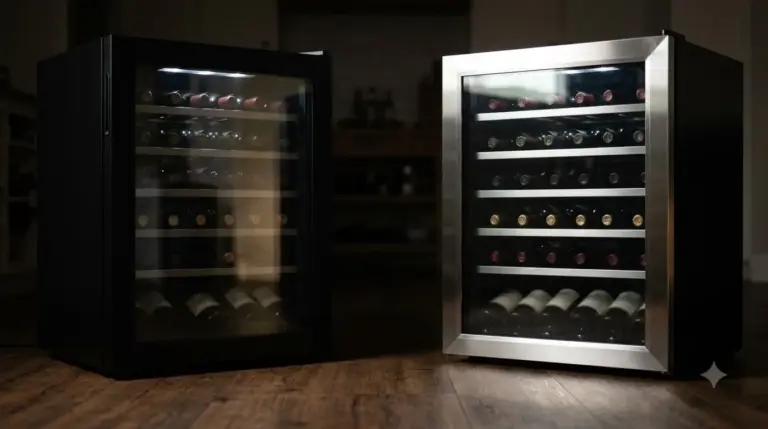
A wine fridge is a self-contained refrigerated cabinet, while a wine cellar is a dedicated storage space designed to maintain suitable environmental conditions. Both can support long-term wine storage, but they differ in capacity, installation, accessibility, and the amount of environmental control they require.
| Comparison | Wine Fridge | Wine Cellar |
|---|---|---|
| Typical capacity | Approximately 12 to 200+ bottles, depending on design | Hundreds or thousands of bottles, depending on room size |
| Storage temperature | Commonly adjustable across approximately 39–65°F | Often maintained around 55°F |
| Humidity | Depends on the appliance; some models offer humidity management | Managed through room conditions and suitable equipment |
| Installation | Freestanding or built-in, depending on the model | Requires a suitable room or dedicated enclosure |
| Temperature zones | Single-zone, dual-zone, and multi-zone options | Usually one consistent storage environment, with separate serving arrangements if needed |
| Light protection | Solid doors or UV-protected glass are available | Can be designed with minimal light exposure |
| Vibration management | Depends on cooling technology and cabinet construction | Depends on cooling equipment and room design |
| Expansion | Limited by cabinet capacity | Can accommodate additional racks and storage areas |
| Maintenance | Appliance cleaning and equipment maintenance | Room, insulation, cooling, humidity, and drainage maintenance as applicable |
| Best use | Convenient household storage and controlled access | Large collections and dedicated long-term storage |
These capacity figures are illustrative planning ranges rather than universal specifications. Wine refrigerators vary considerably in size, and a cellar’s capacity depends on its dimensions, rack arrangement, and the bottle formats being stored. A cabinet advertised for 100 standard bottles may hold fewer when the collection includes Champagne, Burgundy bottles, or unusually shaped containers.
The distinction is also not simply about appliance versus traditional architecture. A modern, properly designed wine refrigerator can reproduce many of the environmental conditions found in a good cellar. Wine Enthusiast identifies stable temperature, humidity control, protection from light, and limited disturbance as important considerations for long-term storage. Its wine fridge buying advice also explains why buyers should consider storage duration and bottle capacity before choosing an appliance. The important question is whether the storage arrangement can maintain suitable conditions consistently.
Temperature Control and Long-Term Wine Aging
Temperature stability is one of the strongest reasons to choose a dedicated wine refrigerator or a properly constructed cellar. A target near 55°F is suitable for storing many red, white, and sparkling wines together, provided the temperature stays consistent rather than fluctuating substantially throughout the day.
Wine Enthusiast identifies 53–57°F as a suitable storage range for wine. This is a useful reference point for collectors who intend to keep bottles for several years. A traditional cellar can naturally maintain a similar environment when its location, insulation, and construction are suitable. However, not every basement qualifies as a wine cellar. A basement that becomes warm during summer or experiences significant seasonal changes may require additional cooling.
A wine fridge makes temperature management more straightforward because its thermostat and cooling system are designed to maintain a selected temperature. Many models offer digital controls, and some include alarms or monitoring features that alert owners to unusual temperature changes. These features are especially useful in homes where the kitchen, garage, or utility room experiences substantial temperature fluctuations.
One important distinction is the difference between storage temperature and serving temperature. Wine does not need to be stored at its ideal drinking temperature throughout its life. A single-zone refrigerator set around 55°F can store a mixed collection, with bottles adjusted shortly before serving.
Tip: For a mixed collection intended for long-term storage, start with approximately 55°F rather than trying to maintain separate aging temperatures for every grape variety. Adjust individual bottles to their appropriate serving temperatures shortly before opening.
Serving temperatures can differ considerably. Sparkling wine is generally served around 40–50°F, light whites and rosé around 45–50°F, full-bodied whites around 50–55°F, light reds around 55–60°F, and fuller-bodied reds around 60–65°F. A dual-zone wine fridge can make these serving conditions easier to manage, but separate temperature zones are not essential for long-term aging.
Temperature consistency also matters more than chasing an exact number. A cellar that stays near 55°F throughout the year may be more suitable than an appliance or room that repeatedly swings between cold and warm conditions. Prolonged exposure to excessive heat can accelerate wine maturation and compromise its aromas. A stable environment is therefore more important than simply selecting a refrigerator with the lowest possible temperature setting.
Humidity, Light, and Environmental Protection
A traditional cellar can provide naturally favorable humidity and darkness, while a wine fridge offers a controlled enclosure that protects bottles from many household environmental problems. Neither option automatically guarantees ideal conditions: the actual humidity, lighting, and exposure to outside disturbances depend on the design and location.
Humidity is particularly relevant for bottles sealed with natural cork. Wine Enthusiast identifies humidity control as an important feature for long-term storage, while Miele’s wine storage manual recommends a higher humidity setting of approximately 60–70% to help maintain cork moisture. These recommendations emphasize avoiding excessively dry storage environments.
A traditional underground cellar may naturally maintain moderate humidity because of the surrounding soil and the relative stability of its environment. However, the conditions depend on construction, drainage, ventilation, and local climate. A damp basement with persistent moisture problems is not automatically a good wine cellar. Excessive humidity can encourage mold growth and damage labels, racks, and nearby materials.
Some wine refrigerators incorporate humidity controls or a water reservoir. Others provide relatively limited humidity management, so buyers should distinguish between a model that controls temperature and one that actively manages moisture. If the collection contains expensive cork-sealed bottles intended for years of storage, this feature deserves particular attention.
Light protection is another important consideration. Ultraviolet exposure can contribute to undesirable changes in wine, especially when bottles remain exposed for extended periods. A traditional cellar can provide excellent protection through enclosed walls and limited lighting. A wine fridge with a solid door offers a similar advantage, while glass-door models should be evaluated for UV protection.
Odors and vibration also deserve attention. Wine should be kept away from strong household odors, solvents, cleaning chemicals, and other sources of contamination. A cellar should have a suitable, odor-free environment, while a refrigerator should not be positioned beside equipment that creates excessive vibration or heat.
CHOICE explains that compressor refrigerators generally produce more mechanical vibration than thermoelectric models, although thermoelectric systems still use fans that can create some movement. Wine Enthusiast also identifies vibration-dampening components as a useful feature in storage-oriented refrigerators. These considerations are particularly relevant for bottles that will remain undisturbed for extended aging periods.
Storage Capacity, Installation, and Everyday Convenience
A wine fridge is generally easier to accommodate in an existing home, while a wine cellar is more suitable for collectors who need substantial storage capacity. Your available floor space, bottle inventory, and plans for future purchases should determine which arrangement makes practical sense.
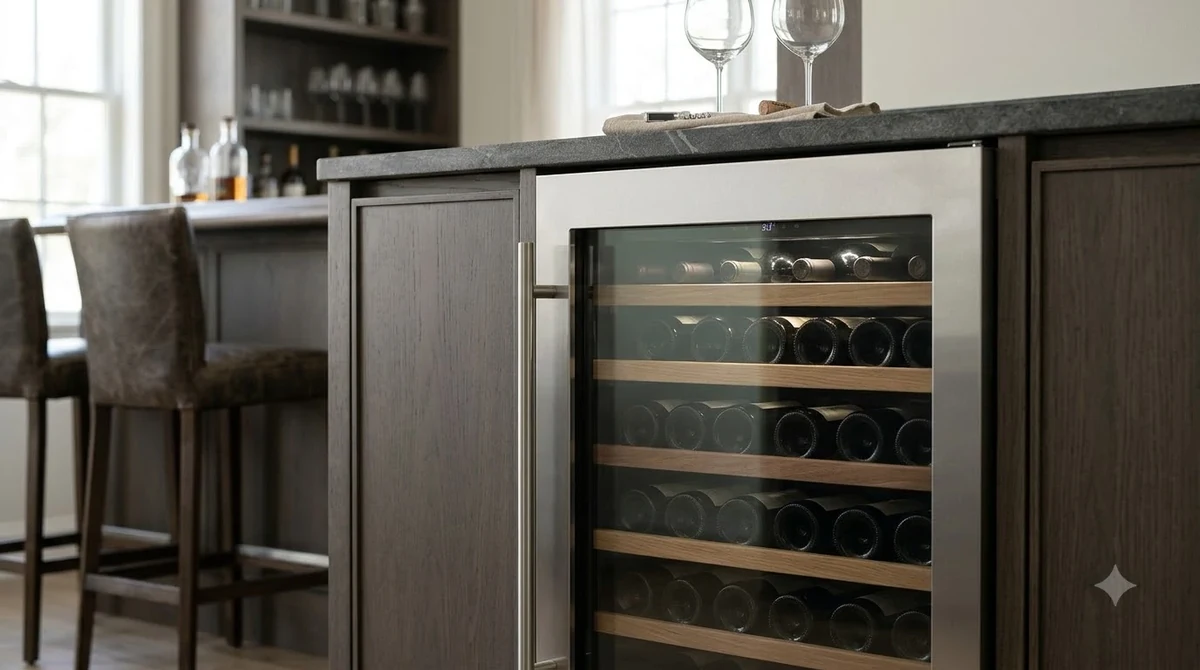
CHOICE reports that wine refrigerator capacities range from approximately a dozen bottles to several cases. That flexibility allows a homeowner to start with a compact cabinet and expand later. Small units can fit into kitchens, dining areas, or other suitable locations, while larger freestanding cabinets can hold considerably more wine.
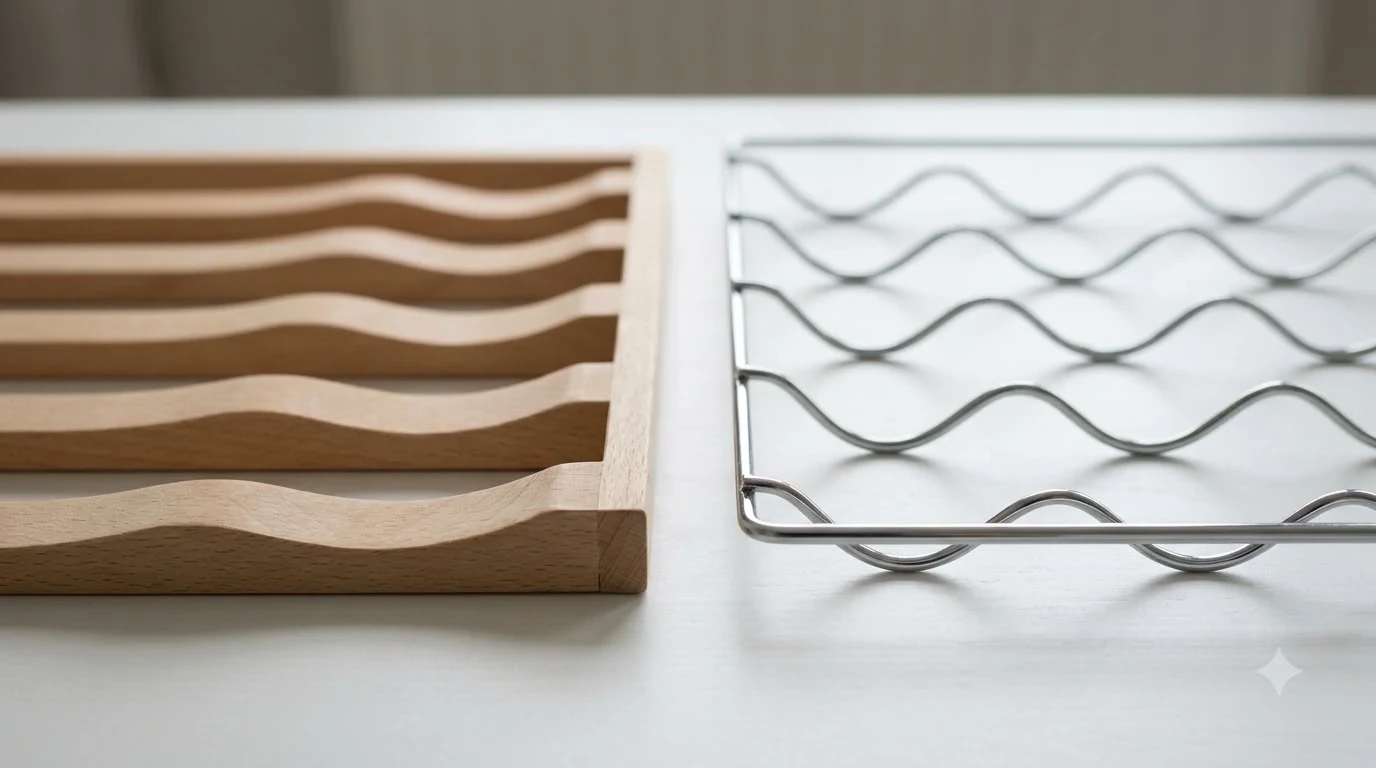
However, advertised bottle capacity should not be treated as an exact measure of usable storage. Manufacturers commonly calculate capacity using standard Bordeaux-style bottles. Wider Champagne bottles, larger formats, and unusually shaped bottles can occupy more room. Individual wooden shelves may also reduce the total number of bottles that fit compared with tightly stacked storage.
A cellar offers more flexibility for larger collections. Racks can be arranged around the available floor area, and dedicated storage sections can accommodate standard bottles, magnums, and unusual formats. A well-planned cellar can also include a tasting counter, display shelves, and separate areas for bottles intended for earlier consumption.
That flexibility comes with additional installation requirements. A cellar intended for serious wine storage may need insulation, a vapor barrier, suitable cooling equipment, humidity management, and a properly sealed door. A wine cooling unit is not necessarily interchangeable with ordinary residential air conditioning because wine storage requires stable conditions within an enclosed space.
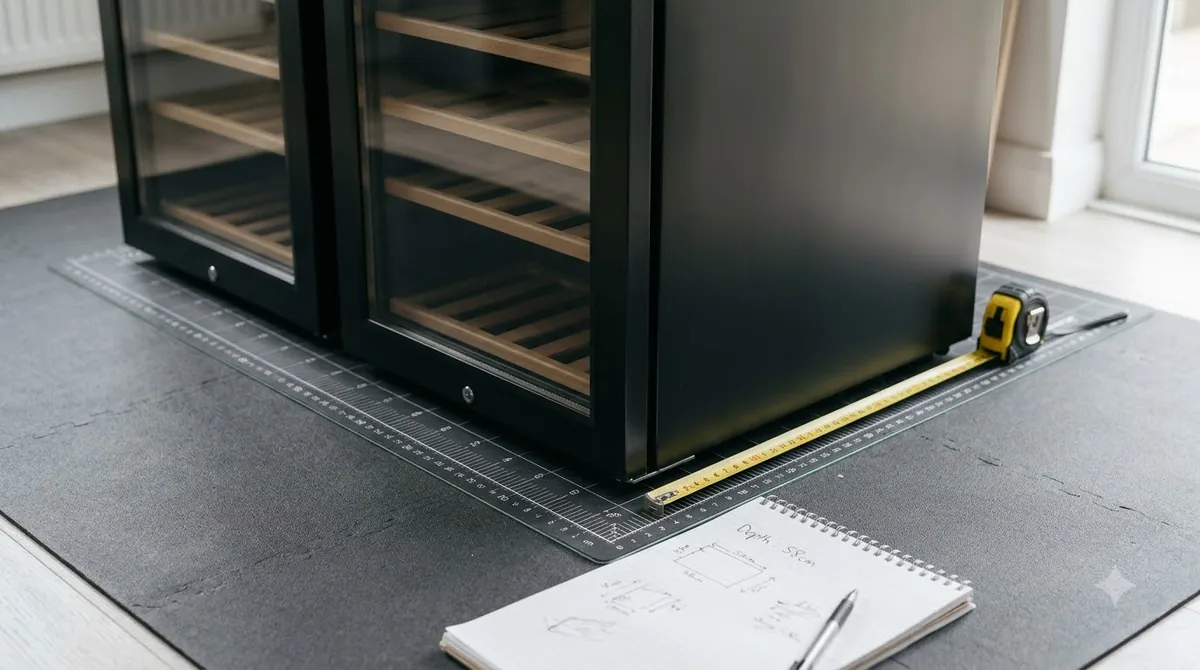
Location also matters for a refrigerator. CHOICE recommends providing sufficient clearance around the appliance for air circulation and avoiding direct sunlight or locations exposed to extreme temperature changes. A wine fridge installed next to an oven, radiator, or poorly insulated exterior wall may have to work harder to maintain its target temperature.
Consider the practical differences in everyday use:
- Small household collection: A 12- to 30-bottle cabinet may be enough for occasional entertaining and a few bottles reserved for later.
- Regular wine drinkers: A 50- to 100-bottle cabinet provides more room for different grapes, regions, and vintages.
- Growing collectors: A larger cabinet or dedicated cellar may make sense when purchases regularly arrive by the case.
- Large collections: A cellar offers more room for organizing hundreds of bottles and expanding storage over time.
Think about access as well as capacity. A refrigerator makes it easy to retrieve one bottle without entering a separate room. A cellar can make inventory management easier for a large collection, especially when racks are organized by producer, region, grape, or drinking window.
For households that entertain frequently, a refrigerator can also support a more convenient serving routine. Bottles of sparkling wine, rosé, and Sauvignon Blanc can be kept ready for chilling, while a separate area can hold red wines at a suitable storage temperature. For a summer gathering, this arrangement can complement drinks such as an Aperol Spritz recipe without requiring the entire wine collection to be stored at serving temperature.
Which Storage Option Makes More Sense for Different Collections?
The right choice depends on how much wine you own, how quickly you drink it, and how many bottles you intend to age. A wine refrigerator suits most households, while a dedicated cellar becomes more attractive as collections grow and storage periods become longer.
Choose a wine fridge for everyday household storage
A wine refrigerator is a practical solution for someone who buys several bottles each month and wants them stored in a predictable environment. It requires less dedicated space than a cellar and can be installed in an appropriate kitchen, dining area, or utility room.
It is particularly useful for mixed collections containing Cabernet Sauvignon, Merlot, Pinot Noir, Chardonnay, Riesling, and sparkling wine. A single-zone model can keep everything near 55°F, while a dual-zone model can separate bottles intended for immediate serving from those being stored for longer.
Homeowners who primarily drink wine within a few months of purchase may not need a large cellar or sophisticated climate-control system. A correctly sized wine refrigerator with stable cooling, suitable shelving, and UV protection can provide a sensible balance between storage quality and convenience.
Choose a wine cellar for a growing collection
A dedicated cellar becomes more attractive when the collection contains hundreds of bottles or includes wines that benefit from extended maturation. It provides more room for inventory organization and can accommodate larger bottle formats that may not fit comfortably in a compact refrigerator.
Collectors interested in Bordeaux, Barolo, Brunello di Montalcino, and age-worthy Napa Valley Cabernet Sauvignon may appreciate the additional storage space. These wines can develop over extended periods under appropriate conditions, although their actual aging potential varies by producer, vintage, structure, and storage history.
A cellar also makes sense when a suitable basement or purpose-built room is already available. The important distinction is that a naturally cool room should be monitored rather than assumed to provide consistent conditions. A thermometer and humidity monitor help identify whether additional environmental equipment is necessary.
Consider a combination of both
Some households benefit from using a wine cellar for long-term storage and a smaller refrigerator for bottles intended for near-term consumption. This arrangement separates the main collection from everyday drinking inventory and avoids repeatedly accessing a large storage room.
For example, a collector might keep reserve bottles of Bordeaux and Barolo in a stable cellar while using a 24-bottle wine refrigerator for Chardonnay, Sauvignon Blanc, rosé, and sparkling wine. A second refrigerator is not essential, but the arrangement can simplify serving and inventory rotation.
This approach also helps distinguish storage goals. Bottles intended for aging remain in a consistent environment, while bottles intended for immediate enjoyment can be adjusted to their preferred serving temperatures. The same planning principle applies to entertaining menus, whether the occasion involves a chicken Marsala recipe or a lighter seafood dinner.
Which Should You Pick: Wine Fridge or Wine Cellar?
Choose a wine fridge if you want reliable storage without dedicating an entire room to your collection. Choose a wine cellar if you have the space, need greater capacity, and intend to maintain a larger collection over many years.
For most casual and intermediate wine drinkers, a wine refrigerator is the more straightforward purchase. It provides controlled temperatures, protects bottles from ordinary household conditions, and does not require the construction work associated with a dedicated cellar. A good single-zone model is often sufficient for storing a mixed collection.
For serious collectors, a cellar can offer a more flexible long-term arrangement. It allows for hundreds of bottles, detailed inventory organization, and the addition of racks or specialized storage areas. However, the room must be designed and monitored properly. A poorly insulated cellar with seasonal temperature swings may provide less protection than a quality wine refrigerator.
Before making a decision, consider these practical questions:
- How many bottles do you own? Count your current collection rather than relying on an estimate. Include bottles purchased by the case and any larger formats.
- How long will you keep them? If most bottles will be opened within several months, a refrigerator may be sufficient. If you plan to mature selected wines for five years or longer, prioritize consistent long-term conditions.
- Where will the storage go? Measure the available space and consider ventilation, electrical access, sunlight, and nearby heat sources.
- Do you need multiple serving temperatures? If convenience is important, a dual-zone refrigerator may be useful. If aging is the priority, stable single-temperature storage is generally the simpler approach.
- Can you maintain the environment? Consider equipment maintenance, humidity monitoring, insulation, and the potential need for professional installation.
Do not choose a wine cellar solely because it sounds more traditional or sophisticated. Equally, do not assume that every appliance marketed as a wine cooler provides the environmental stability needed for extended aging. Compare temperature performance, humidity management, UV protection, bottle capacity, and construction rather than relying on product names alone.
For more side-by-side product and equipment comparisons, browse the Versus section. The same comparison-first approach can help narrow down wine accessories, refrigeration equipment, and other household purchases.
Frequently Asked Questions
Can a regular kitchen refrigerator be used as a wine cellar?
A regular kitchen refrigerator is generally unsuitable for storing a wine collection over extended periods because it is designed for food preservation rather than dedicated wine storage. Its temperature is typically colder than the approximately 55°F storage target, and its humidity and odor conditions may not be ideal for cork-sealed bottles. It can still be useful for temporarily chilling a bottle before serving.
Does wine age faster in a wine fridge than in a traditional cellar?
Wine does not inherently age faster in a refrigerator than in a cellar. The speed of maturation is influenced by temperature and storage consistency rather than whether the enclosure is an appliance or a room. A properly maintained refrigerator can provide suitable aging conditions, just as a well-designed cellar can.
Should wine bottles always be stored horizontally?
Horizontal storage is traditionally recommended for natural-cork bottles because it keeps wine in contact with the cork. Screw-cap bottles do not depend on the same cork-moisture considerations and can generally be stored upright. Bottle orientation should also account for the manufacturer’s storage recommendations and the available shelving system.
Can sparkling wine be stored in a wine cellar for several years?
Some traditional-method sparkling wines can develop additional complexity with extended bottle aging, depending on the producer and wine style. Champagne and certain vintage sparkling wines may have greater aging potential than inexpensive wines intended for early consumption. A stable environment near 55°F and protection from light are useful for bottles being held over longer periods.
How often should a wine cellar’s humidity be checked?
A digital hygrometer can provide an ongoing reading of relative humidity, making it easier to identify seasonal changes. Checking the readings regularly and reviewing them during seasonal transitions helps identify problems before they persist. A sudden change may indicate a ventilation, insulation, drainage, or humidification issue that needs attention.
For most households, a quality wine fridge offers the simplest way to keep bottles at stable storage temperatures without sacrificing living space. A dedicated wine cellar is the stronger option for larger collections and carefully planned long-term aging, provided the room maintains appropriate conditions. Choose the solution that fits your actual bottle count, storage goals, and available space rather than assuming that the larger or more traditional option is always better.
More in Versus
 Edgestar Vs Kalamera: Choose the Right Wine CoolerUpdated Nov 21, 2026
 Frigidaire Vs Magic Chef: Compare Wine Cooler Features and FitUpdated Nov 21, 2026
 EdgeStar Vs Whynter Wine Coolers for Smarter StorageUpdated Nov 21, 2026
 Newair Vs Whynter: Choose the Right 46-Bottle Wine CoolerUpdated Nov 21, 2026
 Kalamera Vs Newair: Choose the Right Wine Cooler for Your HomeUpdated Nov 21, 2026
 Danby Vs Vinotemp: Choose the Right Wine Cooler for Your SpaceUpdated Nov 21, 2026