

We may earn a commission when you buy through links on this page, at no extra cost to you. Learn more.
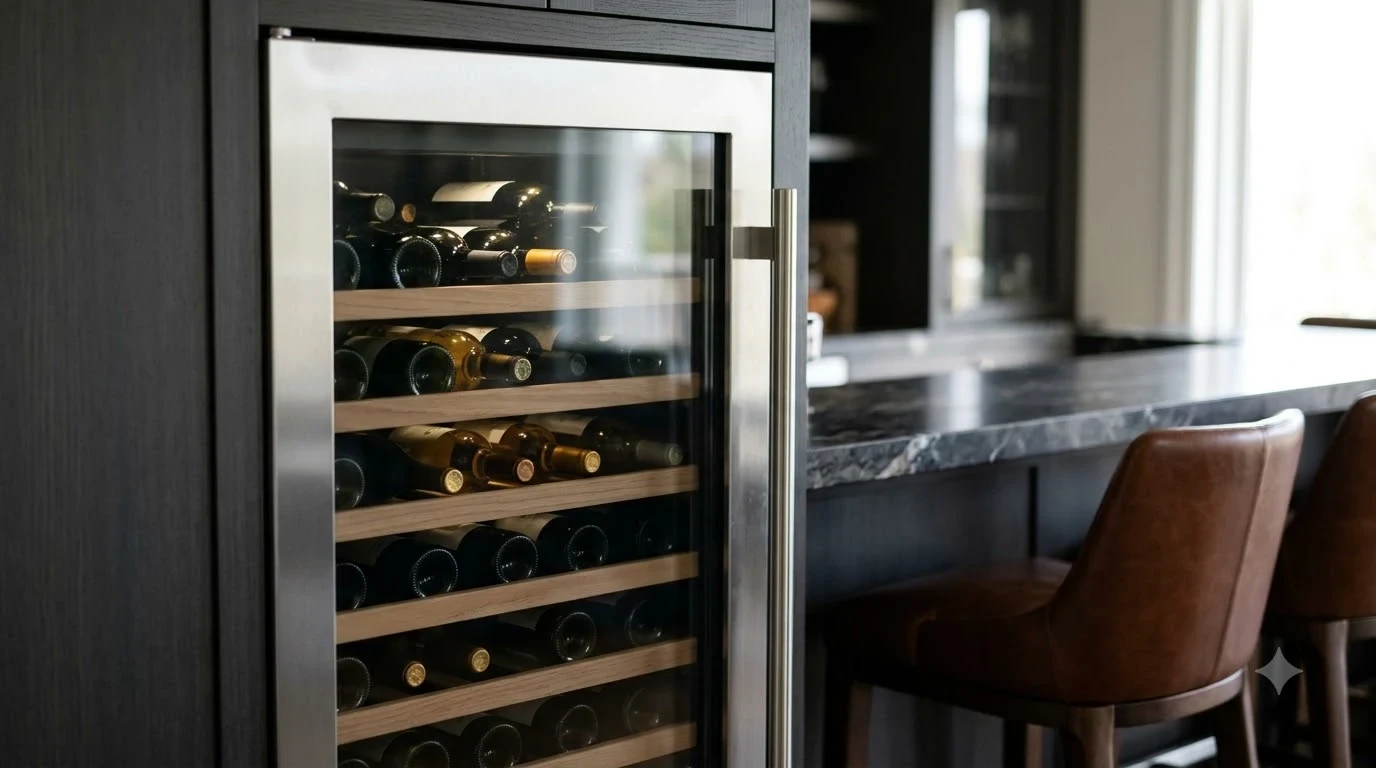
When comparing a wine fridge vs mini fridge, a dedicated wine fridge is far better for storing wine because it holds a steady 45°F to 65°F temperature range, preserves cork moisture, and minimizes motor vibration. A mini fridge is built for food and canned drinks, running at a chilly 32°F to 40°F that strips moisture from the air and numbs wine aromas. While a mini fridge works fine for chilling white or sparkling wine for a day or two before serving, any bottle kept for weeks or months needs the gentler environment of a wine cooler.
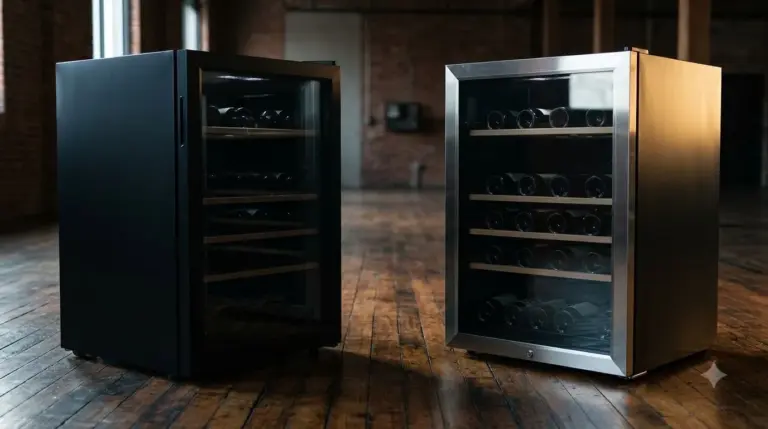
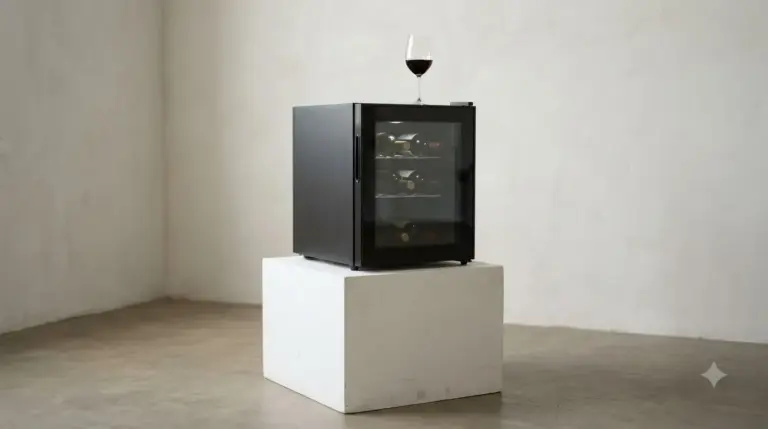
At first glance, both appliances look like compact boxes that plug into a standard wall outlet and tuck neatly under a counter or beside a desk. Inside, however, their cooling systems, humidity levels, and shelving follow completely different engineering goals. Understanding how each machine treats a sealed bottle makes it much easier to pick the right cooler for a home bar, apartment, or office.
Side-by-Side Comparison: Wine Fridge vs Mini Fridge
A wine fridge prioritizes slow, stable preservation around 55°F with horizontal bottle cradles, whereas a mini fridge prioritizes rapid, near-freezing cooling around 35°F to 38°F for perishable food and cans. Looking at their core specifications side by side highlights why these two appliances rarely substitute for one another over the long haul.
| Feature | Dedicated Wine Fridge | Standard Mini Fridge |
|---|---|---|
| Typical Temperature Range | 41°F to 65°F (55°F cellar sweet spot) | 32°F to 40°F (often 35°F to 38°F) |
| Relative Humidity | 50% to 70% (preserves cork elasticity) | Around 30% (actively dehumidifies air) |
| Cooling Technology | Low-vibration compressor or thermoelectric | Standard vapor-compression motor |
| Shelving Design | Scalloped wood or coated wire bottle cradles | Flat glass or wire shelves with door bins |
| Door Construction | UV-tinted double- or triple-pane glass | Solid insulated metal/plastic or clear glass |
| Food Safety | Not safe for meat, dairy, or leftovers | Safe for perishable food and snacks |
| Ideal Bottle Hold Time | Months to multiple years | 1 to 3 days before serving |
According to Wine Enthusiast, dedicated wine refrigerators maintain a steady environment typically centered between 53°F and 57°F, which protects red, white, and sparkling wines from premature chemical aging. By contrast, appliance manufacturer Vinotemp notes that standard food refrigerators operate between 32°F and 40°F to keep milk, produce, and leftovers safe from bacteria.
Because the internal temperatures never overlap at the ideal 55°F cellar mark, each machine excels at a narrow job. Readers weighing broader appliance styles across compact spaces can also explore our Versus comparisons to see how specialized coolers stack up against multi-purpose units.
Temperature Range and Stability
Wine fridges hold steady between 45°F and 65°F without sharp swings, while mini fridges drop to 32°F to 40°F and cycle aggressively whenever the door opens. That 15- to 20-degree gap changes how wine ages, smells, and pours.
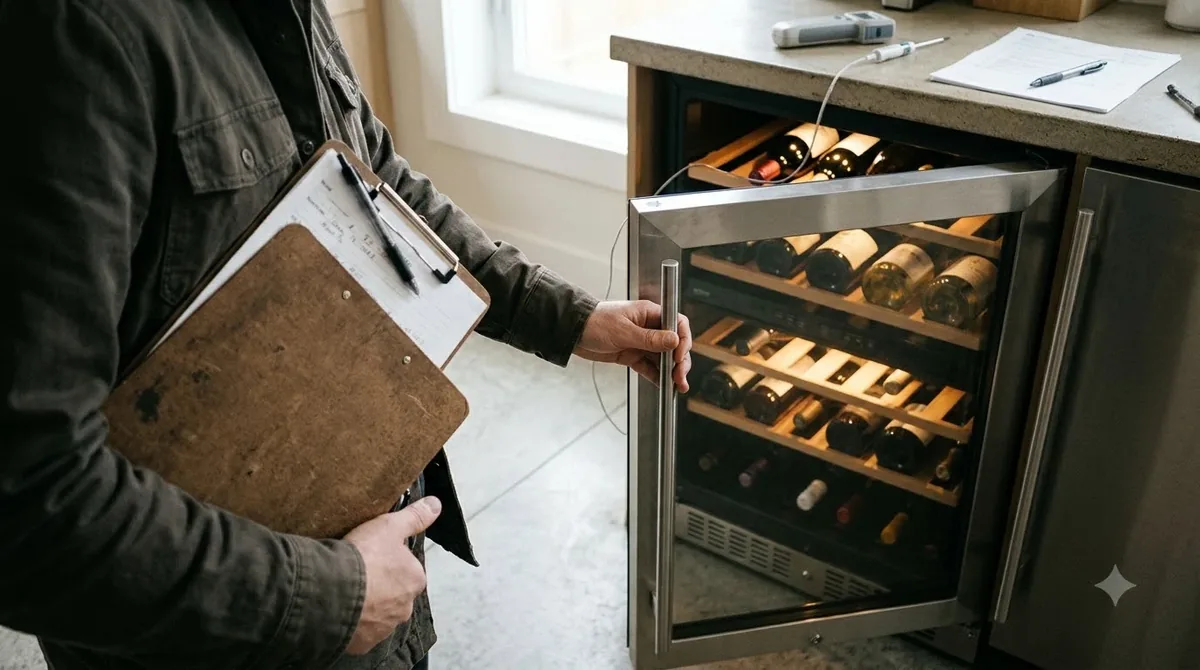
As Master Sommelier Scott Carney explained to Serious Eats, the classic cellar sweet spot sits between 55°F and 57°F because it slows down oxidation without freezing the liquid. When a mini fridge pulls a bottle down to 35°F, cold temperatures mute aromatic compounds in Cabernet Sauvignon and Chardonnay alike, and prolonged exposure near freezing can trigger harmless but gritty potassium bitartrate crystals to precipitate out of the wine. Even worse, if a mini fridge thermostat malfunctions or sits near a cold back wall, water inside the wine can freeze, expand, and push the cork straight out of the neck.
Stability matters just as much as the target number on the dial. Every time someone opens a mini fridge for a sparkling water or snack, warm room air rushes in and forces the compressor to blast cold air to recover. Repeated expansion and contraction of the wine inside the bottle acts like a tiny pump, drawing outside air past the cork seal. Dedicated wine fridges use gradual cooling cycles and offer single-zone or dual-zone controls—letting one compartment hold reds at 60°F to 65°F while another chills whites at 45°F to 50°F.
Tip: If a mini fridge is the only appliance available for an upcoming dinner party, place white wines or sparkling bottles inside 2 to 3 hours before guests arrive rather than storing them there all month.
Humidity Control and Cork Protection
Wine fridges maintain roughly 50 to 70 percent relative humidity to keep natural corks supple, whereas mini fridges actively strip moisture from the interior air down to around 30 percent. Over several weeks, dry air shrinks cork stoppers and breaks the airtight seal that keeps wine fresh.
According to The Spruce Eats, standard household refrigerators hover near 30 percent relative humidity because dry air prevents frost buildup and mold on food. While low moisture helps crisp vegetables and packaged snacks, it starves natural corks of the hydration they need to stay pressed tightly against the inside of the glass bottleneck. Wine Enthusiast notes that dry refrigerator air can begin shrinking a cork in as little as a couple of weeks, letting oxygen seep in and flatten bright fruit flavors into dull, vinegar-like notes.
Dedicated wine coolers solve this problem in two ways. First, cooling only down to 55°F removes far less ambient moisture than cooling down to 36°F. Second, many compressor wine cabinets recirculate condensation moisture inside the cabinet, and owners in arid climates can verify levels with a digital hygrometer—adding a small dish of water or damp sponge if readings dip below 50 percent. Bottles closed with metal screw caps or synthetic stoppers are far less vulnerable to dry air, yet natural cork still dominates mid-tier and age-worthy bottles.
Vibration and Compressor Noise
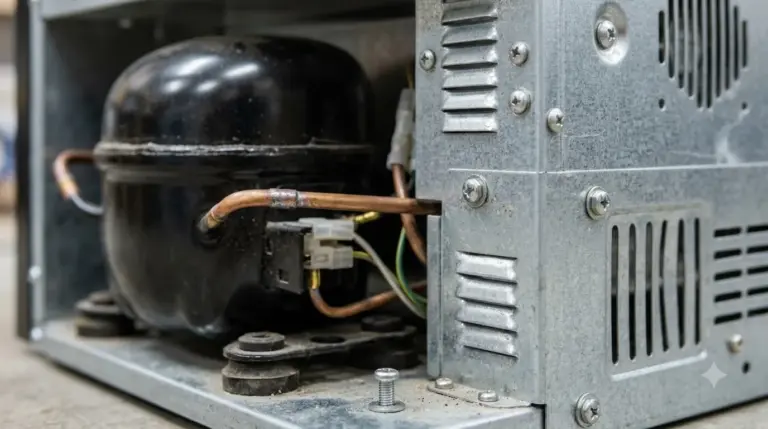
Wine fridges rely on vibration-dampened compressors or solid-state thermoelectric modules to keep bottles still, while mini fridges use standard food-grade compressors that send steady micro-vibrations through every shelf. Constant mechanical shaking disturbs sediment in aged reds and can accelerate unwanted chemical reactions.
Vinotemp explains that wine fridge compressors sit on specialized rubber mounts designed to absorb motor tremors before they reach the racks. Smaller countertop wine coolers often go a step further by using Peltier thermoelectric cooling—passing an electric current through a metal module to transfer heat out of the cabinet with zero moving compressor parts, leaving only a quiet internal fan. Thermoelectric units typically lower internal temperatures 10°F to 12°F below the surrounding room, making them whisper-quiet for bedrooms, home offices, or studio apartments where room temperatures stay near 68°F to 72°F.
Mini fridges prioritize fast temperature recovery and low manufacturing cost, so their compressors bolt directly to the frame and kick on loudly several times an hour. In addition, many mini fridges pack a small top freezer compartment that cycles refrigerant aggressively, rattling loose glass bottles against wire racks. While a few days of vibration will not hurt a crisp Pinot Grigio or bottle of Prosecco meant for a weekend aperol spritz recipe, months of constant shaking can muddy delicate older vintages.
Shelving Design, Bottle Fit, and UV Glass Protection
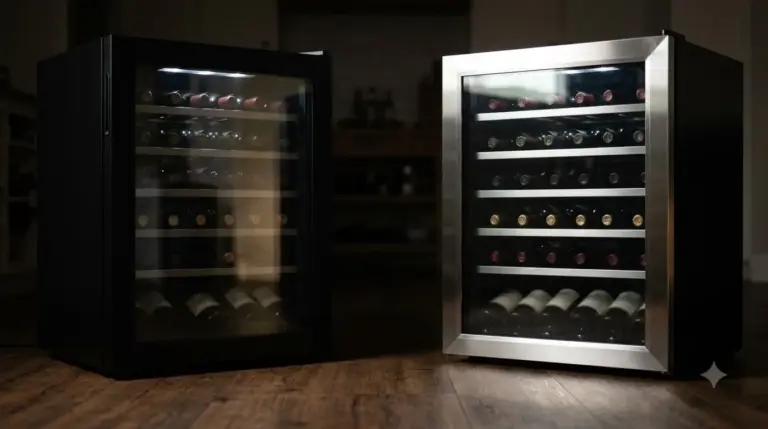
Wine fridges use scalloped horizontal racks and UV-filtering glass doors to cradle bottles safely in contact with their corks, while mini fridges rely on flat shelves and solid or untinted doors built around cans and cartons. That difference affects both usable bottle count and protection from light strike.

According to Vinotemp, laying unopened wine bottles on their sides keeps the liquid pressed against the cork so it stays moist and swollen against the glass. Wine coolers accomplish this with wave-shaped wire or beechwood cradles spaced for standard 750 ml Bordeaux bottles—though wider Burgundy, Pinot Noir, and Champagne bottles frequently require removing a shelf and reducing total capacity by 15 to 25 percent. Serious Eats pointed out during testing that compact retro mini fridges use flat shelves rather than contoured cradles, which lets round wine bottles roll into one another or rattle against the door whenever the unit opens.
Door construction separates the two categories just as sharply. Wine Enthusiast notes that even entry-level wine fridges fit tinted, UV-filtering glass doors—and higher-tier cabinets use double- or triple-pane argon-filled glass—to block ultraviolet rays that trigger sulfur compounds and create cabbage- or wet-cardboard aromas known as light strike. Solid-door mini fridges block light completely while closed, yet glass-front beverage mini fridges often skip UV coatings so canned sodas and craft beers remain brightly visible on display.
Food Safety and Multi-Drink Versatility
A mini fridge safely stores perishable food, milk, and canned drinks below 40°F, whereas a wine fridge runs too warm for food safety and excels only with wine and select shelf-stable beverages. Choosing between them often comes down to whether snacks and meal prep share the same corner.
Vinotemp explicitly warns against keeping perishable food inside a wine cooler because its 41°F to 65°F operating window falls squarely inside the bacterial danger zone for meat, dairy, and cooked leftovers. Even if a single-zone wine fridge drops to its lowest 41°F setting, that temperature still sits above the 35°F to 38°F benchmark that The Spruce Eats cites for standard household food refrigeration. Anyone cooking a weeknight chicken marsala recipe and wanting to chill leftover fortified Marsala wine alongside dairy or poultry needs a true food-rated mini fridge.
On the flip side, a wine fridge handles more than still red and white wine. Sparkling bottles like Prosecco and Cava rest comfortably on the bottom rack—ready to pour into a crisp hugo spritz recipe—and shelf-stable items such as unopened vermouth, sparkling water, or canned mixers chill fine at 45°F without risking spoilage. Mini fridges remain far more flexible for dorm rooms, guest suites, and offices where cold lunches, oat milk, and iced coffee matter just as much as an occasional bottle of Sauvignon Blanc.
Which Should You Pick: Wine Fridge or Mini Fridge?
Pick a dedicated wine fridge if you buy wine by the case, own bottles with natural corks, or hold wines for more than two weeks, and pick a mini fridge if you need safe food storage or only chill white wine right before dinner. Matching the appliance to buying habits avoids ruined bottles and wasted floor space.
According to Vinotemp, roughly 99 percent of wine sold at retail is crafted to be opened within a few months to 3 years rather than aged for decades. Even over a six-month window, however, a 72°F kitchen pantry or a 36°F mini fridge degrades delicate aromatics compared to a steady 55°F wine cooler. Serious Eats recommends starting with a 27- to 32-bottle wine fridge for budding wine lovers so extra space accommodates wide Pinot Noir bottles and impulse purchases without cramming shelves.
- Choose a wine fridge when: You store 6 or more bottles at once, collect reds meant to rest for months or years, want dual-zone serving temperatures for reds and whites, or want a glass-front display that protects labels and corks.
- Choose a mini fridge when: You need safe storage below 40°F for milk, fruit, or meal prep, drink mostly beer and soda with an occasional bottle of chilled white wine, or buy one bottle at a time to open the same weekend.
- Consider a beverage center hybrid when: You entertain frequently and want a 24-inch under-counter unit with separate zones—one side holding wine racks near 55°F and the other chilling cans near 38°F.
Frequently Asked Questions
Can I convert a mini fridge into a wine fridge with an external thermostat?
Plug-in temperature controllers can override a mini fridge compressor to hold 55°F, which solves the over-chilling problem. However, an external thermostat cannot add scalloped bottle cradles, UV-filtering glass, or the vibration dampening built into dedicated wine coolers, and warm-setting cycling can cause condensation pooling inside unvented cabinets.
How should opened wine bottles be stored in a wine fridge versus a mini fridge?
According to Vinotemp, opened wine bottles should stand upright rather than lie flat because standard wine stoppers and re-inserted corks are rarely completely leakproof. Standing an opened bottle upright in a standard mini fridge at 38°F actually slows oxidation slightly better than a 55°F wine fridge, keeping still reds and whites fresh for 3 to 5 days.
Do screw-cap wines still need a wine fridge instead of a mini fridge?
Aluminum screw caps create an airtight seal that will not dry out in a 30 percent humidity mini fridge the way natural corks do. Even so, long-term storage at 35°F in a mini fridge still stalls slow flavor development and exposes bottles to constant compressor vibration, making a 55°F wine fridge better for holding screw-cap Riesling or Pinot Noir beyond a few weeks.
Why do thermoelectric wine fridges struggle in warm garages or sunny kitchens?
Vinotemp notes that Peltier thermoelectric coolers can only drop interior temperatures about 10°F to 12°F below the surrounding room temperature. In an 80°F garage or sun-drenched sunroom, a thermoelectric unit will stall near 68°F to 70°F, whereas a compressor wine fridge maintains 55°F regardless of warm summer room temperatures.
How much ventilation clearance do compact wine fridges and mini fridges need?
Freestanding wine fridges and standard mini fridges both vent heat through side or rear condenser coils and typically require 2 to 5 inches of open clearance at the back and sides. Pushing either freestanding unit flush inside a tight cabinet traps exhaust heat, forces the cooling system to run nonstop, and shortens compressor lifespan unless the unit is specifically engineered with front-venting grilles for built-in installation.
Comparing a wine fridge against a mini fridge comes down to what sits inside the door and how long it stays there. A mini fridge remains the undisputed workhorse for cold snacks, canned drinks, and short-term chilling, while a dedicated wine fridge delivers the steady 55°F temperature, gentle humidity, and quiet support that keep every pour tasting as the winemaker intended.
More in Versus
 Edgestar Vs Kalamera: Choose the Right Wine CoolerUpdated Nov 21, 2026
 Frigidaire Vs Magic Chef: Compare Wine Cooler Features and FitUpdated Nov 21, 2026
 EdgeStar Vs Whynter Wine Coolers for Smarter StorageUpdated Nov 21, 2026
 Newair Vs Whynter: Choose the Right 46-Bottle Wine CoolerUpdated Nov 21, 2026
 Kalamera Vs Newair: Choose the Right Wine Cooler for Your HomeUpdated Nov 21, 2026
 Danby Vs Vinotemp: Choose the Right Wine Cooler for Your SpaceUpdated Nov 21, 2026