


We may earn a commission when you buy through links on this page, at no extra cost to you. Learn more.
The best wine fridge buffet setup is a dual-zone compressor unit that keeps reds and whites at separate temperatures, placed beside the serving table where guests can reach it without crowding the food. For a party that runs several hours, a unit with a clear door and steady cooling holds up better than a compact cooler that only chills a few bottles. The right size depends on how many guests you host and how many bottles you open before the table is cleared.
A buffet creates a specific problem for a wine fridge. Bottles come out often, the door stays open longer than it does in a kitchen, and the unit may sit in a room that is warmer than expected because of the food, the lights, and the guests. A fridge that works well for storage can struggle at a party, so the choice should match the way you plan to serve. This guide groups the best wine fridge buffet options by hosting style, explains which designs keep wine at the right temperature under heavy use, and shows where to place each type so it stays out of the way.
Quick Comparison of Serving Fridge Designs
Serving use changes the trade-offs. The table below compares the common designs on the criteria that matter at a buffet, from how well they hold temperature with the door opening often to how much they take up on a counter or patio.
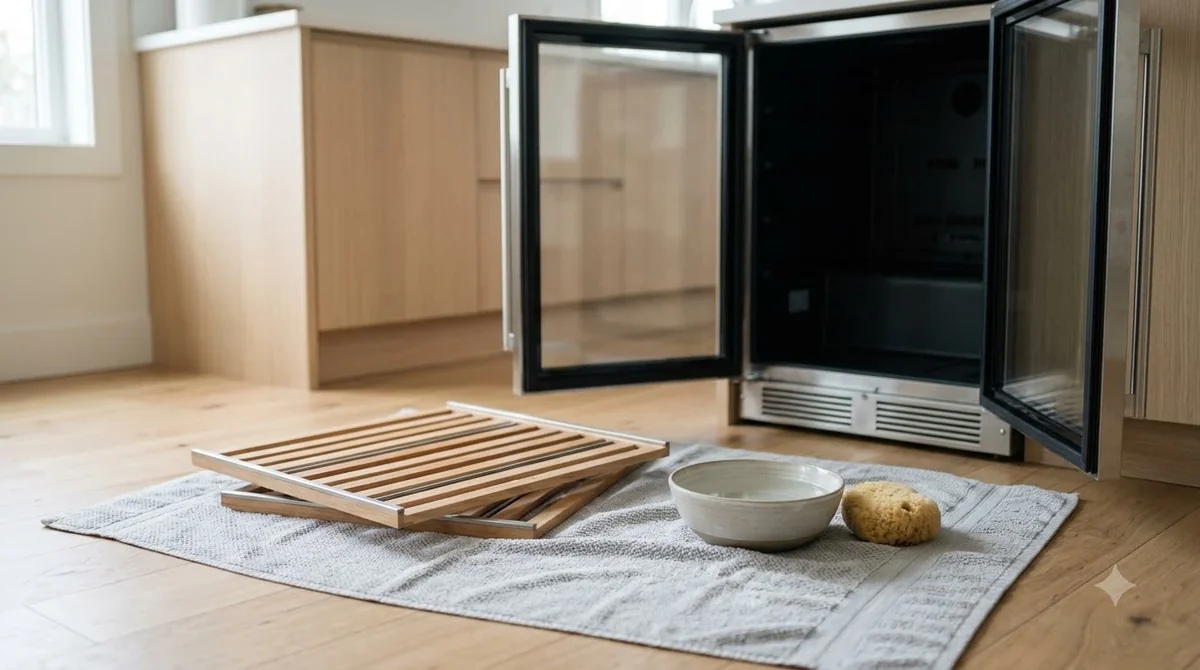
| Design | Holds temperature with frequent opening | Capacity for a party | Best buffet role |
|---|---|---|---|
| Dual-zone compressor | Strong, recovers after the door is opened | Large, often enough for a full evening | Main serving fridge for reds and whites |
| Glass-door compressor | Good, though the door should stay closed between pours | Medium to large, with visible bottles | Display fridge that guests can browse |
| Thermoelectric countertop | Modest, weaker in a warm room | Small, a few bottles at a time | Backup chiller for the next bottle |
| Outdoor-rated unit | Strong when rated for the setting | Medium, sized for a patio bar | Covered patio or deck service |
Dual-zone compressor models are usually the most practical main unit for a buffet. Thermoelectric units use no refrigerant and have no compressor, but they are much less efficient at removing heat. The Wikipedia article on thermoelectric cooling puts them at roughly 10–15% of the efficiency of an ideal refrigerator, compared with 40–60% for compression systems. In a warm, crowded room, that gap shows up as slower recovery after every pour.
Best for Hosting Reds and Whites at Once
A dual-zone compressor is the most flexible choice when the buffet offers both styles, since each zone can be set to its own temperature band.
Dual-zone units are described in general wine accessory guides as refrigerator-style units that store dozens of bottles at selected temperatures, with some models controlling two separate areas. That layout lets a host keep a red section near the serving table and a white section cooler, without moving bottles between two appliances during the evening.
Load the fridge the night before rather than during the party, so it is already at target temperature when the first guests arrive. Keep the door closed between pours and keep a list of what is in each zone so guests do not open it to search.
Why it stands out: Two temperature bands let one appliance cover a mixed buffet, and a compressor recovers well after the door opens.
Keep in mind: Check that the unit’s footprint fits beside the serving table with room at the back for airflow.
Best for: Hosts who serve both styles of wine and want a single main fridge for the evening.
Best for Glass-Door Display at the Bar
A glass-door fridge turns the wine into part of the room, which helps guests choose a bottle without asking. It works best when the fridge is placed where the door is not in direct sunlight and away from heat sources.
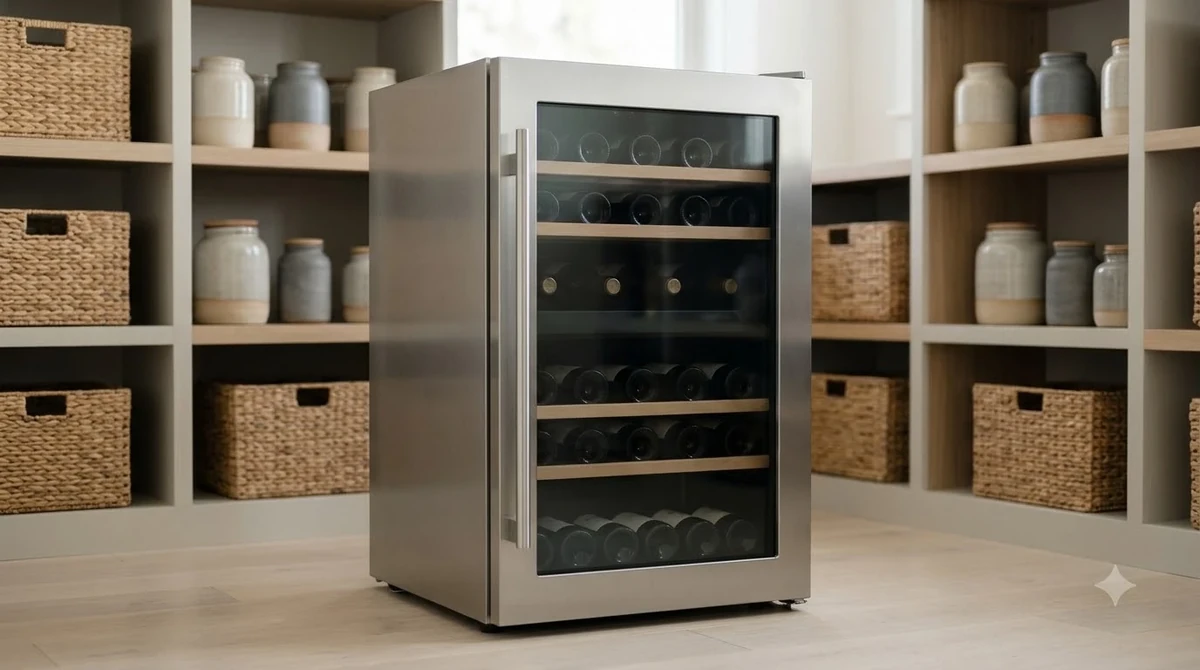
Light matters for stored wine. Wine storage guidance generally lists light among the conditions that can spoil wine, so a glass door in a sunny room is a trade-off. Choose a model with UV-filtering glass if the fridge will sit near a window, and keep it out of the direct path of daylight.
Display units are often best for short stints rather than all-day storage. Keep the bottles most likely to be opened on the front shelves, and move the rest to a closed fridge when the party begins to wind down.
Why it stands out: Visible bottles make the bar easier to browse, and the glass door keeps the collection on show.
Keep in mind: Glass doors let in light and warmth, so position the unit away from windows and the oven.
Best for: Home bars, entertaining rooms, and hosts who like guests to see the selection.
Best for Countertop Backup Chilling
A countertop unit is not a main fridge, but it solves a common buffet problem: the next bottle needs to be cold, and the main fridge is across the room. A small thermoelectric or compact cooler can hold a few bottles at a time.
Table-top chillers are described in wine accessory references as units that rapidly chill a single bottle, often using ice or an electric cooling device, and they are especially useful in warmer climates. That makes them a good addition for white, rosé, or sparkling wine that runs out faster than planned.
Because thermoelectric units lose cooling power in heat, place the countertop unit in the coolest corner you can find, away from the stove, the sink, and direct sun. Expect it to chill more slowly when the kitchen is busy.
Why it stands out: A small unit covers the next bottle without tying up the main fridge.
Keep in mind: Capacity is small, so it works best as a backup rather than the only fridge for the party.
Best for: Hosts who want quick chilling for white or sparkling wine during the evening.
Best for Covered Patios and Outdoor Parties
Outdoor hosting adds heat, humidity, and direct sun, so an indoor fridge is often the wrong tool. A unit rated for the setting, or a shaded position on a covered deck, keeps the buffet running without straining the compressor.
Check the spec sheet for the ambient temperature range before you commit. Many standard indoor models are not built for hot outdoor air, while units sold for outdoor use are designed to run in warmer conditions. Shade the cabinet and leave the back clear so the compressor can release heat.
If the fridge will sit on a patio, plan a power source and a cover for rain. A simple shade structure and a clear space around the unit are often enough to make a summer party run smoothly.
Why it stands out: An outdoor-rated unit handles heat and humidity that would stress an indoor fridge.
Keep in mind: Confirm the rated ambient range and the power plan before the party day.
Best for: Summer parties, covered decks, and patio bars that serve wine for several hours.
Best for Large Hosting Collections
When a party calls for more bottles than a single shelf unit can hold, a larger compressor model with several shelves is the practical answer. Larger units also let you split the collection into reds, whites, and sparkling wines without stacking bottles in front of each other.
Larger cabinets take longer to cool after a restock, so load the fridge early and avoid filling it to the top with warm bottles. A partly full cabinet cools faster and keeps the temperature steadier during the evening.
The wine and beer fridge format is one option for hosts who also serve beer, since the shelves can be reconfigured for cans and bottles. Keep the wine zone on the side nearest the table so guests reach it first.
Why it stands out: A larger cabinet keeps the whole evening’s wine in one place and avoids a second fridge.
Keep in mind: Large units need more floor space and more time to recover after a restock.
Best for: Hosts planning a full-evening party, a wedding reception at home, or a regular entertaining routine.
How to Choose a Buffet Wine Fridge
Serving use rewards a few simple checks before you buy. Use the table below to match the unit to the size of the party and where it will stand.
| Checkpoint | What to look for |
|---|---|
| Party size | Enough shelf space for every bottle you plan to open, with room to restock |
| Zones | Dual zone if you serve both reds and whites at different settings |
| Door type | Solid door for storage, glass door for display in a shaded spot |
| Location rating | Indoor-only or outdoor-rated, matched to where the fridge will sit |
| Airflow | Clear space at the back and sides for the compressor to release heat |
Temperature is the detail that most often goes wrong at a buffet. Wine stored for a party should sit at its target temperature before the first pour, and a fridge that is already full will take longer to reach it. Plan the restock schedule, keep the door closed between refills, and give the unit a few hours to settle after loading.
Tip: Keep one spare bottle of each style in the fridge at the start of the party, so the buffet does not run dry when the first wave of guests arrives.
Frequently Asked Questions
What is the best wine fridge size for a party?
Count the bottles you expect to open during the evening, then add a margin for restocking. A dual-zone compressor unit is usually the most practical choice for a full evening, while a countertop unit works as a backup for the next bottle.
Can a wine fridge be used outdoors at a party?
Only if the unit is rated for outdoor use or placed in a shaded, sheltered spot. Standard indoor models can struggle in hot air, so check the spec sheet for the ambient temperature range before the party.
Is a glass-door wine fridge good for a buffet?
It works well for display, since guests can see the selection, but the glass lets in light and warmth. Keep it out of direct sun and away from the oven, and use it for the bottles guests are most likely to choose.
Should I use a thermoelectric cooler at a party?
A thermoelectric countertop unit is useful for a few bottles at a time, but it is weaker in a warm room and slower to chill. Treat it as a backup and keep the main fridge for the bulk of the wine.
Once you have a plan for the party, use the how many glasses in a bottle of wine guide to estimate how many bottles the evening will need, and check the storage notes for the wine fridge sideboard style if you want a unit that blends into the room. A well-placed fridge with enough capacity makes the buffet easier to run and keeps the wine ready for every pour.
More in Wine Fridge Features
 Best Wine Fridge Bar Cabinet Setups for a Better Home BarUpdated Nov 20, 2026
 Wine Fridge for Champagne Bottles: Sizes and Storage GuideUpdated Nov 18, 2026
 Best Wine Fridge for Champagne Bottles: Shelf and Bottle FitUpdated Nov 18, 2026
 Best Wine Fridge with Display Shelf: Glass Doors and Open RacksUpdated Nov 18, 2026
 Best Wine Fridge With Drawers for Easy Access to Every BottleUpdated Nov 18, 2026
 Best Wine Fridge With Freezer: Combo Styles for Kitchens and BasementsUpdated Nov 18, 2026