

We may earn a commission when you buy through links on this page, at no extra cost to you. Learn more.
The best wine for summer is a chilled, bright style such as dry rosé, Sauvignon Blanc, or a sparkling wine like Prosecco or Cava, with a light red such as Gamay served slightly cool for those who want red. Warm weather favors wines with high acidity, moderate alcohol, and little oak, because those qualities keep a glass refreshing in heat. Salads, grilled chicken, seafood, and fresh fruit all pair well with these styles, and none of them need a long time in a decanter.
Summer asks something different from a glass than winter does. Long evenings on a patio or a picnic blanket reward wines that taste fresh at a cool temperature and do not feel heavy after the second pour. This guide covers which styles fit warm weather, how to match them to the food on the table, and how to chill them so the fruit stays bright.
What Makes a Wine Suit Warm Weather
Three qualities separate a summer bottle from a winter one: lighter body, lively acidity, and a serving temperature that is cold enough to feel refreshing. Each one makes a wine easier to drink when the air is warm and the meal is simple.
Body describes how heavy a wine feels in the mouth, and alcohol content is the main driver. VinePair’s wine body guide sorts wines into light-bodied (under 12.5% alcohol), medium-bodied (12.5% to 13.5%), and full-bodied (over 13.5%). Riesling, Prosecco, and Vinho Verde are among the light-bodied examples named in that guide, while Pinot Grigio, Sauvignon Blanc, and rosé fall in the medium range. Those lighter bodies are why most warm-weather picks come from this group.
Acidity is the sharp, mouth-watering quality that makes a wine taste fresh. Wines with high acidity clean the palate between bites and feel brighter when they are cold. Low-acid, heavily oaked wines can taste flat or heavy in heat, even when they are well made. For that reason, many summer picks come from stainless steel tanks or short oak aging, which keeps the fruit in front.
Temperature rounds out the picture. A white or rosé served too warm loses its snap, and a sparkling wine served too warm can taste flat and sweet. A slightly cool light red, meanwhile, can taste more lively than a red left out on a hot afternoon. Chilling a bottle the right amount is the simplest way to get more from a summer glass.
Quick Comparison of Summer Styles
The table below compares the styles most often chosen for warm weather. The serving ranges follow the guides cited later in this article, and they are starting points for chilling rather than fixed rules.
| Style | Typical body | Flavors that suit summer | Serving range |
|---|---|---|---|
| Dry rosé | Light to medium | Strawberry, citrus, dry finish | About 45 to 55°F |
| Sauvignon Blanc | Medium | Grapefruit, lime, fresh herb | About 45 to 55°F |
| Prosecco | Light | Green apple, pear, lively bubbles | About 40 to 50°F |
| Gamay (Beaujolais) | Light | Red berry, low tannin, fresh acidity | About 55 to 60°F |
Best for Backyard Barbecues
A grill brings smoke, char, and fat, and a dry rosé can handle all three without tasting heavy. Rosé gets its color from a short period of skin contact with red grapes, so it carries some red-fruit character without the tannin of a red. VinePair’s rosé guide says the style suits warm months, sipping outdoors, and backyard barbecues, which is exactly the setting for a chilled bottle on a long afternoon.
Pale, dry rosés are the safest pick for a crowd. They pair with burgers, grilled chicken thighs, and fresh tomato salads, and they suit guests who do not want a red or a heavy white. Darker, fuller rosés can work with grilled pork or a spiced marinade, but they are less refreshing when the heat is high. The rule of thumb is to choose the lightest rosé that still matches the main dish.
Best for Seafood and Salads
Grilled fish, shrimp, and crisp salads are where Sauvignon Blanc shines. Its medium body is light enough for warm weather, and its grapefruit and herb notes match lemon, olive oil, and fresh greens. Those flavors are the reason the grape is so common on summer menus, and they explain why a glass tastes cleaner next to a plate of ceviche or a pile of shaved vegetables.
Cooler whites are also useful with seafood that has a delicate flavor. Riesling is a lighter option with citrus and stone-fruit notes, and it can handle a little sweetness in a dish with fruit or spice. Pinot Grigio, which VinePair places in the medium-bodied group, is another crisp choice for simple pasta with lemon, though it can taste thin next to rich or buttery sauces.
Best for Sparkling Celebrations
Sparkling wine is the easiest summer choice for a party because it works before, during, and after a meal. Prosecco is made from the Glera grape in Veneto and Friuli, Italy, and it is made in tanks rather than in the bottle. VinePair describes the result as lighter and more fruit-forward, released soon after bottling, which is why it suits a warm afternoon.
Sweetness matters as much as style. Brut is the most common dry style, with only a hint of sweetness, while Extra Dry is sweeter but still dry, and Prosecco is the usual example of that style. Cava from Spain is made by the traditional method and also comes as a rosé, and Champagne is the most formal option. A demi-sec bottle is noticeably sweet and is better kept for dessert than for a hot afternoon.
Best for Lighter Reds
Some guests want a red even on a warm day, and a light, chilled red can satisfy them without the weight of a big bottle. Gamay, the grape of Beaujolais, is the usual choice. VinePair describes it as a light-bodied red with high acidity and low tannin, and it is the kind of red that tastes better slightly chilled than at room temperature.
A lighter Pinot Noir can also work in summer, especially with grilled salmon, mushroom skewers, or a cold cut platter. The key is to keep the body light and the serving cool. Fuller reds such as Cabernet, Malbec, and Syrah belong in cooler weather, because their tannin and alcohol can feel heavy in heat.
Serving Summer Wines Cold Enough
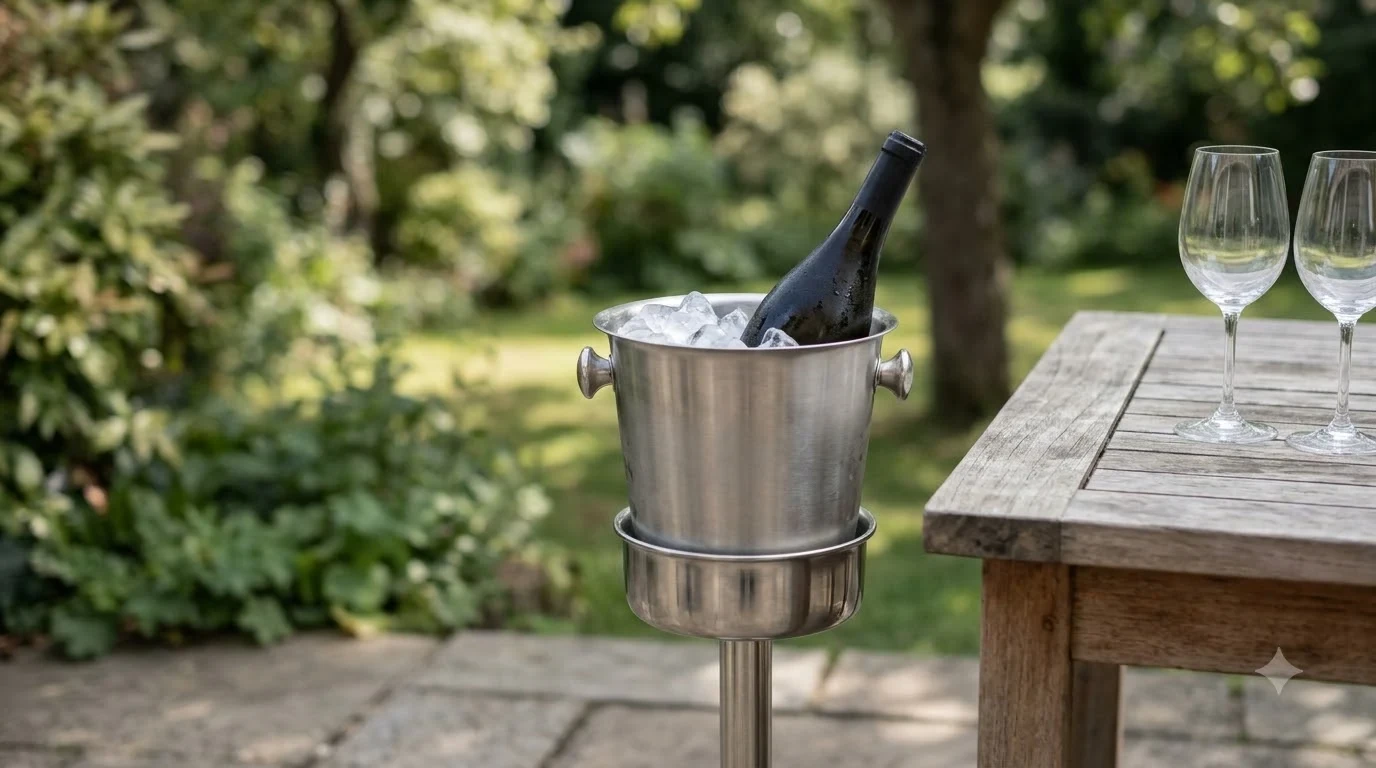
Temperature is where summer bottles most often go wrong. VinePair’s temperature guide puts white wine and rosé in the range of 45 to 55°F, with lighter, aromatic whites and Provence-style rosés usually best at the cold end. It places sparkling wine in the range of 40 to 50°F and recommends chilling it in the freezer about an hour before opening, or in an ice bucket for about 30 minutes. The guide also suggests keeping an open bottle on ice until it is finished.
Light reds such as Gamay are chilled rather than cold, at about 55 to 60°F, so a short time in the fridge is enough. A bottle left in a cooler at a picnic can reach the right range without much effort, and a bottle kept in the sun can warm past it quickly. The practical approach is to chill the bottle before the event and check it again before serving.
Tip: A bottle that tastes flat or sweet on a hot day is often too warm. A few minutes in an ice bucket usually brings back the fresh acidity.
How to Choose a Summer Bottle
Start with the food and the crowd, then pick the body and the chill. A quick checklist makes the choice easier when the store is busy.
- Choose a dry rosé for barbecues, picnics, and mixed groups.
- Choose a Sauvignon Blanc for seafood, salads, and fresh herbs.
- Choose a Prosecco or Cava for parties and celebrations, and check whether the label says Brut or Extra Dry.
- Choose a chilled Gamay or lighter Pinot Noir when a guest wants red.
Labels also help. The alcohol percentage gives a rough sense of body, with lower numbers usually meaning a lighter wine. The sweetness level on sparkling bottles is printed on many labels, and it tells you whether a bottle will suit the dessert course or the start of the meal. Because warm weather is hard on wine, buying a bottle the same day as the event and keeping it cold in transit is often the best plan.
Frequently Asked Questions
What is the best wine for summer parties?
A dry rosé or a sparkling wine such as Prosecco is a common choice for a crowd. Both are light, refreshing, and easy to serve in a range of temperatures, and they suit a wide mix of food.
Should red wine be served cold in summer?
Light reds such as Gamay are best slightly chilled, around 55 to 60°F. Fuller reds are better kept cool rather than cold in hot weather, and a short fridge chill can help if the bottle tastes heavy.
Is rosé only for warm weather?
Rosé is most often chosen for warm months, but dry styles can work with many foods year round. Fuller, deeper rosés can also suit cooler evenings, while pale, crisp ones fit best in hot weather.
How long should a summer white wine stay in the fridge before serving?
A fridge works slowly, so a bottle should go in well before it is needed. For a faster chill, an ice bucket for about 30 minutes is the method VinePair describes, which suits a last-minute gathering.
Summer is also a good season to visit a wine region, and a tasting room with shade and cool drinks can be a pleasant stop. Readers who want a day trip can start with the guide to best Temecula wineries, or learn more about how styles are chosen in wine buying. For warm-weather meals, the simplest rule is to pick a light, bright style and keep it cold until it is poured.
More in Wine Buying Guides
 Riesling Gift: Choose a Bottle They’ll LoveUpdated Nov 21, 2026
 Sweet Red Wine Gift: Choose a Bottle They’ll LoveUpdated Nov 21, 2026
 Malbec Gift: How to Choose a Memorable Bottle for Any OccasionUpdated Nov 21, 2026
 Sherry Gift Ideas That Match Every Wine LoverUpdated Nov 21, 2026
 Moscato Gift: How to Choose a Sweet Wine They’ll LoveUpdated Nov 21, 2026
 Merlot Gift: How to Choose a Bottle They’ll AppreciateUpdated Nov 21, 2026