

We may earn a commission when you buy through links on this page, at no extra cost to you. Learn more.
The best wine for Christmas depends on the menu, but a dry sparkling wine works as a welcome pour, a medium-bodied red such as a Rioja Reserva suits roast meats, and a sweet wine matches the dessert course. Build the wine list around the dishes you already plan to serve, and keep one bottle of each style on hand so guests can move from aperitif to main course to dessert without a gap.
Holiday dinners bring a mix of flavours that few single bottles can cover. There is usually a salty starter, a rich main course, a few sides with butter or cream, and a dessert that may be sweet, spiced, or chocolate-based. Searches for the best wine for Christmas tend to come from hosts who want a simple plan that works for a crowd, and the answer is to match each course with a style rather than look for one perfect bottle.
The good news is that most of these styles are easy to find and easy to serve. A chilled sparkling wine opens the meal well, a fuller red holds up to roast meat, and a sweet wine finishes the table. The sections below walk through each choice and explain how to serve it.
Quick Comparison of Holiday Wine Styles
The table below sets out the main styles you are likely to need for a Christmas meal. Use it to decide how many bottles of each to buy, based on the size of the group and the number of courses.
| Style | Where it fits the meal | Serving range | Good with |
|---|---|---|---|
| Dry sparkling (Brut) | Welcome drink, starters | About 43 to 50°F (6 to 10°C) | Salty snacks, fried food, oysters |
| Light, dry white | Starter or seafood main | Chilled, roughly 45 to 55°F (7 to 12°C) | Smoked fish, ham, goat cheese |
| Medium-bodied red (Reserva Rioja) | Main course | About 60 to 68°F (15 to 20°C) | Roast beef, lamb, roast pork |
| Sweet wine | Dessert | Well chilled | Fruit desserts, cakes, blue cheese |
The serving ranges are general guides. Keep sparkling and sweet wines colder than reds, and bring reds up to temperature gradually rather than serving them straight from a warm room.
Best for a Festive Welcome Pour
A dry sparkling wine is the most practical welcome drink for a holiday table. It is festive without being heavy, and it can be poured as guests arrive before the first course. Brut is the most common dry style, with less than 12 grams of sugar per litre under the Champagne rules, and it suits almost everyone at a mixed table.
Wine Folly describes Champagne as dry, with light body and high acidity, and recommends serving it between 38 and 45°F (3 to 7°C) in a flute. It also notes that salty, fried, or fishy foods pair well with it, which makes it a good match for the snacks many hosts put out before dinner.

Best for a Light White at the Starter
A lighter white wine suits smoked fish, ham, or a simple salad before the main course. Choose an unoaked or lightly oaked style with clean acidity, since it refreshes the palate without overwhelming delicate flavours. Chardonnay is a useful option, and the reference article on the grape describes its lean, unoaked styles as crisp and high in acidity, with citrus and green apple notes.
If the starter is rich, such as a creamy soup, a lightly oaked Chardonnay adds the body needed to stand up to it. Serve whites chilled, but not so cold that the aroma disappears.
Best for Roast Meats and Main Courses
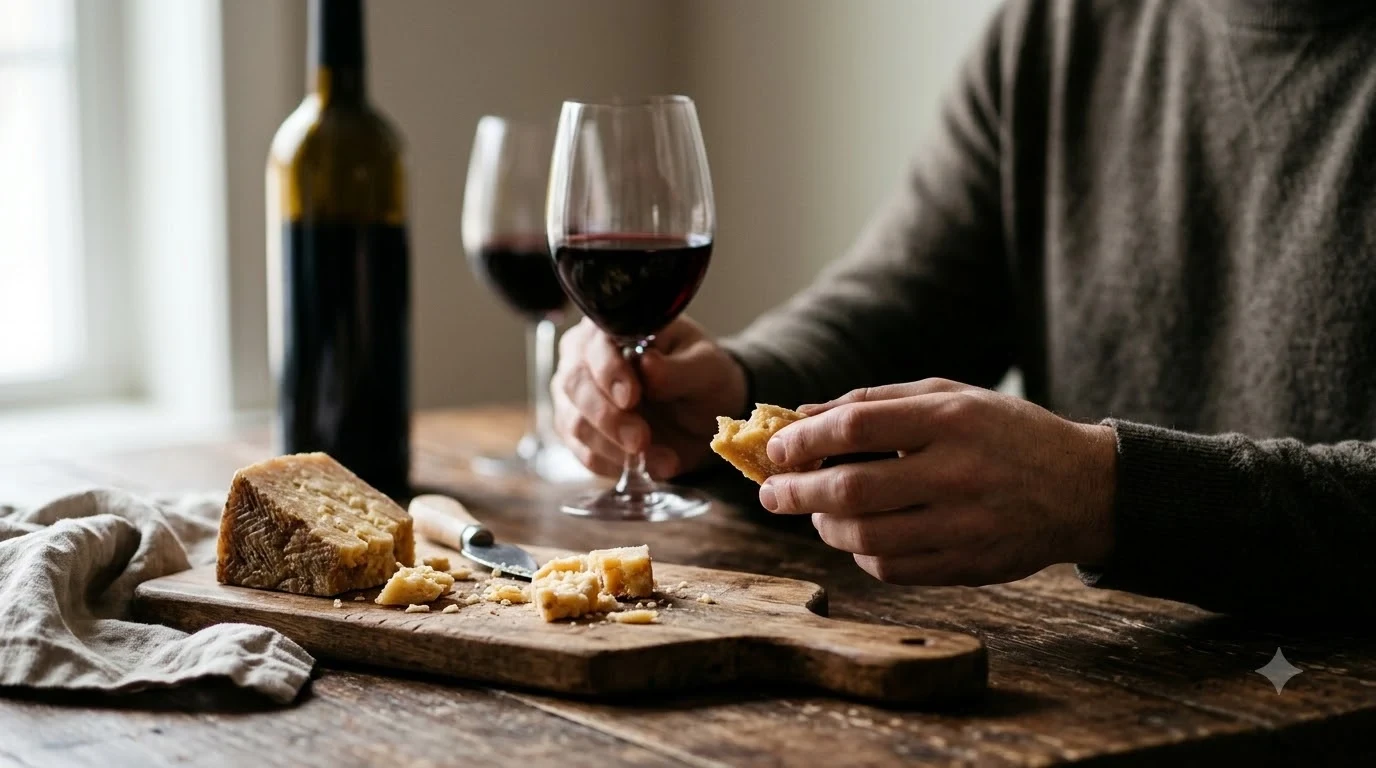
A medium-bodied red is the classic choice for a roast. Rioja Reserva is a good starting point, because the aging rules require at least 36 months in total for red Reserva, with at least 12 of those in oak. That gives the wine a savoury character that suits roast beef, lamb, or pork.
Wine Folly describes Tempranillo, the grape behind most Rioja reds, with cherry, dried fig, cedar, and tobacco flavours. It recommends serving the wine at 60 to 68°F (15 to 20°C) and decanting it for about an hour, so open the bottle before guests arrive if you can.
Wine Folly’s Tempranillo guide covers the grape’s main Spanish regions and serving advice in more detail.
Best for a Sweet Wine with Dessert
Sweet wine is the simplest match for a Christmas dessert. Fruit tarts, creamy cakes, and blue cheese all sit well with a wine that carries more sugar than a dry style. Under the Champagne rules, Demi-Sec is the sweetest common style, with 32 to 50 grams of sugar per litre, and it can be served with a dessert course rather than as an aperitif.
A rule of thumb is to serve the sweet wine no sweeter than the dessert. If the pudding is very sweet, a wine that is slightly less sweet can taste thin, so match the wine to the sugar in the dish rather than the other way round.
Best for a Rosé for a Mixed Menu
Rosé is a flexible choice when the menu includes both poultry and fish, or when the table is divided between red and white drinkers. Rosé Champagne adds berry notes and a pink colour, which suits a festive table, while still-rosé wines tend to be lighter and fresher than reds.
Because rosé is adaptable, it works as a second bottle alongside a sparkling wine. It is a sensible way to cover guests who do not want a full red or white.
How to Choose
Use this checklist when planning the drinks for a holiday meal. Each point helps you decide how much to buy and when to open each bottle.
- Count the courses. Plan at least one bottle per style for each course, plus extra sparkling for the welcome.
- Match the main course. Lighter meats and seafood suit white or rosé, while roast red meat suits a medium-bodied red.
- Read the sweetness word. On a sparkling bottle, Brut is dry and Demi-Sec is sweet. Choose a sweeter style for dessert.
- Chill and open in advance. Whites, sparkling, and sweet wines need time in the refrigerator, while reds are best opened early so they can breathe.
- Keep it simple. Three or four well-chosen bottles usually cover a holiday meal better than a long list of unfamiliar labels.
For shoppers who want to learn more about reading labels and choosing a style, the wine buying guide explains the basics. If you are planning a winery visit as a gift, the best Temecula wineries guide shows how regional styles differ from one place to another.
Frequently Asked Questions
What is the best wine to serve first at Christmas dinner?
A dry sparkling wine, such as a Brut, is the most common welcome pour. It is served cold, works with salty snacks, and sets a festive tone before the main course.
Which red wine works best with a Christmas roast?
A medium-bodied red such as a Rioja Reserva is a good match for roast beef, lamb, or pork. Serve it at about 60 to 68°F and open it early so it can breathe.
What wine goes with Christmas dessert?
A sweet wine is the simplest match, such as a Demi-Sec sparkling wine for fruit tarts or cakes. Serve it well chilled and make sure it is at least as sweet as the dessert.
How much wine should I buy for a holiday dinner?
Plan for the number of guests and the number of courses, and buy at least one bottle per style for each course, plus extra sparkling for the welcome. Adjust the total to how much your guests usually drink.
The best wine for Christmas is the one that suits each course, so plan a sparkling welcome, a medium-bodied red for the main, and a sweet wine for dessert. Start with the menu, use the table above to choose styles, and keep the bottle count simple.
More in Wine Buying Guides
 Riesling Gift: Choose a Bottle They’ll LoveUpdated Nov 21, 2026
 Sweet Red Wine Gift: Choose a Bottle They’ll LoveUpdated Nov 21, 2026
 Malbec Gift: How to Choose a Memorable Bottle for Any OccasionUpdated Nov 21, 2026
 Sherry Gift Ideas That Match Every Wine LoverUpdated Nov 21, 2026
 Moscato Gift: How to Choose a Sweet Wine They’ll LoveUpdated Nov 21, 2026
 Merlot Gift: How to Choose a Bottle They’ll AppreciateUpdated Nov 21, 2026