

We may earn a commission when you buy through links on this page, at no extra cost to you. Learn more.
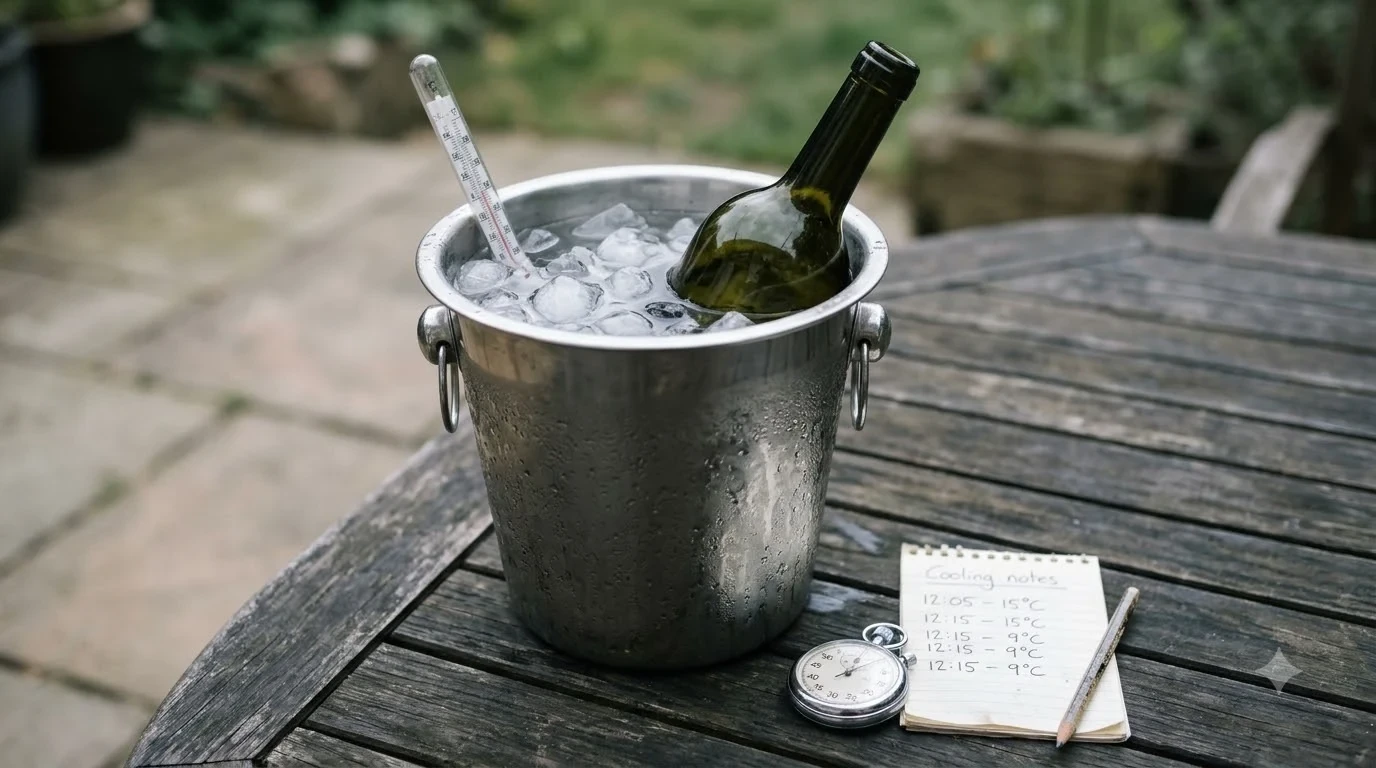
The best wine bottle chiller bucket reviews point to a type that matches your serving style: a metal ice bucket chills fastest at a party, an insulated sleeve keeps a bottle cold at the table, and a freezer gel sleeve works when you have no ice. Matching the bucket to your serving style matters more than any single feature, because each design solves a different timing problem.
This roundup compares wine bottle chiller buckets by how they chill, how long they hold the cold, and where they fit in a home or a small gathering. It is written for hosts who want a bottle at the right temperature without guessing at ice or timing. For the temperature targets behind each recommendation, VinePair’s guide to serving temperatures gives a clear range for each wine style. The sections below group the options by use, not by brand name.
Quick Comparison of Chiller Bucket Types
Chiller buckets fall into a few clear families. Each one trades speed, holding time, and convenience differently, so the table is the fastest way to decide which type matches your plans for the evening.
| Type | How it chills | Best use | Main limit |
|---|---|---|---|
| Metal ice bucket | Ice and water surround the bottle | Parties and quick service | Needs a steady supply of ice |
| Insulated double-wall bucket | Keeps a pre-chilled bottle cold | Dinner at the table | Starts only as cold as the bottle |
| Gel freezer sleeve | Frozen gel draws heat from the bottle | Chilling without ice | Must be frozen ahead |
| Compact or travel bucket | Small ice and water or a sleeve | Picnics and small spaces | Fits smaller bottles only |
Holding time matters just as much. A bucket that chills fast but warms quickly will leave the last glass lukewarm, while a slower bucket that keeps a steady cold may serve the final pour better. Decide which problem you are solving before you buy.
Speed matters most when you are short on time.
Sparkling wine and white wine respond well to a bucket because cold reaches the glass faster, while a full-bodied red usually needs a lighter touch.
Best for Fast Chilling at a Party
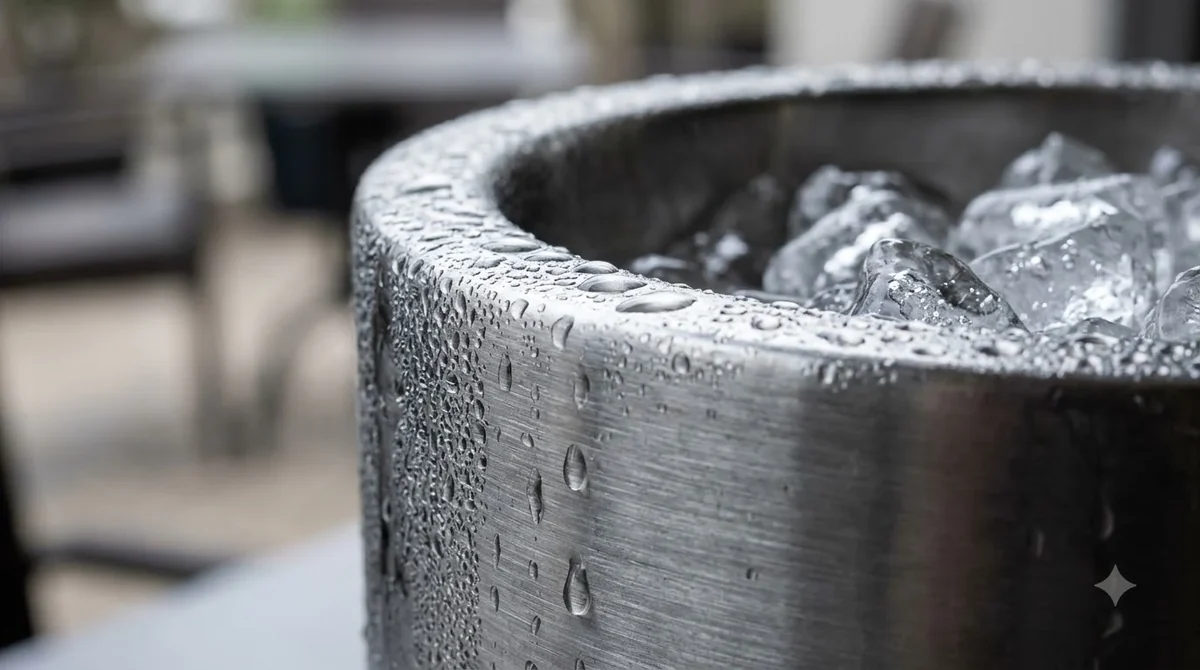
A metal ice bucket with a stand is the workhorse for a gathering. Ice and water surround the bottle on all sides, which is why this approach chills faster than ice alone. It suits a host who expects several bottles to empty in one evening and wants them ready on short notice.
Why it stands out
It reaches serving temperature quickly, holds the bottle in place, and gives guests a visible centerpiece. The sides are usually large enough for a standard bottle, and the stand keeps the bucket steady on a crowded table.
Keep in mind
You will need a steady supply of ice and an extra bowl or tray to catch drips. Start with the bottle at room temperature, and check it after about thirty minutes rather than assuming it is ready.
Best for Keeping a Bottle Cold at the Table
An insulated double-wall bucket is designed for the second half of the meal. It keeps a bottle that is already cold from warming too fast, which makes it useful when guests pour slowly over a long dinner.
Why it stands out
The double wall slows heat transfer, so the bottle stays in its ideal range for longer. It is also easier to move from the kitchen to the dining room without spilling water.
Keep in mind
An insulated sleeve cannot make a warm bottle cold on its own. Chill the wine first, then use the sleeve to hold the temperature. Sparkling wine is the most sensitive, so start it cold for the best result.
Best for Chilling Without Ice
A gel freezer sleeve is useful when you cannot store ice or do not want to deal with melting water. The sleeve is frozen ahead of time, then wrapped around the bottle, and it draws heat away gradually.
Why it stands out
It is tidy, requires no ice trays, and works well for a single bottle at a time. It is also a good option for a small kitchen where a full bucket would take up too much space.
Keep in mind
The sleeve has to be frozen well ahead, and it chills one bottle at a time. Plan ahead for a larger gathering, and keep a spare sleeve in the freezer if you host often.
Best for Small Spaces and Travel
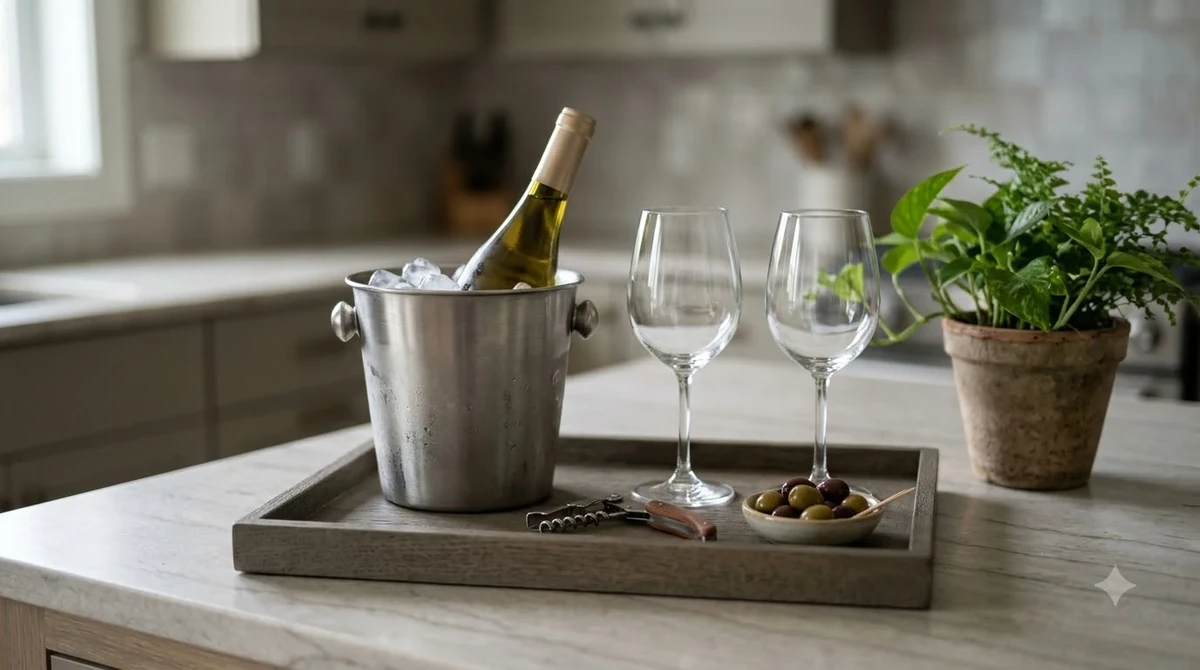
Compact buckets are designed for picnics, balconies, and small apartments. They hold fewer bottles and less ice, which makes them easier to carry and store, but they suit a casual evening better than a large dinner.
Why it stands out
Weight is another factor for travel. A filled metal bucket is heavy, so a compact model with a lid or a fitted carry strap is easier to move than a large bucket with a full load of ice and water. Pack ice in a sealed bag so the water stays contained during the trip.
A smaller footprint is the main advantage.
A compact bucket fits in a cooler bag or a narrow fridge door, and it makes a simple way to bring a bottle to a park or a friend’s house.
Keep in mind
Check the bottle height before you buy, since many compact buckets are sized for standard still wine and may not fit a taller sparkling bottle. Ice melts faster in small containers, so bring extra ice for a warm day.
Best for Sparkling Wine Service
Sparkling wine needs the coldest service, and a bucket tall enough for the full bottle keeps the bubbles fine rather than foamy. Look for a design that covers the neck as well as the body, because the upper part of the bottle is where warmth reaches the wine first.
Why it stands out
A tall, well-sealed bucket keeps the bottle cold from base to neck, and the stand or handle makes it easy to hold during a toast. It is a good match for celebrations where sparkling wine is the main drink.
Keep in mind
Sparkling bottles are heavier and taller than still wine. Choose a bucket with a stable base, and avoid overfilling it with water, which can make the bottle slide when you lift it.
How to Choose a Wine Bottle Chiller Bucket
Pick the bucket that matches your timing and your table. The right choice depends on how soon you need the wine and how long it should stay cold.
- Decide whether you need speed or holding power. Ice and water chill faster, while insulation keeps a pre-chilled bottle cold.
- Check the bottle size. Confirm the bucket fits a standard bottle and, if you serve sparkling wine, a taller bottle too.
- Think about ice supply. A metal bucket needs a steady supply, while a gel sleeve needs freezer space.
- Plan the timing. Wine Folly’s serving temperature guide and VinePair’s temperature advice both suggest chilling sparkling wine to about 40 to 50 degrees Fahrenheit, and cooling white wine to about 45 to 55 degrees.
Frequently Asked Questions
How long does it take to chill wine in a bucket?
VinePair suggests placing sparkling wine in an ice bucket for about 30 minutes to reach serving temperature. Timing varies with the amount of ice and water, the starting temperature of the bottle, and the bucket design, so check the bottle before pouring.
Is ice alone enough to chill a bottle?
Ice alone chills less evenly than ice and water together. Water conducts heat more efficiently, so a bucket that surrounds the bottle with both usually reaches serving temperature faster.
Can I put a wine bottle in the freezer to chill it quickly?
Yes, but with care. VinePair suggests about 30 minutes for white wine and only about 15 minutes for a medium to full-bodied red, and sparkling wine should never be left in the freezer for long, since the bottle can burst.
What temperature should I serve wine at?
Sparkling wine is usually served at about 40 to 50 degrees Fahrenheit, white wine at 45 to 55, and medium to full-bodied red at 60 to 65. Wine Folly gives a similar range for reds, between 60 and 68 degrees.
A good chiller bucket makes the evening simpler, and the right type depends on your timing more than on the label. For a broader look at accessories that suit the same occasions, see the accessories library. For serving plans, the guide to glasses per bottle helps you estimate how many pours a bucket needs to cover. Serve responsibly.
More in Wine Accessories
 Coravin Vs Vacu Vin: Choose the Right Wine Saver for Your BottlesUpdated Nov 21, 2026
 Zwilling Wine Stopper Review: Preserve Open Bottles LongerUpdated Nov 21, 2026
 Wine Enthusiast Wine Preserver Review: Features, Benefits and LimitationsUpdated Nov 21, 2026
 Wine Enthusiast Wine Stopper: An Easier Way to Reseal Open BottlesUpdated Nov 21, 2026
 Vintorio Wine Opener: Two-Step Cork RemovalUpdated Nov 21, 2026
 Zwilling Wine Aerator Review: Aerate, Pour, and Seal With One ToolUpdated Nov 21, 2026